NLI Beijing, China
Beijing Royal School
November 5-6, 2010
Carl A. Young
NC State University
carl_young@ncsu.edu
Using Digital Images to Motivate
Language Exploration & Awareness
Call for a National Dialogue
 …on the use of digital images in the curriculum from
leaders in technology education and teacher
education
 “Arguably, images combined with text offer more than
text alone. This is an important factor in the extensive
use of images for scientific visualization, in popular
media and culture, in museum exhibits, and all
aspects of life outside of schools.”
-- Thompson, A., Bull, G., Shrum, L., &
Johnson, L., 2008
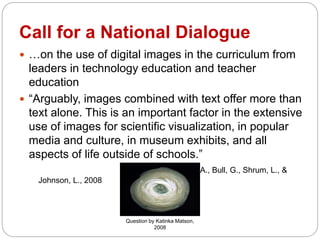
Question by Katinka Matson,
2008
Expanding the
English Language Arts…
 In her 2008 presidential address to NCTE members,
Kathleen Blake Yancey encouraged us to expand
beyond our thinking of students as merely writers,
but instead to think of them as composers.
 “Sometimes a picture—or an audio clip of a speaker,
or a sound effect, or a few seconds of video—is
worth a thousand words, ones that do not
necessarily need to be written.”
o Troy Hicks (2009) The Digital Writing Workshop
 Still teach craft, but expand the context to include
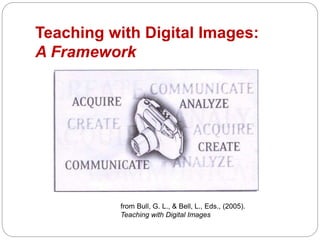
Teaching with Digital Images:
A Framework
from Bull, G. L., & Bell, L., Eds., (2005).
Teaching with Digital Images
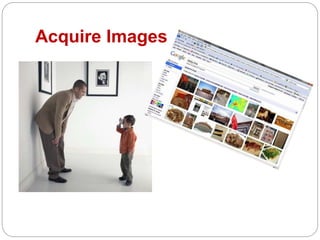
Acquire Images
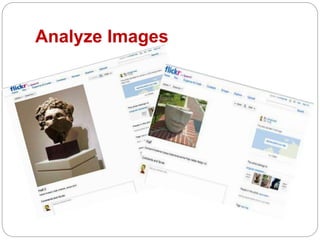
Analyze Images
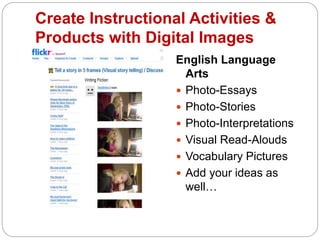
Create Instructional Activities &
Products with Digital Images
English Language
Arts
 Photo-Essays
 Photo-Stories
 Photo-Interpretations
 Visual Read-Alouds
 Vocabulary Pictures
 Add your ideas as
well…
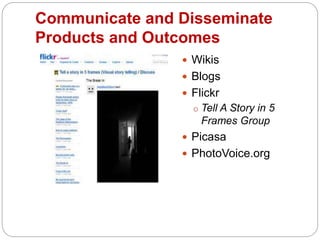
Communicate and Disseminate
Products and Outcomes
 Wikis
 Blogs
 Flickr
o Tell A Story in 5
Frames Group
 Picasa
 PhotoVoice.org
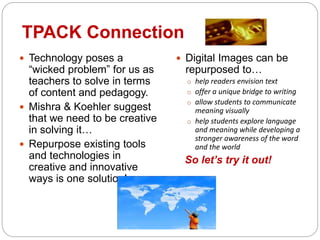
TPACK Connection
 Technology poses a
“wicked problem” for us as
teachers to solve in terms
of content and pedagogy.
 Mishra & Koehler suggest
that we need to be creative
in solving it…
 Repurpose existing tools
and technologies in
creative and innovative
ways is one solution!
 Digital Images can be
repurposed to…
o help readers envision text
o offer a unique bridge to writing
o allow students to communicate
meaning visually
o help students explore language
and meaning while developing a
stronger awareness of the word
and the world
So let’s try it out!

Teaching ELA with Digital Images

  • 1.
    NLI Beijing, China BeijingRoyal School November 5-6, 2010 Carl A. Young NC State University carl_young@ncsu.edu Using Digital Images to Motivate Language Exploration & Awareness
  • 2.
    Call for aNational Dialogue  …on the use of digital images in the curriculum from leaders in technology education and teacher education  “Arguably, images combined with text offer more than text alone. This is an important factor in the extensive use of images for scientific visualization, in popular media and culture, in museum exhibits, and all aspects of life outside of schools.” -- Thompson, A., Bull, G., Shrum, L., & Johnson, L., 2008 Question by Katinka Matson, 2008
  • 3.
    Expanding the English LanguageArts…  In her 2008 presidential address to NCTE members, Kathleen Blake Yancey encouraged us to expand beyond our thinking of students as merely writers, but instead to think of them as composers.  “Sometimes a picture—or an audio clip of a speaker, or a sound effect, or a few seconds of video—is worth a thousand words, ones that do not necessarily need to be written.” o Troy Hicks (2009) The Digital Writing Workshop  Still teach craft, but expand the context to include
  • 4.
    Teaching with DigitalImages: A Framework from Bull, G. L., & Bell, L., Eds., (2005). Teaching with Digital Images
  • 5.
  • 6.
  • 7.
    Create Instructional Activities& Products with Digital Images English Language Arts  Photo-Essays  Photo-Stories  Photo-Interpretations  Visual Read-Alouds  Vocabulary Pictures  Add your ideas as well…
  • 8.
    Communicate and Disseminate Productsand Outcomes  Wikis  Blogs  Flickr o Tell A Story in 5 Frames Group  Picasa  PhotoVoice.org
  • 9.
    TPACK Connection  Technologyposes a “wicked problem” for us as teachers to solve in terms of content and pedagogy.  Mishra & Koehler suggest that we need to be creative in solving it…  Repurpose existing tools and technologies in creative and innovative ways is one solution!  Digital Images can be repurposed to… o help readers envision text o offer a unique bridge to writing o allow students to communicate meaning visually o help students explore language and meaning while developing a stronger awareness of the word and the world So let’s try it out!