

SET Presents @ RRU- March 2018
Strategies for Designing Online Courses
George Veletsianos, PhD
Professor
Canada Research Chair
School of Education & Technology
Goals
share some of the work being done in SET,
explore various activities beyond the Moodle
discussion board,
and learn from one another.
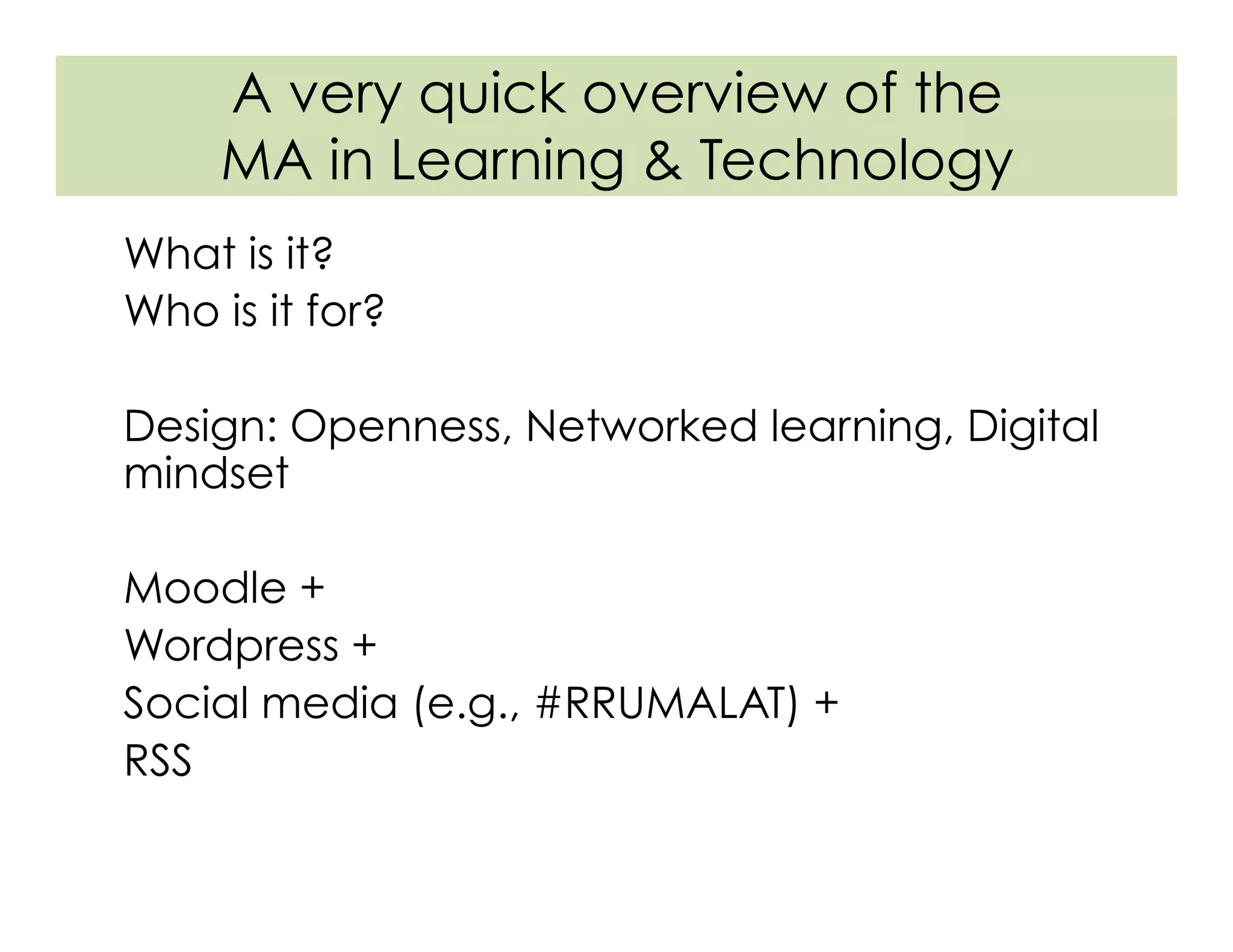
A very quick overview of the
MA in Learning & Technology
What is it?
Who is it for?
Design: Openness, Networked learning, Digital
mindset
Moodle +
Wordpress +
Social media (e.g., #RRUMALAT) +
RSS
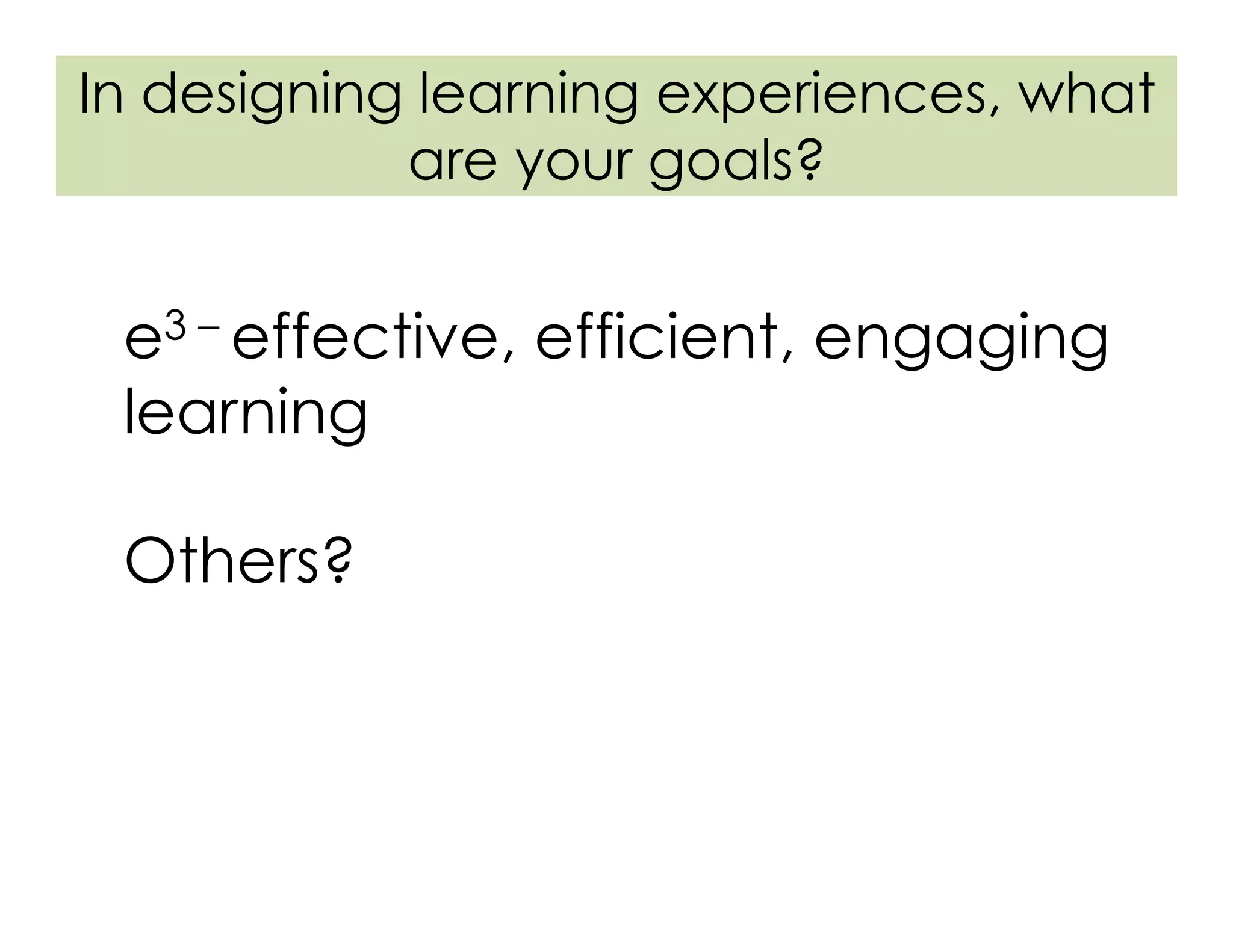
In designing learning experiences, what
are your goals?
e3 – effective, efficient, engaging
learning
Others?
In designing learning experiences, what
are your goals?
e3 – effective, efficient, engaging
learning
Others?
•  “Good”
•  Transformative
What are some of your favorite course
activities? Why?
Foundations
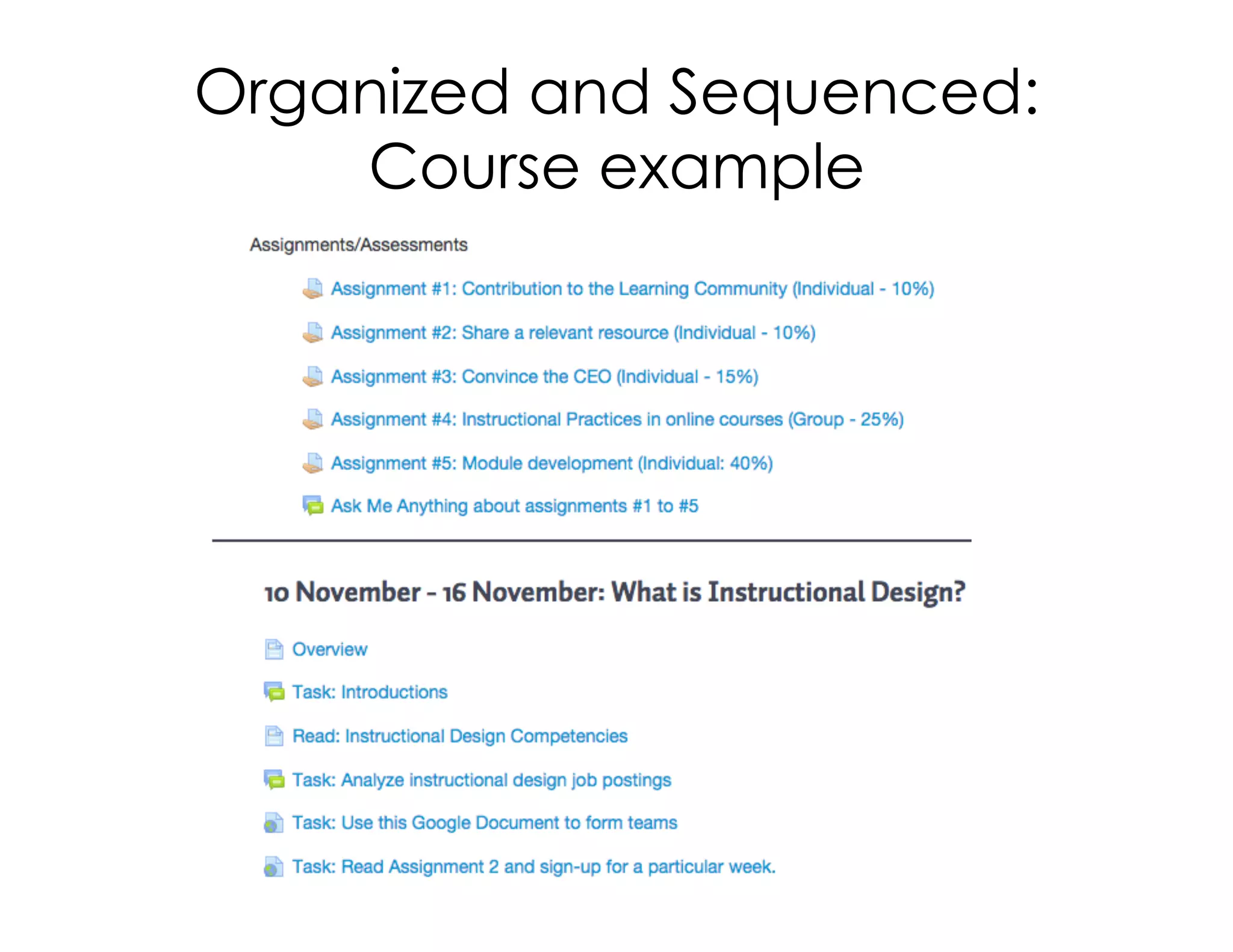
Organized and Sequenced
–  Deadline calendar
–  Establishing a rhythm: Standardized
sequence à familiarity
–  Check-ins (e.g., 1-1 phone/skype chat)
–  Discussion flow (post by? Respond by?)
–  Clear expectations
Organized and Sequenced:
Course example
Organized and Sequenced:
Assessment across MALAT
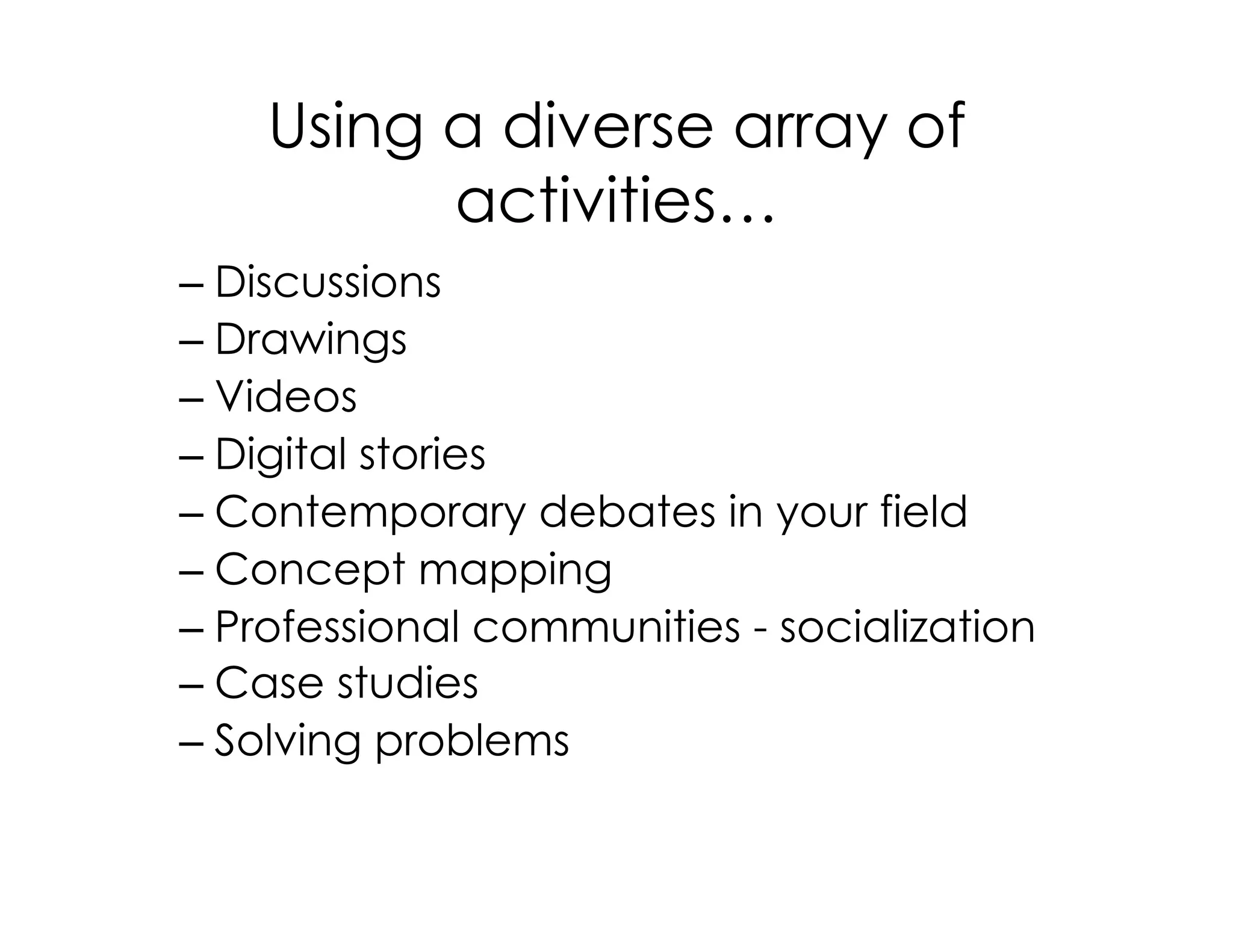
Using a diverse array of
activities…
– Discussions
– Drawings
– Videos
– Digital stories
– Contemporary debates in your field
– Concept mapping
– Professional communities - socialization
– Case studies
– Solving problems
What are some ways that you ask students
to introduce themselves?
•  Superhero Students
You are to create a drawing of yourself to share with
the rest of the class. Your drawing should portray you as
a superhero and include your superhero name
Use your creativity to create a representation of yourself
so that we learn more about each other.
You can use pen/pencils/crayons and paper, or a
graphics program to do this.
–  Adapted from Dunlap & Lowenthal:
http://www.ucdenver.edu/academics/CUOnline/FacultyResources/additionalResources/
Handbook/cuonlinehandbook2011/Documents/chapter10.pdf
What are some ways that you ask students
to introduce themselves?
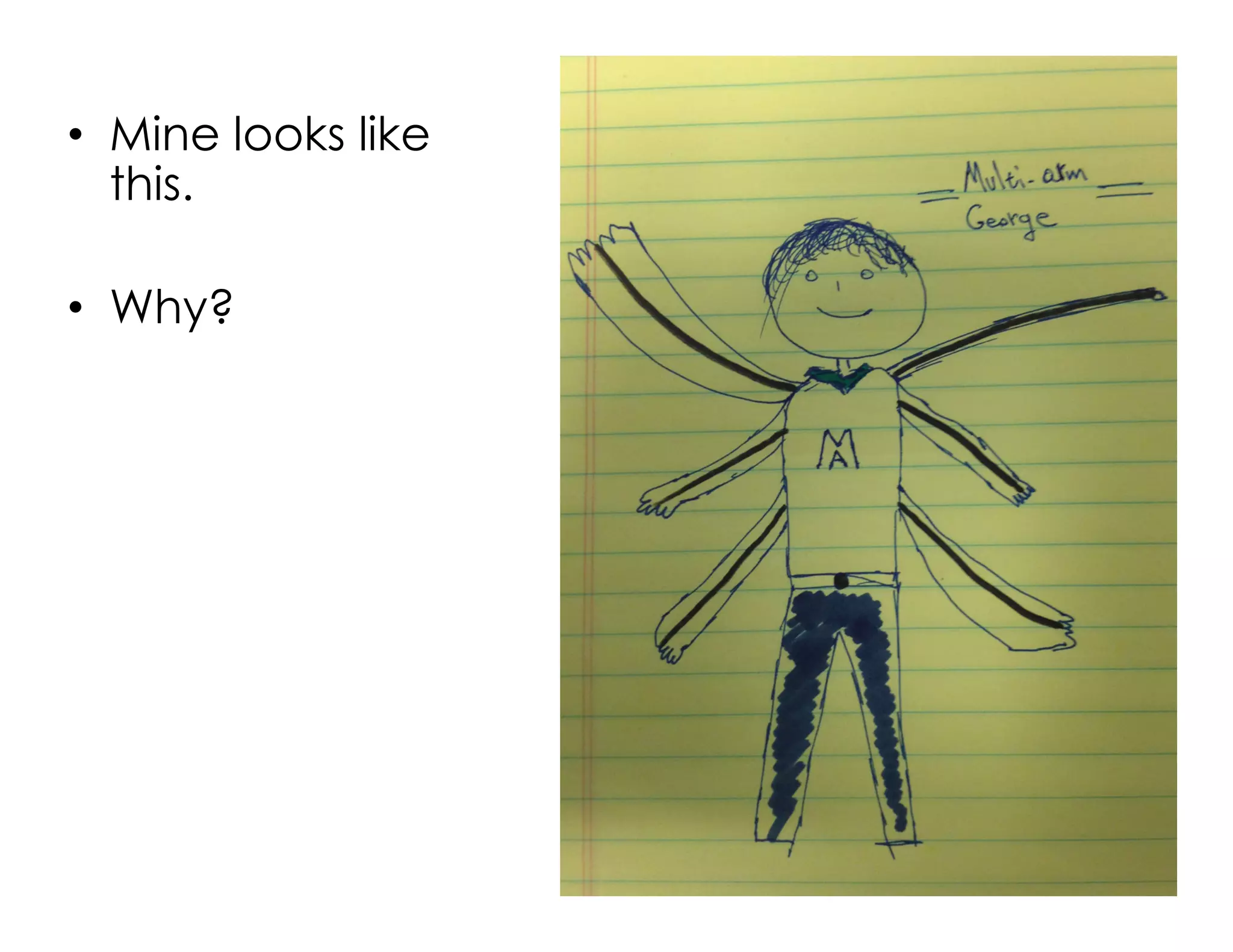
•  Mine looks like
this.
•  Why?
•  Music videos
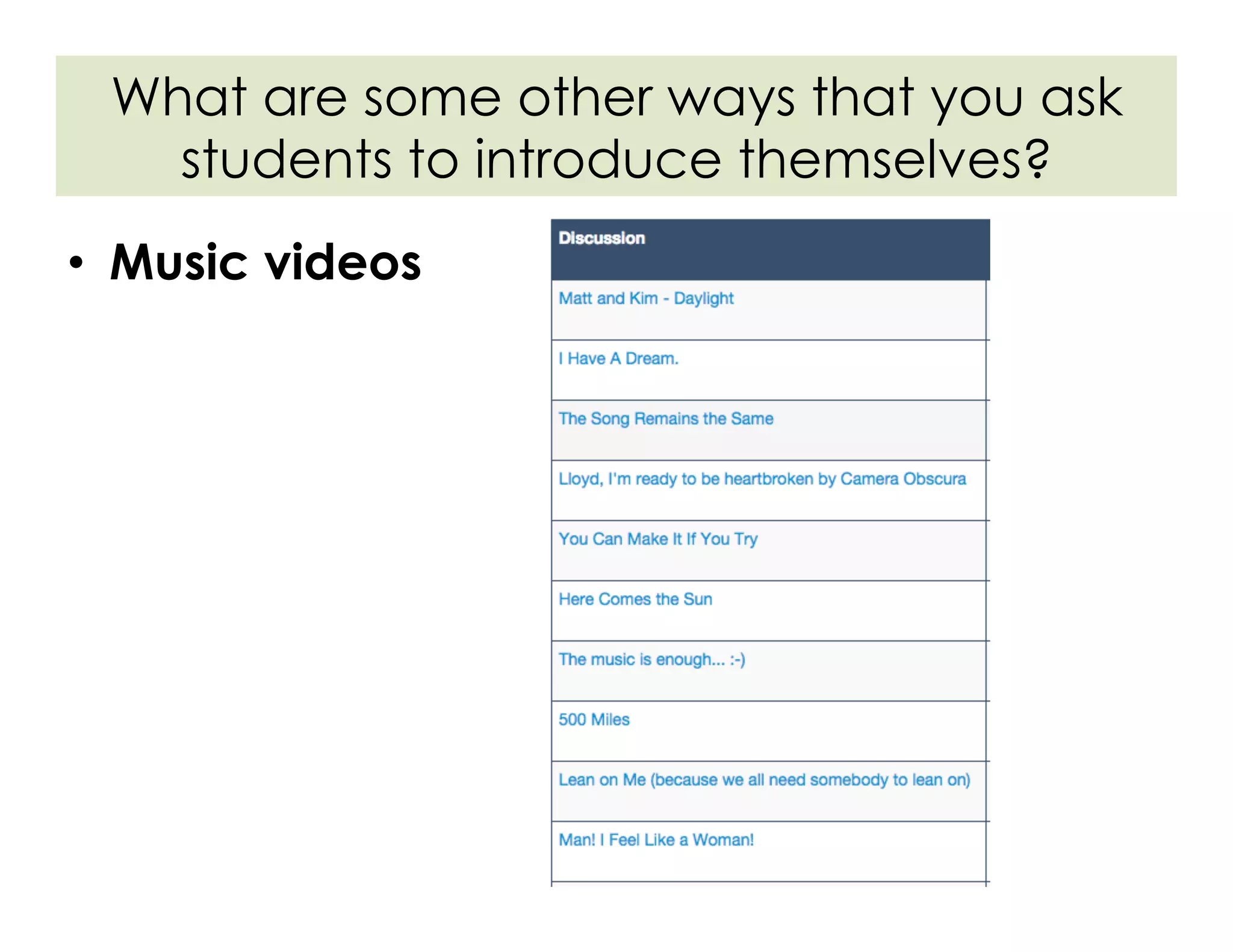
Locate a music video on youtube.com that
describes you and post it below, along with a
message for the rest of the class explaining
why this music video describes you.
Caution: A lot of music videos contain
language and imagery which may be
offensive. Please review the lyrics & watch the
whole video prior to posting it to ensure that it
is appropriate.
What are some other ways that you ask
students to introduce themselves?
•  Music videos
What are some other ways that you ask
students to introduce themselves?
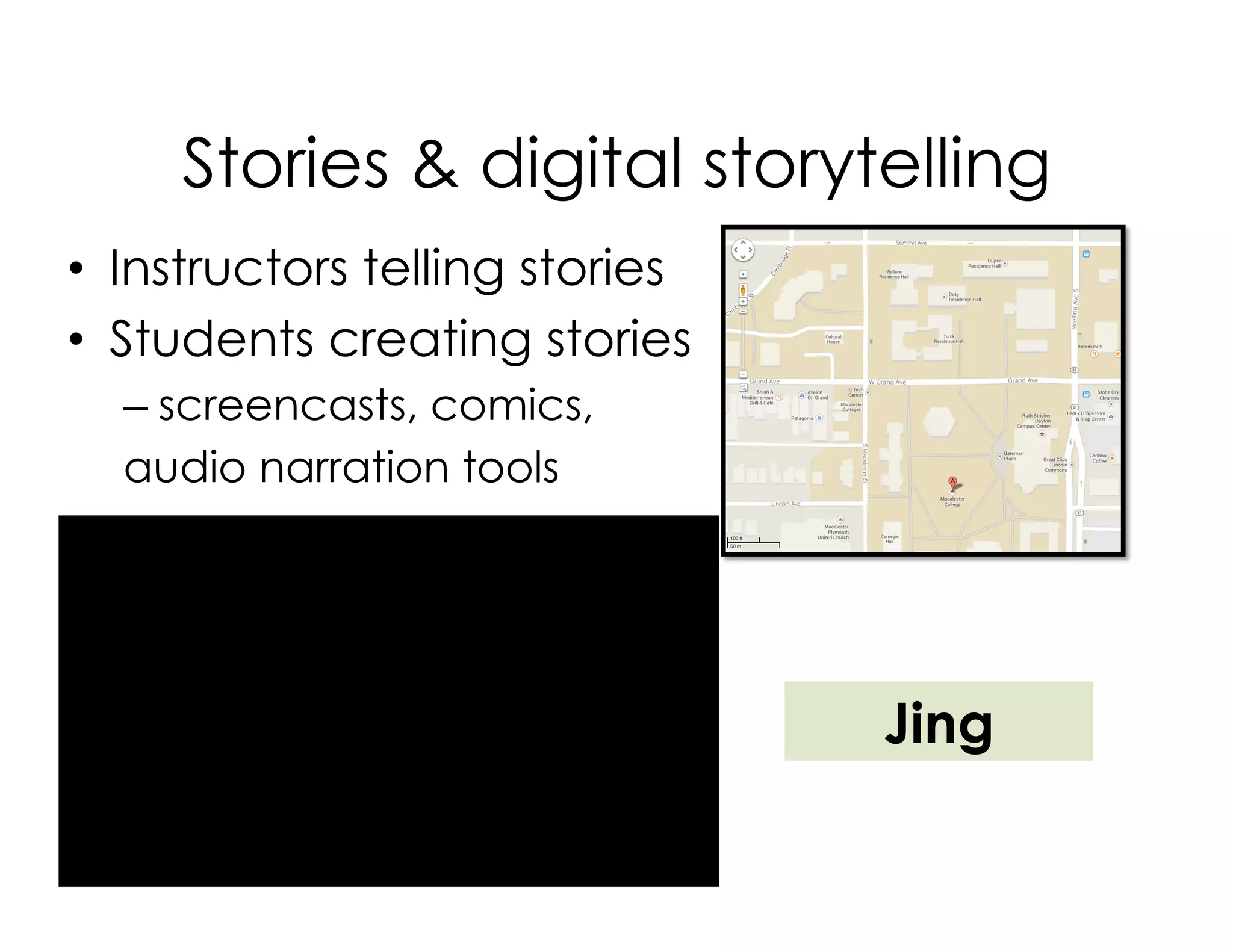
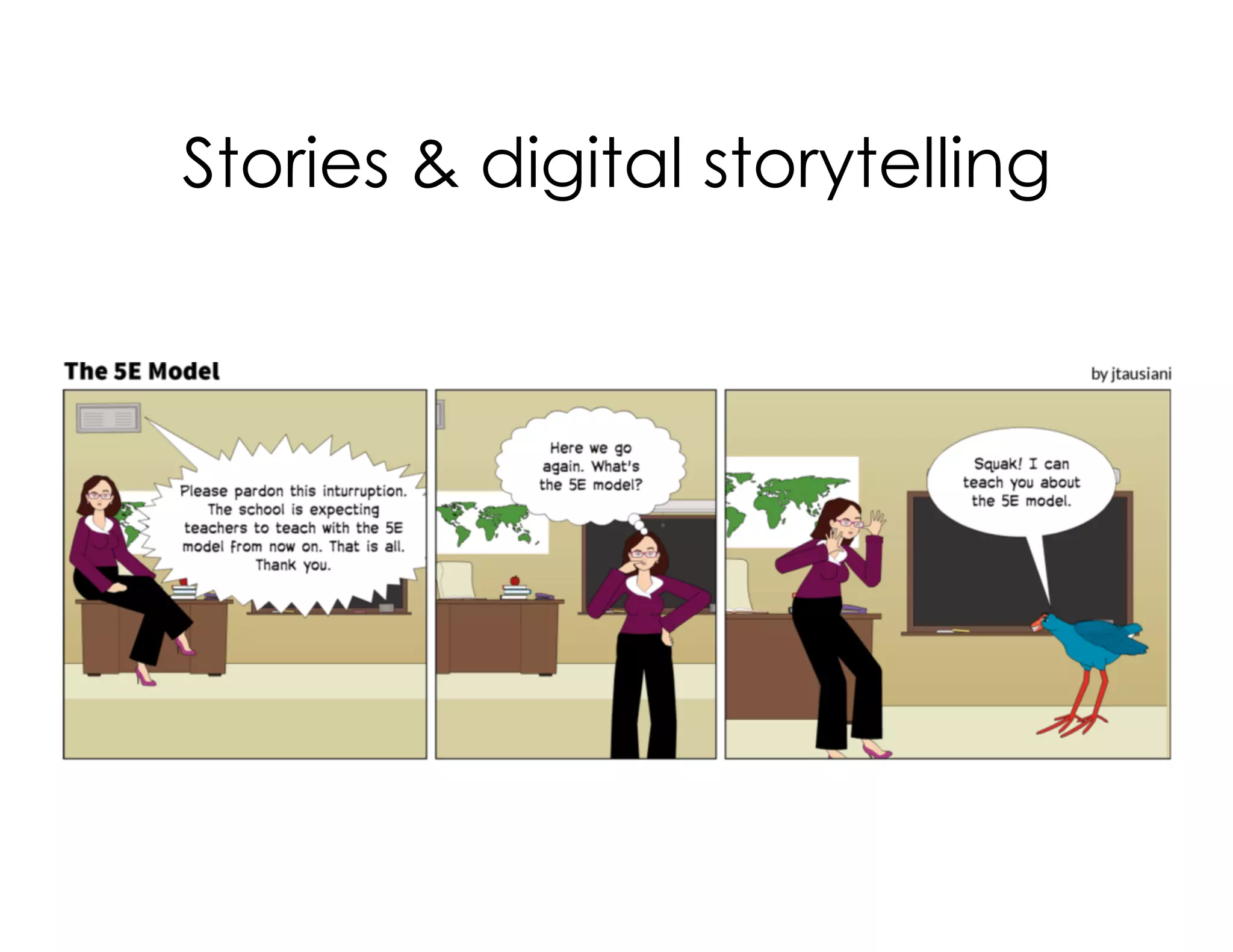
Stories & digital storytelling
•  Instructors telling stories
•  Students creating stories
– screencasts, comics,
audio narration tools
Jing
Stories & digital storytelling
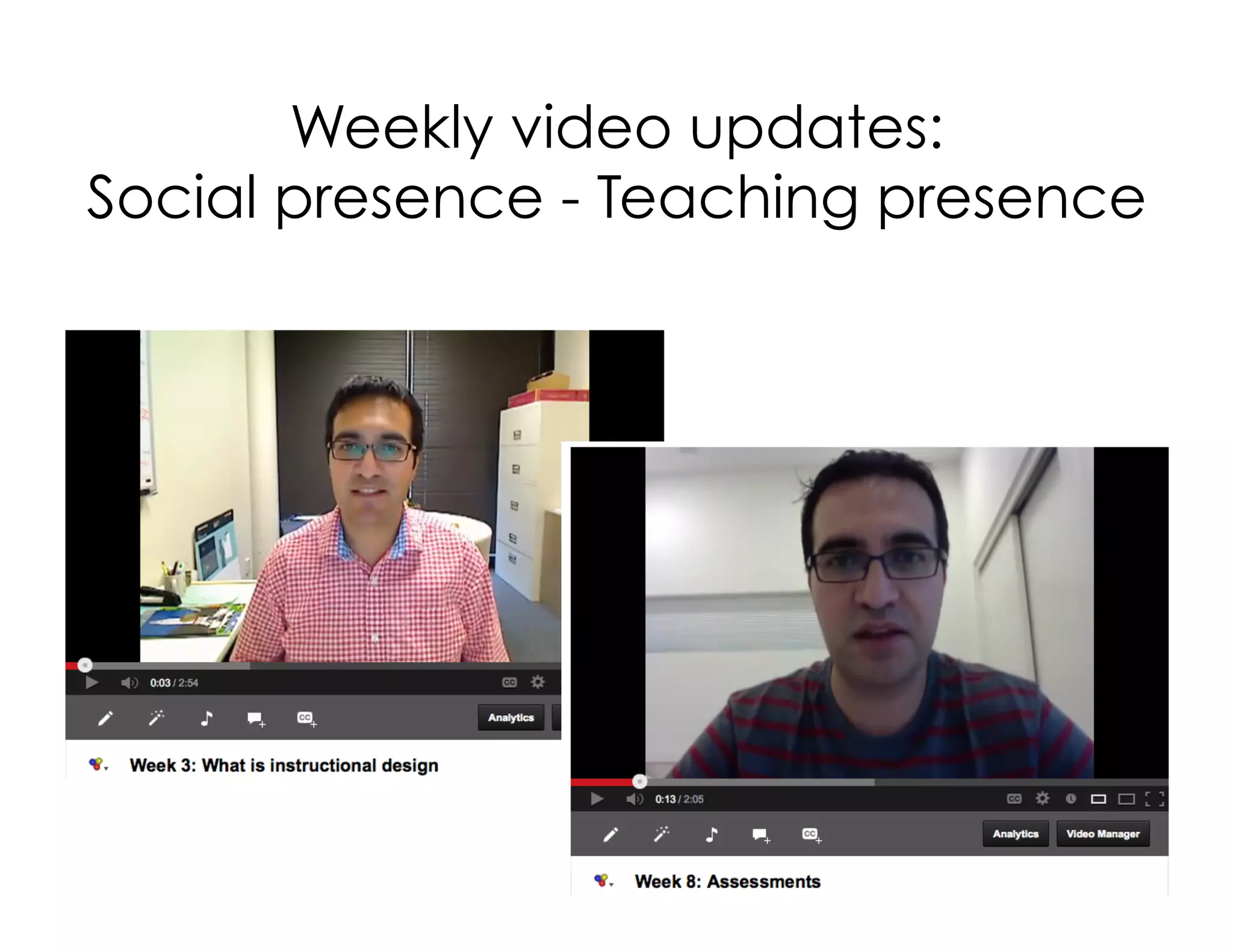
Weekly video updates:
Social presence - Teaching presence
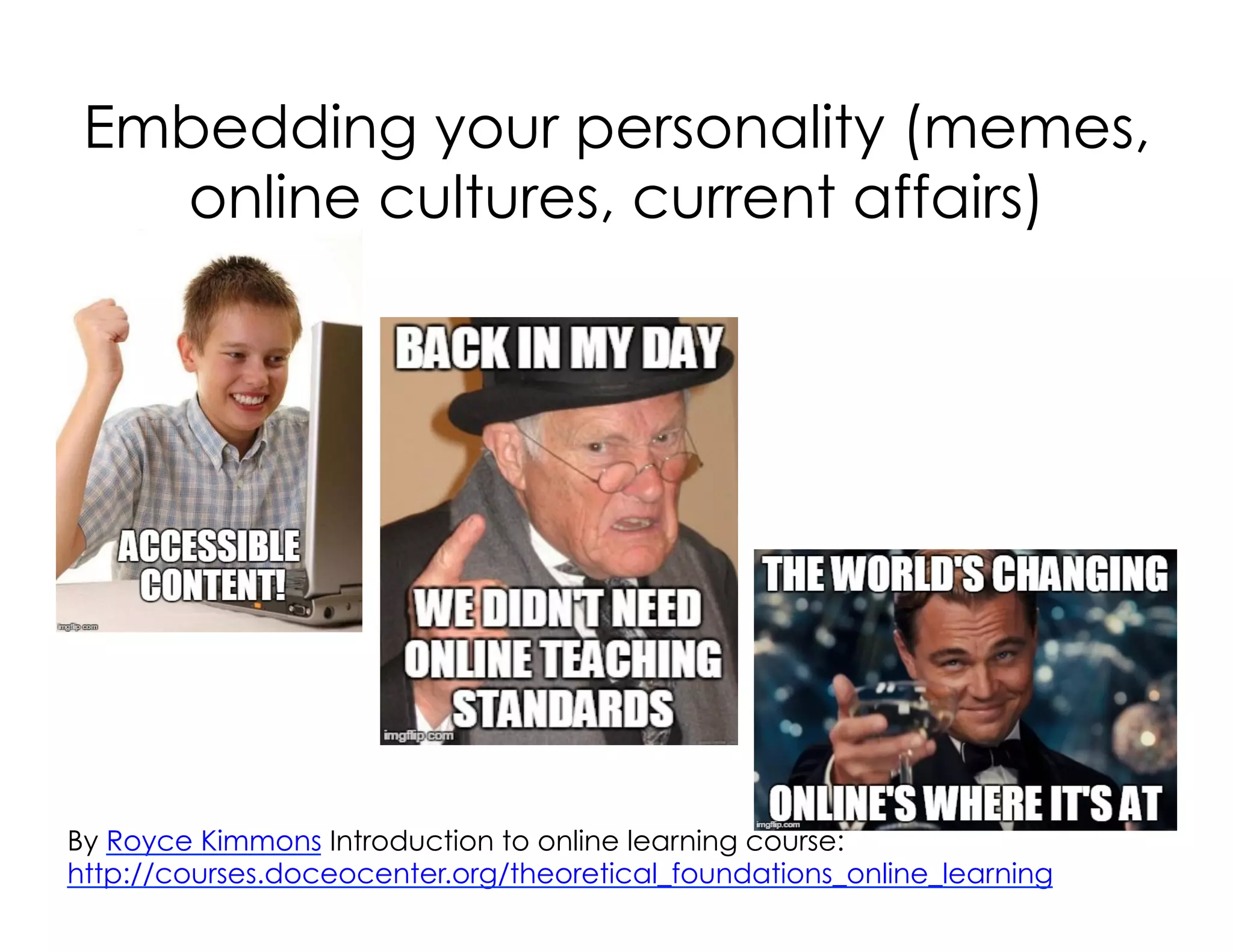
Embedding your personality (memes,
online cultures, current affairs)
By Royce Kimmons Introduction to online learning course:
http://courses.doceocenter.org/theoretical_foundations_online_learning
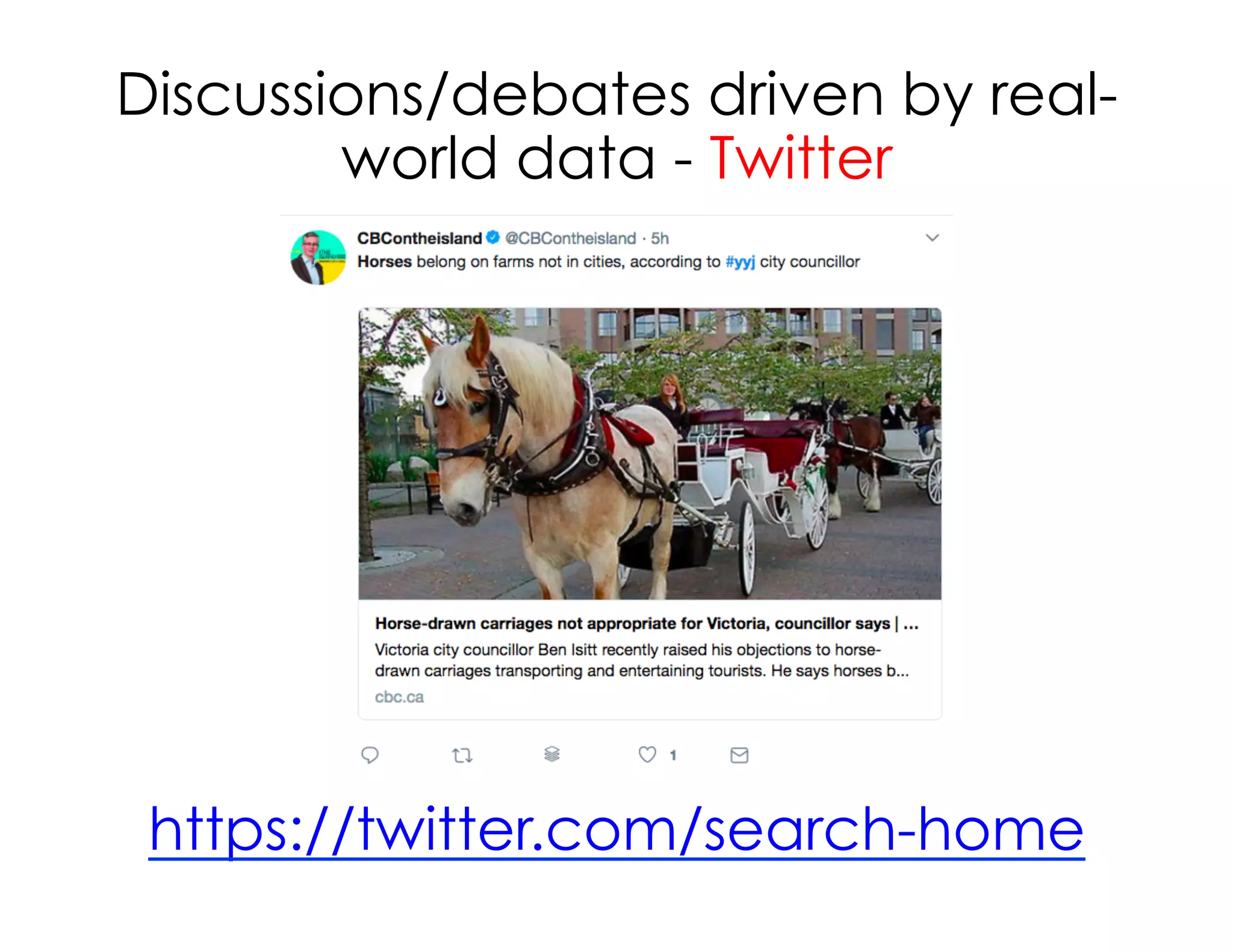
Discussions/debates driven by real-
world data - Twitter
https://twitter.com/search-home
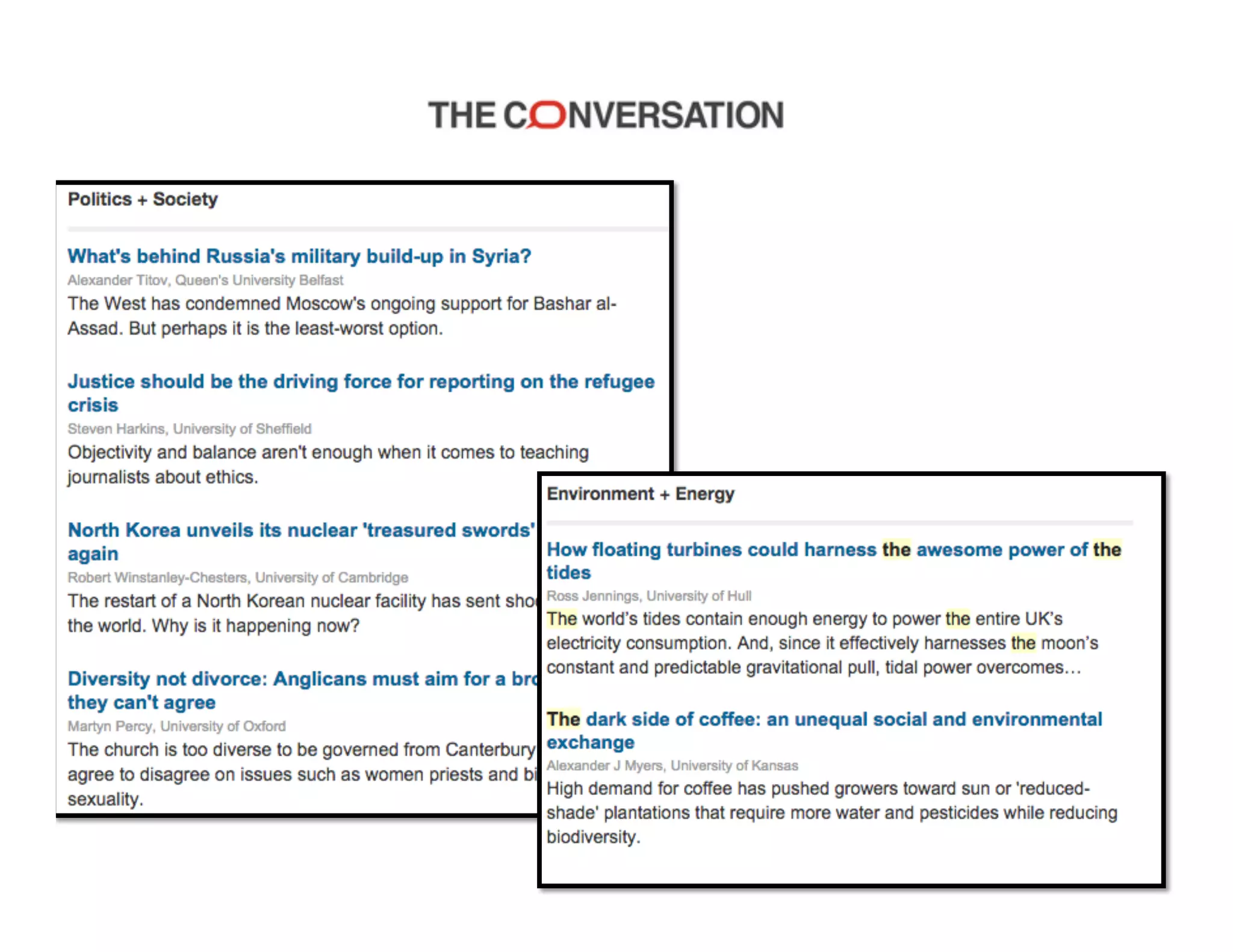
Discussions/debates driven by real-
world data - Newspapers
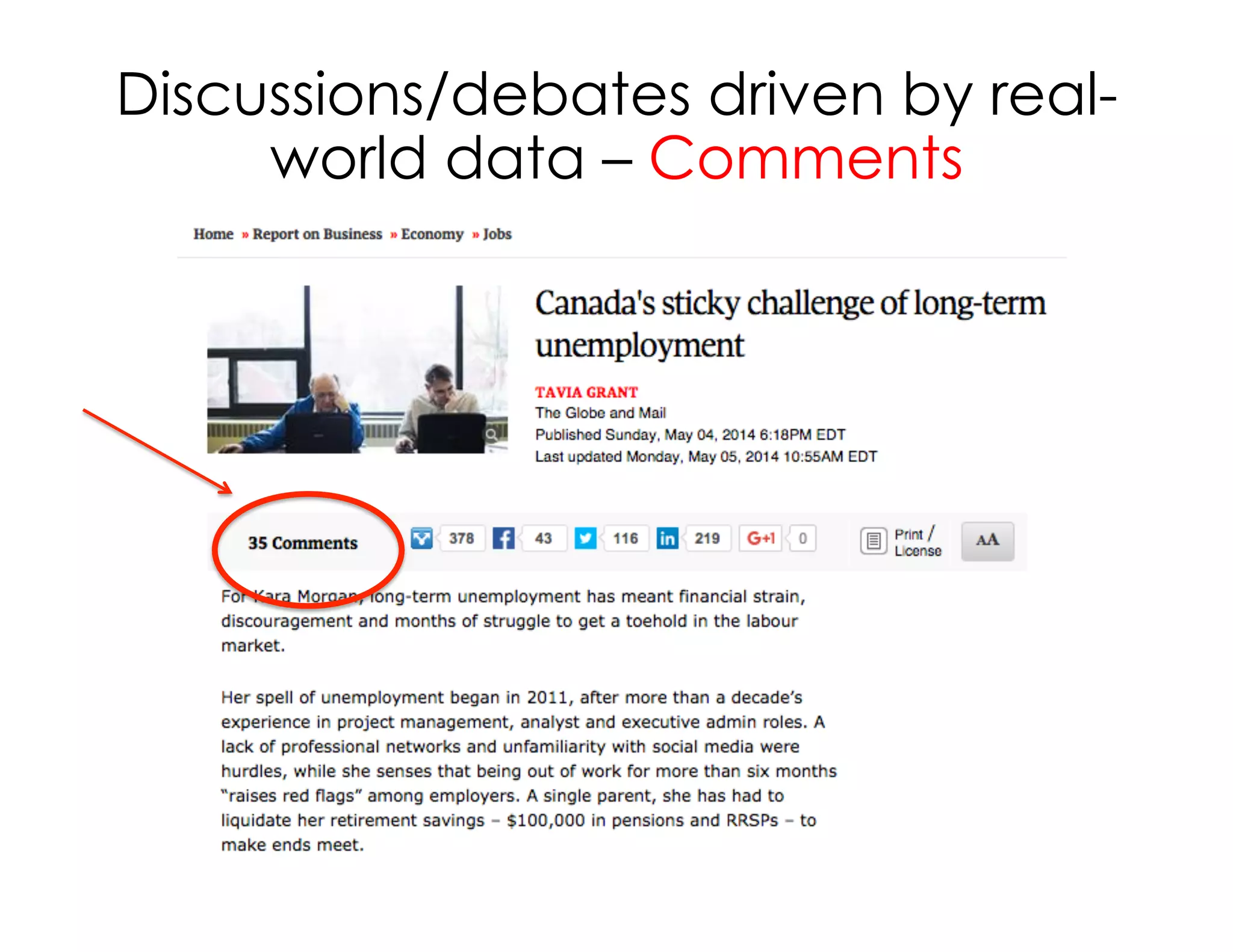
Discussions/debates driven by real-
world data – Comments
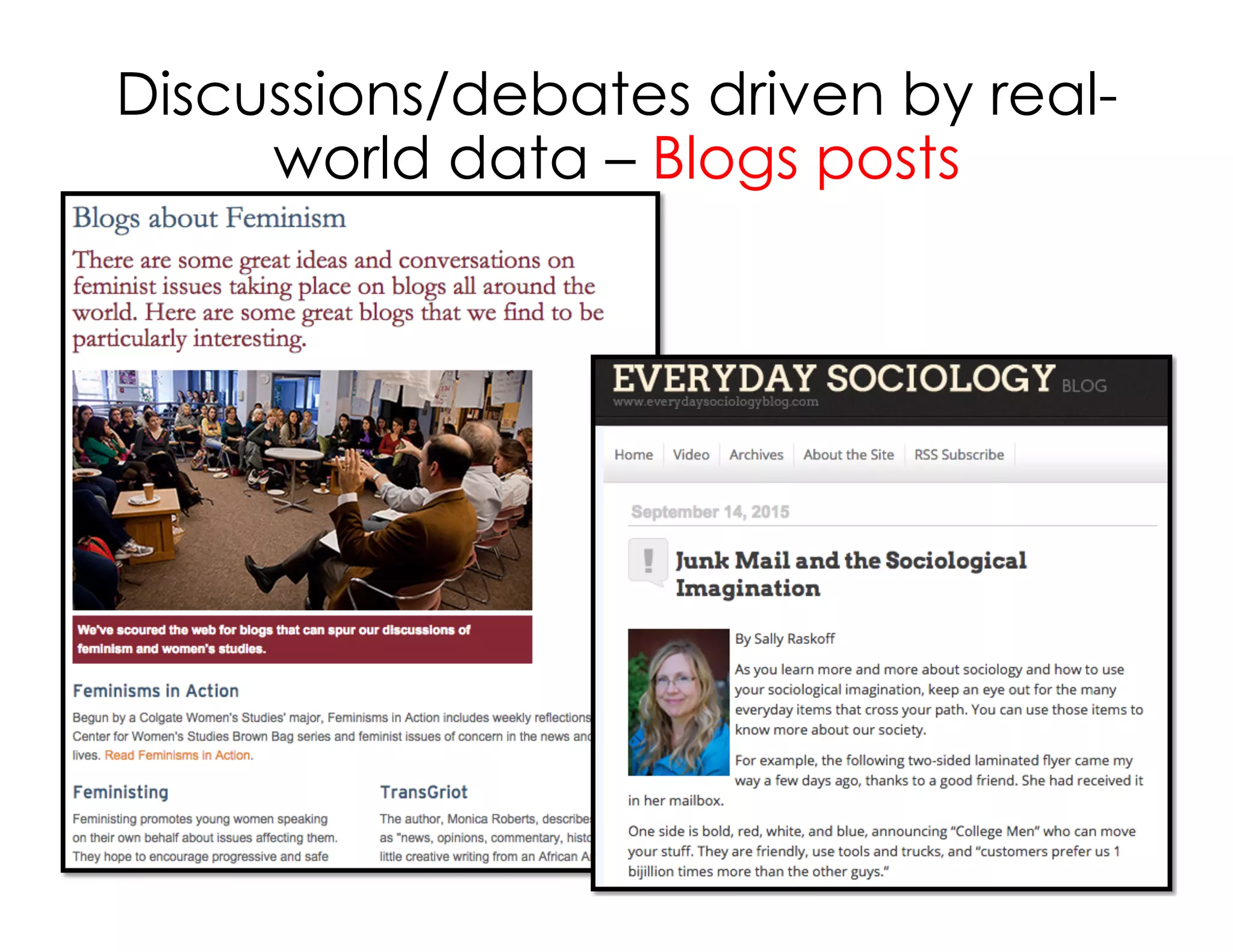
Discussions/debates driven by real-
world data – Blogs posts
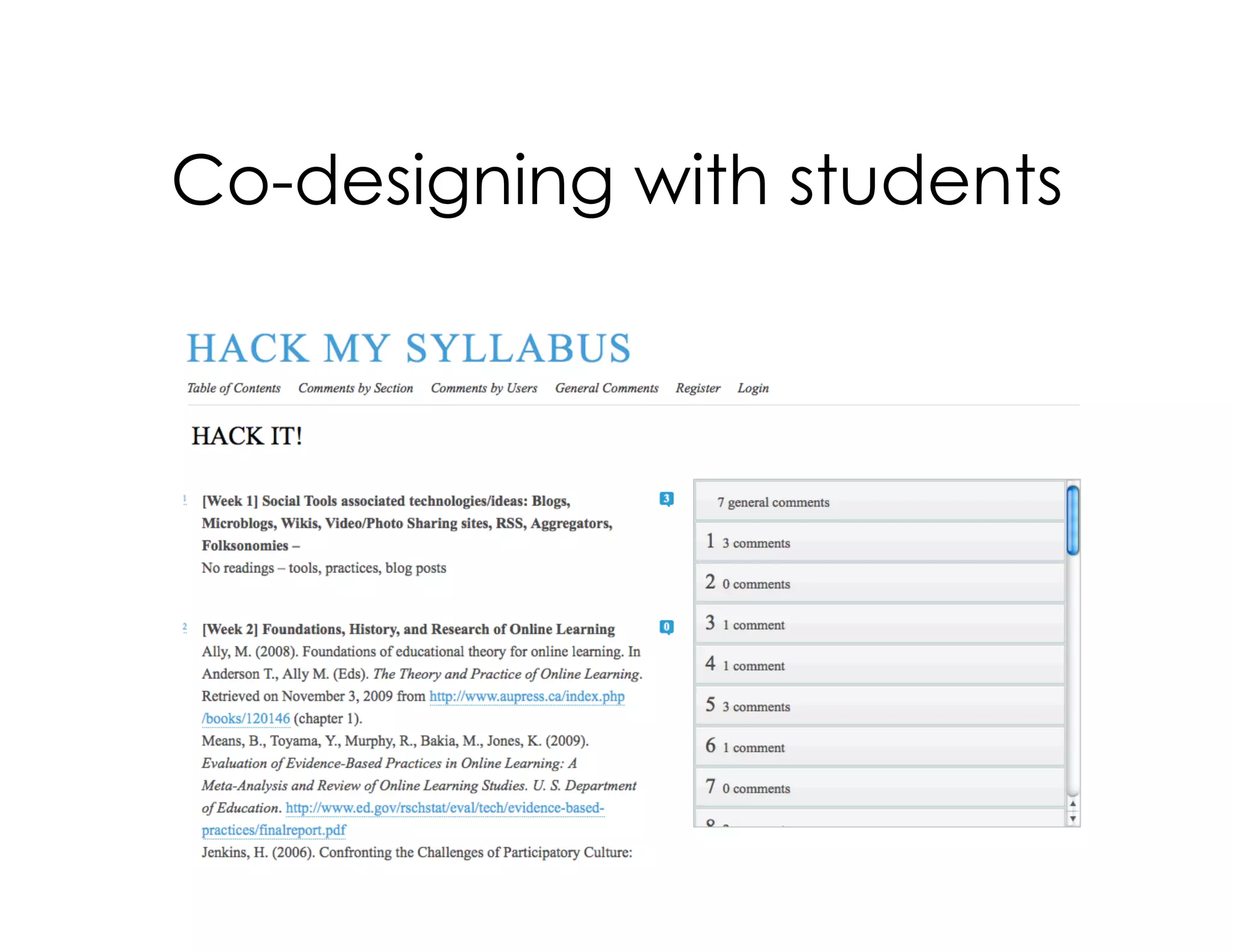
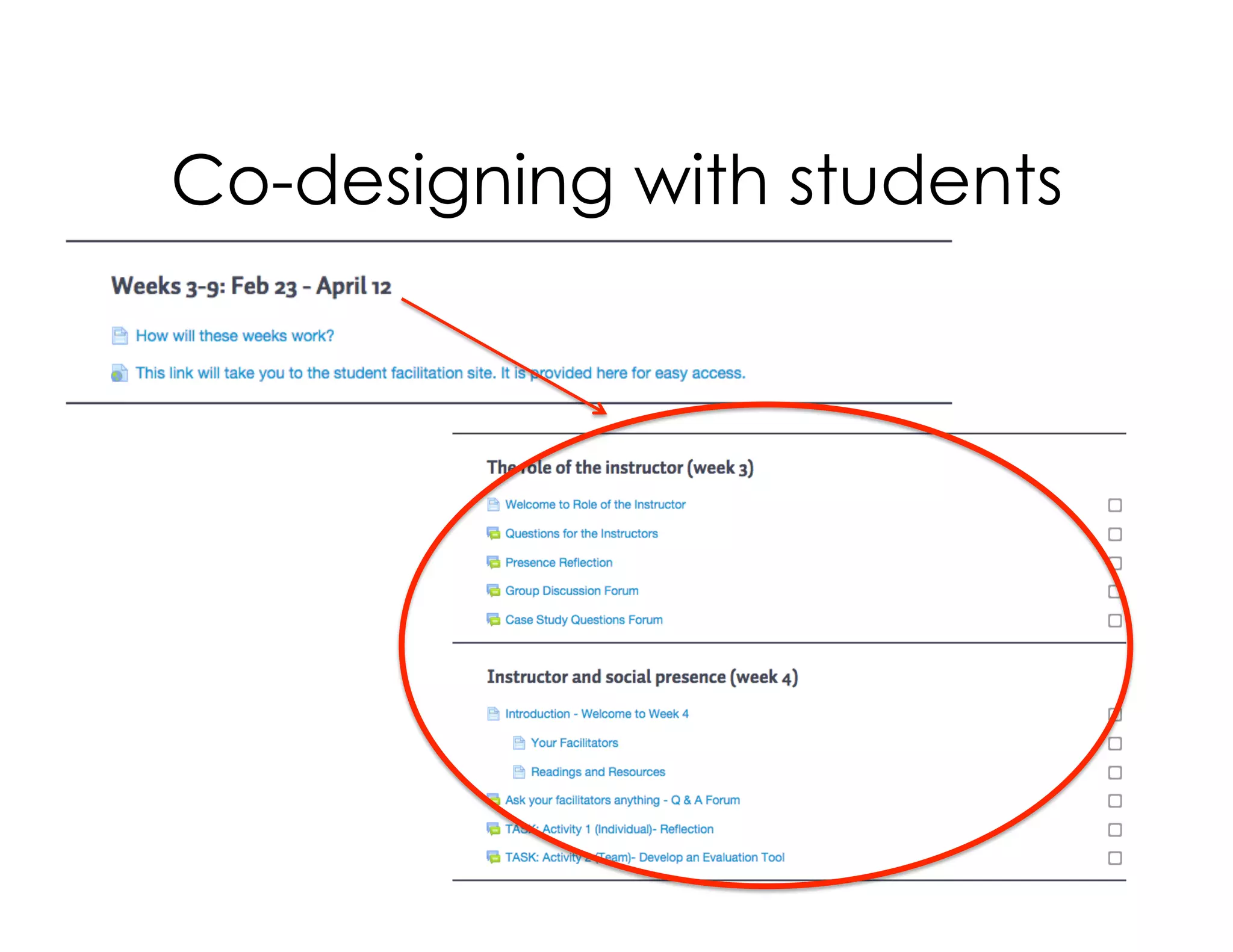
Co-designing with students
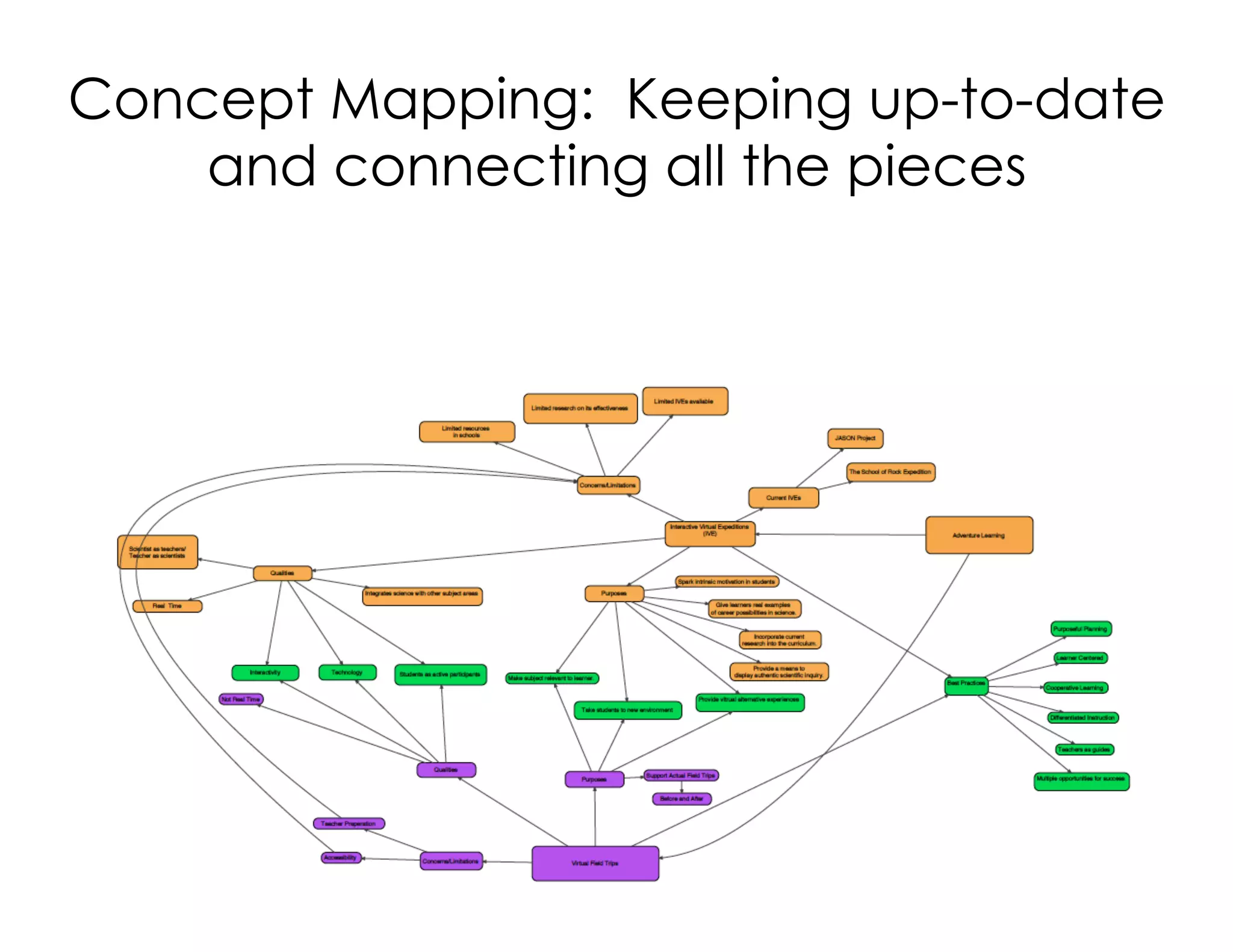
Concept Mapping: Keeping up-to-date
and connecting all the pieces
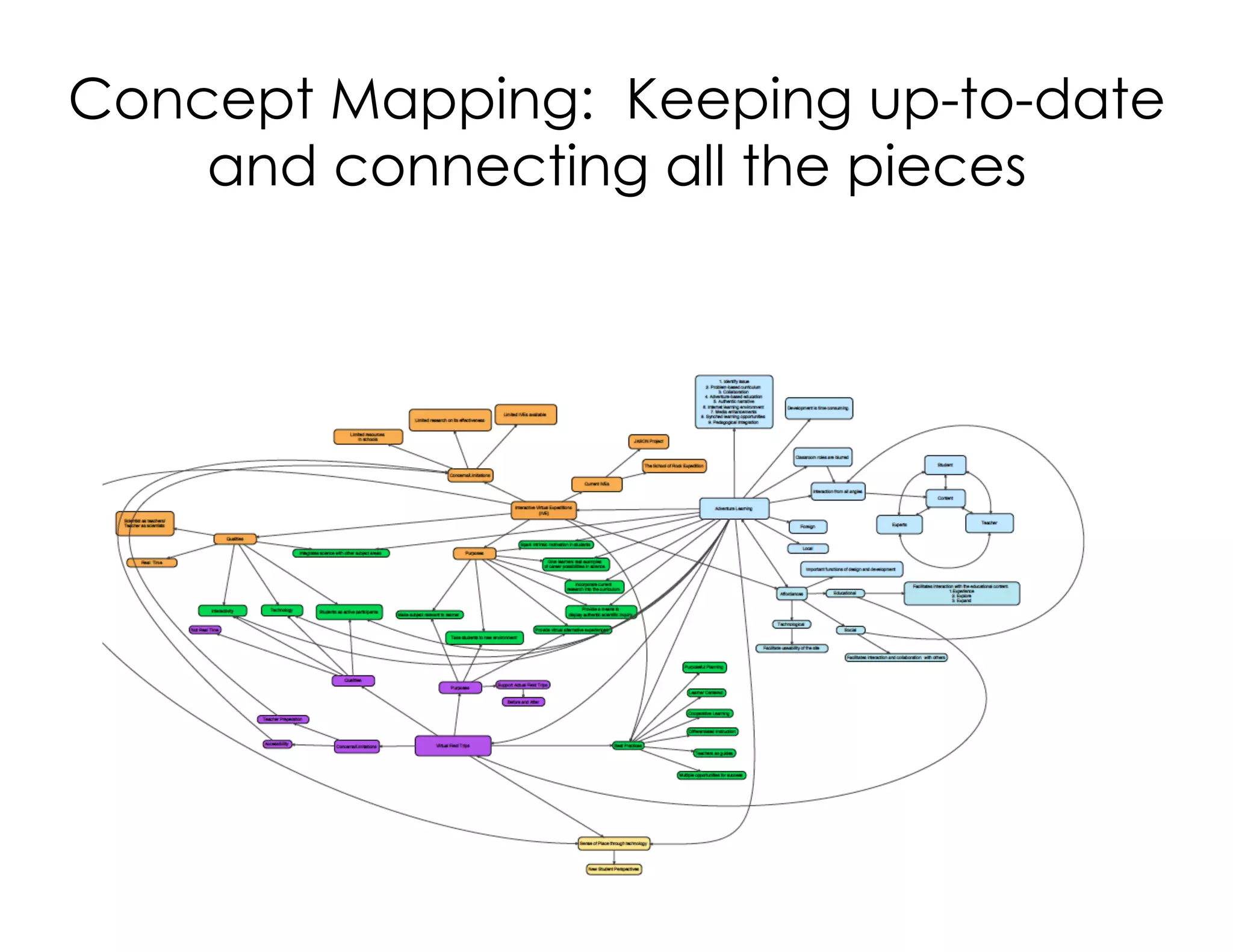
Concept Mapping: Keeping up-to-date
and connecting all the pieces
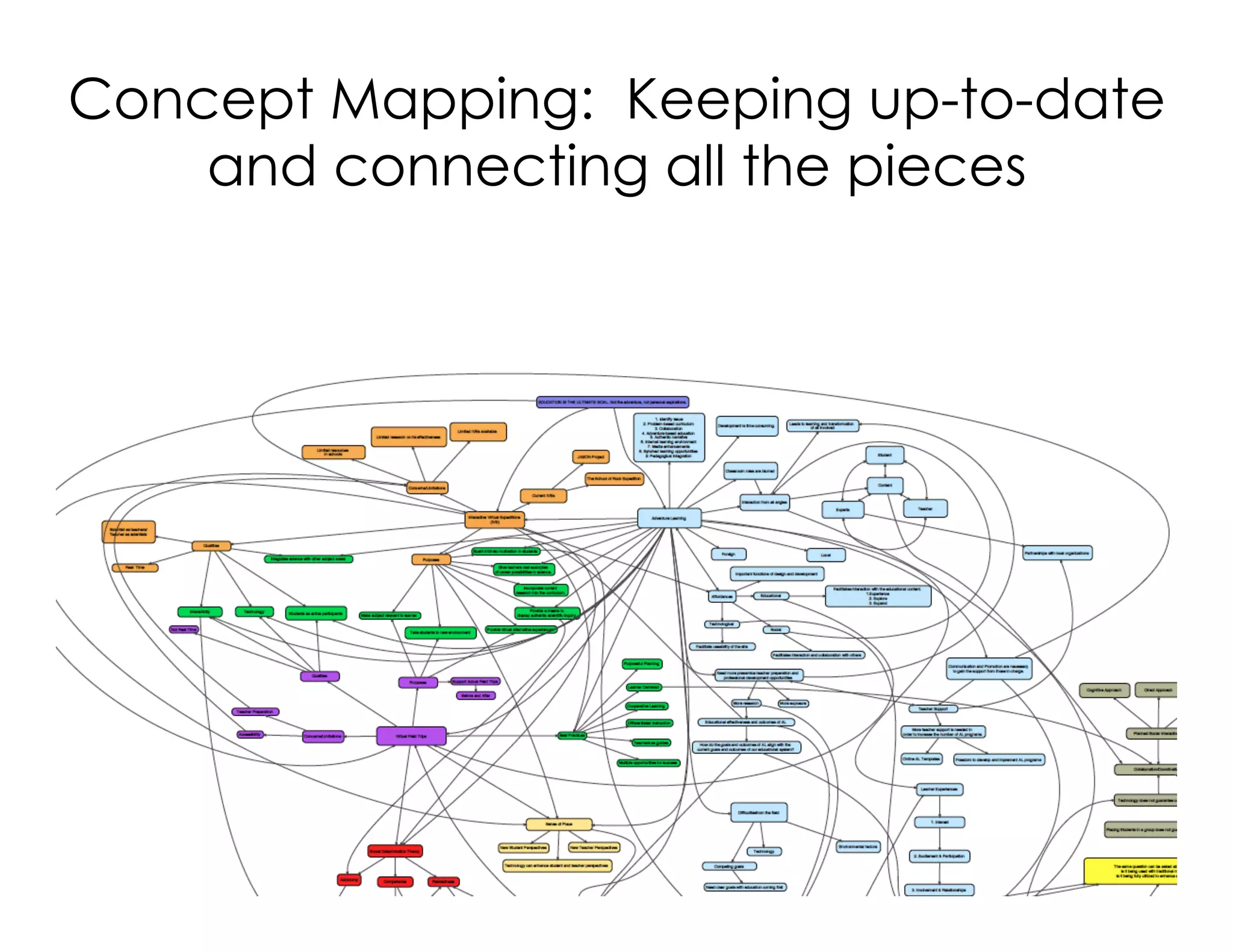
Concept Mapping: Keeping up-to-date
and connecting all the pieces
Concept Mapping: Keeping up-to-date
and connecting all the pieces
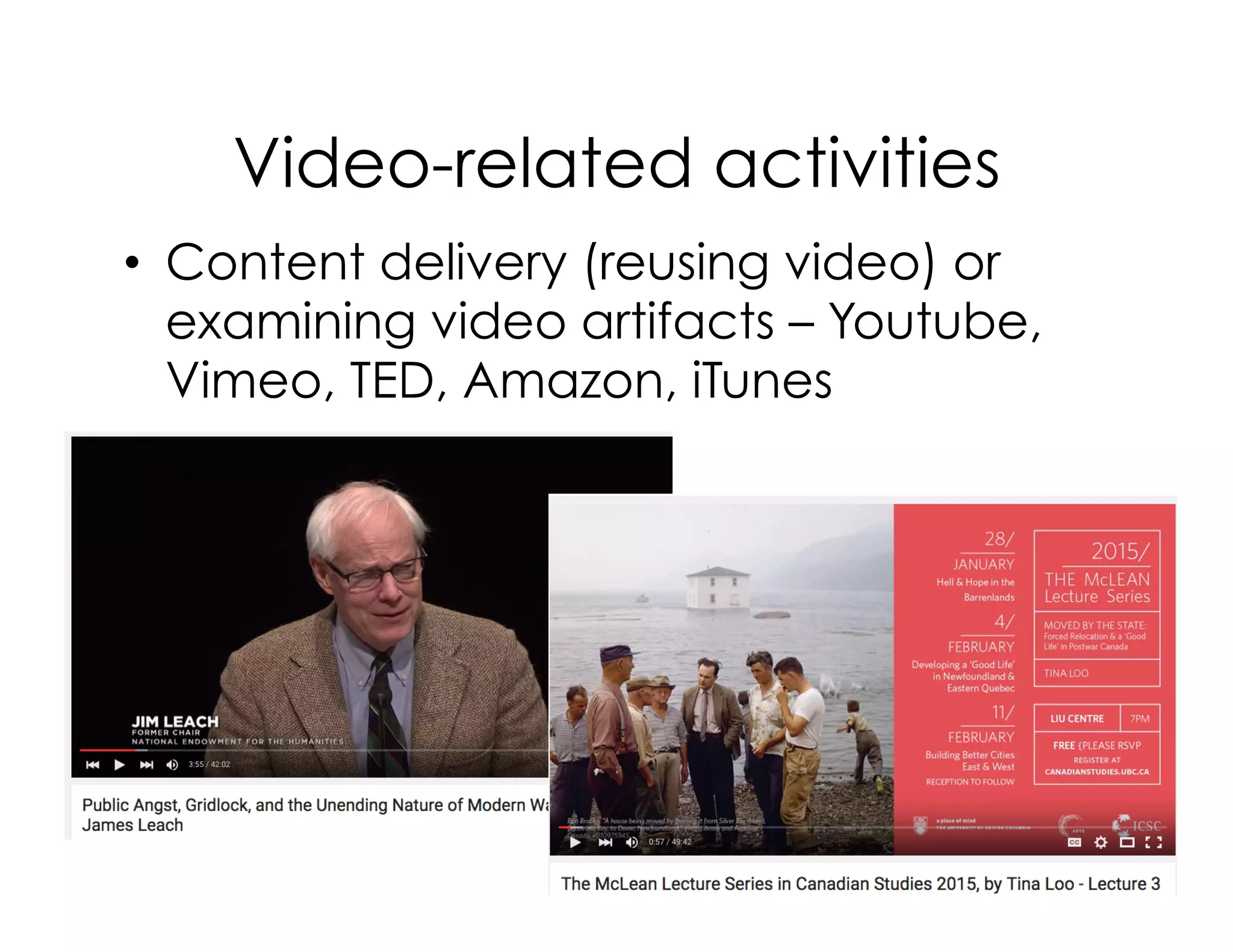
Video-related activities
•  Content delivery (reusing video) or
examining video artifacts – Youtube,
Vimeo, TED, Amazon, iTunes
Video-related activities
•  Additional ideas
– Record an elevator speech
– Find, share, and comment
– Identify misconceptions in existing videos
– Film and share roleplays
Introduce learners to professional
communities
– Professional listservs e.g., Tomorrow’s
Professor
– Blogging communities
– Social Networking Sites (e.g., LinkedIn
discussion groups, Facebook groups)
– Ask students to attend a virtual
conference and do X (reflect/summarize/
etc)
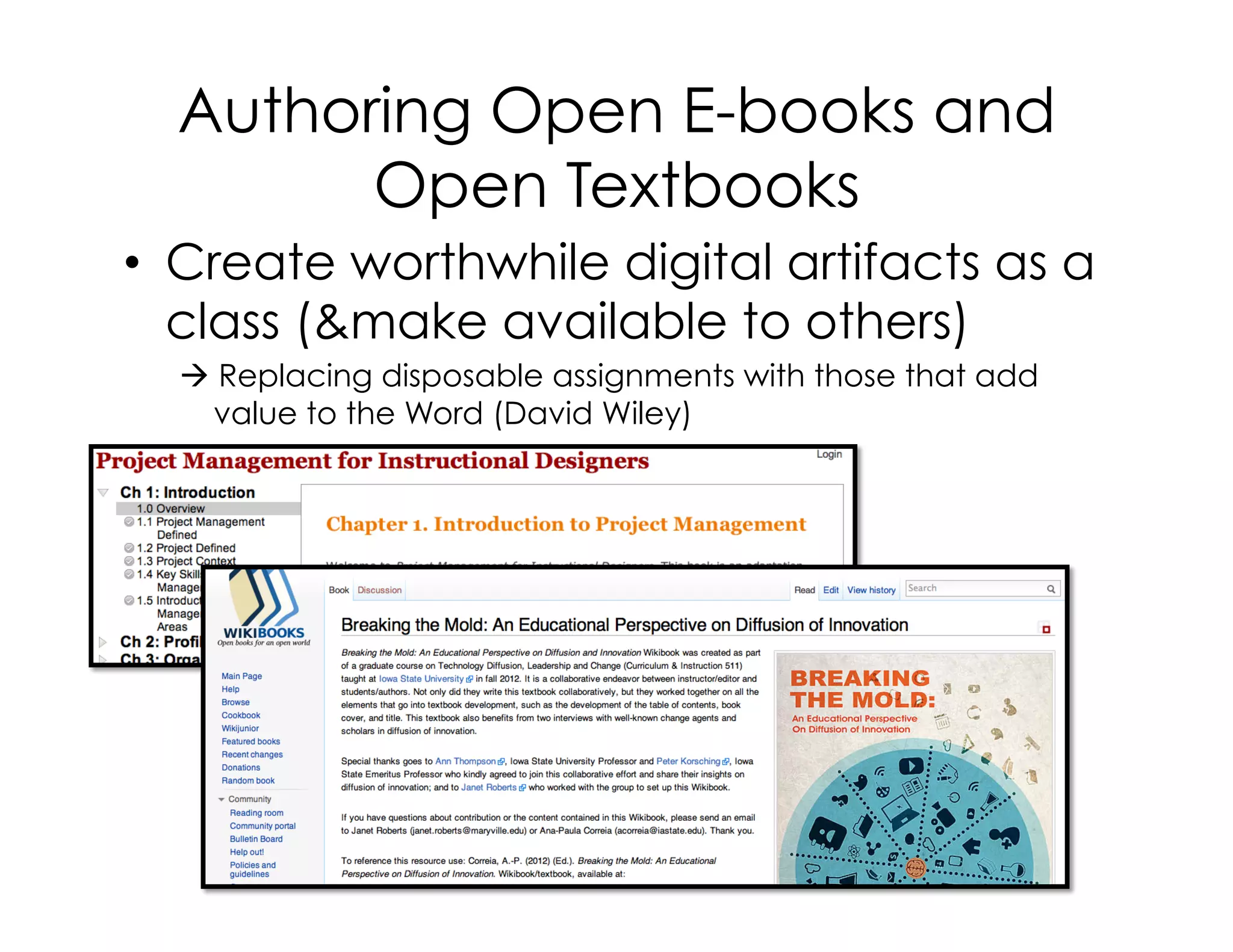
Authoring Open E-books and
Open Textbooks
•  Create worthwhile digital artifacts as a
class (&make available to others)
à Replacing disposable assignments with those that add
value to the Word (David Wiley)
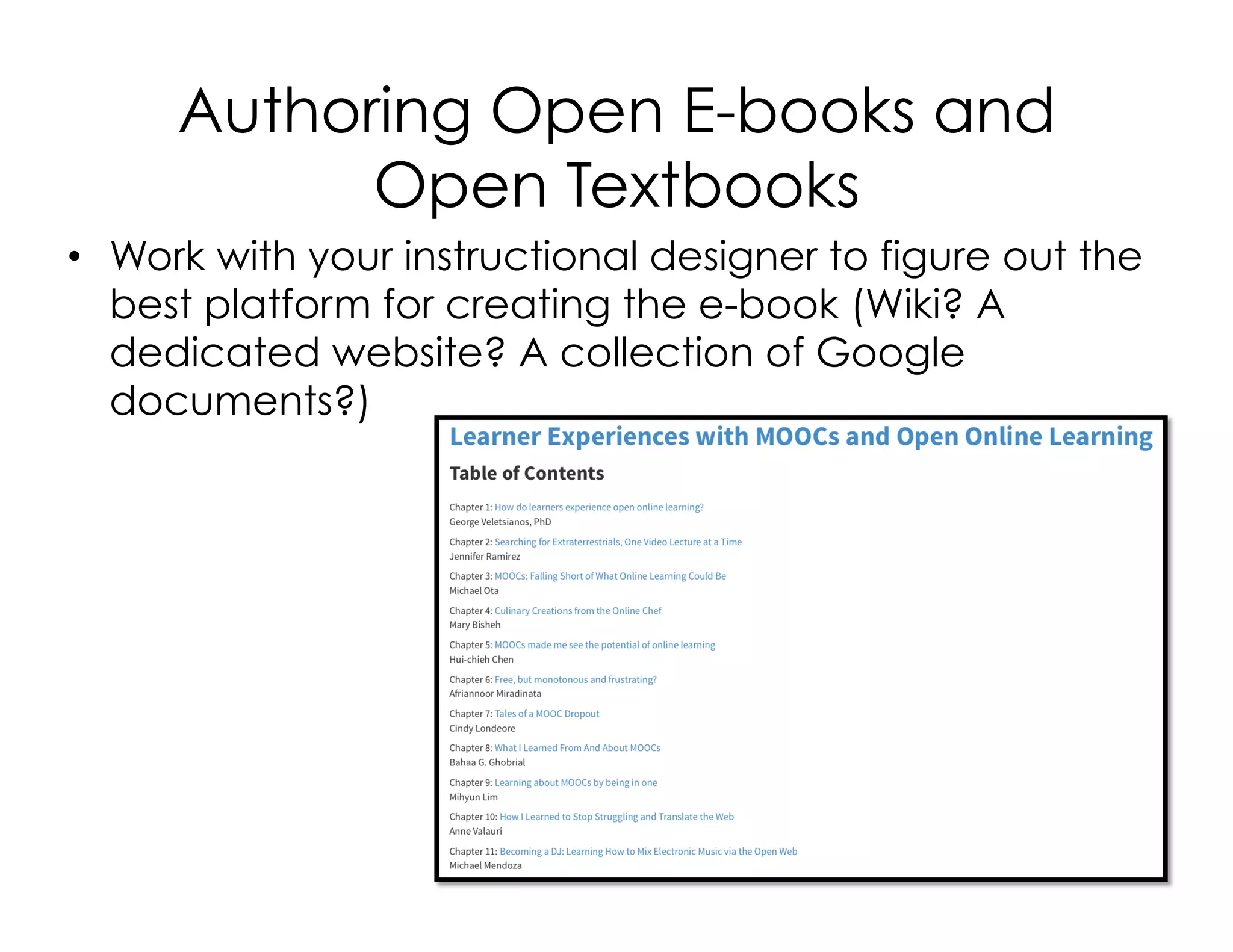
Authoring Open E-books and
Open Textbooks
•  Work with your instructional designer to figure out the
best platform for creating the e-book (Wiki? A
dedicated website? A collection of Google
documents?)
Course book clubs
•  As a class, select a few books that are of interest
•  (allow choice in reading/listening the books to
accommodate student preferences/life)
•  Task teams with analyzing and presenting
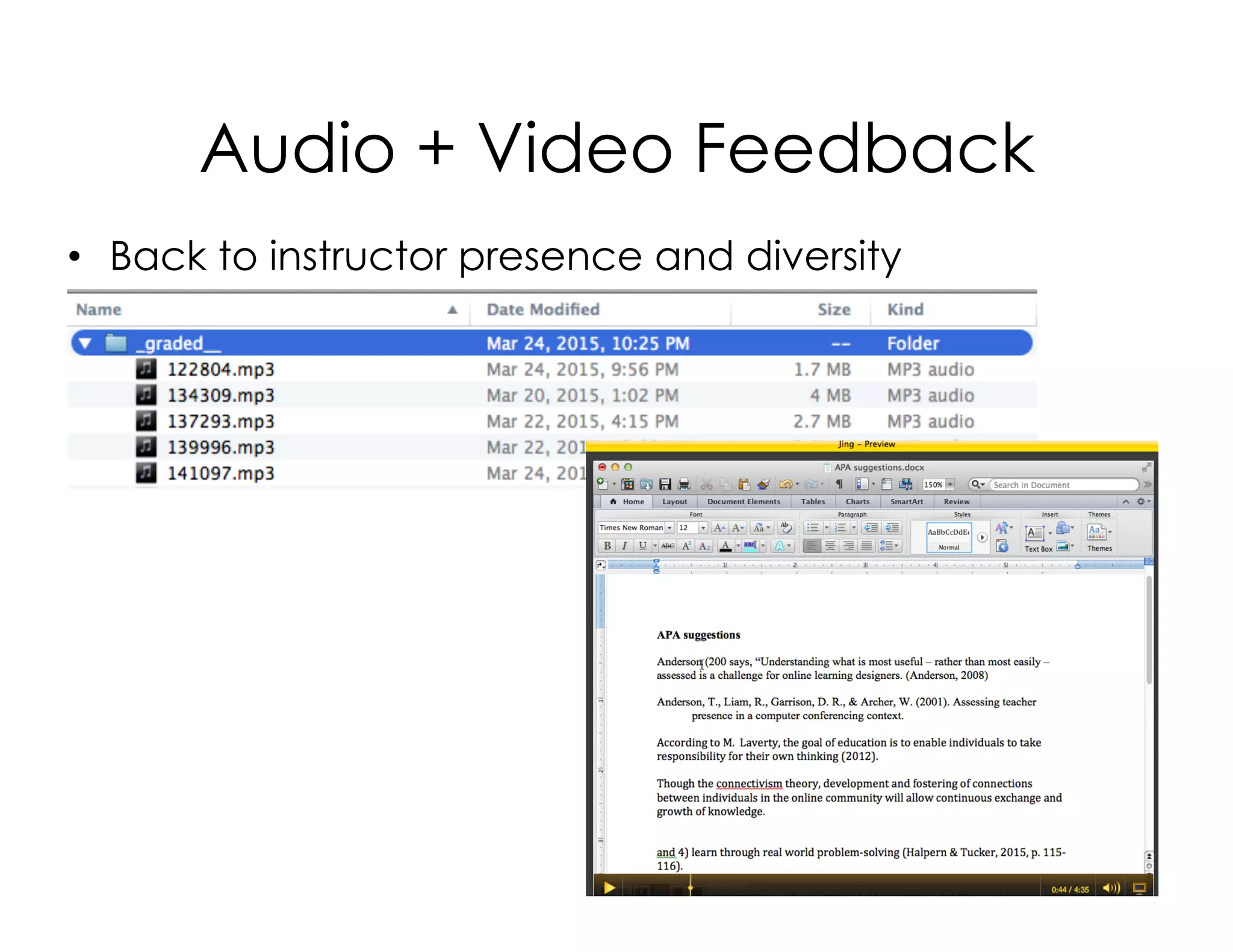
Audio + Video Feedback
•  Back to instructor presence and diversity
Questions and open discussion
Interested in exploring more?
https://tinyurl.com/designSuggestions
http://tec-variety.com/
Thank you!
www.veletsianos.com
www.veletsianos.com/publications
@veletsianos on Twitter
veletsianos@gmail.com
These slides: www.slideshare.com/veletsianos

Strategies for Designing Online Courses that are Effective, Engaging, Efficient, and above all... a bit awesome!

  • 1.
    SET Presents @RRU- March 2018 Strategies for Designing Online Courses George Veletsianos, PhD Professor Canada Research Chair School of Education & Technology
  • 2.
    Goals share some ofthe work being done in SET, explore various activities beyond the Moodle discussion board, and learn from one another.
  • 3.
    A very quickoverview of the MA in Learning & Technology What is it? Who is it for? Design: Openness, Networked learning, Digital mindset Moodle + Wordpress + Social media (e.g., #RRUMALAT) + RSS
  • 4.
    In designing learningexperiences, what are your goals? e3 – effective, efficient, engaging learning Others?
  • 5.
    In designing learningexperiences, what are your goals? e3 – effective, efficient, engaging learning Others? •  “Good” •  Transformative
  • 6.
    What are someof your favorite course activities? Why?
  • 7.
  • 8.
    Organized and Sequenced – Deadline calendar –  Establishing a rhythm: Standardized sequence à familiarity –  Check-ins (e.g., 1-1 phone/skype chat) –  Discussion flow (post by? Respond by?) –  Clear expectations
  • 9.
  • 10.
  • 11.
    Using a diversearray of activities… – Discussions – Drawings – Videos – Digital stories – Contemporary debates in your field – Concept mapping – Professional communities - socialization – Case studies – Solving problems
  • 12.
    What are someways that you ask students to introduce themselves?
  • 13.
    •  Superhero Students Youare to create a drawing of yourself to share with the rest of the class. Your drawing should portray you as a superhero and include your superhero name Use your creativity to create a representation of yourself so that we learn more about each other. You can use pen/pencils/crayons and paper, or a graphics program to do this. –  Adapted from Dunlap & Lowenthal: http://www.ucdenver.edu/academics/CUOnline/FacultyResources/additionalResources/ Handbook/cuonlinehandbook2011/Documents/chapter10.pdf What are some ways that you ask students to introduce themselves?
  • 14.
    •  Mine lookslike this. •  Why?
  • 15.
    •  Music videos Locatea music video on youtube.com that describes you and post it below, along with a message for the rest of the class explaining why this music video describes you. Caution: A lot of music videos contain language and imagery which may be offensive. Please review the lyrics & watch the whole video prior to posting it to ensure that it is appropriate. What are some other ways that you ask students to introduce themselves?
  • 16.
    •  Music videos Whatare some other ways that you ask students to introduce themselves?
  • 17.
    Stories & digitalstorytelling •  Instructors telling stories •  Students creating stories – screencasts, comics, audio narration tools Jing
  • 18.
    Stories & digitalstorytelling
  • 19.
    Weekly video updates: Socialpresence - Teaching presence
  • 21.
    Embedding your personality(memes, online cultures, current affairs) By Royce Kimmons Introduction to online learning course: http://courses.doceocenter.org/theoretical_foundations_online_learning
  • 22.
    Discussions/debates driven byreal- world data - Twitter https://twitter.com/search-home
  • 23.
    Discussions/debates driven byreal- world data - Newspapers
  • 24.
    Discussions/debates driven byreal- world data – Comments
  • 26.
    Discussions/debates driven byreal- world data – Blogs posts
  • 27.
  • 28.
  • 29.
    Concept Mapping: Keepingup-to-date and connecting all the pieces
  • 30.
    Concept Mapping: Keepingup-to-date and connecting all the pieces
  • 31.
    Concept Mapping: Keepingup-to-date and connecting all the pieces
  • 32.
    Concept Mapping: Keepingup-to-date and connecting all the pieces
  • 33.
    Video-related activities •  Contentdelivery (reusing video) or examining video artifacts – Youtube, Vimeo, TED, Amazon, iTunes
  • 34.
    Video-related activities •  Additionalideas – Record an elevator speech – Find, share, and comment – Identify misconceptions in existing videos – Film and share roleplays
  • 35.
    Introduce learners toprofessional communities – Professional listservs e.g., Tomorrow’s Professor – Blogging communities – Social Networking Sites (e.g., LinkedIn discussion groups, Facebook groups) – Ask students to attend a virtual conference and do X (reflect/summarize/ etc)
  • 36.
    Authoring Open E-booksand Open Textbooks •  Create worthwhile digital artifacts as a class (&make available to others) à Replacing disposable assignments with those that add value to the Word (David Wiley)
  • 37.
    Authoring Open E-booksand Open Textbooks •  Work with your instructional designer to figure out the best platform for creating the e-book (Wiki? A dedicated website? A collection of Google documents?)
  • 38.
    Course book clubs • As a class, select a few books that are of interest •  (allow choice in reading/listening the books to accommodate student preferences/life) •  Task teams with analyzing and presenting
  • 39.
    Audio + VideoFeedback •  Back to instructor presence and diversity
  • 40.
  • 41.
    Interested in exploringmore? https://tinyurl.com/designSuggestions http://tec-variety.com/
  • 42.
    Thank you! www.veletsianos.com www.veletsianos.com/publications @veletsianos onTwitter veletsianos@gmail.com These slides: www.slideshare.com/veletsianos