TEACHING AND
LEARNING STANDARDS

Laura Chambless
St. Clair RESA Consultant
www.protopage.com/lchambless
Agenda
 Opening discussion
 Teaching & Learning Standards

 Using Higher Order Thinking verbs and
questions
 Watch teaching videos to find the Teaching &

Learning Standards
 Why are this so important?
Eric Mazur: Professor of
Physics and Applied Physics
at Harvard University
“ I thought I was a good teacher until I
discovered my students were just
memorizing information rather than
learning to understand the material. Who
was to blame? The students? The material?
The teacher?”
What is the reason for your students not doing well? Vote
Learning Target
 Evaluate the four standards of

Teaching and Learning and reflect
how you are using them in your
classroom.
Four Standards for Authentic
Teaching and Learning
 What are they?
 Where to find them?
 Intent of standards?
 Why we need them?
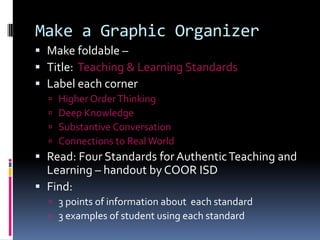
Make a Graphic Organizer
 Make foldable –
 Title: Teaching & Learning Standards
 Label each corner





Higher Order Thinking
Deep Knowledge
Substantive Conversation
Connections to Real World

 Read: Four Standards for Authentic Teaching and
Learning – handout by COOR ISD
 Find:
 3 points of information about each standard
 3 examples of student using each standard
Hold a Debate- Defend Your
Standard
Finishing Question: (write on back of foldable)
Which standard is the most important? Why
Discuss in small groups
each person reads and defends answer with
evidence
How does the 4 standards
change our teaching and
student learning?
Analyzing MDE Videos
 Visit Laura’s Protopage
 http://www.michigan.gov/mde/0,4615,7-140-

5235_53792-219150--,00.html

 Pick Partner and watch same video

 Pick a video according to your grade level.
 Listen to video
 Look at the lesson plan
 Discuss PD questions with a partner
Analyzing 3 Ways Video
 Engaging Students in Direct Instruction:

https://www.teachingchannel.org/videos/dire
ct-instruction-lesson-tips
 Watch video and take notes on the four

Teaching and Learning Standards.
 After video, make a generalization about the

four standards.
Small Group Discussion about
Video
 Form groups of 3 and compare answers
 Add other peoples answers to your page when

needed
 Come up with a group consensus for the
generalization
 Share consensus with another group
Why are Teaching and
Learning Standards Important
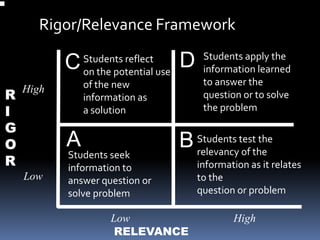
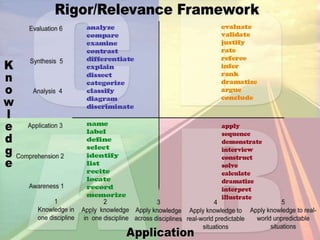
Rigor/Relevance Framework

C
R
I
G
O
R

High

A
Low

Students reflect
on the potential use
of the new
information as
a solution

Students seek
information to
answer question or
solve problem

D

Students apply the
information learned
to answer the
question or to solve
the problem

the
B Students testthe
relevancy of

Low
RELEVANCE

information as it relates
to the
question or problem

High
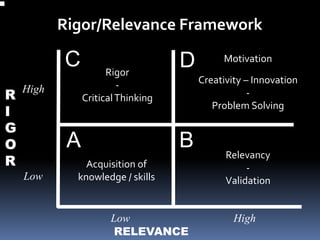
Rigor/Relevance Framework

C
R
I
G
O
R

High

Rigor
Critical Thinking

A
Low

D

Motivation
Creativity – Innovation
Problem Solving

B

Acquisition of
knowledge / skills

Low
RELEVANCE

Relevancy
Validation

High
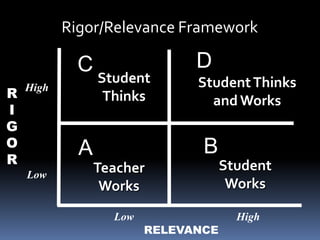
Rigor/Relevance Framework

C
R
I
G
O
R

High

Student
Thinks

Student Thinks
and Works

B

A
Low

D

Teacher
Works
Low

RELEVANCE

Student
Works
High
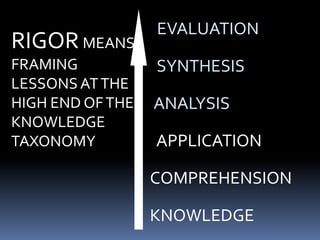
RIGOR MEANS
FRAMING
LESSONS AT THE
HIGH END OF THE
KNOWLEDGE
TAXONOMY

EVALUATION
SYNTHESIS
ANALYSIS

APPLICATION
COMPREHENSION
KNOWLEDGE
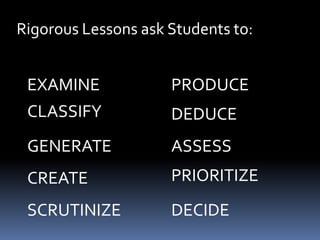
Rigorous Lessons ask Students to:

EXAMINE

PRODUCE

CLASSIFY

DEDUCE

GENERATE

ASSESS

CREATE

PRIORITIZE

SCRUTINIZE

DECIDE
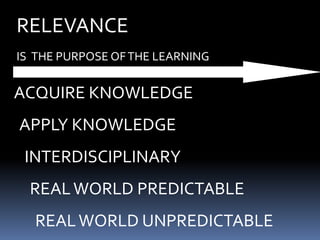
RELEVANCE
IS THE PURPOSE OF THE LEARNING

ACQUIRE KNOWLEDGE
APPLY KNOWLEDGE
INTERDISCIPLINARY

REAL WORLD PREDICTABLE
REAL WORLD UNPREDICTABLE
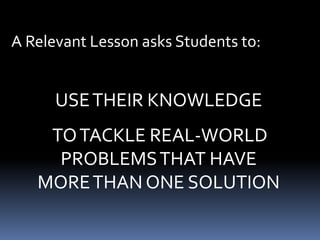
A Relevant Lesson asks Students to:

USE THEIR KNOWLEDGE
TO TACKLE REAL-WORLD
PROBLEMS THAT HAVE
MORE THAN ONE SOLUTION
Eric Mazur
 “ I thought I was a good teacher until I discovered
my students were just memorizing information

rather than learning to understand the material.
Who was to blame? The students? The material?
The teacher?”

 Who was to blame?
Learning Target
 Evaluate the four standards of

Teaching and Learning and reflect
how you are using them in your
classroom.
Ticket Out the Door
 On the back of your evaluation, answer the
following:
 Now I know…
 Now I am going to implement …

Teaching and learning standards 2012

  • 1.
    TEACHING AND LEARNING STANDARDS LauraChambless St. Clair RESA Consultant www.protopage.com/lchambless
  • 2.
    Agenda  Opening discussion Teaching & Learning Standards  Using Higher Order Thinking verbs and questions  Watch teaching videos to find the Teaching & Learning Standards  Why are this so important?
  • 3.
    Eric Mazur: Professorof Physics and Applied Physics at Harvard University “ I thought I was a good teacher until I discovered my students were just memorizing information rather than learning to understand the material. Who was to blame? The students? The material? The teacher?” What is the reason for your students not doing well? Vote
  • 4.
    Learning Target  Evaluatethe four standards of Teaching and Learning and reflect how you are using them in your classroom.
  • 5.
    Four Standards forAuthentic Teaching and Learning  What are they?  Where to find them?  Intent of standards?  Why we need them?
  • 6.
    Make a GraphicOrganizer  Make foldable –  Title: Teaching & Learning Standards  Label each corner     Higher Order Thinking Deep Knowledge Substantive Conversation Connections to Real World  Read: Four Standards for Authentic Teaching and Learning – handout by COOR ISD  Find:  3 points of information about each standard  3 examples of student using each standard
  • 7.
    Hold a Debate-Defend Your Standard Finishing Question: (write on back of foldable) Which standard is the most important? Why Discuss in small groups each person reads and defends answer with evidence
  • 8.
    How does the4 standards change our teaching and student learning?
  • 9.
    Analyzing MDE Videos Visit Laura’s Protopage  http://www.michigan.gov/mde/0,4615,7-140- 5235_53792-219150--,00.html  Pick Partner and watch same video  Pick a video according to your grade level.  Listen to video  Look at the lesson plan  Discuss PD questions with a partner
  • 10.
    Analyzing 3 WaysVideo  Engaging Students in Direct Instruction: https://www.teachingchannel.org/videos/dire ct-instruction-lesson-tips  Watch video and take notes on the four Teaching and Learning Standards.  After video, make a generalization about the four standards.
  • 11.
    Small Group Discussionabout Video  Form groups of 3 and compare answers  Add other peoples answers to your page when needed  Come up with a group consensus for the generalization  Share consensus with another group
  • 12.
    Why are Teachingand Learning Standards Important
  • 13.
    Rigor/Relevance Framework C R I G O R High A Low Students reflect onthe potential use of the new information as a solution Students seek information to answer question or solve problem D Students apply the information learned to answer the question or to solve the problem the B Students testthe relevancy of Low RELEVANCE information as it relates to the question or problem High
  • 15.
    Rigor/Relevance Framework C R I G O R High Rigor Critical Thinking A Low D Motivation Creativity– Innovation Problem Solving B Acquisition of knowledge / skills Low RELEVANCE Relevancy Validation High
  • 16.
    Rigor/Relevance Framework C R I G O R High Student Thinks Student Thinks andWorks B A Low D Teacher Works Low RELEVANCE Student Works High
  • 17.
    RIGOR MEANS FRAMING LESSONS ATTHE HIGH END OF THE KNOWLEDGE TAXONOMY EVALUATION SYNTHESIS ANALYSIS APPLICATION COMPREHENSION KNOWLEDGE
  • 18.
    Rigorous Lessons askStudents to: EXAMINE PRODUCE CLASSIFY DEDUCE GENERATE ASSESS CREATE PRIORITIZE SCRUTINIZE DECIDE
  • 19.
    RELEVANCE IS THE PURPOSEOF THE LEARNING ACQUIRE KNOWLEDGE APPLY KNOWLEDGE INTERDISCIPLINARY REAL WORLD PREDICTABLE REAL WORLD UNPREDICTABLE
  • 20.
    A Relevant Lessonasks Students to: USE THEIR KNOWLEDGE TO TACKLE REAL-WORLD PROBLEMS THAT HAVE MORE THAN ONE SOLUTION
  • 21.
    Eric Mazur  “I thought I was a good teacher until I discovered my students were just memorizing information rather than learning to understand the material. Who was to blame? The students? The material? The teacher?”  Who was to blame?
  • 22.
    Learning Target  Evaluatethe four standards of Teaching and Learning and reflect how you are using them in your classroom.
  • 23.
    Ticket Out theDoor  On the back of your evaluation, answer the following:  Now I know…  Now I am going to implement …