Math Fluency for
ALL
Students
Laura Chambless & Natalie Adair
SCC RESA Consultants
www.protopage.com/lchambless
www.protopage.com/adair.natalie
Learning Target
I can reach all learners, through
engaging activities, while
knowing which phase
(counting, reasoning, and
retrieval) students are in to
build basic math fact fluency.
Goal
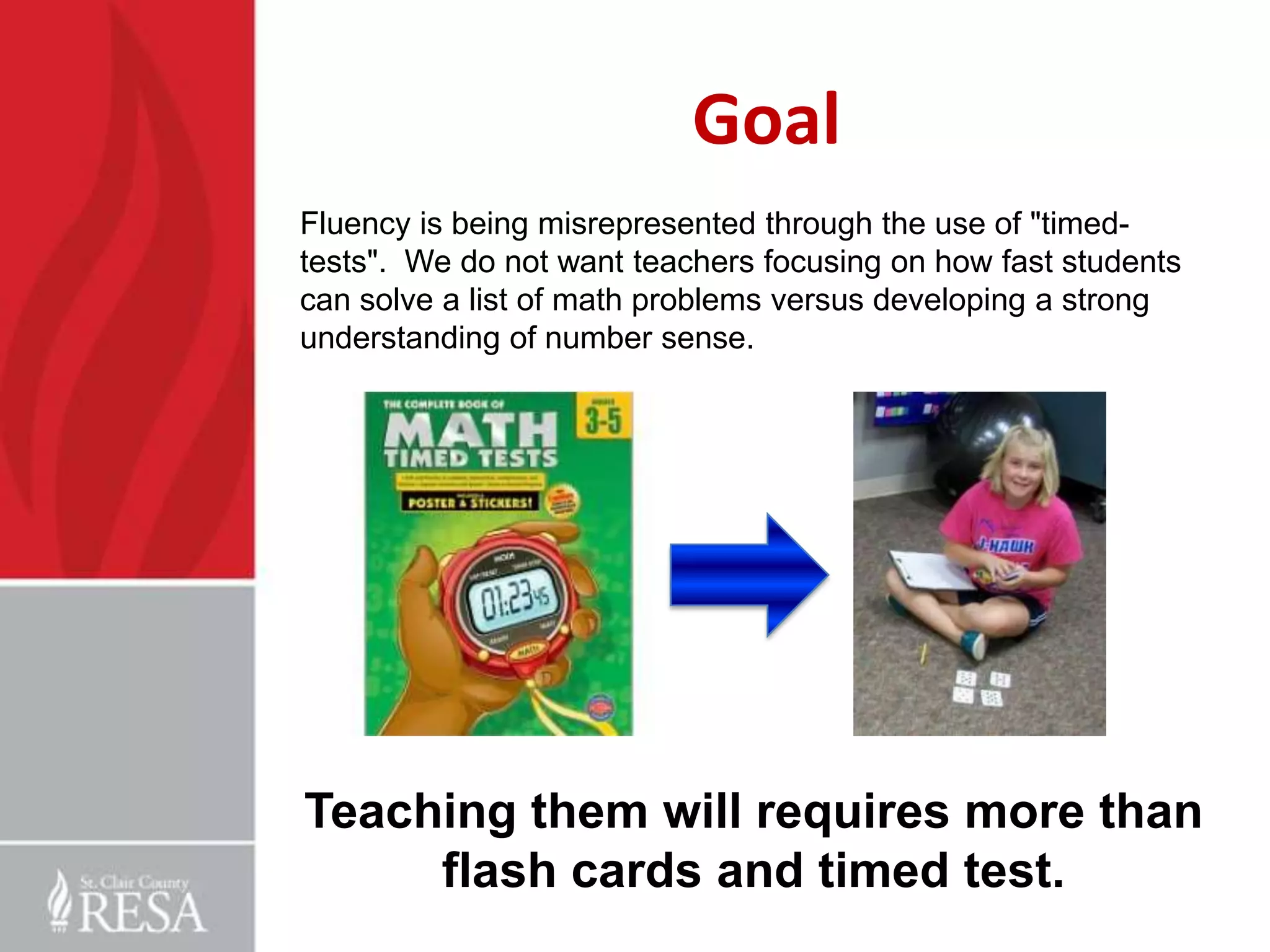
Fluency is being misrepresented through the use of "timedtests". We do not want teachers focusing on how fast students
can solve a list of math problems versus developing a strong
understanding of number sense.

Teaching them will requires more than
flash cards and timed test.
What are basic facts?
When addends or factors are
less than 10
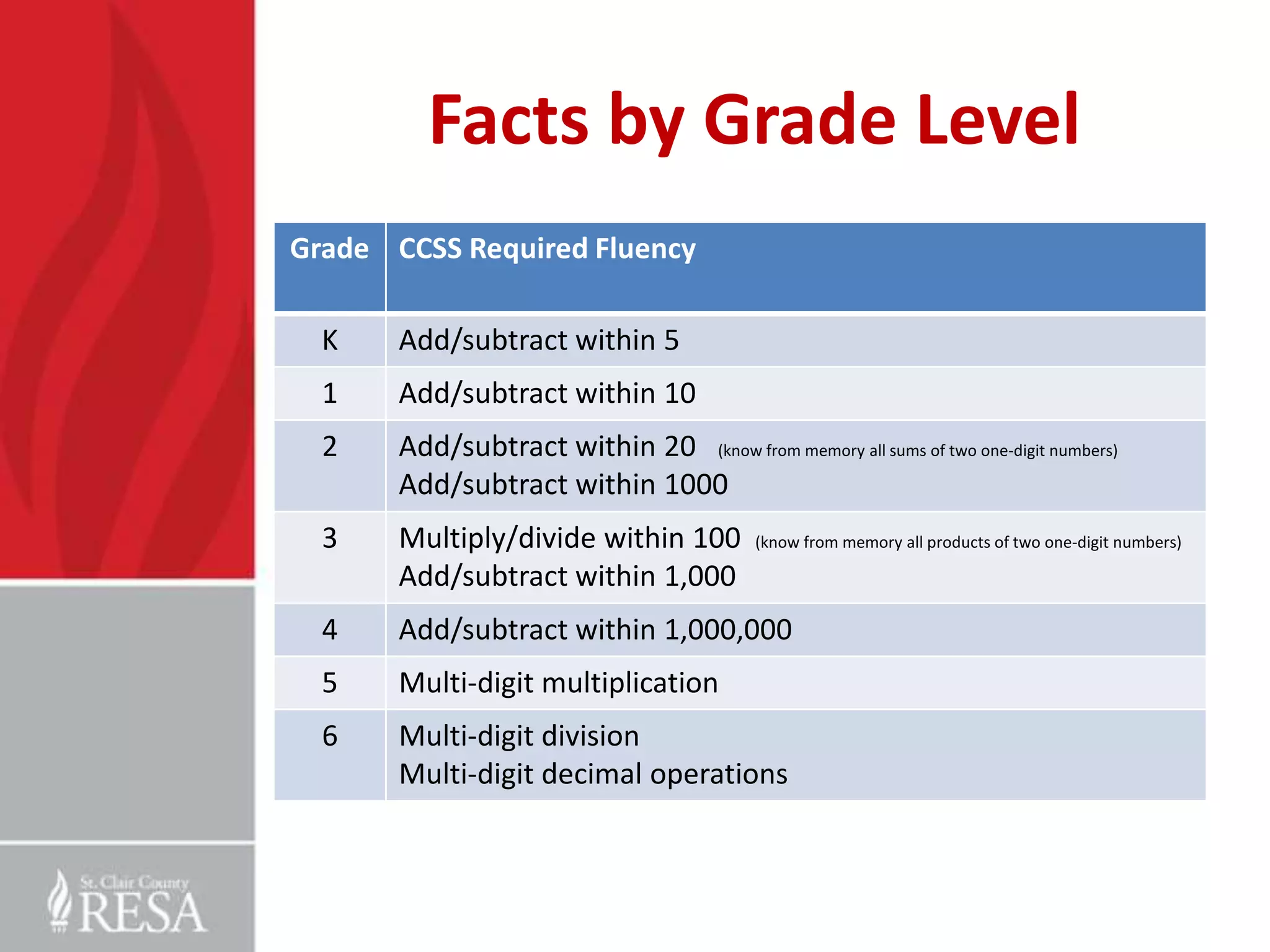
Facts by Grade Level
Grade CCSS Required Fluency
K

Add/subtract within 5

1

Add/subtract within 10

2

Add/subtract within 20 (know from memory all sums of two one-digit numbers)
Add/subtract within 1000

3

Multiply/divide within 100
Add/subtract within 1,000

4

Add/subtract within 1,000,000

5

Multi-digit multiplication

6

Multi-digit division
Multi-digit decimal operations

(know from memory all products of two one-digit numbers)
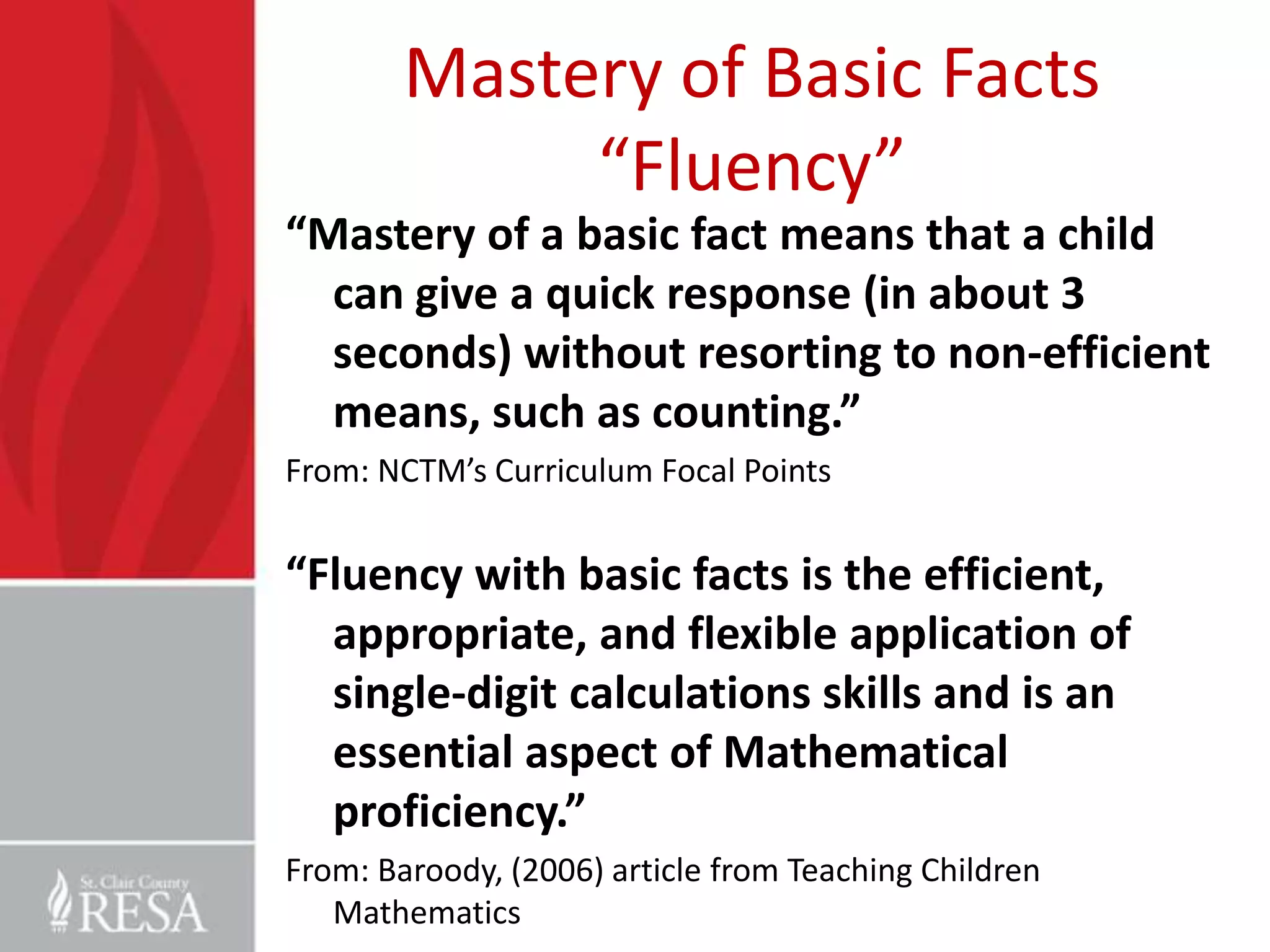
Mastery of Basic Facts
“Fluency”
“Mastery of a basic fact means that a child
can give a quick response (in about 3
seconds) without resorting to non-efficient
means, such as counting.”
From: NCTM’s Curriculum Focal Points

“Fluency with basic facts is the efficient,
appropriate, and flexible application of
single-digit calculations skills and is an
essential aspect of Mathematical
proficiency.”
From: Baroody, (2006) article from Teaching Children
Mathematics
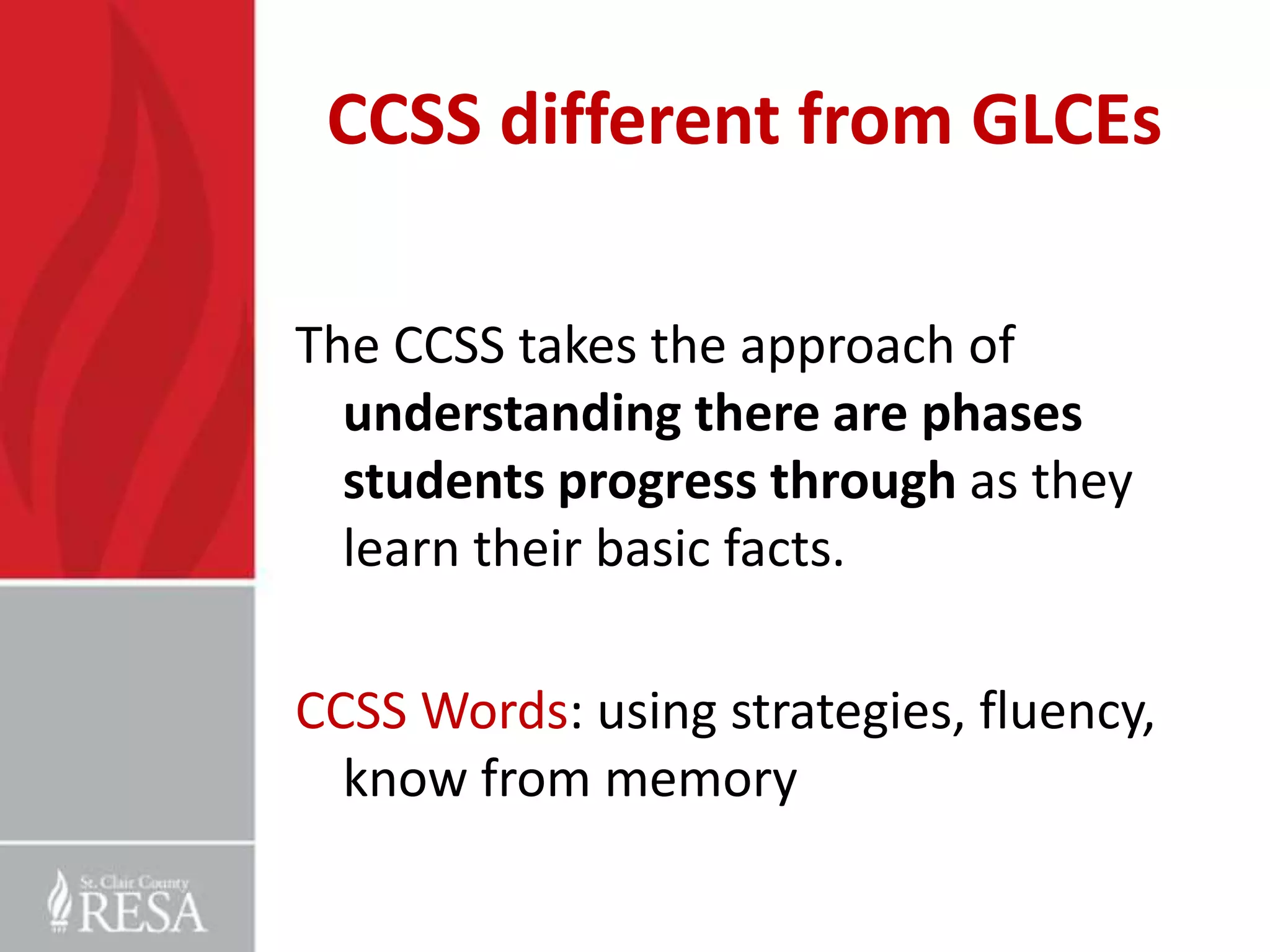
CCSS different from GLCEs
The CCSS takes the approach of
understanding there are phases
students progress through as they
learn their basic facts.
CCSS Words: using strategies, fluency,
know from memory
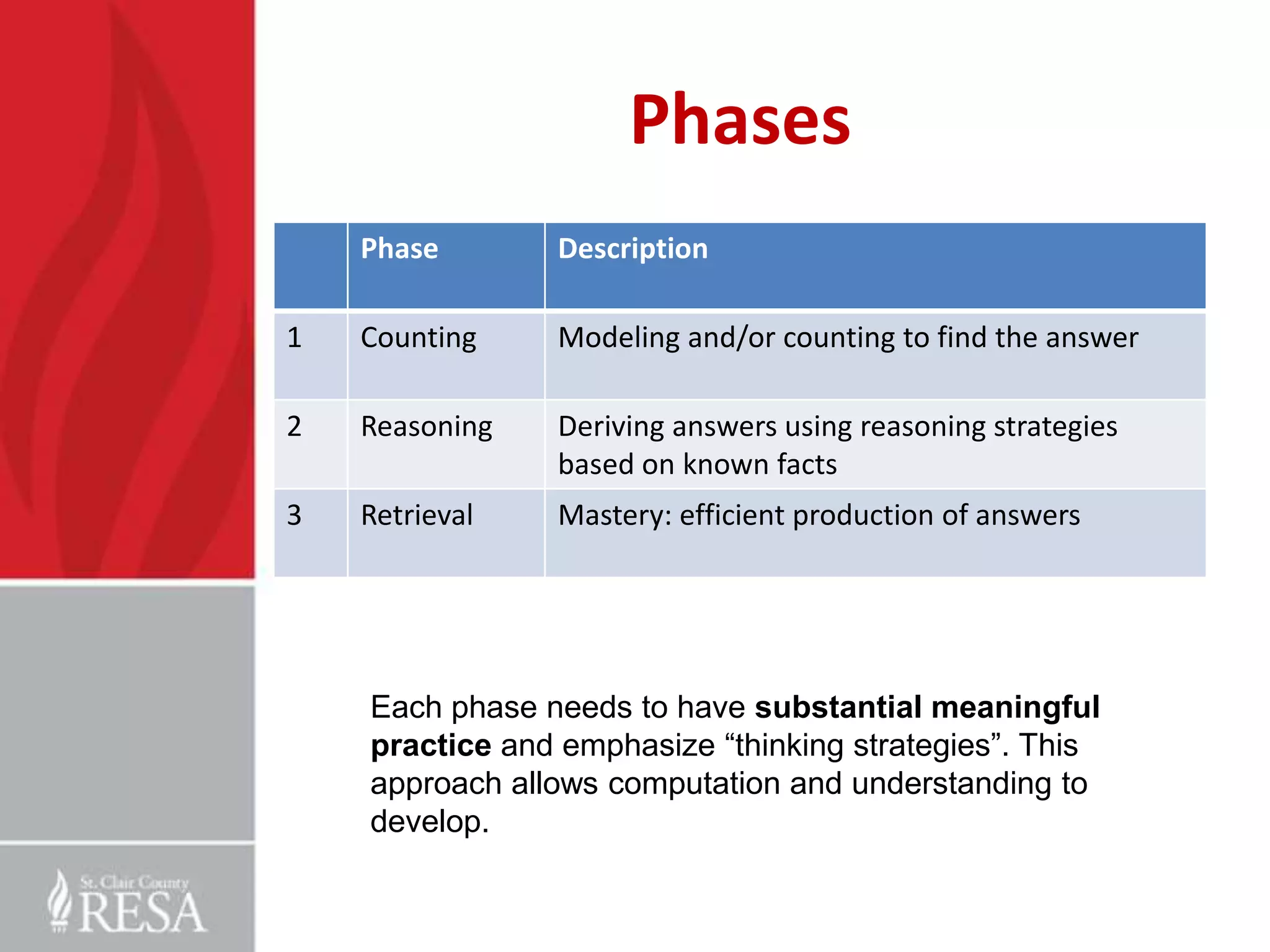
Phases
Phase

Description

1

Counting

Modeling and/or counting to find the answer

2

Reasoning

Deriving answers using reasoning strategies
based on known facts

3

Retrieval

Mastery: efficient production of answers

Each phase needs to have substantial meaningful
practice and emphasize “thinking strategies”. This
approach allows computation and understanding to
develop.
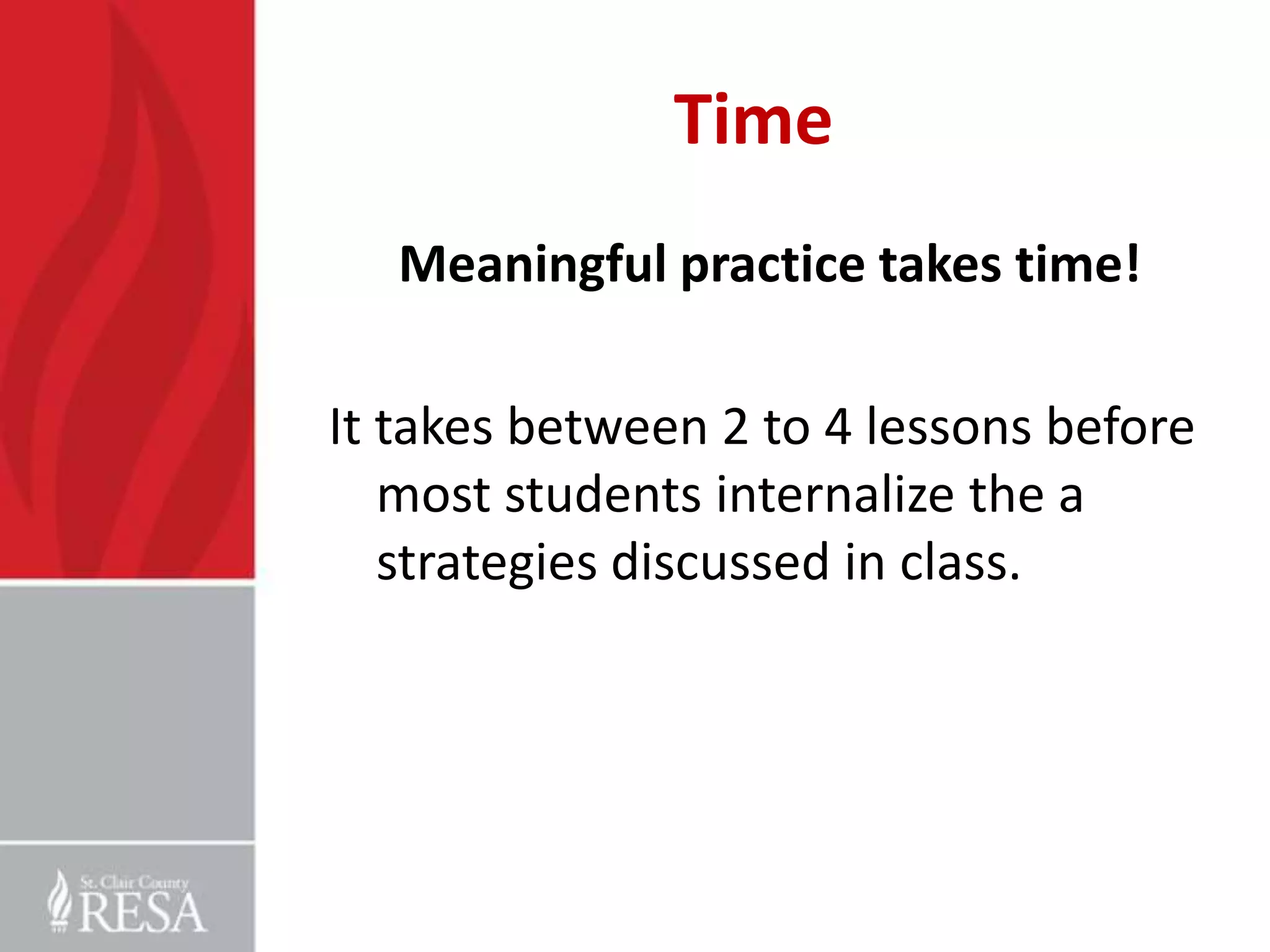
Time
Meaningful practice takes time!
It takes between 2 to 4 lessons before
most students internalize the a
strategies discussed in class.
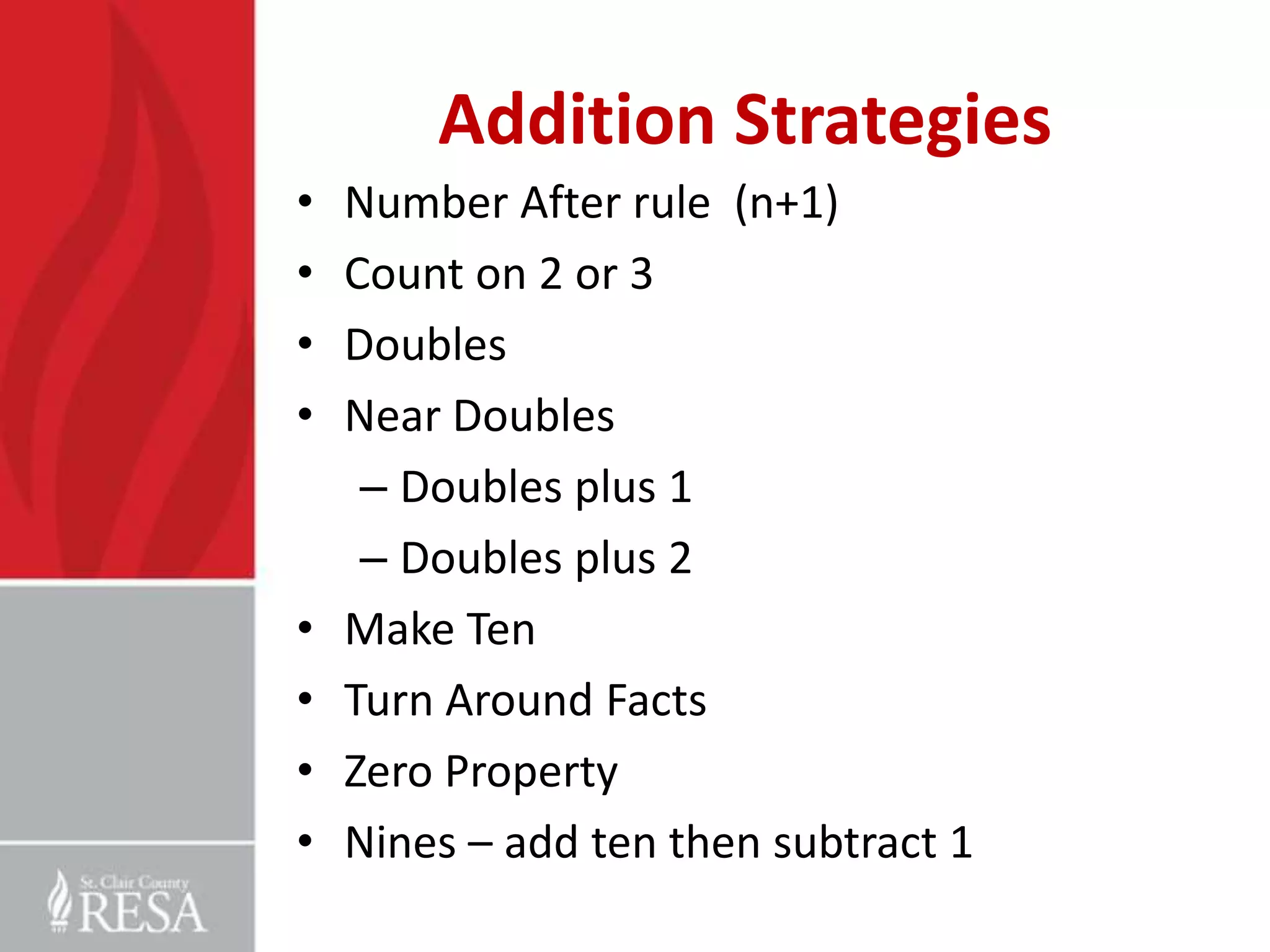
Addition Strategies
•
•
•
•

•
•
•
•

Number After rule (n+1)
Count on 2 or 3
Doubles
Near Doubles
– Doubles plus 1
– Doubles plus 2
Make Ten
Turn Around Facts
Zero Property
Nines – add ten then subtract 1
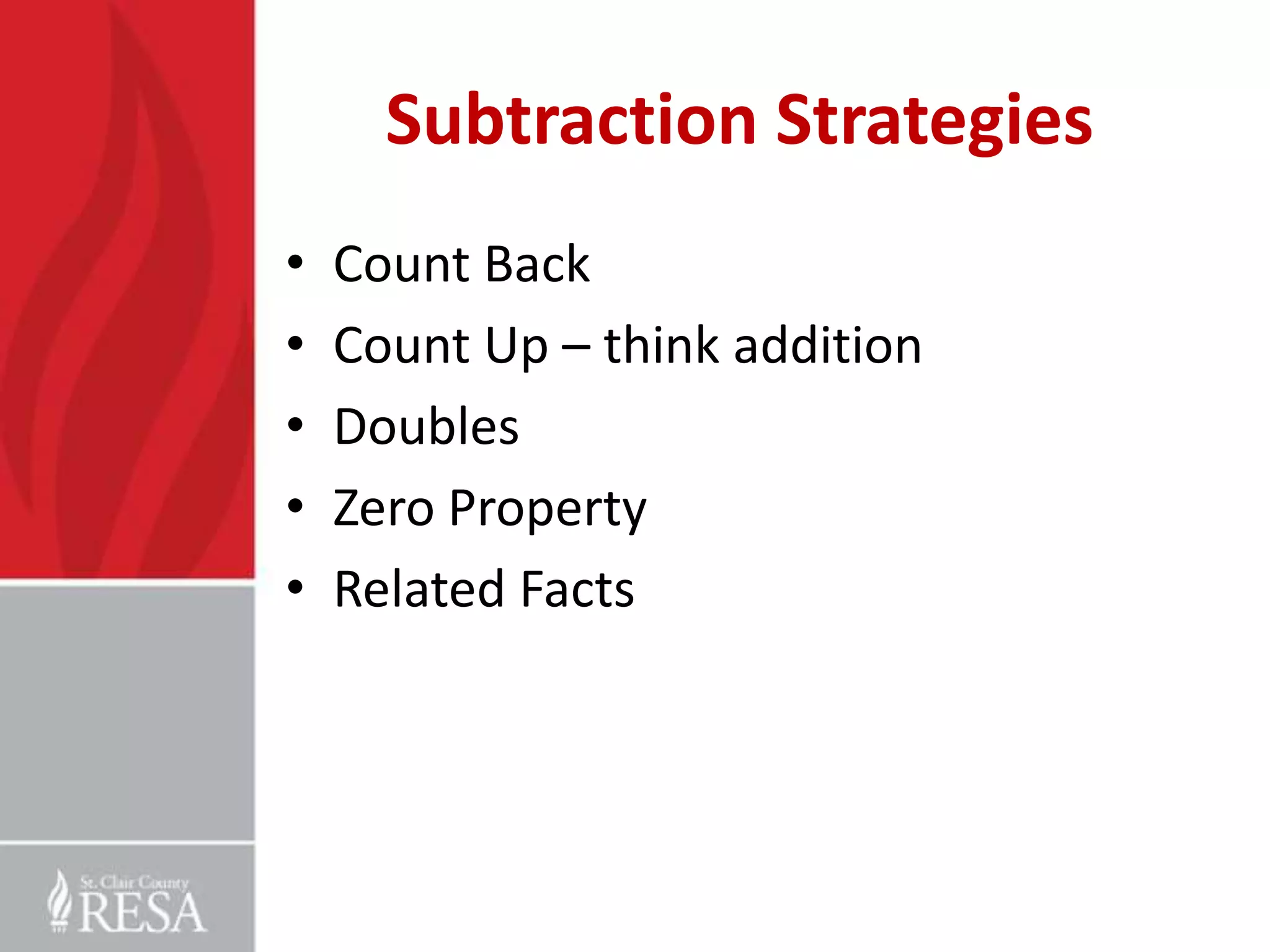
Subtraction Strategies
•
•
•
•
•

Count Back
Count Up – think addition
Doubles
Zero Property
Related Facts
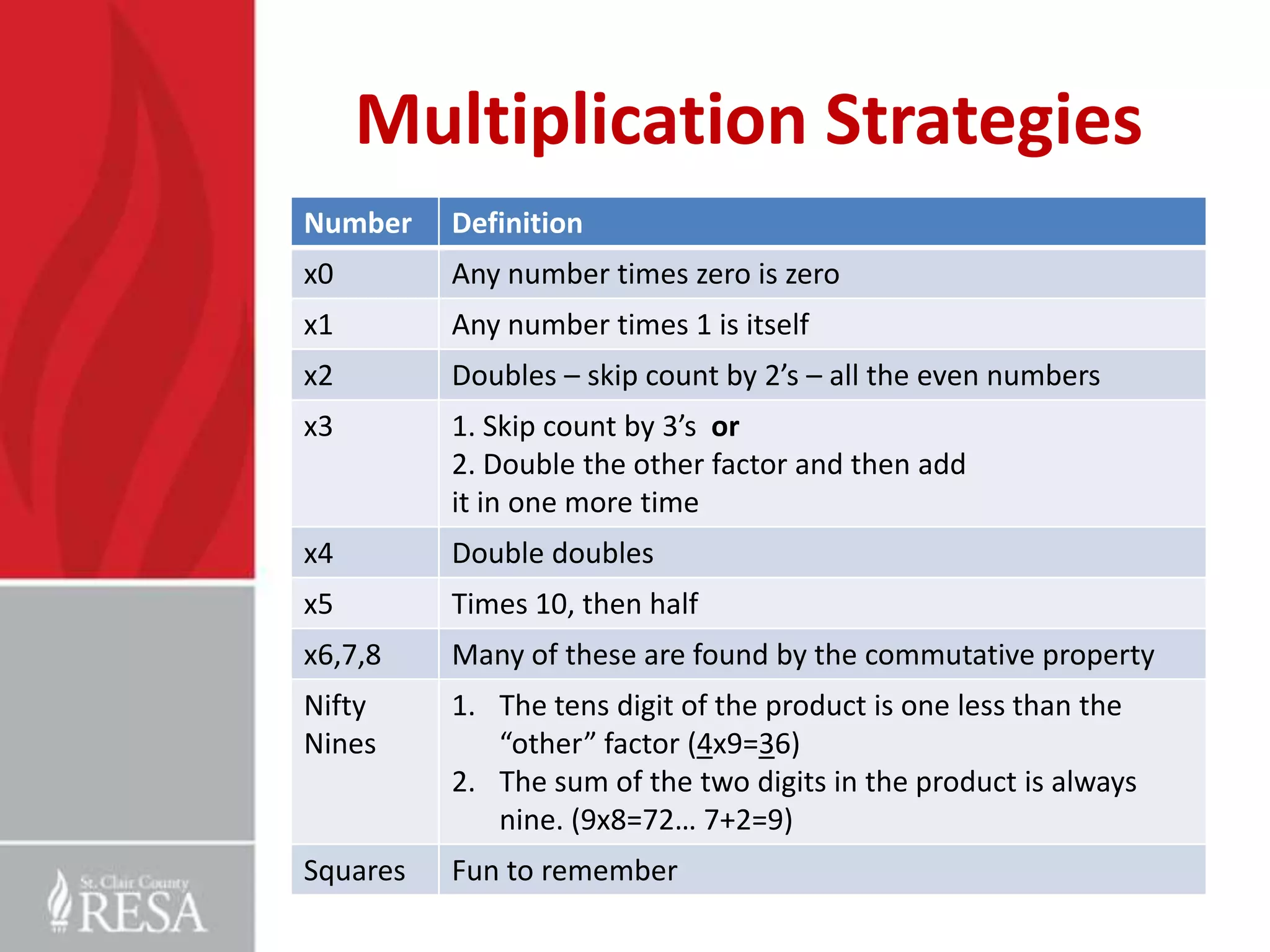
Multiplication Strategies
Number

Definition

x0

Any number times zero is zero

x1

Any number times 1 is itself

x2

Doubles – skip count by 2’s – all the even numbers

x3

1. Skip count by 3’s or
2. Double the other factor and then add
it in one more time

x4

Double doubles

x5

Times 10, then half

x6,7,8

Many of these are found by the commutative property

Nifty
Nines

1. The tens digit of the product is one less than the
“other” factor (4x9=36)
2. The sum of the two digits in the product is always
nine. (9x8=72… 7+2=9)

Squares

Fun to remember
Division Strategies
• Division as Think Multiplication
• 2s,4s,8s: Use halving rule

Multiplication Fact Posters & Division Fact Posters
http://www2.carrollk12.org/instruction/elemcurric/math/tba
sicfacts.HTM
Daily Instruction
• After initial class lessons on specific
strategies
• Use activities to guide students
through phase 1 and 2 and into
phase 3
• 5 – 10 minutes a day
Five A Day
http://www2.carrollk12.org/instruction/elemcurric/
math/tbasicfacts.HTM
Phase 1 Activities (Counting)
Addition/Subtraction
• Addition
– One More Than and Two More Than with
Dice and Spinner (Van De Walle)
– Pick Two Numbers: Math Mountains with
Tiny Tumblers (Singapore/Math Expression)
– Ten Friend Game using Ten Frames

• Subtraction
– Ten Frame Subtracting (Carroll County Schools)
http://www2.carrollk12.org/instruction/elemcurric/math/tbasicfacts.HTM

– Ten Partner Subtraction
– Pick Two Numbers:Math Mountains with Tiny
Tumblers (Singapore/Math Expression
Phase 1 Activities (Counting)
Multiplication/Division
• Multiplication
– Clock Facts (Van De Walle)
– Yay For Arrays! (E is for Explore!)
– Explore Multiplication (E is for Explore!)

• Division
– Yay For Arrays! For Division
– Dot Array Fact Families(Numbered
Heads Together)
Learning Target
I can reach all learners, through
engaging activities, while
knowing which phase
(counting, reasoning, and
retrieval) students are in to
build basic math fact fluency.

Math fluency for all students ppt

  • 1.
    Math Fluency for ALL Students LauraChambless & Natalie Adair SCC RESA Consultants www.protopage.com/lchambless www.protopage.com/adair.natalie
  • 2.
    Learning Target I canreach all learners, through engaging activities, while knowing which phase (counting, reasoning, and retrieval) students are in to build basic math fact fluency.
  • 3.
    Goal Fluency is beingmisrepresented through the use of "timedtests". We do not want teachers focusing on how fast students can solve a list of math problems versus developing a strong understanding of number sense. Teaching them will requires more than flash cards and timed test.
  • 4.
    What are basicfacts? When addends or factors are less than 10
  • 5.
    Facts by GradeLevel Grade CCSS Required Fluency K Add/subtract within 5 1 Add/subtract within 10 2 Add/subtract within 20 (know from memory all sums of two one-digit numbers) Add/subtract within 1000 3 Multiply/divide within 100 Add/subtract within 1,000 4 Add/subtract within 1,000,000 5 Multi-digit multiplication 6 Multi-digit division Multi-digit decimal operations (know from memory all products of two one-digit numbers)
  • 6.
    Mastery of BasicFacts “Fluency” “Mastery of a basic fact means that a child can give a quick response (in about 3 seconds) without resorting to non-efficient means, such as counting.” From: NCTM’s Curriculum Focal Points “Fluency with basic facts is the efficient, appropriate, and flexible application of single-digit calculations skills and is an essential aspect of Mathematical proficiency.” From: Baroody, (2006) article from Teaching Children Mathematics
  • 7.
    CCSS different fromGLCEs The CCSS takes the approach of understanding there are phases students progress through as they learn their basic facts. CCSS Words: using strategies, fluency, know from memory
  • 8.
    Phases Phase Description 1 Counting Modeling and/or countingto find the answer 2 Reasoning Deriving answers using reasoning strategies based on known facts 3 Retrieval Mastery: efficient production of answers Each phase needs to have substantial meaningful practice and emphasize “thinking strategies”. This approach allows computation and understanding to develop.
  • 9.
    Time Meaningful practice takestime! It takes between 2 to 4 lessons before most students internalize the a strategies discussed in class.
  • 10.
    Addition Strategies • • • • • • • • Number Afterrule (n+1) Count on 2 or 3 Doubles Near Doubles – Doubles plus 1 – Doubles plus 2 Make Ten Turn Around Facts Zero Property Nines – add ten then subtract 1
  • 11.
    Subtraction Strategies • • • • • Count Back CountUp – think addition Doubles Zero Property Related Facts
  • 12.
    Multiplication Strategies Number Definition x0 Any numbertimes zero is zero x1 Any number times 1 is itself x2 Doubles – skip count by 2’s – all the even numbers x3 1. Skip count by 3’s or 2. Double the other factor and then add it in one more time x4 Double doubles x5 Times 10, then half x6,7,8 Many of these are found by the commutative property Nifty Nines 1. The tens digit of the product is one less than the “other” factor (4x9=36) 2. The sum of the two digits in the product is always nine. (9x8=72… 7+2=9) Squares Fun to remember
  • 13.
    Division Strategies • Divisionas Think Multiplication • 2s,4s,8s: Use halving rule Multiplication Fact Posters & Division Fact Posters http://www2.carrollk12.org/instruction/elemcurric/math/tba sicfacts.HTM
  • 14.
    Daily Instruction • Afterinitial class lessons on specific strategies • Use activities to guide students through phase 1 and 2 and into phase 3 • 5 – 10 minutes a day Five A Day http://www2.carrollk12.org/instruction/elemcurric/ math/tbasicfacts.HTM
  • 15.
    Phase 1 Activities(Counting) Addition/Subtraction • Addition – One More Than and Two More Than with Dice and Spinner (Van De Walle) – Pick Two Numbers: Math Mountains with Tiny Tumblers (Singapore/Math Expression) – Ten Friend Game using Ten Frames • Subtraction – Ten Frame Subtracting (Carroll County Schools) http://www2.carrollk12.org/instruction/elemcurric/math/tbasicfacts.HTM – Ten Partner Subtraction – Pick Two Numbers:Math Mountains with Tiny Tumblers (Singapore/Math Expression
  • 16.
    Phase 1 Activities(Counting) Multiplication/Division • Multiplication – Clock Facts (Van De Walle) – Yay For Arrays! (E is for Explore!) – Explore Multiplication (E is for Explore!) • Division – Yay For Arrays! For Division – Dot Array Fact Families(Numbered Heads Together)
  • 17.
    Learning Target I canreach all learners, through engaging activities, while knowing which phase (counting, reasoning, and retrieval) students are in to build basic math fact fluency.