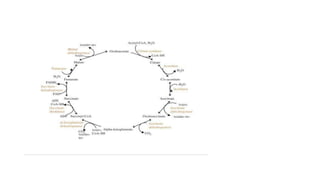
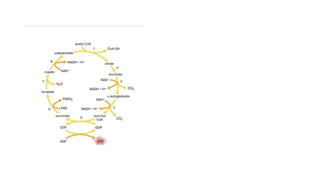
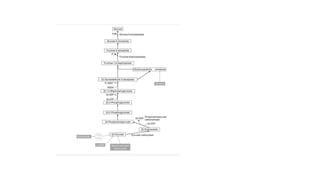
The TCA cycle, also known as the Krebs cycle or citric acid cycle, is the final common pathway for the oxidation of carbohydrates, fats, and proteins. It generates energy through the oxidation of acetyl-CoA derived from these nutrients and provides precursors for amino acid, nucleotide, and lipid synthesis. The cycle takes place in the matrix of mitochondria and involves 8 steps that completely oxidize acetyl-CoA to produce carbon dioxide and water while generating reduced cofactors NADH and FADH2. These cofactors then transfer electrons to the electron transport chain to facilitate ATP production through oxidative phosphorylation.