DeliveryDelivery of aof a
training seminartraining seminar
for adultsfor adults
R. Koncevičienė
Šakiai, 30 November 2017
11 hour allotted before the eventhour allotted before the event
to make it successfulto make it successful::
• To evaluate the suitability of the auditorium
and prepare the furniture
• To prepare the technical devices
• To Lay out the extra materials
• To prepare the environment
• To prepare the necessary notes
• To see to the equipment of the room
• To concentrate
The first impression isThe first impression is
made bymade by::
• appropriately prepared place of work
• competence demonstrated
• awareness of the subject revealed
• ability to establish and maintain relations
• inner positivity, ‘warm’ attitude
• appearance as part of non-verbal communication
TaskTask
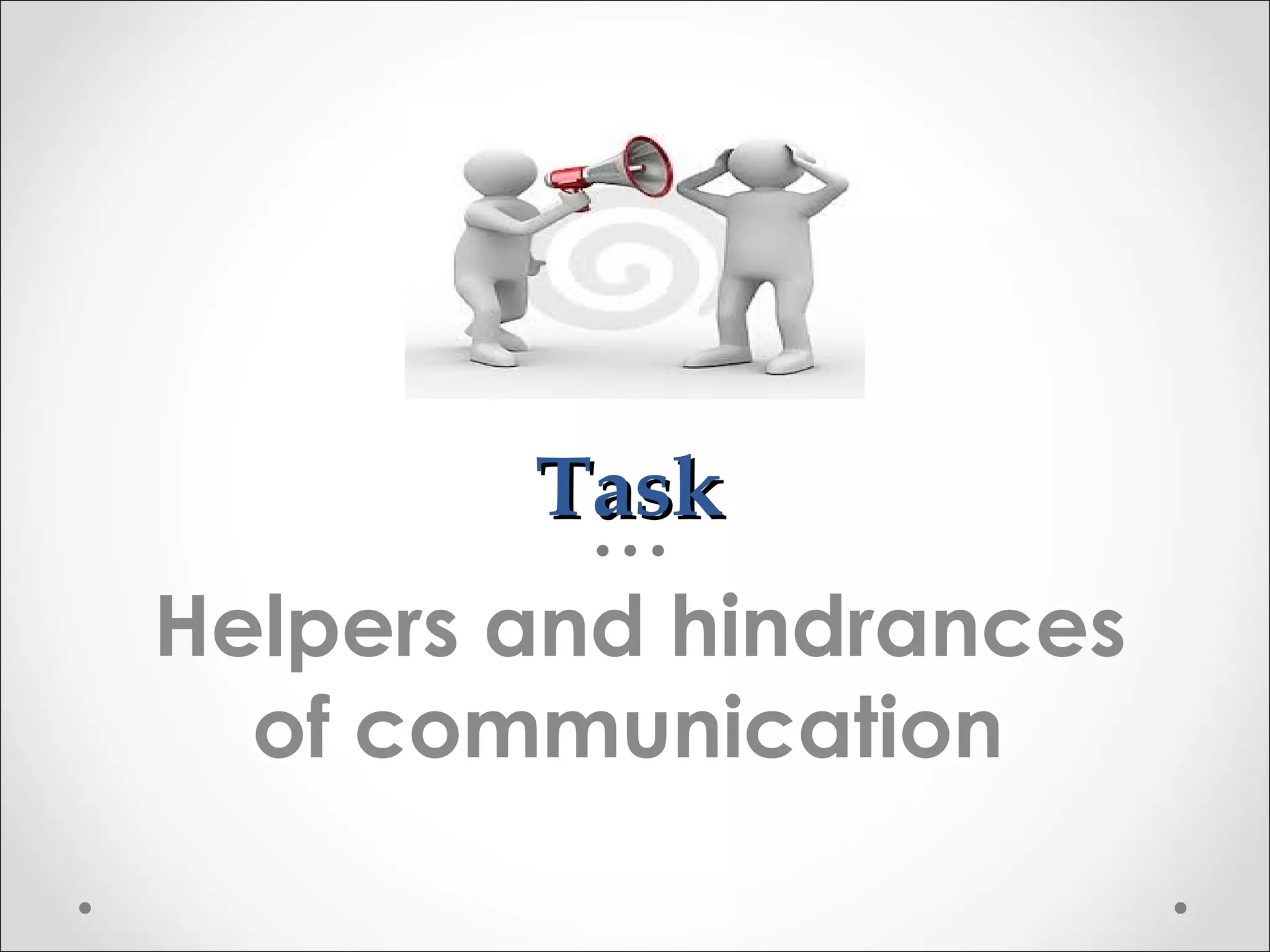
Helpers and hindrances
of communication
communicationcommunication
(after Watzlavik)(after Watzlavik)
4 AXIOMS:
1.Communication begins from the first minute
2.Communication proceeds on the level of content
and feelings
3.Specific vocabulary is used
What is the participantWhat is the participant
afraid ofafraid of??
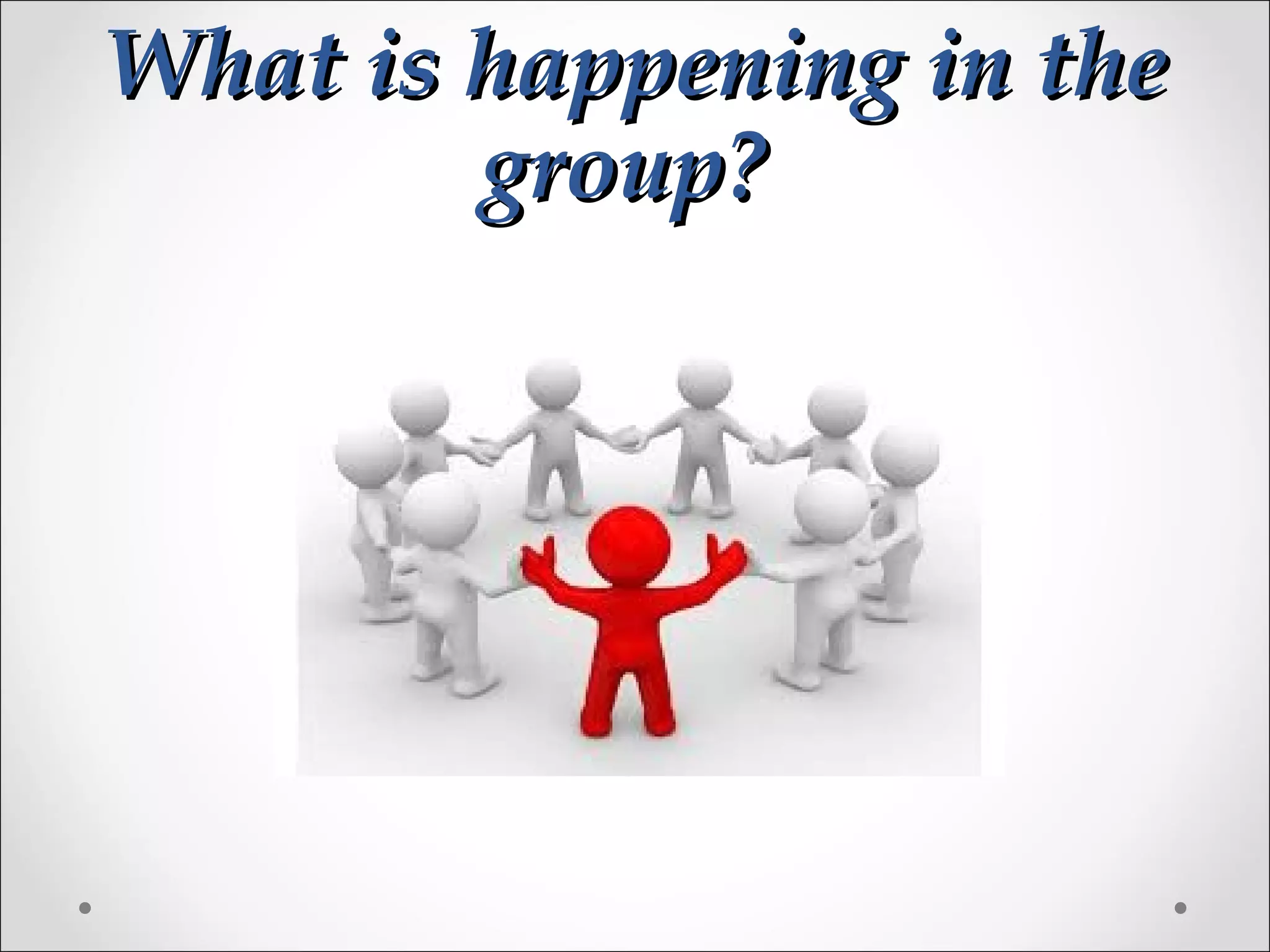
What is happening in theWhat is happening in the
groupgroup??
The beginning of theThe beginning of the
eventevent
The aim of the of the seminar is at the beginning of
the seminar to create a harmonious atmosphere,
with no fear
If it does not happen in the first half of the day, the
aims of the seminar are hardly achievable!
(Birkelbihl)
The beginning of successfulThe beginning of successful
communicationcommunication
 The trainer of the course:
Is aware of the goal of the event
Is able to choose the style of training
With a friendly attitude
Takes participants as they are
Demonstrates competence, takes
responsibility
Creates atmosphere secure for work and
communication
Keeps eye contact
The needs of the participantThe needs of the participant
Physiological
Security
Social
Respect
Self-realisation
Secondary
needs
Primary
needs
The dynamics of the group/1The dynamics of the group/1
 The processes of the dynamics:
Deciding on sympathies/antipathies
Search for the like-minded
Fight for status
Search for your own role
Perception that the aims which may
change will have to be sought
The dynamics of the group/2The dynamics of the group/2
 Before the group solve their own problems, they will
not learn anything
 The level of integration in the group– the behaviour
that the group demonstrate to the trainer
 When the people become a group, they try to test the
potency of the trainer
Talk in pairsTalk in pairs::
The percentage you would allot
when passing the message to the:
1.WORDS ....... ?
2.TONE OF VOICE ....... ?
3.BODY LANGUAGE ...... ?
Passing of the ‘message’ in:Passing of the ‘message’ in:
(A.Mehrabian)(A.Mehrabian)
 Words 7 %
 Tone of voice 38 %
 Body language 55 %
100 %
Comunication inComunication in
auditoriumauditorium
• Voice (sound level, pace, moduliation,
stressing, pauses)
• Hands
• Eyes
• Moving around the auditorium
• Position of the trainer
• Visual devices
Every seminar consists ofEvery seminar consists of
three partsthree parts::
1. INTRODUCTION – preparation (15 %)
2. BODY – the use of all learning possibilities (80 %)
3. FINAL PART, CONCLUSION – foresees the further
learning possibilities (5 %)
A a A2
ConclusionConclusion
• The success of the seminar depends on the
preparation.
• The first impression is important.
• Emotional communication is more important than
the subject of the seminar.
• Use not only verbal, but non-verbal body language.
• Have in mind that dynamic processes go on in the
group.
• The group do not learn until personal problems are
solved.
• Be sure - PROBLEMS are unavoidable.

Tau delivery of a training seminar for adults

  • 1.
    DeliveryDelivery of aofa training seminartraining seminar for adultsfor adults R. Koncevičienė Šakiai, 30 November 2017
  • 2.
    11 hour allottedbefore the eventhour allotted before the event to make it successfulto make it successful:: • To evaluate the suitability of the auditorium and prepare the furniture • To prepare the technical devices • To Lay out the extra materials • To prepare the environment • To prepare the necessary notes • To see to the equipment of the room • To concentrate
  • 3.
    The first impressionisThe first impression is made bymade by:: • appropriately prepared place of work • competence demonstrated • awareness of the subject revealed • ability to establish and maintain relations • inner positivity, ‘warm’ attitude • appearance as part of non-verbal communication
  • 4.
  • 5.
    communicationcommunication (after Watzlavik)(after Watzlavik) 4AXIOMS: 1.Communication begins from the first minute 2.Communication proceeds on the level of content and feelings 3.Specific vocabulary is used
  • 6.
    What is theparticipantWhat is the participant afraid ofafraid of??
  • 7.
    What is happeningin theWhat is happening in the groupgroup??
  • 8.
    The beginning oftheThe beginning of the eventevent The aim of the of the seminar is at the beginning of the seminar to create a harmonious atmosphere, with no fear If it does not happen in the first half of the day, the aims of the seminar are hardly achievable! (Birkelbihl)
  • 9.
    The beginning ofsuccessfulThe beginning of successful communicationcommunication  The trainer of the course: Is aware of the goal of the event Is able to choose the style of training With a friendly attitude Takes participants as they are Demonstrates competence, takes responsibility Creates atmosphere secure for work and communication Keeps eye contact
  • 11.
    The needs ofthe participantThe needs of the participant Physiological Security Social Respect Self-realisation Secondary needs Primary needs
  • 12.
    The dynamics ofthe group/1The dynamics of the group/1  The processes of the dynamics: Deciding on sympathies/antipathies Search for the like-minded Fight for status Search for your own role Perception that the aims which may change will have to be sought
  • 13.
    The dynamics ofthe group/2The dynamics of the group/2  Before the group solve their own problems, they will not learn anything  The level of integration in the group– the behaviour that the group demonstrate to the trainer  When the people become a group, they try to test the potency of the trainer
  • 14.
    Talk in pairsTalkin pairs:: The percentage you would allot when passing the message to the: 1.WORDS ....... ? 2.TONE OF VOICE ....... ? 3.BODY LANGUAGE ...... ?
  • 15.
    Passing of the‘message’ in:Passing of the ‘message’ in: (A.Mehrabian)(A.Mehrabian)  Words 7 %  Tone of voice 38 %  Body language 55 % 100 %
  • 16.
    Comunication inComunication in auditoriumauditorium •Voice (sound level, pace, moduliation, stressing, pauses) • Hands • Eyes • Moving around the auditorium • Position of the trainer • Visual devices
  • 17.
    Every seminar consistsofEvery seminar consists of three partsthree parts:: 1. INTRODUCTION – preparation (15 %) 2. BODY – the use of all learning possibilities (80 %) 3. FINAL PART, CONCLUSION – foresees the further learning possibilities (5 %) A a A2
  • 18.
    ConclusionConclusion • The successof the seminar depends on the preparation. • The first impression is important. • Emotional communication is more important than the subject of the seminar. • Use not only verbal, but non-verbal body language. • Have in mind that dynamic processes go on in the group. • The group do not learn until personal problems are solved. • Be sure - PROBLEMS are unavoidable.

Editor's Notes

  • #10 Awareness of the aim of the event. The trainer of what he wants to achieve with the group. He also has to present the aims of the seminar so that the group accepted them. If he does not succeed in doing that at the beginning of the seminar, the group will arouse problems in all possible situations. Renginio vedimo stilius. Vedėjas turi pasirinkti renginio vedimo stilių, kuris tiktų jam pačiam, dėstymo medžiagai ir grupei. Nusiteikimas. Seminaro vedėjas turi būti draugiškai nusiteikęs, disciplinuotas (visų pirma jis negali rodyti savo blogų nuotaikų), visus dalyvius traktuoti kaip lygius, būti kantrus, ypač su „sunkesniais“ dalyviais, pasirengęs skatinti pagyrimais, reiškiamais kūno kalba ir žodžiu. Mokėjimas priimti kitus tokius, kokie jie yra. Lengva priimti tuos, kuriuose matome tai, ką patys turime.(pvz., reiklumas: jei esi reiklus sau, tai priimsi reiklius klausytojus). Geras vedėjas išmoksta priimti dalyvių silpnybes ir parodyti, kad jas priima. Teigiamos atmosferos kūrimas nereiškia, kad nereikia priimti ir neigiamų jausmų. Kompetencijos rodymas. Dalyviai visą laiką tiria, ar verta klausyti mokymų vedėjo. Norėdami būti saugūs, jie tiria, ar pastarasis patyręs ir gali prisiimti atsakomybę už dalyvius. Vedėjui patartina demonstruoti žodžiu ir kūno kalba aš nebijau jūsų, jūs galite manęs klausti. Tačiau tai jokiu būdu nereiškia didžiavimosi savimi: pažiūrėkite, koks aš šaunus, gražus ir protingas. Nuo pirmųjų seminaro minučių reikia stengtis, kad atsipalaiduotų dalyviai, tuomet galės atsipalaiduoti ir mokymų vedėjas.
  • #13 On the one hand, the trainer of the seminar has to remember that from the first minute the dynamic processes go on in the group in the auditorium. The individuals who attend the seminar bring not only their life and professional experience, they also bring their ethnical and moral beliefs, the values of their family etc. While keeping to his beliefs and values, the participant of the seminar, as an individual, may be trying to resist to the aims of the trainer of the seminar, and try to find the like-minded so that not to be alone. Therefore, at the beginning of the seminar the participant faces a ‘double load’ as he has to decide on the sympathies and antipathies, or indifference towards the other participants, at the same time fighting for his leadership position and status and trying to find his role; on the other hand, the trainer wants him to change in his behaviour, as he has to refuse his habits, overcome his weakness and voluntarily seek the aims which he is sure about. Being aware of that, the trainer has to ‘work’ in both areas from the very beginning of the event. If the group has any problems of integration, the trainer has to ‘forget’ the aims of training and become the tutor when solving the problems of the group (though he by no means should not solve the problems of the group himself). If the integration process goes on smoothly and fast, he may be more concentrated on the content.