Coexisting lumbar and cervical stenosis (tandem spinal
stenosis): an infrequent presentation. Retrospective
analysis of single-stage surgery (53 cases)
Eur Spine J (2014) 23:64–73 DOI 10.1007/s00586-013-2868-4
Ajay Krishnan • Bharat R. Dave • Arun Kumar Kambar • Himanshu Ram
Journal Club Presentation – Mirant Dave
Spinal Stenosis
• Defined as a narrowing of the spinal canal.
• The term stenosis is derived from the Greek word for narrow, which
is “stenos.”
• The first description of this condition is attributed to Antoine Portal
in 1803.
• Verbiest is credited with coining the term spinal stenosis and the
associated narrowing of the spinal canal as its potential cause.
• Kirkaldy-Willis subsequently described the degenerative cascade in
the lumbar spine as the cause for the altered anatomy and
pathophysiology in spinal stenosis.
Relevant Anatomy of Spine
• Spinal canal’s anterior border is formed by the vertebral body, the disc, and
the posterior longitudinal ligament.
• The lateral border is formed by the pedicles, the lateral ligamentum
flavum, and the neural foramen.
• The posterior border is formed by the facet joints, lamina, and ligamentum
flavum.
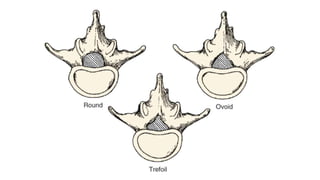
• The shape of the spinal canal may be circular, oval, or trefoil.
• The circular and oval canal shapes provide the most space for the neural
elements centrally and in the lateral recess.
• The trefoil canal has the smallest cross-sectional area. It is present in 15%
of the individuals and predisposes these individuals to lateral recess
stenosis.
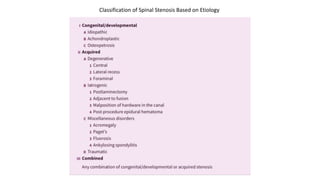
Classification of Spinal Stenosis Based on Etiology
Classification
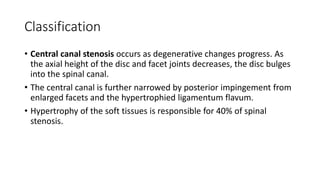
• Central canal stenosis occurs as degenerative changes progress. As
the axial height of the disc and facet joints decreases, the disc bulges
into the spinal canal.
• The central canal is further narrowed by posterior impingement from
enlarged facets and the hypertrophied ligamentum flavum.
• Hypertrophy of the soft tissues is responsible for 40% of spinal
stenosis.
Classification
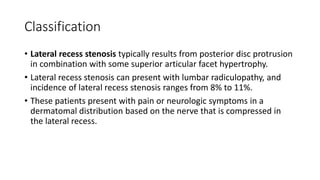
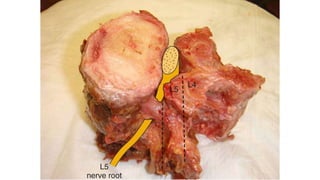
• Lateral recess stenosis typically results from posterior disc protrusion
in combination with some superior articular facet hypertrophy.
• Lateral recess stenosis can present with lumbar radiculopathy, and
incidence of lateral recess stenosis ranges from 8% to 11%.
• These patients present with pain or neurologic symptoms in a
dermatomal distribution based on the nerve that is compressed in
the lateral recess.
Classification
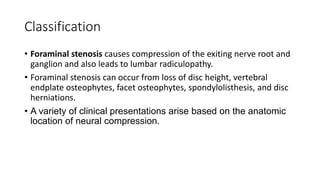
• Foraminal stenosis causes compression of the exiting nerve root and
ganglion and also leads to lumbar radiculopathy.
• Foraminal stenosis can occur from loss of disc height, vertebral
endplate osteophytes, facet osteophytes, spondylolisthesis, and disc
herniations.
• A variety of clinical presentations arise based on the anatomic
location of neural compression.
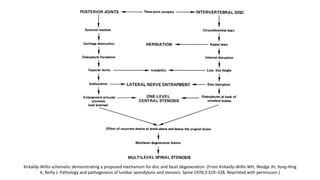
Cycle of Degeneration
• The Kirkaldy-Willis theory explains how these changes progress over
time.
• This theory is based on viewing the spine as a tripod with the disc and
the two facet joints making up the three legs. This analogy makes it
easier to understand how alteration in one joint can alter the others.
Kirkaldy-Willis schematic demonstrating a proposed mechanism for disc and facet degeneration. (From Kirkaldy-Willis WH, Wedge JH, Yong-Hing
K, Reilly J. Pathology and pathogenesis of lumbar spondylosis and stenosis. Spine 1978;3:319–328. Reprinted with permission.)
Introduction
• With increased longevity, number of patients with spinal stenosis is
increasing. It commonly affects the most mobile segments, i.e., cervical
and lumbar.
• Studies have shown that radiographic stenosis is common in the
asymptomatic aging population. The clinical presentation varies according
to central canal, neural foramina and/or the lateral recess stenosis.
• Symptomatic degenerative cervical or lumbar spinal stenosis often needs
surgical management.
• Isolated single symptomatic cervical or lumbar stenosis has been
frequently reported in the literature, but very few reports of co-existing
cervical and lumbar stenosis are available. The severity of stenosis in one
region may mask the symptoms of the other.
Introduction
• Concurrent cervical and lumbar stenosis was first reported by Teng et
al., Dagi et al. were the first to coin the term tandem spinal stenosis.
• The patients present with a complex clinical picture (combined UMN
and LMN signs) of predominant symptoms of either cervical or
lumbar stenosis initially. The diagnosis and subsequent treatment are
the dilemma.
• Neurogenic claudication is the major clinical diagnostic feature of
lumbar stenosis, whereas cervical stenosis presents with myelopathy
and/or radiculopathy.
Introduction
• The classic clinical TSS triad consists of (1) intermittent claudication,
(2) mixed upper and lower extremities symptoms and signs, and (3)
progressive gait disturbances.
• The gait disturbances vary and include pseudotabetic proprioceptive
disturbances, mild to moderate proximal lower extremity weakness,
and a flexed posture to relieve back/lower extremity pain with
compensatory neck hyperextension to facilitate gaze above the
horizon.
Introduction
• The incidence of TSS has been reported to range from 0.12 to 28 %. Its
possibility should always be considered in the primary management of
patients with isolated cervical or lumbar spinal stenosis.
• TSS being uncommon, there is still a controversy in the surgical strategy of
these patients. Staged surgery (cervical followed by lumbar or vice versa)
or simultaneous surgery has been advocated. Although not statistically
determined, most would choose decompression of one region in
accordance with each patient’s predominant clinical symptoms and regard
one staged decompression as too invasive in this elderly group.
• The purpose of this retrospective study is to contribute to literature the
largest analysis of TSS patients clinical presentation and outcome of single
staged surgery.
Materials & Methods
• 53 patients had a follow-up of more than 1 year, which was kept as
minimum follow-up period for inclusion in the study.
• All were operated under general anaesthesia in prone position with
horse-shoe extension for head holding. Injection methylprednisolone
1 g dose was given intra- operatively.
• Single-stage simultaneous cervical and lumbar surgeries were
performed by two teams. A separate set of instruments was used so
that there is no interference with each other.
Operative Procedures
• Cervical laminectomy or laminoplasty at involved levels (all grade 2/3)
was done.
• Lumbar laminectomy was done in severe stenosis (grade C/D). Wide
fenestration was done for patients with moderate stenosis (grade B).
Pedicle screws with locally harvested bone grafts and interbody cage
were used for lumbar fusion (Transforaminal interbody fusion) in
patients with instability. In cases of more than two levels of fixations,
instead of interbody fusion posterolateral bone grafting was done.
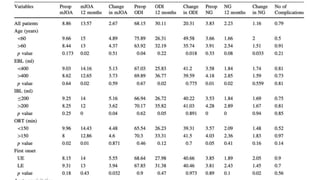
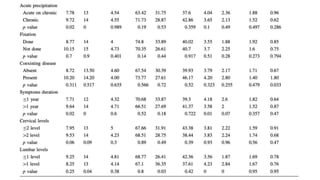
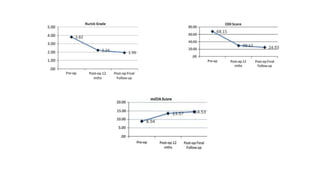
Results
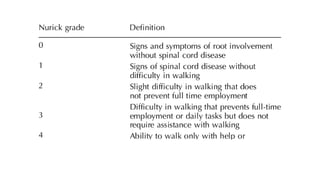
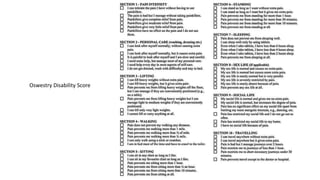
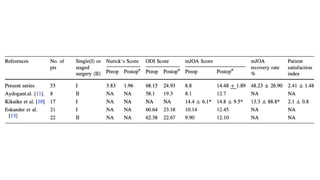
Oswestry Disability Score
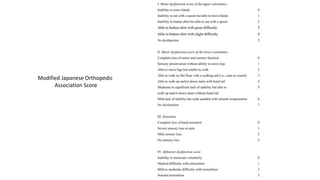
Modified Japanese Orthopedic
Association Score
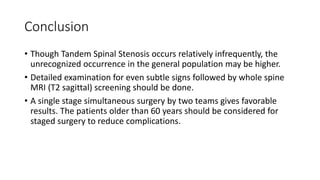
Conclusion
• Though Tandem Spinal Stenosis occurs relatively infrequently, the
unrecognized occurrence in the general population may be higher.
• Detailed examination for even subtle signs followed by whole spine
MRI (T2 sagittal) screening should be done.
• A single stage simultaneous surgery by two teams gives favorable
results. The patients older than 60 years should be considered for
staged surgery to reduce complications.
Conclusion
• Patient’s Perspective
• Cost Effective
• Better Overall Outcome
• Clinician’s Perspective
• UMN & LMN Signs Evaluated
• Whole Spine Screening
• Surgeon’s Perspective
• Single Staged Procedure
Thank You
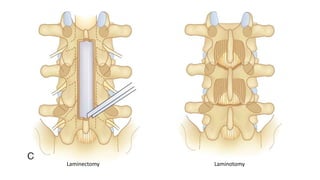
Laminectomy Laminotomy
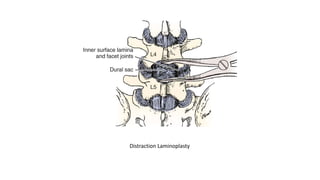
Distraction Laminoplasty
Keng et al. Grading for Cervical Stenosis
• Grade 0: the absence of central canal stenosis.
• Grade 1: nearly complete obliteration of subarachnoid space,
including obliteration of the arbitrary subarachnoid space exceeding
50 %, without signs of cord deformity.
• Grade 2: central canal stenosis with cord deformity but without spinal
cord signal change.
• Grade 3: presence of spinal cord signal change near the compressed
level
Schizas et al. Grading for Lumbar Stenosis
• Grade A: there is clearly CSF visible inside the dural sac, but its distribution is in
homogeneous:
• A1, the rootlets lie dorsally and occupy less than half of the dural sac area.
• A2, the rootlets lie dorsally, in contact with the dura but in a horseshoe configuration.
• A3, the rootlets lie dorsally and occupy more than half of the dural sac area.
• A4, the rootlets lie centrally and occupy the majority of the dural sac area.
• Grade B: the rootlets occupy the whole of the dural sac, but they can still be
individualized. Some CSF is still present giving a grainy appearance to the sac.
• Grade C: no rootlets can be recognized, the dural sac demonstrating a
homogeneous gray signal with no CSF signal visible. There is epidural fat present
posteriorly.
• Grade D: in addition to no rootlets being recognizable, there is no epidural fat
posteriorly

Tandem stenosis

  • 1.
    Coexisting lumbar andcervical stenosis (tandem spinal stenosis): an infrequent presentation. Retrospective analysis of single-stage surgery (53 cases) Eur Spine J (2014) 23:64–73 DOI 10.1007/s00586-013-2868-4 Ajay Krishnan • Bharat R. Dave • Arun Kumar Kambar • Himanshu Ram Journal Club Presentation – Mirant Dave
  • 2.
    Spinal Stenosis • Definedas a narrowing of the spinal canal. • The term stenosis is derived from the Greek word for narrow, which is “stenos.” • The first description of this condition is attributed to Antoine Portal in 1803. • Verbiest is credited with coining the term spinal stenosis and the associated narrowing of the spinal canal as its potential cause. • Kirkaldy-Willis subsequently described the degenerative cascade in the lumbar spine as the cause for the altered anatomy and pathophysiology in spinal stenosis.
  • 3.
    Relevant Anatomy ofSpine • Spinal canal’s anterior border is formed by the vertebral body, the disc, and the posterior longitudinal ligament. • The lateral border is formed by the pedicles, the lateral ligamentum flavum, and the neural foramen. • The posterior border is formed by the facet joints, lamina, and ligamentum flavum. • The shape of the spinal canal may be circular, oval, or trefoil. • The circular and oval canal shapes provide the most space for the neural elements centrally and in the lateral recess. • The trefoil canal has the smallest cross-sectional area. It is present in 15% of the individuals and predisposes these individuals to lateral recess stenosis.
  • 5.
    Classification of SpinalStenosis Based on Etiology
  • 6.
    Classification • Central canalstenosis occurs as degenerative changes progress. As the axial height of the disc and facet joints decreases, the disc bulges into the spinal canal. • The central canal is further narrowed by posterior impingement from enlarged facets and the hypertrophied ligamentum flavum. • Hypertrophy of the soft tissues is responsible for 40% of spinal stenosis.
  • 7.
    Classification • Lateral recessstenosis typically results from posterior disc protrusion in combination with some superior articular facet hypertrophy. • Lateral recess stenosis can present with lumbar radiculopathy, and incidence of lateral recess stenosis ranges from 8% to 11%. • These patients present with pain or neurologic symptoms in a dermatomal distribution based on the nerve that is compressed in the lateral recess.
  • 8.
    Classification • Foraminal stenosiscauses compression of the exiting nerve root and ganglion and also leads to lumbar radiculopathy. • Foraminal stenosis can occur from loss of disc height, vertebral endplate osteophytes, facet osteophytes, spondylolisthesis, and disc herniations. • A variety of clinical presentations arise based on the anatomic location of neural compression.
  • 9.
    Cycle of Degeneration •The Kirkaldy-Willis theory explains how these changes progress over time. • This theory is based on viewing the spine as a tripod with the disc and the two facet joints making up the three legs. This analogy makes it easier to understand how alteration in one joint can alter the others.
  • 10.
    Kirkaldy-Willis schematic demonstratinga proposed mechanism for disc and facet degeneration. (From Kirkaldy-Willis WH, Wedge JH, Yong-Hing K, Reilly J. Pathology and pathogenesis of lumbar spondylosis and stenosis. Spine 1978;3:319–328. Reprinted with permission.)
  • 14.
    Introduction • With increasedlongevity, number of patients with spinal stenosis is increasing. It commonly affects the most mobile segments, i.e., cervical and lumbar. • Studies have shown that radiographic stenosis is common in the asymptomatic aging population. The clinical presentation varies according to central canal, neural foramina and/or the lateral recess stenosis. • Symptomatic degenerative cervical or lumbar spinal stenosis often needs surgical management. • Isolated single symptomatic cervical or lumbar stenosis has been frequently reported in the literature, but very few reports of co-existing cervical and lumbar stenosis are available. The severity of stenosis in one region may mask the symptoms of the other.
  • 15.
    Introduction • Concurrent cervicaland lumbar stenosis was first reported by Teng et al., Dagi et al. were the first to coin the term tandem spinal stenosis. • The patients present with a complex clinical picture (combined UMN and LMN signs) of predominant symptoms of either cervical or lumbar stenosis initially. The diagnosis and subsequent treatment are the dilemma. • Neurogenic claudication is the major clinical diagnostic feature of lumbar stenosis, whereas cervical stenosis presents with myelopathy and/or radiculopathy.
  • 16.
    Introduction • The classicclinical TSS triad consists of (1) intermittent claudication, (2) mixed upper and lower extremities symptoms and signs, and (3) progressive gait disturbances. • The gait disturbances vary and include pseudotabetic proprioceptive disturbances, mild to moderate proximal lower extremity weakness, and a flexed posture to relieve back/lower extremity pain with compensatory neck hyperextension to facilitate gaze above the horizon.
  • 17.
    Introduction • The incidenceof TSS has been reported to range from 0.12 to 28 %. Its possibility should always be considered in the primary management of patients with isolated cervical or lumbar spinal stenosis. • TSS being uncommon, there is still a controversy in the surgical strategy of these patients. Staged surgery (cervical followed by lumbar or vice versa) or simultaneous surgery has been advocated. Although not statistically determined, most would choose decompression of one region in accordance with each patient’s predominant clinical symptoms and regard one staged decompression as too invasive in this elderly group. • The purpose of this retrospective study is to contribute to literature the largest analysis of TSS patients clinical presentation and outcome of single staged surgery.
  • 18.
    Materials & Methods •53 patients had a follow-up of more than 1 year, which was kept as minimum follow-up period for inclusion in the study. • All were operated under general anaesthesia in prone position with horse-shoe extension for head holding. Injection methylprednisolone 1 g dose was given intra- operatively. • Single-stage simultaneous cervical and lumbar surgeries were performed by two teams. A separate set of instruments was used so that there is no interference with each other.
  • 19.
    Operative Procedures • Cervicallaminectomy or laminoplasty at involved levels (all grade 2/3) was done. • Lumbar laminectomy was done in severe stenosis (grade C/D). Wide fenestration was done for patients with moderate stenosis (grade B). Pedicle screws with locally harvested bone grafts and interbody cage were used for lumbar fusion (Transforaminal interbody fusion) in patients with instability. In cases of more than two levels of fixations, instead of interbody fusion posterolateral bone grafting was done.
  • 20.
  • 22.
  • 23.
  • 28.
    Conclusion • Though TandemSpinal Stenosis occurs relatively infrequently, the unrecognized occurrence in the general population may be higher. • Detailed examination for even subtle signs followed by whole spine MRI (T2 sagittal) screening should be done. • A single stage simultaneous surgery by two teams gives favorable results. The patients older than 60 years should be considered for staged surgery to reduce complications.
  • 29.
    Conclusion • Patient’s Perspective •Cost Effective • Better Overall Outcome • Clinician’s Perspective • UMN & LMN Signs Evaluated • Whole Spine Screening • Surgeon’s Perspective • Single Staged Procedure
  • 30.
  • 31.
  • 32.
  • 34.
    Keng et al.Grading for Cervical Stenosis • Grade 0: the absence of central canal stenosis. • Grade 1: nearly complete obliteration of subarachnoid space, including obliteration of the arbitrary subarachnoid space exceeding 50 %, without signs of cord deformity. • Grade 2: central canal stenosis with cord deformity but without spinal cord signal change. • Grade 3: presence of spinal cord signal change near the compressed level
  • 35.
    Schizas et al.Grading for Lumbar Stenosis • Grade A: there is clearly CSF visible inside the dural sac, but its distribution is in homogeneous: • A1, the rootlets lie dorsally and occupy less than half of the dural sac area. • A2, the rootlets lie dorsally, in contact with the dura but in a horseshoe configuration. • A3, the rootlets lie dorsally and occupy more than half of the dural sac area. • A4, the rootlets lie centrally and occupy the majority of the dural sac area. • Grade B: the rootlets occupy the whole of the dural sac, but they can still be individualized. Some CSF is still present giving a grainy appearance to the sac. • Grade C: no rootlets can be recognized, the dural sac demonstrating a homogeneous gray signal with no CSF signal visible. There is epidural fat present posteriorly. • Grade D: in addition to no rootlets being recognizable, there is no epidural fat posteriorly