
Dr.Soma Sekhara Reddy
Emergency medicine
T I A and
CERVICAL ARTERY DISSECTION
T I A
 Definition :
A transient episode of neurological dysfunction
caused by focal brain, spinal cord, or retinal
ischemia, without acute infarction.
 Analogous to unstable angina
 Symptoms – similar to stroke
 Lasts less than 1 or 2 hours
 Resolved on its own
 Warning signal to the future threat
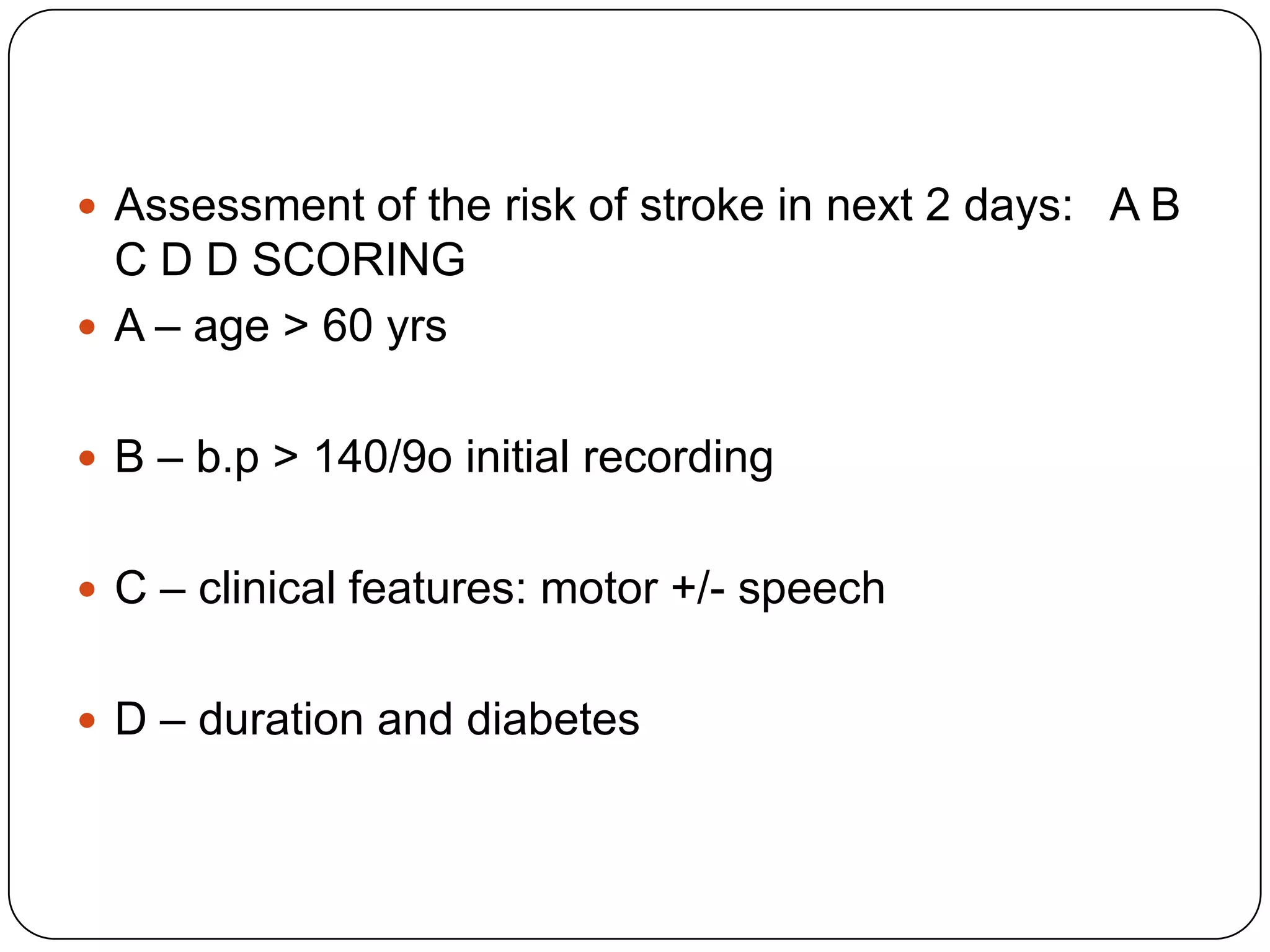
 Assessment of the risk of stroke in next 2 days: A B
C D D SCORING
 A – age > 60 yrs
 B – b.p > 140/9o initial recording
 C – clinical features: motor +/- speech
 D – duration and diabetes
Management
 Diagnosis :
1. history:
 symptoms
 try to identify risk factors for heart disease and
stroke:
 high blood pressure
 high cholesterol
 diabetes
 smoking and
 family history
2.Physical examination:
 A - Airway
 B - Breathing
 C - Circulation
 Examination of the neck: bruits / gushing sounds
 A full neurologic exam
 E C G: arrhythmias and AF
 CT scan : to rule out bleeding not to distinguish
b/n stroke and TIA
 Carotid ultrasound : look for narrowing of the
blood vessels
 CBC and other routines including cholesterols ,PT
and INR if indicated
Treatment
 ?
 Prevention of the next..
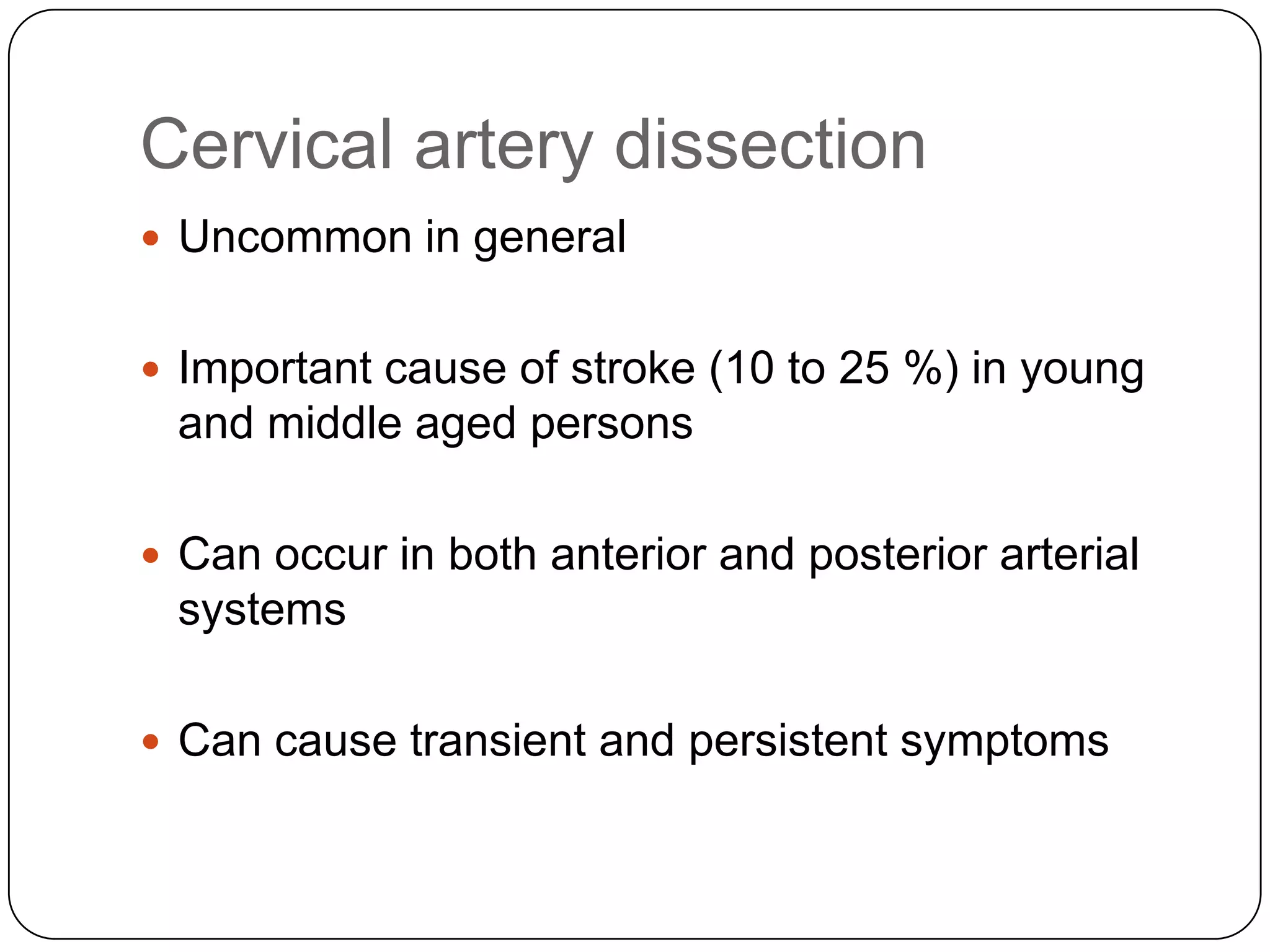
Cervical artery dissection
 Uncommon in general
 Important cause of stroke (10 to 25 %) in young
and middle aged persons
 Can occur in both anterior and posterior arterial
systems
 Can cause transient and persistent symptoms
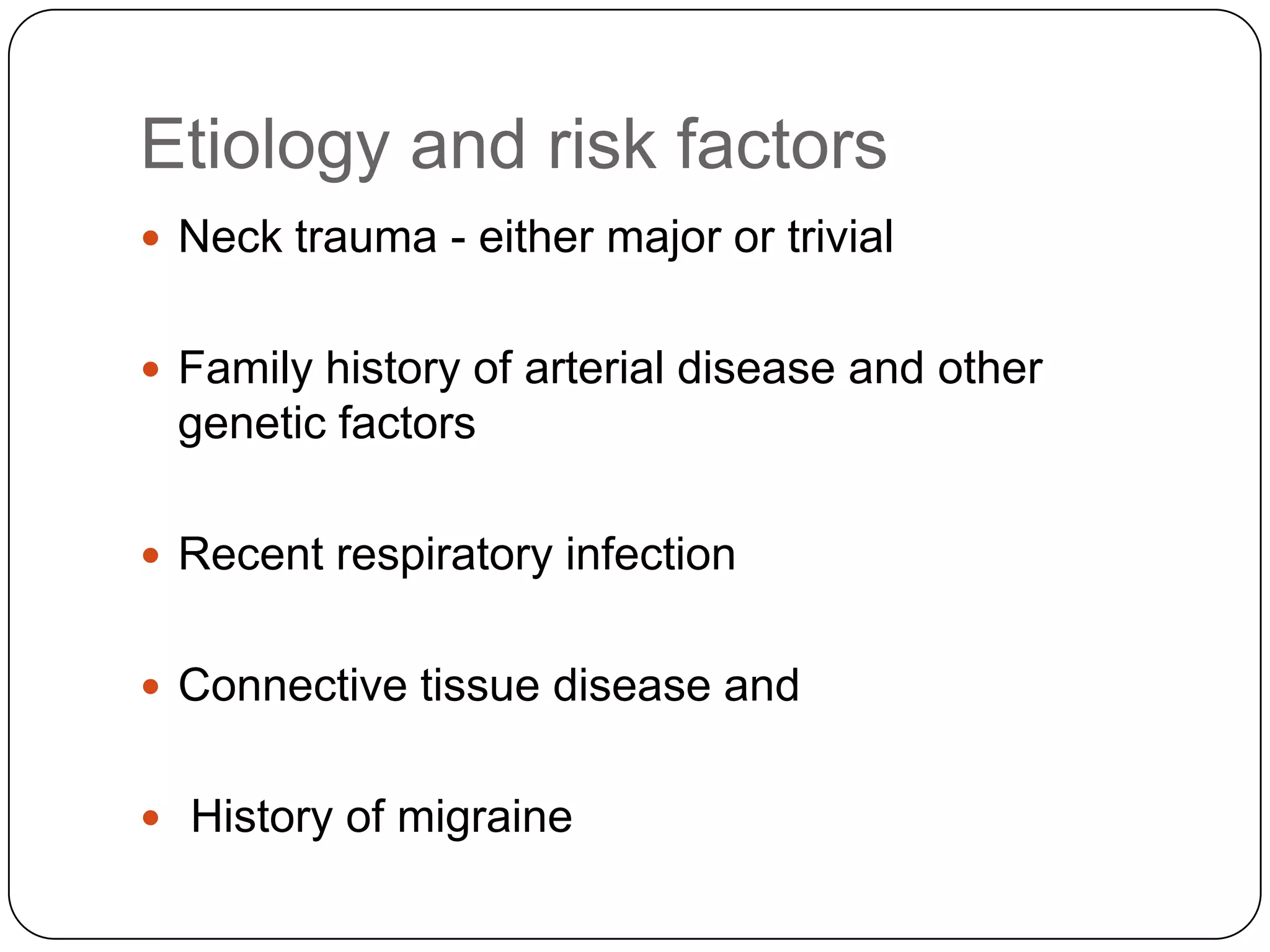
Etiology and risk factors
 Neck trauma - either major or trivial
 Family history of arterial disease and other
genetic factors
 Recent respiratory infection
 Connective tissue disease and
 History of migraine
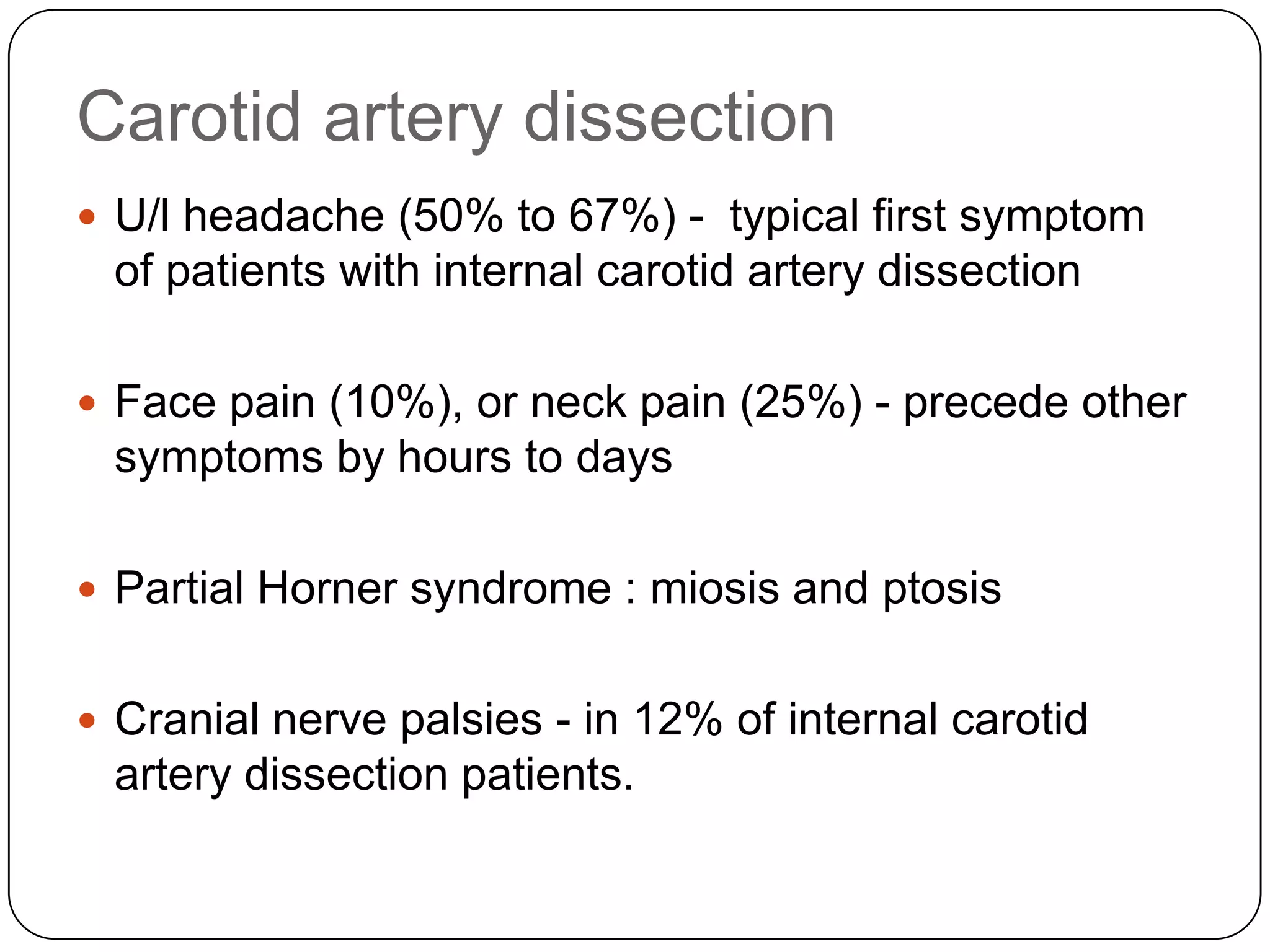
Carotid artery dissection
 U/l headache (50% to 67%) - typical first symptom
of patients with internal carotid artery dissection
 Face pain (10%), or neck pain (25%) - precede other
symptoms by hours to days
 Partial Horner syndrome : miosis and ptosis
 Cranial nerve palsies - in 12% of internal carotid
artery dissection patients.
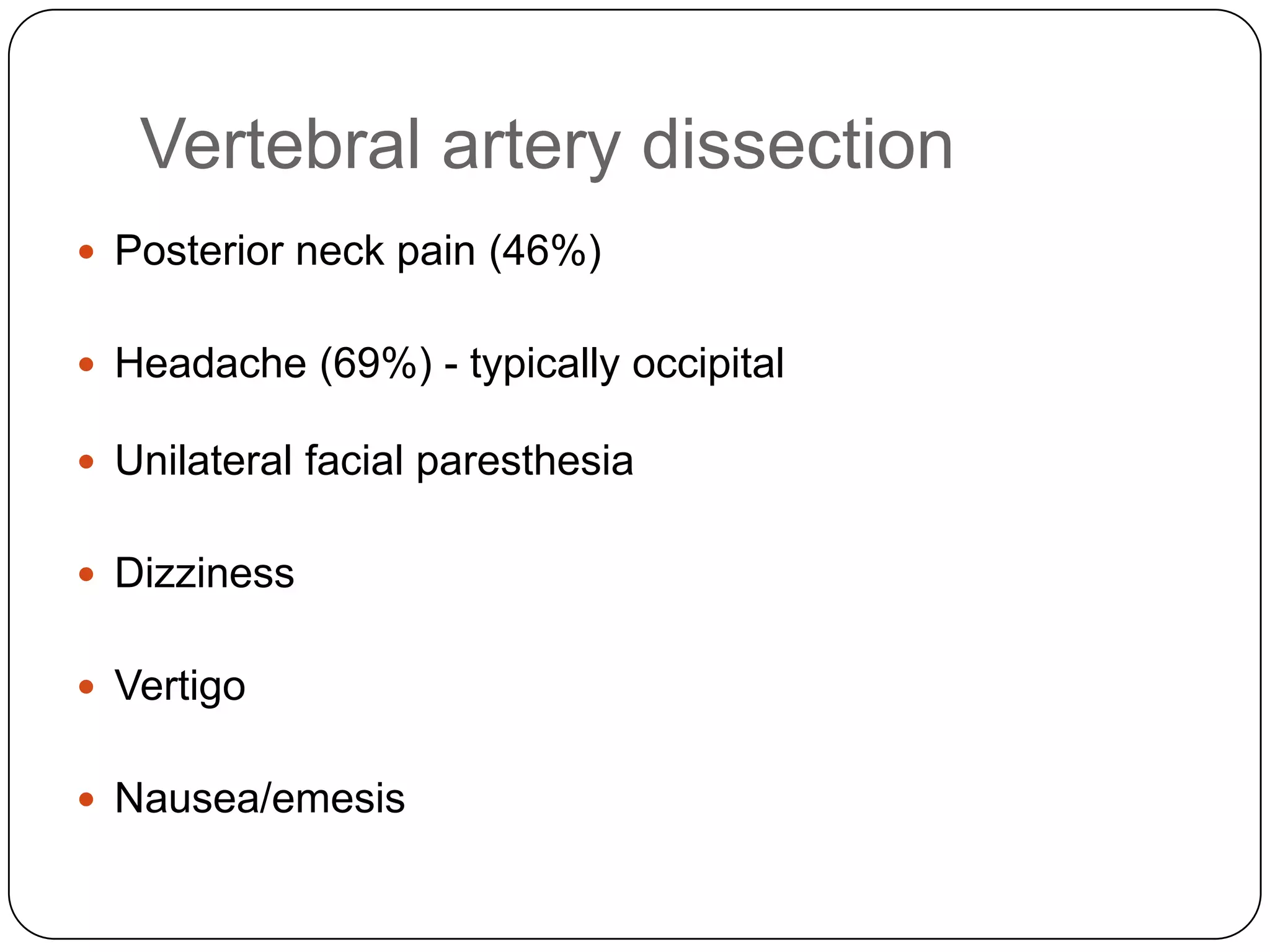
Vertebral artery dissection
 Posterior neck pain (46%)
 Headache (69%) - typically occipital
 Unilateral facial paresthesia
 Dizziness
 Vertigo
 Nausea/emesis
 Diplopia and other visual disturbances
 Ataxia
 Limb weakness and numbness
 Dysarthria
 Hearing loss
 Cervical radiculopathy – 1 %
If left untreated:
 carotid dissection -cerebral ischemia
retinal infarction rarely
 vertebral artery dissection - posterior circulation
infarction.
 Investigation of choice:
MRI/MRA or CT/CTA
conclusion
Before discharging the patient consider:
 MRA / CTA / Carotid Doppler
 Initiate and titrate the dose of anti hypertensives
, anti diabetics and statins
 Counseling about importance of regular
medication and cessation of smoking.
Thank you

T i a and cervical artery dissection

  • 1.
    Dr.Soma Sekhara Reddy Emergencymedicine T I A and CERVICAL ARTERY DISSECTION
  • 2.
    T I A Definition : A transient episode of neurological dysfunction caused by focal brain, spinal cord, or retinal ischemia, without acute infarction.
  • 3.
     Analogous tounstable angina  Symptoms – similar to stroke  Lasts less than 1 or 2 hours  Resolved on its own  Warning signal to the future threat
  • 4.
     Assessment ofthe risk of stroke in next 2 days: A B C D D SCORING  A – age > 60 yrs  B – b.p > 140/9o initial recording  C – clinical features: motor +/- speech  D – duration and diabetes
  • 5.
    Management  Diagnosis : 1.history:  symptoms  try to identify risk factors for heart disease and stroke:  high blood pressure  high cholesterol  diabetes  smoking and  family history
  • 6.
    2.Physical examination:  A- Airway  B - Breathing  C - Circulation  Examination of the neck: bruits / gushing sounds  A full neurologic exam
  • 7.
     E CG: arrhythmias and AF  CT scan : to rule out bleeding not to distinguish b/n stroke and TIA  Carotid ultrasound : look for narrowing of the blood vessels  CBC and other routines including cholesterols ,PT and INR if indicated
  • 8.
  • 9.
    Cervical artery dissection Uncommon in general  Important cause of stroke (10 to 25 %) in young and middle aged persons  Can occur in both anterior and posterior arterial systems  Can cause transient and persistent symptoms
  • 10.
    Etiology and riskfactors  Neck trauma - either major or trivial  Family history of arterial disease and other genetic factors  Recent respiratory infection  Connective tissue disease and  History of migraine
  • 11.
    Carotid artery dissection U/l headache (50% to 67%) - typical first symptom of patients with internal carotid artery dissection  Face pain (10%), or neck pain (25%) - precede other symptoms by hours to days  Partial Horner syndrome : miosis and ptosis  Cranial nerve palsies - in 12% of internal carotid artery dissection patients.
  • 12.
    Vertebral artery dissection Posterior neck pain (46%)  Headache (69%) - typically occipital  Unilateral facial paresthesia  Dizziness  Vertigo  Nausea/emesis
  • 13.
     Diplopia andother visual disturbances  Ataxia  Limb weakness and numbness  Dysarthria  Hearing loss  Cervical radiculopathy – 1 %
  • 14.
    If left untreated: carotid dissection -cerebral ischemia retinal infarction rarely  vertebral artery dissection - posterior circulation infarction.  Investigation of choice: MRI/MRA or CT/CTA
  • 15.
    conclusion Before discharging thepatient consider:  MRA / CTA / Carotid Doppler  Initiate and titrate the dose of anti hypertensives , anti diabetics and statins  Counseling about importance of regular medication and cessation of smoking.
  • 16.