T-Cell mediated
immune responses
Topics we will understand today
◦ Early Development
◦ Repertoire selection Processes
◦ Late Development
◦ Activation
◦ Differentiation
◦ Cell Death
2
I AM RASHMI
PhD Student,
Allergy and Immunology Unit,
Dept.of Pediatrics,
PGIMER, Chandigarh
3
‘All T cells show adaptive immune response’
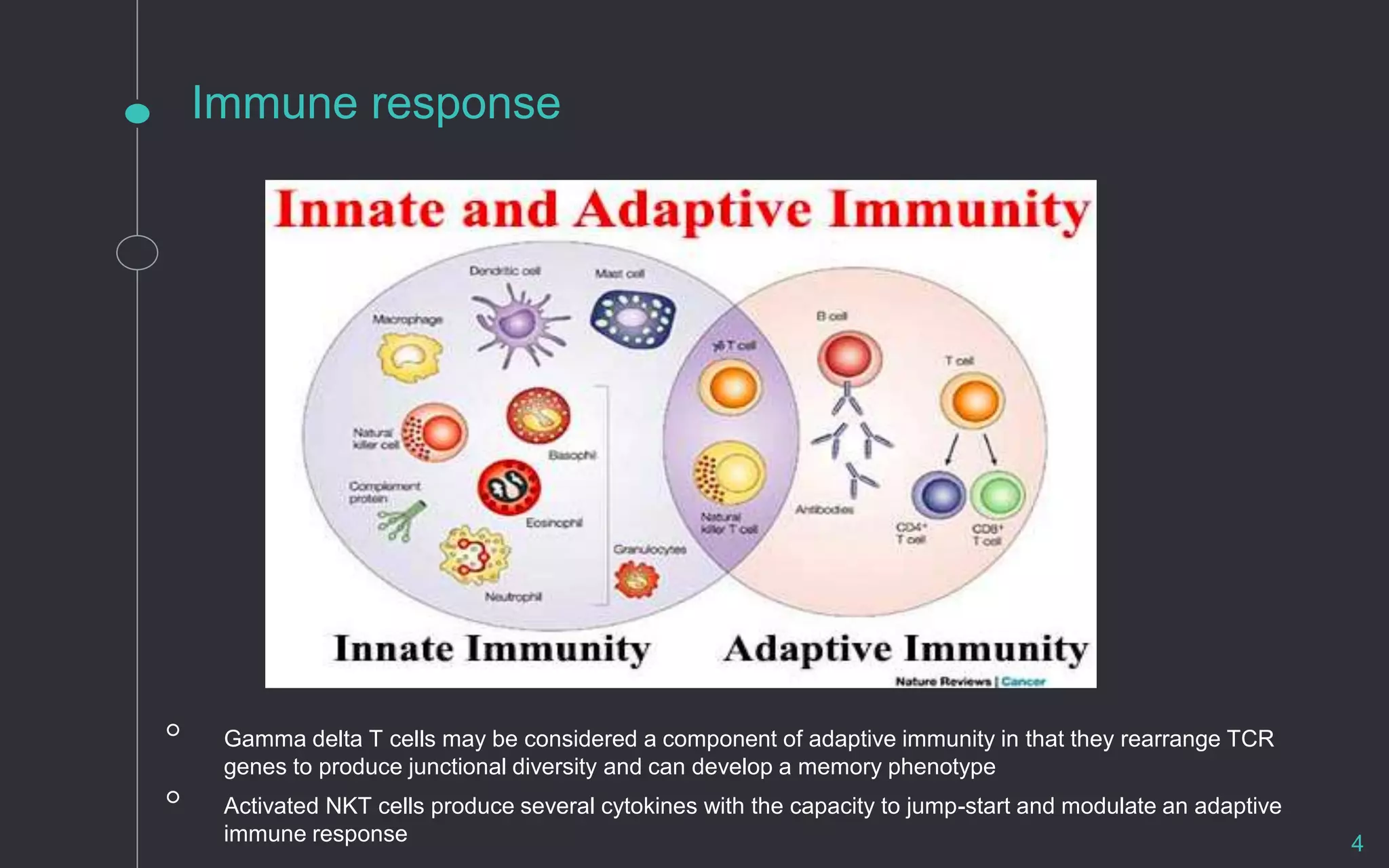
Immune response
4
◦ Gamma delta T cells may be considered a component of adaptive immunity in that they rearrange TCR
genes to produce junctional diversity and can develop a memory phenotype
◦ Activated NKT cells produce several cytokines with the capacity to jump-start and modulate an adaptive
immune response
Importance of adaptive immune response
◦ Innate immune
response can plateau
the pathogenic infection.
◦ However, complete
clearance requires
adaptive immune
response
5
T cell development and activation
6
T-cell precursor rearranges its T-
cell receptor genes in the thymus
Immature T cells that recognize
self MHC receive signals for
survival. Those that interact
strongly with self antigen are
removed from the repertoire
Mature T cells encounter foreign
antigens in the peripheral
lymphoid organs and are activated
Activated T cells proliferate and
eliminate infection
T-cell progenitors develop in the
bone marrow and migrate to
thymus
Positive and negative selection in
the thymus
Matute T cells migrate to the
peripheral lymphoid organs
Activated T cells migrate to sites
of infection
T Cell Development
7
T cell precursor migration from Bone marrow to thymus
8
1o lymphoid organ 1o lymphoid organ
Chemo attractants:
Thymosin
Thymotaxin
Thymopoietin
Thymic factors
T cell
precursor
Each of the several million T and B cells circulating in
the body expresses a novel and unique antigen
receptor
○Cells entering the thymus are not yet committed to become a
lymphocyte and express no antigen-specific receptors
○Cells leaving the thymus are functional and express unique TCRs
9
T cell development
T cell commitment
◦ Progenitor T cells migrate from
bone marrow to thymus
◦ T cells can be grown in vitro in
absence of thymic fragments
▫ Grown on bone marrow stem
cells with Notch protein
(transcription factor)
■ Notch protein is key in
determining T-lineage
specification
10
T cell development
Vertebrates generate 2
broad categories of T
cells:
11
○TCR-αβ – dominant participant in adaptive
immune response
○TCR-γδ – protect barrier tissues from outside
infection
-First cells to arise during fetal development, drop off after
T cell development
Begins with arrival of small numbers of
lymphoid precursors migrating from
blood to thymus
○When they do arrive in thymus, T-cell
precursors don’t express signature surface
markers (CD3, CD4, and CD8)
○Do not yet express RAG-1 or RAG-2 that
are necessary for gene rearrangement
12
13
Thymic cells
Thymosin
Thymotaxin
Thymopoietin
Thymic factors
RAG1 & RAG2
CD4
CD8
TCR
Various TCR gene rearrangements
takes place at this point
MHC II
MHC I
+ selection
- selection
Thymocytes failing to recognize
both MHC molecules through
respective CDs, undergo
APOPTOSIS
FAS
FAS L
Self-antigen
Thymocytes recognizing self
antigen with high affinity undergo
APOPTOSIS
Stronger signal
between these two
decides the fate of
Single positive cell
Let’s just revise what we have learnt till now!!
◦ Progenitor T cells migrate to thymus
▫ At about 8th or 9th week of gestation in humans
◦ T cell maturation involves rearrangements
of the germ-line TCR genes
◦ In thymus, thymocytes proliferate and
differentiate
▫ Early Thymocyte Development
▫ Positive and Negative Selection
▫ Lineage Commitment
14
15
WANT BIG IMPACT?
Use big image.
16
17
You have Fluorescein-labeled anti-CD4 and phycoerythrin- labeled
anti-CD8. You use these antibodies to stain thymocytes and lymph-
node cells from normal mice and from RAG-1 knockout mice. In the
forms below, draw the FACS plots that you would expect.
18
19
WANT BIG IMPACT?
Use big image.
20
Start
expressing
CCR7
Abnormal genes reported in SCID patients
21
22
23
Selection process in thymus
Positive selection
○Survival of only T cells whose TCRs recognize self-MHC molecules
○Ensure MHC restriction
—
Negative selection
○Eliminates T cells that react too strongly with self MHC or MHC with
self-peptides
24
Thymocytes “learn” MHC restriction in thymus
ž
25
• Selection process results in development of
T cells that might respond to certain MHC
molecules
• This prevents supernumerary wandering
lymphocyte generation and also
‘economical’
Death by neglect
ž
T cell development is expensive for host
○98% of all thymocytes do not mature, die by
apoptosis within thymus
○However, the benefits of having functional T cells
outweigh the costs
26
Positive selection ensures MHC restriction
ž
27
Failure of Apoptosis causes defective lymphocyte homeostasis
28
FAS knockout mice
Normal mice
Separate pathways for intracellular and extracellular ‘self’ molecule
29
Do we delete Thymocytes reactive to tissue-specific
antigen?
Thymus has an extraordinary capacity to express and present proteins
from all over the body.
Medullary epithelial cells express a unique protein, AIRE (Autoimmune
regulator), that allows cells to express, process, and present proteins
that are ordinarily only found in specific organs.
AIRE is part of transcriptional complex that facilitates expression of
tissue-specific genes by regulating not only translation, but also
chromatin packing
30
Autoimmune polyendocrinopathy-candidiasis-ectodermal dystrophy (APECED) syndrome
Thymus: Cosmopolitan city of body
31
Deletion of auto-reactive TCR
What stages of T-cell development (DN1, DN2, DN3,
DN4, DP, CD4 SP, or CD8 SP) would be affected in
mice with the following genetic modifications? Justify
your answers.
a. Mice that do not express MHC Class II.
b. Mice that do not express AIRE.
c. Mice that do not express the TCR-alpha chain.
32
Exit from thymus and final maturation
ž
ž
Mature T cells that survive the selection
process leave the thymus
○Recent thymic emigrants
RTE are not as functionally mature as most naïve T cells in the periphery: they do not proliferate or
secrete cytokines as vigorously in response to T-cell receptor stimulation.
33
Treg Cells
◦ Shown to inhibit proliferation of other T
cells in vitro CD4+CD25+
◦ Shown to inhibit development of
autoimmune diseases
34
Treg cells
35
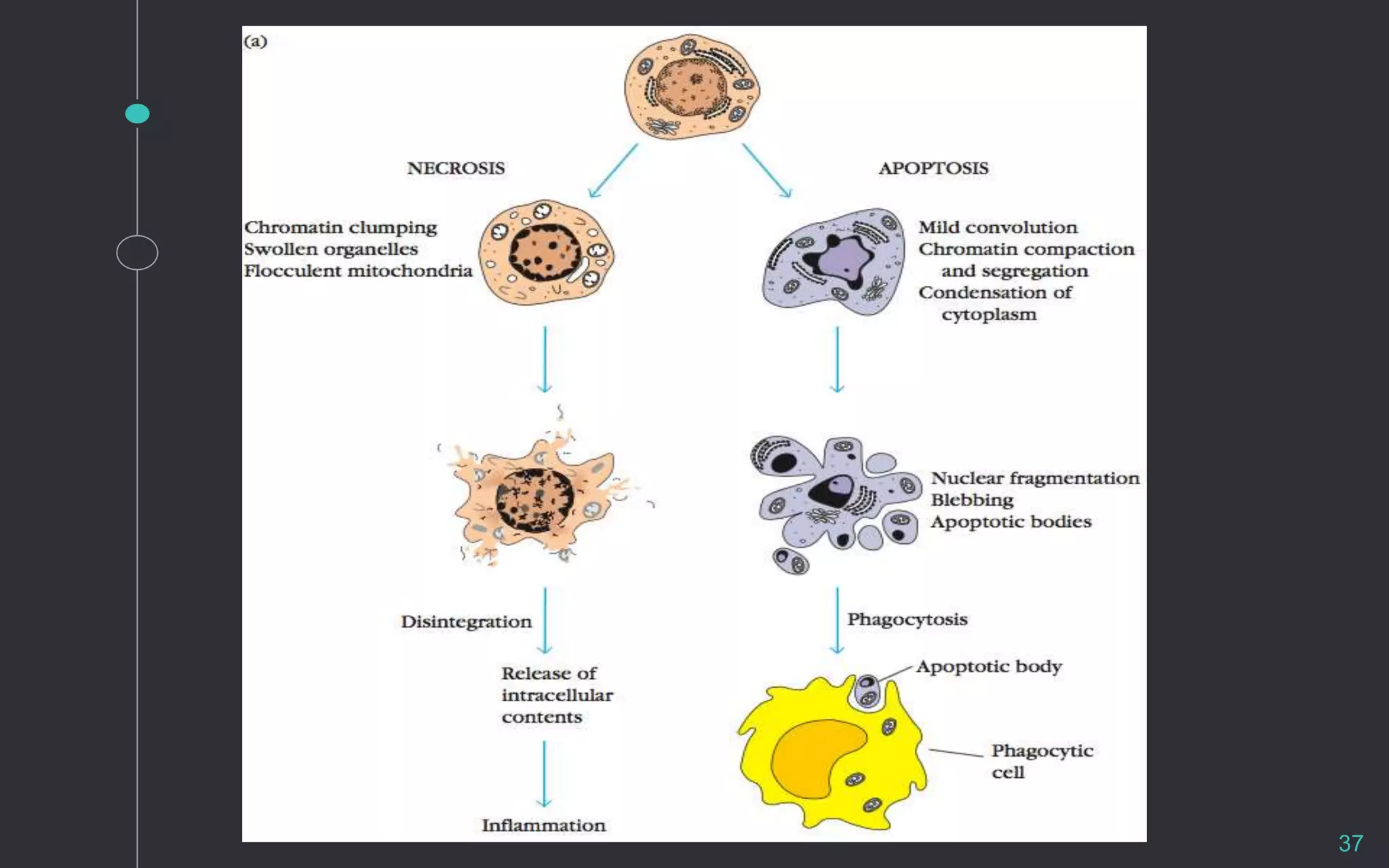
Cell Death and T cell populations
Apoptosis plays critical role
◦ —
Deletion of potentially autoreactive
thymocytes
◦ —
Deletion of T cell populations after activation
◦ Fas and FasL pathway to induce self death
36
37
38
Fas or Fas-L deficiency
CD3+ cells in periphery
39
Control Canale-Smith syndrome
patient
T cell activation and diffrentiation
1
40
◦ Role of APCs
◦ Signal 1, 2 and 3
◦ Co-inhibitory pathway
◦ Immunological exhaustion
41
42
T cell – APC interaction
© The copyright for this work resides with the British Society for Immunology
Signaling molecules and space
43
supramolecular activation complexes
Signaling molecules and space
44
APC migration and specific activation
45
46
High endothelial venules
Sphingosine-1-phosphate
47
Signal 1, 2 and 3
o Antigen receptor binding
and Co-stimulation
IL-6, IL-12,
TGF-β, IL4
48
49
Differences in the
properties of
professional
antigen-presenting
cells that induce T
cell activation
50
Pathways influenced with
PHA, PMA and ionomycin
51
T cell proliferation
52
53
54
Anergy
Lack of reaction by the body's defense mechanisms to foreign
substances, and consists of a direct induction of peripheral
lymphocyte tolerance
Anergy
55
Q/A
◦ Which of the following conditions would lead to T-
cell anergy?
▫ A naïve T-cell interaction with a dendritic cell in
the presence of CTLA-4 Ig.
▫ A naïve T cell stimulated with antibodies that
bind both the TCR and CD28.
▫ A naïve T cell stimulated with antibodies that
bind only the TCR.
▫ A naïve T cell stimulated with antibodies that
bind only CD28.
56
57
Antigen Co-stimulation No co-stimulation
Infectious agent Protective immunity Recurrent infection
Innocuous substance Allergy No Allergy
Grafted organ Rejection Acceptance
Self organ Autoimmunity Self tolerance
Tumor Tumor immunity Cancer
Regulation of Co-stimulation is critical
58
Cell surface signaling molecules in control of immune response
59
T cell differentiation
60
• Your lab acquires mice that do not have the GATA-3
gene (GATA-3 knockout mice). You discover that this
mouse has a di cult time clearing helminth (worm)
infections. Why might this be?
Q/A
61
62
Inhibitory signals
63
Inhibitory signals
64
Inhibitory signals
Immunological Exhaustion
◦ Loss of CD8 T cell function
◦ Occurs with chronic infection or
cancer
◦ CD8 T cell exhaustion correlates
with higher antigen, duration of
infection, loss of CD4 help
◦ Blockade of inhibitory receptors can
rescue CD8 T cells
65
Role of CD4+ helper Tcells
66
Exhaustion
67
Poly
68
Conclusion
◦ Early Development
◦ Repertoire selection Processes
◦ Late Development
◦ Activation
◦ Differentiation
◦ Cell Death
69
ANY QUESTIONS?
70

T cell mediated immune response Rashmi PGI 2022

  • 1.
  • 2.
    Topics we willunderstand today ◦ Early Development ◦ Repertoire selection Processes ◦ Late Development ◦ Activation ◦ Differentiation ◦ Cell Death 2
  • 3.
    I AM RASHMI PhDStudent, Allergy and Immunology Unit, Dept.of Pediatrics, PGIMER, Chandigarh 3 ‘All T cells show adaptive immune response’
  • 4.
    Immune response 4 ◦ Gammadelta T cells may be considered a component of adaptive immunity in that they rearrange TCR genes to produce junctional diversity and can develop a memory phenotype ◦ Activated NKT cells produce several cytokines with the capacity to jump-start and modulate an adaptive immune response
  • 5.
    Importance of adaptiveimmune response ◦ Innate immune response can plateau the pathogenic infection. ◦ However, complete clearance requires adaptive immune response 5
  • 6.
    T cell developmentand activation 6 T-cell precursor rearranges its T- cell receptor genes in the thymus Immature T cells that recognize self MHC receive signals for survival. Those that interact strongly with self antigen are removed from the repertoire Mature T cells encounter foreign antigens in the peripheral lymphoid organs and are activated Activated T cells proliferate and eliminate infection T-cell progenitors develop in the bone marrow and migrate to thymus Positive and negative selection in the thymus Matute T cells migrate to the peripheral lymphoid organs Activated T cells migrate to sites of infection
  • 7.
  • 8.
    T cell precursormigration from Bone marrow to thymus 8 1o lymphoid organ 1o lymphoid organ Chemo attractants: Thymosin Thymotaxin Thymopoietin Thymic factors T cell precursor
  • 9.
    Each of theseveral million T and B cells circulating in the body expresses a novel and unique antigen receptor ○Cells entering the thymus are not yet committed to become a lymphocyte and express no antigen-specific receptors ○Cells leaving the thymus are functional and express unique TCRs 9 T cell development
  • 10.
    T cell commitment ◦Progenitor T cells migrate from bone marrow to thymus ◦ T cells can be grown in vitro in absence of thymic fragments ▫ Grown on bone marrow stem cells with Notch protein (transcription factor) ■ Notch protein is key in determining T-lineage specification 10
  • 11.
    T cell development Vertebratesgenerate 2 broad categories of T cells: 11 ○TCR-αβ – dominant participant in adaptive immune response ○TCR-γδ – protect barrier tissues from outside infection -First cells to arise during fetal development, drop off after
  • 12.
    T cell development Beginswith arrival of small numbers of lymphoid precursors migrating from blood to thymus ○When they do arrive in thymus, T-cell precursors don’t express signature surface markers (CD3, CD4, and CD8) ○Do not yet express RAG-1 or RAG-2 that are necessary for gene rearrangement 12
  • 13.
    13 Thymic cells Thymosin Thymotaxin Thymopoietin Thymic factors RAG1& RAG2 CD4 CD8 TCR Various TCR gene rearrangements takes place at this point MHC II MHC I + selection - selection Thymocytes failing to recognize both MHC molecules through respective CDs, undergo APOPTOSIS FAS FAS L Self-antigen Thymocytes recognizing self antigen with high affinity undergo APOPTOSIS Stronger signal between these two decides the fate of Single positive cell
  • 14.
    Let’s just revisewhat we have learnt till now!! ◦ Progenitor T cells migrate to thymus ▫ At about 8th or 9th week of gestation in humans ◦ T cell maturation involves rearrangements of the germ-line TCR genes ◦ In thymus, thymocytes proliferate and differentiate ▫ Early Thymocyte Development ▫ Positive and Negative Selection ▫ Lineage Commitment 14
  • 15.
  • 16.
    WANT BIG IMPACT? Usebig image. 16
  • 17.
  • 18.
    You have Fluorescein-labeledanti-CD4 and phycoerythrin- labeled anti-CD8. You use these antibodies to stain thymocytes and lymph- node cells from normal mice and from RAG-1 knockout mice. In the forms below, draw the FACS plots that you would expect. 18
  • 19.
  • 20.
    WANT BIG IMPACT? Usebig image. 20 Start expressing CCR7
  • 21.
    Abnormal genes reportedin SCID patients 21
  • 22.
  • 23.
  • 24.
    Selection process inthymus Positive selection ○Survival of only T cells whose TCRs recognize self-MHC molecules ○Ensure MHC restriction — Negative selection ○Eliminates T cells that react too strongly with self MHC or MHC with self-peptides 24
  • 25.
    Thymocytes “learn” MHCrestriction in thymus ž 25 • Selection process results in development of T cells that might respond to certain MHC molecules • This prevents supernumerary wandering lymphocyte generation and also ‘economical’
  • 26.
    Death by neglect ž Tcell development is expensive for host ○98% of all thymocytes do not mature, die by apoptosis within thymus ○However, the benefits of having functional T cells outweigh the costs 26
  • 27.
    Positive selection ensuresMHC restriction ž 27
  • 28.
    Failure of Apoptosiscauses defective lymphocyte homeostasis 28 FAS knockout mice Normal mice
  • 29.
    Separate pathways forintracellular and extracellular ‘self’ molecule 29
  • 30.
    Do we deleteThymocytes reactive to tissue-specific antigen? Thymus has an extraordinary capacity to express and present proteins from all over the body. Medullary epithelial cells express a unique protein, AIRE (Autoimmune regulator), that allows cells to express, process, and present proteins that are ordinarily only found in specific organs. AIRE is part of transcriptional complex that facilitates expression of tissue-specific genes by regulating not only translation, but also chromatin packing 30 Autoimmune polyendocrinopathy-candidiasis-ectodermal dystrophy (APECED) syndrome Thymus: Cosmopolitan city of body
  • 31.
  • 32.
    What stages ofT-cell development (DN1, DN2, DN3, DN4, DP, CD4 SP, or CD8 SP) would be affected in mice with the following genetic modifications? Justify your answers. a. Mice that do not express MHC Class II. b. Mice that do not express AIRE. c. Mice that do not express the TCR-alpha chain. 32
  • 33.
    Exit from thymusand final maturation ž ž Mature T cells that survive the selection process leave the thymus ○Recent thymic emigrants RTE are not as functionally mature as most naïve T cells in the periphery: they do not proliferate or secrete cytokines as vigorously in response to T-cell receptor stimulation. 33
  • 34.
    Treg Cells ◦ Shownto inhibit proliferation of other T cells in vitro CD4+CD25+ ◦ Shown to inhibit development of autoimmune diseases 34
  • 35.
  • 36.
    Cell Death andT cell populations Apoptosis plays critical role ◦ — Deletion of potentially autoreactive thymocytes ◦ — Deletion of T cell populations after activation ◦ Fas and FasL pathway to induce self death 36
  • 37.
  • 38.
  • 39.
    Fas or Fas-Ldeficiency CD3+ cells in periphery 39 Control Canale-Smith syndrome patient
  • 40.
    T cell activationand diffrentiation 1 40
  • 41.
    ◦ Role ofAPCs ◦ Signal 1, 2 and 3 ◦ Co-inhibitory pathway ◦ Immunological exhaustion 41
  • 42.
    42 T cell –APC interaction © The copyright for this work resides with the British Society for Immunology
  • 43.
    Signaling molecules andspace 43 supramolecular activation complexes
  • 44.
  • 45.
    APC migration andspecific activation 45
  • 46.
  • 47.
    47 Signal 1, 2and 3 o Antigen receptor binding and Co-stimulation IL-6, IL-12, TGF-β, IL4
  • 48.
  • 49.
    49 Differences in the propertiesof professional antigen-presenting cells that induce T cell activation
  • 50.
  • 51.
  • 52.
  • 53.
  • 54.
    54 Anergy Lack of reactionby the body's defense mechanisms to foreign substances, and consists of a direct induction of peripheral lymphocyte tolerance
  • 55.
  • 56.
    Q/A ◦ Which ofthe following conditions would lead to T- cell anergy? ▫ A naïve T-cell interaction with a dendritic cell in the presence of CTLA-4 Ig. ▫ A naïve T cell stimulated with antibodies that bind both the TCR and CD28. ▫ A naïve T cell stimulated with antibodies that bind only the TCR. ▫ A naïve T cell stimulated with antibodies that bind only CD28. 56
  • 57.
    57 Antigen Co-stimulation Noco-stimulation Infectious agent Protective immunity Recurrent infection Innocuous substance Allergy No Allergy Grafted organ Rejection Acceptance Self organ Autoimmunity Self tolerance Tumor Tumor immunity Cancer Regulation of Co-stimulation is critical
  • 58.
    58 Cell surface signalingmolecules in control of immune response
  • 59.
  • 60.
    60 • Your labacquires mice that do not have the GATA-3 gene (GATA-3 knockout mice). You discover that this mouse has a di cult time clearing helminth (worm) infections. Why might this be? Q/A
  • 61.
  • 62.
  • 63.
  • 64.
  • 65.
    Immunological Exhaustion ◦ Lossof CD8 T cell function ◦ Occurs with chronic infection or cancer ◦ CD8 T cell exhaustion correlates with higher antigen, duration of infection, loss of CD4 help ◦ Blockade of inhibitory receptors can rescue CD8 T cells 65
  • 66.
    Role of CD4+helper Tcells 66
  • 67.
  • 68.
  • 69.
    Conclusion ◦ Early Development ◦Repertoire selection Processes ◦ Late Development ◦ Activation ◦ Differentiation ◦ Cell Death 69
  • 70.

Editor's Notes

  • #16 Transporter associated with antigen processing (TAP) protein complex belongs to the ATP-binding-cassette transporter family
  • #17 C-kit- receptor for stem cell growth factor CD44-adhesion molecule CD25- alpha chain of IL-2 Receptor
  • #21 CCR7 directs t cells to lymph nodes
  • #23 Assembly of this complex results in intracellular signals that induce a variety of processes, including the maturation to the DP stage
  • #31 cortical thymic epithelial cells
  • #32 Central tolerance
  • #47 HEV specialized post-capillary venous swellings characterized by plump endothelial cells as opposed to the usual thinner endothelial cells found in regular venules. Present in all secondary lymphoid organs This tight binding stops further movement of the T cell which can then move between HEV cells into the lymph node by a process termed 'diapedesis’
  • #55 Grail: Gene related to Anergy in lymphocytes Cbl: negatively regulated activation signals; defect in cbl display lower activation threshold in patients
  • #56 Clonal anergy: low-affinity ligand in the presence of costimulation Tr1: subset of adaptive CD4+ T cells that promote immune tolerance and control excessive and/or inappropriate inflammation mediated by effector T cells and APCs CD25: Also expressed by myeloid dendritic cells Adaptive immune tolerance: Raised against Stress; Liver usually remains in relatively immune-compromised because it has to process many things T-T: The unresponsive state induced (T-T Cell presentation in Table 1) had clonal anergy properties in that IL-2 production was inhibited, the state persisted in the absence of antigen, and it was reversible upon stimulation with IL-2.
  • #59 Can talk about adverse effects of overstimulation like MAS.