systematic r e v i e w s  Adam Dubrowski NUR 1022, Lecture 5
We will address the following 2 issues: How is a systematic review different than a narrative review of the literature? Advantages of the systematic review? Systematic Review
A systematic review is a literature review focused on a  single question  which tries to  identify appraise  select synthesize  all high quality research evidence relevant to that question.  Systematic Review
Systematic reviews are regarded as the  highest  level of medical evidence by evidence-based medicine professionals .  An understanding of systematic reviews and how to implement them in practice is becoming  mandatory  for all professionals involved in the delivery of health care. Systematic Review
There are mechanisms to overcome bias in the review which involves following a  rigorous methodology . Systematic Review
Formulate a Research Question 1.1 Specify the Population, Intervention or Exposure, Methodology, Outcome (close to PICO) 1.2 Specify inclusion and exclusion criteria (of literature) 1.3 Determine restrictions: Time frame, Unpublished data, Language The Process of Conducting a Systematic Review
Conduct Literature Search 2.1 Decide on information sources:  bibliographical databases key journals articles, funding agencies, pharmaceutical company registries etc. (document!) 2.2 Identify Titles and Abstracts The Process of Conducting a Systematic Review
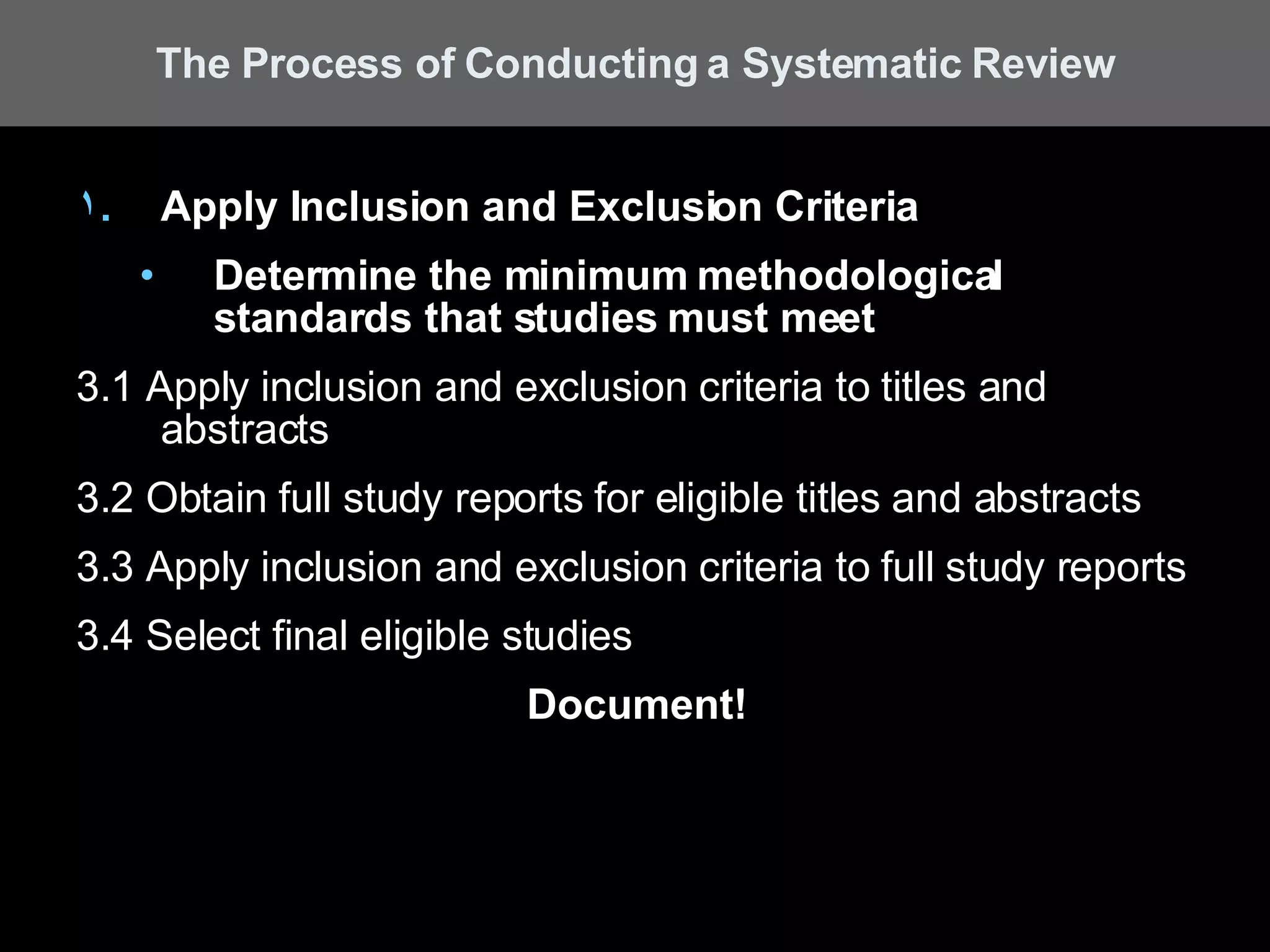
Apply Inclusion and Exclusion Criteria Determine the minimum methodological standards that studies must meet 3.1 Apply inclusion and exclusion criteria to titles and abstracts  3.2 Obtain full study reports for eligible titles and abstracts 3.3 Apply inclusion and exclusion criteria to full study reports 3.4 Select final eligible studies Document! The Process of Conducting a Systematic Review
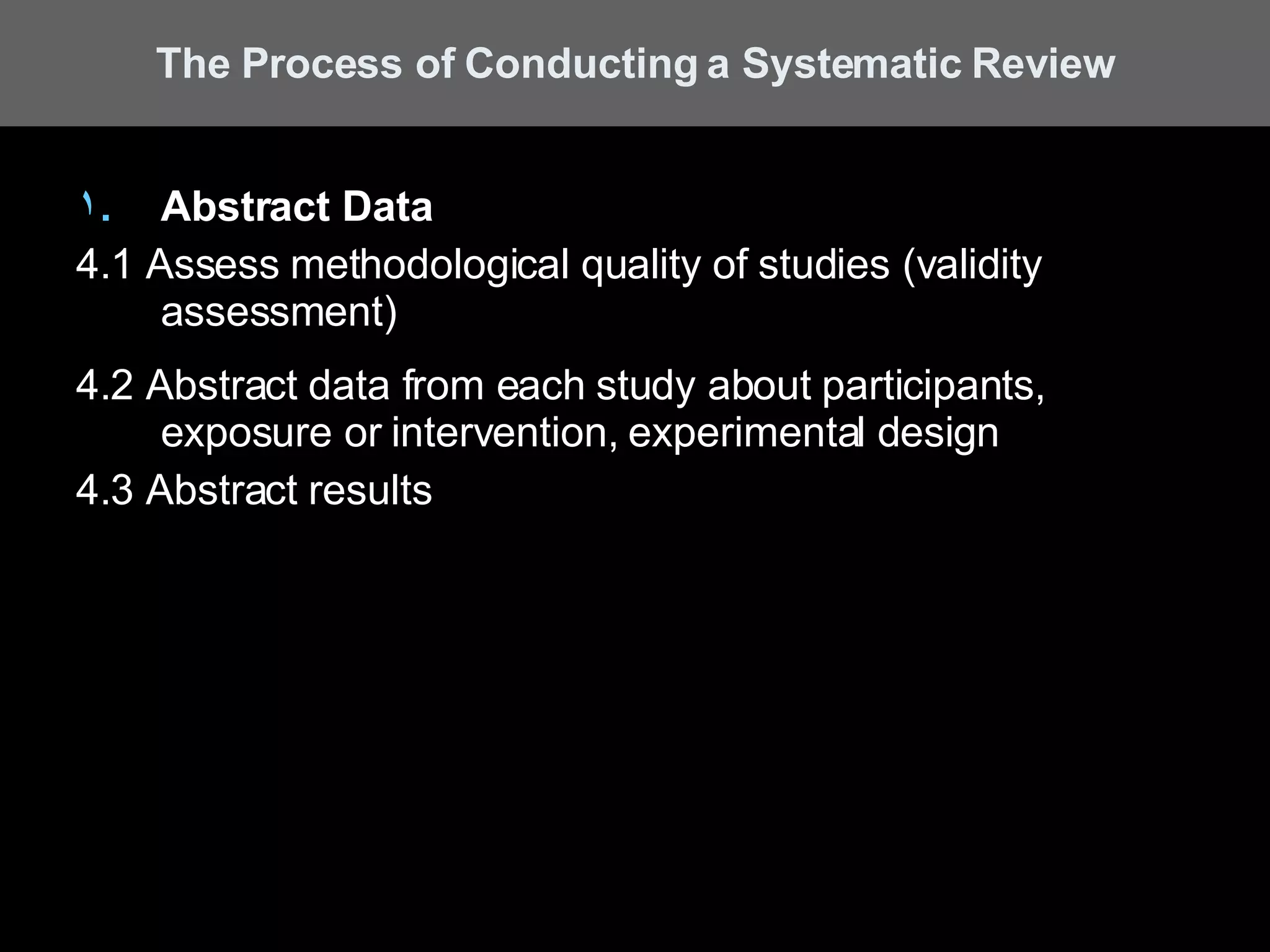
Abstract Data 4.1 Assess methodological quality of studies (validity assessment) 4.2 Abstract data from each study about participants, exposure or intervention, experimental design 4.3 Abstract results The Process of Conducting a Systematic Review
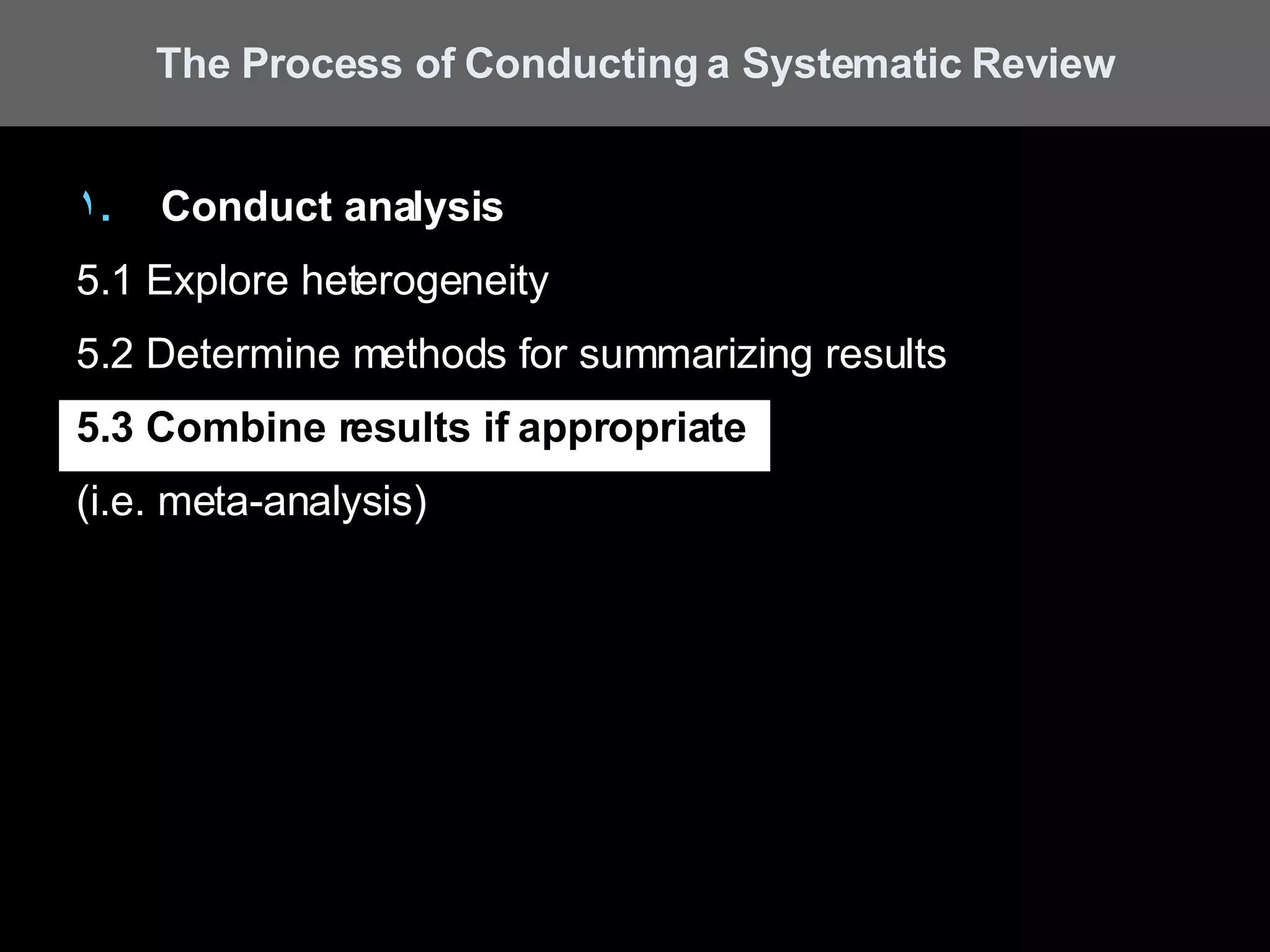
Conduct analysis 5.1 Explore heterogeneity 5.2 Determine methods for summarizing results 5.3 Combine results if appropriate   (i.e. meta-analysis) The Process of Conducting a Systematic Review
combining results
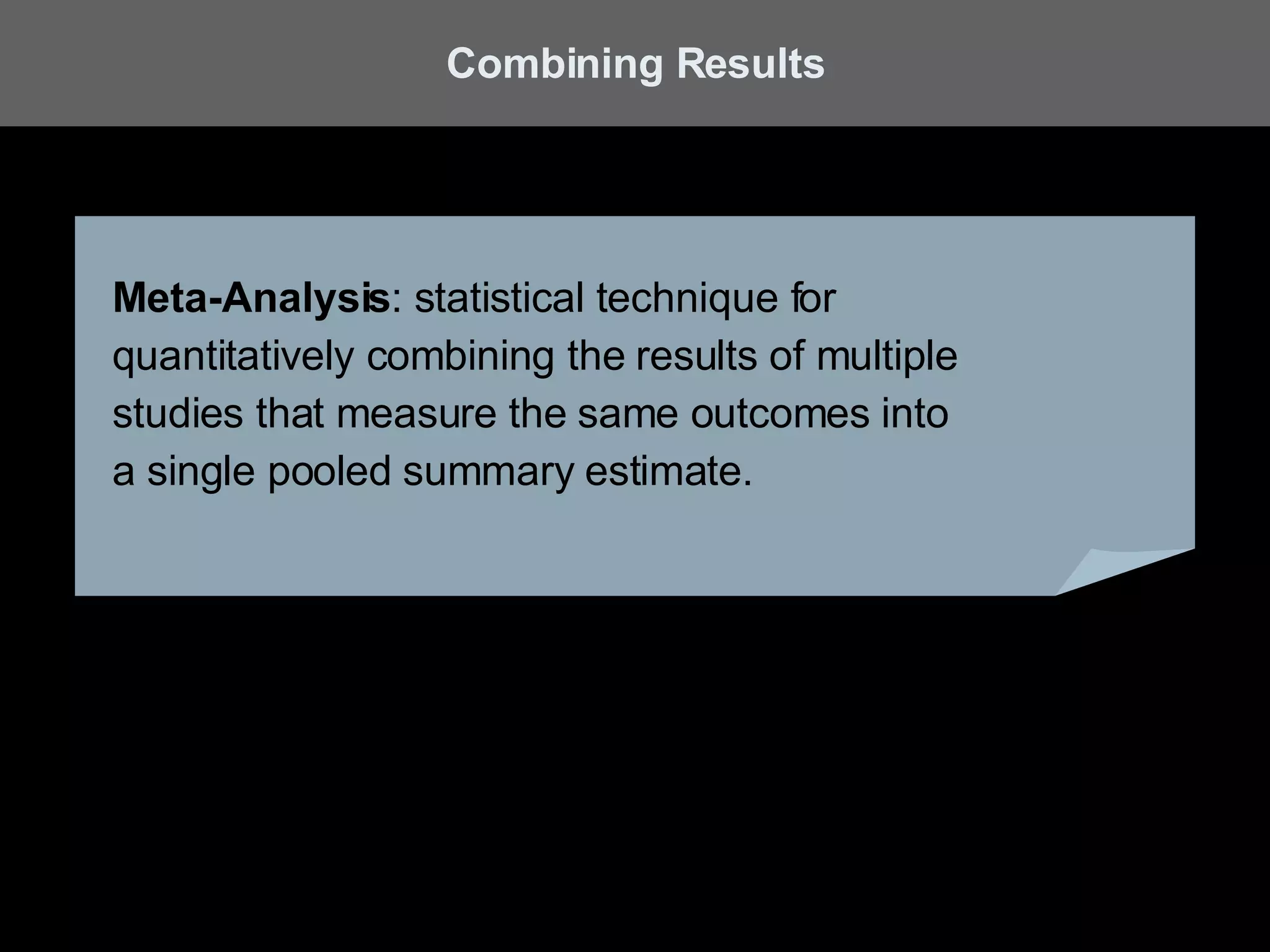
Meta-Analysis : statistical technique for  quantitatively combining the results of multiple  studies that measure the same outcomes into  a single pooled summary estimate. Combining Results
Combining Results Study results are weighted by their sample size, which yields a weighted average. There is usually a statistical test of heterogeneity among study weighted means = is the between study variance greater than expected by chance?
Confidence Intervals:  range between two values within which it is probably that the true value lies for the whole population of patients from which the study patients were selected. Differences Among Studies
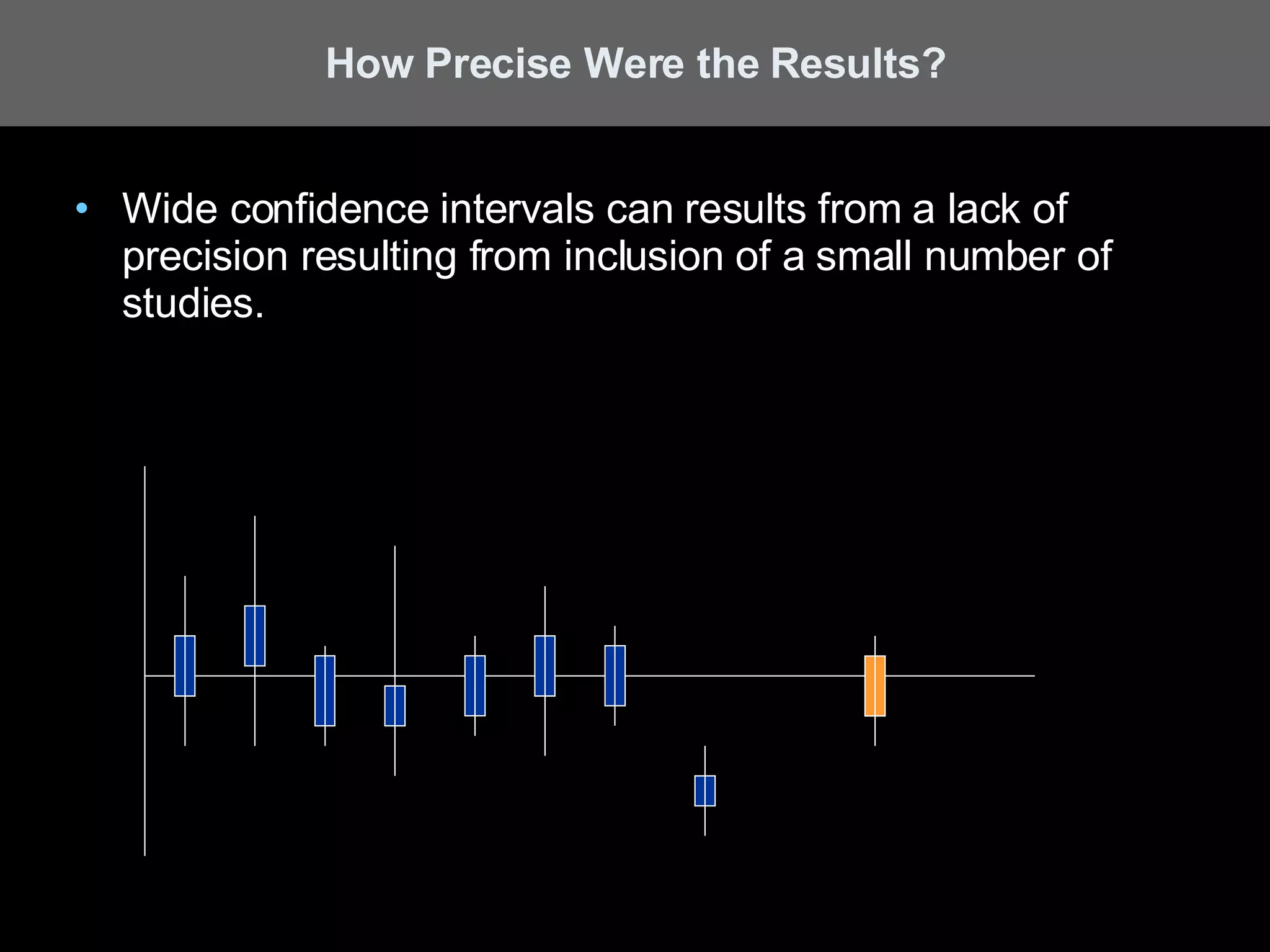
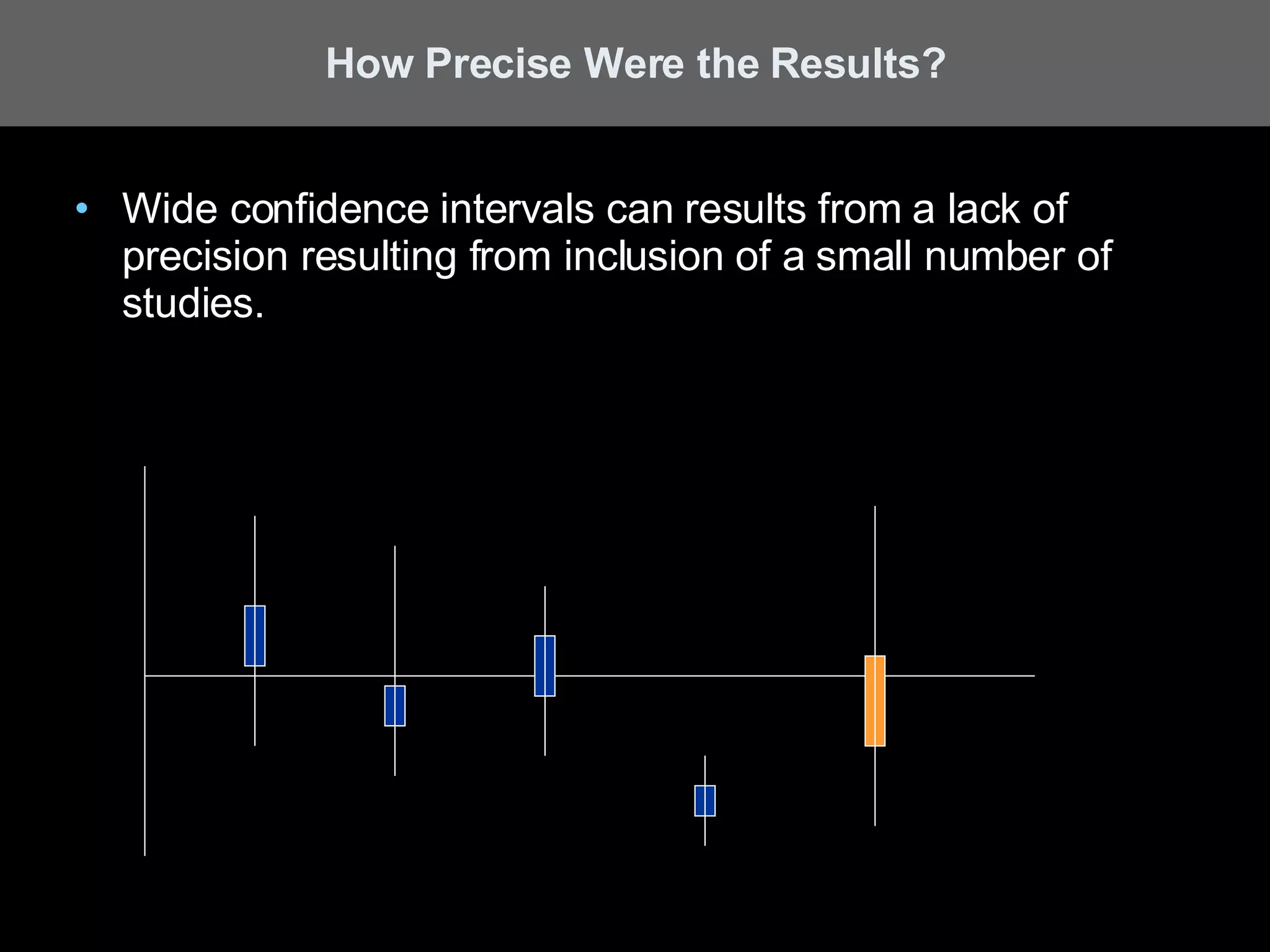
Wide confidence intervals can results from a lack of precision resulting from inclusion of a small number of studies. How Precise Were the Results?
The selective publication of manuscripts based on the magnitude, direction or statistical significance of the study results. Publication Bias
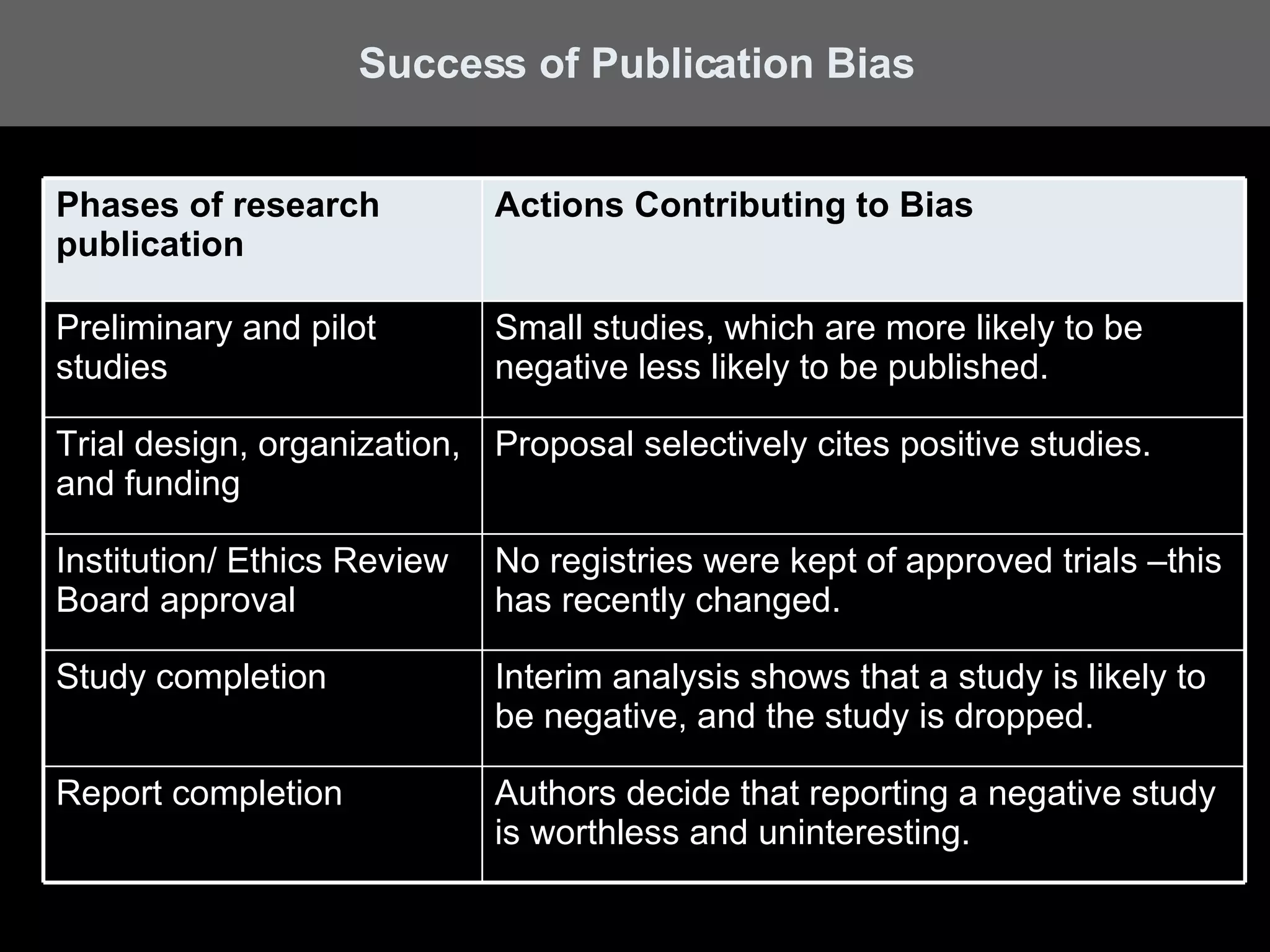
Success of Publication Bias Authors decide that reporting a negative study is worthless and uninteresting. Report completion Interim analysis shows that a study is likely to be negative, and the study is dropped. Study completion No registries were kept of approved trials –this has recently changed. Institution/ Ethics Review Board approval Proposal selectively cites positive studies. Trial design, organization, and funding Small studies, which are more likely to be negative less likely to be published. Preliminary and pilot studies Actions Contributing to Bias Phases of research publication
Applying the Results  to Patient Care
Consider whether: The population sample covered by the review could be different from your population in ways that would produce different results? Your local setting differs from that of the review? You can provide the same intervention in your setting? 1. How Can I apply the Results to Patient Care
Consider outcomes from the point of view of the: Individual Policy makers and professionals Family/careers Wider community Systematic reviews frequently do not report the adverse effects of treatment. 2. Were all Patient-Important Outcomes Considered?
Consider: Whether any benefit reported outweighs any harm and/or cost. If this information is not reported can it be filled in from elsewhere? 3. Are the Benefits worth the Cost and Potential Risks?

Systematic Reviews Class 4c

  • 1.
    systematic r ev i e w s Adam Dubrowski NUR 1022, Lecture 5
  • 2.
    We will addressthe following 2 issues: How is a systematic review different than a narrative review of the literature? Advantages of the systematic review? Systematic Review
  • 3.
    A systematic reviewis a literature review focused on a single question which tries to identify appraise select synthesize all high quality research evidence relevant to that question. Systematic Review
  • 4.
    Systematic reviews areregarded as the highest level of medical evidence by evidence-based medicine professionals . An understanding of systematic reviews and how to implement them in practice is becoming mandatory for all professionals involved in the delivery of health care. Systematic Review
  • 5.
    There are mechanismsto overcome bias in the review which involves following a rigorous methodology . Systematic Review
  • 6.
    Formulate a ResearchQuestion 1.1 Specify the Population, Intervention or Exposure, Methodology, Outcome (close to PICO) 1.2 Specify inclusion and exclusion criteria (of literature) 1.3 Determine restrictions: Time frame, Unpublished data, Language The Process of Conducting a Systematic Review
  • 7.
    Conduct Literature Search2.1 Decide on information sources: bibliographical databases key journals articles, funding agencies, pharmaceutical company registries etc. (document!) 2.2 Identify Titles and Abstracts The Process of Conducting a Systematic Review
  • 8.
    Apply Inclusion andExclusion Criteria Determine the minimum methodological standards that studies must meet 3.1 Apply inclusion and exclusion criteria to titles and abstracts 3.2 Obtain full study reports for eligible titles and abstracts 3.3 Apply inclusion and exclusion criteria to full study reports 3.4 Select final eligible studies Document! The Process of Conducting a Systematic Review
  • 9.
    Abstract Data 4.1Assess methodological quality of studies (validity assessment) 4.2 Abstract data from each study about participants, exposure or intervention, experimental design 4.3 Abstract results The Process of Conducting a Systematic Review
  • 10.
    Conduct analysis 5.1Explore heterogeneity 5.2 Determine methods for summarizing results 5.3 Combine results if appropriate (i.e. meta-analysis) The Process of Conducting a Systematic Review
  • 11.
  • 12.
    Meta-Analysis : statisticaltechnique for quantitatively combining the results of multiple studies that measure the same outcomes into a single pooled summary estimate. Combining Results
  • 13.
    Combining Results Studyresults are weighted by their sample size, which yields a weighted average. There is usually a statistical test of heterogeneity among study weighted means = is the between study variance greater than expected by chance?
  • 14.
    Confidence Intervals: range between two values within which it is probably that the true value lies for the whole population of patients from which the study patients were selected. Differences Among Studies
  • 15.
    Wide confidence intervalscan results from a lack of precision resulting from inclusion of a small number of studies. How Precise Were the Results?
  • 16.
    Wide confidence intervalscan results from a lack of precision resulting from inclusion of a small number of studies. How Precise Were the Results?
  • 17.
    The selective publicationof manuscripts based on the magnitude, direction or statistical significance of the study results. Publication Bias
  • 18.
    Success of PublicationBias Authors decide that reporting a negative study is worthless and uninteresting. Report completion Interim analysis shows that a study is likely to be negative, and the study is dropped. Study completion No registries were kept of approved trials –this has recently changed. Institution/ Ethics Review Board approval Proposal selectively cites positive studies. Trial design, organization, and funding Small studies, which are more likely to be negative less likely to be published. Preliminary and pilot studies Actions Contributing to Bias Phases of research publication
  • 19.
    Applying the Results to Patient Care
  • 20.
    Consider whether: Thepopulation sample covered by the review could be different from your population in ways that would produce different results? Your local setting differs from that of the review? You can provide the same intervention in your setting? 1. How Can I apply the Results to Patient Care
  • 21.
    Consider outcomes fromthe point of view of the: Individual Policy makers and professionals Family/careers Wider community Systematic reviews frequently do not report the adverse effects of treatment. 2. Were all Patient-Important Outcomes Considered?
  • 22.
    Consider: Whether anybenefit reported outweighs any harm and/or cost. If this information is not reported can it be filled in from elsewhere? 3. Are the Benefits worth the Cost and Potential Risks?