4/3/2025
1
Systematic Reviews and
Meta-analysis
Systematic Reviews and
Meta-analysis
Prof Dr. Ejaz Ahmad Khan
Scientific Committee
Systematic Review Network
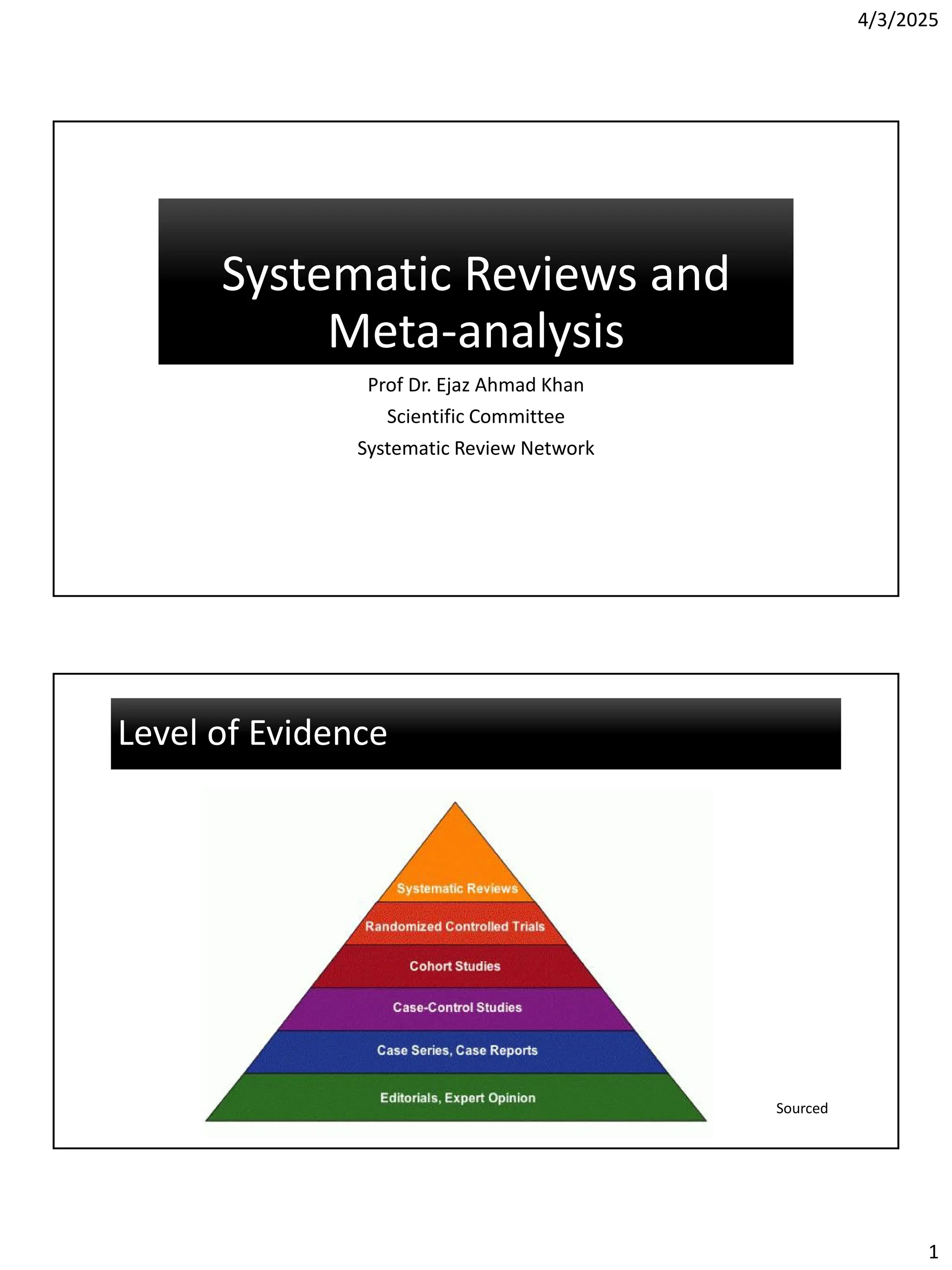
Level of Evidence
Level of Evidence
Sourced
4/3/2025
2
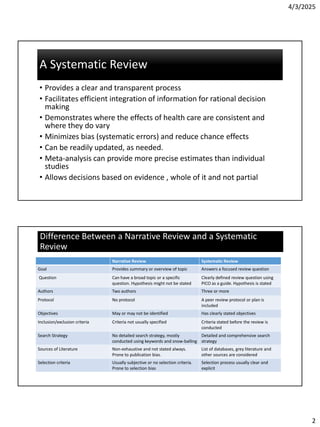
A Systematic Review
A Systematic Review
• Provides a clear and transparent process
• Facilitates efficient integration of information for rational decision
making
• Demonstrates where the effects of health care are consistent and
where they do vary
• Minimizes bias (systematic errors) and reduce chance effects
• Can be readily updated, as needed.
• Meta-analysis can provide more precise estimates than individual
studies
• Allows decisions based on evidence , whole of it and not partial
Difference Between a Narrative Review and a Systematic
Review
Narrative Review Systematic Review
Goal Provides summary or overview of topic Answers a focused review question
Question Can have a broad topic or a specific
question. Hypothesis might not be stated
Clearly defined review question using
PICO as a guide. Hypothesis is stated
Authors Two authors Three or more
Protocol No protocol A peer review protocol or plan is
included
Objectives May or may not be identified Has clearly stated objectives
Inclusion/exclusion criteria Criteria not usually specified Criteria stated before the review is
conducted
Search Strategy No detailed search strategy, mostly
conducted using keywords and snow-balling
Detailed and comprehensive search
strategy
Sources of Literature Non-exhaustive and not stated always.
Prone to publication bias.
List of databases, grey literature and
other sources are considered
Selection criteria Usually subjective or no selection criteria.
Prone to selection bias
Selection process usually clear and
explicit
4/3/2025
3
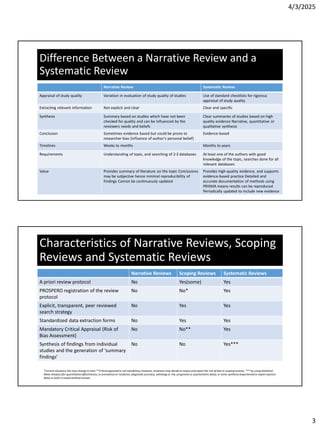
Difference Between a Narrative Review and a
Systematic Review
Narrative Review Systematic Review
Appraisal of study quality Variation in evaluation of study quality of studies Use of standard checklists for rigorous
appraisal of study quality
Extracting relevant information Not explicit and clear Clear and specific
Synthesis Summary based on studies which have not been
checked for quality and can be influenced by the
reviewers needs and beliefs
Clear summaries of studies based on high
quality evidence Narrative, quantitative or
qualitative synthesis
Conclusion Sometimes evidence based but could be prone to
researcher bias (influence of author’s personal belief)
Evidence-based
Timelines Weeks to months Months to years
Requirements Understanding of topic, and searching of 2-3 databases At least one of the authors with good
knowledge of the topic, searches done for all
relevant databases
Value Provides summary of literature on the topic Conclusions
may be subjective hence minimal reproducibility of
findings Cannot be continuously updated
Provides high-quality evidence, and supports
evidence-based practice Detailed and
accurate documentation of methods using
PRISMA means results can be reproduced
Periodically updated to include new evidence
Characteristics of Narrative Reviews, Scoping
Reviews and Systematic Reviews
Narrative Reviews Scoping Reviews Systematic Reviews
A priori review protocol No Yes(some) Yes
PROSPERO registration of the review
protocol
No No* Yes
Explicit, transparent, peer reviewed
search strategy
No Yes Yes
Standardized data extraction forms No Yes Yes
Mandatory Critical Appraisal (Risk of
Bias Assessment)
No No** Yes
Synthesis of findings from individual
studies and the generation of ‘summary
findings’
No No Yes***
*Current situation; this may change in time.**Critical appraisalis not mandatory;however, reviewers may decide to assess and report the risk of bias in scoping reviews. *** by using statistical
Meta-Analysis (for quantitativeeffectiveness, or prevalenceor incidence, diagnostic accuracy, aetiology or risk, prognosticor psychometric data), or meta-synthesis(experiential or expert opinion
data) or both in mixed method reviews
4/3/2025
4
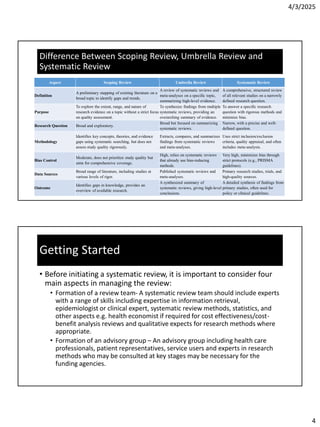
Difference Between Scoping Review, Umbrella Review and
Systematic Review
Aspect Scoping Review Umbrella Review Systematic Review
Definition
A preliminary mapping of existing literature on a
broad topic to identify gaps and trends.
A review of systematic reviews and
meta-analyses on a specific topic,
summarizing high-level evidence.
A comprehensive, structured review
of all relevant studies on a narrowly
defined research question.
Purpose
To explore the extent, range, and nature of
research evidence on a topic without a strict focus
on quality assessment.
To synthesize findings from multiple
systematic reviews, providing an
overarching summary of evidence.
To answer a specific research
question with rigorous methods and
minimize bias.
Research Question Broad and exploratory.
Broad but focused on summarizing
systematic reviews.
Narrow, with a precise and well-
defined question.
Methodology
Identifies key concepts, theories, and evidence
gaps using systematic searching, but does not
assess study quality rigorously.
Extracts, compares, and summarizes
findings from systematic reviews
and meta-analyses.
Uses strict inclusion/exclusion
criteria, quality appraisal, and often
includes meta-analysis.
Bias Control
Moderate, does not prioritize study quality but
aims for comprehensive coverage.
High, relies on systematic reviews
that already use bias-reducing
methods.
Very high, minimizes bias through
strict protocols (e.g., PRISMA
guidelines).
Data Sources
Broad range of literature, including studies at
various levels of rigor.
Published systematic reviews and
meta-analyses.
Primary research studies, trials, and
high-quality sources.
Outcome
Identifies gaps in knowledge, provides an
overview of available research.
A synthesized summary of
systematic reviews, giving high-level
conclusions.
A detailed synthesis of findings from
primary studies, often used for
policy or clinical guidelines.
Getting Started
• Before initiating a systematic review, it is important to consider four
main aspects in managing the review:
• Formation of a review team- A systematic review team should include experts
with a range of skills including expertise in information retrieval,
epidemiologist or clinical expert, systematic review methods, statistics, and
other aspects e.g. health economist if required for cost effectiveness/cost-
benefit analysis reviews and qualitative expects for research methods where
appropriate.
• Formation of an advisory group – An advisory group including health care
professionals, patient representatives, service users and experts in research
methods who may be consulted at key stages may be necessary for the
funding agencies.
4/3/2025
5
Getting Started
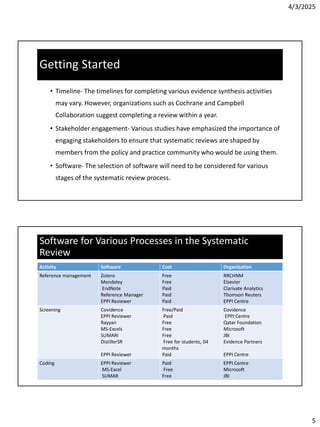
• Timeline- The timelines for completing various evidence synthesis activities
may vary. However, organizations such as Cochrane and Campbell
Collaboration suggest completing a review within a year.
• Stakeholder engagement- Various studies have emphasized the importance of
engaging stakeholders to ensure that systematic reviews are shaped by
members from the policy and practice community who would be using them.
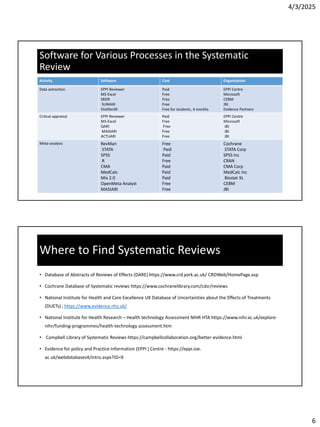
• Software- The selection of software will need to be considered for various
stages of the systematic review process.
Software for Various Processes in the Systematic
Review
Activity Software Cost Organization
Reference management Zotero
Mendeley
EndNote
Reference Manager
EPPI Reviewer
Free
Free
Paid
Paid
Paid
RRCHNM
Elsevier
Clarivate Analytics
Thomson Reuters
EPPI Centre
Screening Covidence
EPPI Reviewer
Rayyan
MS-Excels
SUMARI
DistillerSR
EPPI Reviewer
Free/Paid
Paid
Free
Free
Free
Free for students, 04
months
Paid
Covidence
EPPI Centre
Qatar Foundation
Microsoft
JBI
Evidence Partners
EPPI Centre
Coding EPPI Reviewer
MS-Excel
SUMAR
Paid
Free
Free
EPPI Centre
Microsoft
JBI
4/3/2025
6
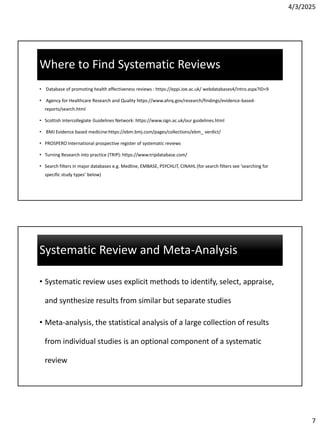
Software for Various Processes in the Systematic
Review
Activity Software Cost Organization
Data extraction EPPI Reviewer
MS-Excel
SRDR
SUMARI
DistillerSR
Paid
Free
Free
Free
Free for students, 4 months
EPPI Centre
Microsoft
CEBM
JBI
Evidence Partners
Critical appraisal EPPI Reviewer
MS-Excel
QARI
MAStARI
ACTUARI
Paid
Free
Free
Free
Free
EPPI Centre
Microsoft
JBI
JBI
JBI
Meta-analysis RevMan
STATA
SPSS
R
CMA
MedCalc
Mix 2.0
OpenMeta Analyst
MAStARI
Free
Paid
Paid
Free
Paid
Paid
Paid
Free
Free
Cochrane
STATA Corp
SPSS Inc
CRAN
CMA Corp
MedCalc Inc
Biostat XL
CEBM
JBI
Where to Find Systematic Reviews
• Database of Abstracts of Reviews of Effects (DARE) https://www.crd.york.ac.uk/ CRDWeb/HomePage.asp
• Cochrane Database of Systematic reviews https://www.cochranelibrary.com/cdsr/reviews
• National Institute for Health and Care Excellence UK Database of Uncertainties about the Effects of Treatments
(DUETs) ; https://www.evidence.nhs.uk/
• National Institute for Health Research – Health technology Assessment NIHR HTA https://www.nihr.ac.uk/explore-
nihr/funding-programmes/health-technology assessment.htm
• Campbell Library of Systematic Reviews https://campbellcollaboration.org/better-evidence.html
• Evidence for policy and Practice Information (EPPI ) Centre - https://eppi.ioe.
ac.uk/webdatabases4/Intro.aspx?ID=9
4/3/2025
7
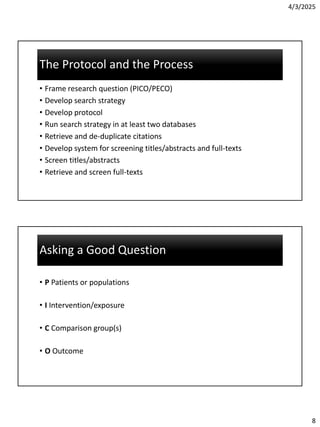
Where to Find Systematic Reviews
• Database of promoting health effectiveness reviews : https://eppi.ioe.ac.uk/ webdatabases4/Intro.aspx?ID=9
• Agency for Healthcare Research and Quality https://www.ahrq.gov/research/findings/evidence-based-
reports/search.html
• Scottish Intercollegiate Guidelines Network: https://www.sign.ac.uk/our guidelines.html
• BMJ Evidence based medicine:https://ebm.bmj.com/pages/collections/ebm_ verdict/
• PROSPERO International prospective register of systematic reviews
• Turning Research into practice (TRIP): https://www.tripdatabase.com/
• Search filters in major databases e.g. Medline, EMBASE, PSYCHLIT, CINAHL (for search filters see ‘searching for
specific study types’ below)
Systematic Review and Meta-Analysis
• Systematic review uses explicit methods to identify, select, appraise,
and synthesize results from similar but separate studies
• Meta-analysis, the statistical analysis of a large collection of results
from individual studies is an optional component of a systematic
review
4/3/2025
8
The Protocol and the Process
• Frame research question (PICO/PECO)
• Develop search strategy
• Develop protocol
• Run search strategy in at least two databases
• Retrieve and de-duplicate citations
• Develop system for screening titles/abstracts and full-texts
• Screen titles/abstracts
• Retrieve and screen full-texts
Asking a Good Question
• P Patients or populations
• I Intervention/exposure
• C Comparison group(s)
• O Outcome
4/3/2025
9
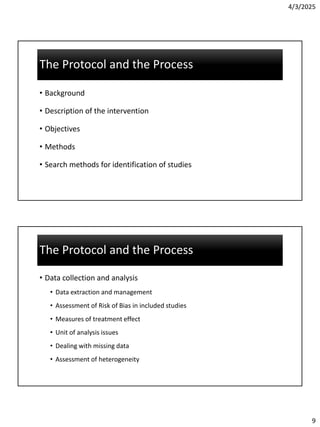
The Protocol and the Process
• Background
• Description of the intervention
• Objectives
• Methods
• Search methods for identification of studies
The Protocol and the Process
• Data collection and analysis
• Data extraction and management
• Assessment of Risk of Bias in included studies
• Measures of treatment effect
• Unit of analysis issues
• Dealing with missing data
• Assessment of heterogeneity
4/3/2025
10
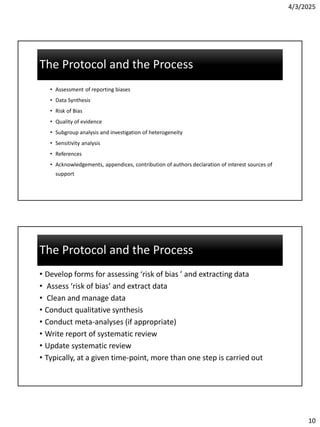
The Protocol and the Process
• Assessment of reporting biases
• Data Synthesis
• Risk of Bias
• Quality of evidence
• Subgroup analysis and investigation of heterogeneity
• Sensitivity analysis
• References
• Acknowledgements, appendices, contribution of authors declaration of interest sources of
support
The Protocol and the Process
• Develop forms for assessing ‘risk of bias ’ and extracting data
• Assess ‘risk of bias’ and extract data
• Clean and manage data
• Conduct qualitative synthesis
• Conduct meta-analyses (if appropriate)
• Write report of systematic review
• Update systematic review
• Typically, at a given time-point, more than one step is carried out
4/3/2025
11
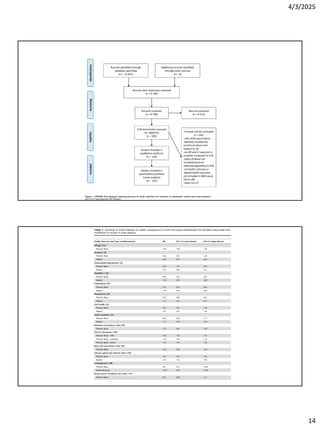
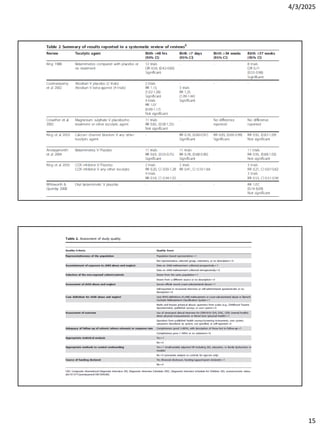
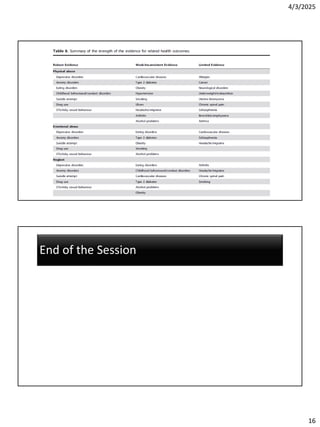
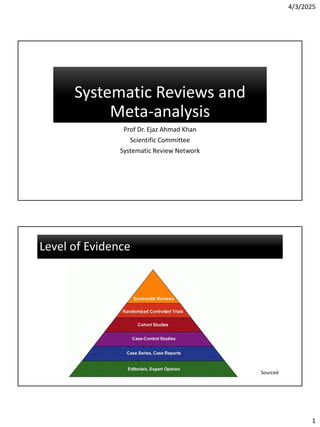
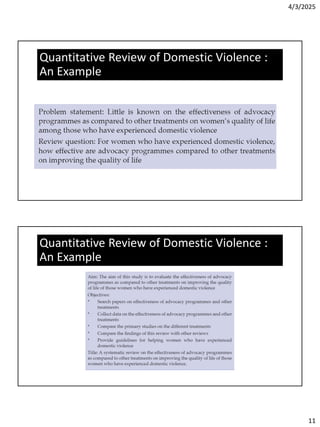
Quantitative Review of Domestic Violence :
An Example
Quantitative Review of Domestic Violence :
An Example
4/3/2025
12
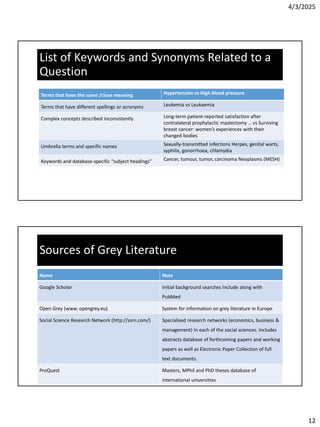
List of Keywords and Synonyms Related to a
Question
Terms that have the same /close meaning Hypertension vs High blood pressure
Terms that have different spellings or acronyms Leukemia vs Leukaemia
Complex concepts described inconsistently Long-term patient-reported satisfaction after
contralateral prophylactic mastectomy … vs Surviving
breast cancer: women’s experiences with their
changed bodies
Umbrella terms and specific names Sexually-transmitted infections Herpes, genital warts,
syphilis, gonorrhoea, chlamydia
Keywords and database-specific “subject headings” Cancer, tumour, tumor, carcinoma Neoplasms (MESH)
Sources of Grey Literature
Name Note
Google Scholar Initial background searches Include along with
PubMed
Open Grey (www. opengrey.eu) System for information on grey literature in Europe
Social Science Research Network (http://ssrn.com/) Specialised research networks (economics, business &
management) in each of the social sciences. Includes
abstracts database of forthcoming papers and working
papers as well as Electronic Paper Collection of full
text documents.
ProQuest Masters, MPhil and PhD theses database of
international universities
4/3/2025
13
Tailor Search Strategy to Database(s)
• Different databases would need different search fields for conducting a
search:
• e.g. PubMed: Search the Text Word field for free-text terms and MeSH Terms for
controlled vocabulary terms. e.g. sunshine[tw], sunlight[tw], Sunbathing[mh],
Suntan[mh]
• e.g. Embase: Search the Title and Abstract field :ti, ab for free-text terms and Emtree
terms ‘term’/exp for controlled vocabulary terms. e.g. sunshine:ti,ab, sunlight:ti,ab,
‘sun exposure’/exp, ‘sunlight’/exp
Tailor Search Strategy to Database(s)
• Syntax for PubMed (From Cochrane
Handbook, 6.4.11.1):
• #1 randomized controlled trial [pt]
• #2 controlled clinical trial [pt]
• #3 randomized [tiab]
• #4 placebo [tiab]
• #5 drug therapy [sh]
• #6 randomly [tiab]
• #7 trial [tiab]
• #8 groups [tiab]
• #9 #1 OR #2 OR #3 OR #4 OR #5 OR
#6 OR #7 OR #8
• #10 animals [mh] NOT humans
[mh]
• #11 #9 NOT #10
4/3/2025
14
4/3/2025
15
4/3/2025
16
End of the Session

Introduction to Systematic Reviews - Prof Ejaz Khan

  • 1.
    4/3/2025 1 Systematic Reviews and Meta-analysis SystematicReviews and Meta-analysis Prof Dr. Ejaz Ahmad Khan Scientific Committee Systematic Review Network Level of Evidence Level of Evidence Sourced
  • 2.
    4/3/2025 2 A Systematic Review ASystematic Review • Provides a clear and transparent process • Facilitates efficient integration of information for rational decision making • Demonstrates where the effects of health care are consistent and where they do vary • Minimizes bias (systematic errors) and reduce chance effects • Can be readily updated, as needed. • Meta-analysis can provide more precise estimates than individual studies • Allows decisions based on evidence , whole of it and not partial Difference Between a Narrative Review and a Systematic Review Narrative Review Systematic Review Goal Provides summary or overview of topic Answers a focused review question Question Can have a broad topic or a specific question. Hypothesis might not be stated Clearly defined review question using PICO as a guide. Hypothesis is stated Authors Two authors Three or more Protocol No protocol A peer review protocol or plan is included Objectives May or may not be identified Has clearly stated objectives Inclusion/exclusion criteria Criteria not usually specified Criteria stated before the review is conducted Search Strategy No detailed search strategy, mostly conducted using keywords and snow-balling Detailed and comprehensive search strategy Sources of Literature Non-exhaustive and not stated always. Prone to publication bias. List of databases, grey literature and other sources are considered Selection criteria Usually subjective or no selection criteria. Prone to selection bias Selection process usually clear and explicit
  • 3.
    4/3/2025 3 Difference Between aNarrative Review and a Systematic Review Narrative Review Systematic Review Appraisal of study quality Variation in evaluation of study quality of studies Use of standard checklists for rigorous appraisal of study quality Extracting relevant information Not explicit and clear Clear and specific Synthesis Summary based on studies which have not been checked for quality and can be influenced by the reviewers needs and beliefs Clear summaries of studies based on high quality evidence Narrative, quantitative or qualitative synthesis Conclusion Sometimes evidence based but could be prone to researcher bias (influence of author’s personal belief) Evidence-based Timelines Weeks to months Months to years Requirements Understanding of topic, and searching of 2-3 databases At least one of the authors with good knowledge of the topic, searches done for all relevant databases Value Provides summary of literature on the topic Conclusions may be subjective hence minimal reproducibility of findings Cannot be continuously updated Provides high-quality evidence, and supports evidence-based practice Detailed and accurate documentation of methods using PRISMA means results can be reproduced Periodically updated to include new evidence Characteristics of Narrative Reviews, Scoping Reviews and Systematic Reviews Narrative Reviews Scoping Reviews Systematic Reviews A priori review protocol No Yes(some) Yes PROSPERO registration of the review protocol No No* Yes Explicit, transparent, peer reviewed search strategy No Yes Yes Standardized data extraction forms No Yes Yes Mandatory Critical Appraisal (Risk of Bias Assessment) No No** Yes Synthesis of findings from individual studies and the generation of ‘summary findings’ No No Yes*** *Current situation; this may change in time.**Critical appraisalis not mandatory;however, reviewers may decide to assess and report the risk of bias in scoping reviews. *** by using statistical Meta-Analysis (for quantitativeeffectiveness, or prevalenceor incidence, diagnostic accuracy, aetiology or risk, prognosticor psychometric data), or meta-synthesis(experiential or expert opinion data) or both in mixed method reviews
  • 4.
    4/3/2025 4 Difference Between ScopingReview, Umbrella Review and Systematic Review Aspect Scoping Review Umbrella Review Systematic Review Definition A preliminary mapping of existing literature on a broad topic to identify gaps and trends. A review of systematic reviews and meta-analyses on a specific topic, summarizing high-level evidence. A comprehensive, structured review of all relevant studies on a narrowly defined research question. Purpose To explore the extent, range, and nature of research evidence on a topic without a strict focus on quality assessment. To synthesize findings from multiple systematic reviews, providing an overarching summary of evidence. To answer a specific research question with rigorous methods and minimize bias. Research Question Broad and exploratory. Broad but focused on summarizing systematic reviews. Narrow, with a precise and well- defined question. Methodology Identifies key concepts, theories, and evidence gaps using systematic searching, but does not assess study quality rigorously. Extracts, compares, and summarizes findings from systematic reviews and meta-analyses. Uses strict inclusion/exclusion criteria, quality appraisal, and often includes meta-analysis. Bias Control Moderate, does not prioritize study quality but aims for comprehensive coverage. High, relies on systematic reviews that already use bias-reducing methods. Very high, minimizes bias through strict protocols (e.g., PRISMA guidelines). Data Sources Broad range of literature, including studies at various levels of rigor. Published systematic reviews and meta-analyses. Primary research studies, trials, and high-quality sources. Outcome Identifies gaps in knowledge, provides an overview of available research. A synthesized summary of systematic reviews, giving high-level conclusions. A detailed synthesis of findings from primary studies, often used for policy or clinical guidelines. Getting Started • Before initiating a systematic review, it is important to consider four main aspects in managing the review: • Formation of a review team- A systematic review team should include experts with a range of skills including expertise in information retrieval, epidemiologist or clinical expert, systematic review methods, statistics, and other aspects e.g. health economist if required for cost effectiveness/cost- benefit analysis reviews and qualitative expects for research methods where appropriate. • Formation of an advisory group – An advisory group including health care professionals, patient representatives, service users and experts in research methods who may be consulted at key stages may be necessary for the funding agencies.
  • 5.
    4/3/2025 5 Getting Started • Timeline-The timelines for completing various evidence synthesis activities may vary. However, organizations such as Cochrane and Campbell Collaboration suggest completing a review within a year. • Stakeholder engagement- Various studies have emphasized the importance of engaging stakeholders to ensure that systematic reviews are shaped by members from the policy and practice community who would be using them. • Software- The selection of software will need to be considered for various stages of the systematic review process. Software for Various Processes in the Systematic Review Activity Software Cost Organization Reference management Zotero Mendeley EndNote Reference Manager EPPI Reviewer Free Free Paid Paid Paid RRCHNM Elsevier Clarivate Analytics Thomson Reuters EPPI Centre Screening Covidence EPPI Reviewer Rayyan MS-Excels SUMARI DistillerSR EPPI Reviewer Free/Paid Paid Free Free Free Free for students, 04 months Paid Covidence EPPI Centre Qatar Foundation Microsoft JBI Evidence Partners EPPI Centre Coding EPPI Reviewer MS-Excel SUMAR Paid Free Free EPPI Centre Microsoft JBI
  • 6.
    4/3/2025 6 Software for VariousProcesses in the Systematic Review Activity Software Cost Organization Data extraction EPPI Reviewer MS-Excel SRDR SUMARI DistillerSR Paid Free Free Free Free for students, 4 months EPPI Centre Microsoft CEBM JBI Evidence Partners Critical appraisal EPPI Reviewer MS-Excel QARI MAStARI ACTUARI Paid Free Free Free Free EPPI Centre Microsoft JBI JBI JBI Meta-analysis RevMan STATA SPSS R CMA MedCalc Mix 2.0 OpenMeta Analyst MAStARI Free Paid Paid Free Paid Paid Paid Free Free Cochrane STATA Corp SPSS Inc CRAN CMA Corp MedCalc Inc Biostat XL CEBM JBI Where to Find Systematic Reviews • Database of Abstracts of Reviews of Effects (DARE) https://www.crd.york.ac.uk/ CRDWeb/HomePage.asp • Cochrane Database of Systematic reviews https://www.cochranelibrary.com/cdsr/reviews • National Institute for Health and Care Excellence UK Database of Uncertainties about the Effects of Treatments (DUETs) ; https://www.evidence.nhs.uk/ • National Institute for Health Research – Health technology Assessment NIHR HTA https://www.nihr.ac.uk/explore- nihr/funding-programmes/health-technology assessment.htm • Campbell Library of Systematic Reviews https://campbellcollaboration.org/better-evidence.html • Evidence for policy and Practice Information (EPPI ) Centre - https://eppi.ioe. ac.uk/webdatabases4/Intro.aspx?ID=9
  • 7.
    4/3/2025 7 Where to FindSystematic Reviews • Database of promoting health effectiveness reviews : https://eppi.ioe.ac.uk/ webdatabases4/Intro.aspx?ID=9 • Agency for Healthcare Research and Quality https://www.ahrq.gov/research/findings/evidence-based- reports/search.html • Scottish Intercollegiate Guidelines Network: https://www.sign.ac.uk/our guidelines.html • BMJ Evidence based medicine:https://ebm.bmj.com/pages/collections/ebm_ verdict/ • PROSPERO International prospective register of systematic reviews • Turning Research into practice (TRIP): https://www.tripdatabase.com/ • Search filters in major databases e.g. Medline, EMBASE, PSYCHLIT, CINAHL (for search filters see ‘searching for specific study types’ below) Systematic Review and Meta-Analysis Systematic Review and Meta-Analysis • Systematic review uses explicit methods to identify, select, appraise, and synthesize results from similar but separate studies • Meta-analysis, the statistical analysis of a large collection of results from individual studies is an optional component of a systematic review
  • 8.
    4/3/2025 8 The Protocol andthe Process The Protocol and the Process • Frame research question (PICO/PECO) • Develop search strategy • Develop protocol • Run search strategy in at least two databases • Retrieve and de-duplicate citations • Develop system for screening titles/abstracts and full-texts • Screen titles/abstracts • Retrieve and screen full-texts Asking a Good Question Asking a Good Question • P Patients or populations • I Intervention/exposure • C Comparison group(s) • O Outcome
  • 9.
    4/3/2025 9 The Protocol andthe Process The Protocol and the Process • Background • Description of the intervention • Objectives • Methods • Search methods for identification of studies The Protocol and the Process The Protocol and the Process • Data collection and analysis • Data extraction and management • Assessment of Risk of Bias in included studies • Measures of treatment effect • Unit of analysis issues • Dealing with missing data • Assessment of heterogeneity
  • 10.
    4/3/2025 10 The Protocol andthe Process The Protocol and the Process • Assessment of reporting biases • Data Synthesis • Risk of Bias • Quality of evidence • Subgroup analysis and investigation of heterogeneity • Sensitivity analysis • References • Acknowledgements, appendices, contribution of authors declaration of interest sources of support The Protocol and the Process The Protocol and the Process • Develop forms for assessing ‘risk of bias ’ and extracting data • Assess ‘risk of bias’ and extract data • Clean and manage data • Conduct qualitative synthesis • Conduct meta-analyses (if appropriate) • Write report of systematic review • Update systematic review • Typically, at a given time-point, more than one step is carried out
  • 11.
    4/3/2025 11 Quantitative Review ofDomestic Violence : An Example Quantitative Review of Domestic Violence : An Example
  • 12.
    4/3/2025 12 List of Keywordsand Synonyms Related to a Question Terms that have the same /close meaning Hypertension vs High blood pressure Terms that have different spellings or acronyms Leukemia vs Leukaemia Complex concepts described inconsistently Long-term patient-reported satisfaction after contralateral prophylactic mastectomy … vs Surviving breast cancer: women’s experiences with their changed bodies Umbrella terms and specific names Sexually-transmitted infections Herpes, genital warts, syphilis, gonorrhoea, chlamydia Keywords and database-specific “subject headings” Cancer, tumour, tumor, carcinoma Neoplasms (MESH) Sources of Grey Literature Name Note Google Scholar Initial background searches Include along with PubMed Open Grey (www. opengrey.eu) System for information on grey literature in Europe Social Science Research Network (http://ssrn.com/) Specialised research networks (economics, business & management) in each of the social sciences. Includes abstracts database of forthcoming papers and working papers as well as Electronic Paper Collection of full text documents. ProQuest Masters, MPhil and PhD theses database of international universities
  • 13.
    4/3/2025 13 Tailor Search Strategyto Database(s) • Different databases would need different search fields for conducting a search: • e.g. PubMed: Search the Text Word field for free-text terms and MeSH Terms for controlled vocabulary terms. e.g. sunshine[tw], sunlight[tw], Sunbathing[mh], Suntan[mh] • e.g. Embase: Search the Title and Abstract field :ti, ab for free-text terms and Emtree terms ‘term’/exp for controlled vocabulary terms. e.g. sunshine:ti,ab, sunlight:ti,ab, ‘sun exposure’/exp, ‘sunlight’/exp Tailor Search Strategy to Database(s) • Syntax for PubMed (From Cochrane Handbook, 6.4.11.1): • #1 randomized controlled trial [pt] • #2 controlled clinical trial [pt] • #3 randomized [tiab] • #4 placebo [tiab] • #5 drug therapy [sh] • #6 randomly [tiab] • #7 trial [tiab] • #8 groups [tiab] • #9 #1 OR #2 OR #3 OR #4 OR #5 OR #6 OR #7 OR #8 • #10 animals [mh] NOT humans [mh] • #11 #9 NOT #10
  • 14.
  • 15.
  • 16.