
What is an operating system?
An operating system is the most important software
that runs on a computer. It manages the
computer's memory, processes, and all of its
software and hardware. It also allows you to
communicate with the computer without knowing
how to speak the computer's language. Without an
operating system, a computer is useless.
The operating system's job
Your computer's operating system (OS) manages all of the software
and hardware on the computer. Most of the time, there are many
different computer programs running at the same time, and they all
need to access your computer's central processing unit (CPU),
memory, and storage. The operating system coordinates all of this to
make sure each program gets what it needs.
Types of operating systems
Operating systems usually come preloaded on any computer you
buy. Most people use the operating system that comes with their
computer, but it's possible to upgrade or even change operating
systems.
The three most common operating systems for personal computers
are Microsoft Windows, Apple Mac OS X, and Linux.
The Windows, OS X, and Linux logos
Microsoft Windows
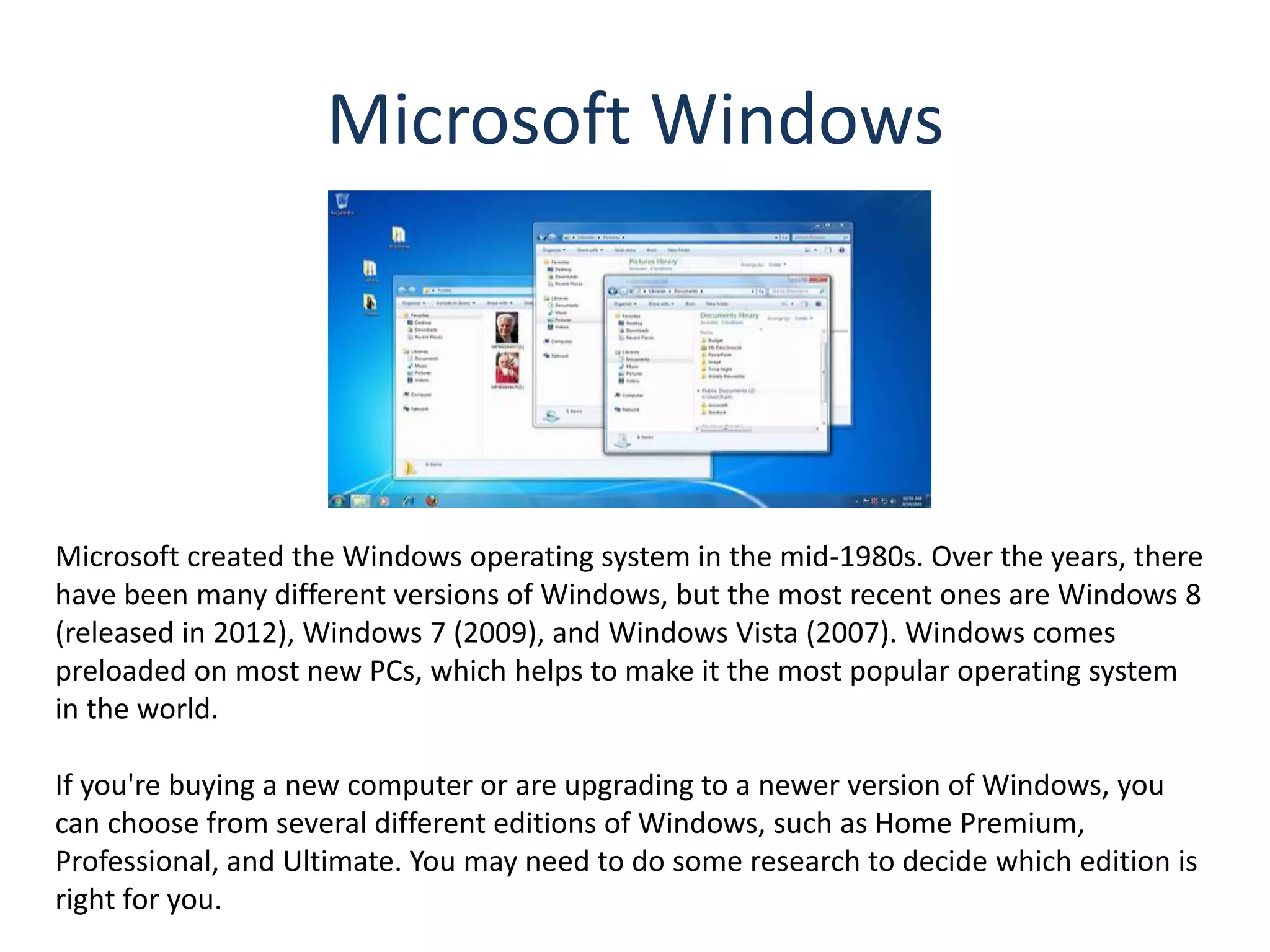
Microsoft created the Windows operating system in the mid-1980s. Over the years, there
have been many different versions of Windows, but the most recent ones are Windows 8
(released in 2012), Windows 7 (2009), and Windows Vista (2007). Windows comes
preloaded on most new PCs, which helps to make it the most popular operating system
in the world.
If you're buying a new computer or are upgrading to a newer version of Windows, you
can choose from several different editions of Windows, such as Home Premium,
Professional, and Ultimate. You may need to do some research to decide which edition is
right for you.
Mac OS X
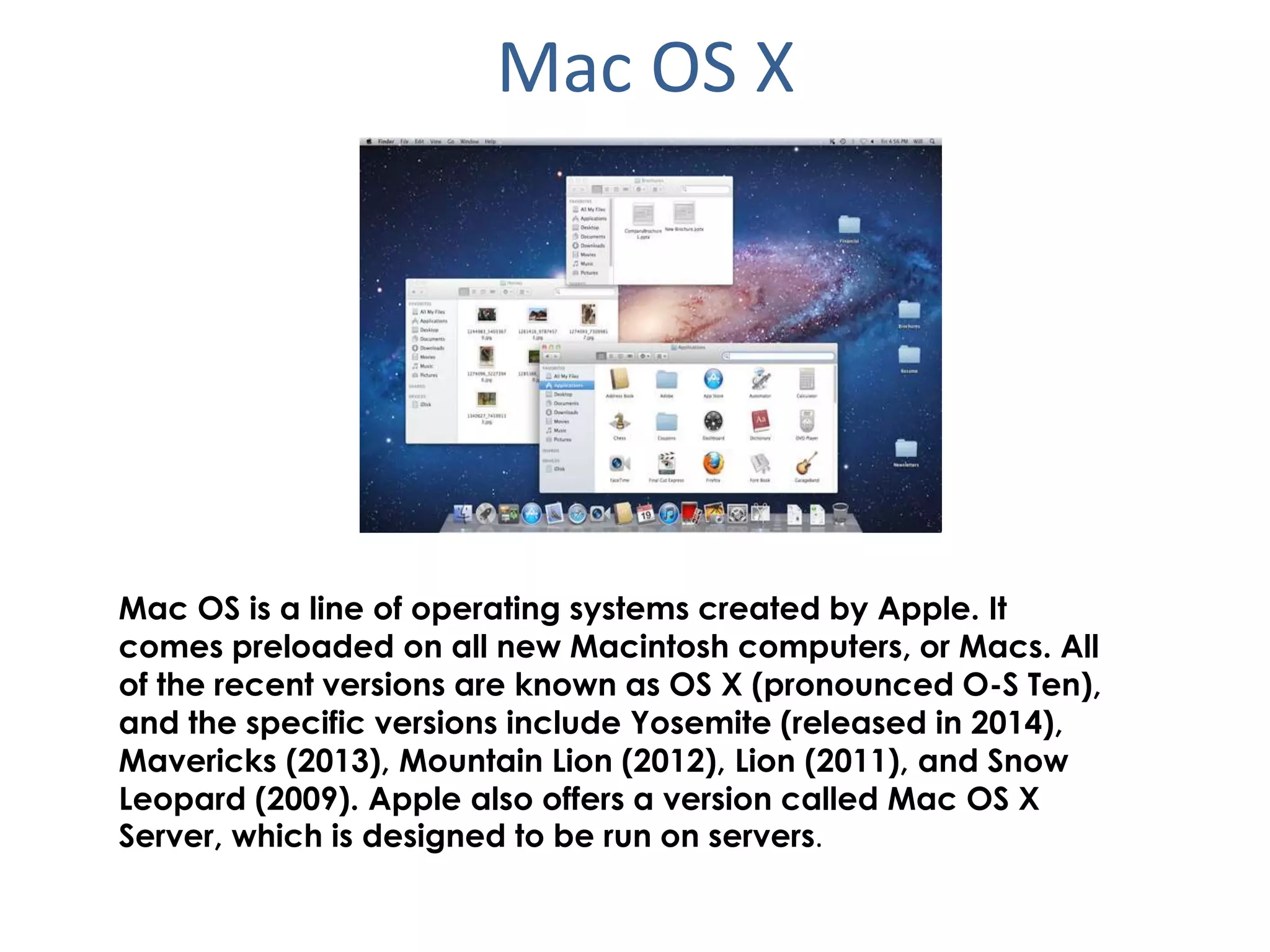
Mac OS is a line of operating systems created by Apple. It
comes preloaded on all new Macintosh computers, or Macs. All
of the recent versions are known as OS X (pronounced O-S Ten),
and the specific versions include Yosemite (released in 2014),
Mavericks (2013), Mountain Lion (2012), Lion (2011), and Snow
Leopard (2009). Apple also offers a version called Mac OS X
Server, which is designed to be run on servers.
Linux
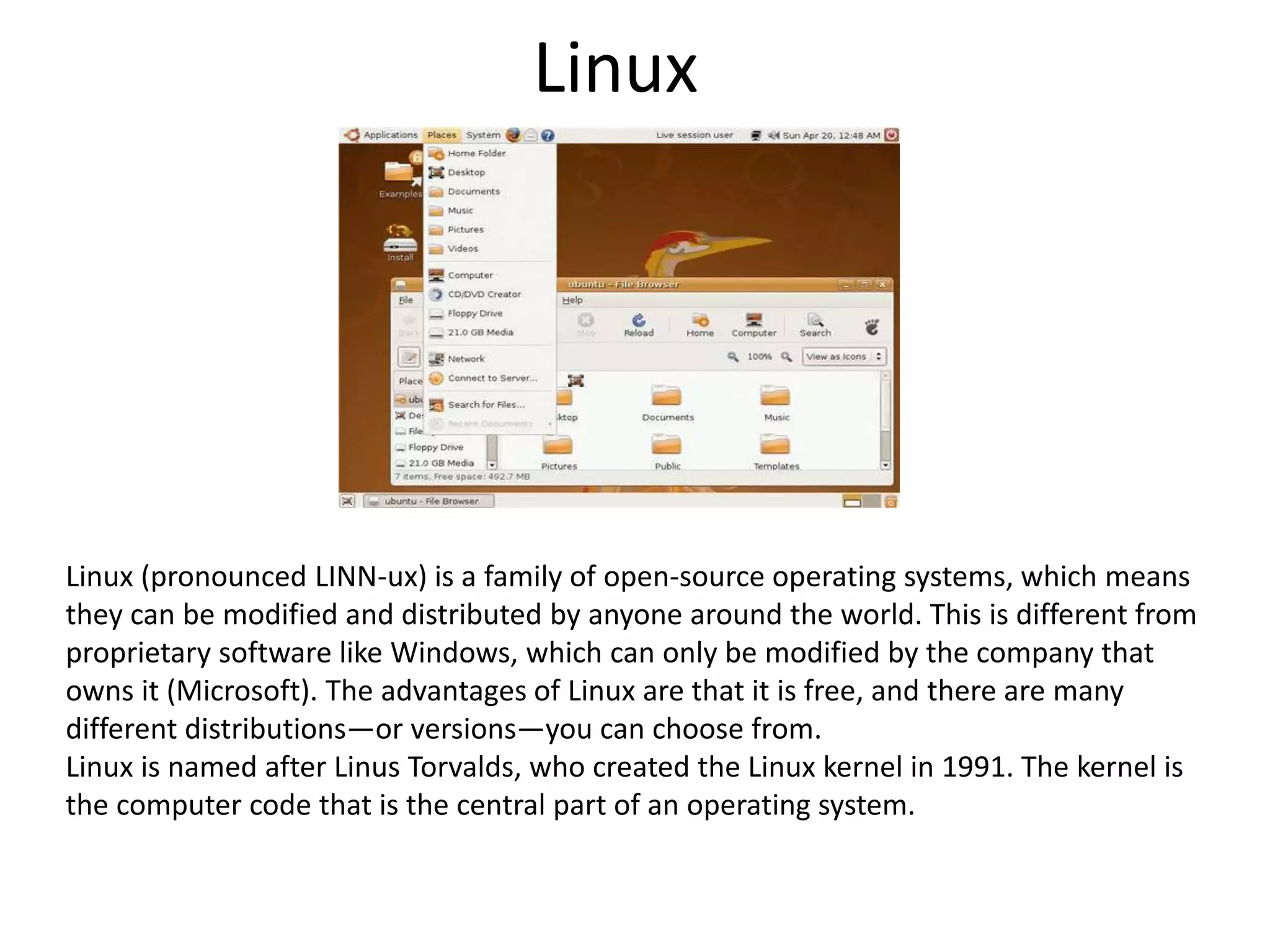
Linux (pronounced LINN-ux) is a family of open-source operating systems, which means
they can be modified and distributed by anyone around the world. This is different from
proprietary software like Windows, which can only be modified by the company that
owns it (Microsoft). The advantages of Linux are that it is free, and there are many
different distributions—or versions—you can choose from.
Linux is named after Linus Torvalds, who created the Linux kernel in 1991. The kernel is
the computer code that is the central part of an operating system.
Operating systems for mobile devices
The operating systems we've been talking about were designed to run on desktop or laptop
computers. Mobile devices such as phones, tablet computers, and MP3 players are different
from desktop and laptop computers, so they run operating systems that are designed
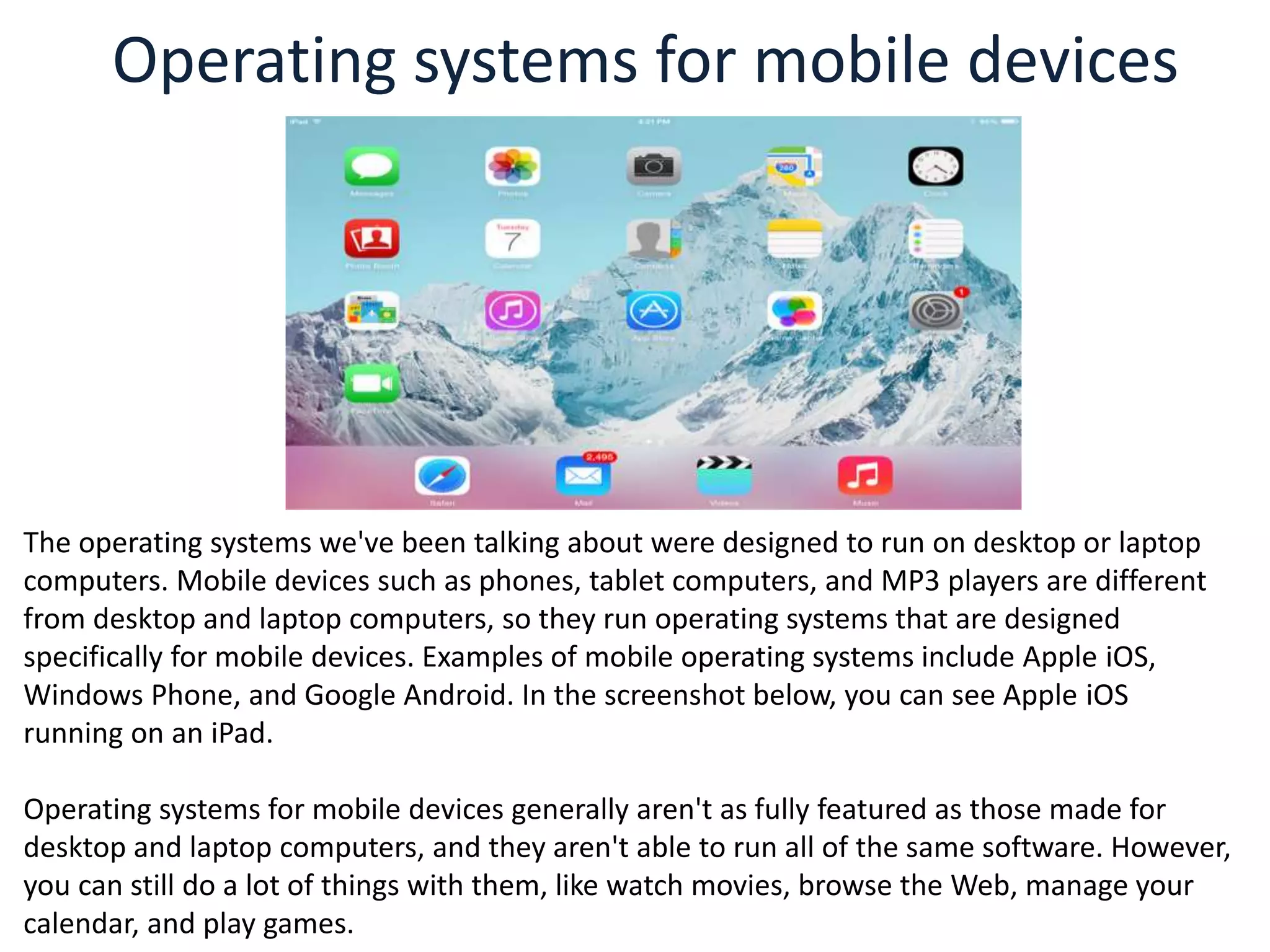
specifically for mobile devices. Examples of mobile operating systems include Apple iOS,
Windows Phone, and Google Android. In the screenshot below, you can see Apple iOS
running on an iPad.
Operating systems for mobile devices generally aren't as fully featured as those made for
desktop and laptop computers, and they aren't able to run all of the same software. However,
you can still do a lot of things with them, like watch movies, browse the Web, manage your
calendar, and play games.
Online Software
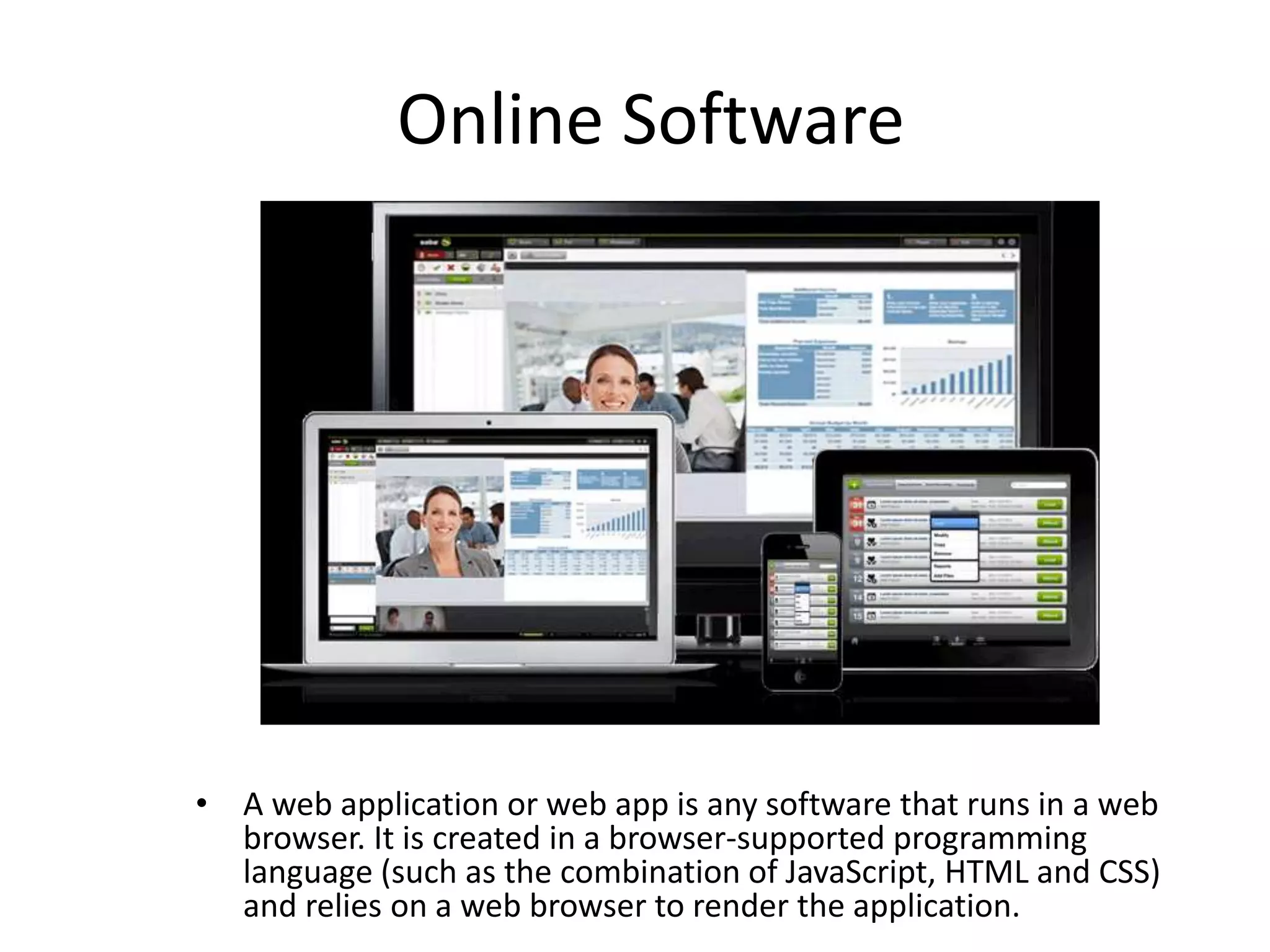
• A web application or web app is any software that runs in a web
browser. It is created in a browser-supported programming
language (such as the combination of JavaScript, HTML and CSS)
and relies on a web browser to render the application.
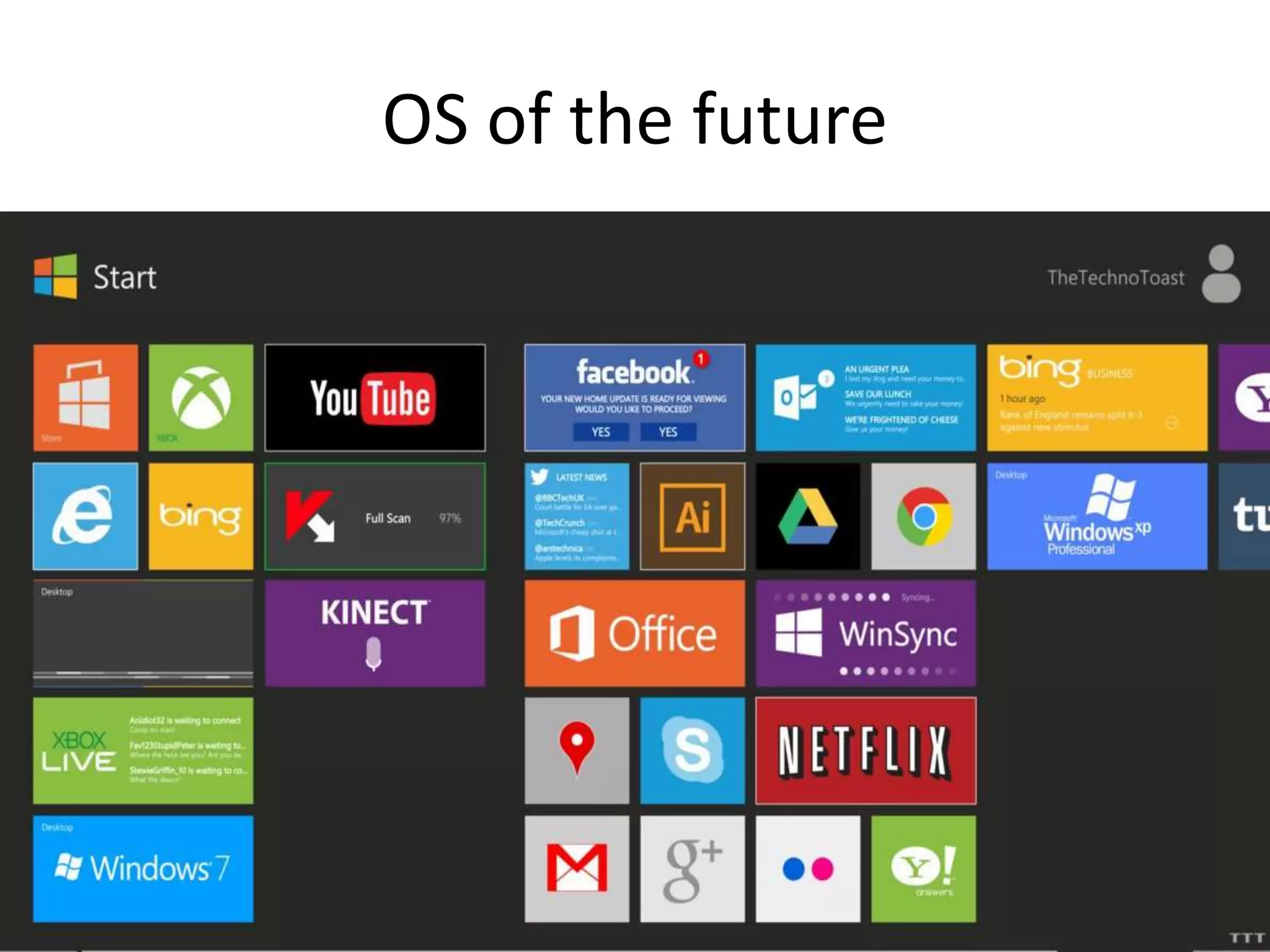
OS of the future
Imagine an operating system that only ran the Chrome web
browser. Simple, By focusing on one thing – web apps – and
doing it to the exclusion of all else, Chrome OS can avoid the
complexity and bloat of traditional operating systems
System software

System software

  • 1.
    What is anoperating system? An operating system is the most important software that runs on a computer. It manages the computer's memory, processes, and all of its software and hardware. It also allows you to communicate with the computer without knowing how to speak the computer's language. Without an operating system, a computer is useless.
  • 2.
    The operating system'sjob Your computer's operating system (OS) manages all of the software and hardware on the computer. Most of the time, there are many different computer programs running at the same time, and they all need to access your computer's central processing unit (CPU), memory, and storage. The operating system coordinates all of this to make sure each program gets what it needs.
  • 3.
    Types of operatingsystems Operating systems usually come preloaded on any computer you buy. Most people use the operating system that comes with their computer, but it's possible to upgrade or even change operating systems. The three most common operating systems for personal computers are Microsoft Windows, Apple Mac OS X, and Linux. The Windows, OS X, and Linux logos
  • 4.
    Microsoft Windows Microsoft createdthe Windows operating system in the mid-1980s. Over the years, there have been many different versions of Windows, but the most recent ones are Windows 8 (released in 2012), Windows 7 (2009), and Windows Vista (2007). Windows comes preloaded on most new PCs, which helps to make it the most popular operating system in the world. If you're buying a new computer or are upgrading to a newer version of Windows, you can choose from several different editions of Windows, such as Home Premium, Professional, and Ultimate. You may need to do some research to decide which edition is right for you.
  • 5.
    Mac OS X MacOS is a line of operating systems created by Apple. It comes preloaded on all new Macintosh computers, or Macs. All of the recent versions are known as OS X (pronounced O-S Ten), and the specific versions include Yosemite (released in 2014), Mavericks (2013), Mountain Lion (2012), Lion (2011), and Snow Leopard (2009). Apple also offers a version called Mac OS X Server, which is designed to be run on servers.
  • 6.
    Linux Linux (pronounced LINN-ux)is a family of open-source operating systems, which means they can be modified and distributed by anyone around the world. This is different from proprietary software like Windows, which can only be modified by the company that owns it (Microsoft). The advantages of Linux are that it is free, and there are many different distributions—or versions—you can choose from. Linux is named after Linus Torvalds, who created the Linux kernel in 1991. The kernel is the computer code that is the central part of an operating system.
  • 7.
    Operating systems formobile devices The operating systems we've been talking about were designed to run on desktop or laptop computers. Mobile devices such as phones, tablet computers, and MP3 players are different from desktop and laptop computers, so they run operating systems that are designed specifically for mobile devices. Examples of mobile operating systems include Apple iOS, Windows Phone, and Google Android. In the screenshot below, you can see Apple iOS running on an iPad. Operating systems for mobile devices generally aren't as fully featured as those made for desktop and laptop computers, and they aren't able to run all of the same software. However, you can still do a lot of things with them, like watch movies, browse the Web, manage your calendar, and play games.
  • 8.
    Online Software • Aweb application or web app is any software that runs in a web browser. It is created in a browser-supported programming language (such as the combination of JavaScript, HTML and CSS) and relies on a web browser to render the application.
  • 9.
    OS of thefuture
  • 10.
    Imagine an operatingsystem that only ran the Chrome web browser. Simple, By focusing on one thing – web apps – and doing it to the exclusion of all else, Chrome OS can avoid the complexity and bloat of traditional operating systems