
Prepared By:
Valencia Fernandes
 Swine flu (swine influenza) is a respiratory
disease caused by influenza viruses
(Orthomyxoviridae) that infect the respiratory
tract of pigs and is now transmitted to humans.
 The 2009 swine flu outbreak (pandemic) was due
to infection with the H1N1 virus and was first
observed in Mexico and spread so rapidly that
the World Health Organisation declared a global
flu pandemic on 11 June.
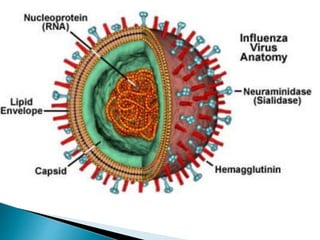
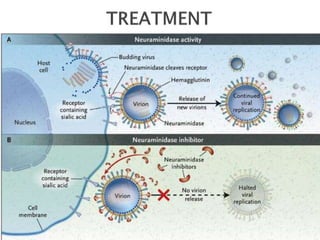
 Exhibits two main surface antigens, H1
(hemagglutinin type 1) and N1 (neuraminidase
type1).
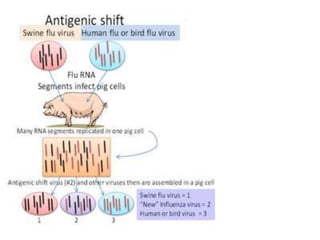
 First, the influenza viruses (types A, B, C) are
enveloped RNA viruses with a segmented
genome; this means the viral RNA genetic code is
not a single strand of RNA but exists as eight
different RNA segments in the influenza viruses.
 A human (or bird) influenza virus can infect a pig
respiratory cell at the same time as a swine
influenza virus; some of the replicating RNA
strands from the human virus can get mistakenly
enclosed inside the enveloped swine influenza
virus.
 Swine flu is transmitted from person to
person by inhalation or ingestion of droplets
containing virus from people sneezing or
coughing.
 It is not transmitted by eating cooked pork
products.
 Fever (greater than 100°F or 37.8°C) and
coughing
 Running nose
 Fatigue
 Muscle ache
 Decreased appetite
 Sore throat
 About one quarter of cases, vomiting and
diarrhoea.
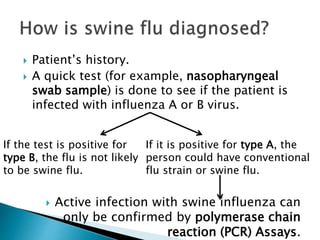
 Patient’s history.
 A quick test (for example, nasopharyngeal
swab sample) is done to see if the patient is
infected with influenza A or B virus.
 Active infection with swine influenza can
only be confirmed by polymerase chain
reaction (PCR) Assays.
If the test is positive for
type B, the flu is not likely
to be swine flu.
If it is positive for type A, the
person could have conventional
flu strain or swine flu.
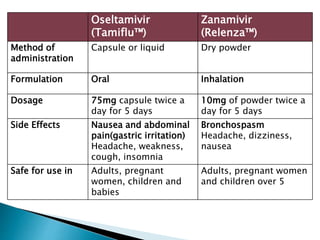
Oseltamivir
(Tamiflu™)
Zanamivir
(Relenza™)
Method of
administration
Capsule or liquid Dry powder
Formulation Oral Inhalation
Dosage 75mg capsule twice a
day for 5 days
10mg of powder twice a
day for 5 days
Side Effects Nausea and abdominal
pain(gastric irritation)
Headache, weakness,
cough, insomnia
Bronchospasm
Headache, dizziness,
nausea
Safe for use in Adults, pregnant
women, children and
babies
Adults, pregnant women
and children over 5
 On Dec 22, 2014; the FDA approved the first new
anti-influenza drug (for H1N1 and other influenza
virus types) in 15 years, Peramivir (Rapivab ™).
Intravenous,
Side Effect: Diarrhea, skin infections, hallucinations,
and other altered behavior.
 Pandemrix™:The first H1N1 vaccine released in
early October 2009 was a nasal spray vaccine
that was approved for use in healthy individuals
ages 2-49.
 Celvapan™: The injectable(i.m) vaccine, made
from killed H1N1, became available in the second
week of Oct. 2009. This vaccine was approved for
use in ages 6 months to the elderly, including
pregnant females.
 Intradermal, Jet Injector(Approved by USFDA in
2014)
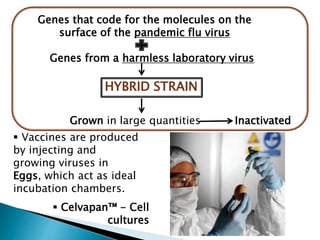
 Vaccines are produced
by injecting and
growing viruses in
Eggs, which act as ideal
incubation chambers.
 Celvapan™ - Cell
cultures
Genes that code for the molecules on the
surface of the pandemic flu virus
Genes from a harmless laboratory virus
HYBRID STRAIN
Grown in large quantities Inactivated
 In 2011, the CDC reported a new assortment of
genetic material from H1N1(M gene) and H3N2
influenza A viruses that resulted in a new strain
of swine virus termed influenza A (H3N2)v that
was similar to viruses that infected pigs in the
1990s.
 In the fall of 2011, the CDC reported that about
12 confirmed human infections were detected in
young people who often had some association
with pigs or pig farming.
 In July 2012, the CDC noted a rapid rise in these
H3N2v infections that again occurred with people
associated with pigs and pig farming.
 If possible, avoid close contact with people
who are sick.
 Cover your mouth while coughing and
sneezing.
 Wash your hands often with soap and water,
or hand sanitizer.
 Avoid frequent touching your eyes, nose or
mouth.
 Get your H1N1 flu shot.
 Pandemic H1N1 Swine Flu, Society for General
Microbiology (SGM)
 www.medicinenet.com
 Influenza swine flu: Self study package,
Technip
 H1N1 Flu Virus (Human Swine Flu), Health
Canada
THANK YOU

Swine flu

  • 1.
  • 2.
     Swine flu(swine influenza) is a respiratory disease caused by influenza viruses (Orthomyxoviridae) that infect the respiratory tract of pigs and is now transmitted to humans.  The 2009 swine flu outbreak (pandemic) was due to infection with the H1N1 virus and was first observed in Mexico and spread so rapidly that the World Health Organisation declared a global flu pandemic on 11 June.  Exhibits two main surface antigens, H1 (hemagglutinin type 1) and N1 (neuraminidase type1).
  • 4.
     First, theinfluenza viruses (types A, B, C) are enveloped RNA viruses with a segmented genome; this means the viral RNA genetic code is not a single strand of RNA but exists as eight different RNA segments in the influenza viruses.  A human (or bird) influenza virus can infect a pig respiratory cell at the same time as a swine influenza virus; some of the replicating RNA strands from the human virus can get mistakenly enclosed inside the enveloped swine influenza virus.
  • 6.
     Swine fluis transmitted from person to person by inhalation or ingestion of droplets containing virus from people sneezing or coughing.  It is not transmitted by eating cooked pork products.
  • 7.
     Fever (greaterthan 100°F or 37.8°C) and coughing  Running nose  Fatigue  Muscle ache  Decreased appetite  Sore throat  About one quarter of cases, vomiting and diarrhoea.
  • 8.
     Patient’s history. A quick test (for example, nasopharyngeal swab sample) is done to see if the patient is infected with influenza A or B virus.  Active infection with swine influenza can only be confirmed by polymerase chain reaction (PCR) Assays. If the test is positive for type B, the flu is not likely to be swine flu. If it is positive for type A, the person could have conventional flu strain or swine flu.
  • 10.
    Oseltamivir (Tamiflu™) Zanamivir (Relenza™) Method of administration Capsule orliquid Dry powder Formulation Oral Inhalation Dosage 75mg capsule twice a day for 5 days 10mg of powder twice a day for 5 days Side Effects Nausea and abdominal pain(gastric irritation) Headache, weakness, cough, insomnia Bronchospasm Headache, dizziness, nausea Safe for use in Adults, pregnant women, children and babies Adults, pregnant women and children over 5
  • 11.
     On Dec22, 2014; the FDA approved the first new anti-influenza drug (for H1N1 and other influenza virus types) in 15 years, Peramivir (Rapivab ™). Intravenous, Side Effect: Diarrhea, skin infections, hallucinations, and other altered behavior.
  • 12.
     Pandemrix™:The firstH1N1 vaccine released in early October 2009 was a nasal spray vaccine that was approved for use in healthy individuals ages 2-49.  Celvapan™: The injectable(i.m) vaccine, made from killed H1N1, became available in the second week of Oct. 2009. This vaccine was approved for use in ages 6 months to the elderly, including pregnant females.  Intradermal, Jet Injector(Approved by USFDA in 2014)
  • 13.
     Vaccines areproduced by injecting and growing viruses in Eggs, which act as ideal incubation chambers.  Celvapan™ - Cell cultures Genes that code for the molecules on the surface of the pandemic flu virus Genes from a harmless laboratory virus HYBRID STRAIN Grown in large quantities Inactivated
  • 14.
     In 2011,the CDC reported a new assortment of genetic material from H1N1(M gene) and H3N2 influenza A viruses that resulted in a new strain of swine virus termed influenza A (H3N2)v that was similar to viruses that infected pigs in the 1990s.  In the fall of 2011, the CDC reported that about 12 confirmed human infections were detected in young people who often had some association with pigs or pig farming.  In July 2012, the CDC noted a rapid rise in these H3N2v infections that again occurred with people associated with pigs and pig farming.
  • 15.
     If possible,avoid close contact with people who are sick.  Cover your mouth while coughing and sneezing.  Wash your hands often with soap and water, or hand sanitizer.  Avoid frequent touching your eyes, nose or mouth.  Get your H1N1 flu shot.
  • 16.
     Pandemic H1N1Swine Flu, Society for General Microbiology (SGM)  www.medicinenet.com  Influenza swine flu: Self study package, Technip  H1N1 Flu Virus (Human Swine Flu), Health Canada
  • 17.