Project-Based Learning for our Digital LearnersWhy Teach with Project Learning?By – Susan Webb
What is Project-Based Learning?Students explore real-world problems and challengesActive and engaged learningStudents develop confidence and self-direction
What is Project-Based Learning?Authentic learning connecting to real-life issuesEffective way to integrate technology into the curriculum
Characteristics of Project-Based LearningProjects form the centerpiece of the curriculumStudents engage in authentic real-world activities
Characteristics of Project-Based LearningStudents work collaboratively to solve problemsTechnology is integrated as a tool for discovery, collaboration and communication
Research Supporting PBLConstructivism Learning Theory –focuses on “doing rather than receiving”Howard Gardner’s Multiple Intelligences theoryInquiry-Based Learning
Research Supporting PBLStudents are engaged in cooperative learning and collaborative problem solvingParallel between project-based learning and process writing.
Benefits of Project-Based LearningIncrease motivationIncreased problem-solving abilityImproved library research skillsIncreased collaborationIncreased resource-management skills
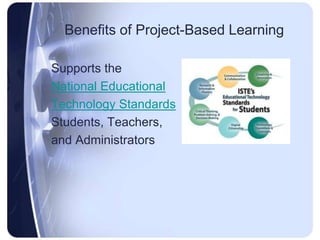
Benefits of Project-Based LearningSupports the National Educational Technology StandardsStudents, Teachers,and Administrators
Design Principal #1Begin with the end in MindDevelop a Project IdeaDecide the Scope of the ProjectSelect StandardsIncorporate OutcomesCreate the Optimal Learning Environment
Design Principal # 2  Craft the Driving QuestionWhat is a Driving Question?Generate the Driving QuestionRefine the Driving QuestionUse Standards to Develop a Driving Question.
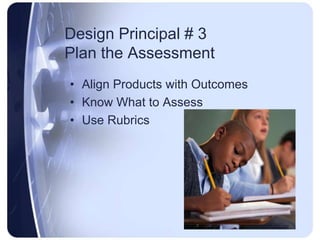
Design Principal # 3 Plan the AssessmentAlign Products with OutcomesKnow What to AssessUse Rubrics
Design Principal # 4 Map the ProjectOrganize Tasks and ActivitiesLaunch the ProjectGather ResourcesDraw a Storyboard
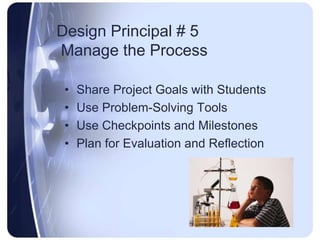
Design Principal # 5 Manage the ProcessShare Project Goals with StudentsUse Problem-Solving ToolsUse Checkpoints and MilestonesPlan for Evaluation and Reflection
Technology Tools ConsiderationsTake inventory of what technology is availableInclude training on how to use the hardware/softwareLearn the Web 2.0 tools
Resources for Project-Based LearningReinventing Project-Based Learning, Suzie Boss and Jane Krauss, 2007 ISTEDesign Principals for Project-Based Learning Designing your ProjectISTE – Project Based Learning

Susan webbmodule2powerpoint

  • 1.
    Project-Based Learning forour Digital LearnersWhy Teach with Project Learning?By – Susan Webb
  • 2.
    What is Project-BasedLearning?Students explore real-world problems and challengesActive and engaged learningStudents develop confidence and self-direction
  • 3.
    What is Project-BasedLearning?Authentic learning connecting to real-life issuesEffective way to integrate technology into the curriculum
  • 4.
    Characteristics of Project-BasedLearningProjects form the centerpiece of the curriculumStudents engage in authentic real-world activities
  • 5.
    Characteristics of Project-BasedLearningStudents work collaboratively to solve problemsTechnology is integrated as a tool for discovery, collaboration and communication
  • 6.
    Research Supporting PBLConstructivismLearning Theory –focuses on “doing rather than receiving”Howard Gardner’s Multiple Intelligences theoryInquiry-Based Learning
  • 7.
    Research Supporting PBLStudentsare engaged in cooperative learning and collaborative problem solvingParallel between project-based learning and process writing.
  • 8.
    Benefits of Project-BasedLearningIncrease motivationIncreased problem-solving abilityImproved library research skillsIncreased collaborationIncreased resource-management skills
  • 9.
    Benefits of Project-BasedLearningSupports the National Educational Technology StandardsStudents, Teachers,and Administrators
  • 10.
    Design Principal #1Beginwith the end in MindDevelop a Project IdeaDecide the Scope of the ProjectSelect StandardsIncorporate OutcomesCreate the Optimal Learning Environment
  • 11.
    Design Principal #2 Craft the Driving QuestionWhat is a Driving Question?Generate the Driving QuestionRefine the Driving QuestionUse Standards to Develop a Driving Question.
  • 12.
    Design Principal #3 Plan the AssessmentAlign Products with OutcomesKnow What to AssessUse Rubrics
  • 13.
    Design Principal #4 Map the ProjectOrganize Tasks and ActivitiesLaunch the ProjectGather ResourcesDraw a Storyboard
  • 14.
    Design Principal #5 Manage the ProcessShare Project Goals with StudentsUse Problem-Solving ToolsUse Checkpoints and MilestonesPlan for Evaluation and Reflection
  • 15.
    Technology Tools ConsiderationsTakeinventory of what technology is availableInclude training on how to use the hardware/softwareLearn the Web 2.0 tools
  • 16.
    Resources for Project-BasedLearningReinventing Project-Based Learning, Suzie Boss and Jane Krauss, 2007 ISTEDesign Principals for Project-Based Learning Designing your ProjectISTE – Project Based Learning