HEAT TREATMENT
HEAT TREATMENT
 Heat Treatment process is a series of operations involving the
Heating and Cooling of metals in the solid state.
Its purpose is to change a mechanical property or combination of
mechanical properties so that the metal will be more useful,
serviceable, and safe for definite purpose.
By heat treating, a metal can be made harder, stronger, and more
resistant to impact, heat treatment can also make a metal softer
and more ductile.
HEAT TREATMENT
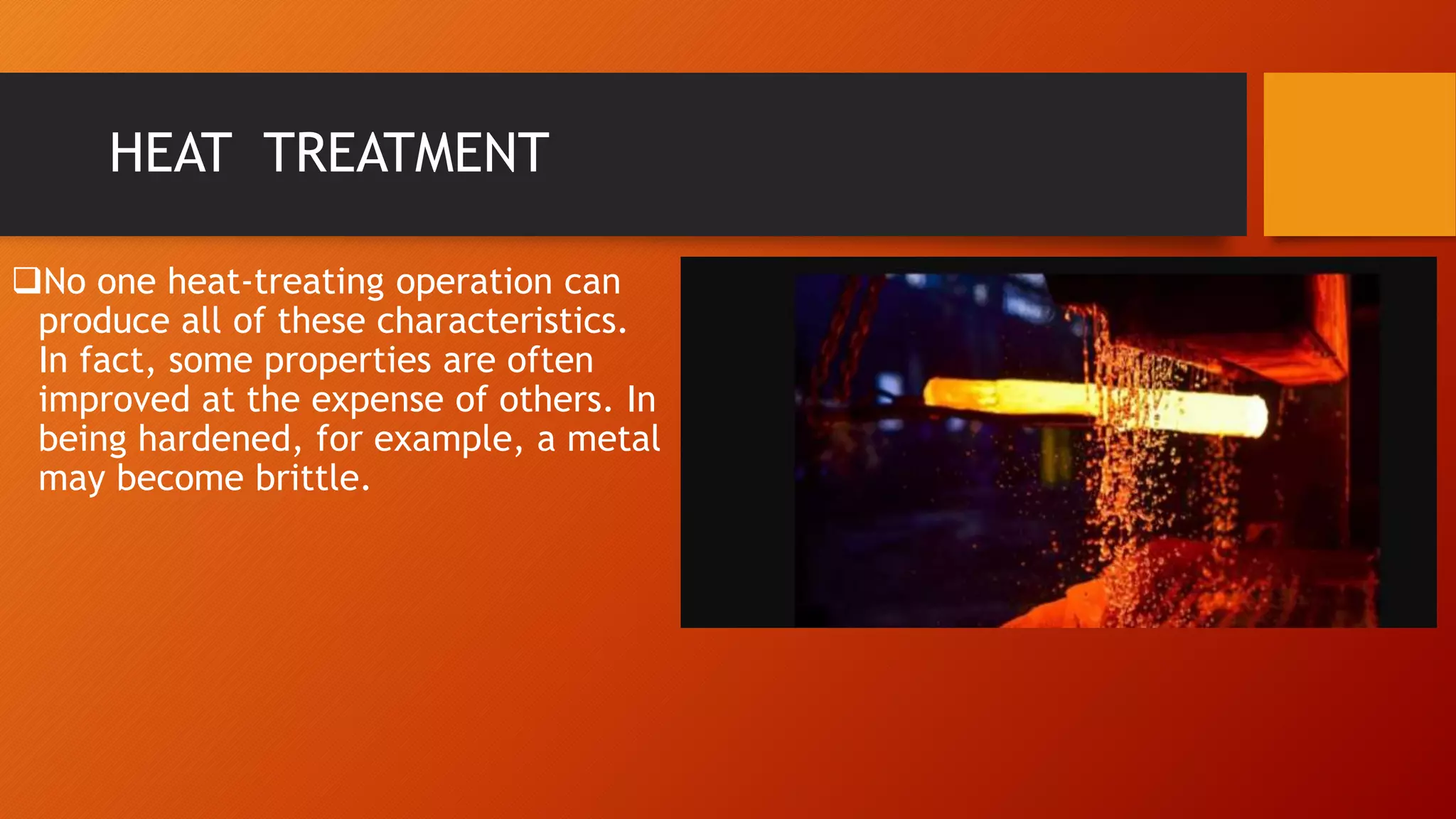
No one heat-treating operation can
produce all of these characteristics.
In fact, some properties are often
improved at the expense of others. In
being hardened, for example, a metal
may become brittle.
TYPES OF HEAT TREATMENT
1. Annealing
2. Normalizing
3. Hardening
4. Tempering
5. Surface Hardening
6. Case Hardening
7. Austempering
8. Marquenching
ANNEALING
Annealing is the process for softening materials or to bring about
required changes in properties, such as machinability, mechanical
or electrical properties, or dimensional stability.
The annealing process consists of heating the steel to or near the
critical temperature (temperature at which crystalline phase
change occurs) to make it suitable for fabrication.
A material can be annealed by heating it to a specific
temperature and then letting the material slowly cool to room
temperature in an oven.
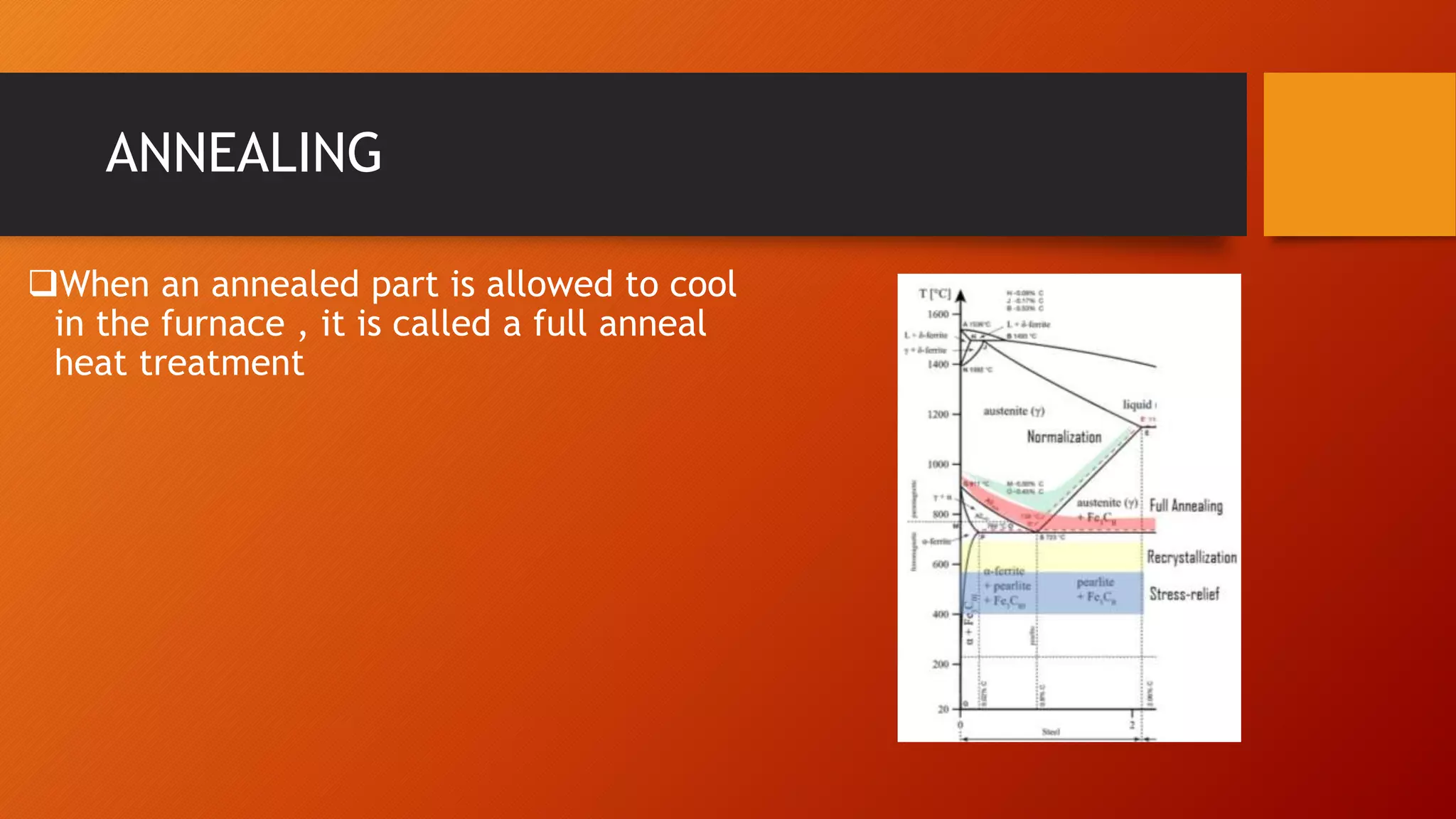
ANNEALING
When an annealed part is allowed to cool
in the furnace , it is called a full anneal
heat treatment
NORMALIZING
It is a type of heat treatment applicable to ferrous metals only.
It differs from annealing in that the metal is heated to a higher
temperature and then removed from the furnace for air cooling.
The purpose of normalizing is to remove the internal stresses
induced by heat treating, welding, casting, forging, forming, or
machining.
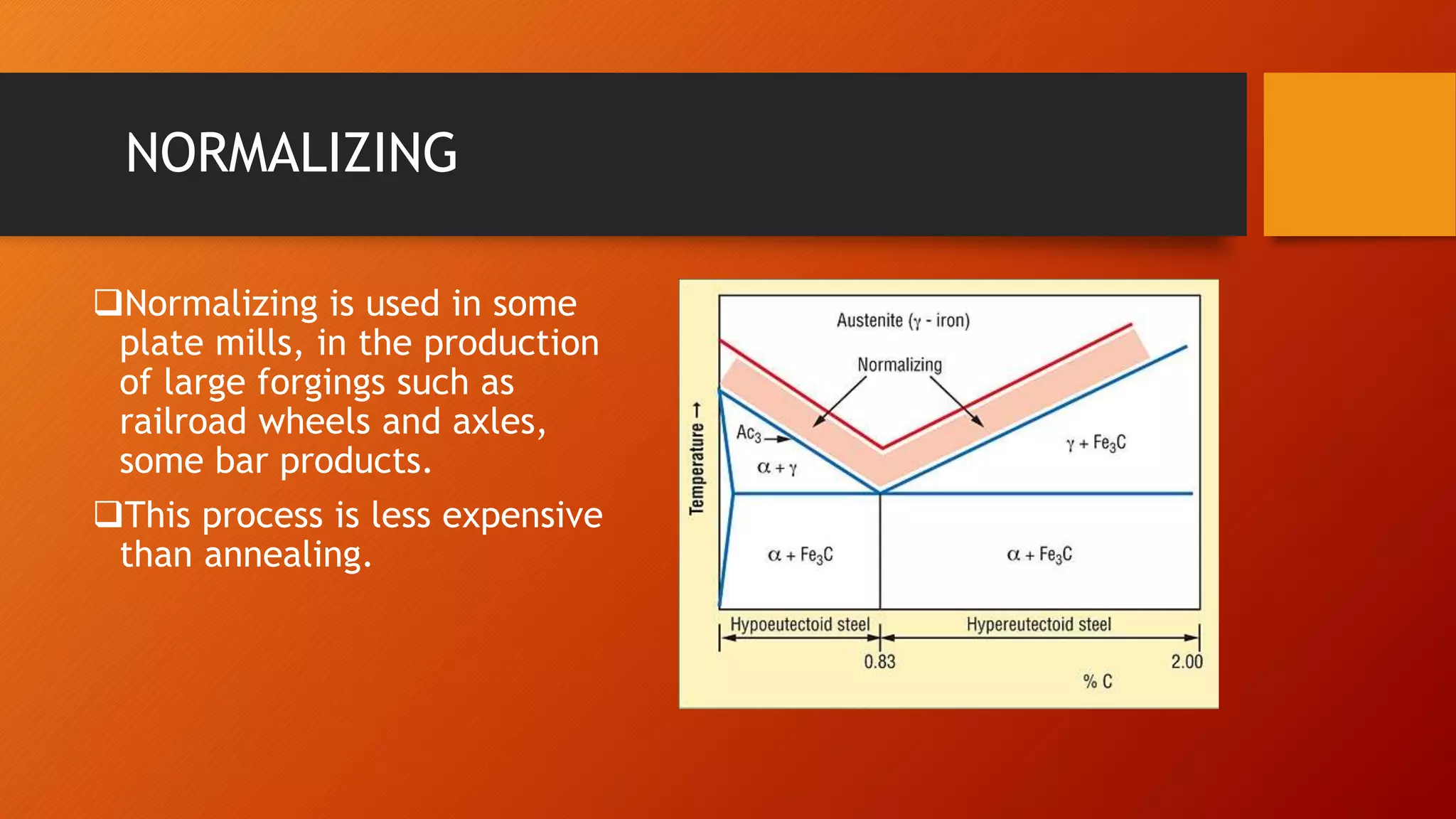
NORMALIZING
Normalizing is used in some
plate mills, in the production
of large forgings such as
railroad wheels and axles,
some bar products.
This process is less expensive
than annealing.
HARDENING
It is done to increase the strength and wear properties. One of
the pre-requisites for hardening is sufficient carbon and alloy
content.
To harden by quenching, a metal (usually steel or cast iron) must
be heated into the austenitic crystal phase. and then quickly
cooled.
Depending on the alloy and other considerations (such as concern
for maximum hardness vs. cracking and distortion), cooling may be
done with forced air or other gas (such as nitrogen), oil, polymer
dissolved in water, or brine.
HARDENING
One drawback of using this
method by itself is that the
metal becomes brittle. This
treatment is therefore
typically followed by a
tempering process which is a
heating process at another
lower specific temperature to
stress relieve the material and
minimize the brittleness
problem
TEMPERING
Tempering is carried out by preheating previously quenched or
normalized steel to a temperature below the critical range,
holding, and then cooling to obtain the desired mechanical
properties.
Tempering is used to reduce the brittleness of quenched steel.
The temperature chosen for the tempering process directly
impacts the hardness of the work piece. The higher the
temperature in the tempering process, the lower the hardness.
TEMPERING
SURFACE HARDENING
Surface hardening, treatment of steel by heat or mechanical
means to increase the hardness of the outer surface while the
core remains relatively soft.
Surface-hardened steel is also valued for its low and superior
flexibility in manufacturing.
The oldest surface-hardening method is carburizing, in which steel
is placed at a high temperature for several hours in a
carbonaceous environment. The carbon diffuses into the surface
of the steel, rendering it harder.
SURFACE HARDENING
Another method of surface hardening, called nitriding, utilizes nitrogen
and heat. Cam shafts, fuel injection pumps, and valve stems are
typically hardened by this process.
Flame hardening and induction hardening, in which high heat is applied
for a short time (by gas flame or high-frequency electric current,
respectively) and then the steel is immediately quenched, are used
generally for larger implements.
Mechanical means of hardening the surface of steel parts include
peening, which is the hammering of the heated surface, as by iron
pellets shot onto the surface or by air blasting, and cold-working, which
consists of rolling, hammering, or drawing at temperatures that do not
affect the composition of the steel.
MARTEMPERING
To overcome the restrictions of conventional quenching and
tempering, Martempering process can be used.
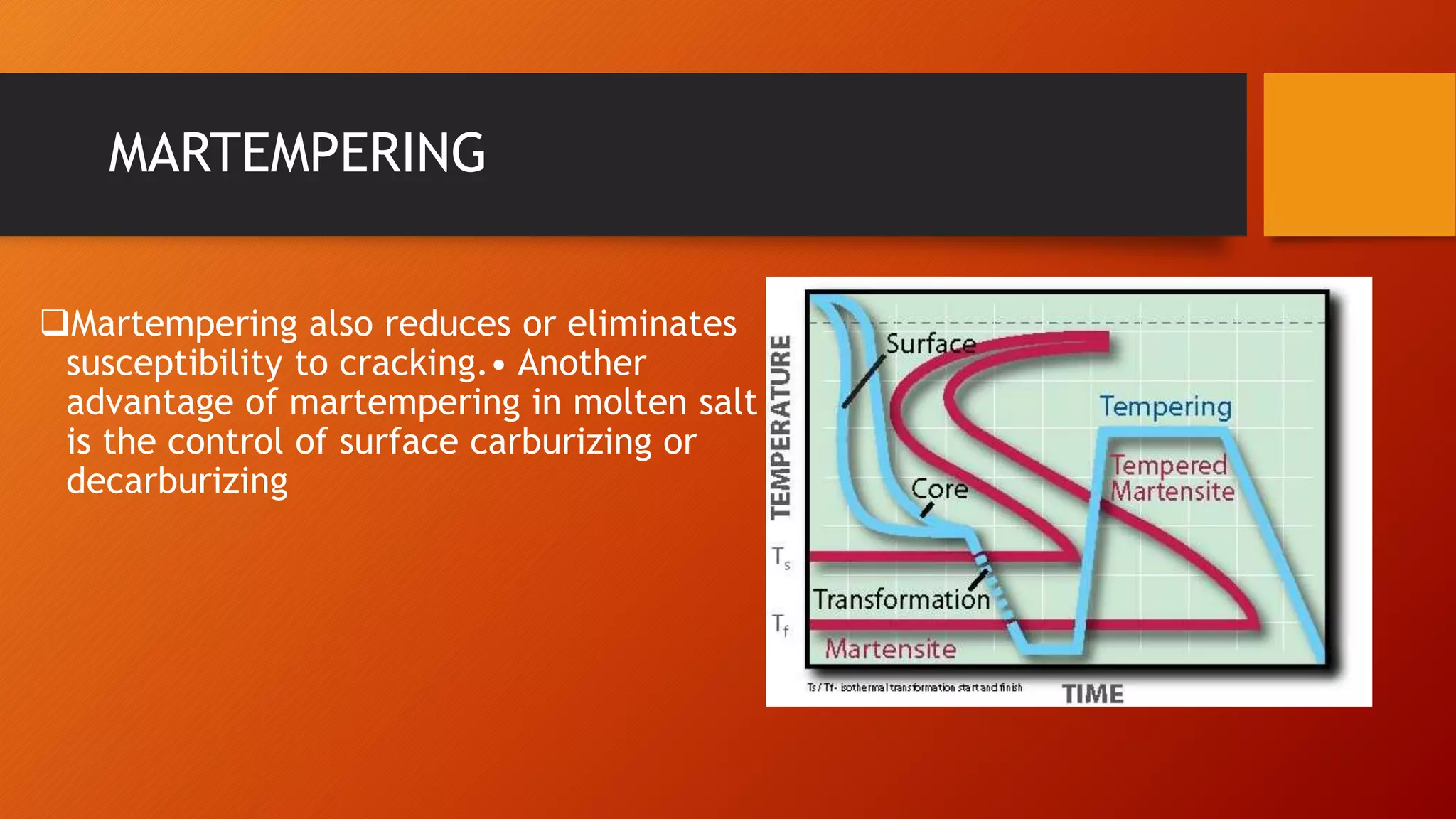
Martempering or marquenching permits the transformation of
Austenite to Martensite to take place at the same time throughout
the structure of the metal part.
Residual stresses developed during martempering are lower than
those developed during conventional quenching.
MARTEMPERING
Martempering also reduces or eliminates
susceptibility to cracking.• Another
advantage of martempering in molten salt
is the control of surface carburizing or
decarburizing
HEAT  TREATMENT .pptx

HEAT TREATMENT .pptx

  • 1.
  • 2.
    HEAT TREATMENT  HeatTreatment process is a series of operations involving the Heating and Cooling of metals in the solid state. Its purpose is to change a mechanical property or combination of mechanical properties so that the metal will be more useful, serviceable, and safe for definite purpose. By heat treating, a metal can be made harder, stronger, and more resistant to impact, heat treatment can also make a metal softer and more ductile.
  • 3.
    HEAT TREATMENT No oneheat-treating operation can produce all of these characteristics. In fact, some properties are often improved at the expense of others. In being hardened, for example, a metal may become brittle.
  • 4.
    TYPES OF HEATTREATMENT 1. Annealing 2. Normalizing 3. Hardening 4. Tempering 5. Surface Hardening 6. Case Hardening 7. Austempering 8. Marquenching
  • 5.
    ANNEALING Annealing is theprocess for softening materials or to bring about required changes in properties, such as machinability, mechanical or electrical properties, or dimensional stability. The annealing process consists of heating the steel to or near the critical temperature (temperature at which crystalline phase change occurs) to make it suitable for fabrication. A material can be annealed by heating it to a specific temperature and then letting the material slowly cool to room temperature in an oven.
  • 6.
    ANNEALING When an annealedpart is allowed to cool in the furnace , it is called a full anneal heat treatment
  • 7.
    NORMALIZING It is atype of heat treatment applicable to ferrous metals only. It differs from annealing in that the metal is heated to a higher temperature and then removed from the furnace for air cooling. The purpose of normalizing is to remove the internal stresses induced by heat treating, welding, casting, forging, forming, or machining.
  • 8.
    NORMALIZING Normalizing is usedin some plate mills, in the production of large forgings such as railroad wheels and axles, some bar products. This process is less expensive than annealing.
  • 9.
    HARDENING It is doneto increase the strength and wear properties. One of the pre-requisites for hardening is sufficient carbon and alloy content. To harden by quenching, a metal (usually steel or cast iron) must be heated into the austenitic crystal phase. and then quickly cooled. Depending on the alloy and other considerations (such as concern for maximum hardness vs. cracking and distortion), cooling may be done with forced air or other gas (such as nitrogen), oil, polymer dissolved in water, or brine.
  • 10.
    HARDENING One drawback ofusing this method by itself is that the metal becomes brittle. This treatment is therefore typically followed by a tempering process which is a heating process at another lower specific temperature to stress relieve the material and minimize the brittleness problem
  • 11.
    TEMPERING Tempering is carriedout by preheating previously quenched or normalized steel to a temperature below the critical range, holding, and then cooling to obtain the desired mechanical properties. Tempering is used to reduce the brittleness of quenched steel. The temperature chosen for the tempering process directly impacts the hardness of the work piece. The higher the temperature in the tempering process, the lower the hardness.
  • 12.
  • 13.
    SURFACE HARDENING Surface hardening,treatment of steel by heat or mechanical means to increase the hardness of the outer surface while the core remains relatively soft. Surface-hardened steel is also valued for its low and superior flexibility in manufacturing. The oldest surface-hardening method is carburizing, in which steel is placed at a high temperature for several hours in a carbonaceous environment. The carbon diffuses into the surface of the steel, rendering it harder.
  • 14.
    SURFACE HARDENING Another methodof surface hardening, called nitriding, utilizes nitrogen and heat. Cam shafts, fuel injection pumps, and valve stems are typically hardened by this process. Flame hardening and induction hardening, in which high heat is applied for a short time (by gas flame or high-frequency electric current, respectively) and then the steel is immediately quenched, are used generally for larger implements. Mechanical means of hardening the surface of steel parts include peening, which is the hammering of the heated surface, as by iron pellets shot onto the surface or by air blasting, and cold-working, which consists of rolling, hammering, or drawing at temperatures that do not affect the composition of the steel.
  • 15.
    MARTEMPERING To overcome therestrictions of conventional quenching and tempering, Martempering process can be used. Martempering or marquenching permits the transformation of Austenite to Martensite to take place at the same time throughout the structure of the metal part. Residual stresses developed during martempering are lower than those developed during conventional quenching.
  • 16.
    MARTEMPERING Martempering also reducesor eliminates susceptibility to cracking.• Another advantage of martempering in molten salt is the control of surface carburizing or decarburizing