Supratentorial masses-
anaesthetic considerations.
Dr. ZIKRULLAH.
Introduction
• Brain tumors constitute the majority of neurosurgical
conditions that present for elective operations.
• The Brain can be divided into two parts by the tentorium
cerebeli –
1.) Supratentorial Compartment.
2.) Infratentorial Compartment.
• About 80% of the tumors are located in the supratentorial
compartment and about 20% in the posterior fossa.
• SUPRATENTORIAL COMPARTMENTS –
• largest part of the brain.
• It is divided by falx cerebri, is contributed to by the
anterior cranial fossa and middle cranial fossa.
• INFRATENTORIAL COMPARTMENTS -
• It includes ?
• Brain stem & Cerebellum.
• Brain Stem- It includes the mid brain, the pons and the
medulla.
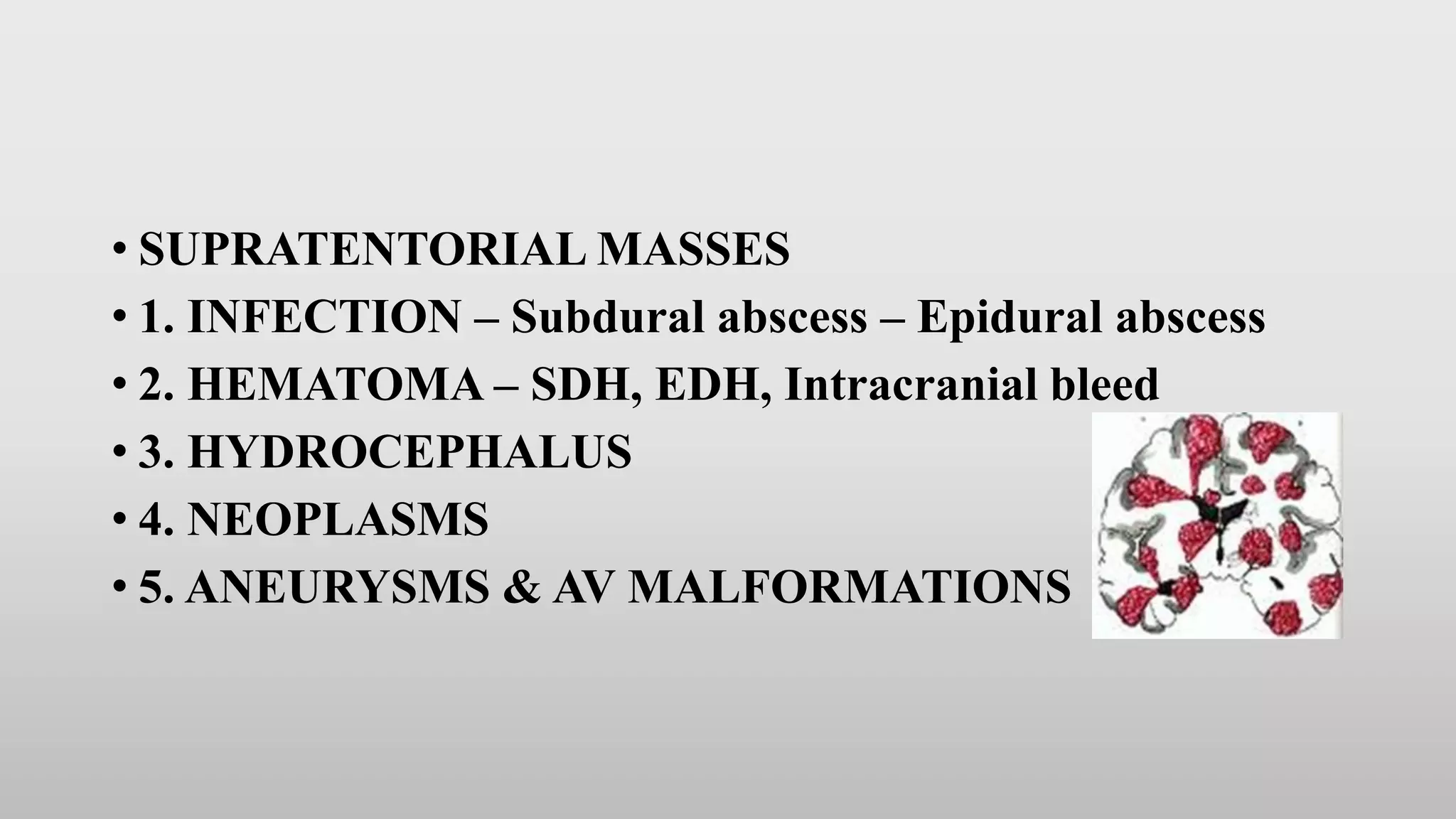
• SUPRATENTORIAL MASSES
• 1. INFECTION – Subdural abscess – Epidural abscess
• 2. HEMATOMA – SDH, EDH, Intracranial bleed
• 3. HYDROCEPHALUS
• 4. NEOPLASMS
• 5. ANEURYSMS & AV MALFORMATIONS
NEOPLASMS OF BRAIN ?
• PRIMARY (85%) – most of the tumors are primary.
1).Benign--
Meningiomas, PitutaryAdenomas, Craniopharyngioma,
Neurocytoma, Haemangioma, Pilocytic astrocytoma.
2).Malignant --
Astrocytoma/Glioma , Ependymoma , Medulloblastoma ,
Lymphoma, Germ cell tumor.
• METASTASIS (15%)– secondary tumors.
Classify supratentorial masses ?
Specific tumor types
• Astrocytoma
• Often present in young adults with new-onset seizures.
• Upon imaging, they generally show minimal enhancement
with contrast.
• Usually appears as a contrast-enhancing, well-demarcated
lesion with minimal to no surrounding edema.
• Because of its benign pathologic characteristics, prognosis
following surgical resection is generally very good.
• Gliobastoma multiforme (grade IV glioma) accounts for
30% of all primary brain tumors in adults.
• Imaging usually reveals a ring-enhancing lesion due to
central necrosis as well as surrounding edema.
• Due to microscopic infiltration of normal brain by tumor
cells, resection alone is usually inadequate.
• Instead, treatment usually consists of surgical debulking
combined with chemotherapy and radiation and is aimed
at palliation, not cure.
• Oligodendroglioma
• Arising from myelin-producing cells within CNS, account
for only 6% of primary intracranial tumors.
• Classically, seizures predate appearance of tumor on
imaging.
• Calcifications are common & visualized on CT imaging.
• consists of mixture of oligodendrocytic & astrocytic cells.
• Treatment & prognosis depend on the pathologic features.
• Initial treatment involves resection since, early in the
course, consists of primarily oligodendrocytic cells, which
are radioresistant.
• Ependymoma
• Arising from cells lining ventricles & central canal of
spinal cord, commonly present in childhood & young
adulthood.
• Most common location?
• floor of 4th ventricle.
• Symptoms include: obstructive hydrocephalus, headache
,nausea, vomiting, ataxia .
• Treatment consists of resection and radiation.
• Meningioma
• Usually extra-axial (arising outside of the brain proper),
• slow-growing, well-circumscribed, benign tumors
• arising from arachnoid cap cells, not dura mater
• slow-growing nature, can be very large at time of
diagnosis.
• Usually apparent on plain radiographs & CT due to
presence of calcifications.
• On MRI & conventional angiography, these tumors often
receive their blood supply from external carotid artery.
• Surgical resection is mainstay of treatment.
• Prognosis is usually excellent; however, some tumors may
be recurrent and require additional resection
• Acoustic Neuroma
• Benign schwannoma involving vestibular
component of cranial nerve VIII within internal
auditory canal.
• Bilateral tumors may occur as part of
neurofibromatosis type 2.
• Common presenting symptoms - hearing loss,
tinnitus & disequilibrium.
• Larger tumors, which grow out of the internal auditory
canal & into CP angle
• may cause symptoms related to compression of cranial
nerves,
• most commonly facial nerve (cranial nerve VII) &
brainstem
• Treatment usually consists of surgical resection +/-
radiation.
• Surgery usually involves intraoperative cranial nerve
monitoring with electromyography or brainstem auditory
evoked potentials.
• Prognosis is usually very good; however, recurrence of
tumor is not uncommon
• CNS Lymphoma
• Rare tumor that can arise as primary brain tumor, also
known as microglioma, or via metastatis from systemic
lymphoma.
• Primary CNS lymphoma can occur anywhere, most
common in supratentorial locations (deep gray mater
/corpus callosum).
• Primary CNS lymphoma thought to be associated with a
variety of systemic disorders - SLE, Sjögren's syndrome,
RA, EBV.
• Symptoms depend on location of tumor.
• CTS-associated tumor lysis prior to performing biopsy
may result in failure to obtain an adequate sample to
make diagnosis.
• Mainstay of treatment is chemotherapy (including
intraventricularly delivered drugs) & whole-brain
radiation.
• Prognosis is poor despite treatment.
Pituitary tumors
• Anaesthetic management of supratentorial tumors.
problems and concerns ?
• Effect of anaesthetics on brain.
• Intracranial pathophysiology of tumors.
• Surgical position & concurrent medications
• Measures to decrease ICP & brain bulk.
• Intraoperative monitoring requirements.
• Implications of fluid therapy
• Perioperative haemodynamic management.
• Complications
• Preop knowledge of Surgery to plan technique,
Position.
Intraop monitoring.
Neurophysiological monitoring.
Blood conservation strategies.
• Major goals during anesthesia include ?
maintenance of adequate perfusion & oxygenation of
normal brain.
optimizing operative conditions to facilitate resection.
ensuring a rapid emergence for neurologic assessment.
accommodating intraoperative electrophysiologic
monitoring.
Preanesthetic evaluation?
• Assess neurological status, deficit to be documented.
• Routine pre-op assessment.
• Airway, cvs and respiratory system.
• Evaluate hydration status.
• Investigations appropriate for age, general status of
patient and type of surgery .
• The preanesthetic evaluation should attempt to establish
the presence or absence of intracranial hypertension.
• Computed tomographic (CT) and magnetic
resonance imaging (MRI) scans should be reviewed
for evidence of brain edema, ventricular size and
midline shift greater than 0.5 cm.
• Medications should be reviewed with special
reference to corticosteroid, diuretic, and
anticonvulsant therapy.
Monitoring ?
• Standard ASA monitoring devices.
• Measurement of intra-arterial blood pressure, ABG, CVP
recommended for major neurosurgical procedures.
• Arterial cannula is inserted before induction of anesthesia
to continuously monitor ABP & estimate CPP.
• When cranium is open, ICP = atm pressure & CPP =
MAP
• Capnography : can facilitate ventilation & PaCO2
management as well as detecting VAE
• Urine output also measured as indicator of perioperative
fluid balance.
• IV access with large-bore catheters , given likelihood
• of bleeding & need for transfusion.
• rapid administration of fluids.
• CVP - reliable means of large-bore IV, monitor of fluid status.
• Avoids increased ICP from both head-down position & decreased
cerebral venous outflow.
• Neuromuscular function should be monitored.
• Peripheral nerve stimulator : monitoring persistence of drug-
induced skeletal muscle weakness/paralysis
• Preoperative ICP monitoring
• Management of patients with intracranial hypertension is
greatly facilitated by monitoring ICP perioperatively.
• A ventriculostomy or subdural bolt is commonly
employed and is usually placed by the neurosurgeon
preoperatively under local anesthesia.
• A ventriculostomy has the added advantage of allowing
removal of CSF to decrease ICP.
Brain monitoring ?
• Electroencephalogram,
• Evoked potentials,
• Jugular venous bulb oxygen saturation (Sjo2),
• Flow velocity measured by transcranial Doppler (TCD),
• Brain tissue Po2 (btPo2),
• ICP
POSITIONING & ITS PROBLEMS ?
• Common neurosurgical positions are:
• Supine
• Lateral (park bench)
• Semilateral (Janetta)
• Prone
• Sitting
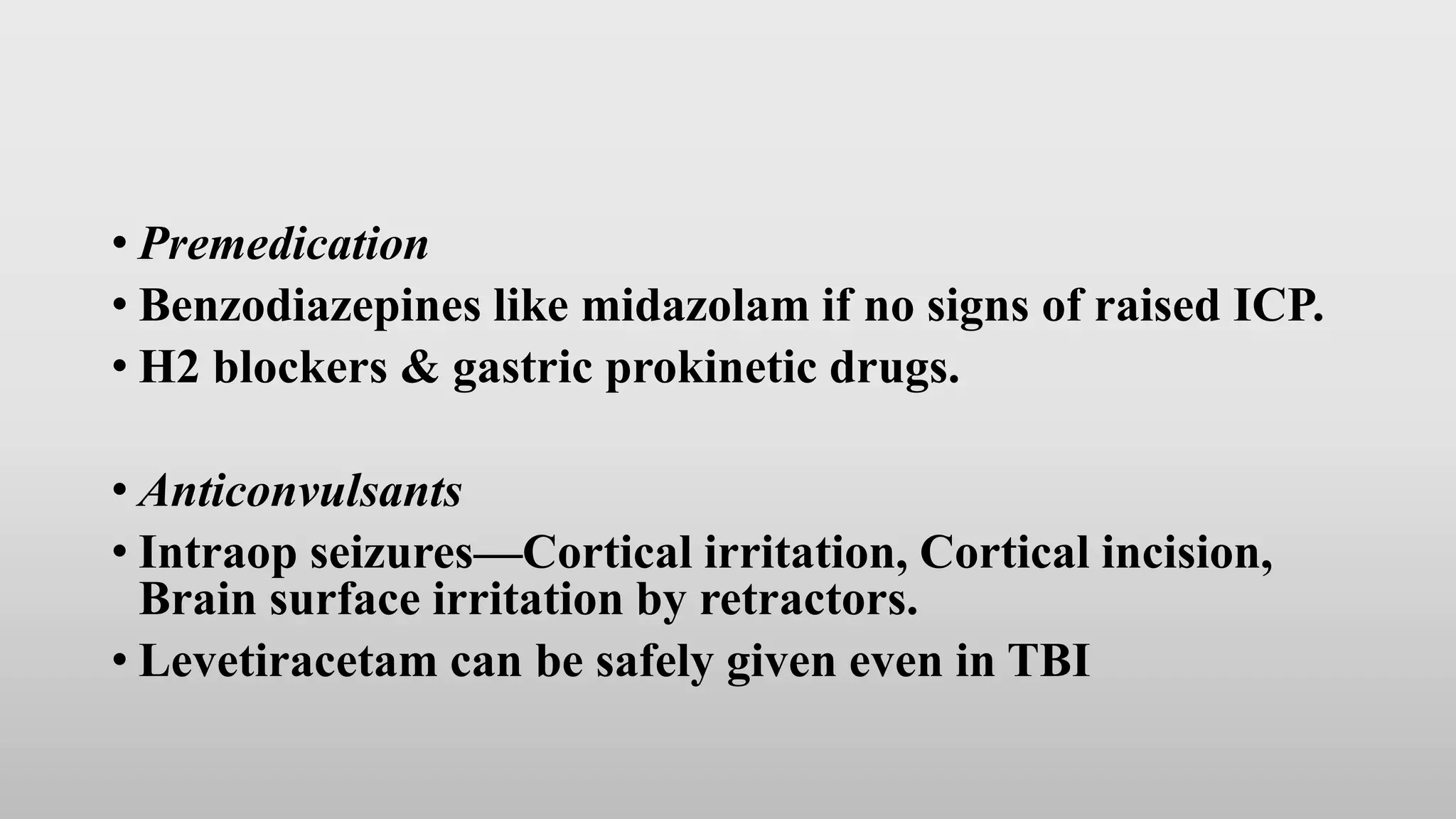
Hazards of Positioning Prone?
• Pressure over the eyeballs, pinna , genitalia
• Kinking of the neck veins
• Extreme flexion – endobronchial migration of the tube,
kinking
• Brachial plexus , ulnar and sciatic nerve injuries.
• avoid extreme flexion or rotation of the neck as it impedes
jugular venous drainage and can increase ICP
• The head is elevated 15°–30° to facilitate venous and CSF
drainage.
• Pressure points should be padded
• Eyes taped to prevent corneal damage from exposure or
irrigation of fluid
•
• Re-check placement of ETT after positioning.
• During positioning, the tracheal tube should be well
secured and all breathing circuit connections checked.
• Risk of unrecognized disconnection as the patient's
airway is not easily accessible.
• Head is often secured in place using Mayfield 3-point
fixator
HAZARDS OF POSITIONING LATERAL
• Ventilation perfusion mismatch.
• Common peroneal nerve injury.
• Dependent pinna injury.
Preoperative Preperation ?
• Preop steroids
• -Decreases edema.
• -Decreases BBB permeability.
• -Improves the viscoelastic properties of intracranial
space.
• -Clinical improvement within 24 hrs
• -Decreases ICP within 48-72 hrs
• Arrange blood .
• Premedication
• Benzodiazepines like midazolam if no signs of raised ICP.
• H2 blockers & gastric prokinetic drugs.
• Anticonvulsants
• Intraop seizures—Cortical irritation, Cortical incision,
Brain surface irritation by retractors.
• Levetiracetam can be safely given even in TBI
• Vascular access
• 2 large widebore peripheral IV lines.
• Central Venous access :
• Large vascular tumors
• Extensive bone resection
• Major cardiovascular compromise present
• Vasoactive drugs are to be infused
• Risk of venous air embolism
• Arterial cannulation
• Preinduction is appropriate.
• Need for close monitoring & control CPP
• (transducer at level of external auditory meatus / circle of
willis)
• ABG.
• RBS or S. electrolytes.
Induction goals ?
• Avoid ICP elevations
• Preserve CPP
• Adequate depth of anaesthesia
• Achieved with drugs ( thiopental, etomidate, propofol)
• produce rapid, reliable onset of unconsciousness
without increasing ICP.
• In presence of raised ICP, thiopental is commonly used
• Following induction sequence suggested: IV
administration of thiopental (3-5 mg/kg) or propofol
(1.25-2.5 mg/kg), followed by opioid (fentanyl, 3-5 µg/kg)
& muscle relaxant
• Adequate depth & profound skeletal muscle paralysis
should be achieved prior to laryngoscopy, (as movement
can abruptly increase CBF & ICP).
• Lidocaine (1.5 mg/kg) also administered IV 90sec before
intubation to suppress laryngeal reflexes
• Administration of succinylcholine associated with modest,
transient increases in ICP. (risk benefit assessment)
• Gentle laryngoscopy & intubation.
• Maintenance
• Maintain with propofol infusion & opiod till dura is
opened
• N2O + O2 (50-70%)+ Propofol infusion 50-150 ug/kg)
• Muscle relaxants
• Vecuronium is ideal
• NDMR with histamine release is avoided
• Volatile anesthetics may be used once dura open.
• Nitrous oxide & volatile anesthetics potential to increase
CBV & ICP as result of direct cerebral vasodilation.
• Nitrous oxide, 50 -70% in O2, administered by some to
decrease total dose of IV agent / volatile agent.
• Spontaneous movement by pts must be prevented
(dangerous increases in ICP/herniation/bleeding).
• In addition to adequate depths of anesthesia, skeletal
muscle paralysis maintained.
Effect of anaesthetic drugs ?
MUSCLE RELAXANTS
• Succinylcholine
• Transient increase in ICP
• Caused by increased afferent signals from muscle spindles
• Prevented by deep anaesthesia, defasciculation with
NDMR
• NDMR
• With histamine release(eg Atracurium, mivacurium)
• Cause cerebral vasodilatation & increase ICP
• Simultaneous decrease in BP & cause reduction in CPP
• Laudanosine-metabolite of atracurium -seizures
• Steroidals (pancuronium,vecuronium & rocuronium) may
be better relaxants (do not directly affect ICP).
• Vecuronium has no effect on ICP, HR/BP in neurosurgical
pts.
• To achieve relatively rapid airway control (within 90
seconds), a priming dose of vecuronium (0.01 mg/kg) can
be administered followed by a higher dose (0.10 mg/kg),
or high doses of vecuronium (to 0.4 mg/kg) without
hemodynamic consequence.
MEASURES TO REDUCE intra-op ICP ?
• Hyperventilation
• Hyperosmolar therapy- Mannitol, glycerol, hypertonic
saline
• Loop diuretics- furosemide.
• Corticosteroids- dexamethasone, methylprednisolone.
• Barbiturate therapy.
• Adequate sedation and analgesia.
• Hyperventilation
• Hyperventilation decreases PaCO2, which can induce constriction
of cerebral arteries by alkalinizing the CSF.
• The resulting reduction in cerebral blood volume decreases ICP.
• reduces brain volume by decreasing CBF through cerebral
vasoconstriction.
• Aggressive hyperventilation (PCO2<25 mm hg) should be avoided
as it may lead to cerebral ischemia.
• Maintain PaCO2 30-35 mm Hg.
• Mannitol: Most commonly used hyperosmolar agent.
• Infusion 0.25-1.0 g/kg.
• Intravenous bolus administration of mannitol lowers the ICP in 1
to 5 minutes with a peak effect at 20 to 60 minutes.
• The effect of mannitol on ICP lasts 1.5 to 6 hours.
• Larger doses produce a longer duration of action but do not
necessarily reduce ICP more effectively (metabolic derangement).
• Mannitol is effective when the blood-brain barrier is intact.
• By increasing osmolality of blood relative to brain,
• pulls water across intact BBB from brain to blood
• to restore the osmolar balance
• Hence should be given slowly (10-minute infusion) in conjunction
with maneuvers that decrease ICV (steroids / hyperventilation
• Side effects :
• Acute hypervolemia (due to vasodilatation)
• Electrolyte imbalance
• Glycerol
• Trivalent alcohol.
• Used systemically and orally to decrease the ICP.
• Not metabolically inert and is partially metabolised to CO2 and
water.
• Oral glycerol decreases the ICP in 30-60min.
• Dosage: 1-2g/kg, maintainence 0.5-1gm/kg every 3-4 hrs
• Complications: hemolysis, hemoglobinuria, renal failure and
hyperosmolar coma
Hypertonic saline ?
• Mechanism of action:
• Membrane stabilizing effect helps in preserving BBB.
• Direct vasodilatation of pial vessels
• Reduction of blood viscosity due to enhancement of the
intravascular volume
• Rapid absorption of cerebrospinal fluid
• Restoration of the normal membrane potentials
• Local dehydration of brain tissue
Loop diuretics
• furosemide
• Used in conjunction with mannitol to treat raised ICP.
• Furosemide works synergitically with mannitol
• Removes free water
• Appropriate in patients with fluid overload
• Decreases CSF production
• Decreases edema in pathological areas (disrupted
BBB)
• better agent in pts with impaired cardiac reserve.
• Loop diuretic : reduces ICP by inducing systemic diuresis, decreasing CSF
production & resolving cerebral edema by improving cellular water transport.
• lowers ICP without increasing CBV or blood osmolality; but not as effective as
mannitol.
• Can be given alone,initial dose (0.5-1 mg/kg) or lower dose with mannitol (0.15-
0.30 mg/kg).
• combination of mannitol & furosemide diuresis more effective than mannitol
alone in reducing ICP & brain bulk but causes more severe dehydration &
electrolyte imbalances.
• Thus necessary to monitor electrolytes intraop & replace K as indicated.
• CORTICOSTEROIDS
• Dexamethasone is the most widely used
• Steroids are effective in reducing ICP in tumors.
• Steroids preop frequently cause neurologic improvement
that precede ICP reduction.
• No proven benefit in head injury patients.
MOA for steroidal reduction in brain edema ?
• Reduction in CSF production
• Membrane stabilization & restoration of BBB
• Reduction in ICP secondary to antiedema action
• Improves CSF bulk outflow at arachnoid villi.
• improved brain metabolism,
• promotion of H2O & electrolyte excretion,
• inhibition of phospholipase A2 activity.
Barbiturate therapy
• Barbiturate protect brain from anoxic, ischemic and
vasogenic cerebral edema.
• Useful in reducing ICP resistant for other methods of
treatment.
• Mechanism of action:
• Uncouples brain metabolism and CBF
• Reduces CMRO2 permitting tolerance of a degree of
ischemia or anoxia => lower demand for CBF =>reduces
the CBV and hence reduces the ICP.
• Free radical scavenger
• Dosage: 10mg/kg adminstered over 30min.
• Followed by 1-5mg/kg to maintain a serum
concentration of 3.5 – 4.5mg/100ml or 10 – 20min of burst
suppression
Fluid management ?
• Aim---to maintain normovolemia, normotension
• Avoid reduction of serum osmolarity
• Keep hematocrit around 30 %
• Glucose containing solutions to be avoided
• Hyperglycemia -> increased lactate production ->
intracellular acidosis -> aggravate neuronal injury
• Blood glucose <140-180 mg%
• Normal saline and ringer lactate preferred
• 0.9% saline is the preferred crystalloid but may cause
hyperchloraemic acidosis when large doses are infused
• Normal saline-slightly hyperosmolar (308) compared to
plasma(295)
• Ringer lactate(280) hypoosmolarlarge volume can cause
cerebral edema.
• Alternate NS and RL litre by litre in case of large volume
administration
BP CONTROL
• Maintain cerebral perfusion pressure normal or high
normal range
• CBF is low in many regions after TBI
• Autoregulatory response may not be intact after TBI/
SAH
• Brain compressed under retractors regional perfusion
press will be low
PONV:
• very common after craniotomy despite the widespread use of
dexamethasone.
• Decreased incidence with Propofol anesthesia.
• Treatment / prevention:
• Ondansetron 4 mg (0.1 mg/kg in children)
• Granisetron 0.01–0.04 mg/kg
• Dolasetron 12.5 (0.035 mg/kg in children )
• Refractory cases
• Dexamethasone 4–10 mg (0.10 mg/kg in children), combined
with another antiemetic.
Emergence from Anaesthesia
• Aims during emergence from anaesthesia
• Smooth emergence
• Maintain MAP, CMRO2, PaO2, PaCO2, Temp
• maintenance of stable ICP, thereby adequate CPP,
• Avoid factors that lead to intracranial bleeding
• (coughing, bucking, intratracheal suctioning, ventilator fight)
• The patient must be fully awake at the time of extubation so
that neurological examination can be performed
• Extubate patients if normal criteria are met and if High
ICP is not out of control, patients who remain intubated
should be sedated if agitation is a problem.
• The patient should not be allowed to cough through
ETT(tachycardia, hypertension and increased ICP), it
may precipitate intracranial hemorrhage or worsen
cerebral edema.
Awakening sequence ?
• Discontinue opioids (bolus / infusion) ~ 60 min before planned
emergence
• Progressive rise of PaCO2 to normal
• Stop volatile anesthetics during skin closure
• Lignocaine 1.5mg/kg to be given as head dressing begins, which
decrease coughing & straining
• Adequate suctioning
• Antagonise muscle relaxant, Stop N2O
• Extubate
• Transfer to pacu/icu for post op monitoring.
causes for late emergence ?
Preoperative low GCS
Large tumor
Residual anesthetics
Surgical complications
Cerebral edema
Hematoma
PACU MANAGEMENT ?
• Regular neurological observations
• Any neurological deterioration should raise suspicion of
ICB/ oedema. Urgent CT should be considered.
• Other aspects:
• Hemodynamic should be closely monitored to maintain
adequate CPP.
• Electrolyte imbalance (esp sodium)
• U/o should be monitored(diabetes insipidus)
Thanks….

Supratentorial masses excision -anaesthetic implication

  • 1.
  • 2.
    Introduction • Brain tumorsconstitute the majority of neurosurgical conditions that present for elective operations. • The Brain can be divided into two parts by the tentorium cerebeli – 1.) Supratentorial Compartment. 2.) Infratentorial Compartment. • About 80% of the tumors are located in the supratentorial compartment and about 20% in the posterior fossa.
  • 3.
    • SUPRATENTORIAL COMPARTMENTS– • largest part of the brain. • It is divided by falx cerebri, is contributed to by the anterior cranial fossa and middle cranial fossa.
  • 4.
    • INFRATENTORIAL COMPARTMENTS- • It includes ? • Brain stem & Cerebellum. • Brain Stem- It includes the mid brain, the pons and the medulla.
  • 5.
    • SUPRATENTORIAL MASSES •1. INFECTION – Subdural abscess – Epidural abscess • 2. HEMATOMA – SDH, EDH, Intracranial bleed • 3. HYDROCEPHALUS • 4. NEOPLASMS • 5. ANEURYSMS & AV MALFORMATIONS
  • 6.
    NEOPLASMS OF BRAIN? • PRIMARY (85%) – most of the tumors are primary. 1).Benign-- Meningiomas, PitutaryAdenomas, Craniopharyngioma, Neurocytoma, Haemangioma, Pilocytic astrocytoma. 2).Malignant -- Astrocytoma/Glioma , Ependymoma , Medulloblastoma , Lymphoma, Germ cell tumor. • METASTASIS (15%)– secondary tumors.
  • 7.
  • 8.
    Specific tumor types •Astrocytoma • Often present in young adults with new-onset seizures. • Upon imaging, they generally show minimal enhancement with contrast. • Usually appears as a contrast-enhancing, well-demarcated lesion with minimal to no surrounding edema. • Because of its benign pathologic characteristics, prognosis following surgical resection is generally very good.
  • 9.
    • Gliobastoma multiforme(grade IV glioma) accounts for 30% of all primary brain tumors in adults. • Imaging usually reveals a ring-enhancing lesion due to central necrosis as well as surrounding edema. • Due to microscopic infiltration of normal brain by tumor cells, resection alone is usually inadequate. • Instead, treatment usually consists of surgical debulking combined with chemotherapy and radiation and is aimed at palliation, not cure.
  • 10.
    • Oligodendroglioma • Arisingfrom myelin-producing cells within CNS, account for only 6% of primary intracranial tumors. • Classically, seizures predate appearance of tumor on imaging. • Calcifications are common & visualized on CT imaging. • consists of mixture of oligodendrocytic & astrocytic cells.
  • 11.
    • Treatment &prognosis depend on the pathologic features. • Initial treatment involves resection since, early in the course, consists of primarily oligodendrocytic cells, which are radioresistant.
  • 12.
    • Ependymoma • Arisingfrom cells lining ventricles & central canal of spinal cord, commonly present in childhood & young adulthood. • Most common location? • floor of 4th ventricle. • Symptoms include: obstructive hydrocephalus, headache ,nausea, vomiting, ataxia . • Treatment consists of resection and radiation.
  • 13.
    • Meningioma • Usuallyextra-axial (arising outside of the brain proper), • slow-growing, well-circumscribed, benign tumors • arising from arachnoid cap cells, not dura mater • slow-growing nature, can be very large at time of diagnosis.
  • 14.
    • Usually apparenton plain radiographs & CT due to presence of calcifications. • On MRI & conventional angiography, these tumors often receive their blood supply from external carotid artery. • Surgical resection is mainstay of treatment. • Prognosis is usually excellent; however, some tumors may be recurrent and require additional resection
  • 15.
    • Acoustic Neuroma •Benign schwannoma involving vestibular component of cranial nerve VIII within internal auditory canal. • Bilateral tumors may occur as part of neurofibromatosis type 2. • Common presenting symptoms - hearing loss, tinnitus & disequilibrium.
  • 16.
    • Larger tumors,which grow out of the internal auditory canal & into CP angle • may cause symptoms related to compression of cranial nerves, • most commonly facial nerve (cranial nerve VII) & brainstem
  • 17.
    • Treatment usuallyconsists of surgical resection +/- radiation. • Surgery usually involves intraoperative cranial nerve monitoring with electromyography or brainstem auditory evoked potentials. • Prognosis is usually very good; however, recurrence of tumor is not uncommon
  • 18.
    • CNS Lymphoma •Rare tumor that can arise as primary brain tumor, also known as microglioma, or via metastatis from systemic lymphoma. • Primary CNS lymphoma can occur anywhere, most common in supratentorial locations (deep gray mater /corpus callosum). • Primary CNS lymphoma thought to be associated with a variety of systemic disorders - SLE, Sjögren's syndrome, RA, EBV. • Symptoms depend on location of tumor.
  • 19.
    • CTS-associated tumorlysis prior to performing biopsy may result in failure to obtain an adequate sample to make diagnosis. • Mainstay of treatment is chemotherapy (including intraventricularly delivered drugs) & whole-brain radiation. • Prognosis is poor despite treatment.
  • 20.
  • 21.
    • Anaesthetic managementof supratentorial tumors.
  • 22.
    problems and concerns? • Effect of anaesthetics on brain. • Intracranial pathophysiology of tumors. • Surgical position & concurrent medications • Measures to decrease ICP & brain bulk. • Intraoperative monitoring requirements. • Implications of fluid therapy • Perioperative haemodynamic management. • Complications
  • 23.
    • Preop knowledgeof Surgery to plan technique, Position. Intraop monitoring. Neurophysiological monitoring. Blood conservation strategies.
  • 24.
    • Major goalsduring anesthesia include ? maintenance of adequate perfusion & oxygenation of normal brain. optimizing operative conditions to facilitate resection. ensuring a rapid emergence for neurologic assessment. accommodating intraoperative electrophysiologic monitoring.
  • 25.
    Preanesthetic evaluation? • Assessneurological status, deficit to be documented. • Routine pre-op assessment. • Airway, cvs and respiratory system. • Evaluate hydration status. • Investigations appropriate for age, general status of patient and type of surgery . • The preanesthetic evaluation should attempt to establish the presence or absence of intracranial hypertension.
  • 26.
    • Computed tomographic(CT) and magnetic resonance imaging (MRI) scans should be reviewed for evidence of brain edema, ventricular size and midline shift greater than 0.5 cm. • Medications should be reviewed with special reference to corticosteroid, diuretic, and anticonvulsant therapy.
  • 27.
    Monitoring ? • StandardASA monitoring devices. • Measurement of intra-arterial blood pressure, ABG, CVP recommended for major neurosurgical procedures. • Arterial cannula is inserted before induction of anesthesia to continuously monitor ABP & estimate CPP. • When cranium is open, ICP = atm pressure & CPP = MAP
  • 28.
    • Capnography :can facilitate ventilation & PaCO2 management as well as detecting VAE • Urine output also measured as indicator of perioperative fluid balance. • IV access with large-bore catheters , given likelihood • of bleeding & need for transfusion. • rapid administration of fluids.
  • 29.
    • CVP -reliable means of large-bore IV, monitor of fluid status. • Avoids increased ICP from both head-down position & decreased cerebral venous outflow. • Neuromuscular function should be monitored. • Peripheral nerve stimulator : monitoring persistence of drug- induced skeletal muscle weakness/paralysis
  • 30.
    • Preoperative ICPmonitoring • Management of patients with intracranial hypertension is greatly facilitated by monitoring ICP perioperatively. • A ventriculostomy or subdural bolt is commonly employed and is usually placed by the neurosurgeon preoperatively under local anesthesia. • A ventriculostomy has the added advantage of allowing removal of CSF to decrease ICP.
  • 31.
    Brain monitoring ? •Electroencephalogram, • Evoked potentials, • Jugular venous bulb oxygen saturation (Sjo2), • Flow velocity measured by transcranial Doppler (TCD), • Brain tissue Po2 (btPo2), • ICP
  • 32.
    POSITIONING & ITSPROBLEMS ? • Common neurosurgical positions are: • Supine • Lateral (park bench) • Semilateral (Janetta) • Prone • Sitting
  • 33.
    Hazards of PositioningProne? • Pressure over the eyeballs, pinna , genitalia • Kinking of the neck veins • Extreme flexion – endobronchial migration of the tube, kinking • Brachial plexus , ulnar and sciatic nerve injuries.
  • 34.
    • avoid extremeflexion or rotation of the neck as it impedes jugular venous drainage and can increase ICP • The head is elevated 15°–30° to facilitate venous and CSF drainage. • Pressure points should be padded • Eyes taped to prevent corneal damage from exposure or irrigation of fluid •
  • 35.
    • Re-check placementof ETT after positioning. • During positioning, the tracheal tube should be well secured and all breathing circuit connections checked. • Risk of unrecognized disconnection as the patient's airway is not easily accessible. • Head is often secured in place using Mayfield 3-point fixator
  • 36.
    HAZARDS OF POSITIONINGLATERAL • Ventilation perfusion mismatch. • Common peroneal nerve injury. • Dependent pinna injury.
  • 37.
    Preoperative Preperation ? •Preop steroids • -Decreases edema. • -Decreases BBB permeability. • -Improves the viscoelastic properties of intracranial space. • -Clinical improvement within 24 hrs • -Decreases ICP within 48-72 hrs • Arrange blood .
  • 38.
    • Premedication • Benzodiazepineslike midazolam if no signs of raised ICP. • H2 blockers & gastric prokinetic drugs. • Anticonvulsants • Intraop seizures—Cortical irritation, Cortical incision, Brain surface irritation by retractors. • Levetiracetam can be safely given even in TBI
  • 39.
    • Vascular access •2 large widebore peripheral IV lines. • Central Venous access : • Large vascular tumors • Extensive bone resection • Major cardiovascular compromise present • Vasoactive drugs are to be infused • Risk of venous air embolism
  • 40.
    • Arterial cannulation •Preinduction is appropriate. • Need for close monitoring & control CPP • (transducer at level of external auditory meatus / circle of willis) • ABG. • RBS or S. electrolytes.
  • 41.
    Induction goals ? •Avoid ICP elevations • Preserve CPP • Adequate depth of anaesthesia
  • 42.
    • Achieved withdrugs ( thiopental, etomidate, propofol) • produce rapid, reliable onset of unconsciousness without increasing ICP. • In presence of raised ICP, thiopental is commonly used • Following induction sequence suggested: IV administration of thiopental (3-5 mg/kg) or propofol (1.25-2.5 mg/kg), followed by opioid (fentanyl, 3-5 µg/kg) & muscle relaxant
  • 43.
    • Adequate depth& profound skeletal muscle paralysis should be achieved prior to laryngoscopy, (as movement can abruptly increase CBF & ICP). • Lidocaine (1.5 mg/kg) also administered IV 90sec before intubation to suppress laryngeal reflexes • Administration of succinylcholine associated with modest, transient increases in ICP. (risk benefit assessment) • Gentle laryngoscopy & intubation.
  • 44.
    • Maintenance • Maintainwith propofol infusion & opiod till dura is opened • N2O + O2 (50-70%)+ Propofol infusion 50-150 ug/kg) • Muscle relaxants • Vecuronium is ideal • NDMR with histamine release is avoided • Volatile anesthetics may be used once dura open.
  • 45.
    • Nitrous oxide& volatile anesthetics potential to increase CBV & ICP as result of direct cerebral vasodilation. • Nitrous oxide, 50 -70% in O2, administered by some to decrease total dose of IV agent / volatile agent. • Spontaneous movement by pts must be prevented (dangerous increases in ICP/herniation/bleeding). • In addition to adequate depths of anesthesia, skeletal muscle paralysis maintained.
  • 46.
  • 47.
    MUSCLE RELAXANTS • Succinylcholine •Transient increase in ICP • Caused by increased afferent signals from muscle spindles • Prevented by deep anaesthesia, defasciculation with NDMR
  • 48.
    • NDMR • Withhistamine release(eg Atracurium, mivacurium) • Cause cerebral vasodilatation & increase ICP • Simultaneous decrease in BP & cause reduction in CPP • Laudanosine-metabolite of atracurium -seizures
  • 49.
    • Steroidals (pancuronium,vecuronium& rocuronium) may be better relaxants (do not directly affect ICP). • Vecuronium has no effect on ICP, HR/BP in neurosurgical pts. • To achieve relatively rapid airway control (within 90 seconds), a priming dose of vecuronium (0.01 mg/kg) can be administered followed by a higher dose (0.10 mg/kg), or high doses of vecuronium (to 0.4 mg/kg) without hemodynamic consequence.
  • 50.
    MEASURES TO REDUCEintra-op ICP ? • Hyperventilation • Hyperosmolar therapy- Mannitol, glycerol, hypertonic saline • Loop diuretics- furosemide. • Corticosteroids- dexamethasone, methylprednisolone. • Barbiturate therapy. • Adequate sedation and analgesia.
  • 51.
    • Hyperventilation • Hyperventilationdecreases PaCO2, which can induce constriction of cerebral arteries by alkalinizing the CSF. • The resulting reduction in cerebral blood volume decreases ICP. • reduces brain volume by decreasing CBF through cerebral vasoconstriction. • Aggressive hyperventilation (PCO2<25 mm hg) should be avoided as it may lead to cerebral ischemia. • Maintain PaCO2 30-35 mm Hg.
  • 52.
    • Mannitol: Mostcommonly used hyperosmolar agent. • Infusion 0.25-1.0 g/kg. • Intravenous bolus administration of mannitol lowers the ICP in 1 to 5 minutes with a peak effect at 20 to 60 minutes. • The effect of mannitol on ICP lasts 1.5 to 6 hours. • Larger doses produce a longer duration of action but do not necessarily reduce ICP more effectively (metabolic derangement). • Mannitol is effective when the blood-brain barrier is intact.
  • 53.
    • By increasingosmolality of blood relative to brain, • pulls water across intact BBB from brain to blood • to restore the osmolar balance • Hence should be given slowly (10-minute infusion) in conjunction with maneuvers that decrease ICV (steroids / hyperventilation • Side effects : • Acute hypervolemia (due to vasodilatation) • Electrolyte imbalance
  • 54.
    • Glycerol • Trivalentalcohol. • Used systemically and orally to decrease the ICP. • Not metabolically inert and is partially metabolised to CO2 and water. • Oral glycerol decreases the ICP in 30-60min. • Dosage: 1-2g/kg, maintainence 0.5-1gm/kg every 3-4 hrs • Complications: hemolysis, hemoglobinuria, renal failure and hyperosmolar coma
  • 55.
    Hypertonic saline ? •Mechanism of action: • Membrane stabilizing effect helps in preserving BBB. • Direct vasodilatation of pial vessels • Reduction of blood viscosity due to enhancement of the intravascular volume • Rapid absorption of cerebrospinal fluid • Restoration of the normal membrane potentials • Local dehydration of brain tissue
  • 56.
    Loop diuretics • furosemide •Used in conjunction with mannitol to treat raised ICP. • Furosemide works synergitically with mannitol • Removes free water • Appropriate in patients with fluid overload • Decreases CSF production • Decreases edema in pathological areas (disrupted BBB)
  • 57.
    • better agentin pts with impaired cardiac reserve. • Loop diuretic : reduces ICP by inducing systemic diuresis, decreasing CSF production & resolving cerebral edema by improving cellular water transport. • lowers ICP without increasing CBV or blood osmolality; but not as effective as mannitol. • Can be given alone,initial dose (0.5-1 mg/kg) or lower dose with mannitol (0.15- 0.30 mg/kg). • combination of mannitol & furosemide diuresis more effective than mannitol alone in reducing ICP & brain bulk but causes more severe dehydration & electrolyte imbalances. • Thus necessary to monitor electrolytes intraop & replace K as indicated.
  • 58.
    • CORTICOSTEROIDS • Dexamethasoneis the most widely used • Steroids are effective in reducing ICP in tumors. • Steroids preop frequently cause neurologic improvement that precede ICP reduction. • No proven benefit in head injury patients.
  • 59.
    MOA for steroidalreduction in brain edema ? • Reduction in CSF production • Membrane stabilization & restoration of BBB • Reduction in ICP secondary to antiedema action • Improves CSF bulk outflow at arachnoid villi. • improved brain metabolism, • promotion of H2O & electrolyte excretion, • inhibition of phospholipase A2 activity.
  • 60.
    Barbiturate therapy • Barbiturateprotect brain from anoxic, ischemic and vasogenic cerebral edema. • Useful in reducing ICP resistant for other methods of treatment. • Mechanism of action: • Uncouples brain metabolism and CBF • Reduces CMRO2 permitting tolerance of a degree of ischemia or anoxia => lower demand for CBF =>reduces the CBV and hence reduces the ICP. • Free radical scavenger
  • 61.
    • Dosage: 10mg/kgadminstered over 30min. • Followed by 1-5mg/kg to maintain a serum concentration of 3.5 – 4.5mg/100ml or 10 – 20min of burst suppression
  • 62.
    Fluid management ? •Aim---to maintain normovolemia, normotension • Avoid reduction of serum osmolarity • Keep hematocrit around 30 % • Glucose containing solutions to be avoided • Hyperglycemia -> increased lactate production -> intracellular acidosis -> aggravate neuronal injury • Blood glucose <140-180 mg%
  • 63.
    • Normal salineand ringer lactate preferred • 0.9% saline is the preferred crystalloid but may cause hyperchloraemic acidosis when large doses are infused • Normal saline-slightly hyperosmolar (308) compared to plasma(295) • Ringer lactate(280) hypoosmolarlarge volume can cause cerebral edema. • Alternate NS and RL litre by litre in case of large volume administration
  • 64.
    BP CONTROL • Maintaincerebral perfusion pressure normal or high normal range • CBF is low in many regions after TBI • Autoregulatory response may not be intact after TBI/ SAH • Brain compressed under retractors regional perfusion press will be low
  • 65.
    PONV: • very commonafter craniotomy despite the widespread use of dexamethasone. • Decreased incidence with Propofol anesthesia. • Treatment / prevention: • Ondansetron 4 mg (0.1 mg/kg in children) • Granisetron 0.01–0.04 mg/kg • Dolasetron 12.5 (0.035 mg/kg in children ) • Refractory cases • Dexamethasone 4–10 mg (0.10 mg/kg in children), combined with another antiemetic.
  • 66.
    Emergence from Anaesthesia •Aims during emergence from anaesthesia • Smooth emergence • Maintain MAP, CMRO2, PaO2, PaCO2, Temp • maintenance of stable ICP, thereby adequate CPP, • Avoid factors that lead to intracranial bleeding • (coughing, bucking, intratracheal suctioning, ventilator fight) • The patient must be fully awake at the time of extubation so that neurological examination can be performed
  • 67.
    • Extubate patientsif normal criteria are met and if High ICP is not out of control, patients who remain intubated should be sedated if agitation is a problem. • The patient should not be allowed to cough through ETT(tachycardia, hypertension and increased ICP), it may precipitate intracranial hemorrhage or worsen cerebral edema.
  • 68.
    Awakening sequence ? •Discontinue opioids (bolus / infusion) ~ 60 min before planned emergence • Progressive rise of PaCO2 to normal • Stop volatile anesthetics during skin closure • Lignocaine 1.5mg/kg to be given as head dressing begins, which decrease coughing & straining • Adequate suctioning • Antagonise muscle relaxant, Stop N2O • Extubate • Transfer to pacu/icu for post op monitoring.
  • 69.
    causes for lateemergence ? Preoperative low GCS Large tumor Residual anesthetics Surgical complications Cerebral edema Hematoma
  • 70.
    PACU MANAGEMENT ? •Regular neurological observations • Any neurological deterioration should raise suspicion of ICB/ oedema. Urgent CT should be considered. • Other aspects: • Hemodynamic should be closely monitored to maintain adequate CPP. • Electrolyte imbalance (esp sodium) • U/o should be monitored(diabetes insipidus)
  • 71.