“How Social Are You?”
The Social Organization

•   Karen Wickre, Google
•   Jennifer Preston, The New York Times
•   Frank Eliason, Citi
•   Ben Edwards, IBM
•   Stefan Stern, Mike Slaby, Michael Wiley, Steve Rubel, David Armano,
    Bruce Anderson and Michael Brito


•   www.change.edelman.com
• Public Engagement:
  The Evolution of Public Relations
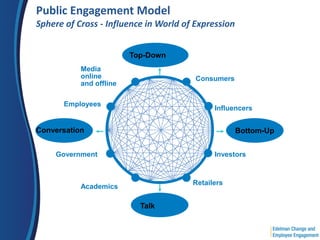
Public Engagement Model
Sphere of Cross - Influence in World of Expression


                         Top-Down
           Media
           online                       Consumers
           and offline

      Employees
                                             Influencers


Conversation                                         Bottom-Up


    Government                               Investors


                                       Retailers
           Academics

                           Talk
Being a Social Organization is More than
Social Media
  • Over seventy percent of people on-line blog or network
  • Exponential growth of Twitter; 500 million+ active on Facebook
  • 370 million unique visitors to Wikipedia each month; 2 + billion views
    per day on YouTube
  • Diversity continues: Flickr, Digg, Skype, LinkedIn
“Defining Social”
  •   Interactions
  •   Behaviors
  •   Intentions
  •   Involvement
  •   Attitudes
How Social Are You?
  •   Leadership Actions
  •   Management Practices
  •   Communications Protocols
  •   Frequency
  •   Feedback
  •   Transparency
  •   Accessibility
  •   Listening
  •   Integration
An Evolving Workforce
It’s 2010…do you know your workforce?

   • Reengage with your workforce
   • Comprehend business strategy and translate it via new language,
     mediums
   • Upend communications from a strategic and operational
     standpoint
   • Constantly reassess, experiment, fail
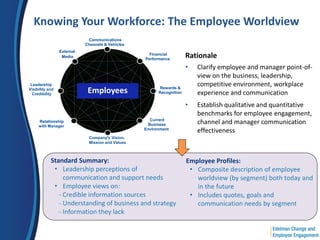
Knowing Your Workforce: The Employee Worldview
                             Communications
                            Channels & Vehicles
                 External
                  Media
                                                    Financial
                                                  Performance
                                                                      Rationale
                                                                      •   Clarify employee and manager point-of-
                                                                          view on the business, leadership,
 Leadership
                                                        Rewards &
                                                                          competitive environment, workplace
Visibility and
  Credibility
                             Employees                  Recognition       experience and communication
                                                                      •   Establish qualitative and quantitative
                                                                          benchmarks for employee engagement,
                                                    Current
     Relationship
     with Manager                                  Business               channel and manager communication
                                                  Environment
                                                                          effectiveness
                                      ’
                             Company’s Vision,
                             Mission and Values


            Standard Summary:                                         Employee Profiles:
             • Leadership perceptions of                               • Composite description of employee
                 communication and support needs                         worldview (by segment) both today and
             • Employee views on:                                        in the future
               - Credible information sources                          • Includes quotes, goals and
               - Understanding of business and strategy                  communication needs by segment
               - Information they lack
How Smart Do You Want Your
Employees to Be?
  • How smart do you want to be about your
    employees?
Conversations inform decision-making, not vice-versa

   •   Organizational conversation and information flow used to be linear, in a
       controlled environment
   •   Now, with information ubiquitous, people are talking about your company
       24/7, both inside and outside
   •   What you stand for, who you are, supported by clearly defined goals and
       actions – i.e., organizational clarity – is more critical than ever


          Organizations must listen more closely
          and bring new points of view into the
                 decision making process
Rise of the “social” enterprise develops a differentiated
workforce

     Increasing pressures on organizations to be more
     competitive, agile and “lean” result in a workforce
     that is more:
                   • Cognitively complex
                   • Team-based and collaborative
                   • Dependent on social skills
                   • Dependent on technological competence
                   • Time pressured
To be successful, companies need to evolve constantly

   • Innovation no longer crucial simply for business success, but for
     business survival
   • Need for innovation, self-assessment and re-invention are not
     novel
   • Main difference today is rapid pace of change
   • Sustainable competitive advantage no longer exists
   • Success today is based on creating a flow of temporary
     advantages, which requires innovation and agility
In summary…
 • How social are you? is an individual analysis
 • It starts with leadership actions and management practices
 • It impacts every facet of the enterprise
 • Being Social is more about how employees and customers
   “experiences” the organization
 • Organizational Communications has a unique role to engage
   people by providing context and relevance, helping to
   “connect the dots”, listening to and acting upon the voices
   and conversations internally
“How Social Are You?”

How Social Are You? by Gary Grates

  • 1.
  • 2.
    The Social Organization • Karen Wickre, Google • Jennifer Preston, The New York Times • Frank Eliason, Citi • Ben Edwards, IBM • Stefan Stern, Mike Slaby, Michael Wiley, Steve Rubel, David Armano, Bruce Anderson and Michael Brito • www.change.edelman.com
  • 3.
    • Public Engagement: The Evolution of Public Relations
  • 4.
    Public Engagement Model Sphereof Cross - Influence in World of Expression Top-Down Media online Consumers and offline Employees Influencers Conversation Bottom-Up Government Investors Retailers Academics Talk
  • 5.
    Being a SocialOrganization is More than Social Media • Over seventy percent of people on-line blog or network • Exponential growth of Twitter; 500 million+ active on Facebook • 370 million unique visitors to Wikipedia each month; 2 + billion views per day on YouTube • Diversity continues: Flickr, Digg, Skype, LinkedIn
  • 6.
    “Defining Social” • Interactions • Behaviors • Intentions • Involvement • Attitudes
  • 7.
    How Social AreYou? • Leadership Actions • Management Practices • Communications Protocols • Frequency • Feedback • Transparency • Accessibility • Listening • Integration
  • 8.
  • 9.
    It’s 2010…do youknow your workforce? • Reengage with your workforce • Comprehend business strategy and translate it via new language, mediums • Upend communications from a strategic and operational standpoint • Constantly reassess, experiment, fail
  • 10.
    Knowing Your Workforce:The Employee Worldview Communications Channels & Vehicles External Media Financial Performance Rationale • Clarify employee and manager point-of- view on the business, leadership, Leadership Rewards & competitive environment, workplace Visibility and Credibility Employees Recognition experience and communication • Establish qualitative and quantitative benchmarks for employee engagement, Current Relationship with Manager Business channel and manager communication Environment effectiveness ’ Company’s Vision, Mission and Values Standard Summary: Employee Profiles: • Leadership perceptions of • Composite description of employee communication and support needs worldview (by segment) both today and • Employee views on: in the future - Credible information sources • Includes quotes, goals and - Understanding of business and strategy communication needs by segment - Information they lack
  • 11.
    How Smart DoYou Want Your Employees to Be? • How smart do you want to be about your employees?
  • 12.
    Conversations inform decision-making,not vice-versa • Organizational conversation and information flow used to be linear, in a controlled environment • Now, with information ubiquitous, people are talking about your company 24/7, both inside and outside • What you stand for, who you are, supported by clearly defined goals and actions – i.e., organizational clarity – is more critical than ever Organizations must listen more closely and bring new points of view into the decision making process
  • 13.
    Rise of the“social” enterprise develops a differentiated workforce Increasing pressures on organizations to be more competitive, agile and “lean” result in a workforce that is more: • Cognitively complex • Team-based and collaborative • Dependent on social skills • Dependent on technological competence • Time pressured
  • 14.
    To be successful,companies need to evolve constantly • Innovation no longer crucial simply for business success, but for business survival • Need for innovation, self-assessment and re-invention are not novel • Main difference today is rapid pace of change • Sustainable competitive advantage no longer exists • Success today is based on creating a flow of temporary advantages, which requires innovation and agility
  • 15.
    In summary… •How social are you? is an individual analysis • It starts with leadership actions and management practices • It impacts every facet of the enterprise • Being Social is more about how employees and customers “experiences” the organization • Organizational Communications has a unique role to engage people by providing context and relevance, helping to “connect the dots”, listening to and acting upon the voices and conversations internally
  • 16.