Relationship between
Trade unions
and
Political parties
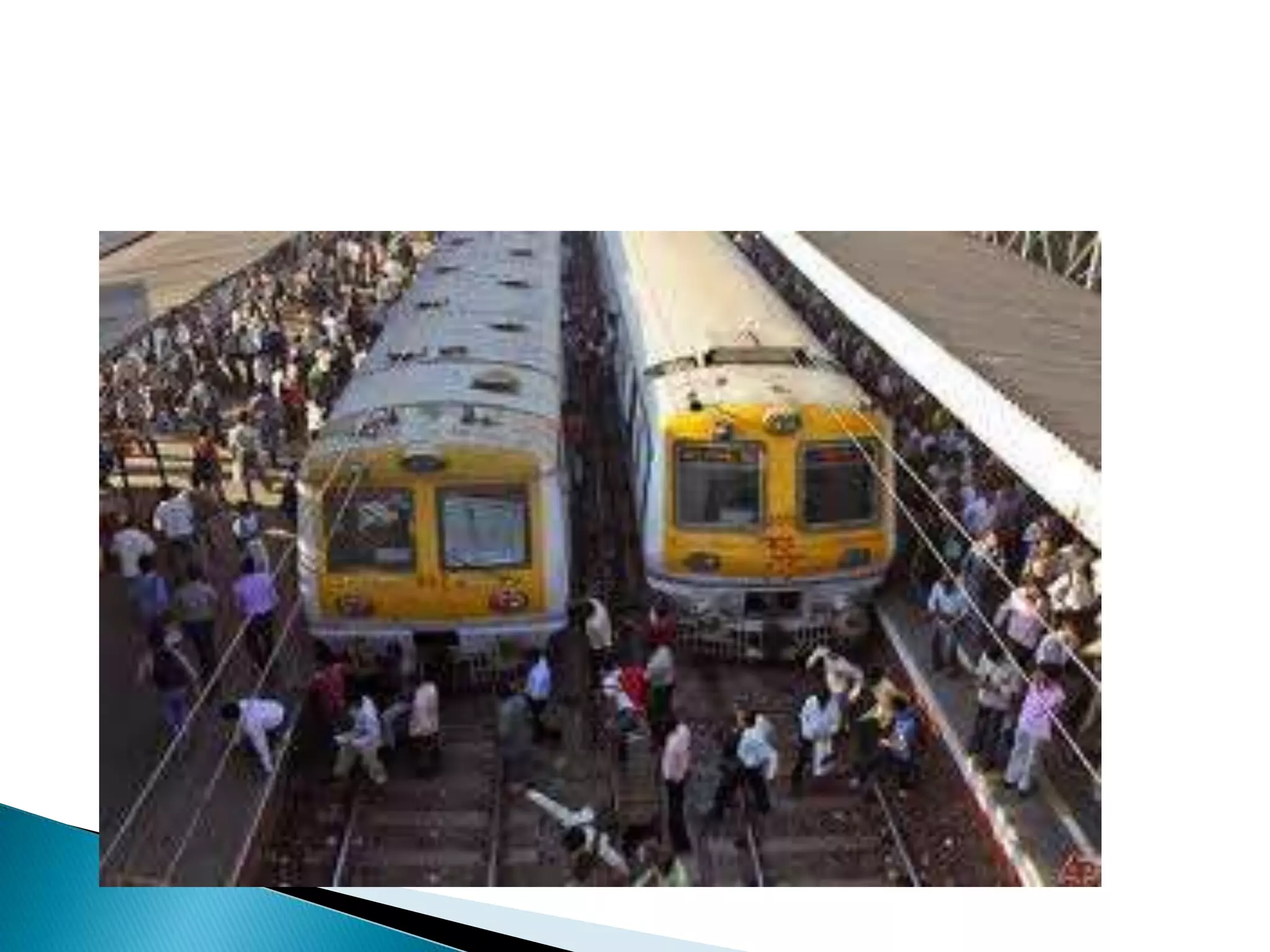
20 days strike
17,00,000 workers participated in
the strike
Largest known strike
Issues – low wages, harsh working
conditions, very long working
hours
Strike was brutally crushed,
violently suppressed.
1000s sent to jail.
1000s lost their jobs
Reign of terror unleashed.
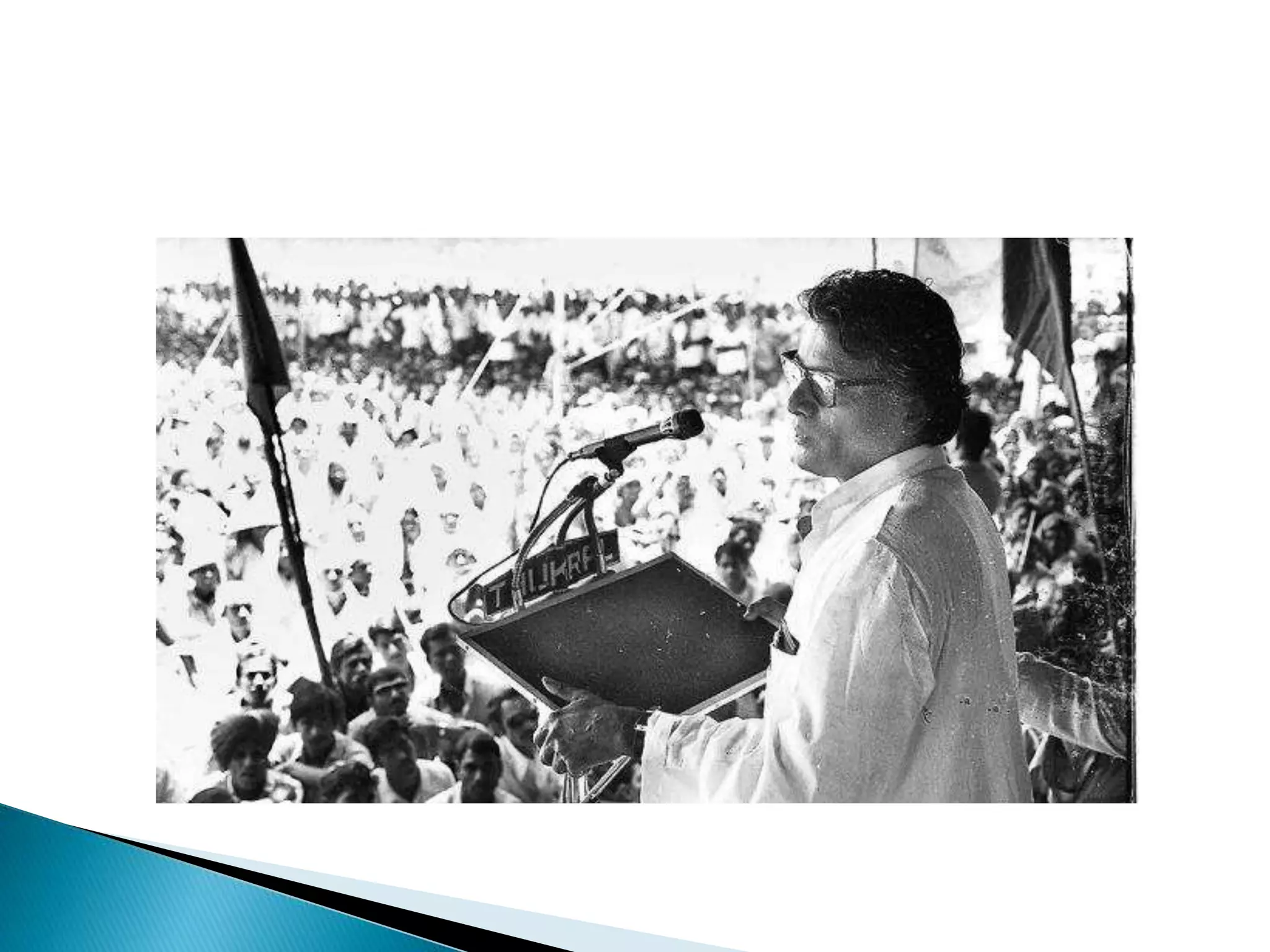
The leader of the strike was
Mr. George Fernandes, the
President of the All India
Railwaymen’s Federation.
This was 1974.
Within a few years, in 1977, George
Fernandes and his party came to power.
He became the Union Minister for
Industries.
He immediately told the railway unions to
stop their agitational mode.
This was the difference between the union
leader and the minister.
Not an isolated case.
Experience of the CPI(M) not
very different.
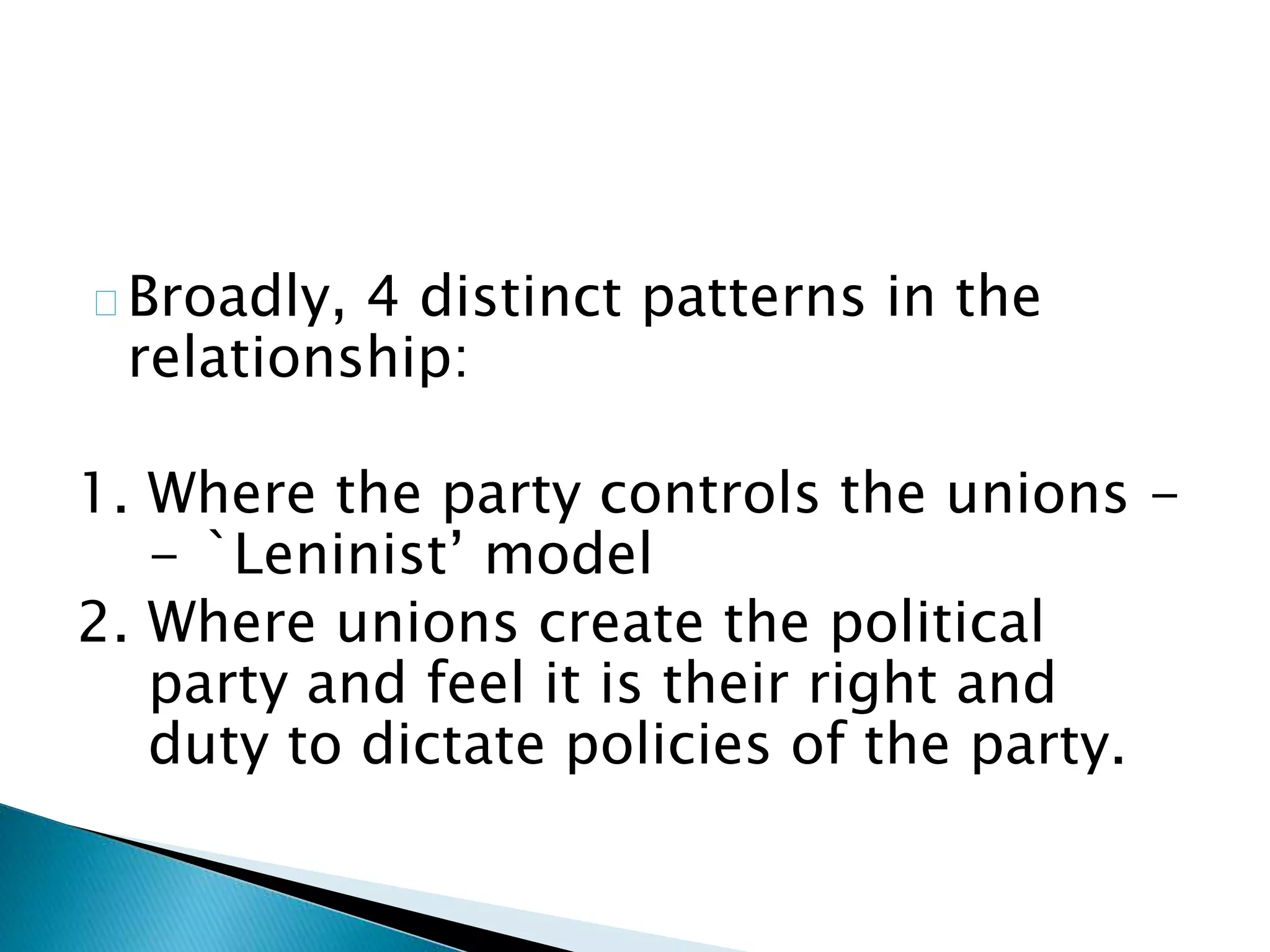
Broadly, 4 distinct patterns in the
relationship:
1. Where the party controls the unions -
- `Leninist’ model
2. Where unions create the political
party and feel it is their right and
duty to dictate policies of the party.
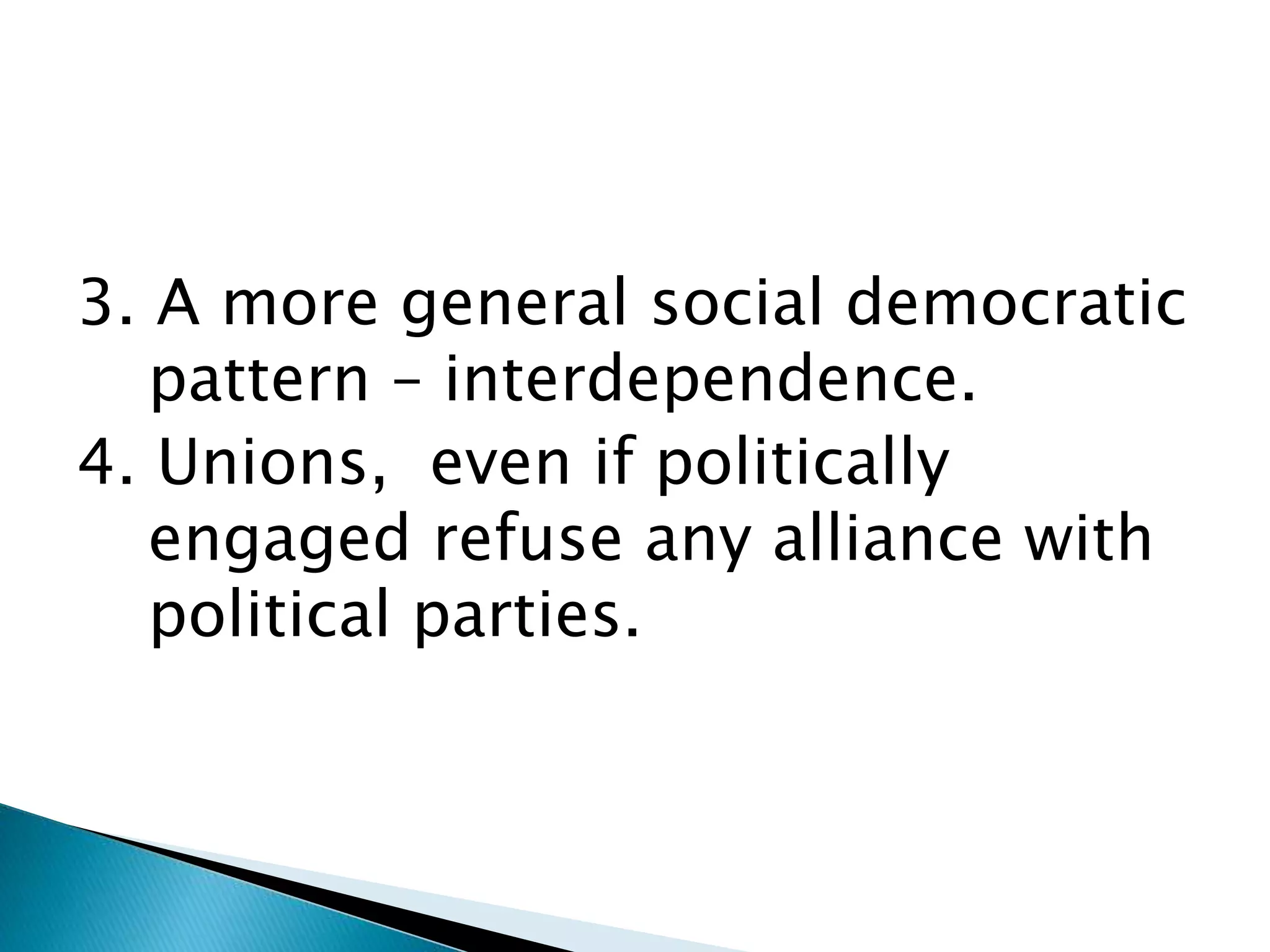
3. A more general social democratic
pattern – interdependence.
4. Unions, even if politically
engaged refuse any alliance with
political parties.
In India – lack of class politics of the
classical type.
More complex, fragmented and
hierarchical nature of society partly
due to the grip of the caste system
over almost all relationships.
Plus the left in India historically
divided and steeped in Stalinist
politics.
Historically, the trade union movement grew
out of the national Independence movement
and by and large remained a creation of it.
First leaders common.
Nehru – President of AITUC and then the
Prime Minister of the country.
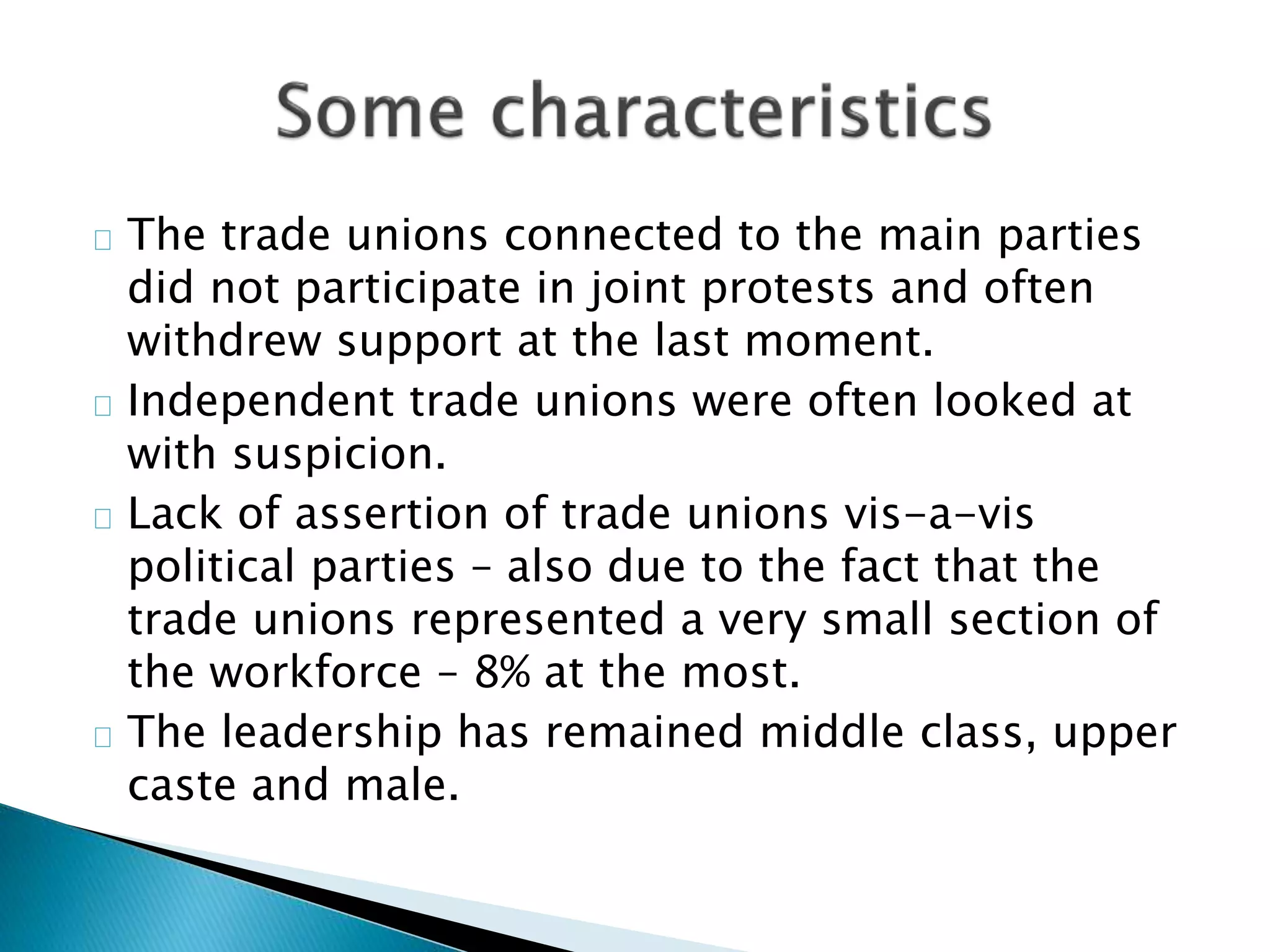
The trade unions connected to the main parties
did not participate in joint protests and often
withdrew support at the last moment.
Independent trade unions were often looked at
with suspicion.
Lack of assertion of trade unions vis-a-vis
political parties – also due to the fact that the
trade unions represented a very small section of
the workforce – 8% at the most.
The leadership has remained middle class, upper
caste and male.
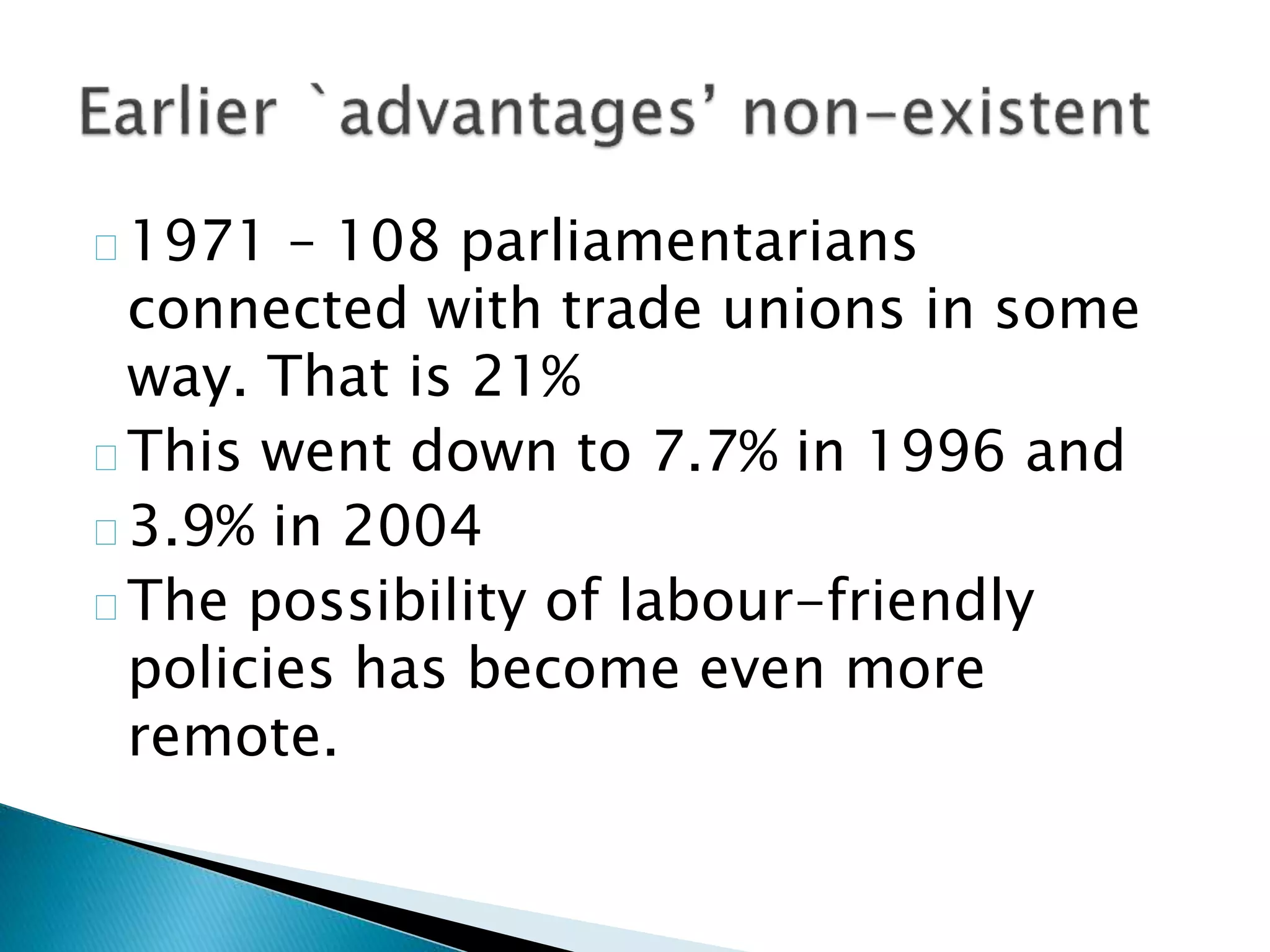
1971 – 108 parliamentarians
connected with trade unions in some
way. That is 21%
This went down to 7.7% in 1996 and
3.9% in 2004
The possibility of labour-friendly
policies has become even more
remote.
Recent negative changes in the
Contract labour act, Industrial
Disputes Act etc have been formulated
without consulting their respective
unions.
Uncontrolled rapacious capital
Ruthless exploitation of every
possible resource, including
labour
Entire thrust – opening of
markets, expansion of markets
and emergence of a new regime
of accumulation.
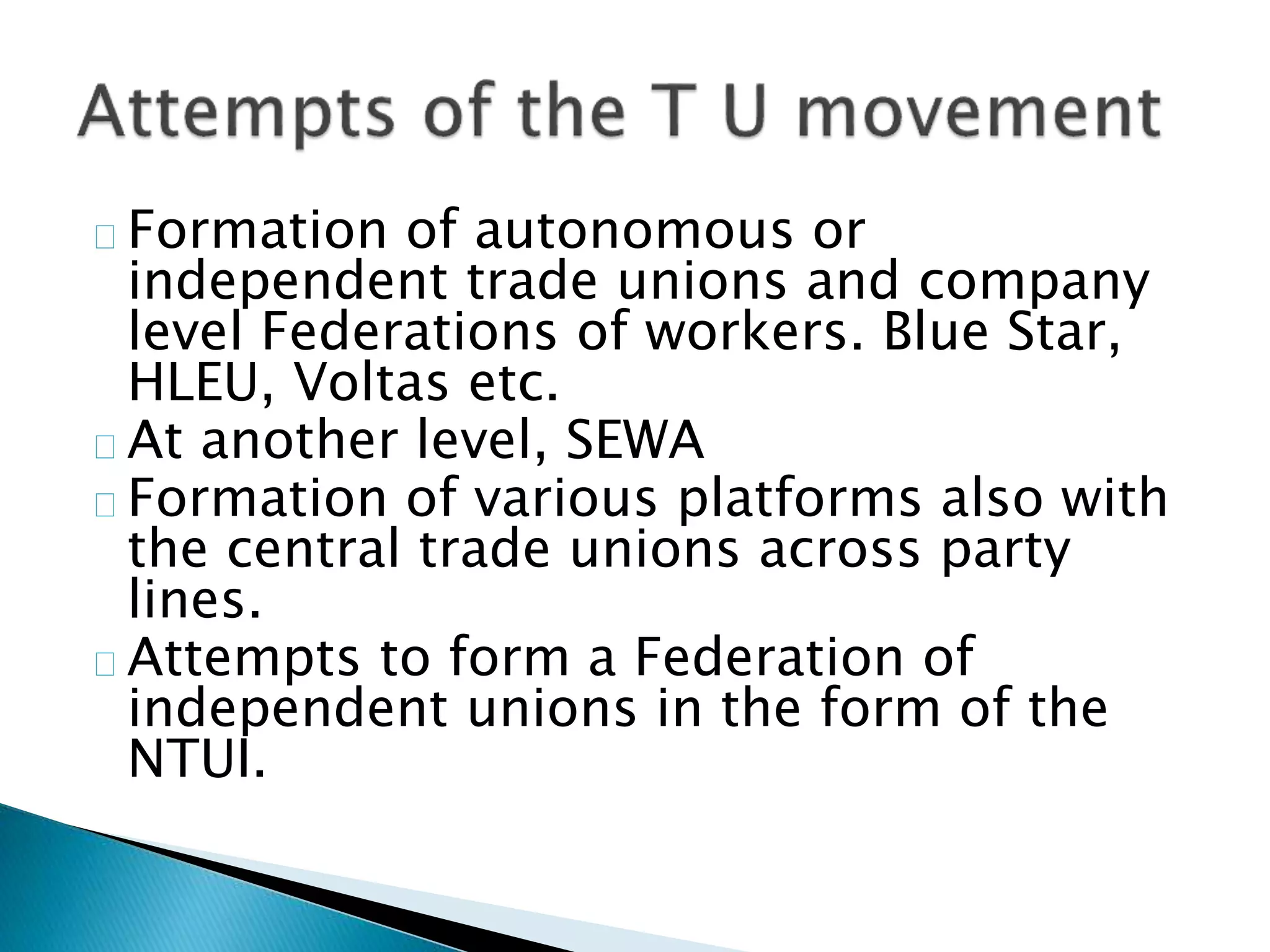
Formation of autonomous or
independent trade unions and company
level Federations of workers. Blue Star,
HLEU, Voltas etc.
At another level, SEWA
Formation of various platforms also with
the central trade unions across party
lines.
Attempts to form a Federation of
independent unions in the form of the
NTUI.
Broad fronts with organisations of rural
workers, informal sector workers that are
issue-based. For example, over right to
food or right to work campaigns. Some
have been quite successful .
Some of these have been alliances with
women’s organisations, dalit
organisations, organisations working
with issues related with human rights,
rights of sexual minorities and other
disadvantaged sections.
The existing parties seem a total no-no.
One issue has been raised that has been
raised here as well –
Is the time ripe to attempt to form a new
radical workers’ party?
Given the nature of capitalist crisis and its
almost persistent nature, the idea of a radical
party coming into being at this stage seems
remote, though much more debate in needed.

The relationship between trade unions and political parties

  • 1.
  • 3.
    20 days strike 17,00,000workers participated in the strike Largest known strike Issues – low wages, harsh working conditions, very long working hours
  • 6.
    Strike was brutallycrushed, violently suppressed. 1000s sent to jail. 1000s lost their jobs Reign of terror unleashed.
  • 7.
    The leader ofthe strike was Mr. George Fernandes, the President of the All India Railwaymen’s Federation.
  • 9.
    This was 1974. Withina few years, in 1977, George Fernandes and his party came to power. He became the Union Minister for Industries. He immediately told the railway unions to stop their agitational mode. This was the difference between the union leader and the minister.
  • 10.
    Not an isolatedcase. Experience of the CPI(M) not very different.
  • 11.
    Broadly, 4 distinctpatterns in the relationship: 1. Where the party controls the unions - - `Leninist’ model 2. Where unions create the political party and feel it is their right and duty to dictate policies of the party.
  • 12.
    3. A moregeneral social democratic pattern – interdependence. 4. Unions, even if politically engaged refuse any alliance with political parties.
  • 13.
    In India –lack of class politics of the classical type. More complex, fragmented and hierarchical nature of society partly due to the grip of the caste system over almost all relationships. Plus the left in India historically divided and steeped in Stalinist politics.
  • 14.
    Historically, the tradeunion movement grew out of the national Independence movement and by and large remained a creation of it. First leaders common. Nehru – President of AITUC and then the Prime Minister of the country.
  • 15.
    The trade unionsconnected to the main parties did not participate in joint protests and often withdrew support at the last moment. Independent trade unions were often looked at with suspicion. Lack of assertion of trade unions vis-a-vis political parties – also due to the fact that the trade unions represented a very small section of the workforce – 8% at the most. The leadership has remained middle class, upper caste and male.
  • 16.
    1971 – 108parliamentarians connected with trade unions in some way. That is 21% This went down to 7.7% in 1996 and 3.9% in 2004 The possibility of labour-friendly policies has become even more remote.
  • 17.
    Recent negative changesin the Contract labour act, Industrial Disputes Act etc have been formulated without consulting their respective unions.
  • 18.
    Uncontrolled rapacious capital Ruthlessexploitation of every possible resource, including labour Entire thrust – opening of markets, expansion of markets and emergence of a new regime of accumulation.
  • 19.
    Formation of autonomousor independent trade unions and company level Federations of workers. Blue Star, HLEU, Voltas etc. At another level, SEWA Formation of various platforms also with the central trade unions across party lines. Attempts to form a Federation of independent unions in the form of the NTUI.
  • 20.
    Broad fronts withorganisations of rural workers, informal sector workers that are issue-based. For example, over right to food or right to work campaigns. Some have been quite successful . Some of these have been alliances with women’s organisations, dalit organisations, organisations working with issues related with human rights, rights of sexual minorities and other disadvantaged sections.
  • 21.
    The existing partiesseem a total no-no. One issue has been raised that has been raised here as well – Is the time ripe to attempt to form a new radical workers’ party? Given the nature of capitalist crisis and its almost persistent nature, the idea of a radical party coming into being at this stage seems remote, though much more debate in needed.