LABOURWELFARE –
SCOPE,OBJECTIVES
AND PRINCIPLES
BY
Mounika
Ramachandruni
Introduction
The concept of labour welfare embraces a multitude
of activities including all extra-mural, intra-mural
activities, as well as statutory and non-statutory
welfare measures undertaken by the employees, the
government and the trade unions to help workers
and their families in the context of their industrial
life.
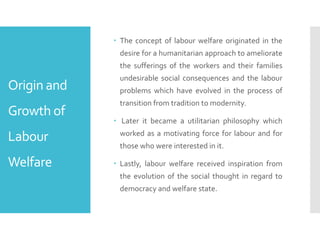
Origin and
Growth of
Labour
Welfare
 The concept of labour welfare originated in the
desire for a humanitarian approach to ameliorate
the sufferings of the workers and their families
undesirable social consequences and the labour
problems which have evolved in the process of
transition from tradition to modernity.
 Later it became a utilitarian philosophy which
worked as a motivating force for labour and for
those who were interested in it.
 Lastly, labour welfare received inspiration from
the evolution of the social thought in regard to
democracy and welfare state.
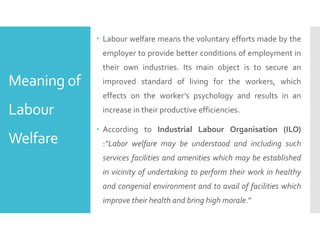
Meaning of
Labour
Welfare
 Labour welfare means the voluntary efforts made by the
employer to provide better conditions of employment in
their own industries. Its main object is to secure an
improved standard of living for the workers, which
effects on the worker’s psychology and results in an
increase in their productive efficiencies.
 According to Industrial Labour Organisation (ILO)
:“Labor welfare may be understood and including such
services facilities and amenities which may be established
in vicinity of undertaking to perform their work in healthy
and congenial environment and to avail of facilities which
improve their health and bring high morale.”
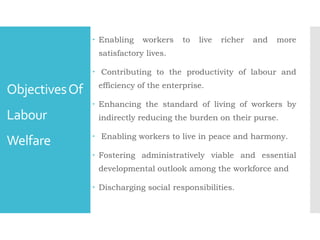
ObjectivesOf
Labour
Welfare
 Enabling workers to live richer and more
satisfactory lives.
 Contributing to the productivity of labour and
efficiency of the enterprise.
 Enhancing the standard of living of workers by
indirectly reducing the burden on their purse.
 Enabling workers to live in peace and harmony.
 Fostering administratively viable and essential
developmental outlook among the workforce and
 Discharging social responsibilities.
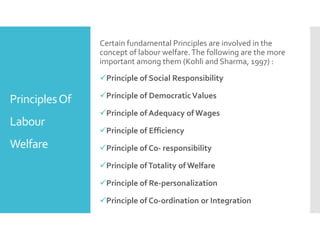
PrinciplesOf
Labour
Welfare
Certain fundamental Principles are involved in the
concept of labour welfare.The following are the more
important among them (Kohli and Sharma, 1997) :
Principle of Social Responsibility
Principle of Democratic Values
Principle of Adequacy of Wages
Principle of Efficiency
Principle of Co- responsibility
Principle ofTotality of Welfare
Principle of Re-personalization
Principle of Co-ordination or Integration
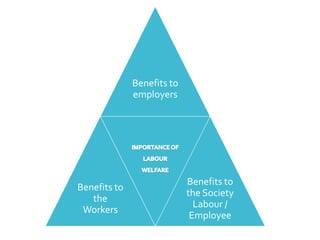
Benefits to
employers
Benefits to
the
Workers
Benefits to
the Society
Labour /
Employee
Principle of
Social
Responsibility
 Industries have a social responsibility towards the
society. Social responsibility means the obligations of the
industry to pursue those policies, to take such decisions
and to follow those lines of action that are desirable in
terms of the objectives and values currently prevailing in
the society.
 Industry is expected to win the co-operation of the
workers, provide them security of employment, fair
wage and equal opportunity for personal growth and
advancement, and make welfare facilities available to
them.
Principle of
Democratic
Values
 The principle of democratic values of labour welfare
concedes that workers may have certain unmet needs
for no fault of their own, that industry has an obligation
to render them help in gratifying those needs, and that
workers have a right of determining the manner in
which these needs can be met and of participation in
the administration of the mechanism of need
gratification.
 The underlying assumption to this approach is that the
worker is a mature and rational individual who is
capable of taking decisions for himself/herself.
Principle of
Adequacy of
Wages
 The third principle of labour welfare is adequacy of
wages, it implies that labour welfare measures are
not a substitute for wages. It will be wrong to argue
that since workers are given a variety of labour
welfare service, they need to be paid low wages.
Right to adequate wage is beyond dispute.
Principle of
Efficiency
 The fourth principle of labour welfare lays stress on
the dictum that to cultivate welfare is to cultivate
efficiency. Even those who deny any social
responsibility for industry, do accept that an enterprise
must introduce all such labour welfare measures that
promote efficiency (Marshall 1950).
 It has been often mentioned that workers education
and training, housing, and diet are the three most
important aspects of labour welfare, which always
accentuate labour efficiency.
Principle of
Co-
responsibility
 The sixth principle of labour welfare recognizes
that the responsibility for labour welfare lies in both
employers and workers and not on employers alone
(Moorthy, 1958). Labour welfare measures are
likely to be of little success unless mutuality of
interest and responsibilities are accepted and
understood by both the parties, in particular the
quality of responsibility at the attitudinal and
organizational level.
Principle of
Totality of
Welfare
 The final principle of labour welfare is that the
concept of labour welfare must permeate
throughout the hierarchy of an organization and
accepted by all levels of functionaries in the
enterprise.
Principle of
Re-
personalizati
on
 The development of the human personality is given
here as the goal of industrial welfare which
according to this principle should counteract the
baneful effects of the industrial system. Therefore,
it is necessary to implement labour welfare facilities
both inside and outside the factory, that is provide
intramural and extramural labour welfare facilities.
Principle of
Co-
ordination or
Integration
 This Principle plays an important role in the success
of welfare services. Welfare is a total concept. From
this angle, a co-ordinated approach will promote
healthy development of the worker in his work,
home and community. This is essential for the sake
of harmony and continuity in labour welfare
facilities.
Conclusion
The concept of labour welfare embraces a multitude
of activities including all extra-mural, intra-mural
activities to help workers and their families in the
context of their industrial life. It is, therefore,
concluded that labour welfare is a convenient term to
cover all those aspects of industrial life which
contribute to the well being of a worker.
Labour welfare

Labour welfare

  • 1.
  • 2.
    Introduction The concept oflabour welfare embraces a multitude of activities including all extra-mural, intra-mural activities, as well as statutory and non-statutory welfare measures undertaken by the employees, the government and the trade unions to help workers and their families in the context of their industrial life.
  • 3.
    Origin and Growth of Labour Welfare The concept of labour welfare originated in the desire for a humanitarian approach to ameliorate the sufferings of the workers and their families undesirable social consequences and the labour problems which have evolved in the process of transition from tradition to modernity.  Later it became a utilitarian philosophy which worked as a motivating force for labour and for those who were interested in it.  Lastly, labour welfare received inspiration from the evolution of the social thought in regard to democracy and welfare state.
  • 4.
    Meaning of Labour Welfare  Labourwelfare means the voluntary efforts made by the employer to provide better conditions of employment in their own industries. Its main object is to secure an improved standard of living for the workers, which effects on the worker’s psychology and results in an increase in their productive efficiencies.  According to Industrial Labour Organisation (ILO) :“Labor welfare may be understood and including such services facilities and amenities which may be established in vicinity of undertaking to perform their work in healthy and congenial environment and to avail of facilities which improve their health and bring high morale.”
  • 5.
    ObjectivesOf Labour Welfare  Enabling workersto live richer and more satisfactory lives.  Contributing to the productivity of labour and efficiency of the enterprise.  Enhancing the standard of living of workers by indirectly reducing the burden on their purse.  Enabling workers to live in peace and harmony.  Fostering administratively viable and essential developmental outlook among the workforce and  Discharging social responsibilities.
  • 6.
    PrinciplesOf Labour Welfare Certain fundamental Principlesare involved in the concept of labour welfare.The following are the more important among them (Kohli and Sharma, 1997) : Principle of Social Responsibility Principle of Democratic Values Principle of Adequacy of Wages Principle of Efficiency Principle of Co- responsibility Principle ofTotality of Welfare Principle of Re-personalization Principle of Co-ordination or Integration
  • 7.
  • 8.
    Principle of Social Responsibility  Industrieshave a social responsibility towards the society. Social responsibility means the obligations of the industry to pursue those policies, to take such decisions and to follow those lines of action that are desirable in terms of the objectives and values currently prevailing in the society.  Industry is expected to win the co-operation of the workers, provide them security of employment, fair wage and equal opportunity for personal growth and advancement, and make welfare facilities available to them.
  • 9.
    Principle of Democratic Values  Theprinciple of democratic values of labour welfare concedes that workers may have certain unmet needs for no fault of their own, that industry has an obligation to render them help in gratifying those needs, and that workers have a right of determining the manner in which these needs can be met and of participation in the administration of the mechanism of need gratification.  The underlying assumption to this approach is that the worker is a mature and rational individual who is capable of taking decisions for himself/herself.
  • 10.
    Principle of Adequacy of Wages The third principle of labour welfare is adequacy of wages, it implies that labour welfare measures are not a substitute for wages. It will be wrong to argue that since workers are given a variety of labour welfare service, they need to be paid low wages. Right to adequate wage is beyond dispute.
  • 11.
    Principle of Efficiency  Thefourth principle of labour welfare lays stress on the dictum that to cultivate welfare is to cultivate efficiency. Even those who deny any social responsibility for industry, do accept that an enterprise must introduce all such labour welfare measures that promote efficiency (Marshall 1950).  It has been often mentioned that workers education and training, housing, and diet are the three most important aspects of labour welfare, which always accentuate labour efficiency.
  • 12.
    Principle of Co- responsibility  Thesixth principle of labour welfare recognizes that the responsibility for labour welfare lies in both employers and workers and not on employers alone (Moorthy, 1958). Labour welfare measures are likely to be of little success unless mutuality of interest and responsibilities are accepted and understood by both the parties, in particular the quality of responsibility at the attitudinal and organizational level.
  • 13.
    Principle of Totality of Welfare The final principle of labour welfare is that the concept of labour welfare must permeate throughout the hierarchy of an organization and accepted by all levels of functionaries in the enterprise.
  • 14.
    Principle of Re- personalizati on  Thedevelopment of the human personality is given here as the goal of industrial welfare which according to this principle should counteract the baneful effects of the industrial system. Therefore, it is necessary to implement labour welfare facilities both inside and outside the factory, that is provide intramural and extramural labour welfare facilities.
  • 15.
    Principle of Co- ordination or Integration This Principle plays an important role in the success of welfare services. Welfare is a total concept. From this angle, a co-ordinated approach will promote healthy development of the worker in his work, home and community. This is essential for the sake of harmony and continuity in labour welfare facilities.
  • 16.
    Conclusion The concept oflabour welfare embraces a multitude of activities including all extra-mural, intra-mural activities to help workers and their families in the context of their industrial life. It is, therefore, concluded that labour welfare is a convenient term to cover all those aspects of industrial life which contribute to the well being of a worker.