Presented By -
Priyanka Sharma - 77
Shephali Srivastava - 96
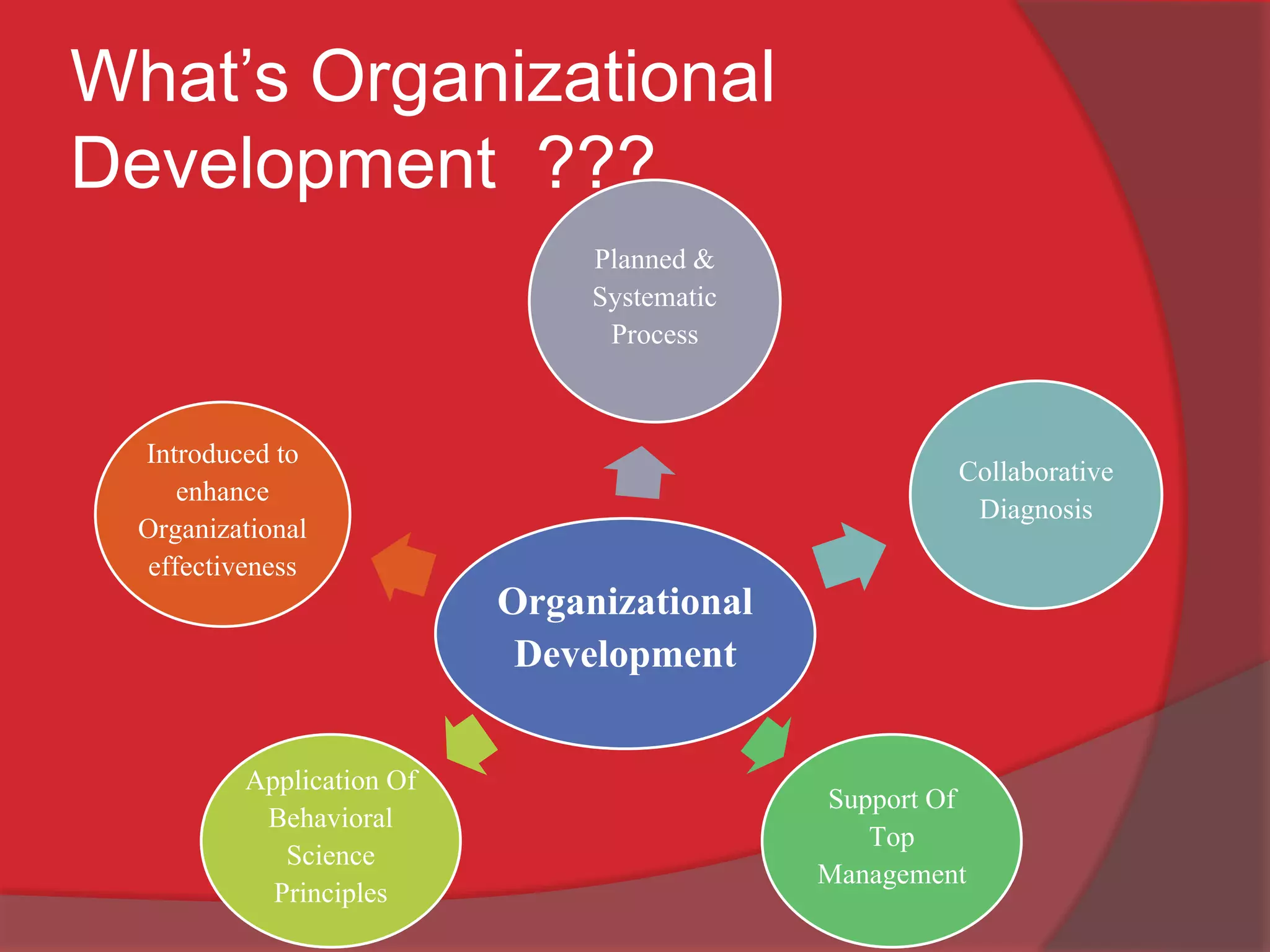
What’s Organizational
Development ???
Organizational
Development
Planned &
Systematic
Process
Collaborative
Diagnosis
Support Of
Top
Management
Application Of
Behavioral
Science
Principles
Introduced to
enhance
Organizational
effectiveness
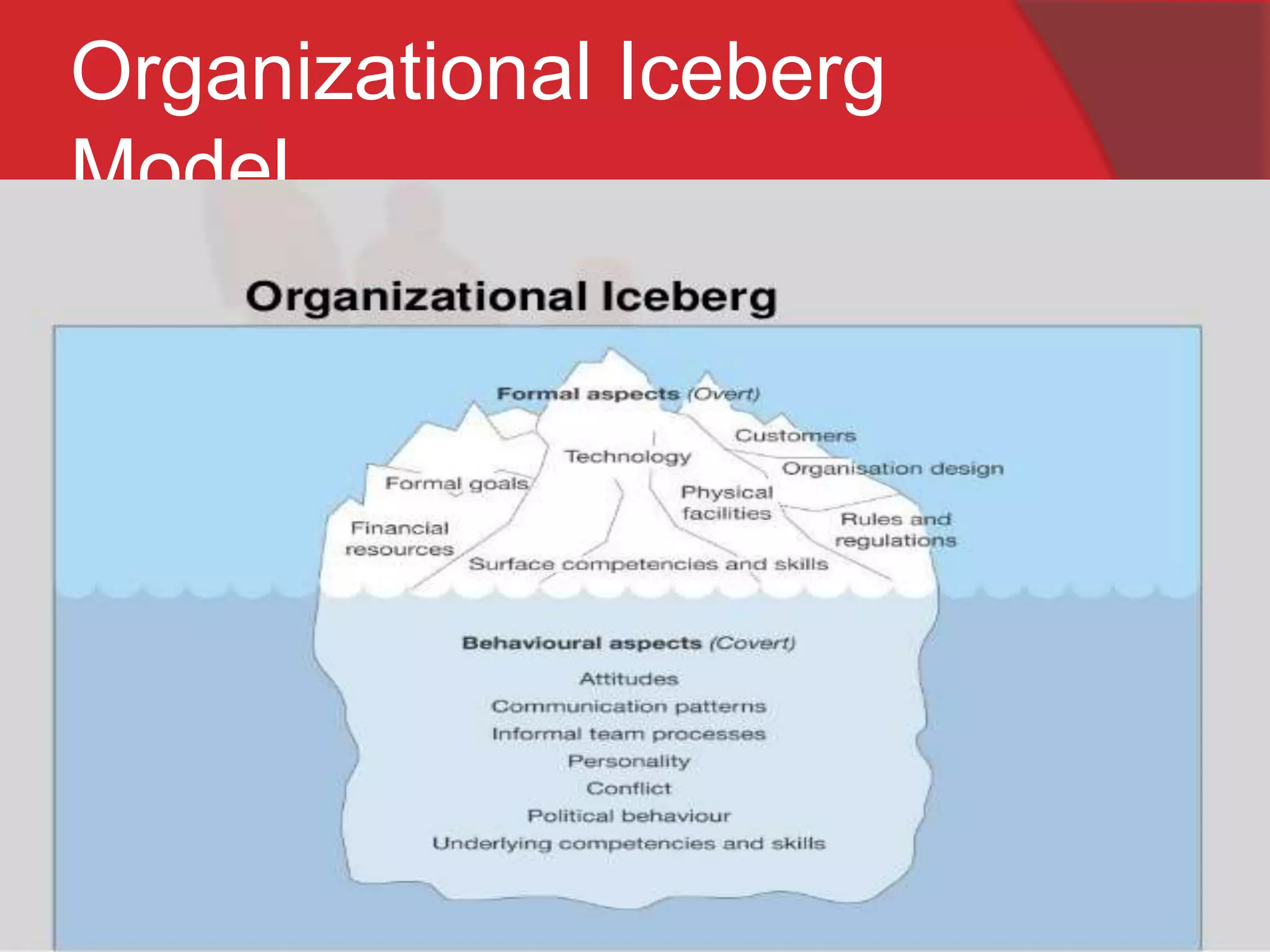
Organizational Iceberg
Model
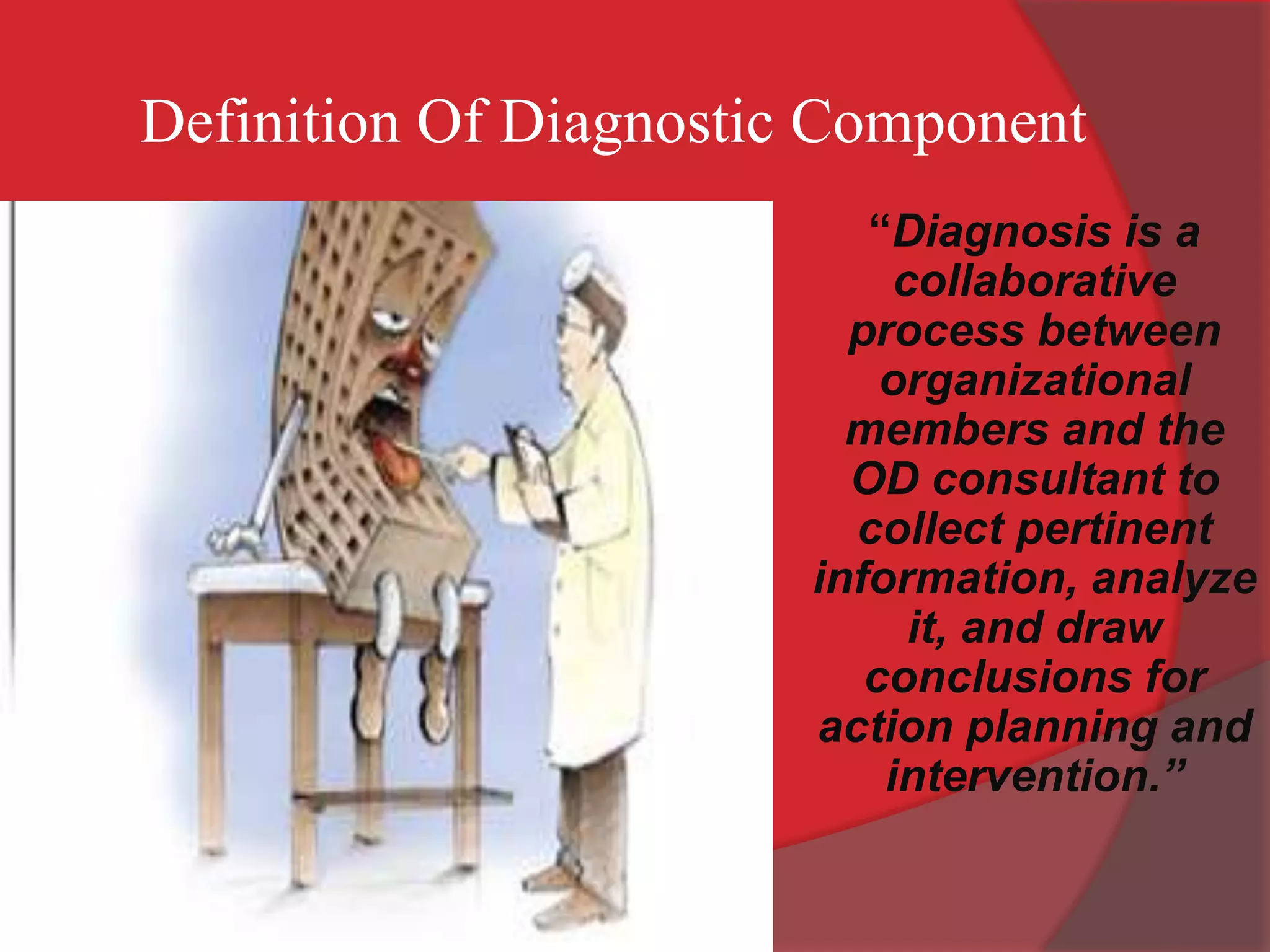
“Diagnosis is a
collaborative
process between
organizational
members and the
OD consultant to
collect pertinent
information, analyze
it, and draw
conclusions for
action planning and
intervention.”
Definition Of Diagnostic Component
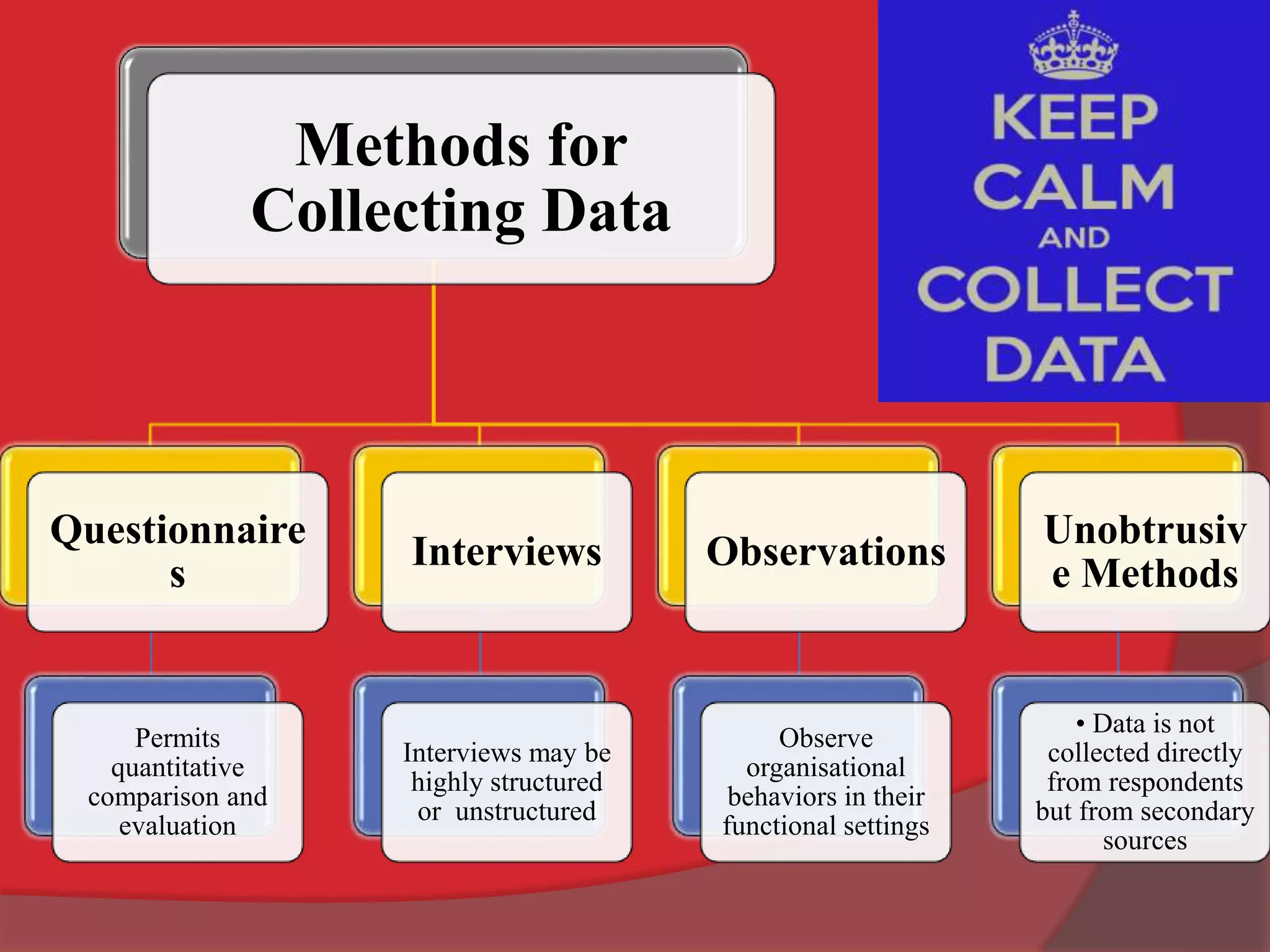
Methods for
Collecting Data
Questionnaire
s
Permits
quantitative
comparison and
evaluation
Interviews
Interviews may be
highly structured
or unstructured
Observations
Observe
organisational
behaviors in their
functional settings
Unobtrusiv
e Methods
• Data is not
collected directly
from respondents
but from secondary
sources
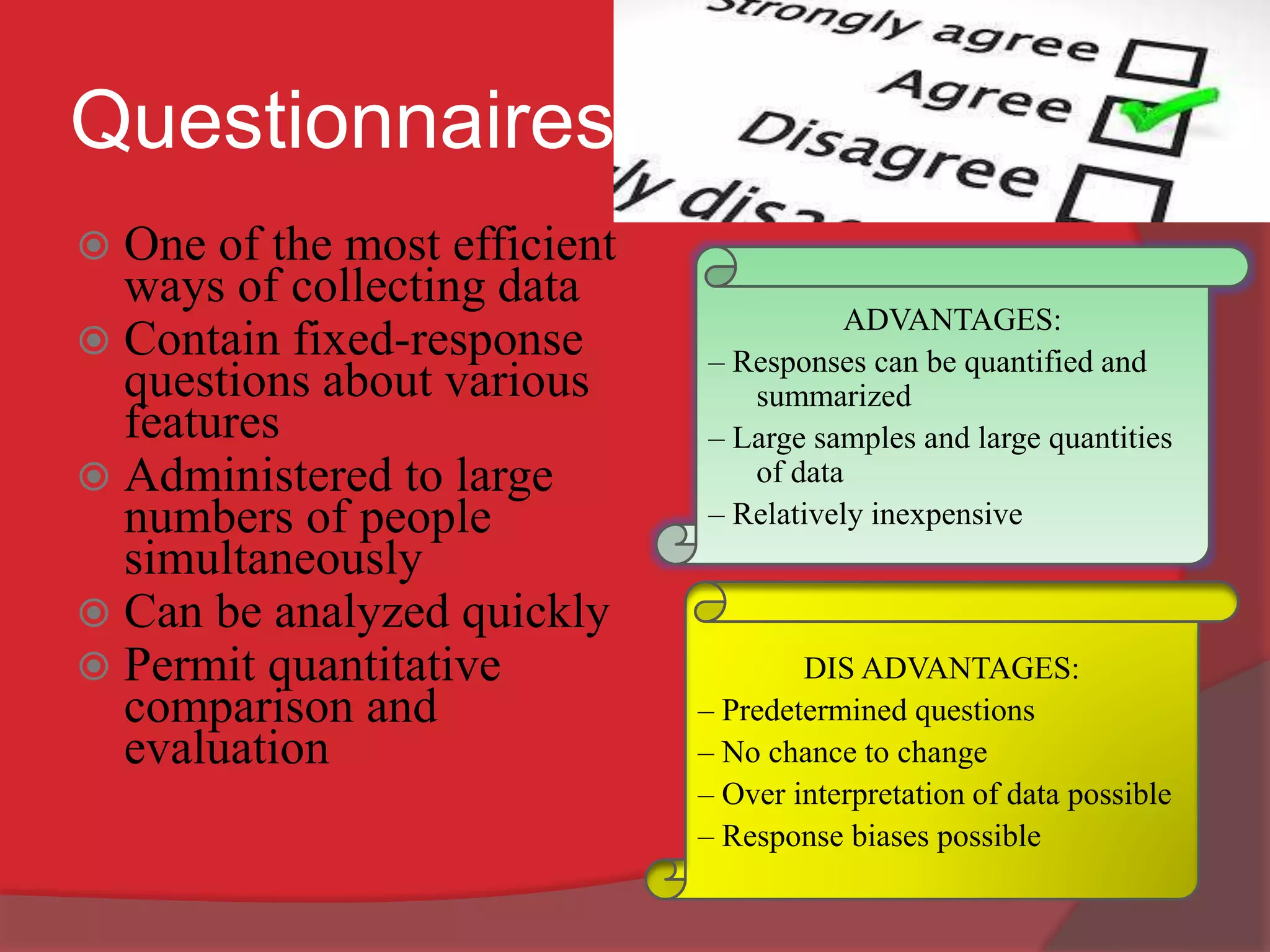
Questionnaires
 One of the most efficient
ways of collecting data
 Contain fixed-response
questions about various
features
 Administered to large
numbers of people
simultaneously
 Can be analyzed quickly
 Permit quantitative
comparison and
evaluation
ADVANTAGES:
– Responses can be quantified and
summarized
– Large samples and large quantities
of data
– Relatively inexpensive
DIS ADVANTAGES:
– Predetermined questions
– No chance to change
– Over interpretation of data possible
– Response biases possible
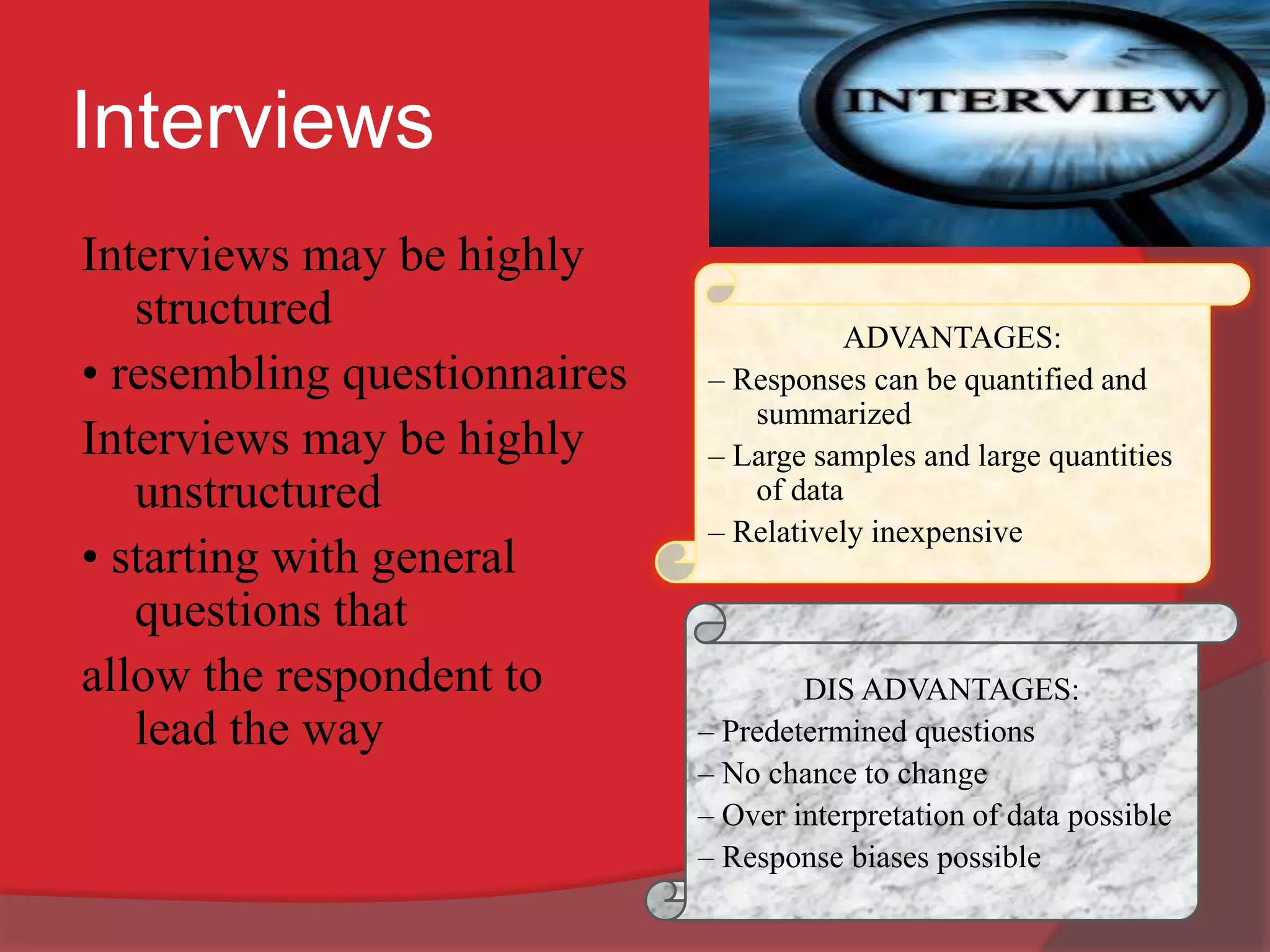
Interviews
Interviews may be highly
structured
• resembling questionnaires
Interviews may be highly
unstructured
• starting with general
questions that
allow the respondent to
lead the way
ADVANTAGES:
– Responses can be quantified and
summarized
– Large samples and large quantities
of data
– Relatively inexpensive
DIS ADVANTAGES:
– Predetermined questions
– No chance to change
– Over interpretation of data possible
– Response biases possible
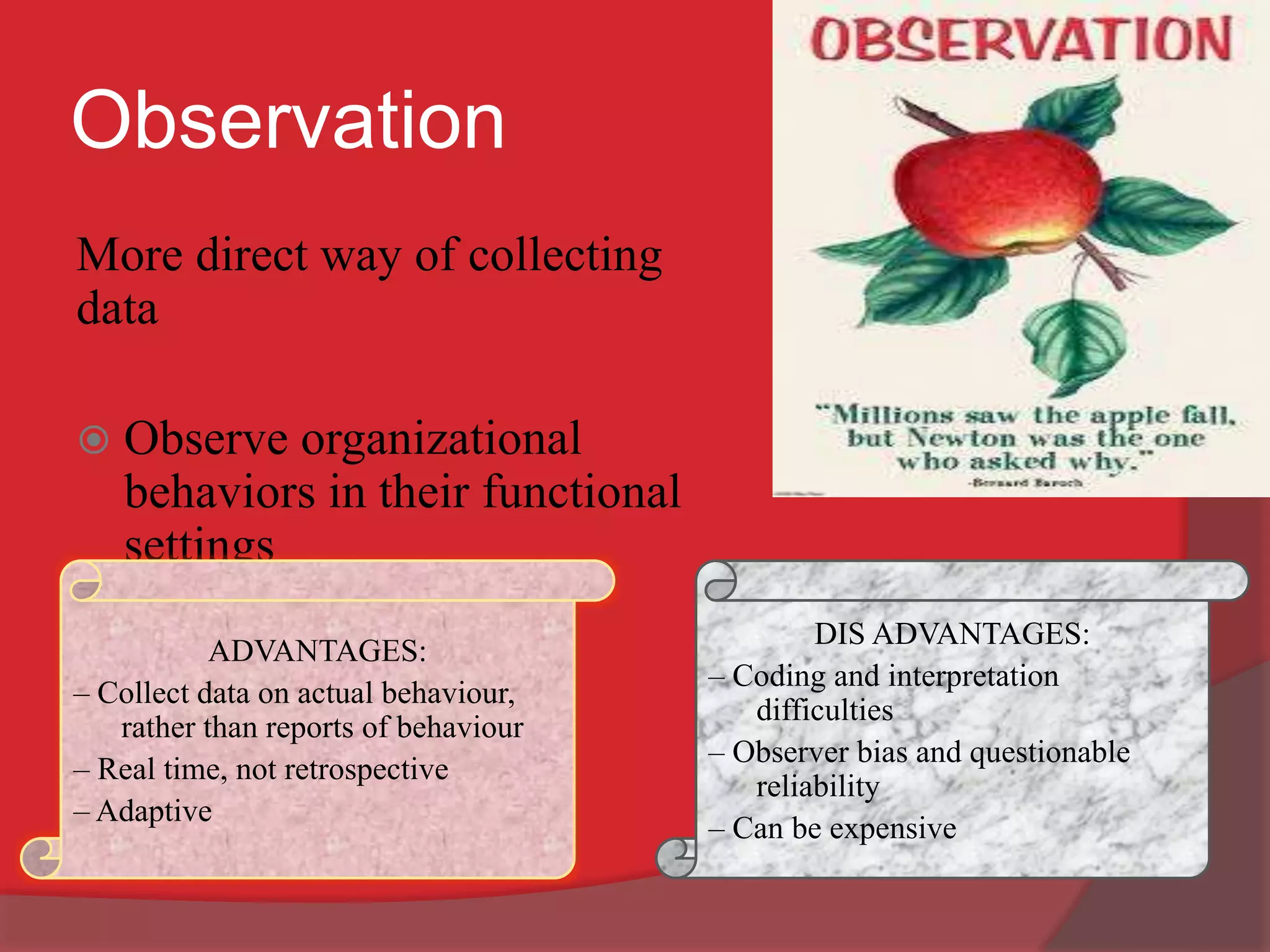
Observation
More direct way of collecting
data
 Observe organizational
behaviors in their functional
settings
ADVANTAGES:
– Collect data on actual behaviour,
rather than reports of behaviour
– Real time, not retrospective
– Adaptive
DIS ADVANTAGES:
– Coding and interpretation
difficulties
– Observer bias and questionable
reliability
– Can be expensive
Unobtrusive
 Data is not collected directly
from respondents but from
secondary sources
 Use records of absenteeism or
tardiness, grievances, quantity
and quality of production or
service, financial performance
and correspondence with key
customers, suppliers or
governmental agencies
 Helpful in diagnosing the
organisation, group and
individual outputs
ADVANTAGES:
– Non-reactive, no response bias
– High face validity
– Easily quantified
DIS ADVANTAGES:
– Access and retrieval difficulties
– Validity concerns
– Coding and interpretation
difficulties
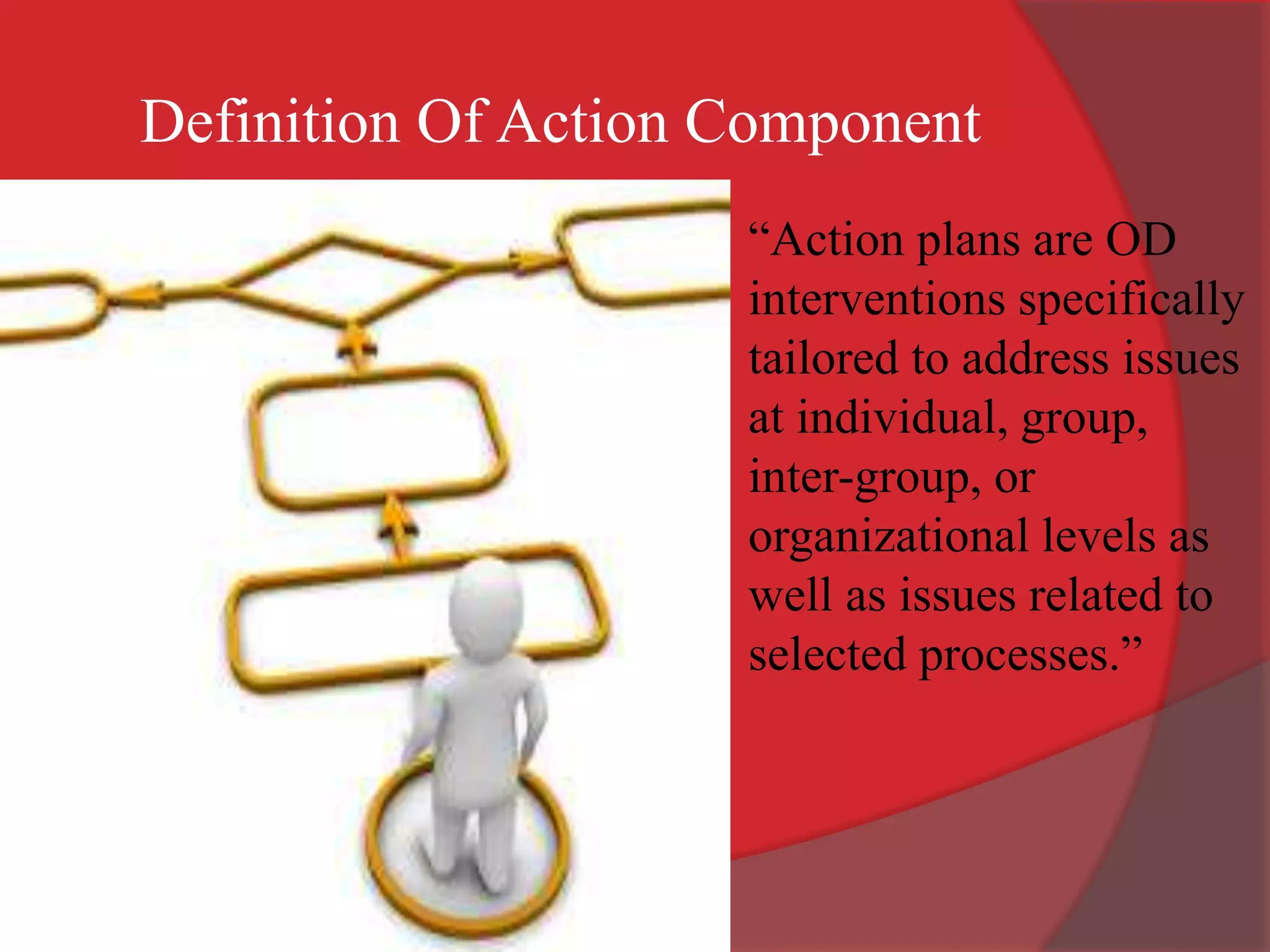
“Action plans are OD
interventions specifically
tailored to address issues
at individual, group,
inter-group, or
organizational levels as
well as issues related to
selected processes.”
Definition Of Action Component
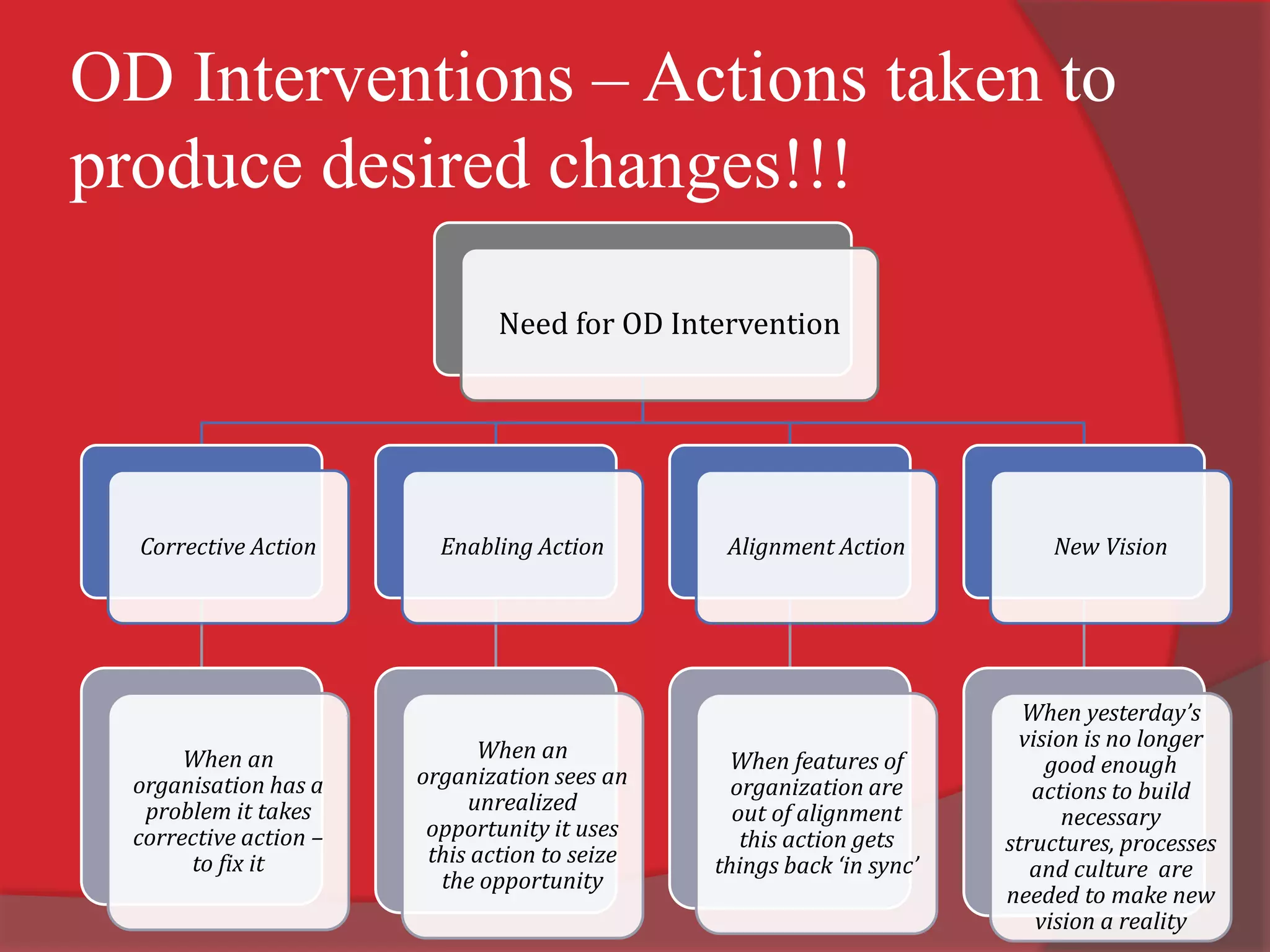
OD Interventions – Actions taken to
produce desired changes!!!
Need for OD Intervention
Corrective Action
When an
organisation has a
problem it takes
corrective action –
to fix it
Enabling Action
When an
organization sees an
unrealized
opportunity it uses
this action to seize
the opportunity
Alignment Action
When features of
organization are
out of alignment
this action gets
things back ‘in sync’
New Vision
When yesterday’s
vision is no longer
good enough
actions to build
necessary
structures, processes
and culture are
needed to make new
vision a reality
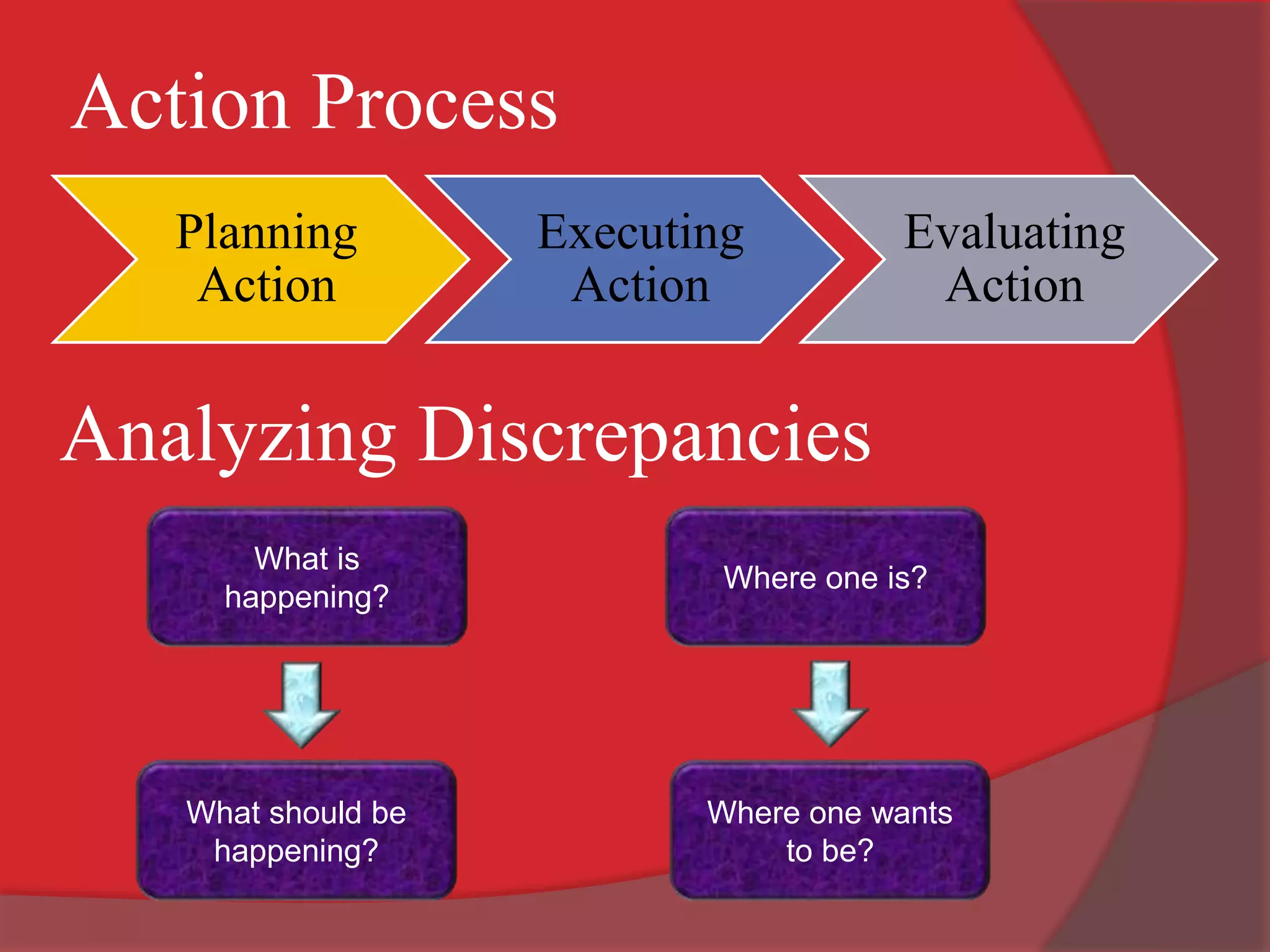
Action Process
Planning
Action
Executing
Action
Evaluating
Action
Analyzing Discrepancies
What is
happening?
What should be
happening?
Where one wants
to be?
Where one is?
“This component is
concerned with self-
analysis and self-
reflection as a means to
self-improvement. Action
Research principles are
observed in goal-setting
and feedback
mechanisms to monitor
and evaluate actions.”
Definition Of Process Maintenance
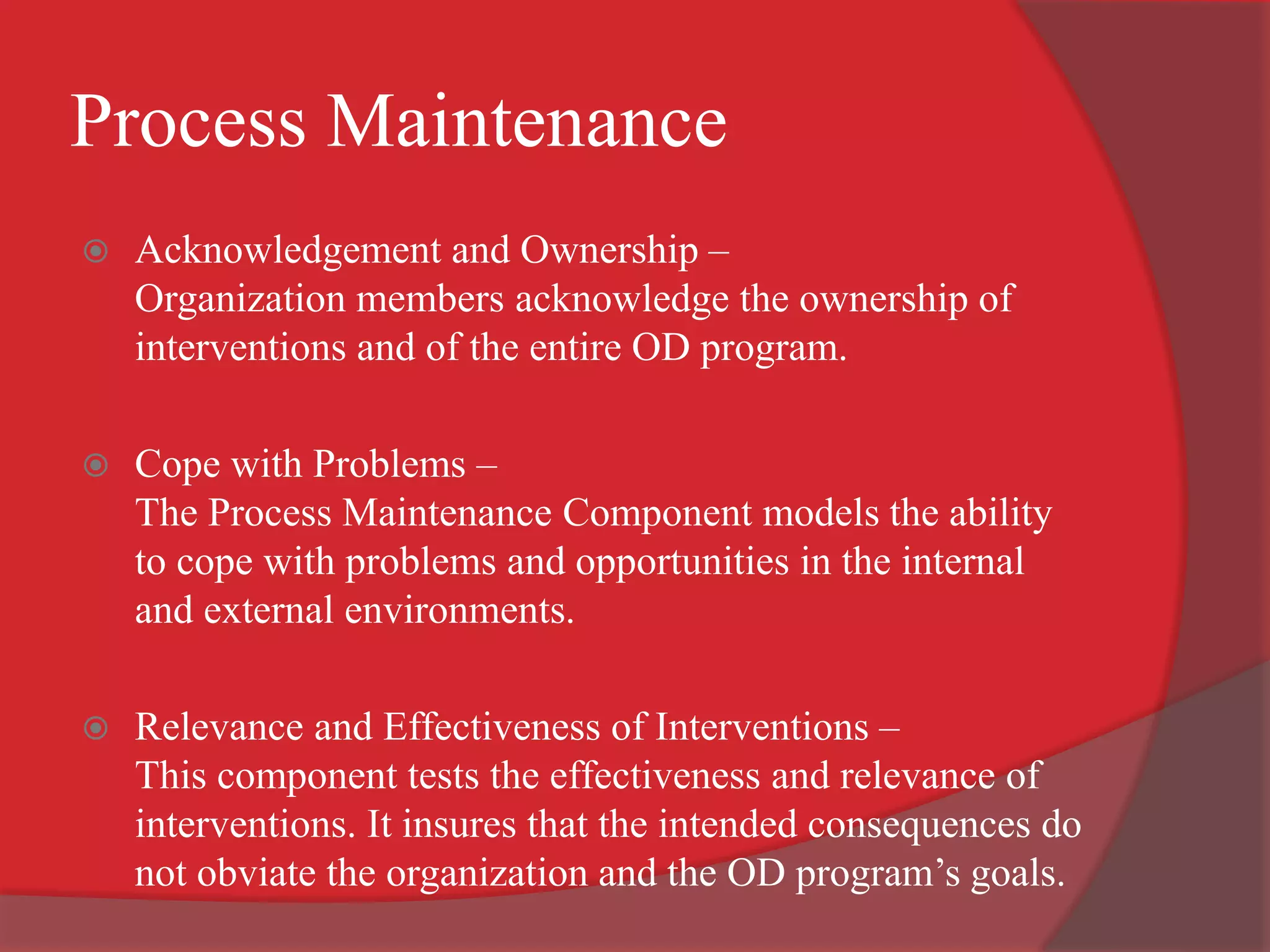
Process Maintenance
 Acknowledgement and Ownership –
Organization members acknowledge the ownership of
interventions and of the entire OD program.
 Cope with Problems –
The Process Maintenance Component models the ability
to cope with problems and opportunities in the internal
and external environments.
 Relevance and Effectiveness of Interventions –
This component tests the effectiveness and relevance of
interventions. It insures that the intended consequences do
not obviate the organization and the OD program’s goals.
Operational components of OD - By Priyanka & Shephali

Operational components of OD - By Priyanka & Shephali

  • 1.
    Presented By - PriyankaSharma - 77 Shephali Srivastava - 96
  • 2.
    What’s Organizational Development ??? Organizational Development Planned& Systematic Process Collaborative Diagnosis Support Of Top Management Application Of Behavioral Science Principles Introduced to enhance Organizational effectiveness
  • 3.
  • 5.
    “Diagnosis is a collaborative processbetween organizational members and the OD consultant to collect pertinent information, analyze it, and draw conclusions for action planning and intervention.” Definition Of Diagnostic Component
  • 6.
    Methods for Collecting Data Questionnaire s Permits quantitative comparisonand evaluation Interviews Interviews may be highly structured or unstructured Observations Observe organisational behaviors in their functional settings Unobtrusiv e Methods • Data is not collected directly from respondents but from secondary sources
  • 7.
    Questionnaires  One ofthe most efficient ways of collecting data  Contain fixed-response questions about various features  Administered to large numbers of people simultaneously  Can be analyzed quickly  Permit quantitative comparison and evaluation ADVANTAGES: – Responses can be quantified and summarized – Large samples and large quantities of data – Relatively inexpensive DIS ADVANTAGES: – Predetermined questions – No chance to change – Over interpretation of data possible – Response biases possible
  • 8.
    Interviews Interviews may behighly structured • resembling questionnaires Interviews may be highly unstructured • starting with general questions that allow the respondent to lead the way ADVANTAGES: – Responses can be quantified and summarized – Large samples and large quantities of data – Relatively inexpensive DIS ADVANTAGES: – Predetermined questions – No chance to change – Over interpretation of data possible – Response biases possible
  • 9.
    Observation More direct wayof collecting data  Observe organizational behaviors in their functional settings ADVANTAGES: – Collect data on actual behaviour, rather than reports of behaviour – Real time, not retrospective – Adaptive DIS ADVANTAGES: – Coding and interpretation difficulties – Observer bias and questionable reliability – Can be expensive
  • 10.
    Unobtrusive  Data isnot collected directly from respondents but from secondary sources  Use records of absenteeism or tardiness, grievances, quantity and quality of production or service, financial performance and correspondence with key customers, suppliers or governmental agencies  Helpful in diagnosing the organisation, group and individual outputs ADVANTAGES: – Non-reactive, no response bias – High face validity – Easily quantified DIS ADVANTAGES: – Access and retrieval difficulties – Validity concerns – Coding and interpretation difficulties
  • 11.
    “Action plans areOD interventions specifically tailored to address issues at individual, group, inter-group, or organizational levels as well as issues related to selected processes.” Definition Of Action Component
  • 12.
    OD Interventions –Actions taken to produce desired changes!!! Need for OD Intervention Corrective Action When an organisation has a problem it takes corrective action – to fix it Enabling Action When an organization sees an unrealized opportunity it uses this action to seize the opportunity Alignment Action When features of organization are out of alignment this action gets things back ‘in sync’ New Vision When yesterday’s vision is no longer good enough actions to build necessary structures, processes and culture are needed to make new vision a reality
  • 13.
    Action Process Planning Action Executing Action Evaluating Action Analyzing Discrepancies Whatis happening? What should be happening? Where one wants to be? Where one is?
  • 14.
    “This component is concernedwith self- analysis and self- reflection as a means to self-improvement. Action Research principles are observed in goal-setting and feedback mechanisms to monitor and evaluate actions.” Definition Of Process Maintenance
  • 15.
    Process Maintenance  Acknowledgementand Ownership – Organization members acknowledge the ownership of interventions and of the entire OD program.  Cope with Problems – The Process Maintenance Component models the ability to cope with problems and opportunities in the internal and external environments.  Relevance and Effectiveness of Interventions – This component tests the effectiveness and relevance of interventions. It insures that the intended consequences do not obviate the organization and the OD program’s goals.