Sulfonamides & Co-trimoxazole
Dr. J.N. Chaturvedi
Assoc. Prof. (Desig.)
S.S. Medical College, Rewa (M.P.)
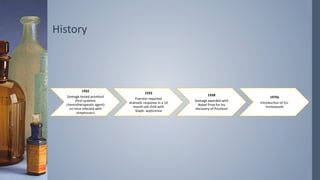
History
1932
Domagk tested prontosil
(first systemic
chemotherapeutic agent)
on mice infected with
streptococci
1933
Foerster reported
dramatic response in a 10
month old child with
Staph. septicemia
1938
Domagk awarded with
Nobel Prize for his
discovery of Prontosil
1970s
Introduction of Co-
trimoxazole
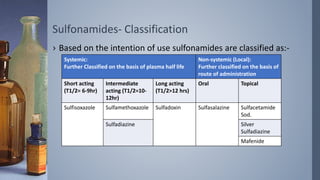
Sulfonamides- Classification
› Based on the intention of use sulfonamides are classified as:-
Systemic:
Further Classified on the basis of plasma half life
Non-systemic (Local):
Further classified on the basis of
route of administration
Short acting
(T1/2= 6-9hr)
Intermediate
acting (T1/2=10-
12hr)
Long acting
(T1/2>12 hrs)
Oral Topical
Sulfisoxazole Sulfamethoxazole Sulfadoxin Sulfasalazine Sulfacetamide
Sod.
Sulfadiazine Silver
Sulfadiazine
Mafenide
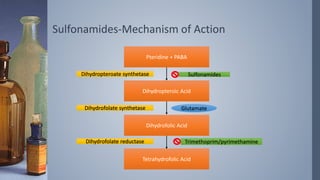
Sulfonamides-Mechanism of Action
Pteridine + PABA
Dihydropteroic Acid
Dihydrofolic Acid
Tetrahydrofolic Acid
Dihydropteroate synthetase
Dihydrofolate synthetase
Dihydrofolate reductase
Glutamate
Sulfonamides
Trimethoprim/pyrimethamine
Sulfonamides-Antimicrobial Spectrum
› Bacteria:
– Hemophlius ducreyi
– Nocardia
– Klebsiella Granulomatis
› Protozoa
– Toxoplasma (Sulfadiazine)
– Plasmodium (Sulfadoxin)
Sulfonamides- Mechanism of resistance
1. Production of low affinity dihydropteroate synthetase
2. Decreased entry into bacterium.
3. Increased Efflux.
4. Acquisition of alternative pathway for production of
Dihydrofolic acid.
5. Increased production of PABA.
Sulfonamides- Pharmacokinetics
› A= Well absorbed orally (except those indented for local
effect).
› D= 50-80% plasma protein bound, widely distributed
throughout all tissues.
› M= Hepatic (Acetylation)
› E= Renal; Mainly unchanged & small amount of metabolite.
(Can precipitate in acidic urine)
Sulfonamides- Pharmacological Properties
› Specific Agents:
1. Sulfisoxazole:
– Rapidly absorbed and excreted sulfonamide.
– Bound extensively to plasma proteins.
– Tasteless and hence preferred for oral use in children.
– marketed in combination with erythromycin ethylsuccinate for use in
children with otitis media.
2. Sulfamethoxazole
– close congener of sulfisoxazole.
– Rates of enteric absorption and urinary excretion are slower.
Sulfonamides- Pharmacological Properties
› Specific Agents:
3. Sulfadiazine:
– Absorbed and excreted rapidly (T1/2= 10hrs).
– Therapeutic conc. in CSF is attained within 4 hrs.
– Free & acetylated metabolites excreted readily by kidney.
– Alkalinisation of urine increases the excretion.
– Precaution must be taken for fluid intake to ensure daily urine output
>1200 ml in adults.
– Sodium bicarbonate may be given to prevent risk of crystalluria.
Sulfonamides- Pharmacological Properties
› Specific Agents:
4. Sulfadoxin:
– Rapidly absorbed but very slow excretion.
– Long plasma half life (T1/2= 7-9days)
– Used along with pyrimethamine.
5. Sulfacetamide:
– Sod. Salt is used as ophthalmic solution (30% with pH 7.4).
– Very good penetration in aqueous fluid.
Sulfonamides- Pharmacological Properties
› Specific Agents:
6. Silver sulfadiazine:
– Used topically to prevent colonization of bacteria in burn cases.
– Should not be used for deep seated infection.
7. Mafenide:
– Similar to silver sulfadiazine.
– Due to more risk of ADRs used less frequently.
Sulfonamides-Therapeutic Uses
› Due to development of high degree of resistance in large number
of bacteria systemic use of sulfonamides alone are seldom used.
› Therapeutic Uses:
– UTI:
› Co-trimoxazole is preferred agent.
› Sulfisoxazole 2-4g initial dose f/b 1-2g q6h for 5-10 days may be used for
uncomplicated cystitis.
– Nocardiosis:
› Sulfisoxazole/sulfadiazine 6-8g daily is alternative to Co-trimoxazole.
– Toxoplasmosis:
› Combination Sulfadiazine (1-1.5g PO q6h) + pyrimethamine (2g PO f/b 50-75mg PO
daily) + leucovorin (10-25 mg PO daily) for 6 weeks is combination of choice.
– Malaria:
› [Sulfadoxin (25mg/kg)+ Pyrimethamine (1.25mg/kg)] PO once on D1+ Artesunate
(4mg/kg/d) for 3 days for falciparum malaria.
Sulfonamides- Adverse Drug Reactions
1. Hypersensitivity reactions:
– Rash (morbilliform, scarlantinal, urticarial, erysipeloid, pemphigoid,
purpuric or petechial).
– ENL
– Erythema multiforme
– Exfoliative dermatitis
– Stevens –Johnson syndrome
– Photosensitivity.
2. Risk of crystalluria
3. Haemolytic anaemia.
4. Precipitation of kernicterus in newborn.
Sulfonamides-Drug Interactions
1. Oral Anticoagulants- Risk of bleeding.
2. Sulfonylureas- Risk of hypoglycemia
3. Phenytoin- Risk of seizures
Co-trimoxazole
› Combination of sulfamethoxazole and trimethoprim in a ratio
of 5:1 to achieve plasma concentration of 20:1.
› Antimicrobial Spectrum:
– Streptococci.
– Staph. (incl. MRSA)
– Enterobacteriaceae
– Brucella abortus
– Pasteurella.
– Yersinia.
– Nocardia.
Co-trimoxazole- Mechanism of action
Pteridine + PABA
Dihydropteroic Acid
Dihydrofolic Acid
Tetrahydrofolic Acid
Dihydropteroate synthetase
Dihydrofolate synthetase
Dihydrofolate reductase
Glutamate
Sulfonamides
Trimethoprim/pyrimethamine
Synergestic combination resulting in sequential block in folic acid synthetic pathway.
Cotrimoxazole- Mechanism of resistance
› Rapidly increasing problem
– Acquisition of altered DHFRase.
Cotrimoxazole- Pharmacokinetics
› Absorption: Rapid oral absorption.
– Tmax (sulfamethoxazole): 4hr
– Tmax (Trimethoprim): 2hr
› Distribution: Widely distributed (trimethoprim>>
Sulfamethoxaxole), incl. CSF.
› Metabolism: Hepatic
› Excretion:
– 50 to 75% in bile
– 25-50% in urine
› T1/2 (sulfamethoxazole): 10hr
› T1/2(Trimethoprim): 11hr
Co-trimoxazole- Therapeutic Uses
1. Urinary tract Infection
– Uncomplicated lower UTI
– Single dose of two DS tab. (800mg sulfamethoxazole+160mg Trimethoprim) OR one
DS tab twice daily for 3 days.
2. Bacterial Respiratory Tract Infection
– Acute exacerbation of chronic bronchitis
› 800-1200 mg sulfamethoxazole + 160-240 mg trimethoprim twice daily.
3. GI Infections
– Alternative to fluroquinolones for shigellosis.
4. Infection by pneumocystis jeroveci
– One DS tab once a day for prophylaxis in HIV-AIDS.
– High dose [15-20mg/kg/d trimethoprim + 75-100 mg/kg/d sulfamethoxazole] in 3-4
divided doses± glucocorticoids (Po2<70 mm Hg & A-a gradient <35mm Hg)
Cotrimoxazole-Therapeutic Uses
5. Nocardiosis: Combination of Choice
6. Brucellosis:
– Alternative to Doxycycline (+streptomycin/gentamicin)
7. MRSA:
– Adjunctive therapy during incision & drainage of abscess.
Cotrimoxazole-Adverse Drug Reactions
1. Hypersensitivity reactions.
2. Crystalluria
3. Hematological reactions: megaloblastosis, leukopenia,
thrombocytopenia.
Sulfonamides &amp; co trimoxazole

Sulfonamides &amp; co trimoxazole

  • 1.
    Sulfonamides & Co-trimoxazole Dr.J.N. Chaturvedi Assoc. Prof. (Desig.) S.S. Medical College, Rewa (M.P.)
  • 2.
    History 1932 Domagk tested prontosil (firstsystemic chemotherapeutic agent) on mice infected with streptococci 1933 Foerster reported dramatic response in a 10 month old child with Staph. septicemia 1938 Domagk awarded with Nobel Prize for his discovery of Prontosil 1970s Introduction of Co- trimoxazole
  • 3.
    Sulfonamides- Classification › Basedon the intention of use sulfonamides are classified as:- Systemic: Further Classified on the basis of plasma half life Non-systemic (Local): Further classified on the basis of route of administration Short acting (T1/2= 6-9hr) Intermediate acting (T1/2=10- 12hr) Long acting (T1/2>12 hrs) Oral Topical Sulfisoxazole Sulfamethoxazole Sulfadoxin Sulfasalazine Sulfacetamide Sod. Sulfadiazine Silver Sulfadiazine Mafenide
  • 4.
    Sulfonamides-Mechanism of Action Pteridine+ PABA Dihydropteroic Acid Dihydrofolic Acid Tetrahydrofolic Acid Dihydropteroate synthetase Dihydrofolate synthetase Dihydrofolate reductase Glutamate Sulfonamides Trimethoprim/pyrimethamine
  • 5.
    Sulfonamides-Antimicrobial Spectrum › Bacteria: –Hemophlius ducreyi – Nocardia – Klebsiella Granulomatis › Protozoa – Toxoplasma (Sulfadiazine) – Plasmodium (Sulfadoxin)
  • 6.
    Sulfonamides- Mechanism ofresistance 1. Production of low affinity dihydropteroate synthetase 2. Decreased entry into bacterium. 3. Increased Efflux. 4. Acquisition of alternative pathway for production of Dihydrofolic acid. 5. Increased production of PABA.
  • 7.
    Sulfonamides- Pharmacokinetics › A=Well absorbed orally (except those indented for local effect). › D= 50-80% plasma protein bound, widely distributed throughout all tissues. › M= Hepatic (Acetylation) › E= Renal; Mainly unchanged & small amount of metabolite. (Can precipitate in acidic urine)
  • 8.
    Sulfonamides- Pharmacological Properties ›Specific Agents: 1. Sulfisoxazole: – Rapidly absorbed and excreted sulfonamide. – Bound extensively to plasma proteins. – Tasteless and hence preferred for oral use in children. – marketed in combination with erythromycin ethylsuccinate for use in children with otitis media. 2. Sulfamethoxazole – close congener of sulfisoxazole. – Rates of enteric absorption and urinary excretion are slower.
  • 9.
    Sulfonamides- Pharmacological Properties ›Specific Agents: 3. Sulfadiazine: – Absorbed and excreted rapidly (T1/2= 10hrs). – Therapeutic conc. in CSF is attained within 4 hrs. – Free & acetylated metabolites excreted readily by kidney. – Alkalinisation of urine increases the excretion. – Precaution must be taken for fluid intake to ensure daily urine output >1200 ml in adults. – Sodium bicarbonate may be given to prevent risk of crystalluria.
  • 10.
    Sulfonamides- Pharmacological Properties ›Specific Agents: 4. Sulfadoxin: – Rapidly absorbed but very slow excretion. – Long plasma half life (T1/2= 7-9days) – Used along with pyrimethamine. 5. Sulfacetamide: – Sod. Salt is used as ophthalmic solution (30% with pH 7.4). – Very good penetration in aqueous fluid.
  • 11.
    Sulfonamides- Pharmacological Properties ›Specific Agents: 6. Silver sulfadiazine: – Used topically to prevent colonization of bacteria in burn cases. – Should not be used for deep seated infection. 7. Mafenide: – Similar to silver sulfadiazine. – Due to more risk of ADRs used less frequently.
  • 12.
    Sulfonamides-Therapeutic Uses › Dueto development of high degree of resistance in large number of bacteria systemic use of sulfonamides alone are seldom used. › Therapeutic Uses: – UTI: › Co-trimoxazole is preferred agent. › Sulfisoxazole 2-4g initial dose f/b 1-2g q6h for 5-10 days may be used for uncomplicated cystitis. – Nocardiosis: › Sulfisoxazole/sulfadiazine 6-8g daily is alternative to Co-trimoxazole. – Toxoplasmosis: › Combination Sulfadiazine (1-1.5g PO q6h) + pyrimethamine (2g PO f/b 50-75mg PO daily) + leucovorin (10-25 mg PO daily) for 6 weeks is combination of choice. – Malaria: › [Sulfadoxin (25mg/kg)+ Pyrimethamine (1.25mg/kg)] PO once on D1+ Artesunate (4mg/kg/d) for 3 days for falciparum malaria.
  • 13.
    Sulfonamides- Adverse DrugReactions 1. Hypersensitivity reactions: – Rash (morbilliform, scarlantinal, urticarial, erysipeloid, pemphigoid, purpuric or petechial). – ENL – Erythema multiforme – Exfoliative dermatitis – Stevens –Johnson syndrome – Photosensitivity. 2. Risk of crystalluria 3. Haemolytic anaemia. 4. Precipitation of kernicterus in newborn.
  • 14.
    Sulfonamides-Drug Interactions 1. OralAnticoagulants- Risk of bleeding. 2. Sulfonylureas- Risk of hypoglycemia 3. Phenytoin- Risk of seizures
  • 15.
    Co-trimoxazole › Combination ofsulfamethoxazole and trimethoprim in a ratio of 5:1 to achieve plasma concentration of 20:1. › Antimicrobial Spectrum: – Streptococci. – Staph. (incl. MRSA) – Enterobacteriaceae – Brucella abortus – Pasteurella. – Yersinia. – Nocardia.
  • 16.
    Co-trimoxazole- Mechanism ofaction Pteridine + PABA Dihydropteroic Acid Dihydrofolic Acid Tetrahydrofolic Acid Dihydropteroate synthetase Dihydrofolate synthetase Dihydrofolate reductase Glutamate Sulfonamides Trimethoprim/pyrimethamine Synergestic combination resulting in sequential block in folic acid synthetic pathway.
  • 17.
    Cotrimoxazole- Mechanism ofresistance › Rapidly increasing problem – Acquisition of altered DHFRase.
  • 18.
    Cotrimoxazole- Pharmacokinetics › Absorption:Rapid oral absorption. – Tmax (sulfamethoxazole): 4hr – Tmax (Trimethoprim): 2hr › Distribution: Widely distributed (trimethoprim>> Sulfamethoxaxole), incl. CSF. › Metabolism: Hepatic › Excretion: – 50 to 75% in bile – 25-50% in urine › T1/2 (sulfamethoxazole): 10hr › T1/2(Trimethoprim): 11hr
  • 19.
    Co-trimoxazole- Therapeutic Uses 1.Urinary tract Infection – Uncomplicated lower UTI – Single dose of two DS tab. (800mg sulfamethoxazole+160mg Trimethoprim) OR one DS tab twice daily for 3 days. 2. Bacterial Respiratory Tract Infection – Acute exacerbation of chronic bronchitis › 800-1200 mg sulfamethoxazole + 160-240 mg trimethoprim twice daily. 3. GI Infections – Alternative to fluroquinolones for shigellosis. 4. Infection by pneumocystis jeroveci – One DS tab once a day for prophylaxis in HIV-AIDS. – High dose [15-20mg/kg/d trimethoprim + 75-100 mg/kg/d sulfamethoxazole] in 3-4 divided doses± glucocorticoids (Po2<70 mm Hg & A-a gradient <35mm Hg)
  • 20.
    Cotrimoxazole-Therapeutic Uses 5. Nocardiosis:Combination of Choice 6. Brucellosis: – Alternative to Doxycycline (+streptomycin/gentamicin) 7. MRSA: – Adjunctive therapy during incision & drainage of abscess.
  • 21.
    Cotrimoxazole-Adverse Drug Reactions 1.Hypersensitivity reactions. 2. Crystalluria 3. Hematological reactions: megaloblastosis, leukopenia, thrombocytopenia.