Mohammad Nassef D. Ali
ENG108 – Cc
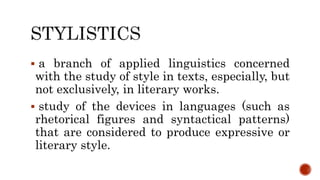
 a branch of applied linguistics concerned
with the study of style in texts, especially, but
not exclusively, in literary works.
 study of the devices in languages (such as
rhetorical figures and syntactical patterns)
that are considered to produce expressive or
literary style.
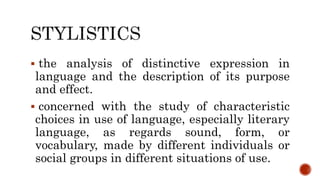
 the analysis of distinctive expression in
language and the description of its purpose
and effect.
 concerned with the study of characteristic
choices in use of language, especially literary
language, as regards sound, form, or
vocabulary, made by different individuals or
social groups in different situations of use.
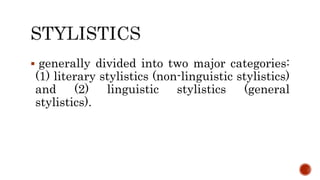
 generally divided into two major categories:
(1) literary stylistics (non-linguistic stylistics)
and (2) linguistic stylistics (general
stylistics).
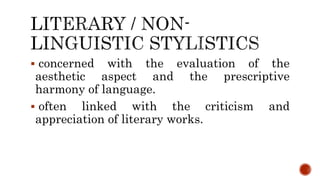
 concerned with the evaluation of the
aesthetic aspect and the prescriptive
harmony of language.
 often linked with the criticism and
appreciation of literary works.
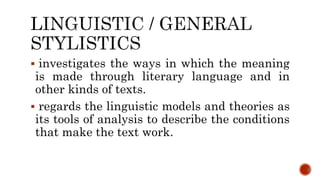
 investigates the ways in which the meaning
is made through literary language and in
other kinds of texts.
 regards the linguistic models and theories as
its tools of analysis to describe the conditions
that make the text work.
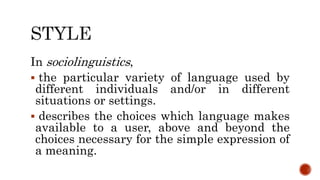
In sociolinguistics,
 the particular variety of language used by
different individuals and/or in different
situations or settings.
 describes the choices which language makes
available to a user, above and beyond the
choices necessary for the simple expression of
a meaning.
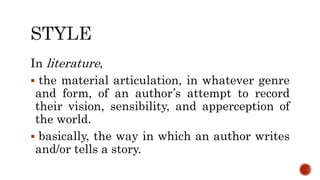
In literature,
 the material articulation, in whatever genre
and form, of an author’s attempt to record
their vision, sensibility, and apperception of
the world.
 basically, the way in which an author writes
and/or tells a story.
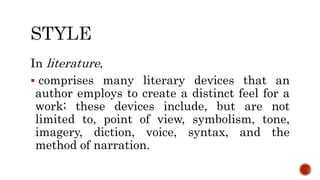
In literature,
 comprises many literary devices that an
author employs to create a distinct feel for a
work; these devices include, but are not
limited to, point of view, symbolism, tone,
imagery, diction, voice, syntax, and the
method of narration.
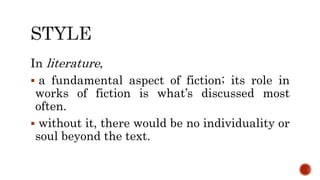
In literature,
 a fundamental aspect of fiction; its role in
works of fiction is what’s discussed most
often.
 without it, there would be no individuality or
soul beyond the text.
I hope you learned something.

STYLISTICS AND STYLE.pptx

  • 1.
    Mohammad Nassef D.Ali ENG108 – Cc
  • 2.
     a branchof applied linguistics concerned with the study of style in texts, especially, but not exclusively, in literary works.  study of the devices in languages (such as rhetorical figures and syntactical patterns) that are considered to produce expressive or literary style.
  • 3.
     the analysisof distinctive expression in language and the description of its purpose and effect.  concerned with the study of characteristic choices in use of language, especially literary language, as regards sound, form, or vocabulary, made by different individuals or social groups in different situations of use.
  • 4.
     generally dividedinto two major categories: (1) literary stylistics (non-linguistic stylistics) and (2) linguistic stylistics (general stylistics).
  • 5.
     concerned withthe evaluation of the aesthetic aspect and the prescriptive harmony of language.  often linked with the criticism and appreciation of literary works.
  • 6.
     investigates theways in which the meaning is made through literary language and in other kinds of texts.  regards the linguistic models and theories as its tools of analysis to describe the conditions that make the text work.
  • 7.
    In sociolinguistics,  theparticular variety of language used by different individuals and/or in different situations or settings.  describes the choices which language makes available to a user, above and beyond the choices necessary for the simple expression of a meaning.
  • 8.
    In literature,  thematerial articulation, in whatever genre and form, of an author’s attempt to record their vision, sensibility, and apperception of the world.  basically, the way in which an author writes and/or tells a story.
  • 9.
    In literature,  comprisesmany literary devices that an author employs to create a distinct feel for a work; these devices include, but are not limited to, point of view, symbolism, tone, imagery, diction, voice, syntax, and the method of narration.
  • 10.
    In literature,  afundamental aspect of fiction; its role in works of fiction is what’s discussed most often.  without it, there would be no individuality or soul beyond the text.
  • 13.
    I hope youlearned something.