
World
Englishes
Introduction
From Modernity to Post
Modernity
Demography
Alia Ali
The Expanding Circle
China, Egypt,
Indonesia,
Israel, Japan, Korea,
Nepal, Saudi Arabia,
Taiwan, Russia,
Zimbabwe, South
Africa,
Caribbean Islands
(EFL)
The Outer Circle
Bangladesh, India
Ghana, Kenya,
Nigeria, Malaysia,
Pakistan, Philippines,
Singapore, Sri Lanka,
Tanzania, Zambia
(ESL)
The Inner
Circle
USA
UK
Canada
Australia
New Zealand
Krachu’s Three Concentric Circles
 The global spread of English language is
not only on linguistic based but it helps to
furnish in studies, economics and politics
issues
 The growth of China would have an
impact on learning English where it was
used to be learnt
 Countries like India in which English is
used as second language can play a major
role in development of global English
 Relationship b/w and globalization was
complex one but economically support
helps English in its extension
From Modernity To Post
Modernity
Modernity spread from Europe across the world
 Renaissance and development can charted
through centuries
 Globalization started in 15th century with the
development of capitalist economies, nation
states and languages
 Before 18 century there was no concept of
foreign of language as we have today
 In 19th century languages in Europe became
modern, standardized and helped to unify the
national identity
 Scholars were well aware the potential
impact of new technologies such as the
electric telegraph on social, political and
economic life
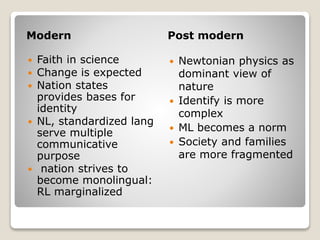
Modern Post modern
 Faith in science
 Change is expected
 Nation states
provides bases for
identity
 NL, standardized lang
serve multiple
communicative
purpose
 nation strives to
become monolingual:
RL marginalized
 Newtonian physics as
dominant view of
nature
 Identify is more
complex
 ML becomes a norm
 Society and families
are more fragmented
 The new model of English was introduced
 English was no more same as it was in
recognition and hegemonic power of
English lang native speakers
Linguistic
postmodernity
 Modernity was introduced in Europe was
invented
 Standard approaches for teaching English
were being used
 New forms of multilingualism
 The growth of multilingualism in Europe
 English factor in business process
outsourcing BPO the rise of urban
middleclass around world
 Internet, communication, technology
 Post modernity may be threat for those
who invest more in modern era
 Industrial revaluation
 A new world of other languages
 key terms
 Growth of languages on internet
 Rising competition
 The doom of monolinguals
 The end of English as foreign language
 Retraining needed for English specialist
 Asia may determine the future of Global
English
Demography
Who lives where-= have been along scientist and
technological process
 Demographic change is one of the most
important factors affecting languages and
to a much greater extend than other key
trends affecting English
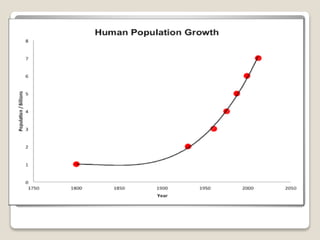
 global population
 People movement
 Demography trends
 Changing age structure
 S-shaped graph is familiar to anyone
analyzing social change or the spread of
innovation
 New mobile phone users
 Sound change through the lexicon in a
rural English dialect
 Who live where?
 What kind of work will they be doing?
 What are the basic needs?
 What kind of work they are doing?
 People movement
 Migrant worker
 Tourist
 Business
 International students
English as linga franca
 As population rise in developed countries
rise, the demographic balance between
languages is changing
 Three quarters of all travel is between
non-English speaking countries, this
suggested that large demand for either
foreign language learning or the
increasing use of English as lingua franca
ThankYou

World Englishes

  • 1.
    World Englishes Introduction From Modernity toPost Modernity Demography Alia Ali
  • 3.
    The Expanding Circle China,Egypt, Indonesia, Israel, Japan, Korea, Nepal, Saudi Arabia, Taiwan, Russia, Zimbabwe, South Africa, Caribbean Islands (EFL) The Outer Circle Bangladesh, India Ghana, Kenya, Nigeria, Malaysia, Pakistan, Philippines, Singapore, Sri Lanka, Tanzania, Zambia (ESL) The Inner Circle USA UK Canada Australia New Zealand Krachu’s Three Concentric Circles
  • 4.
     The globalspread of English language is not only on linguistic based but it helps to furnish in studies, economics and politics issues  The growth of China would have an impact on learning English where it was used to be learnt  Countries like India in which English is used as second language can play a major role in development of global English  Relationship b/w and globalization was complex one but economically support helps English in its extension
  • 5.
    From Modernity ToPost Modernity
  • 8.
    Modernity spread fromEurope across the world  Renaissance and development can charted through centuries  Globalization started in 15th century with the development of capitalist economies, nation states and languages  Before 18 century there was no concept of foreign of language as we have today  In 19th century languages in Europe became modern, standardized and helped to unify the national identity
  • 9.
     Scholars werewell aware the potential impact of new technologies such as the electric telegraph on social, political and economic life
  • 10.
    Modern Post modern Faith in science  Change is expected  Nation states provides bases for identity  NL, standardized lang serve multiple communicative purpose  nation strives to become monolingual: RL marginalized  Newtonian physics as dominant view of nature  Identify is more complex  ML becomes a norm  Society and families are more fragmented
  • 11.
     The newmodel of English was introduced  English was no more same as it was in recognition and hegemonic power of English lang native speakers
  • 12.
  • 13.
     Modernity wasintroduced in Europe was invented  Standard approaches for teaching English were being used  New forms of multilingualism  The growth of multilingualism in Europe  English factor in business process outsourcing BPO the rise of urban middleclass around world  Internet, communication, technology  Post modernity may be threat for those who invest more in modern era
  • 14.
     Industrial revaluation A new world of other languages  key terms  Growth of languages on internet  Rising competition  The doom of monolinguals  The end of English as foreign language  Retraining needed for English specialist  Asia may determine the future of Global English
  • 15.
    Demography Who lives where-=have been along scientist and technological process
  • 16.
     Demographic changeis one of the most important factors affecting languages and to a much greater extend than other key trends affecting English  global population  People movement  Demography trends  Changing age structure
  • 19.
     S-shaped graphis familiar to anyone analyzing social change or the spread of innovation  New mobile phone users  Sound change through the lexicon in a rural English dialect
  • 21.
     Who livewhere?  What kind of work will they be doing?  What are the basic needs?  What kind of work they are doing?
  • 24.
     People movement Migrant worker  Tourist  Business  International students
  • 25.
  • 26.
     As populationrise in developed countries rise, the demographic balance between languages is changing  Three quarters of all travel is between non-English speaking countries, this suggested that large demand for either foreign language learning or the increasing use of English as lingua franca
  • 27.