Presentation
(study skill for success !!)
Prepared by
Darya Rostam
Clinical psychologist
SKILLS for LEARNING
SKILLS for STUDY
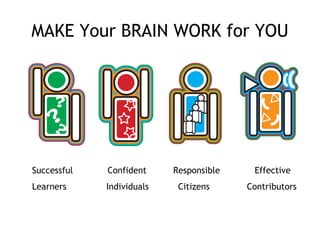
MAKE Your BRAIN WORK for YOU
Successful Confident Responsible Effective
Learners Individuals Citizens Contributors
You are responsible for your own learning
‘Ideas are funny things, they don’t work
unless you do’
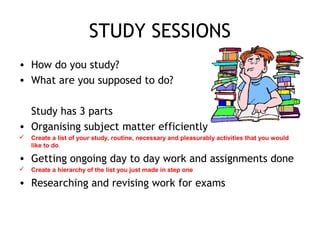
STUDY SESSIONS
• How do you study?
• What are you supposed to do?
Study has 3 parts
• Organising subject matter efficiently
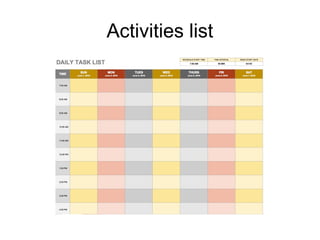
 Create a list of your study, routine, necessary and pleasurably activities that you would
like to do.
• Getting ongoing day to day work and assignments done
 Create a hierarchy of the list you just made in step one
• Researching and revising work for exams
Activities list
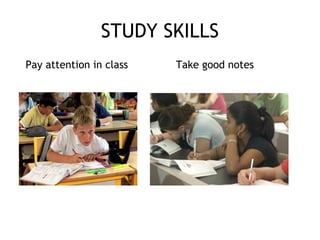
STUDY SKILLS
Pay attention in class Take good notes
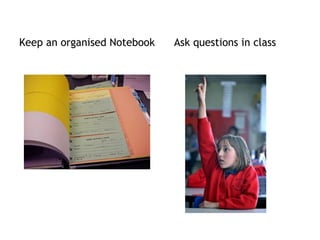
Keep an organised Notebook Ask questions in class
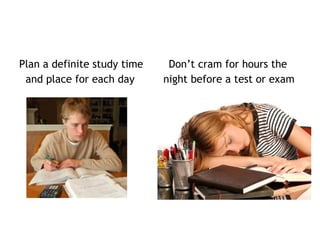
Plan a definite study time Don’t cram for hours the
and place for each day night before a test or exam
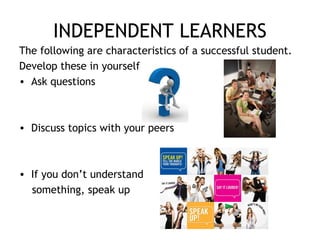
INDEPENDENT LEARNERS
The following are characteristics of a successful student.
Develop these in yourself
• Ask questions
• Discuss topics with your peers
• If you don’t understand
something, speak up
Learning About Learning 1
How Do People Learn?
 1 % through TASTE
 1.5 % through TOUCH
 3.5% through SMELL
 11% through HEARING
 83% through SIGHT
What Does This Mean?
Learning About Learning 2
How Much People Retain
(Remember)?
 10% of what you READ
 20% of what you HEAR
 30% of what you SEE
 50% of what you SEE and HEAR at the same time
 70% of what you SAY as you talk
 90% of what you SAY as you DO a thing
What Does This Mean ?
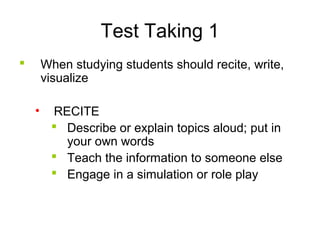
Test Taking 1
 When studying students should recite, write,
visualize
• RECITE
 Describe or explain topics aloud; put in
your own words
 Teach the information to someone else
 Engage in a simulation or role play
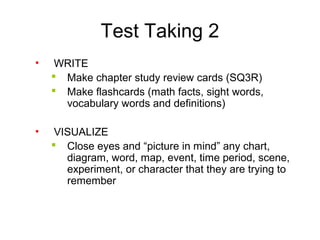
Test Taking 2
• WRITE
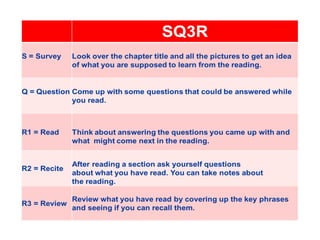
 Make chapter study review cards (SQ3R)
 Make flashcards (math facts, sight words,
vocabulary words and definitions)
• VISUALIZE
 Close eyes and “picture in mind” any chart,
diagram, word, map, event, time period, scene,
experiment, or character that they are trying to
remember
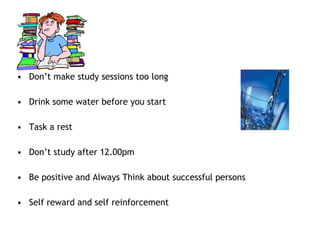
• Don’t make study sessions too long
• Drink some water before you start
• Task a rest
• Don’t study after 12.00pm
• Be positive and Always Think about successful persons
• Self reward and self reinforcement
• Quiz yourself
• Practise skills learned by doing
• Avoiding of postponement
• Eat healthy food for developing your brain
“Well done is better than well said”
Study skills powerpoint

Study skills powerpoint

  • 1.
    Presentation (study skill forsuccess !!) Prepared by Darya Rostam Clinical psychologist
  • 2.
  • 3.
    MAKE Your BRAINWORK for YOU Successful Confident Responsible Effective Learners Individuals Citizens Contributors
  • 4.
    You are responsiblefor your own learning ‘Ideas are funny things, they don’t work unless you do’
  • 5.
    STUDY SESSIONS • Howdo you study? • What are you supposed to do? Study has 3 parts • Organising subject matter efficiently  Create a list of your study, routine, necessary and pleasurably activities that you would like to do. • Getting ongoing day to day work and assignments done  Create a hierarchy of the list you just made in step one • Researching and revising work for exams
  • 6.
  • 7.
    STUDY SKILLS Pay attentionin class Take good notes
  • 8.
    Keep an organisedNotebook Ask questions in class
  • 9.
    Plan a definitestudy time Don’t cram for hours the and place for each day night before a test or exam
  • 10.
    INDEPENDENT LEARNERS The followingare characteristics of a successful student. Develop these in yourself • Ask questions • Discuss topics with your peers • If you don’t understand something, speak up
  • 11.
    Learning About Learning1 How Do People Learn?  1 % through TASTE  1.5 % through TOUCH  3.5% through SMELL  11% through HEARING  83% through SIGHT What Does This Mean?
  • 12.
    Learning About Learning2 How Much People Retain (Remember)?  10% of what you READ  20% of what you HEAR  30% of what you SEE  50% of what you SEE and HEAR at the same time  70% of what you SAY as you talk  90% of what you SAY as you DO a thing What Does This Mean ?
  • 13.
    Test Taking 1 When studying students should recite, write, visualize • RECITE  Describe or explain topics aloud; put in your own words  Teach the information to someone else  Engage in a simulation or role play
  • 14.
    Test Taking 2 •WRITE  Make chapter study review cards (SQ3R)  Make flashcards (math facts, sight words, vocabulary words and definitions) • VISUALIZE  Close eyes and “picture in mind” any chart, diagram, word, map, event, time period, scene, experiment, or character that they are trying to remember
  • 16.
    • Don’t makestudy sessions too long • Drink some water before you start • Task a rest • Don’t study after 12.00pm • Be positive and Always Think about successful persons • Self reward and self reinforcement
  • 17.
    • Quiz yourself •Practise skills learned by doing • Avoiding of postponement • Eat healthy food for developing your brain “Well done is better than well said”