Who is responsible for your learning?
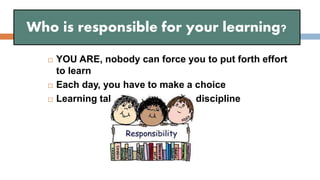
 YOU ARE, nobody can force you to put forth effort
to learn
 Each day, you have to make a choice
 Learning takes hard work and discipline
 Inspire you to learn
 Provide you with tools to learn
 Give you opportunities to practice
study methods and create study
aides
What are the responsibilities of your
teachers and parents?
Ultimately, you must make the choice each day to learn. Learning is not easy. It does takes hard
work and discipline.
STUDYING
What is an important way for you to
learn?
Studying is a SKILL that with practice, improves. It takes effort,
practice, and learning of key study strategies.
Students who develop and practice good study
habits will
1) Retain & store information = long-term memory
2) Improve grades
3) Make transitioning to the next grade-level a smooth
process
Why is studying important?
Remember, if you don’t study or don’t study enough, you can’t expect to do well on tests/quizzes or in
your classes. When you don’t do all you can to excel, you are letting yourself down and limiting
opportunities for yourself.
 Make studying a habit.
 Use your daily planner to map out your
assignments and create a study schedule.
 Try different study methods and figure out which
one works best for you.
How can you develop study skills?
1) CREATE A WEEKLY STUDY PLAN
2) CREATE STUDY AIDS
3) FIND A QUIET AREA TO STUDY
4) CHUNK YOUR MATERIAL
5) FIND A STUDY PARTNER
6) ATTEND ALL TUTORIAL/REVIEW
SESSIONS
What are some key study strategies?
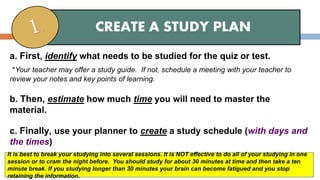
a. First, identify what needs to be studied for the quiz or test.
*Your teacher may offer a study guide. If not, schedule a meeting with your teacher to
review your notes and key points of learning.
b. Then, estimate how much time you will need to master the
material.
c. Finally, use your planner to create a study schedule (with days and
the times)
d. Do not wait until the night before a quiz or test to cram.
CREATE A STUDY PLAN
It is best to break your studying into several sessions. It is NOT effective to do all of your studying in one
session or to cram the night before. You should study for about 30 minutes at time and then take a ten
minute break. If you studying longer than 30 minutes your brain can become fatigued and you stop
retaining the information.
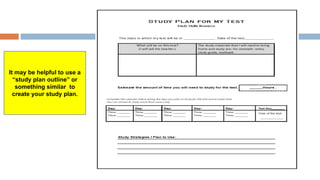
It may be helpful to use a
“study plan outline” or
something similar to
create your study plan.
 creating study aides will increase you ability to
learn and remember.
CREATE STUDY AIDES
Seeing, hearing, saying, and doing are the common ways (modes) of learning. When we use more than
one method of learning, it increases your ability to remember things. Creating study aides will help you
engage in multiple learning modes.
 Organize your notes.
 Circle or highlight what you need to
focus on the most or what you know the
least.
 Make flashcards.
 Make concept or mind maps using your
notes.
 Use Mnemonic strategies to help you
remember material by making up
sayings with beginning letters such as,
“Please Excuse My Dear Aunt Sally”
PEMDAS
 Make up your own quiz.
 Use quizlet to review.
 Create a PowerPoint of the study
material. Share with your friends.
 Ask someone to quiz you.
 Read your notes aloud
 Review old quizzes and tests.
 Make an outline, list, a Venn Diagram, a
chart, or other graphic organizer of the
material
Distractions WILL interfere with your learning and
memorizing.
 Turn your phone off and place it somewhere that you will
not be tempted to use it.
FIND A QUIET AREA TO STUDY
Don't multitask. Studies have shown that multitasking is physically impossible. This means no texting or
posting/reading messages on social media while you are working on getting yourself organized or when you are
actually studying.
Separating and placing what you need to learn into small
chunks or groups is helpful for your brain to store
information into long-term memory.
a) It is much easier for us to learn and remember small chunks of
information.
b) Focus on mastering one group or chunk of information before
moving on to the next group.
c) Look for patterns and group related information
CHUNK YOUR MATERIAL
Chucking does take some time to organize but is it well worth the effort.
A. Study partners are a good source of motivation.
B. They can help you increase the retention of your material.
When working with a partner:
Don’t: Waste time with off topic talking.
Do: Bring your class notes, tests and quizzes to use for
study aides.
FIND A STUDY PARTNER
With partners, you are interacting with the material by explaining, listening, and visualizing.
If you can teach the material to someone else, than you know it!
Your teachers want you to succeed!
They are available to meet with you for
tutorial and review sessions.
ATTEND ALL TUTORIAL & REVIEW
SESSIONS
Ask questions. You're in school to learn, so don't be afraid to do just that! Asking for help - from a
teacher or your friends - is a surefire way to make sure you truly understand the material. Tutorial
and before/after school help is available if you speak with your teachers.
Learning to study

Learning to study

  • 2.
    Who is responsiblefor your learning?  YOU ARE, nobody can force you to put forth effort to learn  Each day, you have to make a choice  Learning takes hard work and discipline
  • 3.
     Inspire youto learn  Provide you with tools to learn  Give you opportunities to practice study methods and create study aides What are the responsibilities of your teachers and parents? Ultimately, you must make the choice each day to learn. Learning is not easy. It does takes hard work and discipline.
  • 4.
    STUDYING What is animportant way for you to learn? Studying is a SKILL that with practice, improves. It takes effort, practice, and learning of key study strategies.
  • 5.
    Students who developand practice good study habits will 1) Retain & store information = long-term memory 2) Improve grades 3) Make transitioning to the next grade-level a smooth process Why is studying important? Remember, if you don’t study or don’t study enough, you can’t expect to do well on tests/quizzes or in your classes. When you don’t do all you can to excel, you are letting yourself down and limiting opportunities for yourself.
  • 6.
     Make studyinga habit.  Use your daily planner to map out your assignments and create a study schedule.  Try different study methods and figure out which one works best for you. How can you develop study skills?
  • 7.
    1) CREATE AWEEKLY STUDY PLAN 2) CREATE STUDY AIDS 3) FIND A QUIET AREA TO STUDY 4) CHUNK YOUR MATERIAL 5) FIND A STUDY PARTNER 6) ATTEND ALL TUTORIAL/REVIEW SESSIONS What are some key study strategies?
  • 8.
    a. First, identifywhat needs to be studied for the quiz or test. *Your teacher may offer a study guide. If not, schedule a meeting with your teacher to review your notes and key points of learning. b. Then, estimate how much time you will need to master the material. c. Finally, use your planner to create a study schedule (with days and the times) d. Do not wait until the night before a quiz or test to cram. CREATE A STUDY PLAN It is best to break your studying into several sessions. It is NOT effective to do all of your studying in one session or to cram the night before. You should study for about 30 minutes at time and then take a ten minute break. If you studying longer than 30 minutes your brain can become fatigued and you stop retaining the information.
  • 9.
    It may behelpful to use a “study plan outline” or something similar to create your study plan.
  • 10.
     creating studyaides will increase you ability to learn and remember. CREATE STUDY AIDES Seeing, hearing, saying, and doing are the common ways (modes) of learning. When we use more than one method of learning, it increases your ability to remember things. Creating study aides will help you engage in multiple learning modes.  Organize your notes.  Circle or highlight what you need to focus on the most or what you know the least.  Make flashcards.  Make concept or mind maps using your notes.  Use Mnemonic strategies to help you remember material by making up sayings with beginning letters such as, “Please Excuse My Dear Aunt Sally” PEMDAS  Make up your own quiz.  Use quizlet to review.  Create a PowerPoint of the study material. Share with your friends.  Ask someone to quiz you.  Read your notes aloud  Review old quizzes and tests.  Make an outline, list, a Venn Diagram, a chart, or other graphic organizer of the material
  • 11.
    Distractions WILL interferewith your learning and memorizing.  Turn your phone off and place it somewhere that you will not be tempted to use it. FIND A QUIET AREA TO STUDY Don't multitask. Studies have shown that multitasking is physically impossible. This means no texting or posting/reading messages on social media while you are working on getting yourself organized or when you are actually studying.
  • 12.
    Separating and placingwhat you need to learn into small chunks or groups is helpful for your brain to store information into long-term memory. a) It is much easier for us to learn and remember small chunks of information. b) Focus on mastering one group or chunk of information before moving on to the next group. c) Look for patterns and group related information CHUNK YOUR MATERIAL Chucking does take some time to organize but is it well worth the effort.
  • 13.
    A. Study partnersare a good source of motivation. B. They can help you increase the retention of your material. When working with a partner: Don’t: Waste time with off topic talking. Do: Bring your class notes, tests and quizzes to use for study aides. FIND A STUDY PARTNER With partners, you are interacting with the material by explaining, listening, and visualizing. If you can teach the material to someone else, than you know it!
  • 14.
    Your teachers wantyou to succeed! They are available to meet with you for tutorial and review sessions. ATTEND ALL TUTORIAL & REVIEW SESSIONS Ask questions. You're in school to learn, so don't be afraid to do just that! Asking for help - from a teacher or your friends - is a surefire way to make sure you truly understand the material. Tutorial and before/after school help is available if you speak with your teachers.