INTRODUCTION
• The blended cements are manufactured by adding
pozzolanic or Cementitious materials like fly ash or
coconut fibre ash or condensed silica fumes (CSF) to
portland cement clinker and Gypsum.
• Alternatively, these pozzolanic and cementitious
materials can be
• Introduced into Portland cement concrete during
concrete making operations.
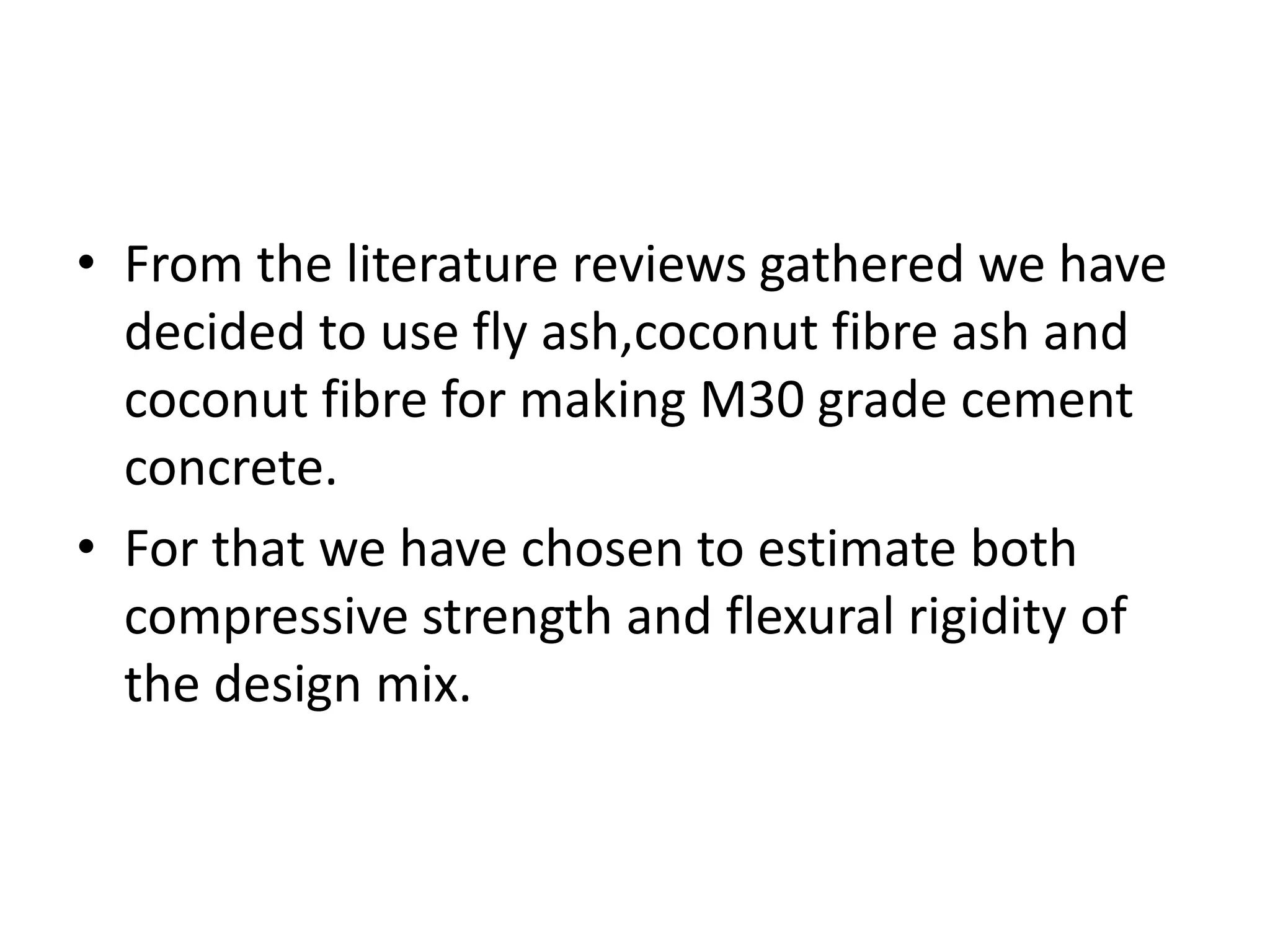
• From the literature reviews gathered we have
decided to use fly ash,coconut fibre ash and
coconut fibre for making M30 grade cement
concrete.
• For that we have chosen to estimate both
compressive strength and flexural rigidity of
the design mix.
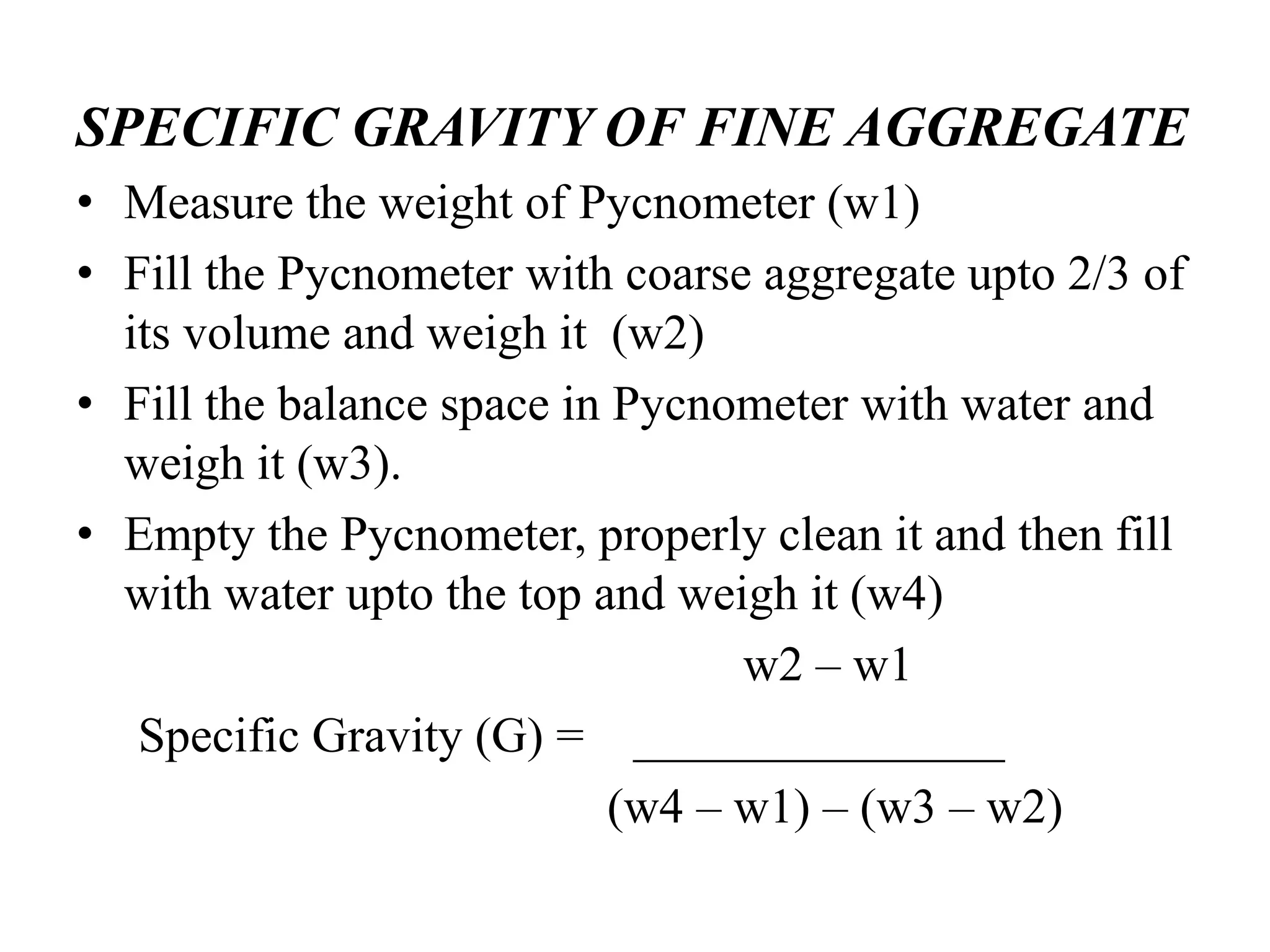
SPECIFIC GRAVITY OF FINE AGGREGATE
• Measure the weight of Pycnometer (w1)
• Fill the Pycnometer with coarse aggregate upto 2/3 of
its volume and weigh it (w2)
• Fill the balance space in Pycnometer with water and
weigh it (w3).
• Empty the Pycnometer, properly clean it and then fill
with water upto the top and weigh it (w4)
w2 – w1
Specific Gravity (G) = _______________
(w4 – w1) – (w3 – w2)
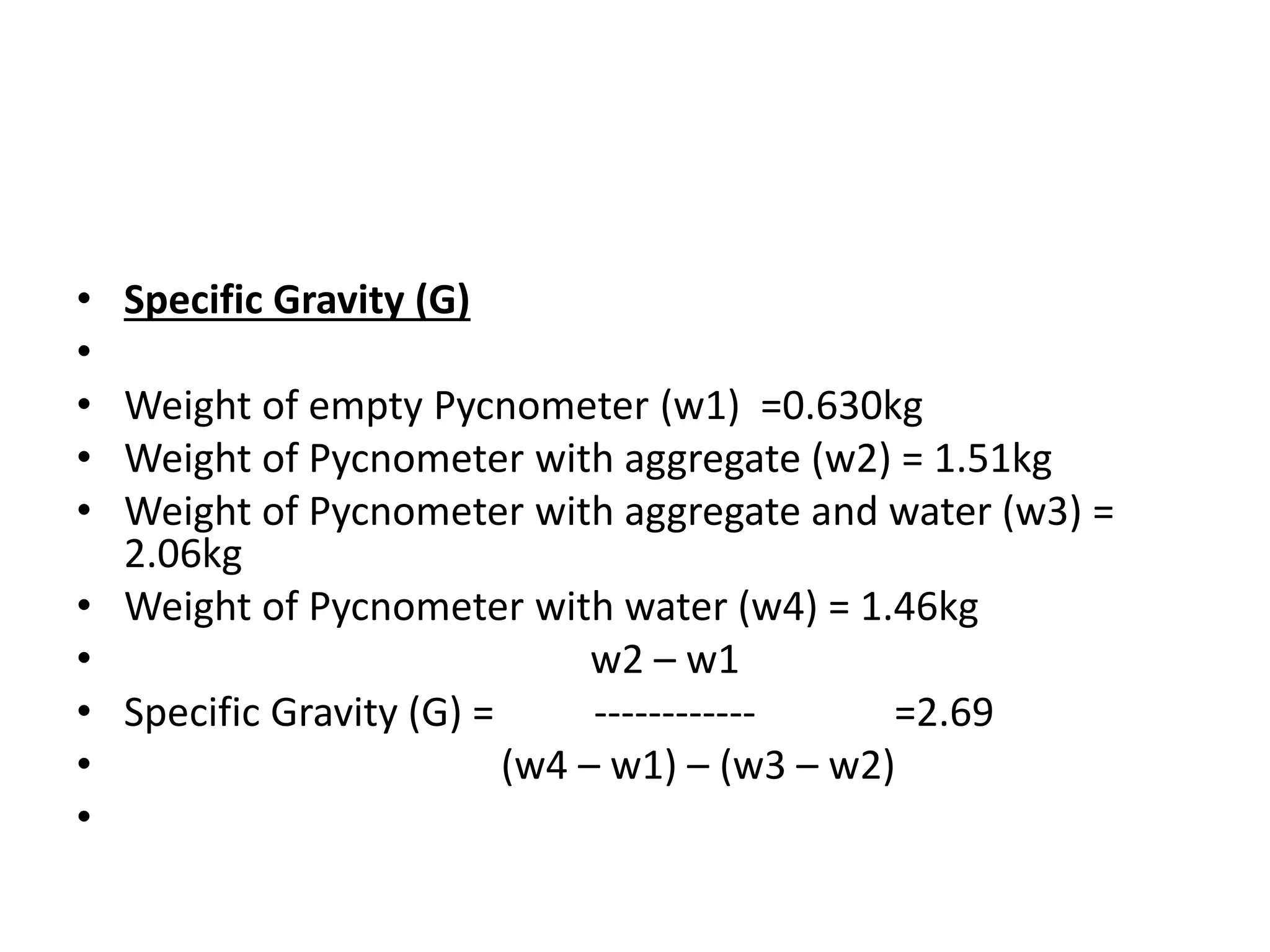
• Specific Gravity (G)
•
• Weight of empty Pycnometer (w1) =0.630kg
• Weight of Pycnometer with aggregate (w2) = 1.51kg
• Weight of Pycnometer with aggregate and water (w3) =
2.06kg
• Weight of Pycnometer with water (w4) = 1.46kg
• w2 – w1
• Specific Gravity (G) = ------------ =2.69
• (w4 – w1) – (w3 – w2)
•
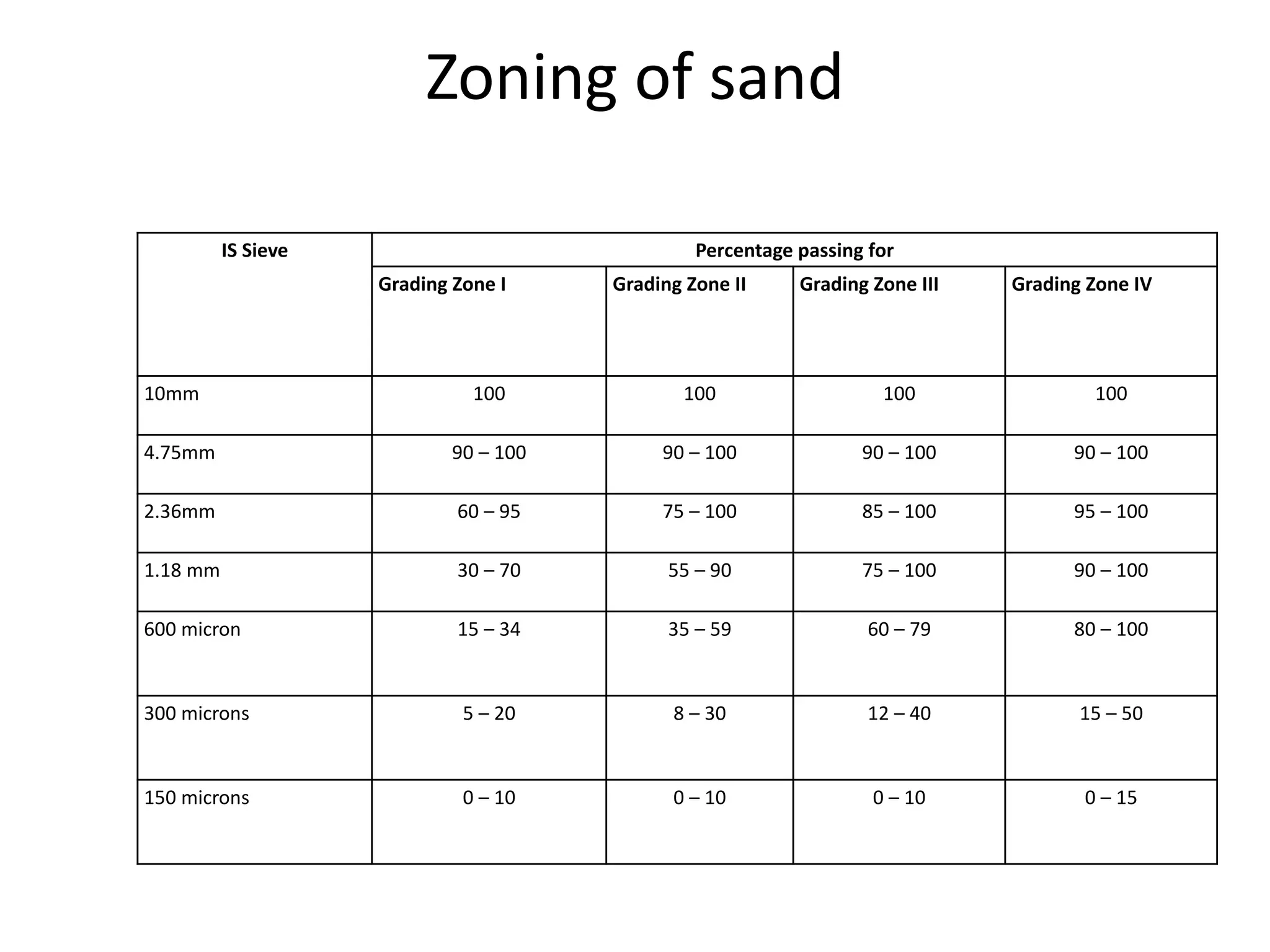
Zoning of sand
IS Sieve Percentage passing for
Grading Zone I Grading Zone II Grading Zone III Grading Zone IV
10mm 100 100 100 100
4.75mm 90 – 100 90 – 100 90 – 100 90 – 100
2.36mm 60 – 95 75 – 100 85 – 100 95 – 100
1.18 mm 30 – 70 55 – 90 75 – 100 90 – 100
600 micron 15 – 34 35 – 59 60 – 79 80 – 100
300 microns 5 – 20 8 – 30 12 – 40 15 – 50
150 microns 0 – 10 0 – 10 0 – 10 0 – 15
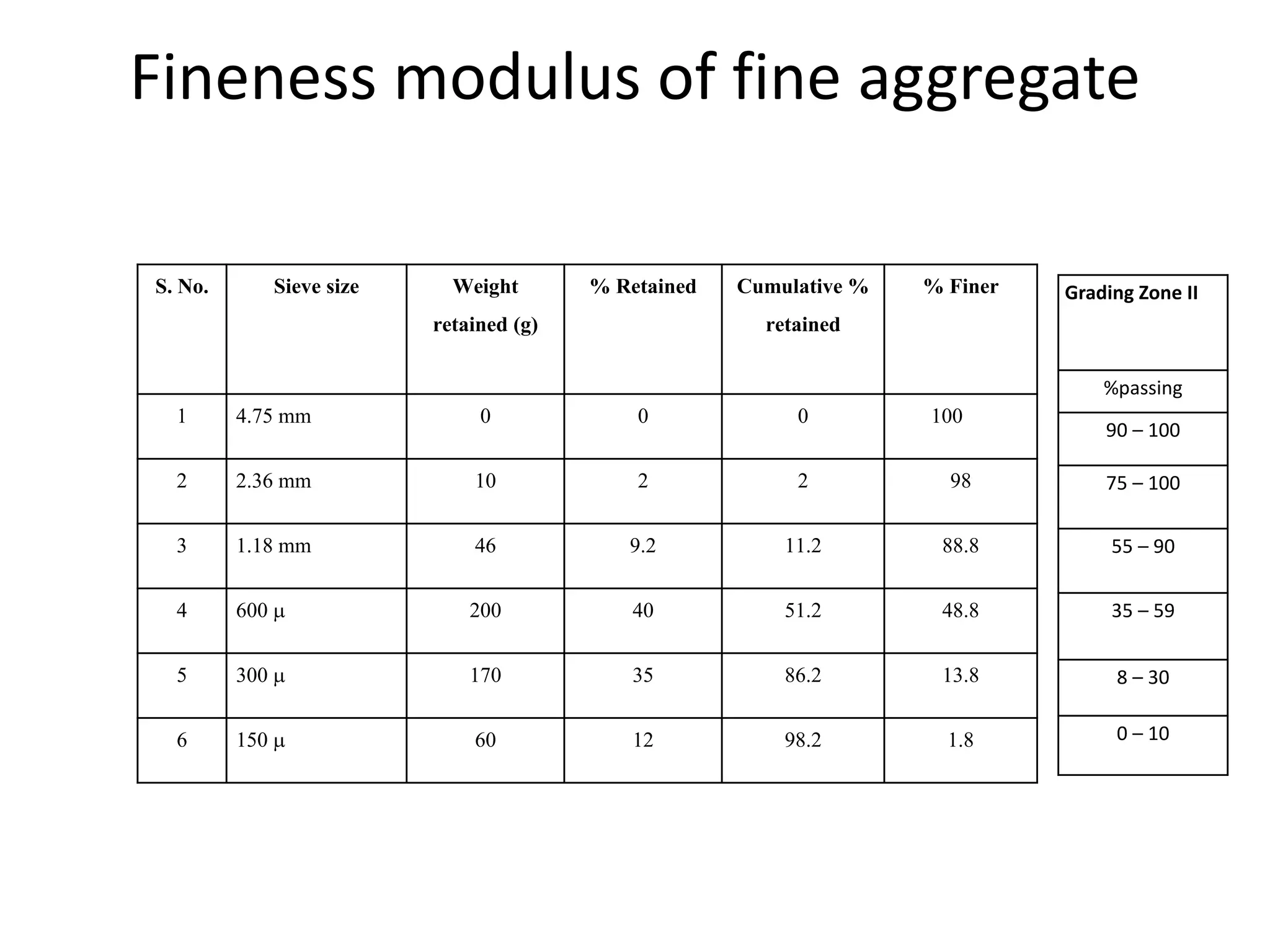
Fineness modulus of fine aggregate
S. No. Sieve size Weight
retained (g)
% Retained Cumulative %
retained
% Finer
1 4.75 mm 0 0 0 100
2 2.36 mm 10 2 2 98
3 1.18 mm 46 9.2 11.2 88.8
4 600  200 40 51.2 48.8
5 300  170 35 86.2 13.8
6 150  60 12 98.2 1.8
Grading Zone II
%passing
90 – 100
75 – 100
55 – 90
35 – 59
8 – 30
0 – 10
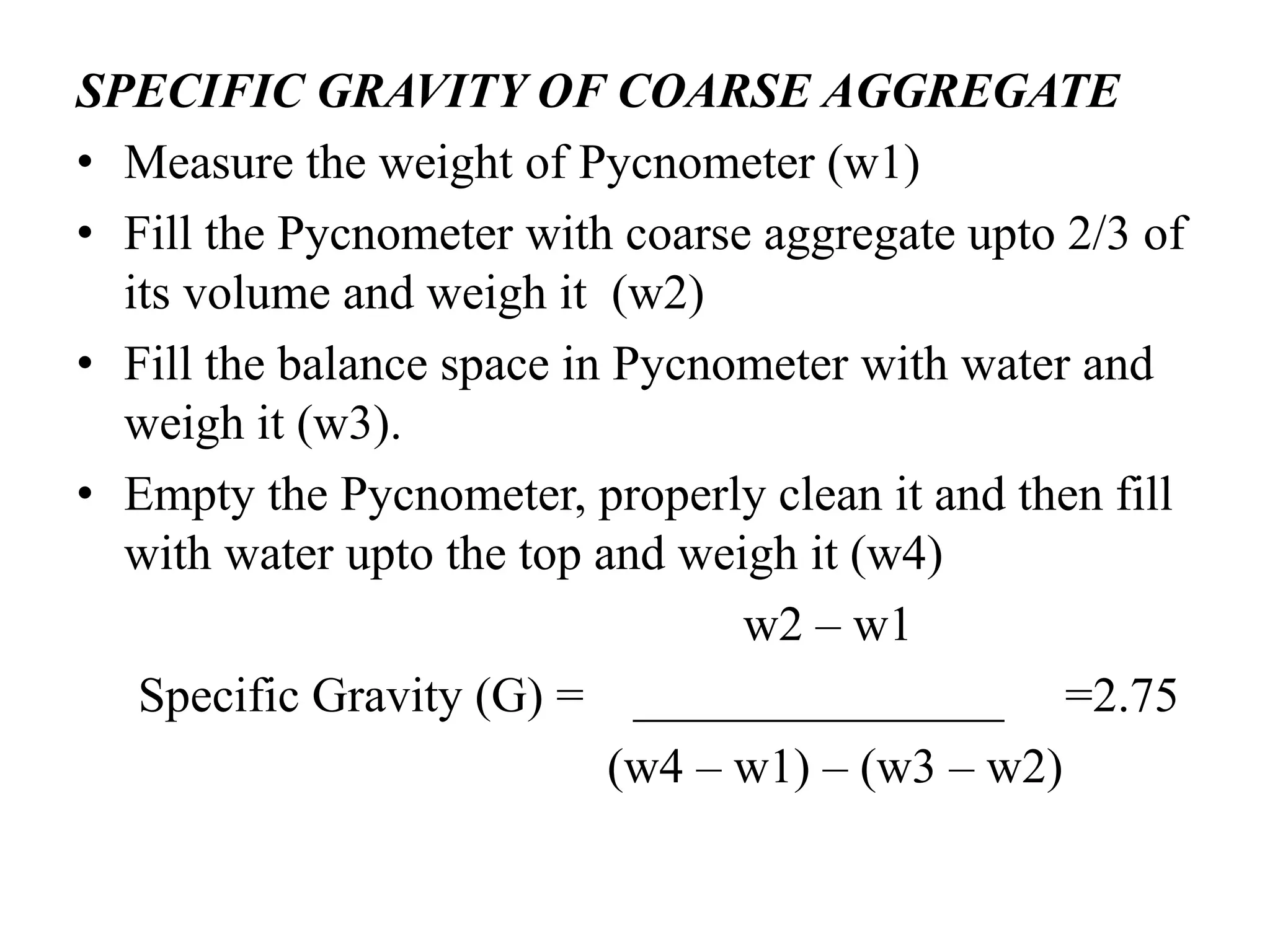
SPECIFIC GRAVITY OF COARSE AGGREGATE
• Measure the weight of Pycnometer (w1)
• Fill the Pycnometer with coarse aggregate upto 2/3 of
its volume and weigh it (w2)
• Fill the balance space in Pycnometer with water and
weigh it (w3).
• Empty the Pycnometer, properly clean it and then fill
with water upto the top and weigh it (w4)
w2 – w1
Specific Gravity (G) = _______________ =2.75
(w4 – w1) – (w3 – w2)
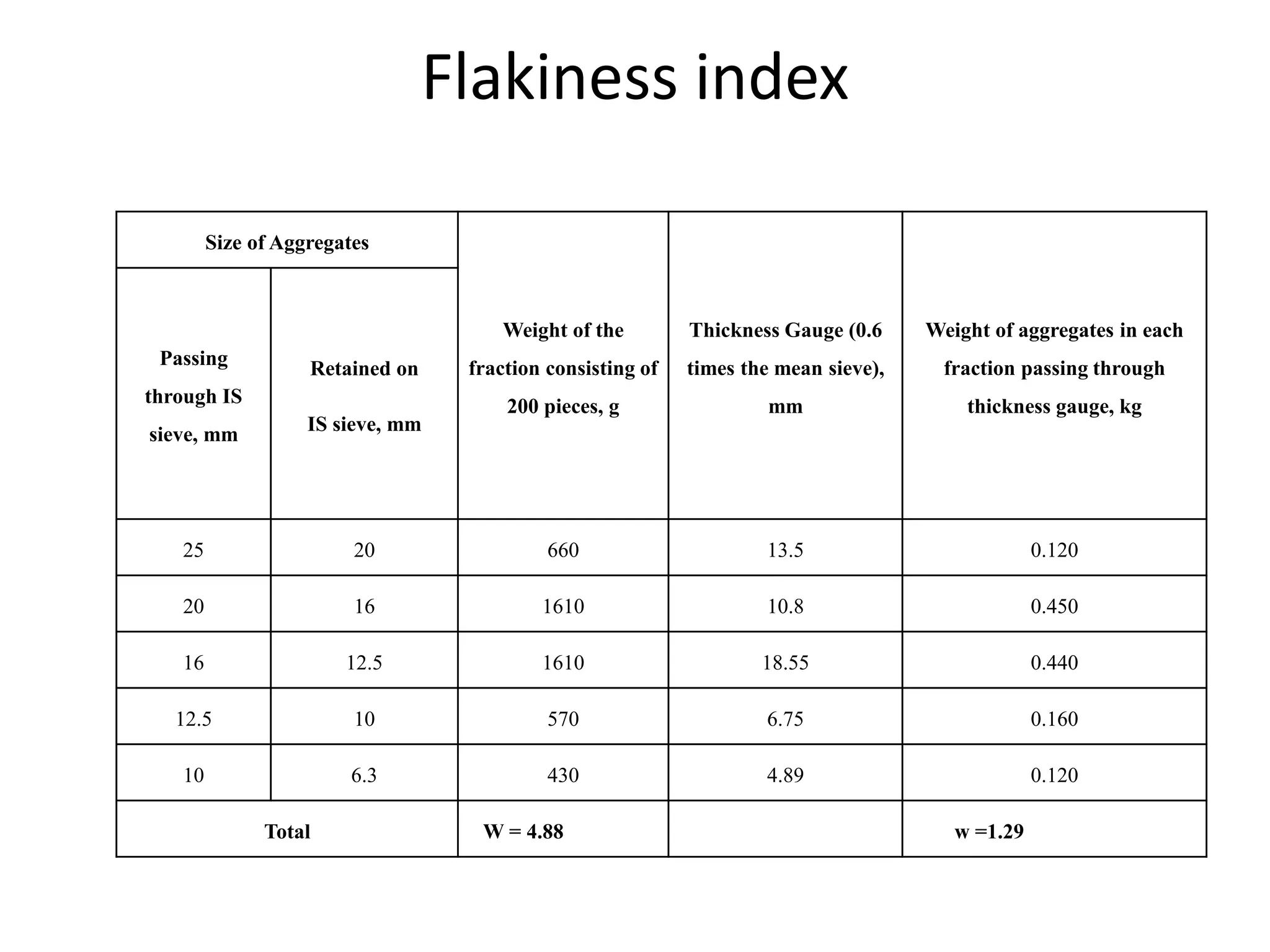
Flakiness index
Size of Aggregates
Weight of the
fraction consisting of
200 pieces, g
Thickness Gauge (0.6
times the mean sieve),
mm
Weight of aggregates in each
fraction passing through
thickness gauge, kg
Passing
through IS
sieve, mm
Retained on
IS sieve, mm
25 20 660 13.5 0.120
20 16 1610 10.8 0.450
16 12.5 1610 18.55 0.440
12.5 10 570 6.75 0.160
10 6.3 430 4.89 0.120
Total W = 4.88 w =1.29
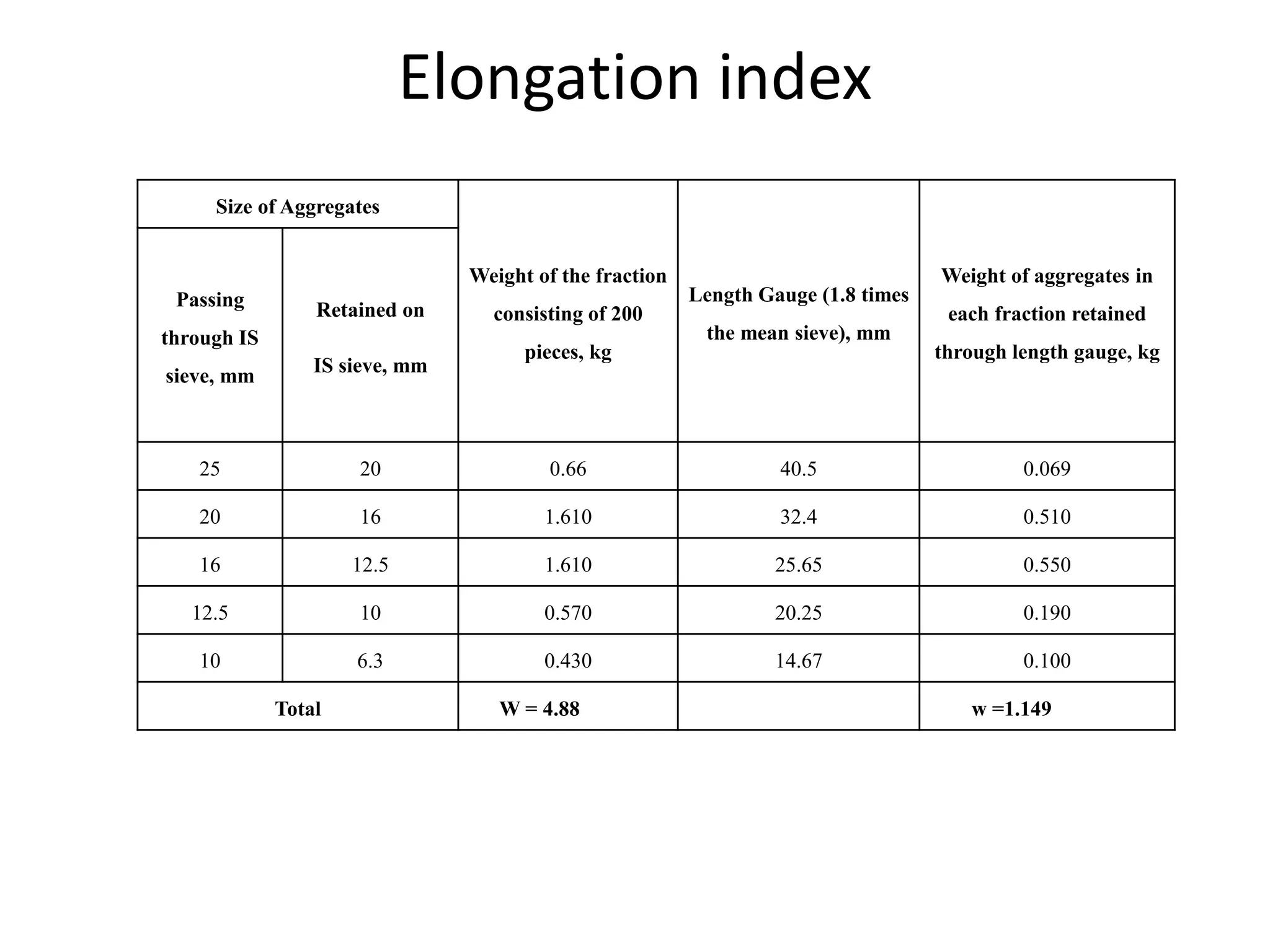
Elongation index
Size of Aggregates
Weight of the fraction
consisting of 200
pieces, kg
Length Gauge (1.8 times
the mean sieve), mm
Weight of aggregates in
each fraction retained
through length gauge, kg
Passing
through IS
sieve, mm
Retained on
IS sieve, mm
25 20 0.66 40.5 0.069
20 16 1.610 32.4 0.510
16 12.5 1.610 25.65 0.550
12.5 10 0.570 20.25 0.190
10 6.3 0.430 14.67 0.100
Total W = 4.88 w =1.149
METHODOLOGY
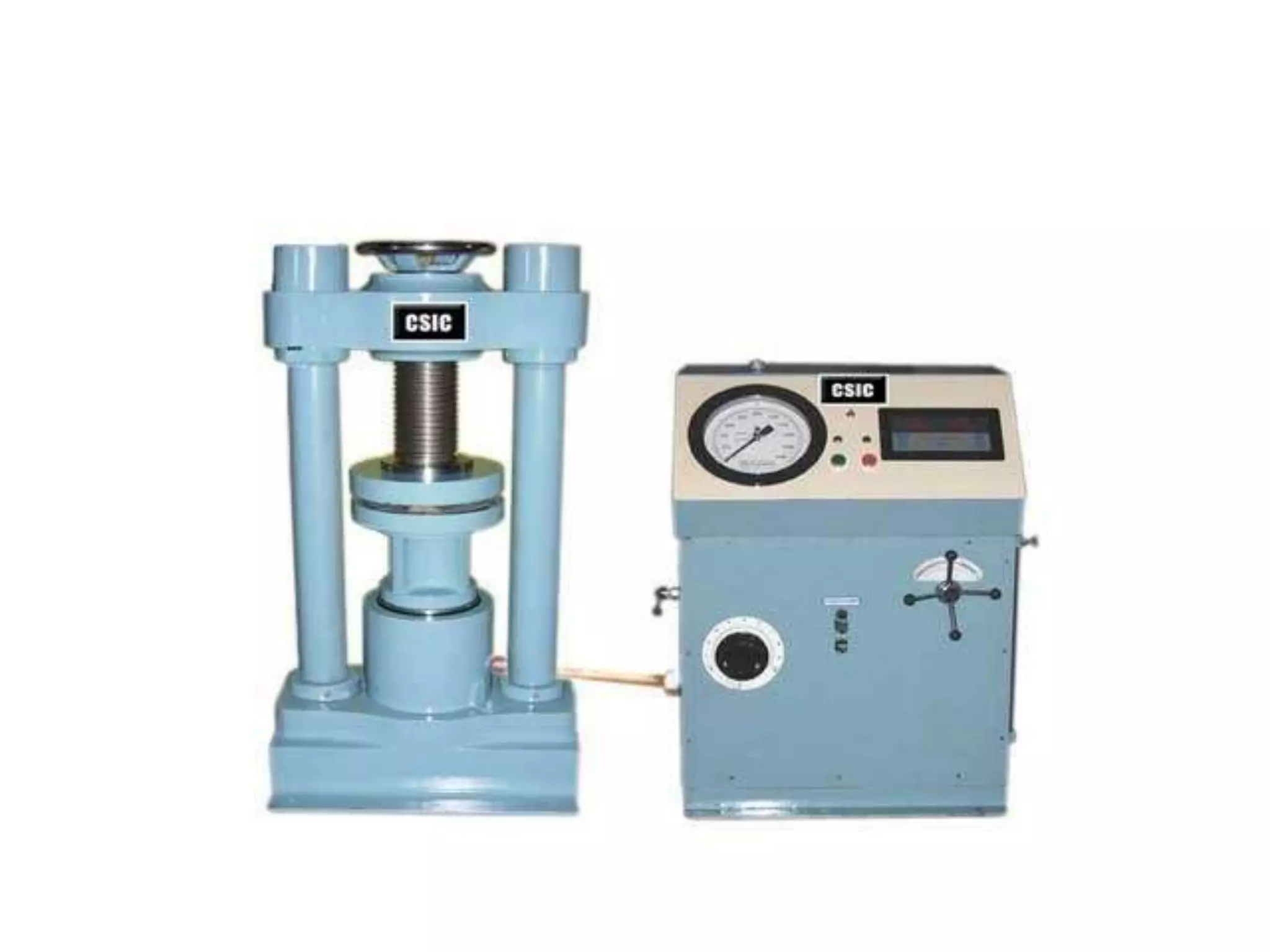
COMPRESSIVE STRENGTH
• Cubes are casted based on ratio in a mould of volume
150mm x 150mm x150mm.
• After 24 hours they are placed in water for curing.
• After 7 and 28 days removed from water and dried
for 1 hour.
• Cubes are tested using compressive testing machine.
FLEXURAL STRENGTH
• Beams are casted based on ratio in a mould of
volume50×10×10 cm.
• After 24 hours they are placed in water for curing.
• After 28 days removed from water and dried for 1
hour.
• Beams are tested using flexural testing machine.
RESULTS
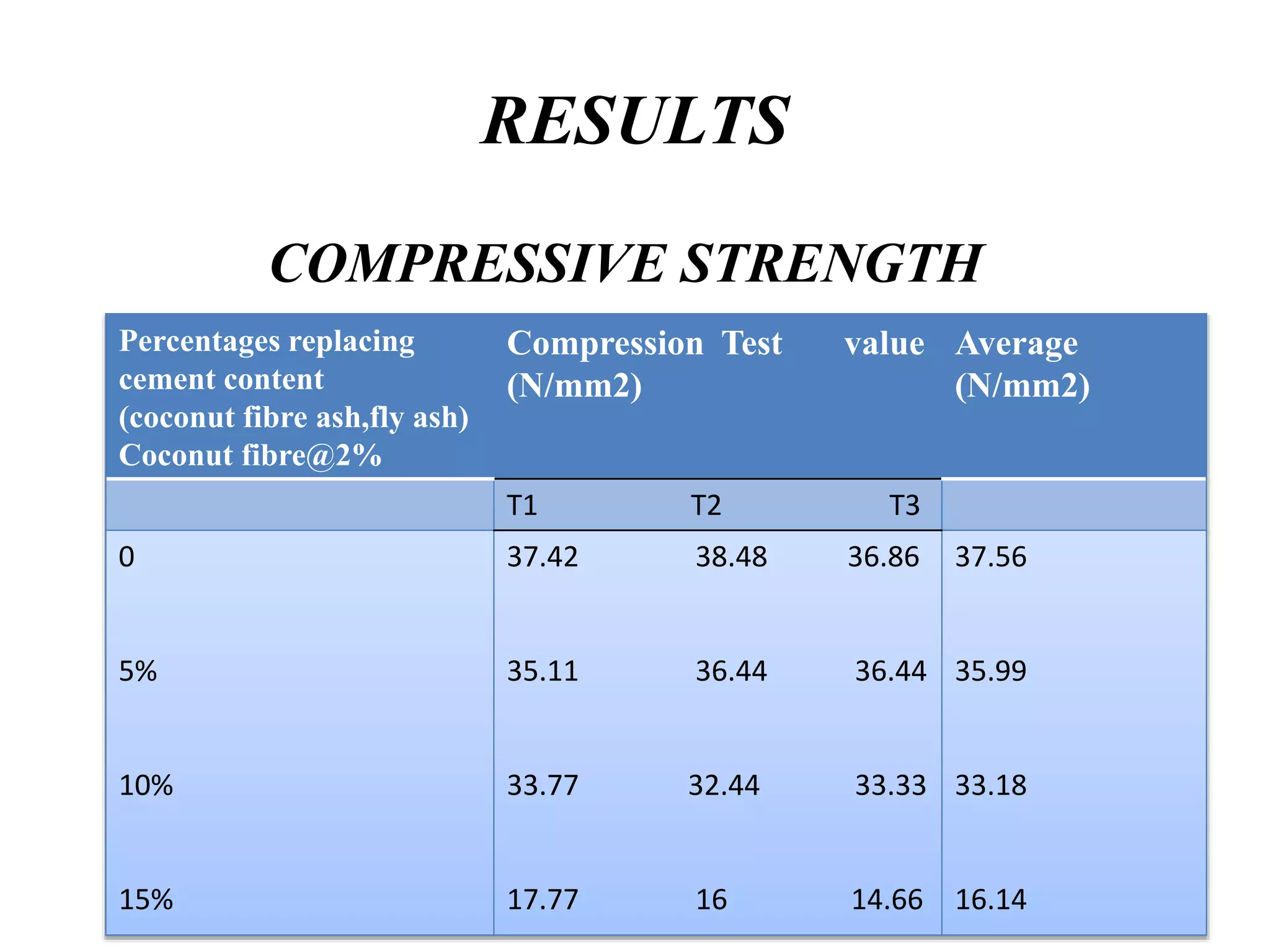
COMPRESSIVE STRENGTH
Percentages replacing
cement content
(coconut fibre ash,fly ash)
Coconut fibre@2%
Compression Test value
(N/mm2)
Average
(N/mm2)
T1 T2 T3
0
5%
10%
15%
37.42 38.48 36.86
35.11 36.44 36.44
33.77 32.44 33.33
17.77 16 14.66
37.56
35.99
33.18
16.14
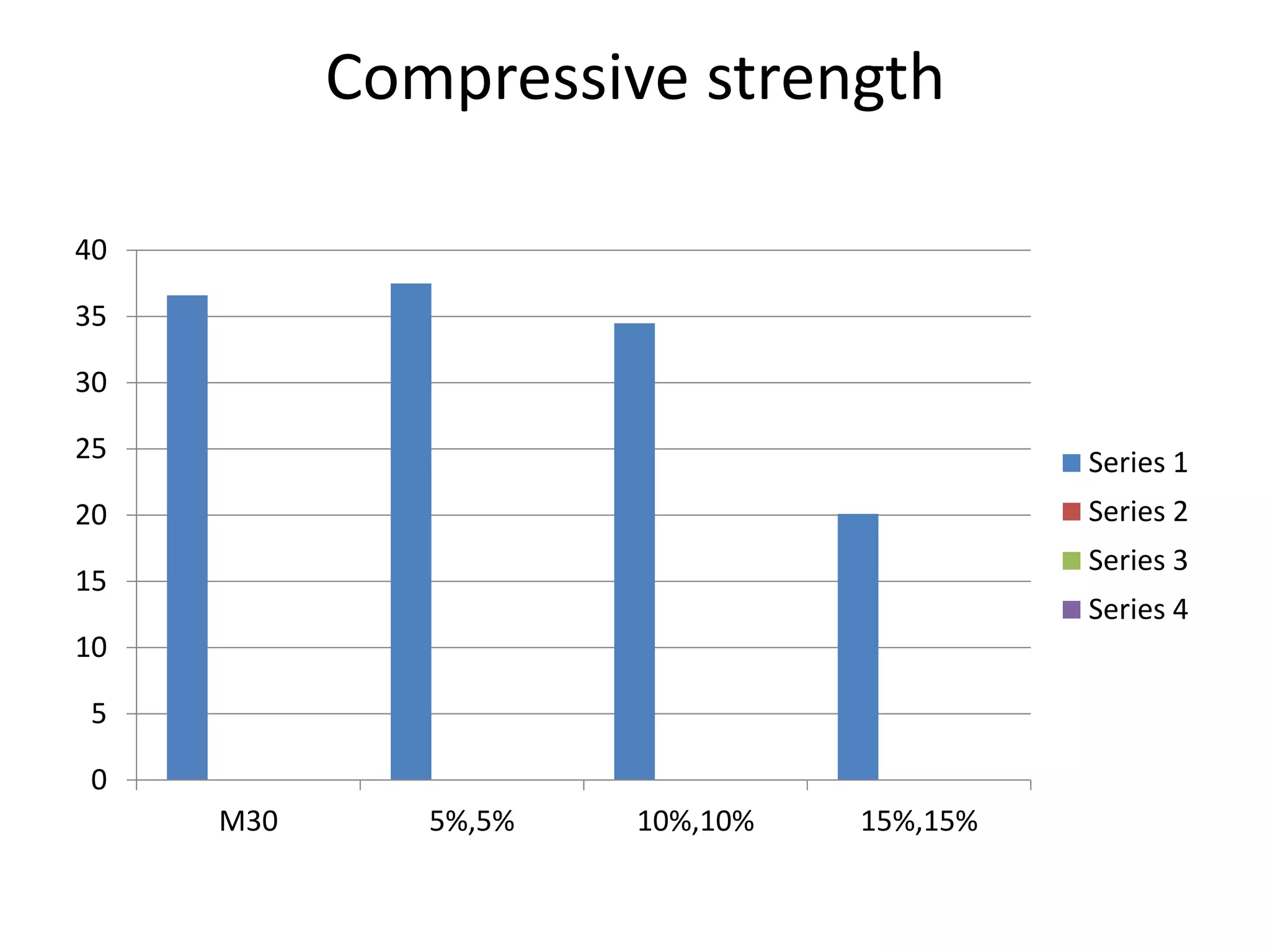
Compressive strength
0
5
10
15
20
25
30
35
40
M30 5%,5% 10%,10% 15%,15%
Series 1
Series 2
Series 3
Series 4
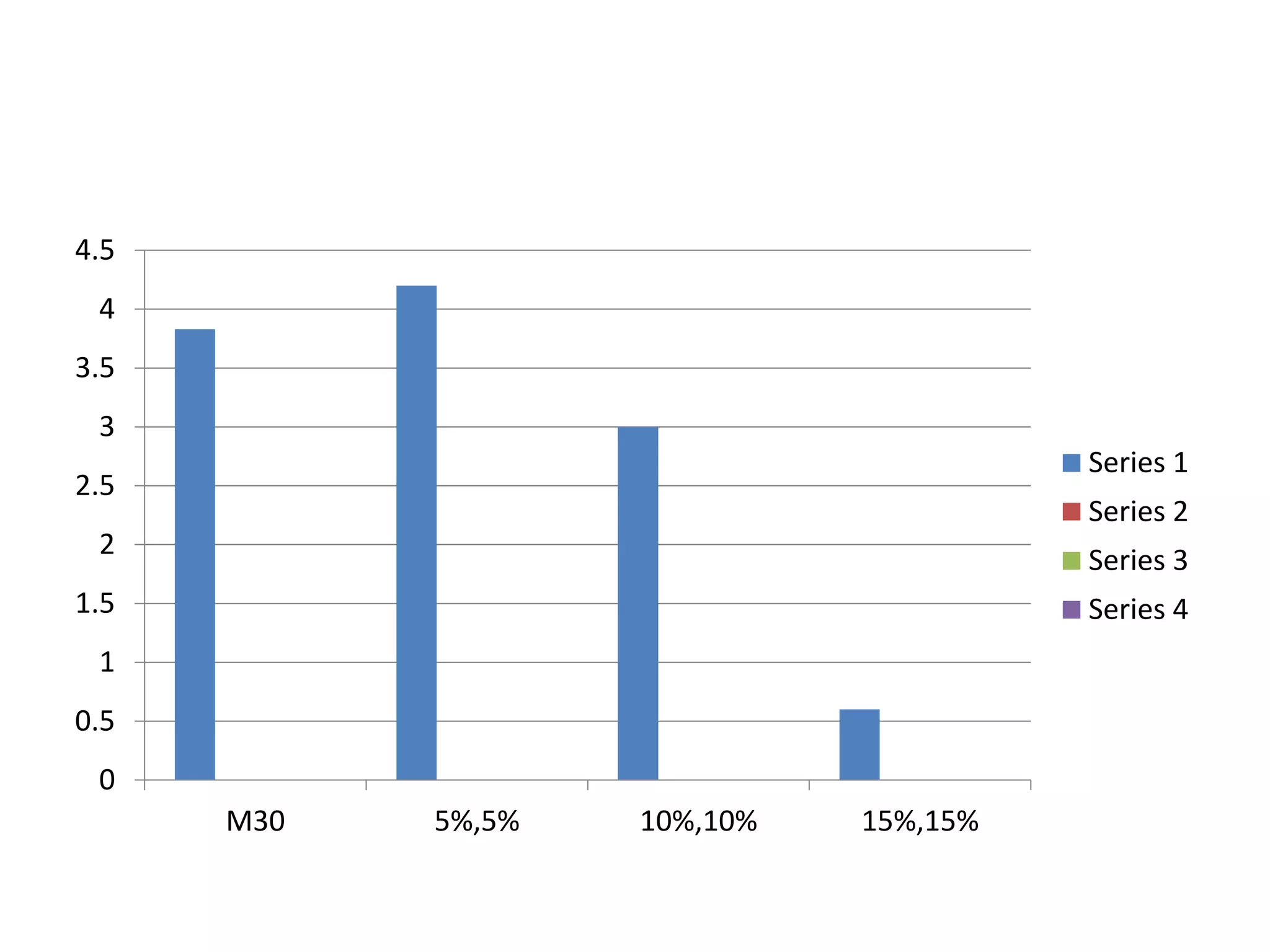
FLEXURAL STRENGTH
Mix designation Flexural strength for 28 days Average flexural
strength
T1
N/mm^2
T2
N/mm^2
T3
N/mm^2 N/mm^2
FA [0%] + CFA [0%] 3.8 3.97 3.72 3.83
FA [5%] + CFA [5%] 4.21 4.35 4.17 4.2
FA [10%] + CFA [10%] 3 3 2.9 3
FA [15%] + CFA [15%] 0.6 0.58 0.6 0.6
0
0.5
1
1.5
2
2.5
3
3.5
4
4.5
M30 5%,5% 10%,10% 15%,15%
Series 1
Series 2
Series 3
Series 4
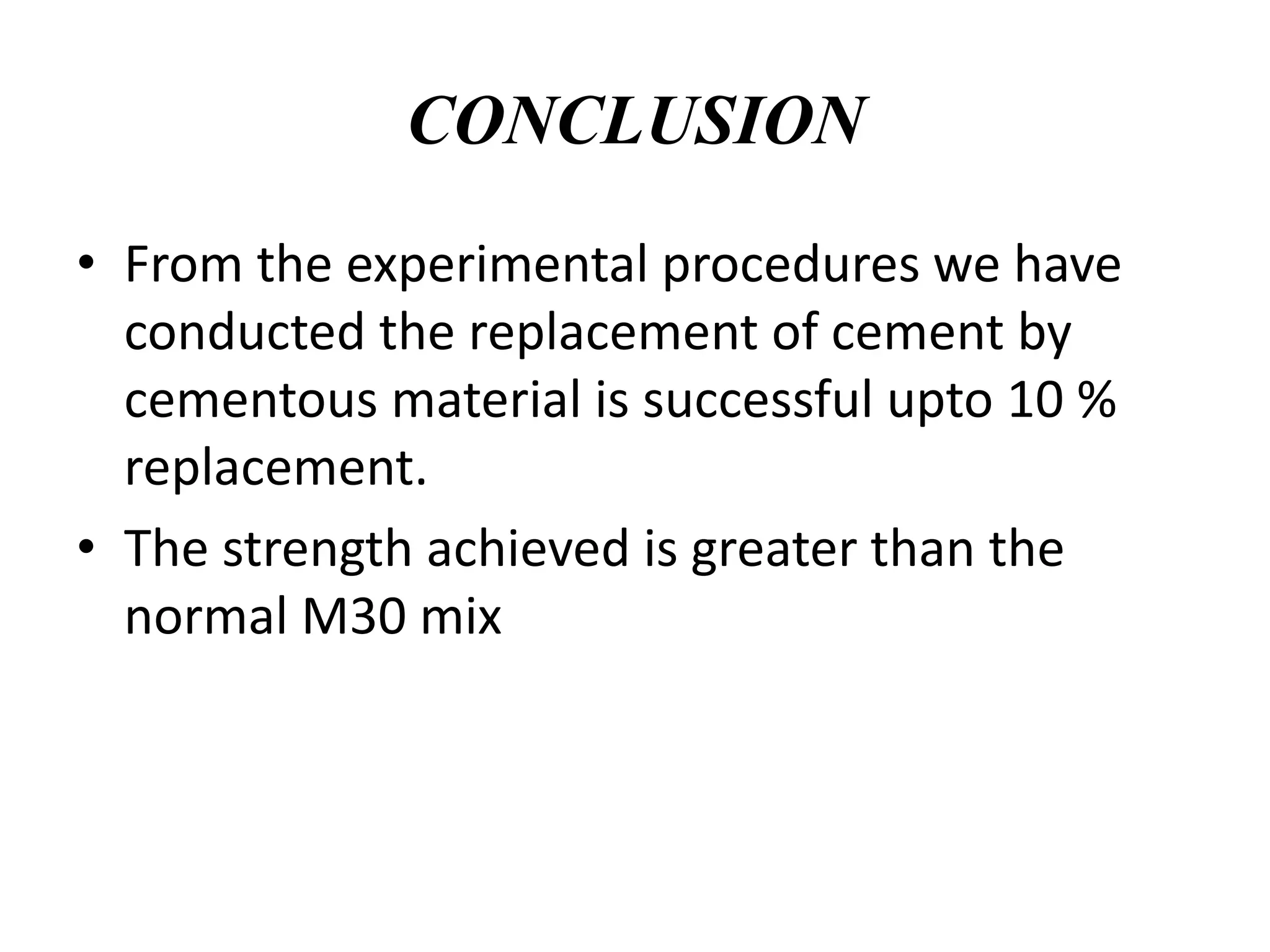
CONCLUSION
• From the experimental procedures we have
conducted the replacement of cement by
cementous material is successful upto 10 %
replacement.
• The strength achieved is greater than the
normal M30 mix
REFERENCES
• IS383:1970[zone of sand]
• IS456:2000[water content]
• IS10262:2009[mix design]
• Text book : Concrete technology by M.S.Shetty

study on strenth properties of blended cement concreate

  • 2.
    INTRODUCTION • The blendedcements are manufactured by adding pozzolanic or Cementitious materials like fly ash or coconut fibre ash or condensed silica fumes (CSF) to portland cement clinker and Gypsum. • Alternatively, these pozzolanic and cementitious materials can be • Introduced into Portland cement concrete during concrete making operations.
  • 3.
    • From theliterature reviews gathered we have decided to use fly ash,coconut fibre ash and coconut fibre for making M30 grade cement concrete. • For that we have chosen to estimate both compressive strength and flexural rigidity of the design mix.
  • 4.
    SPECIFIC GRAVITY OFFINE AGGREGATE • Measure the weight of Pycnometer (w1) • Fill the Pycnometer with coarse aggregate upto 2/3 of its volume and weigh it (w2) • Fill the balance space in Pycnometer with water and weigh it (w3). • Empty the Pycnometer, properly clean it and then fill with water upto the top and weigh it (w4) w2 – w1 Specific Gravity (G) = _______________ (w4 – w1) – (w3 – w2)
  • 5.
    • Specific Gravity(G) • • Weight of empty Pycnometer (w1) =0.630kg • Weight of Pycnometer with aggregate (w2) = 1.51kg • Weight of Pycnometer with aggregate and water (w3) = 2.06kg • Weight of Pycnometer with water (w4) = 1.46kg • w2 – w1 • Specific Gravity (G) = ------------ =2.69 • (w4 – w1) – (w3 – w2) •
  • 6.
    Zoning of sand ISSieve Percentage passing for Grading Zone I Grading Zone II Grading Zone III Grading Zone IV 10mm 100 100 100 100 4.75mm 90 – 100 90 – 100 90 – 100 90 – 100 2.36mm 60 – 95 75 – 100 85 – 100 95 – 100 1.18 mm 30 – 70 55 – 90 75 – 100 90 – 100 600 micron 15 – 34 35 – 59 60 – 79 80 – 100 300 microns 5 – 20 8 – 30 12 – 40 15 – 50 150 microns 0 – 10 0 – 10 0 – 10 0 – 15
  • 7.
    Fineness modulus offine aggregate S. No. Sieve size Weight retained (g) % Retained Cumulative % retained % Finer 1 4.75 mm 0 0 0 100 2 2.36 mm 10 2 2 98 3 1.18 mm 46 9.2 11.2 88.8 4 600  200 40 51.2 48.8 5 300  170 35 86.2 13.8 6 150  60 12 98.2 1.8 Grading Zone II %passing 90 – 100 75 – 100 55 – 90 35 – 59 8 – 30 0 – 10
  • 8.
    SPECIFIC GRAVITY OFCOARSE AGGREGATE • Measure the weight of Pycnometer (w1) • Fill the Pycnometer with coarse aggregate upto 2/3 of its volume and weigh it (w2) • Fill the balance space in Pycnometer with water and weigh it (w3). • Empty the Pycnometer, properly clean it and then fill with water upto the top and weigh it (w4) w2 – w1 Specific Gravity (G) = _______________ =2.75 (w4 – w1) – (w3 – w2)
  • 9.
    Flakiness index Size ofAggregates Weight of the fraction consisting of 200 pieces, g Thickness Gauge (0.6 times the mean sieve), mm Weight of aggregates in each fraction passing through thickness gauge, kg Passing through IS sieve, mm Retained on IS sieve, mm 25 20 660 13.5 0.120 20 16 1610 10.8 0.450 16 12.5 1610 18.55 0.440 12.5 10 570 6.75 0.160 10 6.3 430 4.89 0.120 Total W = 4.88 w =1.29
  • 10.
    Elongation index Size ofAggregates Weight of the fraction consisting of 200 pieces, kg Length Gauge (1.8 times the mean sieve), mm Weight of aggregates in each fraction retained through length gauge, kg Passing through IS sieve, mm Retained on IS sieve, mm 25 20 0.66 40.5 0.069 20 16 1.610 32.4 0.510 16 12.5 1.610 25.65 0.550 12.5 10 0.570 20.25 0.190 10 6.3 0.430 14.67 0.100 Total W = 4.88 w =1.149
  • 11.
    METHODOLOGY COMPRESSIVE STRENGTH • Cubesare casted based on ratio in a mould of volume 150mm x 150mm x150mm. • After 24 hours they are placed in water for curing. • After 7 and 28 days removed from water and dried for 1 hour. • Cubes are tested using compressive testing machine.
  • 13.
    FLEXURAL STRENGTH • Beamsare casted based on ratio in a mould of volume50×10×10 cm. • After 24 hours they are placed in water for curing. • After 28 days removed from water and dried for 1 hour. • Beams are tested using flexural testing machine.
  • 15.
    RESULTS COMPRESSIVE STRENGTH Percentages replacing cementcontent (coconut fibre ash,fly ash) Coconut fibre@2% Compression Test value (N/mm2) Average (N/mm2) T1 T2 T3 0 5% 10% 15% 37.42 38.48 36.86 35.11 36.44 36.44 33.77 32.44 33.33 17.77 16 14.66 37.56 35.99 33.18 16.14
  • 16.
    Compressive strength 0 5 10 15 20 25 30 35 40 M30 5%,5%10%,10% 15%,15% Series 1 Series 2 Series 3 Series 4
  • 17.
    FLEXURAL STRENGTH Mix designationFlexural strength for 28 days Average flexural strength T1 N/mm^2 T2 N/mm^2 T3 N/mm^2 N/mm^2 FA [0%] + CFA [0%] 3.8 3.97 3.72 3.83 FA [5%] + CFA [5%] 4.21 4.35 4.17 4.2 FA [10%] + CFA [10%] 3 3 2.9 3 FA [15%] + CFA [15%] 0.6 0.58 0.6 0.6
  • 18.
    0 0.5 1 1.5 2 2.5 3 3.5 4 4.5 M30 5%,5% 10%,10%15%,15% Series 1 Series 2 Series 3 Series 4
  • 19.
    CONCLUSION • From theexperimental procedures we have conducted the replacement of cement by cementous material is successful upto 10 % replacement. • The strength achieved is greater than the normal M30 mix
  • 20.
    REFERENCES • IS383:1970[zone ofsand] • IS456:2000[water content] • IS10262:2009[mix design] • Text book : Concrete technology by M.S.Shetty