IDL - International Digital Library Of
Technology & Research
Volume 1, Issue 3, Mar 2017 Available at: www.dbpublications.org
International e-Journal For Technology And Research-2017
IDL - International Digital Library 1 | P a g e Copyright@IDL-2017
Studies of Microstructure, Mechanical and
Tribological behaviour of Aluminium can
composites
Siddareddy 1
, Rohith R2
, Shiva Kumar 3
, Suneel M.V4
, Mahadev Prasad5
,
Avinash L6
UG Student, Department of Mechanical Engineering, NMIT Bangalore,Karnataka,India1,2,3,4
Assistant Professor,Department of Mechanical Engineering, NMIT Bangalore, Karnataka,India5,6
Abstract: Aluminum can composite widely used for
application in mechanical and tribological component
of automobile parts like screws,nuts ,rivets,etc.metal
matrix composites(MMCs)constitute an important
category of design and weight-efficient materials this
article highlights on the work where an attempt is
taken to fabricate aluminum can composites reinforced
with rice husk ash(RHA) particles and agricultural
byproducts with high amount of silica.RHA particles
upon analysis are incorporated into aluminum cans
melt by stir casting.4, 8 and 12% of wt,of RHA are
added in to the aluminum can.The micro-structure
analysis reveals the homogeneous particles
distribution in the matrix.the result found in the test
shows a increasing in RHA increases strength and
hardness and wear behavior of composites .
Keywords:Aluminum can,rise husk ash,metal matrix
composite,Stir Casting,micro structure,Agro waste.
1.INTRODUCTION
Aluminum alloy cans is widely used in the canning
industries for food storage in place of traditional glass
jars, bottle and steel cans. This trend is informed by
the peculiar mechanical properties of aluminum such
as light weight, form-ability, corrosion resistant,
excellent barrier, reduced thickness, damage tolerance,
ease of transportation, attractiveness and ease of
printing a high-quality image on the cans [1]. The first
aluminum alloy can was invented in 1972 when their
weight was ten times less than that of glass jars.
Modern cans in use today are even 40 % lighter than
those cans used as far back as in 1972.
In India, the traditional bottle based packaging
companies such as Coca-Cola, Seven –up have
completely modernized their production line or in
some cases shifted completely to the use of Aluminum
can for packaging. The transition from the traditional
bottle packaging to aluminum can packaging has come
with their environmental issues. Large volumes of
aluminum cans drinks are being consumed daily
across India and the empty cans are not properly
disposed. Environmental pollution is increasing
greatly, becoming uncontrollable; streets and drainage
s are being littered by empty drink cans, plastics,
polythene bags used in our day to day lives. Those
wastes were dropped in drainage, preventing water
from flowing leading to water logging which aids
breeding of mosquitoes and disease outbreaks. At
extreme cases, canals, drainage and gutters are
blocked. In rainy season, this leads to over flooding of
cities which at times claiming many lives [2].
In order to reduce if not completely eliminated
menaces associated with poor waste management,
there is a need for recycling of waste materials. As the
name implies, recycling is the new emerging
technology which involves waste conversion into raw
materials for production of new materials for various
engineering applications and also for wealth creation.
In 1992, the Commonwealth Government released the
National Waste Minimization and Recycling Strategy
with a target of reducing the amount of solid waste
going to landfill per capital by 50 % from 1990 to
2000 [3]. The recycling of wastes reduces waste, saves
energy, conserves natural resources, lessens use of
municipal landfills and provides recycle's and
municipalities with considerable revenue [3].
IDL - International Digital Library Of
Technology & Research
Volume 1, Issue 3, Mar 2017 Available at: www.dbpublications.org
International e-Journal For Technology And Research-2017
IDL - International Digital Library 2 | P a g e Copyright@IDL-2017
Aluminum is 100 % recyclable Recycling of
Aluminium uses only 5 % of the energy required for
its initial extraction and processing, 10 % of the initial
capital equipment costs and saves 97 % of the
greenhouse gas (GHG) emissions. Aluminium is an
ideal materials used for architectural, automobile and
aerospace applications because of its light weight,
corrosion resistance and ease of formability but its low
strength and hardness has greatly limited its use in
high strength, hardness and surface wear resistance
applications. Currently, the design of high
performance Aluminium based composites at
significantly reduced cost is receiving much attention
from materials researchers. This is discernible from
the dominant use of stir casting by most researchers
from developing countries; and the sustained interest
in the consideration of industrial and agro wastes as
reinforcements in AMCs.
Agro waste ashes obtained by the controlled burning
of agro waste products such as bagasse, bamboo leaf,
coconut shell, groundnut shell, and rice husk among
others; have the advantages of low densities and
processing cost compared with common synthetic
reinforcing ceramics such as silicon carbide and
alumina. The agro waste ashes have been successfully
utilized to produce Al matrix composites with property
levels which can be improved with the complement of
synthetic reinforcements such as silicon carbide and
alumina. The design concept is built on harnessing the
high strength and wear capabilities of notable
synthetic reinforcements such as silicon carbide and
alumina with the light weight and low cost of
processing of Agro waste ashes. There are very few
literatures which have considered the design of AMCs
with the use of reinforcements of Agro waste ashes.
The mechanical properties of some of these low cost
Al matrix composites have been reported to be
encouraging depending on the weight ratio between
the synthetic reinforcement and the agro waste ashes
selected. The corrosion and wear properties of these
Al matrix hybrid composites are yet to receive any
notable attention considering available literature s.
Corrosion and wear are very important scientific
phenomena requiring consideration in composite
materials design to ensure material reliability in
applications where they come in contact with the
environment and other surfaces. The corrosion
behavior of AMCs is widely acclaimed for its in
conclusiveness judging from the often contradicting
findings reported by authors for the same MMC
system. Thus it is very unlikely for the corrosion
behavior of newly developed AMCs to be predicted
without subjecting them to experimental studies. The
wear properties of AMCs have been reported to be
dependent on factors such as the nature, size, and
volume percent of the reinforcing particles.
Investigations on the wear behavior of Al MMCs
produced with the use of agro waste ashes as
complementing reinforcement are quite limited in
literature. In this present work, metal matrix
composites have been produced from discarded
Aluminium cans and rice husk ash (RHA). The aim of
this work is to study mechanical, corrosion and wear
resistance properties of the produced Aluminum
can/RHA metal matrix composites. This work is also
aimed at providing solution to menaces associated
with poor management of Aluminium cans and RHA
through recycling of these waste materials. It embraces
conversion of waste into wealth which on a large scale
production will enhance technological development
and economic growth.
 Material Selection and sample preparation
The materials used in this work include Rice Husk
Ash (RHA), Aluminium cans, 220-400 grade emery
papers and polishing cloth. The elemental analysis of
the Aluminium can used is shown on Table 1.
Table 1: Chemical composition of aluminium can
(weight percentage)
Element Si Fe Cu Mn Mg Ti Al
%
Composition
0.53 0.51 0.03 0.77 0.02 0.04 98.10
Preparation of RHA
The ash, obtained by burning rice husk was
thoroughly washed with water to remove the dust and
dried at room temperature for 1 day. Washed rice husk
was then heated to 200 ° C for 1 h in order to remove
the moisture and organic matter. It was then heated to
600 ° C for 12 h to remove the carbonaceous material
[4]. The chemical composition of the RHA determined
using X-ray fluorescence spectroscopy is presented in
Table 2.
Table 2: Chemical composition of Rice Husk Ash
(RHA)
IDL - International Digital Library Of
Technology & Research
Volume 1, Issue 3, Mar 2017 Available at: www.dbpublications.org
International e-Journal For Technology And Research-2017
IDL - International Digital Library 3 | P a g e Copyright@IDL-2017
2.OBJECTIVES.
Conclusions from the literature review prompted for
the need of a systematic study of various mechanical
properties of Rice Husk Ash (RHA) reinforced
aluminium can (recycled waste) composites. This
study can lead one to explore the possibility of
identifying the use of these composites for engineering
applications. Therefore the work taken up had the
following objectives:
1. Fabrication of aluminium can / RHA
composites by Stir Casting route.
2. Microstructure characterization of the
composites using optical microscopes
3. Evaluation of mechanical and Wear
properties of composites
4. Comparing the results of mechanical,
Corrosion and Wear properties of as-cast
alloy with composites.
5. Drawing Conclusion based on the obtained
result.
The present study is thus aimed at producing MMCs
with aluminium can (recycled waste) as the matrix
material with Rice Husk Ash (RHA) as reinforcement
processed by stir casting route of these composites in
order to obtain mechanical properties suitable for a
wide range of engineering applications
3.Methodology
Starting Aluminium can with rice husk ash reinforcement
Aluminium can
Micro-structural characterization
 Optical Microscopy
Evaluation of Mechanical
Properties
 Tensile Test(UTS,YTS)
 Hardness Test
Wear Test
a.Load
Drawing conclusion based result
Figure3.1: Flow Chart of Experimental Work
4.IMPLEMENTATION
 Automotive components such as screws,nuts and
rivets.
 Aluminium utensil.
 Foils and conductor cables.
 Aeronautical application
5.OUTCOMES
 We can expect uniform distribution of
reinforcement (RHA) with matrix material
(Aluminium can) by stir casting process
 Uniform distribution may lead to good Micro-
structure of composites
 Further there will be a good improvement in
mechanical properties of Composites
 Optical Microscopic Studies
Fig 5.1(a)Aluminium Can Ac Fig 5.1(b)Aluminium Can+4% RHA
Composition SiO2 Graphite CaO MgO K2O Fe2O3
%weight 90.23 4.77 1.58 0.53 0.39 0.21
Specimen Preparation by stir casting process
Aluminium can composites
IDL - International Digital Library Of
Technology & Research
Volume 1, Issue 3, Mar 2017 Available at: www.dbpublications.org
International e-Journal For Technology And Research-2017
IDL - International Digital Library 4 | P a g e Copyright@IDL-2017
Fig 5.1(c)Aluminium Can+8% RHA Fig 5.1(d)Aluminium Can+12%
RHA
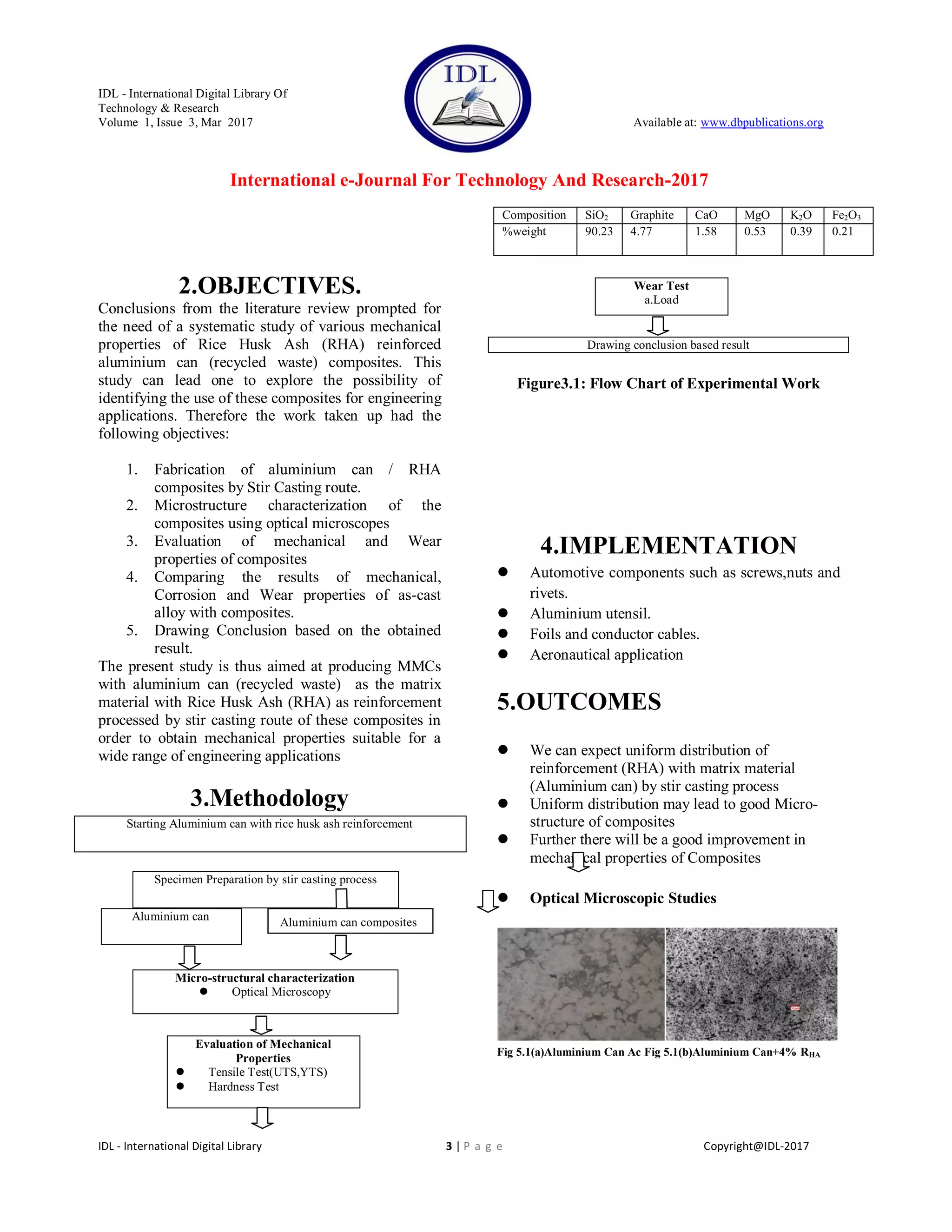
Figure 5.1 shows the microstructure of Aluminium can
and its composites.Figure 5.1(a), 5.1(b), 5.1(c), 5.1(d)
shows the micro photographs of both the matrix alloy
(Aluminium Can-recycled waste) and its composites
system. Figure 5.1(b). 5.1(c), 5.1(d) revealed that
presence of rice husk ash (RHA) particles in alloy
matrix and further confirms that there was a fairly
uniform distribution of rice husk ash particles in the
base matrix of Aluminium Can alloy .
 Hardness Test Result:
Table :5.1 Hardness of Aluminium can and its composites
SL
NO
Alloy/Composite
Designation
BHN(Hardness) % increase in
Hardness
1 Aluminium Can Ac 44.6 _________
2 Aluminium Can+4RHA 54.3 21.74%
3 Aluminium Can+8RHA 59.4 33.18%
4 Aluminium Can+8RHA 60.1 34.7%
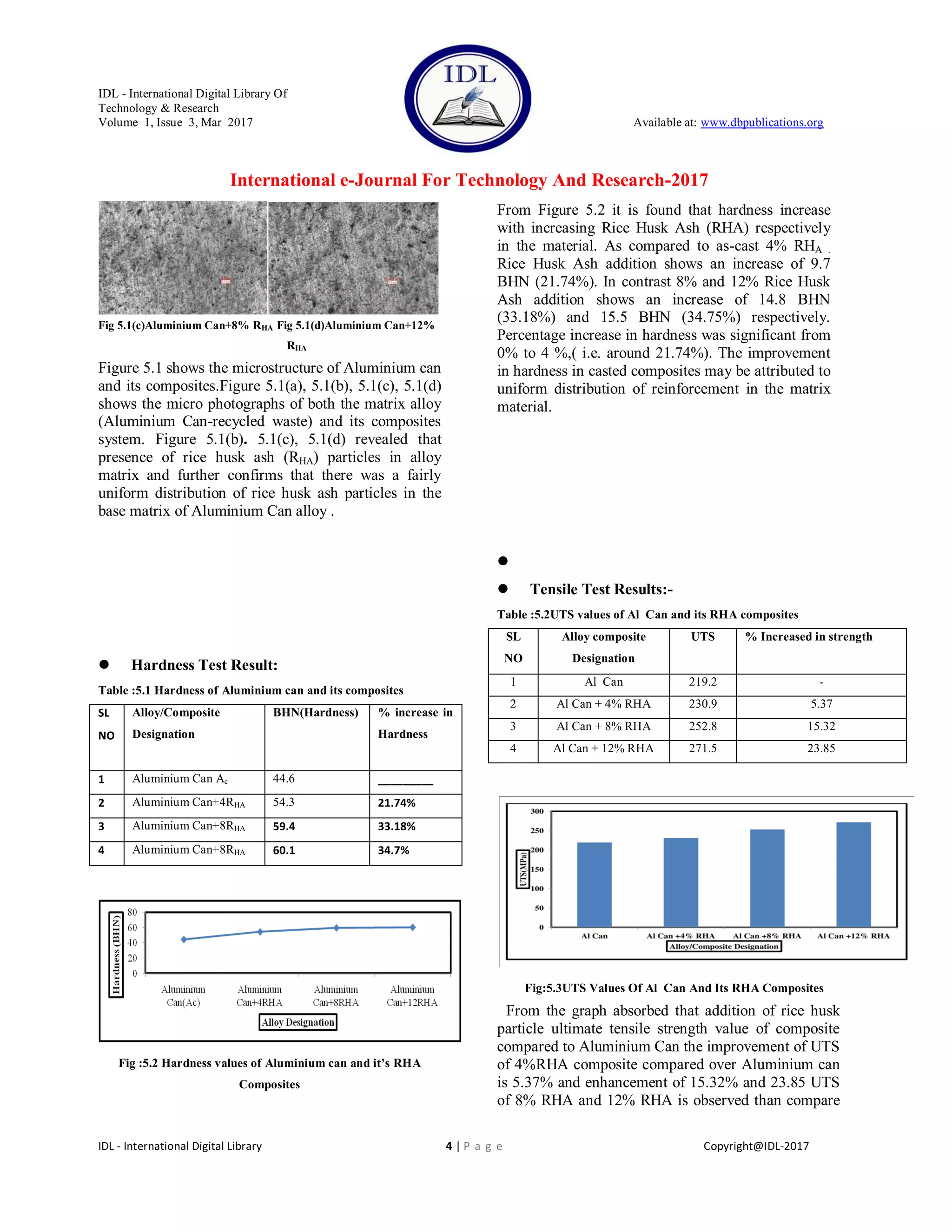
Fig :5.2 Hardness values of Aluminium can and it’s RHA
Composites
From Figure 5.2 it is found that hardness increase
with increasing Rice Husk Ash (RHA) respectively
in the material. As compared to as-cast 4% RHA .
Rice Husk Ash addition shows an increase of 9.7
BHN (21.74%). In contrast 8% and 12% Rice Husk
Ash addition shows an increase of 14.8 BHN
(33.18%) and 15.5 BHN (34.75%) respectively.
Percentage increase in hardness was significant from
0% to 4 %,( i.e. around 21.74%). The improvement
in hardness in casted composites may be attributed to
uniform distribution of reinforcement in the matrix
material.

 Tensile Test Results:-
Table :5.2UTS values of Al Can and its RHA composites
SL
NO
Alloy composite
Designation
UTS % Increased in strength
1 Al Can 219.2 -
2 Al Can + 4% RHA 230.9 5.37
3 Al Can + 8% RHA 252.8 15.32
4 Al Can + 12% RHA 271.5 23.85
Fig:5.3UTS Values Of Al Can And Its RHA Composites
From the graph absorbed that addition of rice husk
particle ultimate tensile strength value of composite
compared to Aluminium Can the improvement of UTS
of 4%RHA composite compared over Aluminium can
is 5.37% and enhancement of 15.32% and 23.85 UTS
of 8% RHA and 12% RHA is observed than compare
IDL - International Digital Library Of
Technology & Research
Volume 1, Issue 3, Mar 2017 Available at: www.dbpublications.org
International e-Journal For Technology And Research-2017
IDL - International Digital Library 5 | P a g e Copyright@IDL-2017
to Aluminium Can desperation of RHA particles in
soft ductile matrix result in improvement of UTS so
UTS value obtained during experiment a taken for the
average of 5 sample which curve closed to each other
they have been used in this table and graph
Table :5.3 Percentage elongation values of Al Can and its RHA
composites
Fig :5.4Percentage elongation values of Al Can and its RHA
composites
From Fig 5.4 Aluminium can has the highest %
Elongation and has the value of % and RHA increased
the ductility decreased from the table
 Fractographic Studies of Aluminium can and
Its RHA Composites
Fig 5.5(a) Fractographic image Fig 5.5(b) Fractographic image
of Aluminium Can of Aluminium Can+4% RHA
Fig 5.5(c) Fractographic image Fig 5.5(d) Fractographic image of
of Aluminium Can+8% RHA sAluminium Can+12% RHA
Figure 5.5 shows the Fractographic images of
Aluminium can and its composites. Figure 5.5(a), 5.5
(b), 5.5 (c), 5.5 (d) shows the Fractographic images of
both the matrix alloy (Aluminium Can-recycled waste)
and its composites system.From the figures 5(a)we can
observe dimples resulting due to overload failure
under tension. We can observe dendritic structure in
the fractured surface .Whereas ductile and brittle mode
of fracture is observed in Fractographic observation of
composite.

Wear Test Results:-
Table :-5.4Wear Test Results
SL
NO
Alloy
Designation
Load
(N)
Wear Rate
(WR) in
(microns)
Wear Rate (WR) in
(mm3
/m)* 10-4
1 Al can 5 83 6.95
10 86 7.20
15 173 14.4
2 Al + 4% 5 61 5.10
10 77 6.45
15 83 6.95
3 Al + 8% 5 47 3.93
10 48 4.02
15 52 4.35
4 Al + 12% 5 27 2.26
10 36 3.01
15 37 3.09
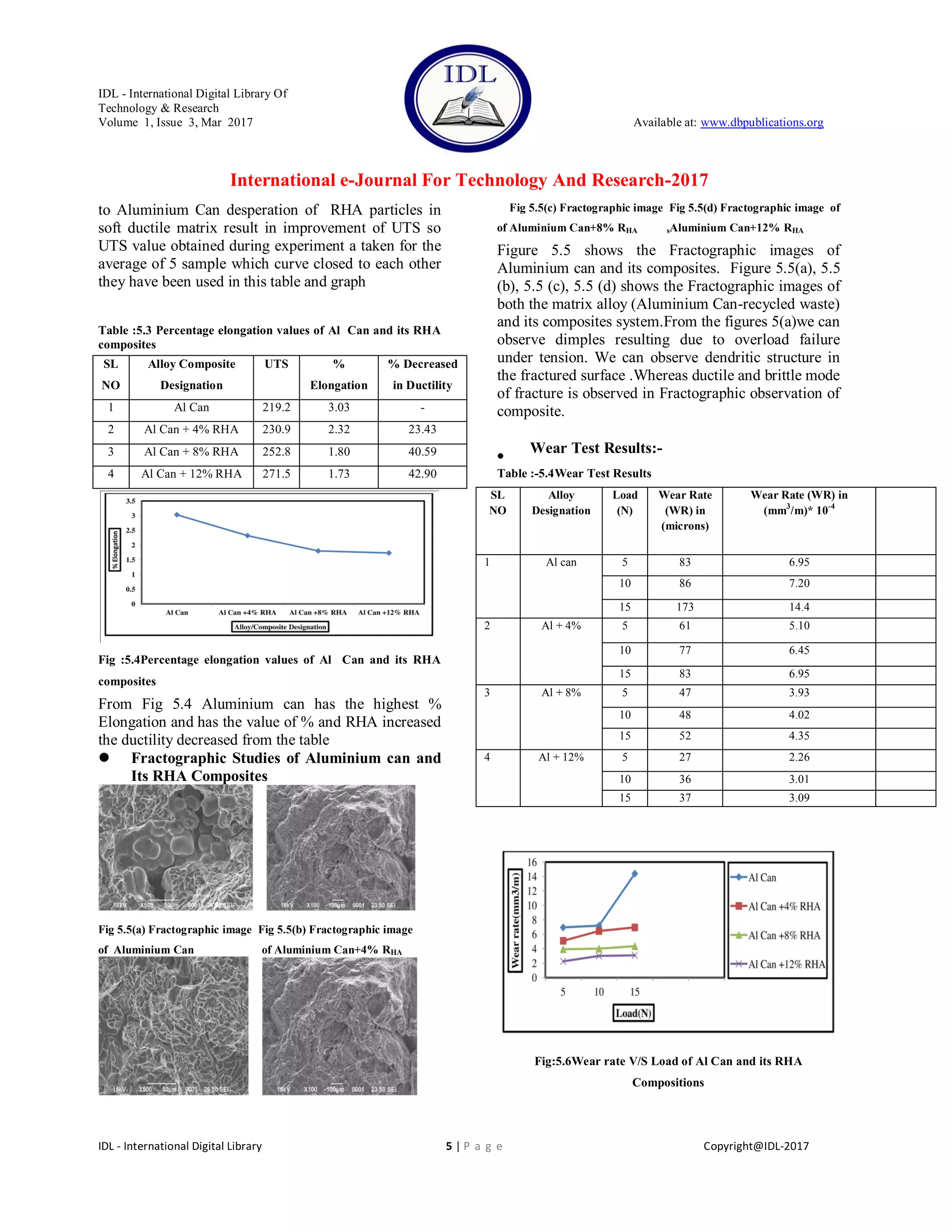
Fig:5.6Wear rate V/S Load of Al Can and its RHA
Compositions
SL
NO
Alloy Composite
Designation
UTS %
Elongation
% Decreased
in Ductility
1 Al Can 219.2 3.03 -
2 Al Can + 4% RHA 230.9 2.32 23.43
3 Al Can + 8% RHA 252.8 1.80 40.59
4 Al Can + 12% RHA 271.5 1.73 42.90
IDL - International Digital Library Of
Technology & Research
Volume 1, Issue 3, Mar 2017 Available at: www.dbpublications.org
International e-Journal For Technology And Research-2017
IDL - International Digital Library 6 | P a g e Copyright@IDL-2017
Fig shows the effect of applied load on the wear
resistance of Aluminum can and Rice husk ash (RHA)
composites respectively from the fig we can see the
wear resistance of Rice husk ash composites is higher
than Aluminum can at all load the important of wear
result could loss due to ability of Rice husk ash
particles to carry the greater portion of applied load
 Wear Track Analysis for the Aluminium can
and Its R composites:
Fig 5.7(a) Wear morphology Fig 5.7(b) Wear morphology of
Of Aluminium can Aluminium cam+RHA 4%
Fig 5.7(c) Wear morphology Fig 5.7(d) Wear morphology of
Of Aluminium can+RHA 8% Aluminium cam+RHA 12%
Fig shows the wear surface morphology of applied
load on the wear resistance of Aluminum can and
Rice husk ash (RHA) composites respectively.From
the above figure 1 denotes the sliding direction and
2 denotes the delamination or particle pull out from
the wear surface respectively. Fig 5.7(a) shows more
wear out of the surface compared to Fig 5.7(b),Fig
5.7(c),and Fig 5.7(d).The surfaces are less wear out
compared to aluminium can
CONCLUSION
Rice husk ash particles were successfully incorporated
in a Aluminium can by using stir casting techniques
Microstructure analysis shows the distribution of rice
husk ash in Aluminium can the microstructure reveled
Good inter facial bond between Aluminium alloy and
rice husk particles the ultimate strength is increased
With rice husk ash content. The strength of
Aluminium can composite maximum in 12% RHA
where as minimum in Aluminium can.
In corporation of rice husk ash particle in Aluminium
matrix can leads to the production of low cost
Aluminium composite with improved hardness
strength this composites can finds where the light
weight materials are required with stiffness and
strength.
REFERENCES
[1] M.G. Labberton, Aluminium Packaging Recycling,
‗The Contribution from Romania towards a More
Resource Efficient Europe‘, Proceeding of European
Recycling Society Annual Conference (2nd
edition)
Bucharest, 2014
[2] www.vanguardngr.com/2012/06/lagos-drains-of-
pure-water-sachets-plastic-bottles
[3] H. Tangya, 10 Years of Recycling: The Good, the
Bad and the Ugly, a Planet Ark Recycling Report,
2005.
[4] S. Das, T. K. Dan, S. V. Prasad, P. K. Rohatgi,
―Aluminium alloy-rice husk ash particle composites‖,
journal of Materials Science Letters (1986) 562 564.
[5] Basavaraj Mathpathi and Bharat S kodli.,
―mechanical behavior of pure aluminum reinforced
with the alloy of Silicon Carbide and coconut shell ash
which was fabricated by liquid metallurgical (stir
casting) method‖ International Journal of Engineering
Research & Technology (IJERT) vol. 1, Issue
3,November 3,2012, pp 1-14.
[6] Ankit Mittal and Ram Narayan Muni., the
mechanical behaviour of aluminum alloy used as the
matrix, RHA and copper as the reinforcements‖
Archives and Foundry Engin, vol. 8, no. 3, June 7,
2008, pp.59.
[7] D. Siva Prasad and Dr. A. Rama Krishna,‖
Production and Mechanical Properties of A356.2
/RHA Composites‖ International Journal of Advanced
Science and Technology Vol. 33, August, 2011
[8] J.O. Agunsoye, S.A. Bello, I.S. Talabi, A.A.
Yekinni, I.A. Raheem, A.D. Oderinde,
T.E.Idegbekwu,‖ Recycled Aluminium Cans/Eggshell
Composites: Evaluation of Mechanical and Wear
Resistance Properties‖ Vol. 37, No. 1 (2015) 107-116
[9] Kenneth Kanayo Alaneme, Peter Apata Olubambi,
―Corrosion and wear behaviour of rice husk ash—
Alumina reinforced Al–Mg–Si alloy matrix hybrid
composites‖ j mater res technol. 2013; 2(2):188–194
1
2
1 2
IDL - International Digital Library Of
Technology & Research
Volume 1, Issue 3, Mar 2017 Available at: www.dbpublications.org
International e-Journal For Technology And Research-2017
IDL - International Digital Library 7 | P a g e Copyright@IDL-2017
[10] S.I. Talabi, J.O. Agunsoye, S.A. Bello, I.O. Awe
―The Effects of Cocos Nucifera (Coconut Shell) on the
Mechanical and Tribological Properties of Recycled
Waste Aluminium Can Composites‖ Vol. 36, No. 2
(2014) 155-162
[11] Basavaraj Mathpathi, Bharat S Kodli‖A Study on
Mechanical Properties of Aluminum, Rice Husk and
Silicon Carbide Matrix Composites ―IJSRD -
International Journal for Scientific Research &
Development| Vol. 2, Issue 08, 2014 | ISSN (online):
2321-0613

Studies of Microstructure, Mechanical and Tribological behaviour of Aluminium can composites

  • 1.
    IDL - InternationalDigital Library Of Technology & Research Volume 1, Issue 3, Mar 2017 Available at: www.dbpublications.org International e-Journal For Technology And Research-2017 IDL - International Digital Library 1 | P a g e Copyright@IDL-2017 Studies of Microstructure, Mechanical and Tribological behaviour of Aluminium can composites Siddareddy 1 , Rohith R2 , Shiva Kumar 3 , Suneel M.V4 , Mahadev Prasad5 , Avinash L6 UG Student, Department of Mechanical Engineering, NMIT Bangalore,Karnataka,India1,2,3,4 Assistant Professor,Department of Mechanical Engineering, NMIT Bangalore, Karnataka,India5,6 Abstract: Aluminum can composite widely used for application in mechanical and tribological component of automobile parts like screws,nuts ,rivets,etc.metal matrix composites(MMCs)constitute an important category of design and weight-efficient materials this article highlights on the work where an attempt is taken to fabricate aluminum can composites reinforced with rice husk ash(RHA) particles and agricultural byproducts with high amount of silica.RHA particles upon analysis are incorporated into aluminum cans melt by stir casting.4, 8 and 12% of wt,of RHA are added in to the aluminum can.The micro-structure analysis reveals the homogeneous particles distribution in the matrix.the result found in the test shows a increasing in RHA increases strength and hardness and wear behavior of composites . Keywords:Aluminum can,rise husk ash,metal matrix composite,Stir Casting,micro structure,Agro waste. 1.INTRODUCTION Aluminum alloy cans is widely used in the canning industries for food storage in place of traditional glass jars, bottle and steel cans. This trend is informed by the peculiar mechanical properties of aluminum such as light weight, form-ability, corrosion resistant, excellent barrier, reduced thickness, damage tolerance, ease of transportation, attractiveness and ease of printing a high-quality image on the cans [1]. The first aluminum alloy can was invented in 1972 when their weight was ten times less than that of glass jars. Modern cans in use today are even 40 % lighter than those cans used as far back as in 1972. In India, the traditional bottle based packaging companies such as Coca-Cola, Seven –up have completely modernized their production line or in some cases shifted completely to the use of Aluminum can for packaging. The transition from the traditional bottle packaging to aluminum can packaging has come with their environmental issues. Large volumes of aluminum cans drinks are being consumed daily across India and the empty cans are not properly disposed. Environmental pollution is increasing greatly, becoming uncontrollable; streets and drainage s are being littered by empty drink cans, plastics, polythene bags used in our day to day lives. Those wastes were dropped in drainage, preventing water from flowing leading to water logging which aids breeding of mosquitoes and disease outbreaks. At extreme cases, canals, drainage and gutters are blocked. In rainy season, this leads to over flooding of cities which at times claiming many lives [2]. In order to reduce if not completely eliminated menaces associated with poor waste management, there is a need for recycling of waste materials. As the name implies, recycling is the new emerging technology which involves waste conversion into raw materials for production of new materials for various engineering applications and also for wealth creation. In 1992, the Commonwealth Government released the National Waste Minimization and Recycling Strategy with a target of reducing the amount of solid waste going to landfill per capital by 50 % from 1990 to 2000 [3]. The recycling of wastes reduces waste, saves energy, conserves natural resources, lessens use of municipal landfills and provides recycle's and municipalities with considerable revenue [3].
  • 2.
    IDL - InternationalDigital Library Of Technology & Research Volume 1, Issue 3, Mar 2017 Available at: www.dbpublications.org International e-Journal For Technology And Research-2017 IDL - International Digital Library 2 | P a g e Copyright@IDL-2017 Aluminum is 100 % recyclable Recycling of Aluminium uses only 5 % of the energy required for its initial extraction and processing, 10 % of the initial capital equipment costs and saves 97 % of the greenhouse gas (GHG) emissions. Aluminium is an ideal materials used for architectural, automobile and aerospace applications because of its light weight, corrosion resistance and ease of formability but its low strength and hardness has greatly limited its use in high strength, hardness and surface wear resistance applications. Currently, the design of high performance Aluminium based composites at significantly reduced cost is receiving much attention from materials researchers. This is discernible from the dominant use of stir casting by most researchers from developing countries; and the sustained interest in the consideration of industrial and agro wastes as reinforcements in AMCs. Agro waste ashes obtained by the controlled burning of agro waste products such as bagasse, bamboo leaf, coconut shell, groundnut shell, and rice husk among others; have the advantages of low densities and processing cost compared with common synthetic reinforcing ceramics such as silicon carbide and alumina. The agro waste ashes have been successfully utilized to produce Al matrix composites with property levels which can be improved with the complement of synthetic reinforcements such as silicon carbide and alumina. The design concept is built on harnessing the high strength and wear capabilities of notable synthetic reinforcements such as silicon carbide and alumina with the light weight and low cost of processing of Agro waste ashes. There are very few literatures which have considered the design of AMCs with the use of reinforcements of Agro waste ashes. The mechanical properties of some of these low cost Al matrix composites have been reported to be encouraging depending on the weight ratio between the synthetic reinforcement and the agro waste ashes selected. The corrosion and wear properties of these Al matrix hybrid composites are yet to receive any notable attention considering available literature s. Corrosion and wear are very important scientific phenomena requiring consideration in composite materials design to ensure material reliability in applications where they come in contact with the environment and other surfaces. The corrosion behavior of AMCs is widely acclaimed for its in conclusiveness judging from the often contradicting findings reported by authors for the same MMC system. Thus it is very unlikely for the corrosion behavior of newly developed AMCs to be predicted without subjecting them to experimental studies. The wear properties of AMCs have been reported to be dependent on factors such as the nature, size, and volume percent of the reinforcing particles. Investigations on the wear behavior of Al MMCs produced with the use of agro waste ashes as complementing reinforcement are quite limited in literature. In this present work, metal matrix composites have been produced from discarded Aluminium cans and rice husk ash (RHA). The aim of this work is to study mechanical, corrosion and wear resistance properties of the produced Aluminum can/RHA metal matrix composites. This work is also aimed at providing solution to menaces associated with poor management of Aluminium cans and RHA through recycling of these waste materials. It embraces conversion of waste into wealth which on a large scale production will enhance technological development and economic growth.  Material Selection and sample preparation The materials used in this work include Rice Husk Ash (RHA), Aluminium cans, 220-400 grade emery papers and polishing cloth. The elemental analysis of the Aluminium can used is shown on Table 1. Table 1: Chemical composition of aluminium can (weight percentage) Element Si Fe Cu Mn Mg Ti Al % Composition 0.53 0.51 0.03 0.77 0.02 0.04 98.10 Preparation of RHA The ash, obtained by burning rice husk was thoroughly washed with water to remove the dust and dried at room temperature for 1 day. Washed rice husk was then heated to 200 ° C for 1 h in order to remove the moisture and organic matter. It was then heated to 600 ° C for 12 h to remove the carbonaceous material [4]. The chemical composition of the RHA determined using X-ray fluorescence spectroscopy is presented in Table 2. Table 2: Chemical composition of Rice Husk Ash (RHA)
  • 3.
    IDL - InternationalDigital Library Of Technology & Research Volume 1, Issue 3, Mar 2017 Available at: www.dbpublications.org International e-Journal For Technology And Research-2017 IDL - International Digital Library 3 | P a g e Copyright@IDL-2017 2.OBJECTIVES. Conclusions from the literature review prompted for the need of a systematic study of various mechanical properties of Rice Husk Ash (RHA) reinforced aluminium can (recycled waste) composites. This study can lead one to explore the possibility of identifying the use of these composites for engineering applications. Therefore the work taken up had the following objectives: 1. Fabrication of aluminium can / RHA composites by Stir Casting route. 2. Microstructure characterization of the composites using optical microscopes 3. Evaluation of mechanical and Wear properties of composites 4. Comparing the results of mechanical, Corrosion and Wear properties of as-cast alloy with composites. 5. Drawing Conclusion based on the obtained result. The present study is thus aimed at producing MMCs with aluminium can (recycled waste) as the matrix material with Rice Husk Ash (RHA) as reinforcement processed by stir casting route of these composites in order to obtain mechanical properties suitable for a wide range of engineering applications 3.Methodology Starting Aluminium can with rice husk ash reinforcement Aluminium can Micro-structural characterization  Optical Microscopy Evaluation of Mechanical Properties  Tensile Test(UTS,YTS)  Hardness Test Wear Test a.Load Drawing conclusion based result Figure3.1: Flow Chart of Experimental Work 4.IMPLEMENTATION  Automotive components such as screws,nuts and rivets.  Aluminium utensil.  Foils and conductor cables.  Aeronautical application 5.OUTCOMES  We can expect uniform distribution of reinforcement (RHA) with matrix material (Aluminium can) by stir casting process  Uniform distribution may lead to good Micro- structure of composites  Further there will be a good improvement in mechanical properties of Composites  Optical Microscopic Studies Fig 5.1(a)Aluminium Can Ac Fig 5.1(b)Aluminium Can+4% RHA Composition SiO2 Graphite CaO MgO K2O Fe2O3 %weight 90.23 4.77 1.58 0.53 0.39 0.21 Specimen Preparation by stir casting process Aluminium can composites
  • 4.
    IDL - InternationalDigital Library Of Technology & Research Volume 1, Issue 3, Mar 2017 Available at: www.dbpublications.org International e-Journal For Technology And Research-2017 IDL - International Digital Library 4 | P a g e Copyright@IDL-2017 Fig 5.1(c)Aluminium Can+8% RHA Fig 5.1(d)Aluminium Can+12% RHA Figure 5.1 shows the microstructure of Aluminium can and its composites.Figure 5.1(a), 5.1(b), 5.1(c), 5.1(d) shows the micro photographs of both the matrix alloy (Aluminium Can-recycled waste) and its composites system. Figure 5.1(b). 5.1(c), 5.1(d) revealed that presence of rice husk ash (RHA) particles in alloy matrix and further confirms that there was a fairly uniform distribution of rice husk ash particles in the base matrix of Aluminium Can alloy .  Hardness Test Result: Table :5.1 Hardness of Aluminium can and its composites SL NO Alloy/Composite Designation BHN(Hardness) % increase in Hardness 1 Aluminium Can Ac 44.6 _________ 2 Aluminium Can+4RHA 54.3 21.74% 3 Aluminium Can+8RHA 59.4 33.18% 4 Aluminium Can+8RHA 60.1 34.7% Fig :5.2 Hardness values of Aluminium can and it’s RHA Composites From Figure 5.2 it is found that hardness increase with increasing Rice Husk Ash (RHA) respectively in the material. As compared to as-cast 4% RHA . Rice Husk Ash addition shows an increase of 9.7 BHN (21.74%). In contrast 8% and 12% Rice Husk Ash addition shows an increase of 14.8 BHN (33.18%) and 15.5 BHN (34.75%) respectively. Percentage increase in hardness was significant from 0% to 4 %,( i.e. around 21.74%). The improvement in hardness in casted composites may be attributed to uniform distribution of reinforcement in the matrix material.   Tensile Test Results:- Table :5.2UTS values of Al Can and its RHA composites SL NO Alloy composite Designation UTS % Increased in strength 1 Al Can 219.2 - 2 Al Can + 4% RHA 230.9 5.37 3 Al Can + 8% RHA 252.8 15.32 4 Al Can + 12% RHA 271.5 23.85 Fig:5.3UTS Values Of Al Can And Its RHA Composites From the graph absorbed that addition of rice husk particle ultimate tensile strength value of composite compared to Aluminium Can the improvement of UTS of 4%RHA composite compared over Aluminium can is 5.37% and enhancement of 15.32% and 23.85 UTS of 8% RHA and 12% RHA is observed than compare
  • 5.
    IDL - InternationalDigital Library Of Technology & Research Volume 1, Issue 3, Mar 2017 Available at: www.dbpublications.org International e-Journal For Technology And Research-2017 IDL - International Digital Library 5 | P a g e Copyright@IDL-2017 to Aluminium Can desperation of RHA particles in soft ductile matrix result in improvement of UTS so UTS value obtained during experiment a taken for the average of 5 sample which curve closed to each other they have been used in this table and graph Table :5.3 Percentage elongation values of Al Can and its RHA composites Fig :5.4Percentage elongation values of Al Can and its RHA composites From Fig 5.4 Aluminium can has the highest % Elongation and has the value of % and RHA increased the ductility decreased from the table  Fractographic Studies of Aluminium can and Its RHA Composites Fig 5.5(a) Fractographic image Fig 5.5(b) Fractographic image of Aluminium Can of Aluminium Can+4% RHA Fig 5.5(c) Fractographic image Fig 5.5(d) Fractographic image of of Aluminium Can+8% RHA sAluminium Can+12% RHA Figure 5.5 shows the Fractographic images of Aluminium can and its composites. Figure 5.5(a), 5.5 (b), 5.5 (c), 5.5 (d) shows the Fractographic images of both the matrix alloy (Aluminium Can-recycled waste) and its composites system.From the figures 5(a)we can observe dimples resulting due to overload failure under tension. We can observe dendritic structure in the fractured surface .Whereas ductile and brittle mode of fracture is observed in Fractographic observation of composite.  Wear Test Results:- Table :-5.4Wear Test Results SL NO Alloy Designation Load (N) Wear Rate (WR) in (microns) Wear Rate (WR) in (mm3 /m)* 10-4 1 Al can 5 83 6.95 10 86 7.20 15 173 14.4 2 Al + 4% 5 61 5.10 10 77 6.45 15 83 6.95 3 Al + 8% 5 47 3.93 10 48 4.02 15 52 4.35 4 Al + 12% 5 27 2.26 10 36 3.01 15 37 3.09 Fig:5.6Wear rate V/S Load of Al Can and its RHA Compositions SL NO Alloy Composite Designation UTS % Elongation % Decreased in Ductility 1 Al Can 219.2 3.03 - 2 Al Can + 4% RHA 230.9 2.32 23.43 3 Al Can + 8% RHA 252.8 1.80 40.59 4 Al Can + 12% RHA 271.5 1.73 42.90
  • 6.
    IDL - InternationalDigital Library Of Technology & Research Volume 1, Issue 3, Mar 2017 Available at: www.dbpublications.org International e-Journal For Technology And Research-2017 IDL - International Digital Library 6 | P a g e Copyright@IDL-2017 Fig shows the effect of applied load on the wear resistance of Aluminum can and Rice husk ash (RHA) composites respectively from the fig we can see the wear resistance of Rice husk ash composites is higher than Aluminum can at all load the important of wear result could loss due to ability of Rice husk ash particles to carry the greater portion of applied load  Wear Track Analysis for the Aluminium can and Its R composites: Fig 5.7(a) Wear morphology Fig 5.7(b) Wear morphology of Of Aluminium can Aluminium cam+RHA 4% Fig 5.7(c) Wear morphology Fig 5.7(d) Wear morphology of Of Aluminium can+RHA 8% Aluminium cam+RHA 12% Fig shows the wear surface morphology of applied load on the wear resistance of Aluminum can and Rice husk ash (RHA) composites respectively.From the above figure 1 denotes the sliding direction and 2 denotes the delamination or particle pull out from the wear surface respectively. Fig 5.7(a) shows more wear out of the surface compared to Fig 5.7(b),Fig 5.7(c),and Fig 5.7(d).The surfaces are less wear out compared to aluminium can CONCLUSION Rice husk ash particles were successfully incorporated in a Aluminium can by using stir casting techniques Microstructure analysis shows the distribution of rice husk ash in Aluminium can the microstructure reveled Good inter facial bond between Aluminium alloy and rice husk particles the ultimate strength is increased With rice husk ash content. The strength of Aluminium can composite maximum in 12% RHA where as minimum in Aluminium can. In corporation of rice husk ash particle in Aluminium matrix can leads to the production of low cost Aluminium composite with improved hardness strength this composites can finds where the light weight materials are required with stiffness and strength. REFERENCES [1] M.G. Labberton, Aluminium Packaging Recycling, ‗The Contribution from Romania towards a More Resource Efficient Europe‘, Proceeding of European Recycling Society Annual Conference (2nd edition) Bucharest, 2014 [2] www.vanguardngr.com/2012/06/lagos-drains-of- pure-water-sachets-plastic-bottles [3] H. Tangya, 10 Years of Recycling: The Good, the Bad and the Ugly, a Planet Ark Recycling Report, 2005. [4] S. Das, T. K. Dan, S. V. Prasad, P. K. Rohatgi, ―Aluminium alloy-rice husk ash particle composites‖, journal of Materials Science Letters (1986) 562 564. [5] Basavaraj Mathpathi and Bharat S kodli., ―mechanical behavior of pure aluminum reinforced with the alloy of Silicon Carbide and coconut shell ash which was fabricated by liquid metallurgical (stir casting) method‖ International Journal of Engineering Research & Technology (IJERT) vol. 1, Issue 3,November 3,2012, pp 1-14. [6] Ankit Mittal and Ram Narayan Muni., the mechanical behaviour of aluminum alloy used as the matrix, RHA and copper as the reinforcements‖ Archives and Foundry Engin, vol. 8, no. 3, June 7, 2008, pp.59. [7] D. Siva Prasad and Dr. A. Rama Krishna,‖ Production and Mechanical Properties of A356.2 /RHA Composites‖ International Journal of Advanced Science and Technology Vol. 33, August, 2011 [8] J.O. Agunsoye, S.A. Bello, I.S. Talabi, A.A. Yekinni, I.A. Raheem, A.D. Oderinde, T.E.Idegbekwu,‖ Recycled Aluminium Cans/Eggshell Composites: Evaluation of Mechanical and Wear Resistance Properties‖ Vol. 37, No. 1 (2015) 107-116 [9] Kenneth Kanayo Alaneme, Peter Apata Olubambi, ―Corrosion and wear behaviour of rice husk ash— Alumina reinforced Al–Mg–Si alloy matrix hybrid composites‖ j mater res technol. 2013; 2(2):188–194 1 2 1 2
  • 7.
    IDL - InternationalDigital Library Of Technology & Research Volume 1, Issue 3, Mar 2017 Available at: www.dbpublications.org International e-Journal For Technology And Research-2017 IDL - International Digital Library 7 | P a g e Copyright@IDL-2017 [10] S.I. Talabi, J.O. Agunsoye, S.A. Bello, I.O. Awe ―The Effects of Cocos Nucifera (Coconut Shell) on the Mechanical and Tribological Properties of Recycled Waste Aluminium Can Composites‖ Vol. 36, No. 2 (2014) 155-162 [11] Basavaraj Mathpathi, Bharat S Kodli‖A Study on Mechanical Properties of Aluminum, Rice Husk and Silicon Carbide Matrix Composites ―IJSRD - International Journal for Scientific Research & Development| Vol. 2, Issue 08, 2014 | ISSN (online): 2321-0613