Structure in Schools
                  Hoy and Miskel, 2008


10/24/2012
Model of Bureaucracy (Formal organization)
Max Weber (1947)
 Division of Labor

  Division of labor produces specialization which increases efficiency.
  Impersonal Orientation
   Decisions are based on fact and not feelings.
  Hierarchy of Authority
  A system of superordination (superiors) and subordination (subordinates) to
  guarantee compliance and discipline
 Rules and Regulations

  Ensures uniformity of behavior of the employees.
  Career Orientation
  Promotion of loyal employees based on seniority and achievement.
  (dispassionate decisions)
  Efficiency
  Bureaucracy maximizes expertise, rational decisions, and administrative
  efficiency.
  10/24/2012
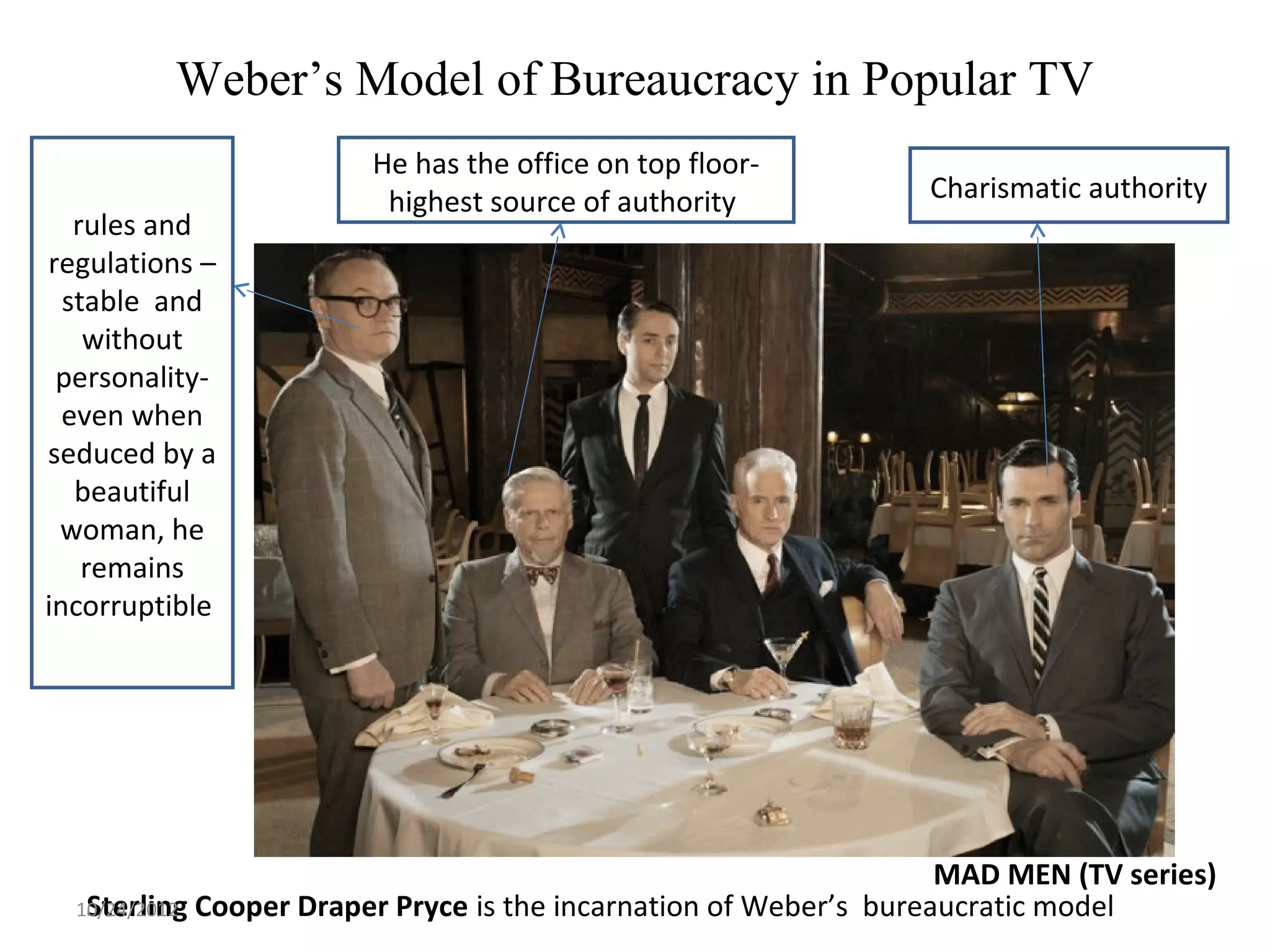
Weber’s Model of Bureaucracy in Popular TV
                        He has the office on top floor-
                         highest source of authority             Charismatic authority
   rules and
regulations –
  stable and
    without
 personality-
  even when
seduced by a
   beautiful
 woman, he
    remains
incorruptible


                                                                    MAD MEN (TV series)
  10/24/2012 Cooper Draper Pryce is the incarnation of Weber’s bureaucratic model
   Sterling
Critique of Weber’s Model
1. Dysfunctional aspects are not considered

2. Informal organization is neglected

3. Dual structure of bureaucratic model

4. Feminist critique


10/24/2012
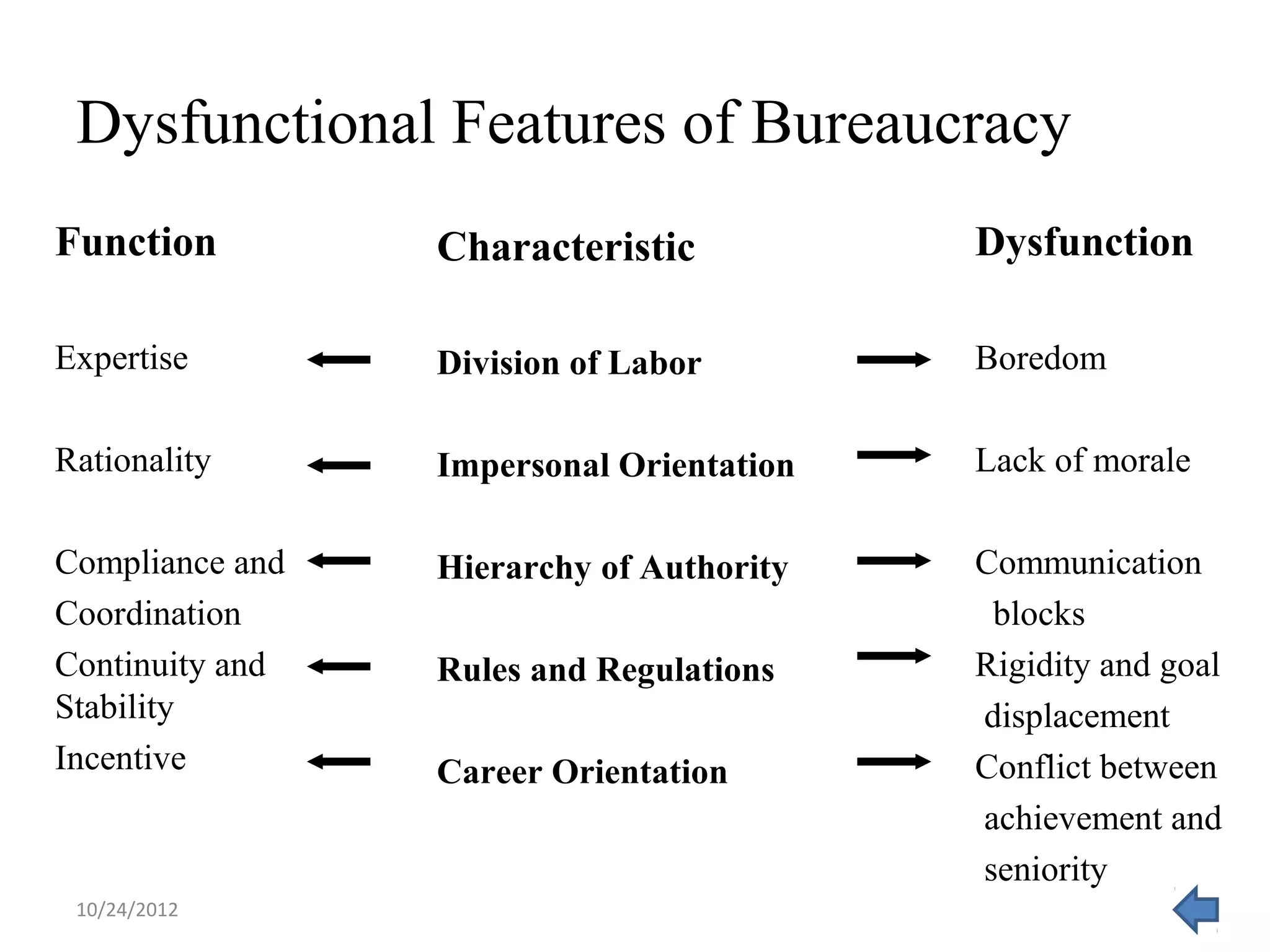
Dysfunctional Features of Bureaucracy
Function         Characteristic           Dysfunction

Expertise        Division of Labor        Boredom

Rationality      Impersonal Orientation   Lack of morale

Compliance and   Hierarchy of Authority   Communication
Coordination                               blocks
Continuity and   Rules and Regulations    Rigidity and goal
Stability                                 displacement
Incentive        Career Orientation       Conflict between
                                          achievement and
                                          seniority
 10/24/2012
Functions and Dysfunctions of Rules

Functions                           Dysfunctions

Explication                  Reinforce Apathy(minimum
acceptable )
Screening (buffering)                        Goal displacement
Legitimate Punishment                Create legalism
Leeway                              Indulgency (leniency)


  10/24/2012
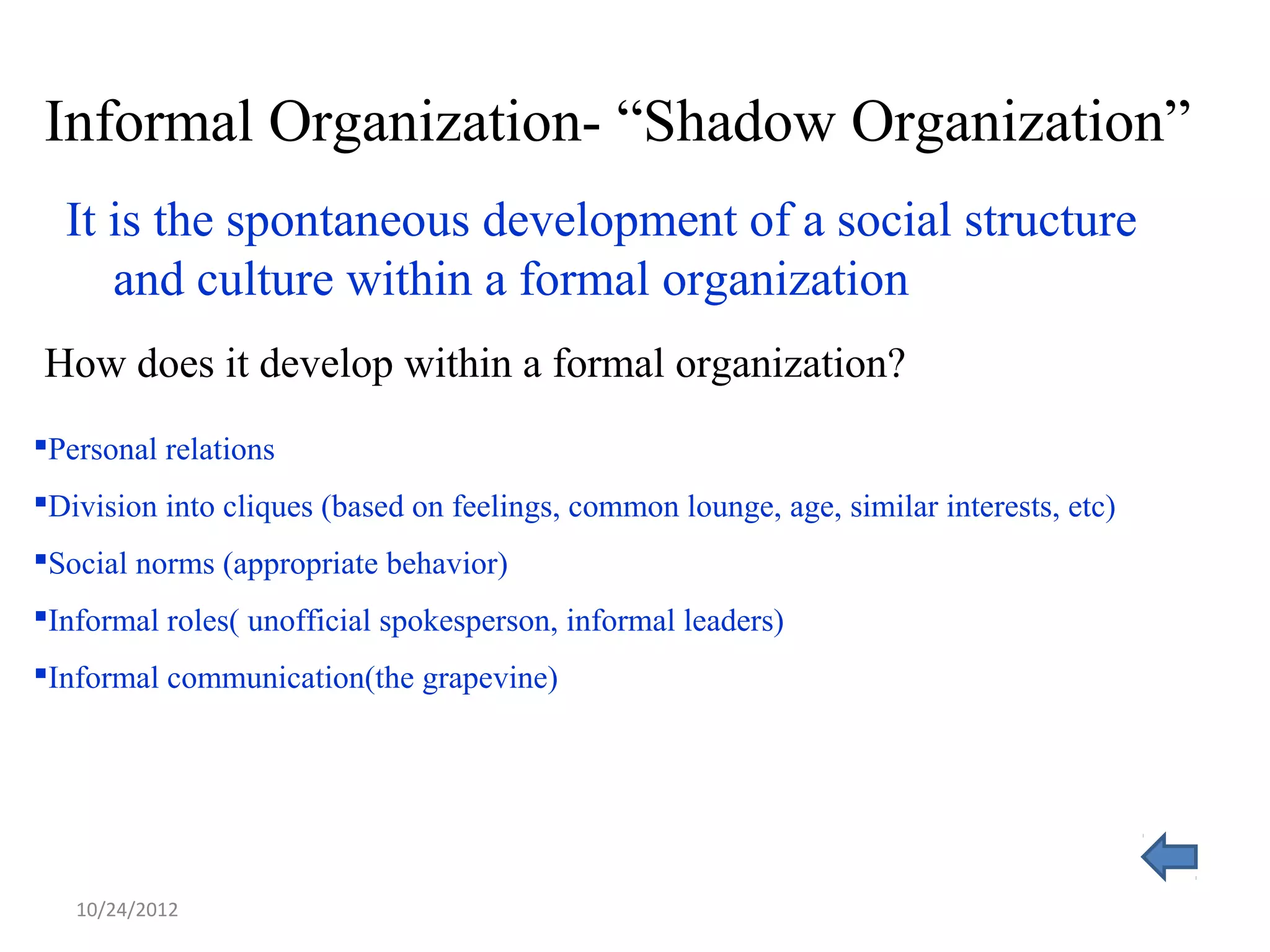
Informal Organization- “Shadow Organization”
  It is the spontaneous development of a social structure
     and culture within a formal organization
How does it develop within a formal organization?
Personal relations
Division into cliques (based on feelings, common lounge, age, similar interests, etc)
Social norms (appropriate behavior)
Informal roles( unofficial spokesperson, informal leaders)
Informal communication(the grapevine)


   10/24/2012
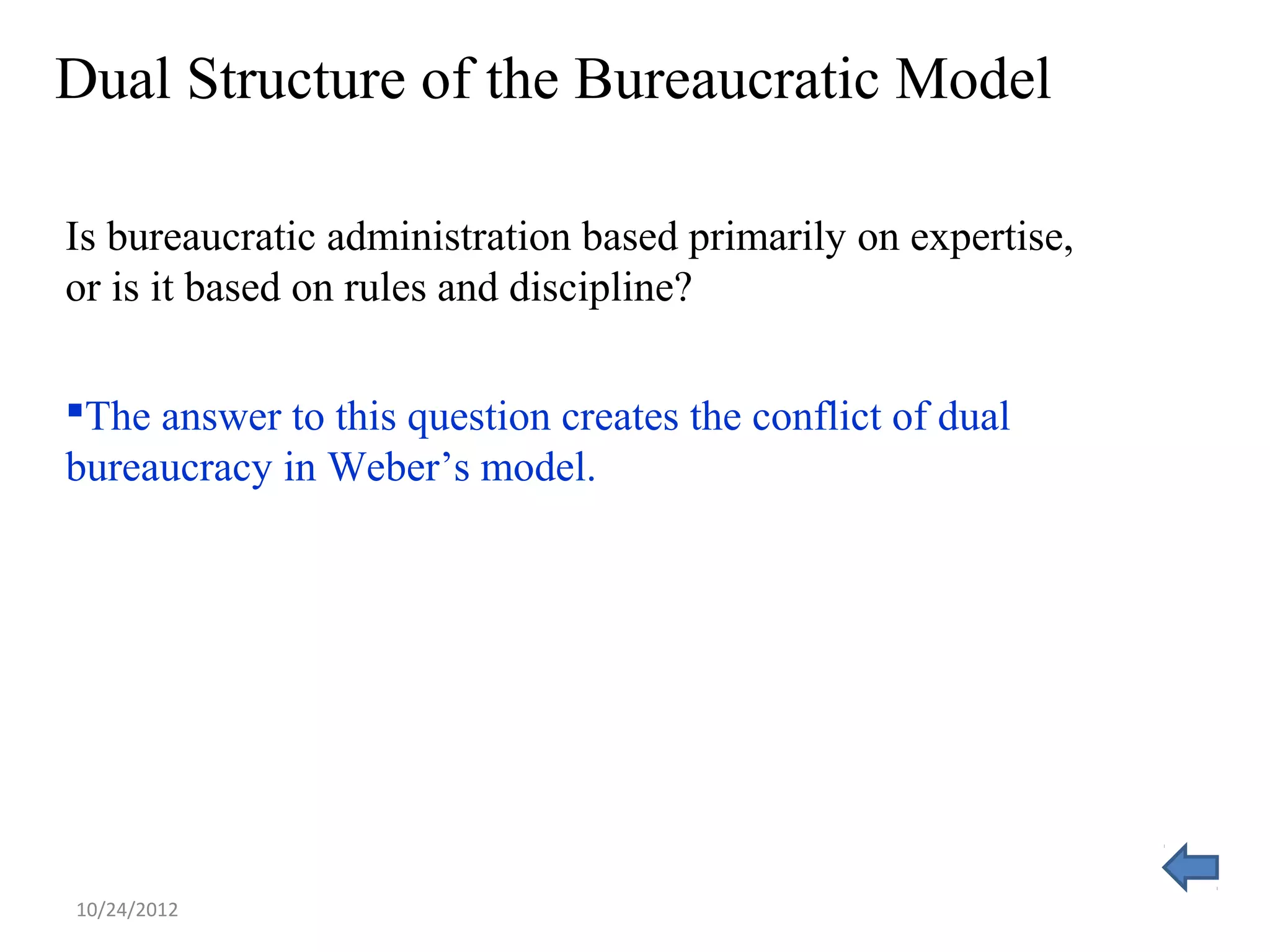
Dual Structure of the Bureaucratic Model

Is bureaucratic administration based primarily on expertise,
or is it based on rules and discipline?

The answer to this question creates the conflict of dual
bureaucracy in Weber’s model.


10/24/2012
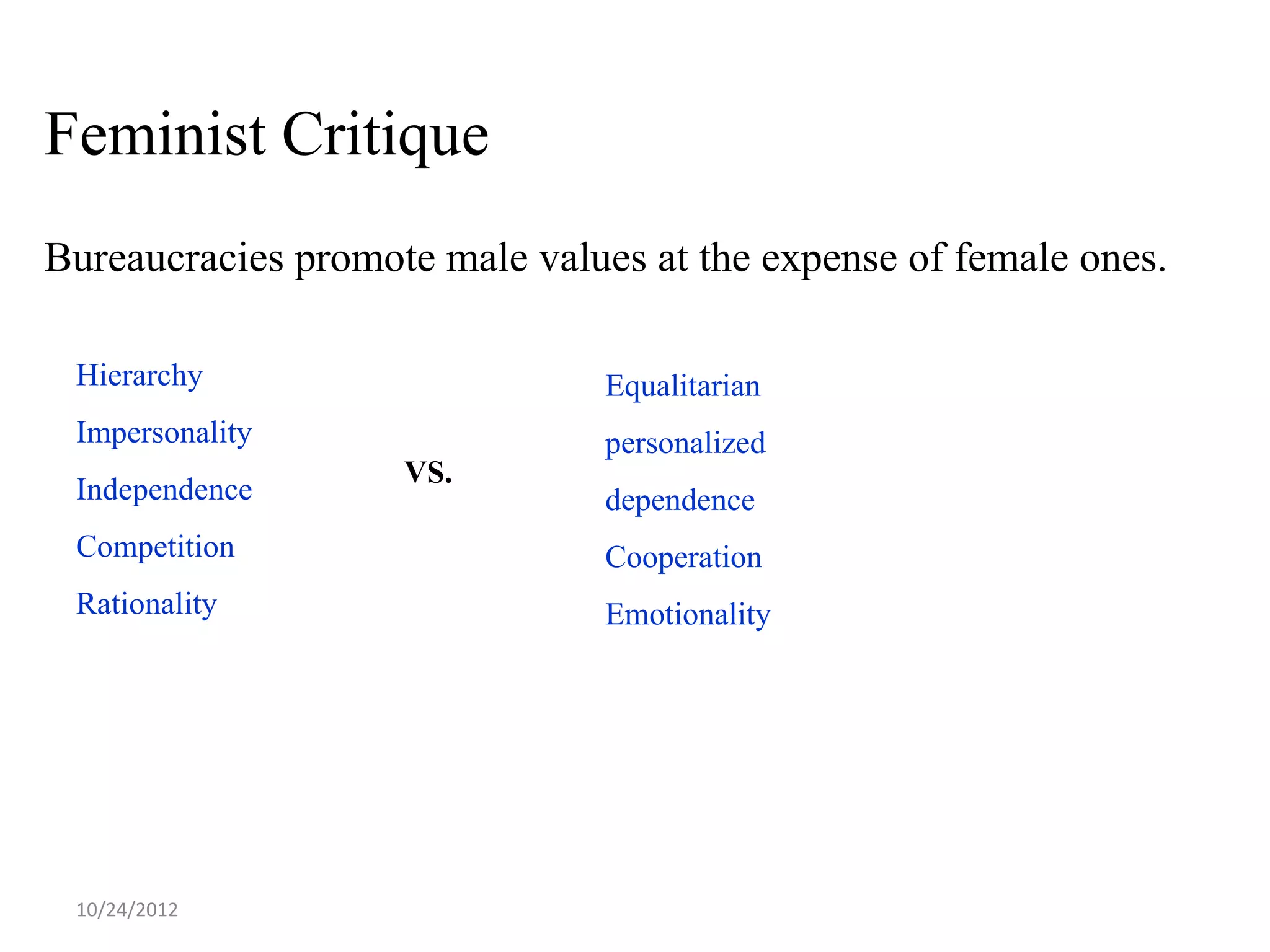
Feminist Critique
Bureaucracies promote male values at the expense of female ones.

 Hierarchy                     Equalitarian
 Impersonality                 personalized
                    VS.
 Independence                  dependence
 Competition                   Cooperation
 Rationality                   Emotionality


 10/24/2012
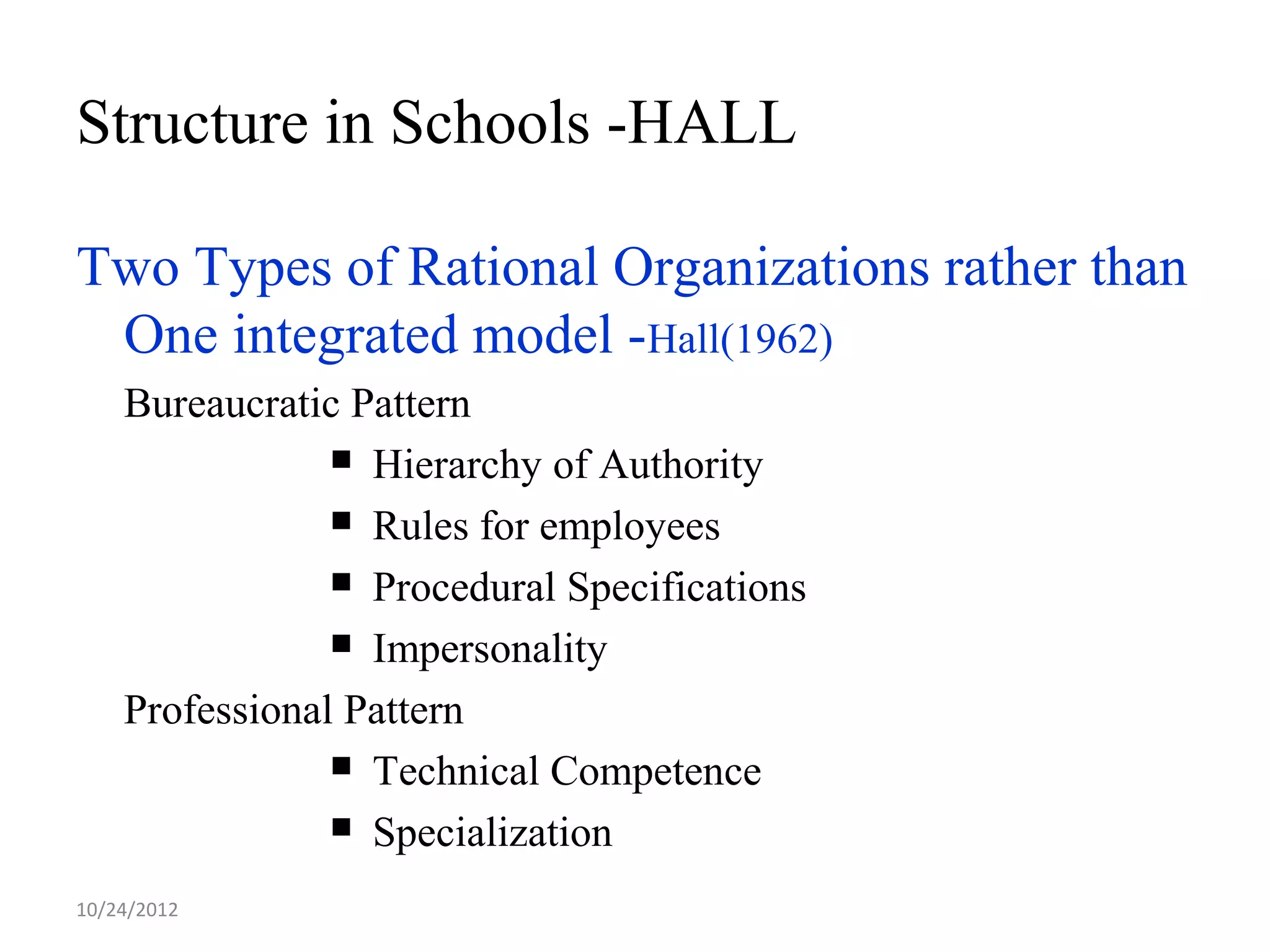
Structure in Schools -HALL

Two Types of Rational Organizations rather than
 One integrated model -Hall(1962)
    Bureaucratic Pattern
                 Hierarchy of Authority

                 Rules for employees

                 Procedural Specifications

                 Impersonality

    Professional Pattern
                 Technical Competence

                 Specialization

10/24/2012
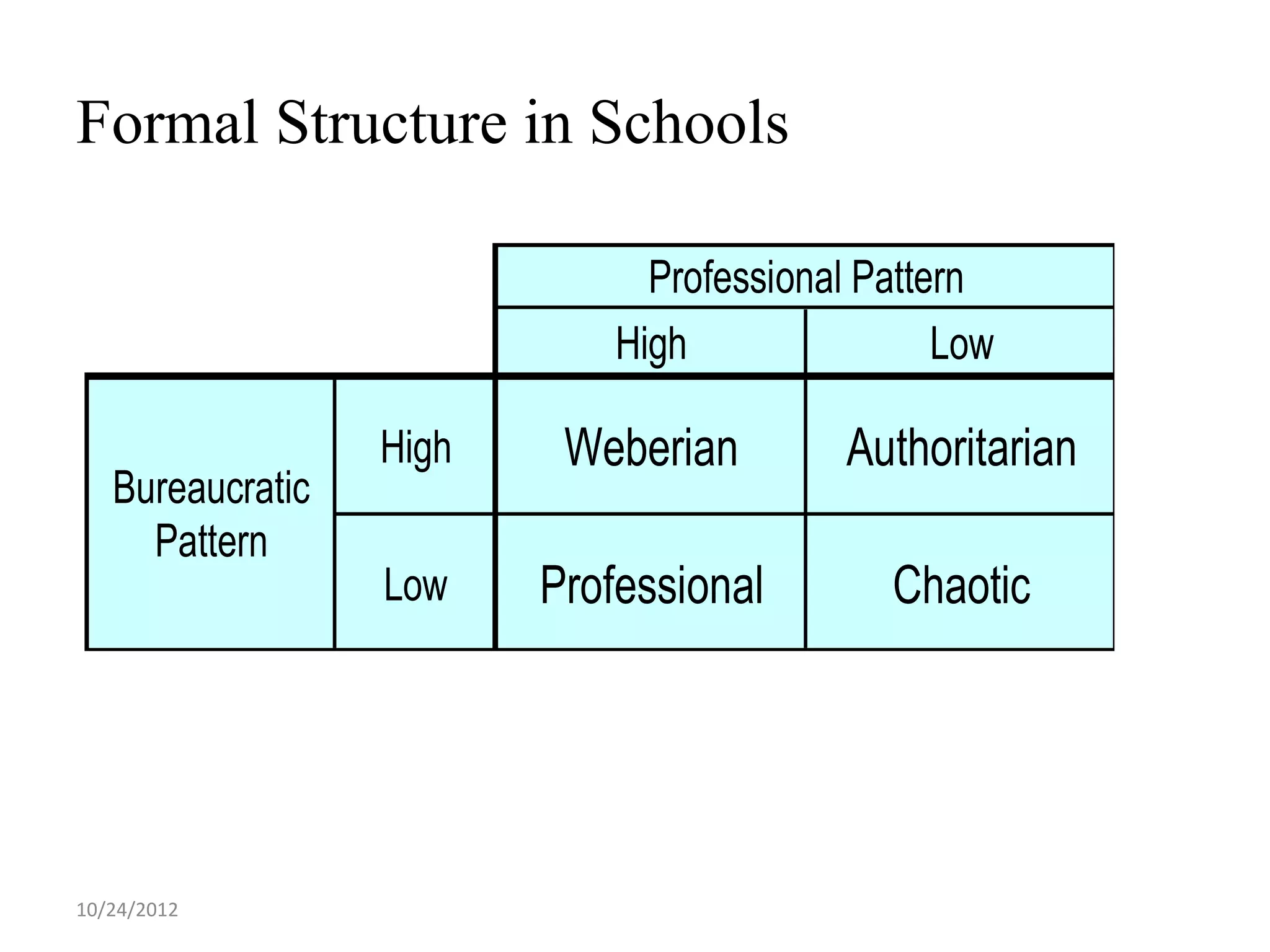
Formal Structure in Schools

                               Professional Pattern
                             High                Low

                  High    Weberian         Authoritarian
   Bureaucratic
     Pattern
                  Low    Professional        Chaotic


10/24/2012
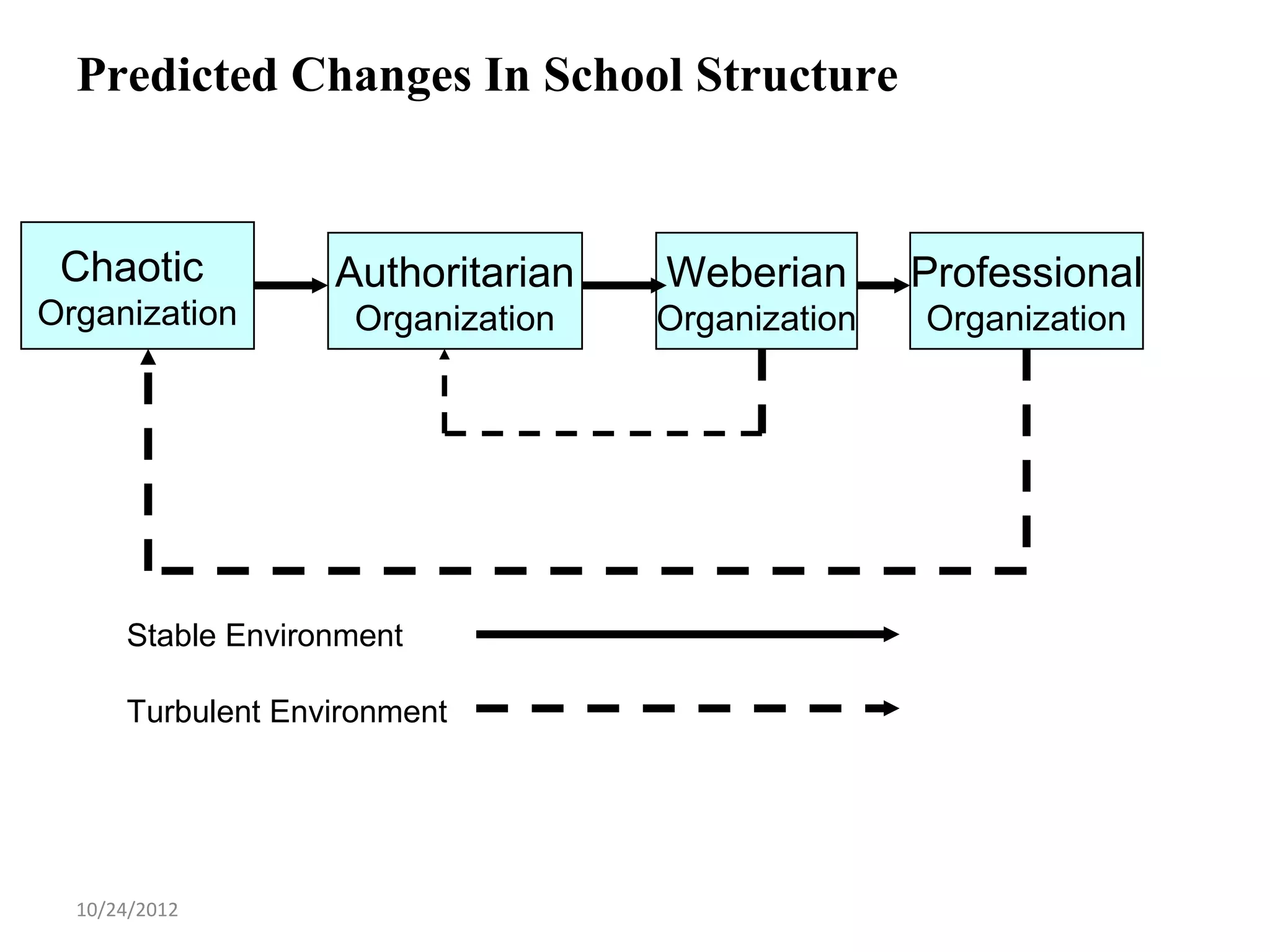
Predicted Changes In School Structure


 Chaotic           Authoritarian   Weberian       Professional
Organization        Organization   Organization   Organization


      Stable Environment

      Turbulent Environment


  10/24/2012
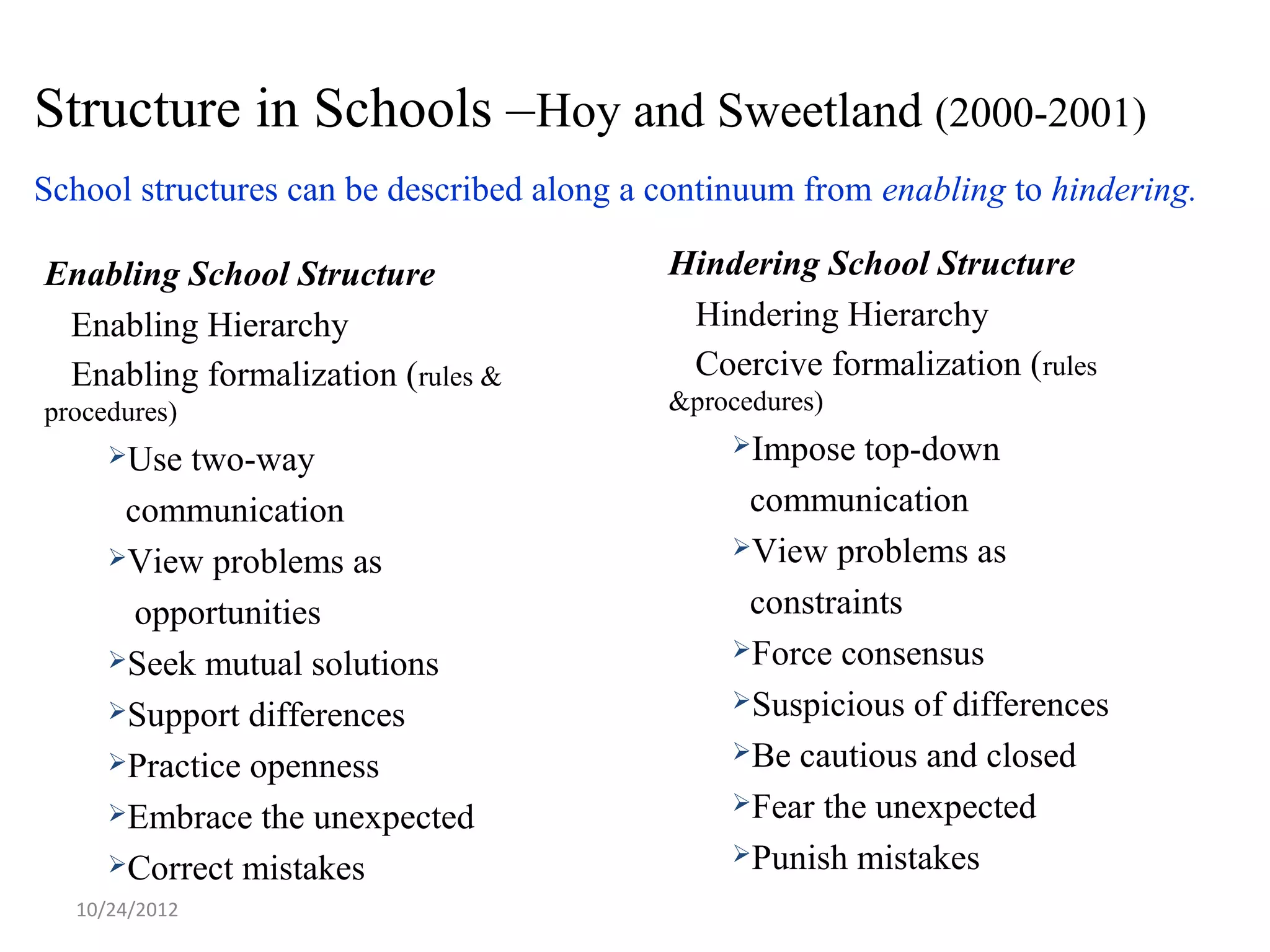
Structure in Schools –Hoy and Sweetland (2000-2001)
School structures can be described along a continuum from enabling to hindering.

Enabling School Structure                  Hindering School Structure
 Enabling Hierarchy                         Hindering Hierarchy
 Enabling formalization (rules &            Coercive formalization (rules
procedures)                                &procedures)
     Use                                      Impose  top-down
          two-way
      communication                             communication
     View problems as                         View problems as

       opportunities                            constraints
     Seek mutual solutions                    Force consensus

     Support differences                      Suspicious of differences

     Practice openness                        Be cautious and closed

     Embrace the unexpected                   Fear the unexpected

     Correct mistakes                         Punish mistakes

  10/24/2012
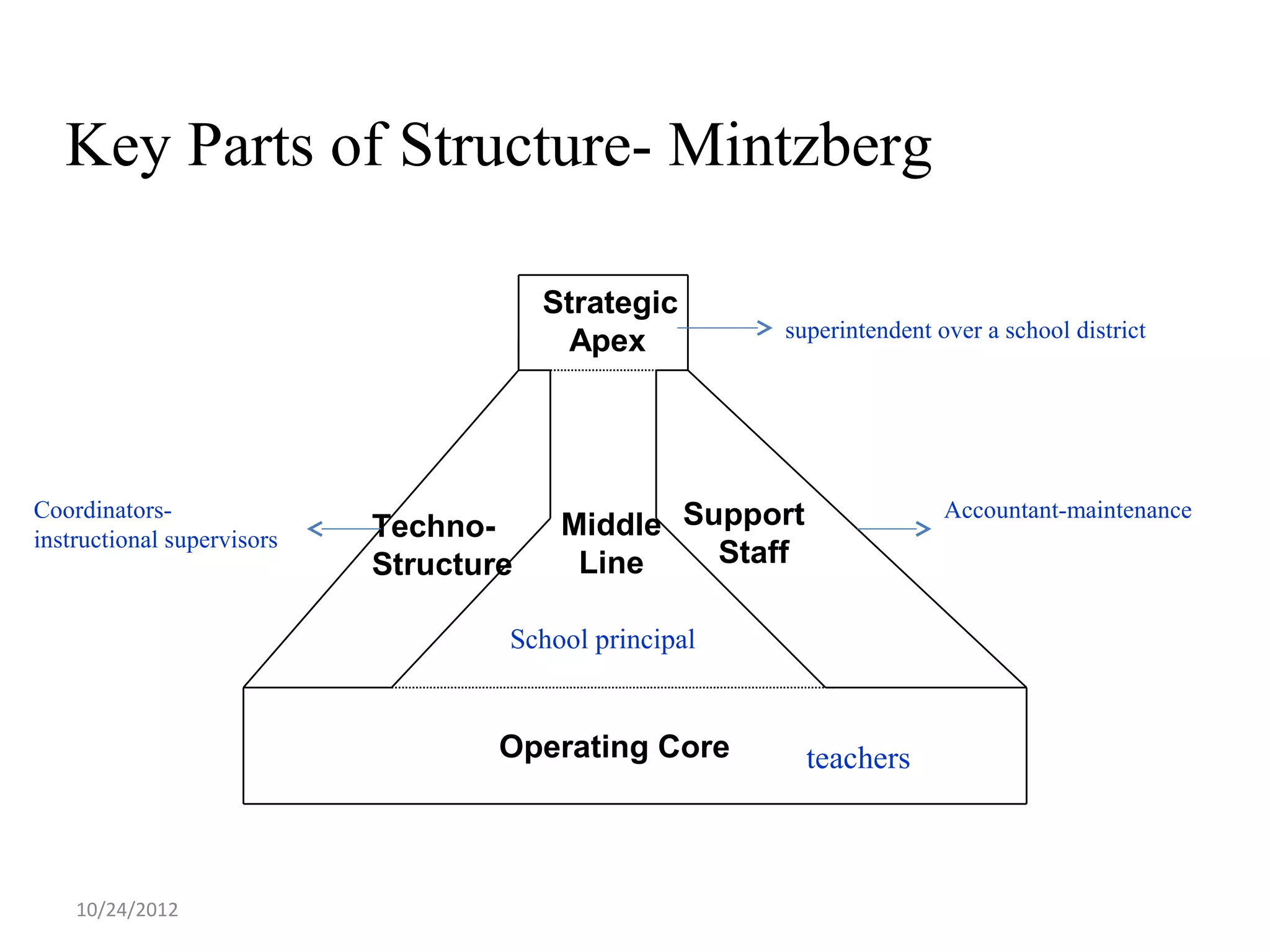
Key Parts of Structure- Mintzberg

                                        Strategic
                                                       superintendent over a school district
                                          Apex


Coordinators-                                                          Accountant-maintenance
instructional supervisors   Techno-      Middle Support
                            Structure     Line    Staff

                                    School principal


                                    Operating Core        teachers


    10/24/2012
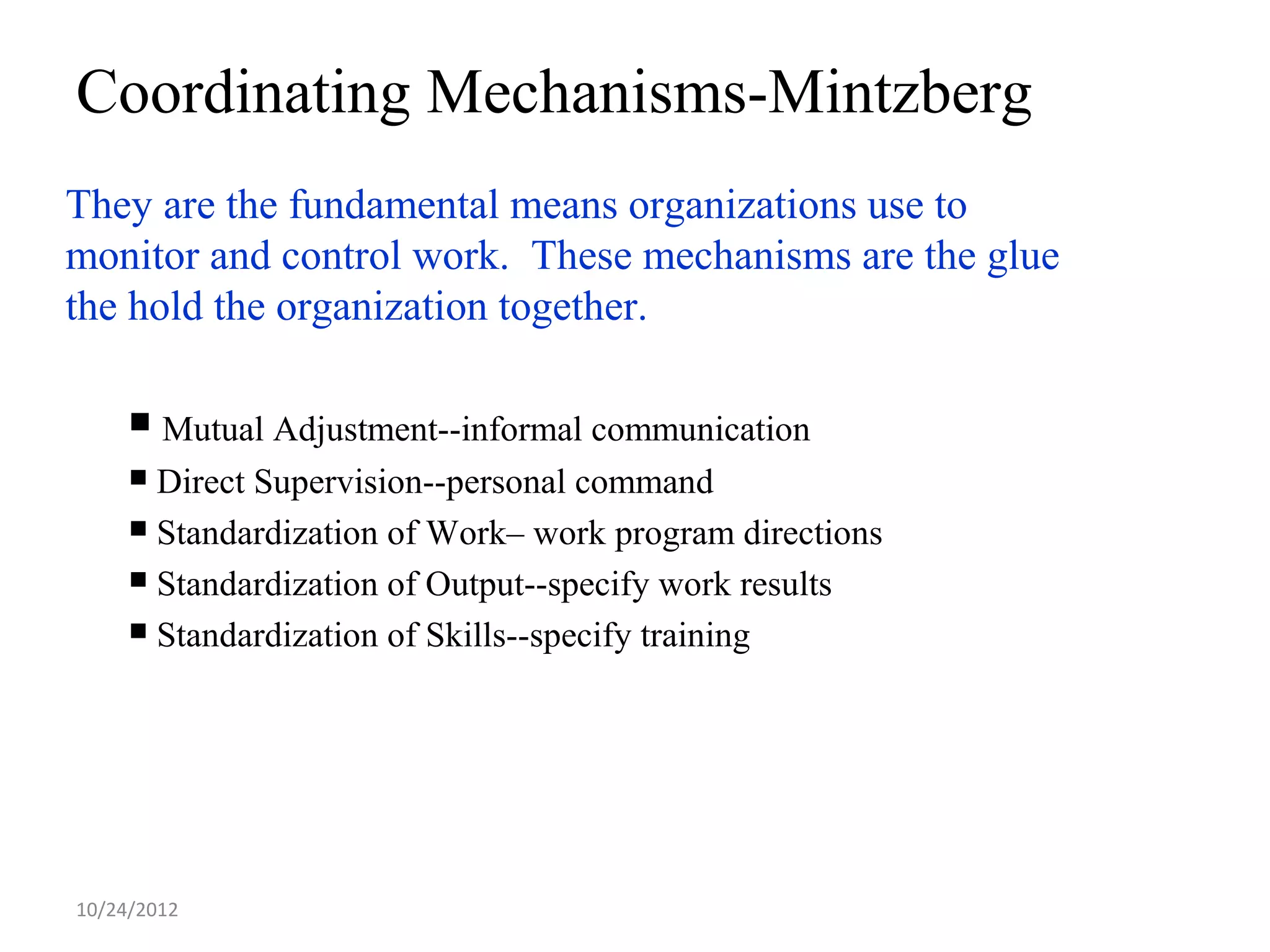
Coordinating Mechanisms-Mintzberg
They are the fundamental means organizations use to
monitor and control work. These mechanisms are the glue
the hold the organization together.

      Mutual Adjustment--informal communication
      Direct Supervision--personal command
      Standardization of Work– work program directions

      Standardization of Output--specify work results

      Standardization of Skills--specify training


10/24/2012
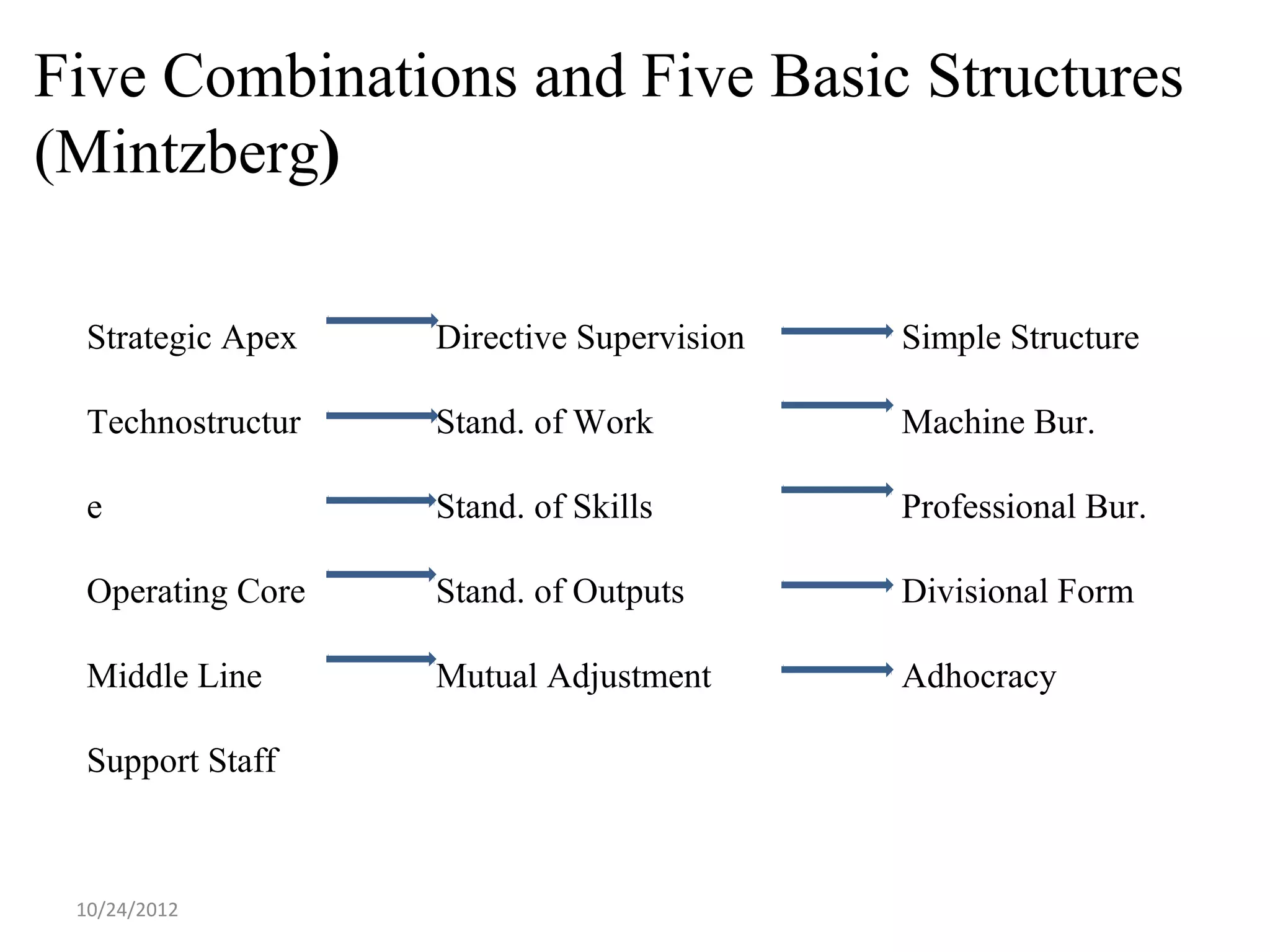
Five Combinations and Five Basic Structures
(Mintzberg)

  Strategic Apex   Directive Supervision   Simple Structure

  Technostructur   Stand. of Work          Machine Bur.

  e                Stand. of Skills        Professional Bur.

  Operating Core   Stand. of Outputs       Divisional Form

  Middle Line      Mutual Adjustment       Adhocracy

  Support Staff


 10/24/2012
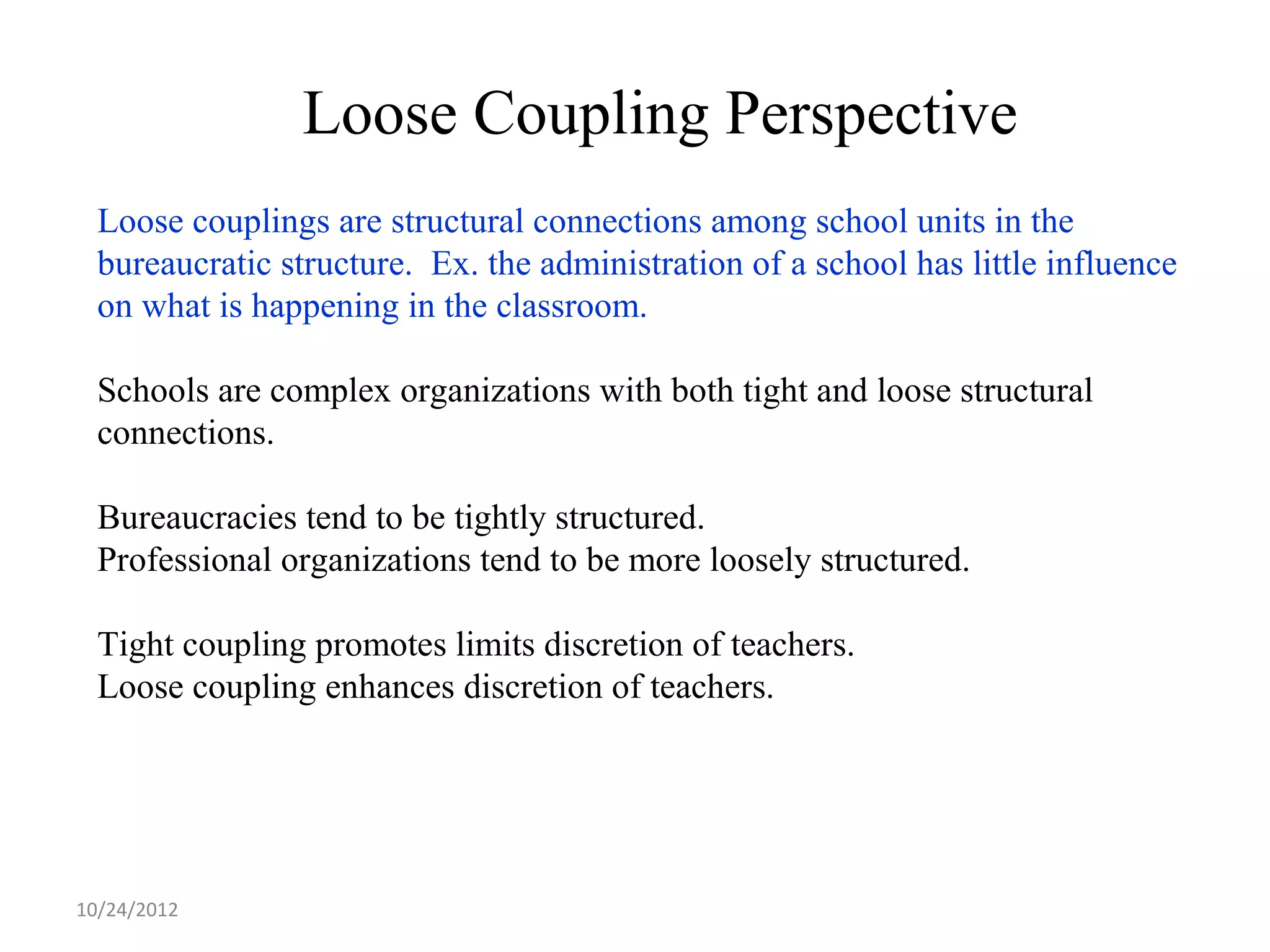
Loose Coupling Perspective
  Loose couplings are structural connections among school units in the
  bureaucratic structure. Ex. the administration of a school has little influence
  on what is happening in the classroom.

  Schools are complex organizations with both tight and loose structural
  connections.

  Bureaucracies tend to be tightly structured.
  Professional organizations tend to be more loosely structured.

  Tight coupling promotes limits discretion of teachers.
  Loose coupling enhances discretion of teachers.


10/24/2012
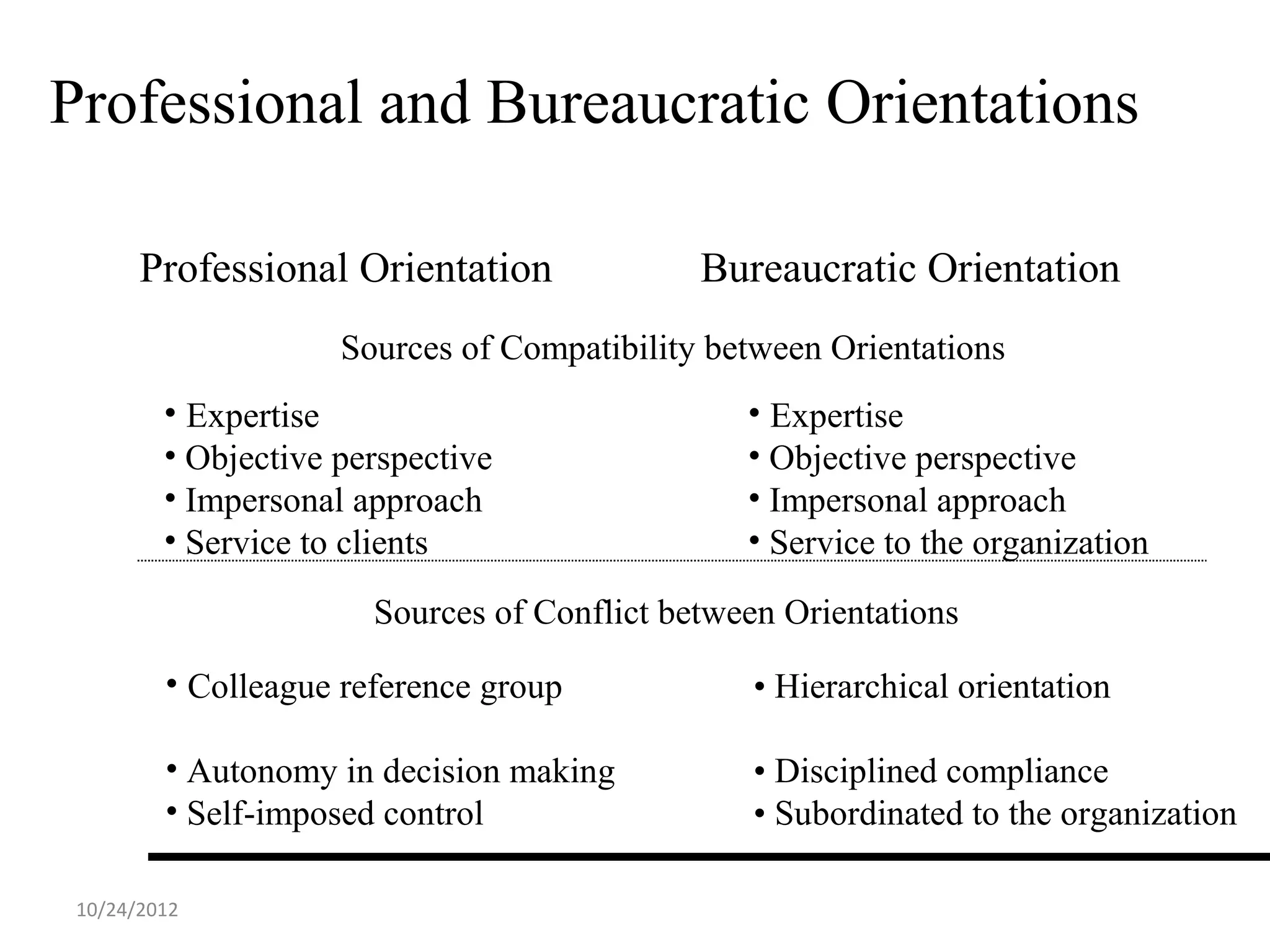
Professional and Bureaucratic Orientations

       Professional Orientation              Bureaucratic Orientation
                     Sources of Compatibility between Orientations
         • Expertise                            • Expertise
         • Objective perspective                • Objective perspective
         • Impersonal approach                  • Impersonal approach
         • Service to clients                   • Service to the organization

                       Sources of Conflict between Orientations

         • Colleague reference group            • Hierarchical orientation

         • Autonomy in decision making          • Disciplined compliance
         • Self-imposed control                 • Subordinated to the organization

 10/24/2012
Questions/Comments


10/24/2012

Structure in schools hoy n miskel

  • 1.
    Structure in Schools Hoy and Miskel, 2008 10/24/2012
  • 2.
    Model of Bureaucracy(Formal organization) Max Weber (1947)  Division of Labor Division of labor produces specialization which increases efficiency.  Impersonal Orientation Decisions are based on fact and not feelings.  Hierarchy of Authority A system of superordination (superiors) and subordination (subordinates) to guarantee compliance and discipline  Rules and Regulations Ensures uniformity of behavior of the employees.  Career Orientation Promotion of loyal employees based on seniority and achievement. (dispassionate decisions)  Efficiency Bureaucracy maximizes expertise, rational decisions, and administrative efficiency. 10/24/2012
  • 3.
    Weber’s Model ofBureaucracy in Popular TV He has the office on top floor- highest source of authority Charismatic authority rules and regulations – stable and without personality- even when seduced by a beautiful woman, he remains incorruptible MAD MEN (TV series) 10/24/2012 Cooper Draper Pryce is the incarnation of Weber’s bureaucratic model Sterling
  • 4.
    Critique of Weber’sModel 1. Dysfunctional aspects are not considered 2. Informal organization is neglected 3. Dual structure of bureaucratic model 4. Feminist critique 10/24/2012
  • 5.
    Dysfunctional Features ofBureaucracy Function Characteristic Dysfunction Expertise Division of Labor Boredom Rationality Impersonal Orientation Lack of morale Compliance and Hierarchy of Authority Communication Coordination blocks Continuity and Rules and Regulations Rigidity and goal Stability displacement Incentive Career Orientation Conflict between achievement and seniority 10/24/2012
  • 6.
    Functions and Dysfunctionsof Rules Functions Dysfunctions Explication Reinforce Apathy(minimum acceptable ) Screening (buffering) Goal displacement Legitimate Punishment Create legalism Leeway Indulgency (leniency) 10/24/2012
  • 7.
    Informal Organization- “ShadowOrganization” It is the spontaneous development of a social structure and culture within a formal organization How does it develop within a formal organization? Personal relations Division into cliques (based on feelings, common lounge, age, similar interests, etc) Social norms (appropriate behavior) Informal roles( unofficial spokesperson, informal leaders) Informal communication(the grapevine) 10/24/2012
  • 8.
    Dual Structure ofthe Bureaucratic Model Is bureaucratic administration based primarily on expertise, or is it based on rules and discipline? The answer to this question creates the conflict of dual bureaucracy in Weber’s model. 10/24/2012
  • 9.
    Feminist Critique Bureaucracies promotemale values at the expense of female ones. Hierarchy Equalitarian Impersonality personalized VS. Independence dependence Competition Cooperation Rationality Emotionality 10/24/2012
  • 10.
    Structure in Schools-HALL Two Types of Rational Organizations rather than One integrated model -Hall(1962) Bureaucratic Pattern  Hierarchy of Authority  Rules for employees  Procedural Specifications  Impersonality Professional Pattern  Technical Competence  Specialization 10/24/2012
  • 11.
    Formal Structure inSchools Professional Pattern High Low High Weberian Authoritarian Bureaucratic Pattern Low Professional Chaotic 10/24/2012
  • 12.
    Predicted Changes InSchool Structure Chaotic Authoritarian Weberian Professional Organization Organization Organization Organization Stable Environment Turbulent Environment 10/24/2012
  • 13.
    Structure in Schools–Hoy and Sweetland (2000-2001) School structures can be described along a continuum from enabling to hindering. Enabling School Structure Hindering School Structure Enabling Hierarchy Hindering Hierarchy Enabling formalization (rules & Coercive formalization (rules procedures) &procedures) Use Impose top-down two-way communication communication View problems as View problems as opportunities constraints Seek mutual solutions Force consensus Support differences Suspicious of differences Practice openness Be cautious and closed Embrace the unexpected Fear the unexpected Correct mistakes Punish mistakes 10/24/2012
  • 14.
    Key Parts ofStructure- Mintzberg Strategic superintendent over a school district Apex Coordinators- Accountant-maintenance instructional supervisors Techno- Middle Support Structure Line Staff School principal Operating Core teachers 10/24/2012
  • 15.
    Coordinating Mechanisms-Mintzberg They arethe fundamental means organizations use to monitor and control work. These mechanisms are the glue the hold the organization together.  Mutual Adjustment--informal communication  Direct Supervision--personal command  Standardization of Work– work program directions  Standardization of Output--specify work results  Standardization of Skills--specify training 10/24/2012
  • 16.
    Five Combinations andFive Basic Structures (Mintzberg) Strategic Apex Directive Supervision Simple Structure Technostructur Stand. of Work Machine Bur. e Stand. of Skills Professional Bur. Operating Core Stand. of Outputs Divisional Form Middle Line Mutual Adjustment Adhocracy Support Staff 10/24/2012
  • 17.
    Loose Coupling Perspective Loose couplings are structural connections among school units in the bureaucratic structure. Ex. the administration of a school has little influence on what is happening in the classroom. Schools are complex organizations with both tight and loose structural connections. Bureaucracies tend to be tightly structured. Professional organizations tend to be more loosely structured. Tight coupling promotes limits discretion of teachers. Loose coupling enhances discretion of teachers. 10/24/2012
  • 18.
    Professional and BureaucraticOrientations Professional Orientation Bureaucratic Orientation Sources of Compatibility between Orientations • Expertise • Expertise • Objective perspective • Objective perspective • Impersonal approach • Impersonal approach • Service to clients • Service to the organization Sources of Conflict between Orientations • Colleague reference group • Hierarchical orientation • Autonomy in decision making • Disciplined compliance • Self-imposed control • Subordinated to the organization 10/24/2012
  • 19.