CHILDREN’S UNIVERSITY
Department of home science
NAME: Varsani Urvisha Chandubhai
COURSE: PG diploma in Food and Dietetics
ROLL NO. : 5
SUB : Physiology
TOPIC : Unit 1
(1)Structure & functions of kidney
(2)Nephron & Urin Formation
Placement of Kidneys In the body
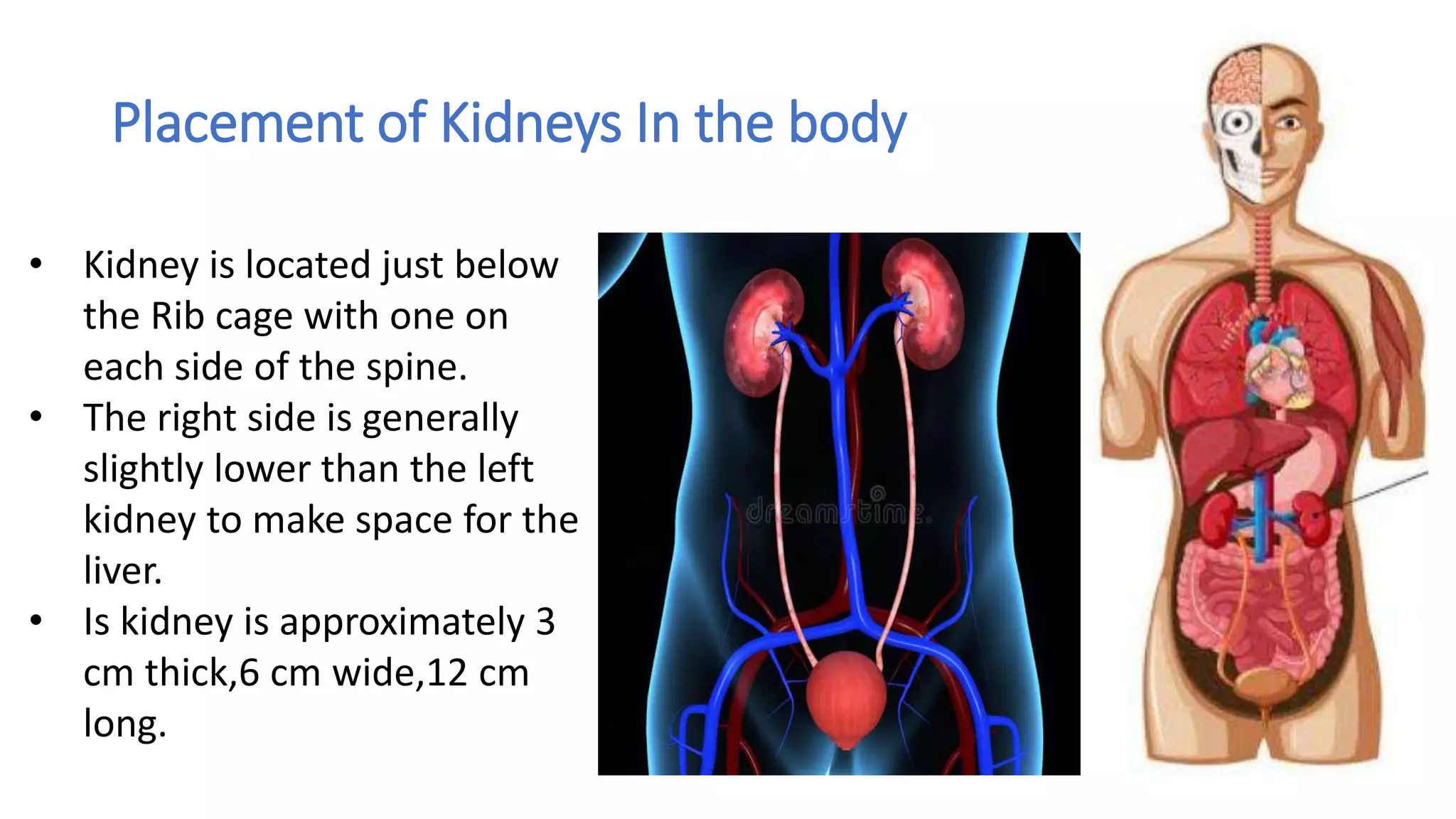
• Kidney is located just below
the Rib cage with one on
each side of the spine.
• The right side is generally
slightly lower than the left
kidney to make space for the
liver.
• Is kidney is approximately 3
cm thick,6 cm wide,12 cm
long.
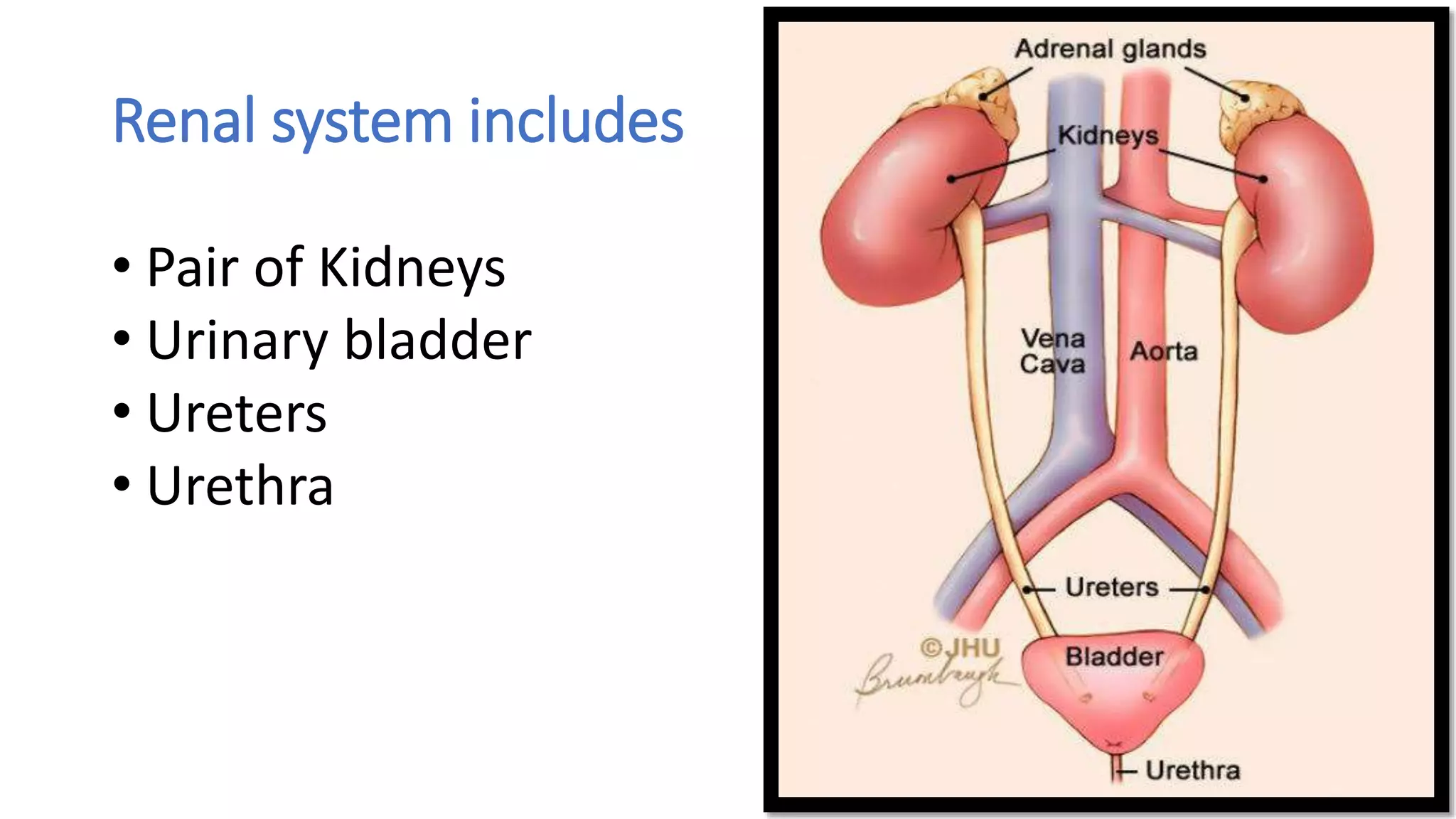
Renal system includes
• Pair of Kidneys
• Urinary bladder
• Ureters
• Urethra
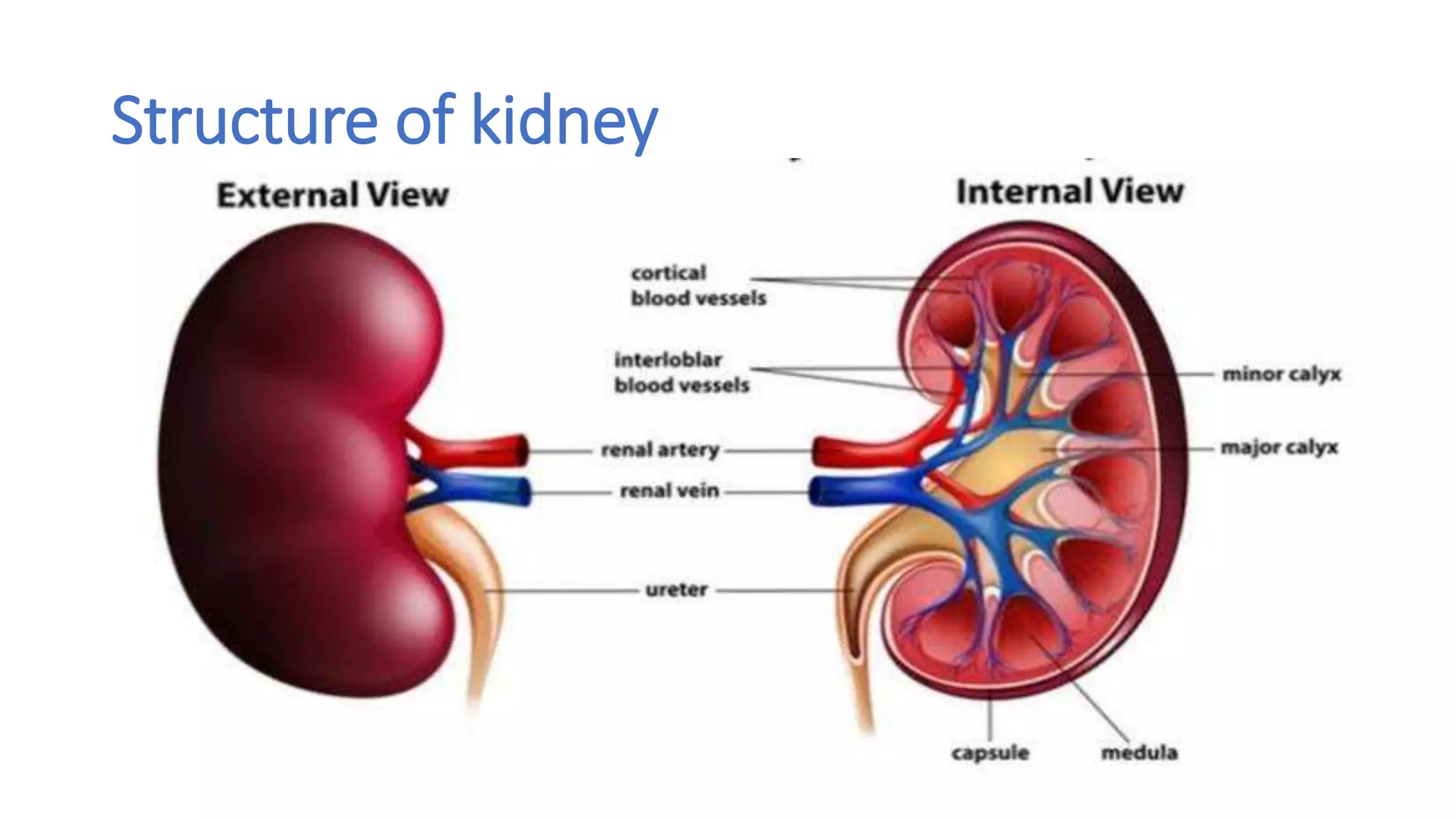
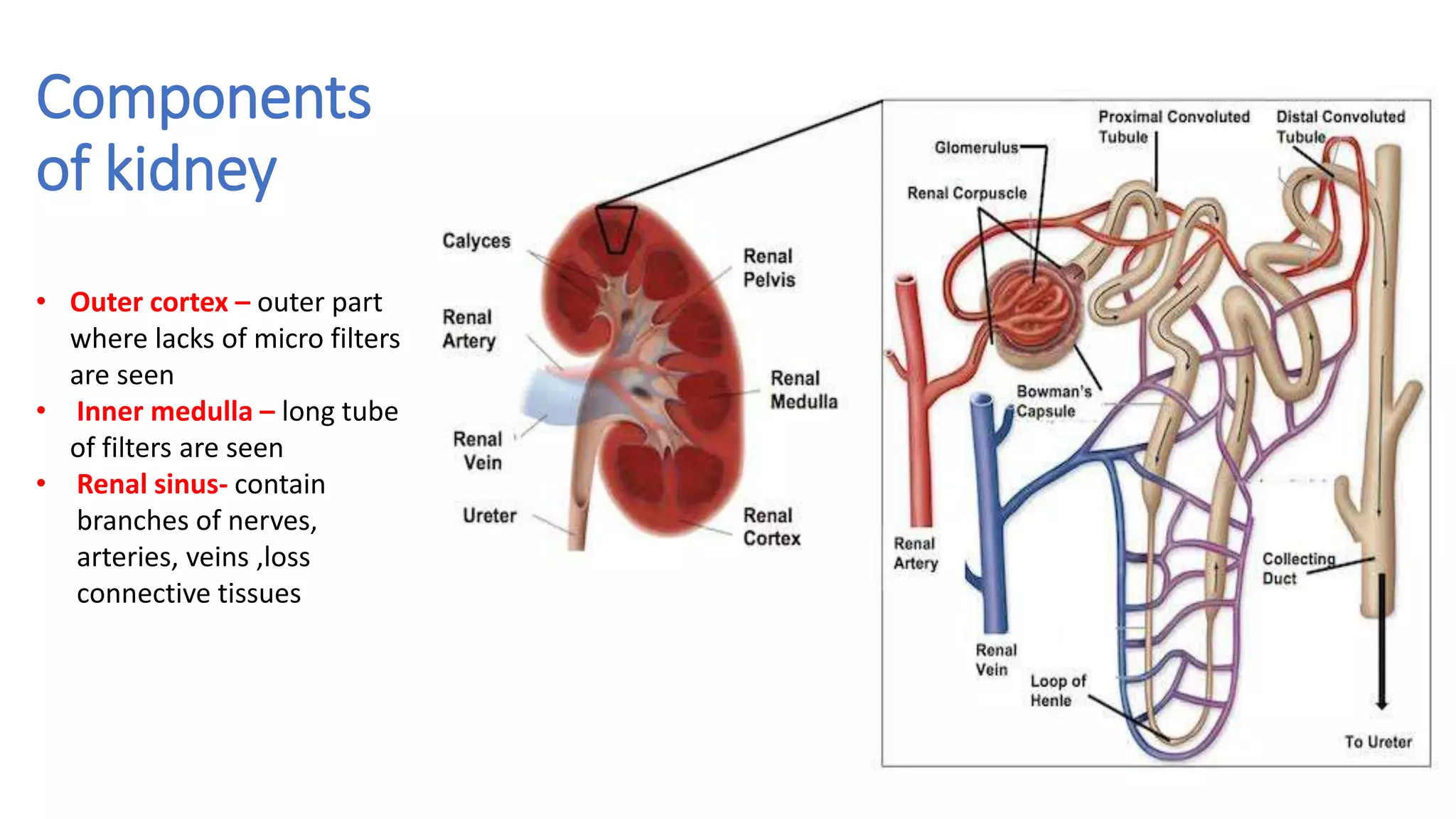
Structure of kidney
Components
of kidney
• Outer cortex – outer part
where lacks of micro filters
are seen
• Inner medulla – long tube
of filters are seen
• Renal sinus- contain
branches of nerves,
arteries, veins ,loss
connective tissues
Function of kidneys
(1) role in homeostasis:
• Primary function of kidney is homeostasis.
• It is accomplished by the formation of urine.
excretion of waste products:
• Kidneys excrete the unwanted West products which are formed during metabolic activities
(1) urea( end product of amino acid)
(2) uric acid( end product of nucleic acid metabolism)
(3) creatinine (end product of metabolism in muscles)
(4) bilirubin (end product of hemoglobin degradation)
(5) products of metabolism of other substances.
Kidney is also excrete harmful foreigner chemical substance such as toxins drugs, heavy metals, pesticides.
• Maintenance of water balance:
• Maintenance of electrolyte Balance : kidney retain sodium if the
osmolarity of body water decreases and eliminate sodium when
osmolarity increases.
• Maintenance of acid base Balance: the pH of the blood and
body fluid should be maintained within narrow range for healthy
living it is achieved by the function of Kidneys.
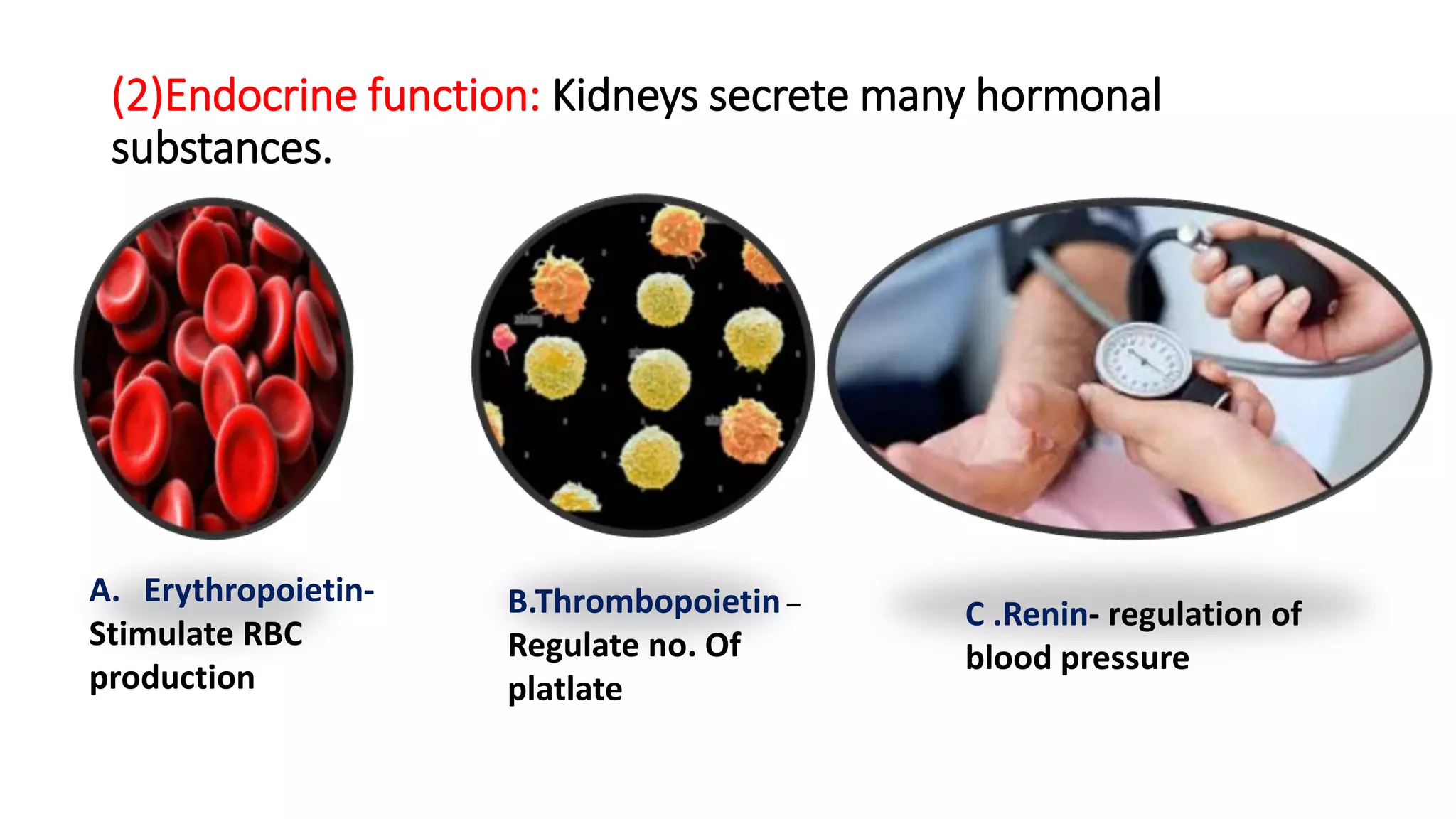
(2)Endocrine function: Kidneys secrete many hormonal
substances.
A. Erythropoietin-
Stimulate RBC
production
B.Thrombopoietin –
Regulate no. Of
platlate
C .Renin- regulation of
blood pressure
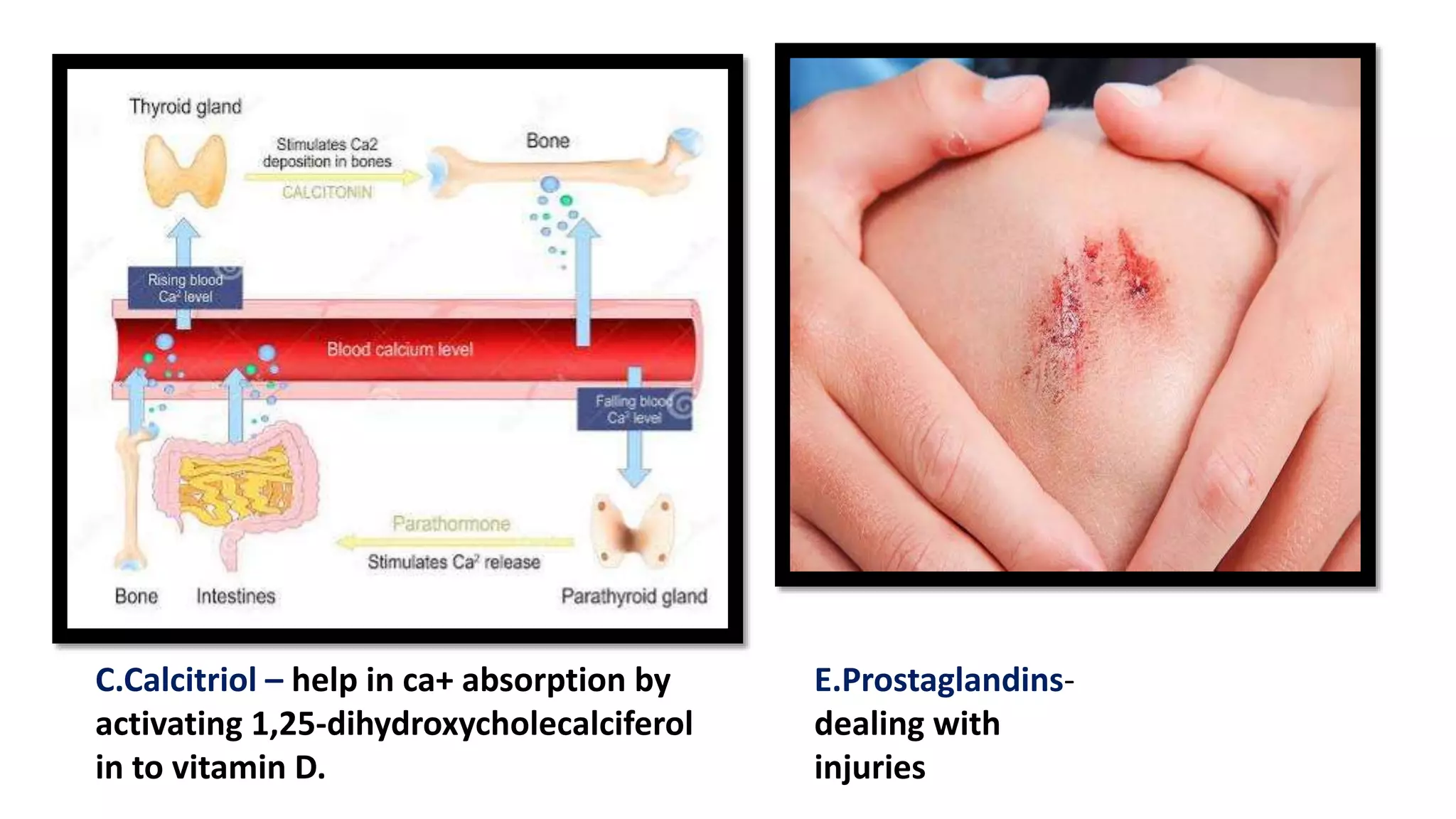
C.Calcitriol – help in ca+ absorption by
activating 1,25-dihydroxycholecalciferol
in to vitamin D.
E.Prostaglandins-
dealing with
injuries
(3) Regulation of blood pressure
(4) Regulation of blood calcium level
(5) Hemopoietic function
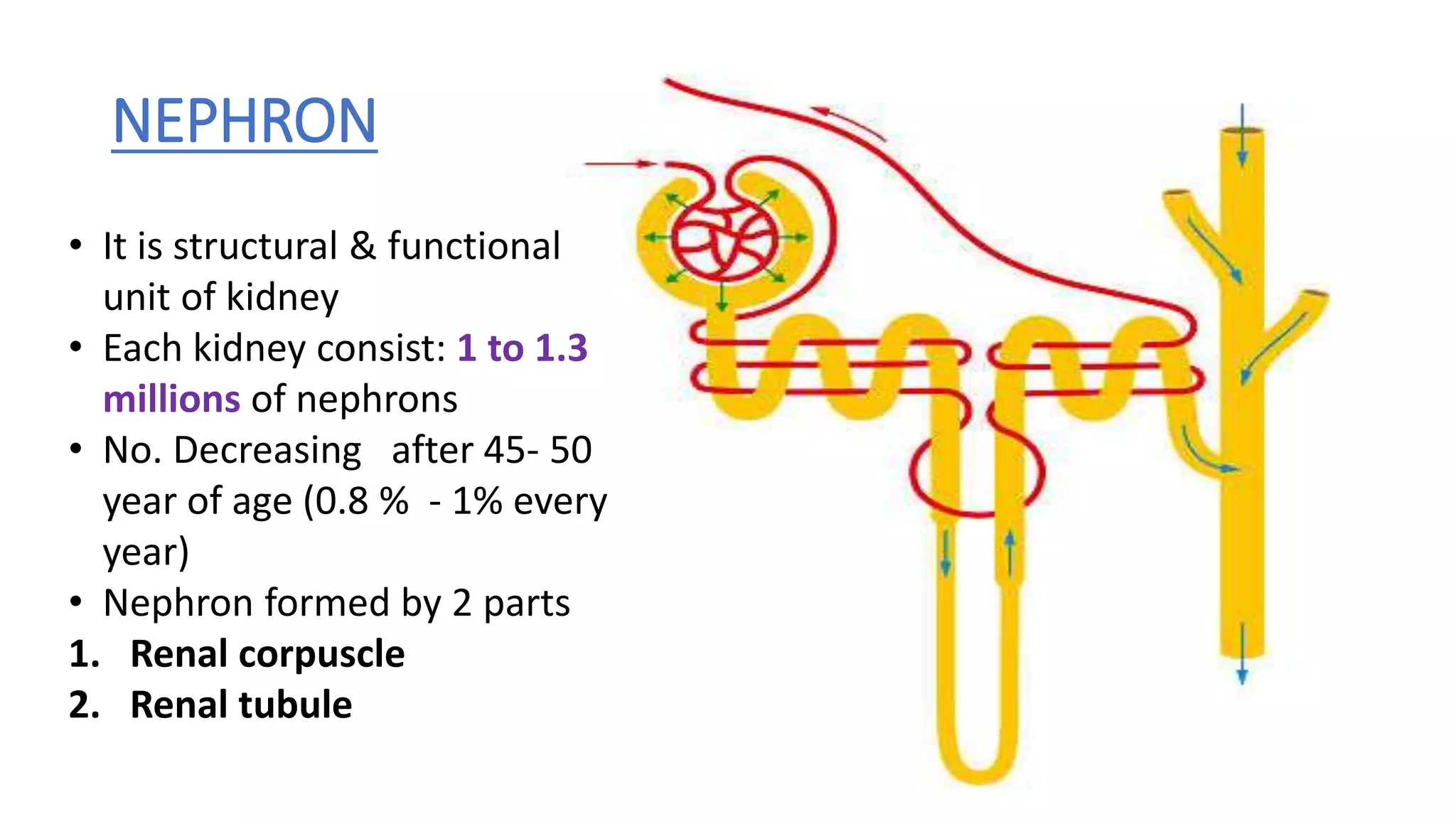
NEPHRON
• It is structural & functional
unit of kidney
• Each kidney consist: 1 to 1.3
millions of nephrons
• No. Decreasing after 45- 50
year of age (0.8 % - 1% every
year)
• Nephron formed by 2 parts
1. Renal corpuscle
2. Renal tubule
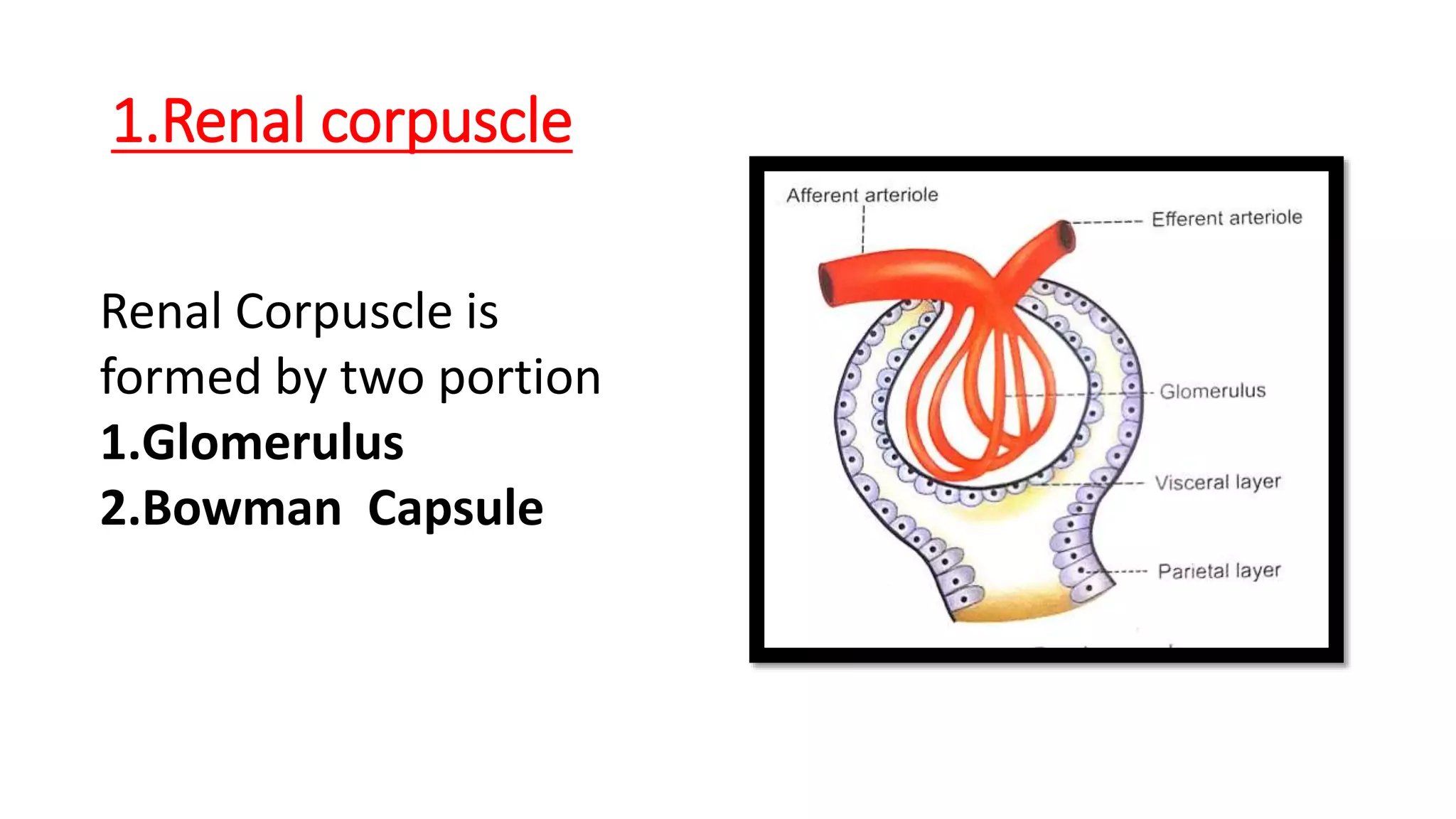
1.Renal corpuscle
Renal Corpuscle is
formed by two portion
1.Glomerulus
2.Bowman Capsule
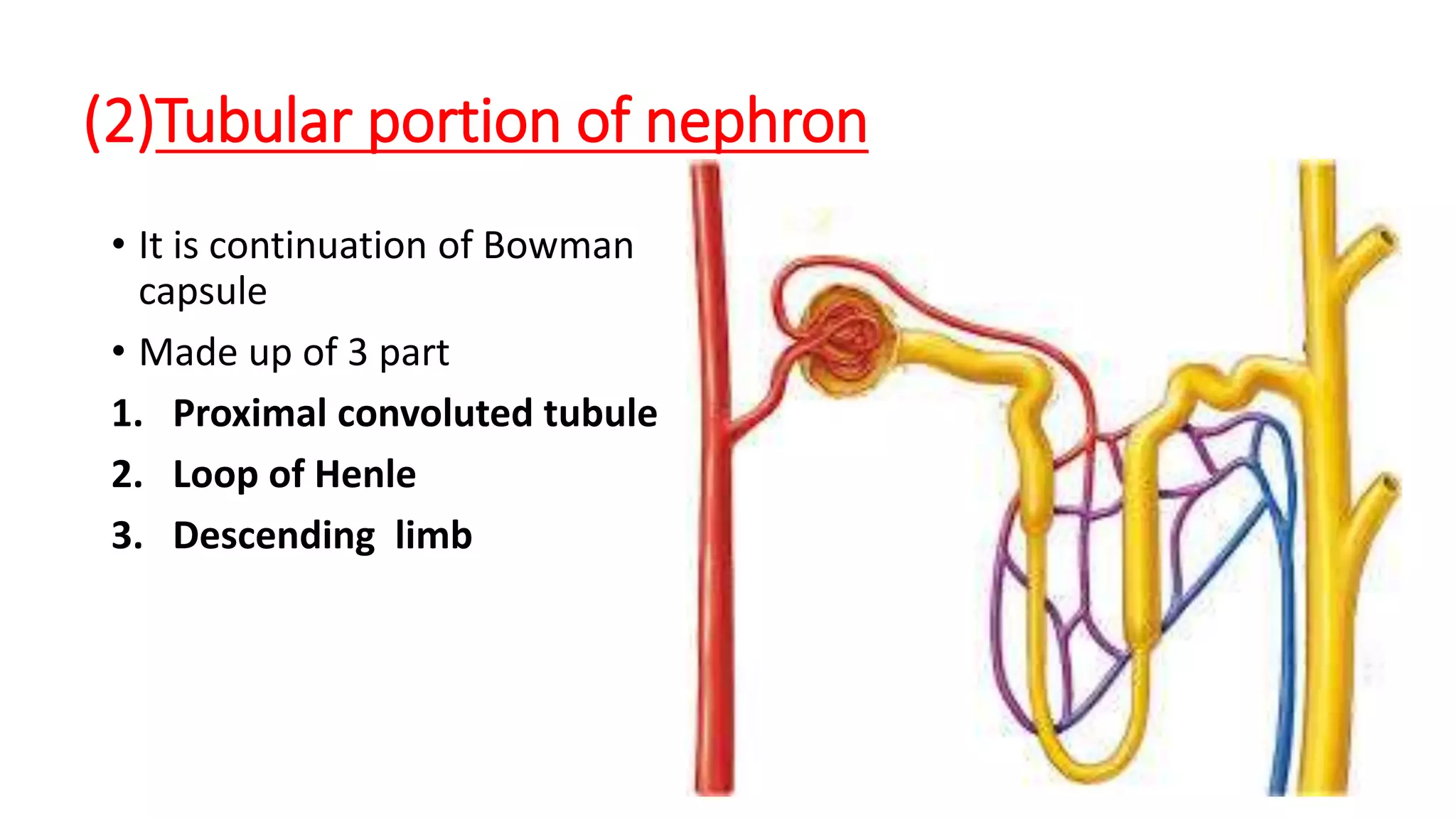
(2)Tubular portion of nephron
• It is continuation of Bowman
capsule
• Made up of 3 part
1. Proximal convoluted tubule
2. Loop of Henle
3. Descending limb
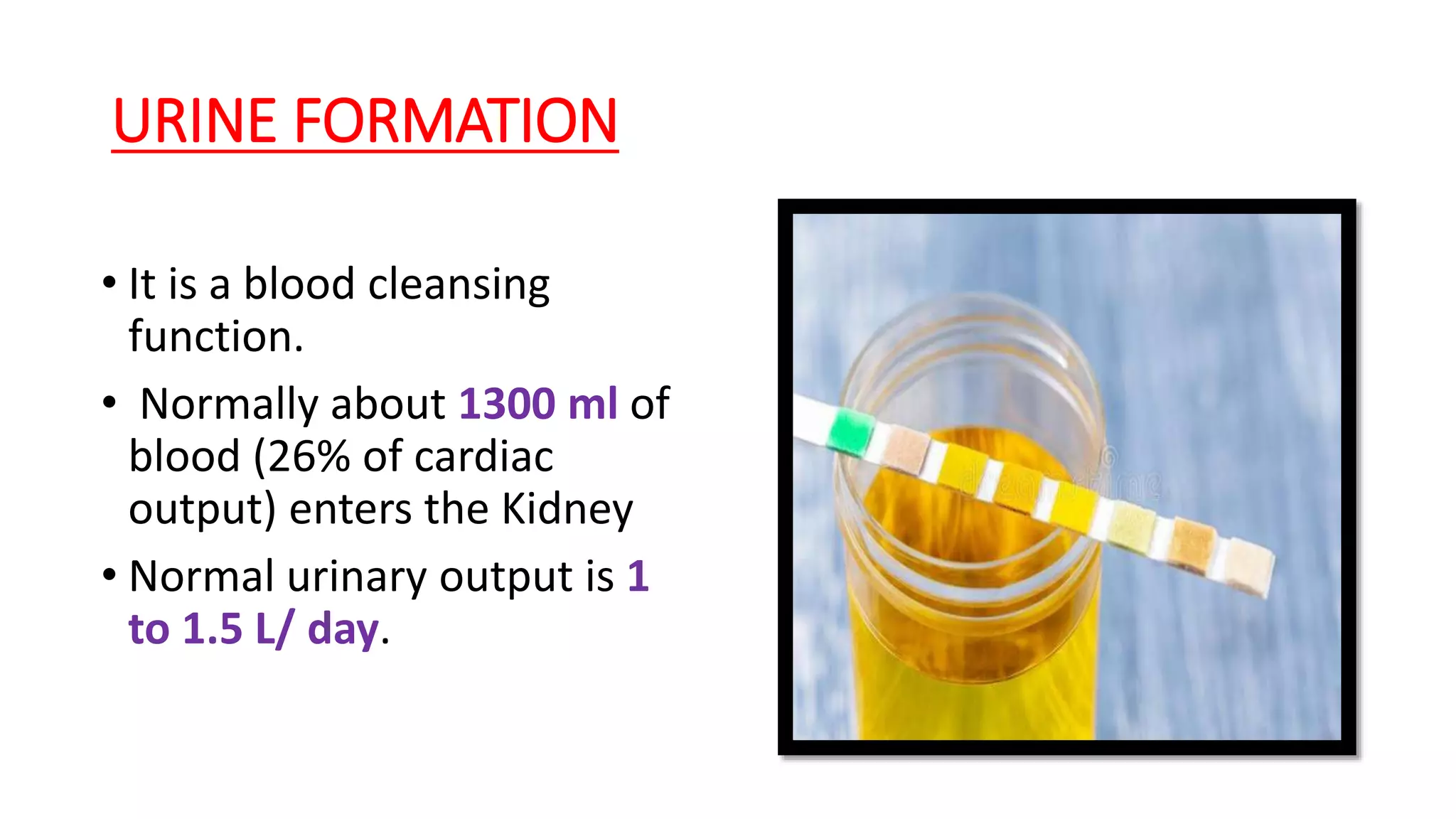
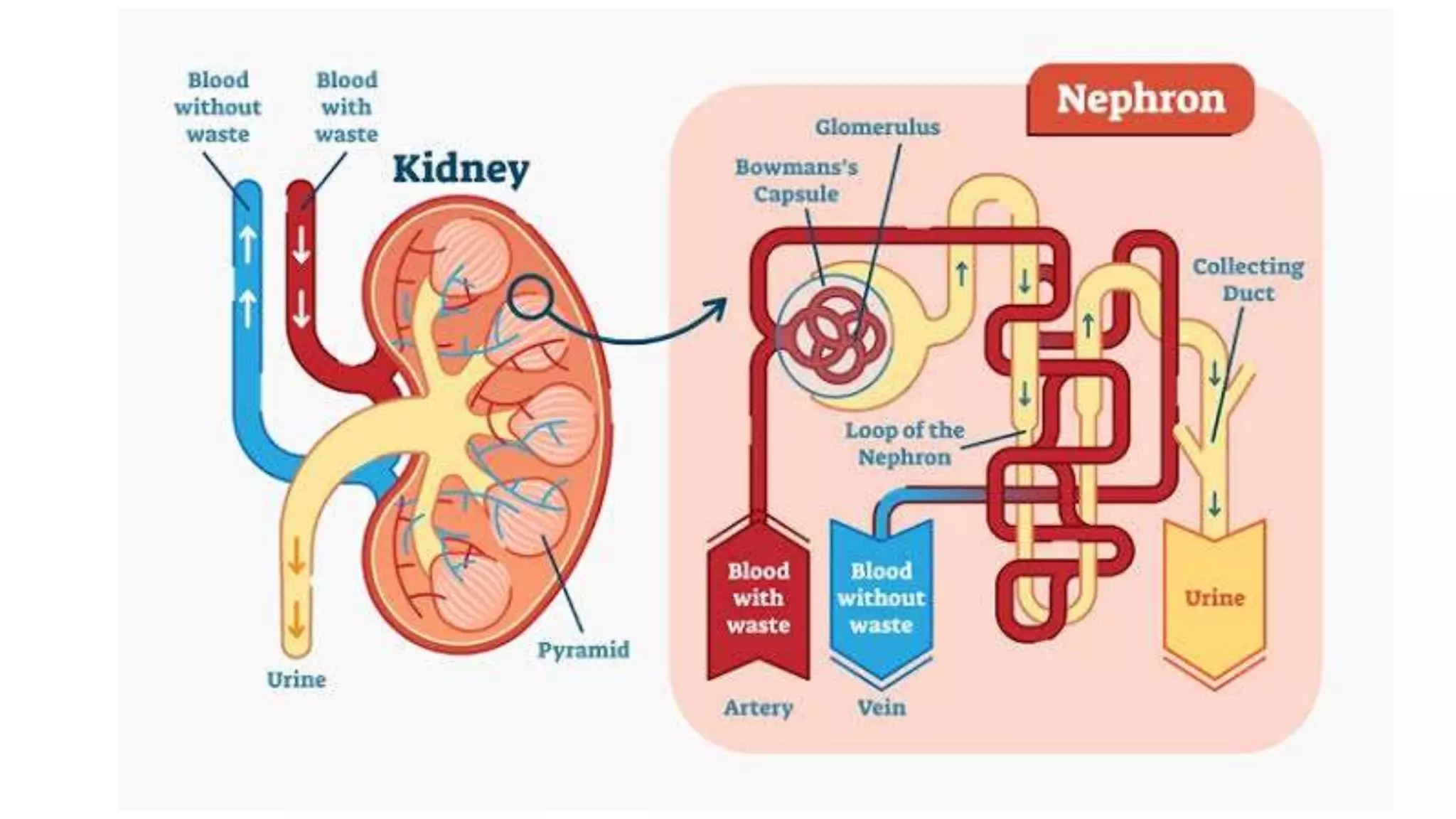
URINE FORMATION
• It is a blood cleansing
function.
• Normally about 1300 ml of
blood (26% of cardiac
output) enters the Kidney
• Normal urinary output is 1
to 1.5 L/ day.
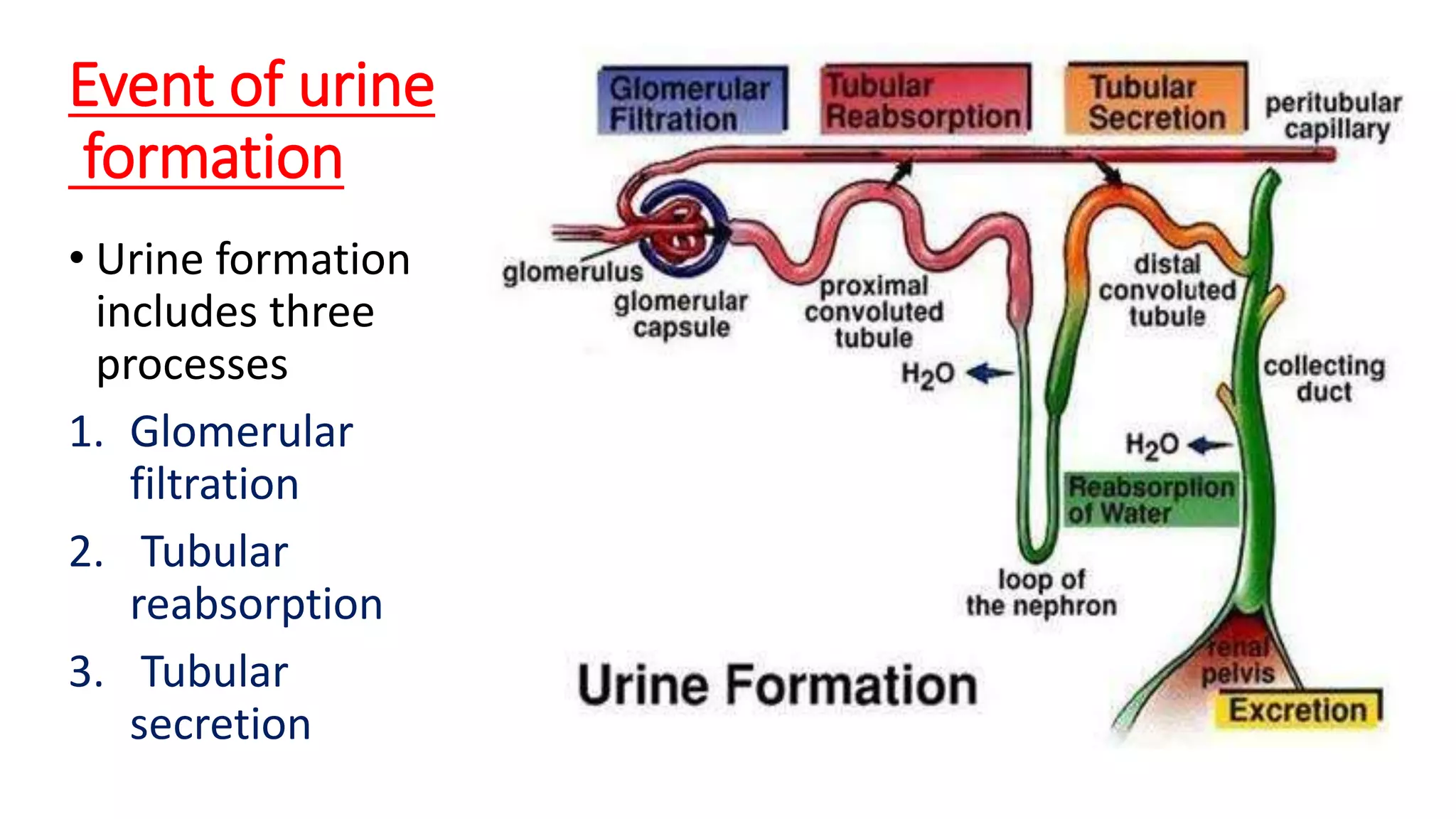
Event of urine
formation
• Urine formation
includes three
processes
1. Glomerular
filtration
2. Tubular
reabsorption
3. Tubular
secretion
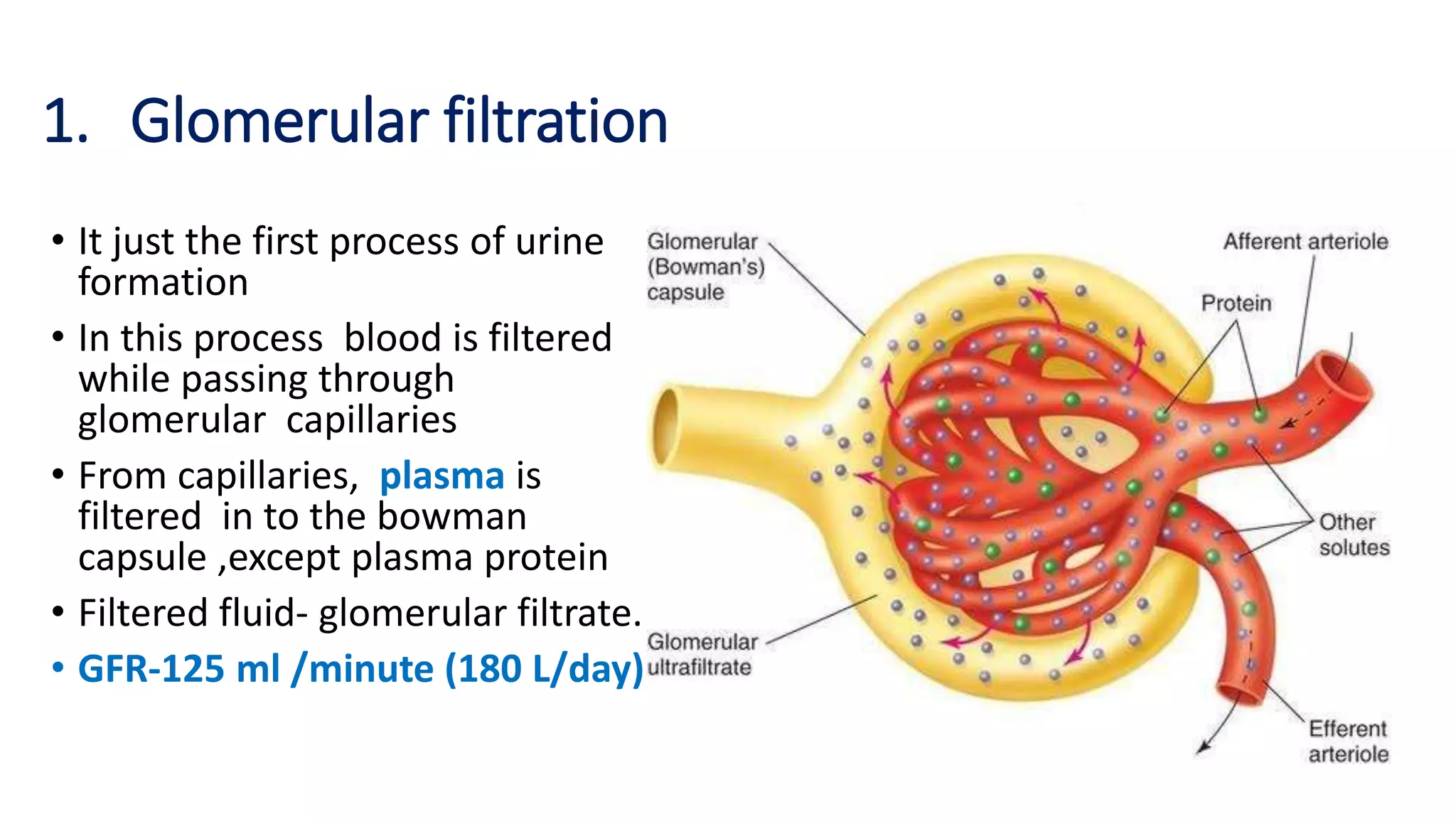
1. Glomerular filtration
• It just the first process of urine
formation
• In this process blood is filtered
while passing through
glomerular capillaries
• From capillaries, plasma is
filtered in to the bowman
capsule ,except plasma protein
• Filtered fluid- glomerular filtrate.
• GFR-125 ml /minute (180 L/day)
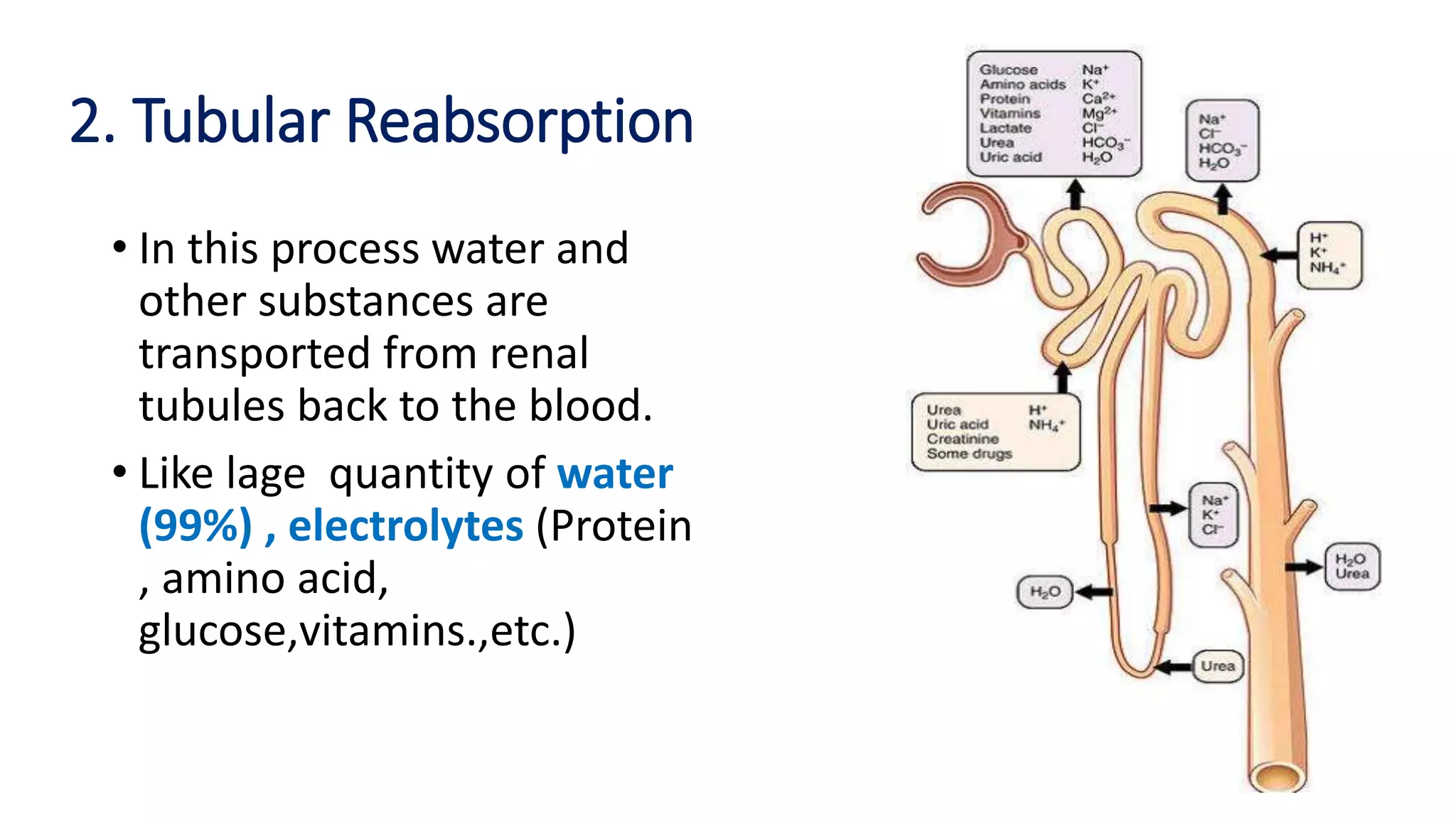
2. Tubular Reabsorption
• In this process water and
other substances are
transported from renal
tubules back to the blood.
• Like lage quantity of water
(99%) , electrolytes (Protein
, amino acid,
glucose,vitamins.,etc.)
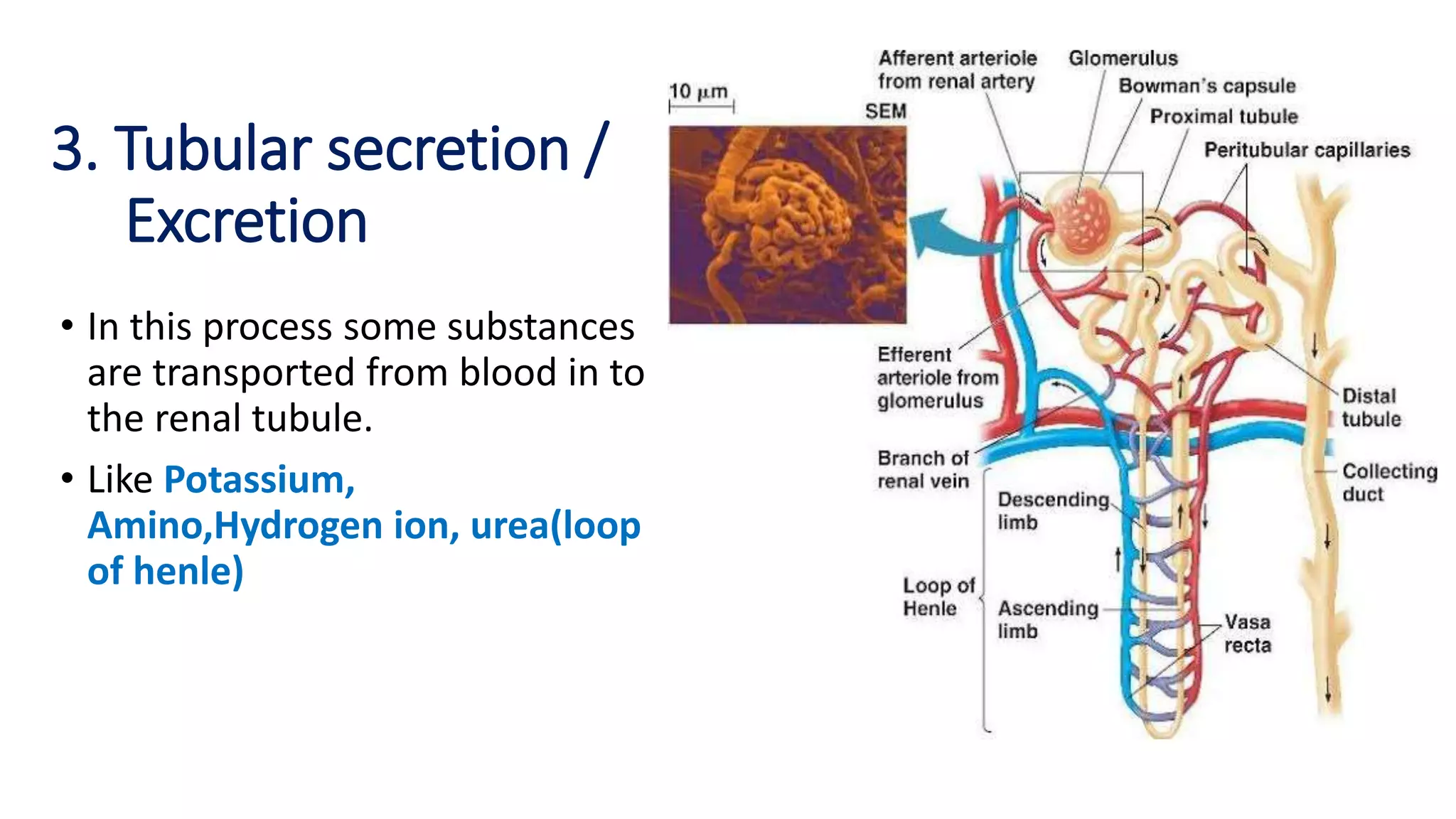
3. Tubular secretion /
Excretion
• In this process some substances
are transported from blood in to
the renal tubule.
• Like Potassium,
Amino,Hydrogen ion, urea(loop
of henle)
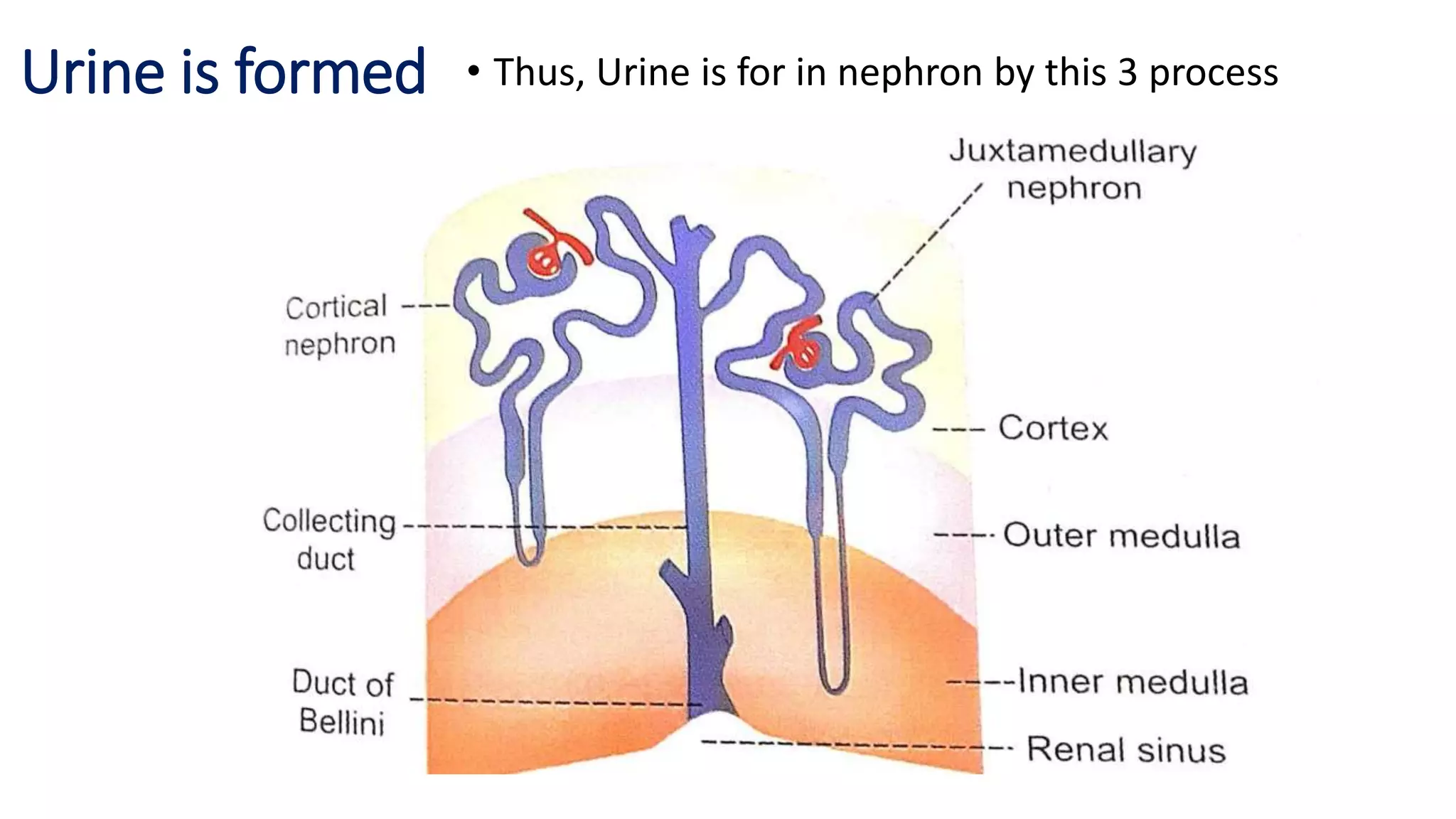
Urine is formed • Thus, Urine is for in nephron by this 3 process
Structure and function of kidney , structure of nephron and urine formation

Structure and function of kidney , structure of nephron and urine formation

  • 1.
    CHILDREN’S UNIVERSITY Department ofhome science NAME: Varsani Urvisha Chandubhai COURSE: PG diploma in Food and Dietetics ROLL NO. : 5 SUB : Physiology TOPIC : Unit 1 (1)Structure & functions of kidney (2)Nephron & Urin Formation
  • 2.
    Placement of KidneysIn the body • Kidney is located just below the Rib cage with one on each side of the spine. • The right side is generally slightly lower than the left kidney to make space for the liver. • Is kidney is approximately 3 cm thick,6 cm wide,12 cm long.
  • 3.
    Renal system includes •Pair of Kidneys • Urinary bladder • Ureters • Urethra
  • 4.
  • 5.
    Components of kidney • Outercortex – outer part where lacks of micro filters are seen • Inner medulla – long tube of filters are seen • Renal sinus- contain branches of nerves, arteries, veins ,loss connective tissues
  • 6.
    Function of kidneys (1)role in homeostasis: • Primary function of kidney is homeostasis. • It is accomplished by the formation of urine. excretion of waste products: • Kidneys excrete the unwanted West products which are formed during metabolic activities (1) urea( end product of amino acid) (2) uric acid( end product of nucleic acid metabolism) (3) creatinine (end product of metabolism in muscles) (4) bilirubin (end product of hemoglobin degradation) (5) products of metabolism of other substances. Kidney is also excrete harmful foreigner chemical substance such as toxins drugs, heavy metals, pesticides.
  • 7.
    • Maintenance ofwater balance: • Maintenance of electrolyte Balance : kidney retain sodium if the osmolarity of body water decreases and eliminate sodium when osmolarity increases. • Maintenance of acid base Balance: the pH of the blood and body fluid should be maintained within narrow range for healthy living it is achieved by the function of Kidneys.
  • 8.
    (2)Endocrine function: Kidneyssecrete many hormonal substances. A. Erythropoietin- Stimulate RBC production B.Thrombopoietin – Regulate no. Of platlate C .Renin- regulation of blood pressure
  • 9.
    C.Calcitriol – helpin ca+ absorption by activating 1,25-dihydroxycholecalciferol in to vitamin D. E.Prostaglandins- dealing with injuries
  • 10.
    (3) Regulation ofblood pressure (4) Regulation of blood calcium level (5) Hemopoietic function
  • 11.
    NEPHRON • It isstructural & functional unit of kidney • Each kidney consist: 1 to 1.3 millions of nephrons • No. Decreasing after 45- 50 year of age (0.8 % - 1% every year) • Nephron formed by 2 parts 1. Renal corpuscle 2. Renal tubule
  • 12.
    1.Renal corpuscle Renal Corpuscleis formed by two portion 1.Glomerulus 2.Bowman Capsule
  • 13.
    (2)Tubular portion ofnephron • It is continuation of Bowman capsule • Made up of 3 part 1. Proximal convoluted tubule 2. Loop of Henle 3. Descending limb
  • 14.
    URINE FORMATION • Itis a blood cleansing function. • Normally about 1300 ml of blood (26% of cardiac output) enters the Kidney • Normal urinary output is 1 to 1.5 L/ day.
  • 15.
    Event of urine formation •Urine formation includes three processes 1. Glomerular filtration 2. Tubular reabsorption 3. Tubular secretion
  • 16.
    1. Glomerular filtration •It just the first process of urine formation • In this process blood is filtered while passing through glomerular capillaries • From capillaries, plasma is filtered in to the bowman capsule ,except plasma protein • Filtered fluid- glomerular filtrate. • GFR-125 ml /minute (180 L/day)
  • 17.
    2. Tubular Reabsorption •In this process water and other substances are transported from renal tubules back to the blood. • Like lage quantity of water (99%) , electrolytes (Protein , amino acid, glucose,vitamins.,etc.)
  • 18.
    3. Tubular secretion/ Excretion • In this process some substances are transported from blood in to the renal tubule. • Like Potassium, Amino,Hydrogen ion, urea(loop of henle)
  • 19.
    Urine is formed• Thus, Urine is for in nephron by this 3 process