STRUCTURAL LIPIDS
Phospholipids and glycolipids are important
structural lipids and are constituents of biological
membranes.
Phospholipids - Introduction
LIPIDS:
 Lipids are macrobiomolecule that are insoluble in water, but
soluble in organic solvents like ether, benzene, chloroform
etc.
PHOSPHOLIPIDS:
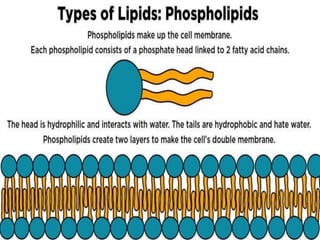
 Phospholipids are a class of lipids whose molecule has a
hydrophilic "head" and hydrophobic "tails".
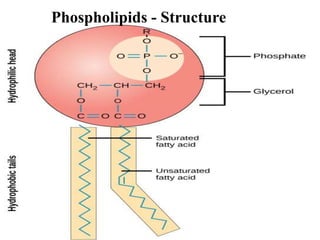
 Phospholipids are compound lipids contain fatty acids,
alcohol, phosphoric acid and nitrogenous base.
Phospholipids - Structure
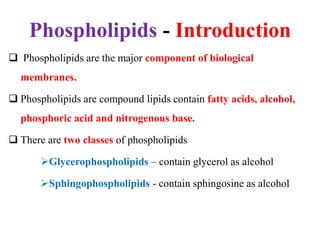
Phospholipids - Introduction
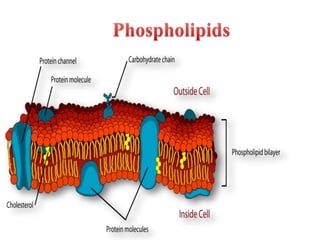
 Phospholipids are the major component of biological
membranes.
 Phospholipids are compound lipids contain fatty acids, alcohol,
phosphoric acid and nitrogenous base.
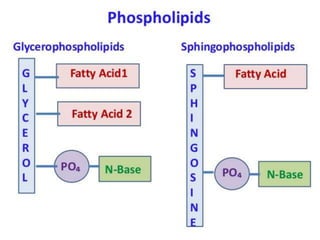
 There are two classes of phospholipids
Glycerophospholipids – contain glycerol as alcohol
Sphingophospholipids - contain sphingosine as alcohol
Phospholipids - Glycerophospholipids
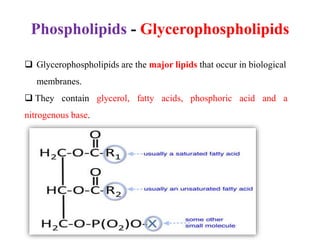
 Glycerophospholipids are the major lipids that occur in biological
membranes.
 They contain glycerol, fatty acids, phosphoric acid and a
nitrogenous base.
Glycerophospholipids
o Glycerophospholipids are the major lipids that
occur in biological membranes.
o They contain glycerol, fatty acids, phosphoric
acid and a nitrogenous base.
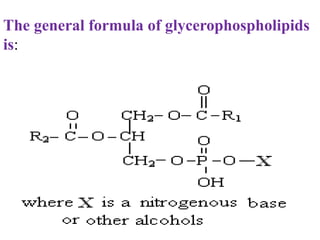
The general formula of glycerophospholipids
is:
Glycerophospholipids
o Usually C-1 contans a saturated fatty acid
while C-2 contains an unsaturated fatty acid.
o The simplest of phospholipids is phosphatidic
acid.
o It contains a glycerol, fatty acids and
phosphate.
Phospholipids - Types
 Depending on the alcoholic residue attached, they are
named as:
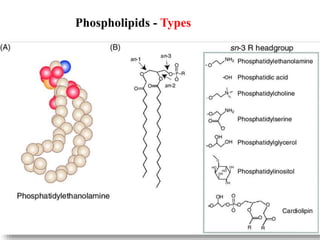
 Phosphatidyl choline (lecithin),
 Phosphatidyl ethanolamine (cephalin),
 Phosphatidyl serine,
 Phosphatidyl inositol,
 Phosphatidyl glycerol and
 Diphosphatidyl glycerol (cardiolipin).
Phospholipids - Types
Lecithins are the most abundant group of
phospholipids in the cell membranes and have
metabolic and structural functions.
Dipalmitoyl lecithin is an important surface
active agent in lungs.
Phospholipids - Types
Cephalins are also membrane phospholipids and have the
base ethanolamine.
Phosphatidylinositol is involved in signal transduction.
Cardiolipin was first isolated from heart muscle. It
consists of two phosphatidic acid held by an additional
glycerol. It is an important component of inner
mitochondrial membrane.
Phospholipids - Types
Phosphatidylglycerol is a major phospholipid
in thylakoid membrane of chloroplast.
Phosphatidyl serine is a minor component of
most membranes. It is found to take part in cell
signaling and in apoptosis.
Phospholipids – Functions
In association with proteins, phospholipids form the
structural components of membranes and regulate
membrane permeability.
Phospholipids (lecithin, cephalin, and cardiolipin) in
the mitochondria are responsible for maintaining
the conformation of electron transport chain
components and thus cellular respiration.
Phospholipids – Functions
Due to their amphipathic nature, phospholipids can
combine with polar and non-polar compounds in the
cell.
Phospholipids participate in the absorption of fat from
the intestine.
Phospholipids are essential for the synthesis of
different lipoproteins and thus participate in the
transport of lipids.
Phospholipids – Functions
Arachidonic acid liberated from phospholipids
serves as a precursor for the synthesis of
eicosanoids (prostaglandins, prostacyclins,
thromboxanes, etc.)
Dipalmitoyl lecithin is an important lung
surfactant.
Cephalins participate in blood clotting.
Phospholipids – Functions
Phospholipids are essential components of bile
where they act as detergents and helps in
solubilization of cholesterol.
Phosphatidyl inositol is involved in signal
transmission across membranes.
Sphingophospholipids
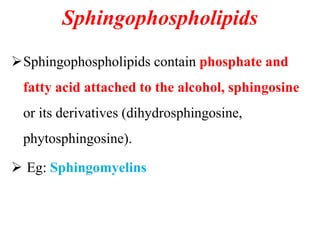
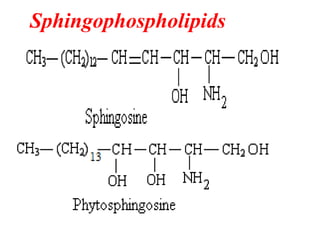
Sphingophospholipids contain phosphate and
fatty acid attached to the alcohol, sphingosine
or its derivatives (dihydrosphingosine,
phytosphingosine).
 Eg: Sphingomyelins
Sphingophospholipids
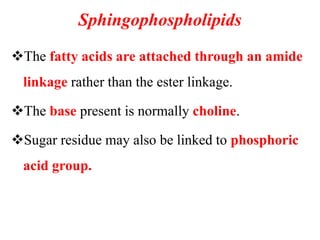
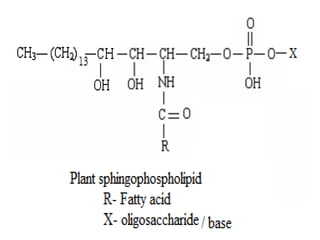
The fatty acids are attached through an amide
linkage rather than the ester linkage.
The base present is normally choline.
Sugar residue may also be linked to phosphoric
acid group.
Sphingophospholipids
When fatty acid and sphingosine is linked by amide
bond, a ceramide is formed.
Ceramide is the fundamental unit in all
sphingolipids.
Sphingomyelins are found in large amount in the
brain and nerve tissues.
Sphingophospholipids are also found in the seeds
of several plant species.
GLYCOLIPIDS
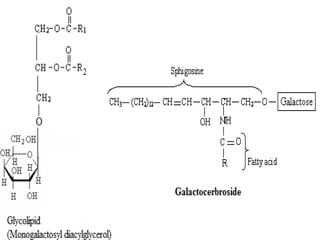
Glycolipids contain an alcohol (sphingosine or
glycerol), fatty acid and a monosaccharide.
They are O-glycosides of either sphingosine or
glycerol derivative.
The commonly attached monosaccharides are D-
glucose, D-galactose or N-acetyl D-galactosamine.
GLYCOLIPIDS
Monogalactosyl diglycerides and
digalactosyldiglycerides have been shown to be
present in many higher plant tissues especially in
chloroplast membrane.
Glycolipids present in animal cells help in cell
to cell communication

Structural Lipids.pptx

  • 2.
    STRUCTURAL LIPIDS Phospholipids andglycolipids are important structural lipids and are constituents of biological membranes.
  • 4.
    Phospholipids - Introduction LIPIDS: Lipids are macrobiomolecule that are insoluble in water, but soluble in organic solvents like ether, benzene, chloroform etc. PHOSPHOLIPIDS:  Phospholipids are a class of lipids whose molecule has a hydrophilic "head" and hydrophobic "tails".  Phospholipids are compound lipids contain fatty acids, alcohol, phosphoric acid and nitrogenous base.
  • 6.
  • 7.
    Phospholipids - Introduction Phospholipids are the major component of biological membranes.  Phospholipids are compound lipids contain fatty acids, alcohol, phosphoric acid and nitrogenous base.  There are two classes of phospholipids Glycerophospholipids – contain glycerol as alcohol Sphingophospholipids - contain sphingosine as alcohol
  • 9.
    Phospholipids - Glycerophospholipids Glycerophospholipids are the major lipids that occur in biological membranes.  They contain glycerol, fatty acids, phosphoric acid and a nitrogenous base.
  • 10.
    Glycerophospholipids o Glycerophospholipids arethe major lipids that occur in biological membranes. o They contain glycerol, fatty acids, phosphoric acid and a nitrogenous base.
  • 11.
    The general formulaof glycerophospholipids is:
  • 12.
    Glycerophospholipids o Usually C-1contans a saturated fatty acid while C-2 contains an unsaturated fatty acid. o The simplest of phospholipids is phosphatidic acid. o It contains a glycerol, fatty acids and phosphate.
  • 13.
    Phospholipids - Types Depending on the alcoholic residue attached, they are named as:  Phosphatidyl choline (lecithin),  Phosphatidyl ethanolamine (cephalin),  Phosphatidyl serine,  Phosphatidyl inositol,  Phosphatidyl glycerol and  Diphosphatidyl glycerol (cardiolipin).
  • 14.
    Phospholipids - Types Lecithinsare the most abundant group of phospholipids in the cell membranes and have metabolic and structural functions. Dipalmitoyl lecithin is an important surface active agent in lungs.
  • 15.
  • 16.
    Phospholipids - Types Cephalinsare also membrane phospholipids and have the base ethanolamine. Phosphatidylinositol is involved in signal transduction. Cardiolipin was first isolated from heart muscle. It consists of two phosphatidic acid held by an additional glycerol. It is an important component of inner mitochondrial membrane.
  • 17.
    Phospholipids - Types Phosphatidylglycerolis a major phospholipid in thylakoid membrane of chloroplast. Phosphatidyl serine is a minor component of most membranes. It is found to take part in cell signaling and in apoptosis.
  • 18.
    Phospholipids – Functions Inassociation with proteins, phospholipids form the structural components of membranes and regulate membrane permeability. Phospholipids (lecithin, cephalin, and cardiolipin) in the mitochondria are responsible for maintaining the conformation of electron transport chain components and thus cellular respiration.
  • 19.
    Phospholipids – Functions Dueto their amphipathic nature, phospholipids can combine with polar and non-polar compounds in the cell. Phospholipids participate in the absorption of fat from the intestine. Phospholipids are essential for the synthesis of different lipoproteins and thus participate in the transport of lipids.
  • 20.
    Phospholipids – Functions Arachidonicacid liberated from phospholipids serves as a precursor for the synthesis of eicosanoids (prostaglandins, prostacyclins, thromboxanes, etc.) Dipalmitoyl lecithin is an important lung surfactant. Cephalins participate in blood clotting.
  • 21.
    Phospholipids – Functions Phospholipidsare essential components of bile where they act as detergents and helps in solubilization of cholesterol. Phosphatidyl inositol is involved in signal transmission across membranes.
  • 22.
    Sphingophospholipids Sphingophospholipids contain phosphateand fatty acid attached to the alcohol, sphingosine or its derivatives (dihydrosphingosine, phytosphingosine).  Eg: Sphingomyelins
  • 23.
  • 24.
    Sphingophospholipids The fatty acidsare attached through an amide linkage rather than the ester linkage. The base present is normally choline. Sugar residue may also be linked to phosphoric acid group.
  • 26.
    Sphingophospholipids When fatty acidand sphingosine is linked by amide bond, a ceramide is formed. Ceramide is the fundamental unit in all sphingolipids. Sphingomyelins are found in large amount in the brain and nerve tissues. Sphingophospholipids are also found in the seeds of several plant species.
  • 27.
    GLYCOLIPIDS Glycolipids contain analcohol (sphingosine or glycerol), fatty acid and a monosaccharide. They are O-glycosides of either sphingosine or glycerol derivative. The commonly attached monosaccharides are D- glucose, D-galactose or N-acetyl D-galactosamine.
  • 29.
    GLYCOLIPIDS Monogalactosyl diglycerides and digalactosyldiglycerideshave been shown to be present in many higher plant tissues especially in chloroplast membrane. Glycolipids present in animal cells help in cell to cell communication