- IVINA ANDRADE
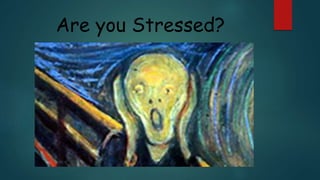
Are you Stressed?
Introduction
Major causes of Stress
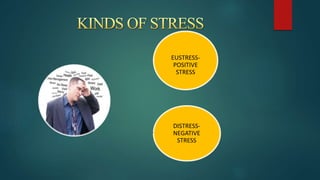
Kinds of Stress
Symptoms of Stress
Stress Related Illnesses
How can you cope with Stress ?
Stress control
Benefits of Stress management
Stress is defined as an organism's total response to
an environmental condition or stimulus, also
known as a stressor.
Stressor – environmental conditions that
cause individuals to experience stress
Stress typically describes a negative condition that
can have an impact on an organism's mental and
physical well-being.
Stress is often termed as a twentieth century
syndrome, born out of man's race towards modern
progress and its ensuing complexities.
- BENJAMIN FRANKLIN
Is All Stress Bad?
 Moderate levels of stress may actually improve
performance and efficiency
 Too little stress may result in boredom
 Too much stress may cause an unproductive
anxiety level
MAJOR CAUSES OF STRESS
Some of these may include:
Being fired
Being Promoted or Demoted
Moving/Relocation
Death of family or friends
These are just examples of major life changes that
can have a serious impact on our lives and cause our
bodies to react with stress. Often times, the most
common and stressful things happen on a daily basis.
EUSTRESS-
POSITIVE
STRESS
DISTRESS-
NEGATIVE
STRESS
Positive Stress
Stress can also have a positive effect, motivation
and awareness, providing the stimulation to cope
with challenging situations.
Stress also provides the sense of urgency and
alertness needed for survival when confronting
threatening situations.
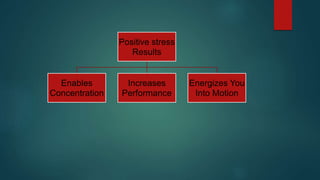
Positive stress
Results
Enables
Concentration
Increases
Performance
Energizes You
Into Motion
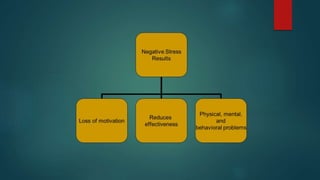
Negative Stress
It is a contributory factor in minor conditions,
such as headaches, digestive problems, skin
complaints, insomnia and ulcers.
Excessive, prolonged and unrelieved stress can
have a harmful effect on mental, physical and
spiritual health.
Acute Stress
Acute stress is usually for short time and may be due to work
pressure, meeting deadlines pressure or minor accident, over
exertion, increased physical activity, searching something but you
misplaced it, or similar things. Symptoms of this type of tension
are headaches, back pain, stomach problems, rapid heartbeat,
muscle aches or body pain.
Chronic Stress
This type of stress is the most serious of all the 3 stress types.
Chronic stress is a prolonged stress that exists for weeks, months,
or even years. This stress is due to poverty, stressed families,
chronic illness and successive failures in life. People suffering
from this type of stress get used to it and may even not realize
that they are under chronic stress. It is very harmful to their
health
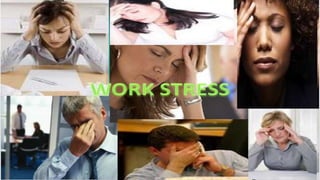
Also known as Occupational Stress
"The adverse reaction people have due to
excessive pressures or other types of
demand placed on them at work.“
Stress is not an illness – it is a state. However,
if stress becomes too excessive and prolonged,
mental and physical illness may develop.
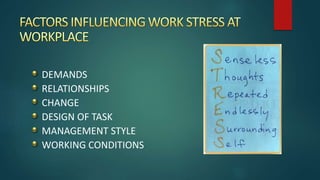
DEMANDS
RELATIONSHIPS
CHANGE
DESIGN OF TASK
MANAGEMENT STYLE
WORKING CONDITIONS
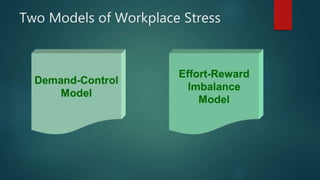
Two Models of Workplace Stress
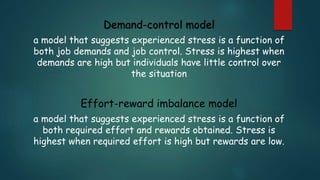
Demand-control model
a model that suggests experienced stress is a function of
both job demands and job control. Stress is highest when
demands are high but individuals have little control over
the situation
Effort-reward imbalance model
a model that suggests experienced stress is a function of
both required effort and rewards obtained. Stress is
highest when required effort is high but rewards are low.
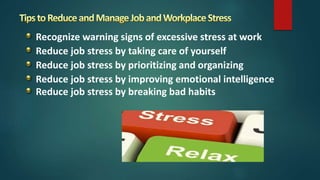
Recognize warning signs of excessive stress at work
Reduce job stress by taking care of yourself
Reduce job stress by prioritizing and organizing
Reduce job stress by improving emotional intelligence
Reduce job stress by breaking bad habits
Figure out where the stress is coming
from.
Consider what you can control—and work
on that.
Do what you love.
Manage your time well.
SYMPTOMS OF STRESS
• Physical symptoms
• Mental symptoms
• Behavioural symptoms
• Emotional symptoms
PHYSICAL SYMPTOMS
• Sleep pattern changes
• Fatigue
• Digestion changes
• Headaches
• Aches and pains
• Infections
• Indigestion
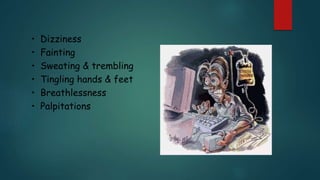
• Dizziness
• Fainting
• Sweating & trembling
• Tingling hands & feet
• Breathlessness
• Palpitations
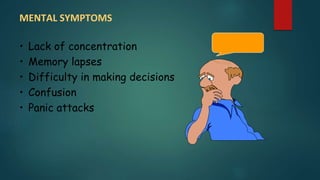
MENTAL SYMPTOMS
• Lack of concentration
• Memory lapses
• Difficulty in making decisions
• Confusion
• Panic attacks
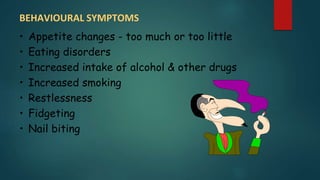
BEHAVIOURAL SYMPTOMS
• Appetite changes - too much or too little
• Eating disorders
• Increased intake of alcohol & other drugs
• Increased smoking
• Restlessness
• Fidgeting
• Nail biting
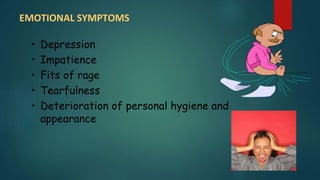
EMOTIONAL SYMPTOMS
• Depression
• Impatience
• Fits of rage
• Tearfulness
• Deterioration of personal hygiene and
appearance
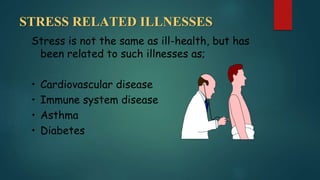
STRESS RELATED ILLNESSES
Stress is not the same as ill-health, but has
been related to such illnesses as;
• Cardiovascular disease
• Immune system disease
• Asthma
• Diabetes
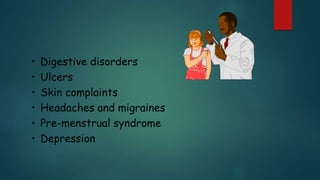
• Digestive disorders
• Ulcers
• Skin complaints
• Headaches and migraines
• Pre-menstrual syndrome
• Depression
How Can You Cope With Stress?
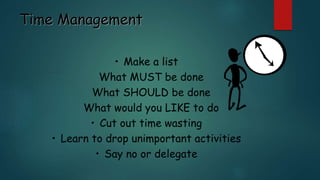
Time Management
• Make a list
What MUST be done
What SHOULD be done
What would you LIKE to do
• Cut out time wasting
• Learn to drop unimportant activities
• Say no or delegate
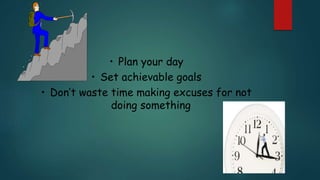
• Plan your day
• Set achievable goals
• Don’t waste time making excuses for not
doing something
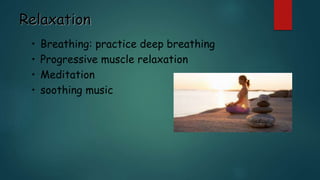
Relaxation
• Breathing: practice deep breathing
• Progressive muscle relaxation
• Meditation
• soothing music
Cognitive (Thoughts)
• Pay attention to what you say to yourself
• Identify negative thinking and irrational
beliefs
• Negative thinking leads to stress and
anxiety
• Teach thought-stopping techniques
• Focus on the positives and the future that
you can still impact.
Speak up
Assertive communication can help you express
how you feel in a thoughtful, tactful way.
Ask for help
People who have a strong network of family
and friends manage stress better.
Focus on the present
Try meditation, exercises, or self-hypnosis.
Don’t keep thinking back to your mistakes and
reliving the negative things that happened.
There is nothing you can do about it. Let it go
and look ahead, not behind.
Laugh it up!
Try to look for the humor in life. Don’t take
yourself so seriously. Everything will pass
eventually and keeping a sense of humor will help
lighten the load. Laughter really can be the best
medicine!
Take good care of yourself.
Exercise, get plenty of rest, try to eat well,
don't smoke and limit how much alcohol you
drink.
Schedule
You may get more done with less stress if you
make a schedule. Think about which things
are most important, and put those at the top
of your schedule/list to do those things first.
More Ideas…
• Laugh Often
• Try a New Thing
• Cry
• Get Enough Sleep
• Exercise & Fresh Air
• Build a Support System – Friends, Family and
Co-Workers
• SAY “NO” OCCASSIONALY
Even More Ideas
• Learn to be flexible
• Relax your standards
• Focus less on pleasing others and more on
pleasing yourself
• Stay away from negative people
• Surround yourself with upbeat, flexible and
fun people.
• Go easy with criticism
Live with an Attitude of Gratitude
Be Grateful for what you have.
One negative thought
leads to another………..
then another………..
then another …..
Pretty soon you have ruined your entire life
STRESS CONTROL
A B C STRATEGY
A = AWARENESS
What causes you stress?
How do you react?
B = BALANCE
There is a fine line between positive / negative
stress
How much can you cope with before it becomes
negative ?
C = CONTROL
What can you do to help yourself combat the
negative effects of stress ?
BENEFITS OF STRESS
MANAGEMENT
 Physical health gets better
-more energy and stamina
 Emotions stabilized
-positive attitude
-hopeful/happier
 Ability to focus improved
-able to learn and achieve
So enjoy your life as it comes
………..and always be happy
Stress management

Stress management

  • 1.
  • 2.
  • 4.
    Introduction Major causes ofStress Kinds of Stress Symptoms of Stress Stress Related Illnesses How can you cope with Stress ? Stress control Benefits of Stress management
  • 5.
    Stress is definedas an organism's total response to an environmental condition or stimulus, also known as a stressor. Stressor – environmental conditions that cause individuals to experience stress
  • 6.
    Stress typically describesa negative condition that can have an impact on an organism's mental and physical well-being. Stress is often termed as a twentieth century syndrome, born out of man's race towards modern progress and its ensuing complexities. - BENJAMIN FRANKLIN
  • 7.
    Is All StressBad?  Moderate levels of stress may actually improve performance and efficiency  Too little stress may result in boredom  Too much stress may cause an unproductive anxiety level
  • 8.
    MAJOR CAUSES OFSTRESS Some of these may include: Being fired Being Promoted or Demoted Moving/Relocation Death of family or friends These are just examples of major life changes that can have a serious impact on our lives and cause our bodies to react with stress. Often times, the most common and stressful things happen on a daily basis.
  • 9.
  • 10.
    Positive Stress Stress canalso have a positive effect, motivation and awareness, providing the stimulation to cope with challenging situations. Stress also provides the sense of urgency and alertness needed for survival when confronting threatening situations.
  • 11.
  • 12.
    Negative Stress It isa contributory factor in minor conditions, such as headaches, digestive problems, skin complaints, insomnia and ulcers. Excessive, prolonged and unrelieved stress can have a harmful effect on mental, physical and spiritual health.
  • 14.
    Acute Stress Acute stressis usually for short time and may be due to work pressure, meeting deadlines pressure or minor accident, over exertion, increased physical activity, searching something but you misplaced it, or similar things. Symptoms of this type of tension are headaches, back pain, stomach problems, rapid heartbeat, muscle aches or body pain. Chronic Stress This type of stress is the most serious of all the 3 stress types. Chronic stress is a prolonged stress that exists for weeks, months, or even years. This stress is due to poverty, stressed families, chronic illness and successive failures in life. People suffering from this type of stress get used to it and may even not realize that they are under chronic stress. It is very harmful to their health
  • 16.
    Also known asOccupational Stress "The adverse reaction people have due to excessive pressures or other types of demand placed on them at work.“ Stress is not an illness – it is a state. However, if stress becomes too excessive and prolonged, mental and physical illness may develop.
  • 17.
  • 18.
    Two Models ofWorkplace Stress
  • 19.
    Demand-control model a modelthat suggests experienced stress is a function of both job demands and job control. Stress is highest when demands are high but individuals have little control over the situation Effort-reward imbalance model a model that suggests experienced stress is a function of both required effort and rewards obtained. Stress is highest when required effort is high but rewards are low.
  • 20.
    Recognize warning signsof excessive stress at work Reduce job stress by taking care of yourself Reduce job stress by prioritizing and organizing Reduce job stress by improving emotional intelligence Reduce job stress by breaking bad habits
  • 21.
    Figure out wherethe stress is coming from. Consider what you can control—and work on that. Do what you love. Manage your time well.
  • 22.
    SYMPTOMS OF STRESS •Physical symptoms • Mental symptoms • Behavioural symptoms • Emotional symptoms
  • 23.
    PHYSICAL SYMPTOMS • Sleeppattern changes • Fatigue • Digestion changes • Headaches • Aches and pains • Infections • Indigestion
  • 24.
    • Dizziness • Fainting •Sweating & trembling • Tingling hands & feet • Breathlessness • Palpitations
  • 25.
    MENTAL SYMPTOMS • Lackof concentration • Memory lapses • Difficulty in making decisions • Confusion • Panic attacks
  • 26.
    BEHAVIOURAL SYMPTOMS • Appetitechanges - too much or too little • Eating disorders • Increased intake of alcohol & other drugs • Increased smoking • Restlessness • Fidgeting • Nail biting
  • 27.
    EMOTIONAL SYMPTOMS • Depression •Impatience • Fits of rage • Tearfulness • Deterioration of personal hygiene and appearance
  • 28.
    STRESS RELATED ILLNESSES Stressis not the same as ill-health, but has been related to such illnesses as; • Cardiovascular disease • Immune system disease • Asthma • Diabetes
  • 29.
    • Digestive disorders •Ulcers • Skin complaints • Headaches and migraines • Pre-menstrual syndrome • Depression
  • 30.
    How Can YouCope With Stress?
  • 31.
    Time Management • Makea list What MUST be done What SHOULD be done What would you LIKE to do • Cut out time wasting • Learn to drop unimportant activities • Say no or delegate
  • 32.
    • Plan yourday • Set achievable goals • Don’t waste time making excuses for not doing something
  • 33.
    Relaxation • Breathing: practicedeep breathing • Progressive muscle relaxation • Meditation • soothing music
  • 34.
    Cognitive (Thoughts) • Payattention to what you say to yourself • Identify negative thinking and irrational beliefs • Negative thinking leads to stress and anxiety • Teach thought-stopping techniques • Focus on the positives and the future that you can still impact.
  • 35.
    Speak up Assertive communicationcan help you express how you feel in a thoughtful, tactful way. Ask for help People who have a strong network of family and friends manage stress better.
  • 36.
    Focus on thepresent Try meditation, exercises, or self-hypnosis. Don’t keep thinking back to your mistakes and reliving the negative things that happened. There is nothing you can do about it. Let it go and look ahead, not behind.
  • 37.
    Laugh it up! Tryto look for the humor in life. Don’t take yourself so seriously. Everything will pass eventually and keeping a sense of humor will help lighten the load. Laughter really can be the best medicine!
  • 38.
    Take good careof yourself. Exercise, get plenty of rest, try to eat well, don't smoke and limit how much alcohol you drink.
  • 39.
    Schedule You may getmore done with less stress if you make a schedule. Think about which things are most important, and put those at the top of your schedule/list to do those things first.
  • 40.
    More Ideas… • LaughOften • Try a New Thing • Cry • Get Enough Sleep • Exercise & Fresh Air • Build a Support System – Friends, Family and Co-Workers • SAY “NO” OCCASSIONALY
  • 41.
    Even More Ideas •Learn to be flexible • Relax your standards • Focus less on pleasing others and more on pleasing yourself • Stay away from negative people • Surround yourself with upbeat, flexible and fun people. • Go easy with criticism
  • 42.
    Live with anAttitude of Gratitude Be Grateful for what you have.
  • 43.
    One negative thought leadsto another……….. then another……….. then another ….. Pretty soon you have ruined your entire life
  • 44.
  • 45.
    A = AWARENESS Whatcauses you stress? How do you react?
  • 46.
    B = BALANCE Thereis a fine line between positive / negative stress How much can you cope with before it becomes negative ?
  • 47.
    C = CONTROL Whatcan you do to help yourself combat the negative effects of stress ?
  • 48.
    BENEFITS OF STRESS MANAGEMENT Physical health gets better -more energy and stamina  Emotions stabilized -positive attitude -hopeful/happier  Ability to focus improved -able to learn and achieve
  • 49.
    So enjoy yourlife as it comes ………..and always be happy