Stress and
Intonation
•To speak is to pronounce every word
with such emotion and conviction to
deliver the appropriate message to
the listeners. Such skill is a tough act
to master! Yet, to become better
English learners, we need to gain
confidence in speaking through
correct speech.
Stress
•You put stress on a syllable when you
pronounce it with such a force that gives
it more importance than the surrounding
syllables and to make it stand out more
among them: for example, the com- of
comfortable or the –ter in determine.
•A long word frequently has two stressed
syllables, one of which is usually more
prominent than the other. An example is
economical. The most important syllable
bears the primary accent and the next
most important bears the secondary
accent. In the case of economical, the
primary accent falls on –nom- and the
secondary on e-.
•Stress then is the key to the
pronunciation of an English word,
and the location of the accent should
always be learned with the word. If
you out stress on the wrong syllable,
it may be quite difficult for anyone
listening to understand what you are
trying to say.
Intonation
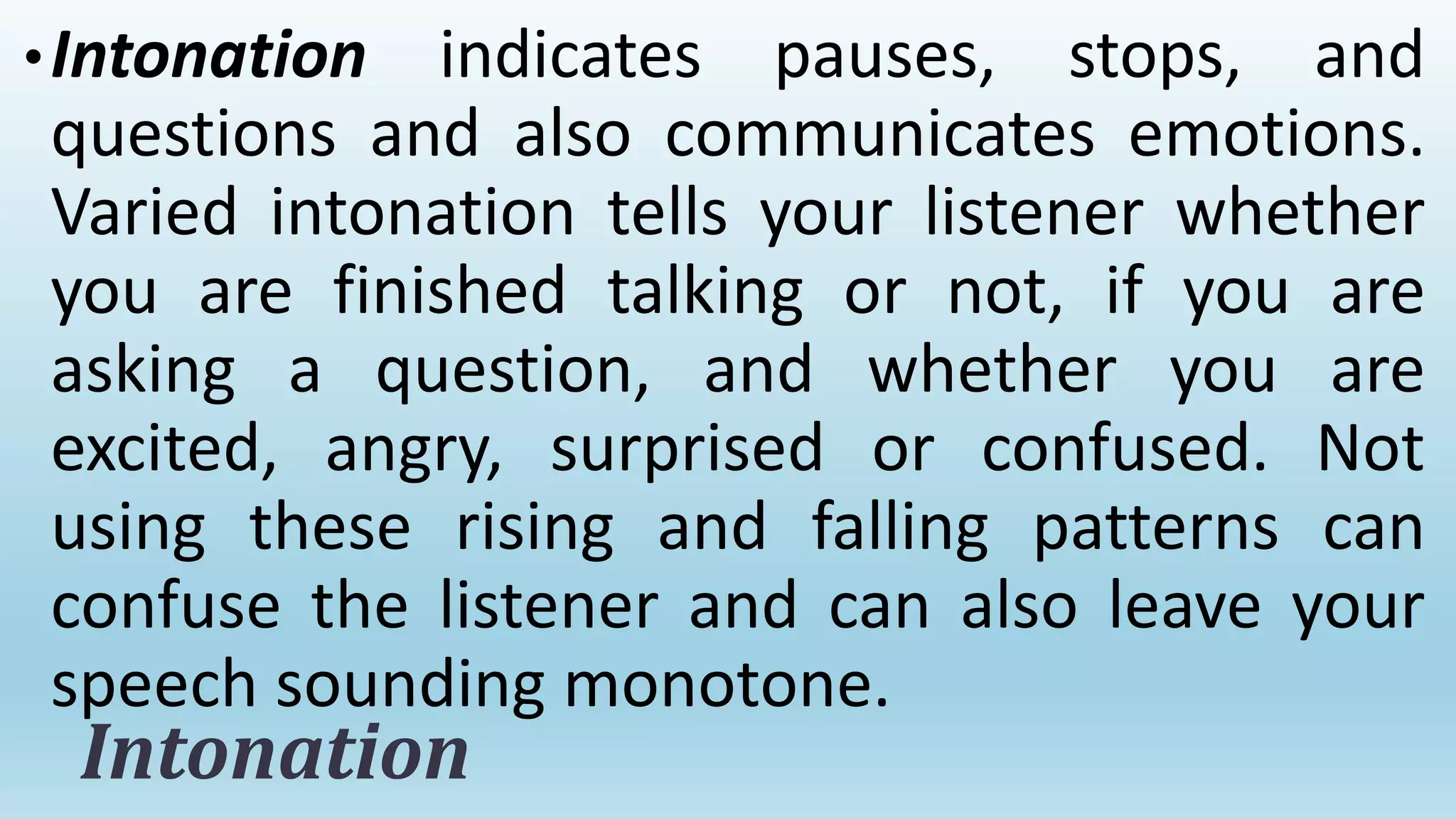
•Intonation indicates pauses, stops, and
questions and also communicates emotions.
Varied intonation tells your listener whether
you are finished talking or not, if you are
asking a question, and whether you are
excited, angry, surprised or confused. Not
using these rising and falling patterns can
confuse the listener and can also leave your
speech sounding monotone.
Falling Intonation
•This is when your pitch lowers at the
end of a phrase or sentence. We use
falling intonation at the end of a
statement or with a question that uses
who, what, when, where, why, or how.
Rising Intonation
•This is when your pitch
goes up. It is used
when asking a yes/no
question.
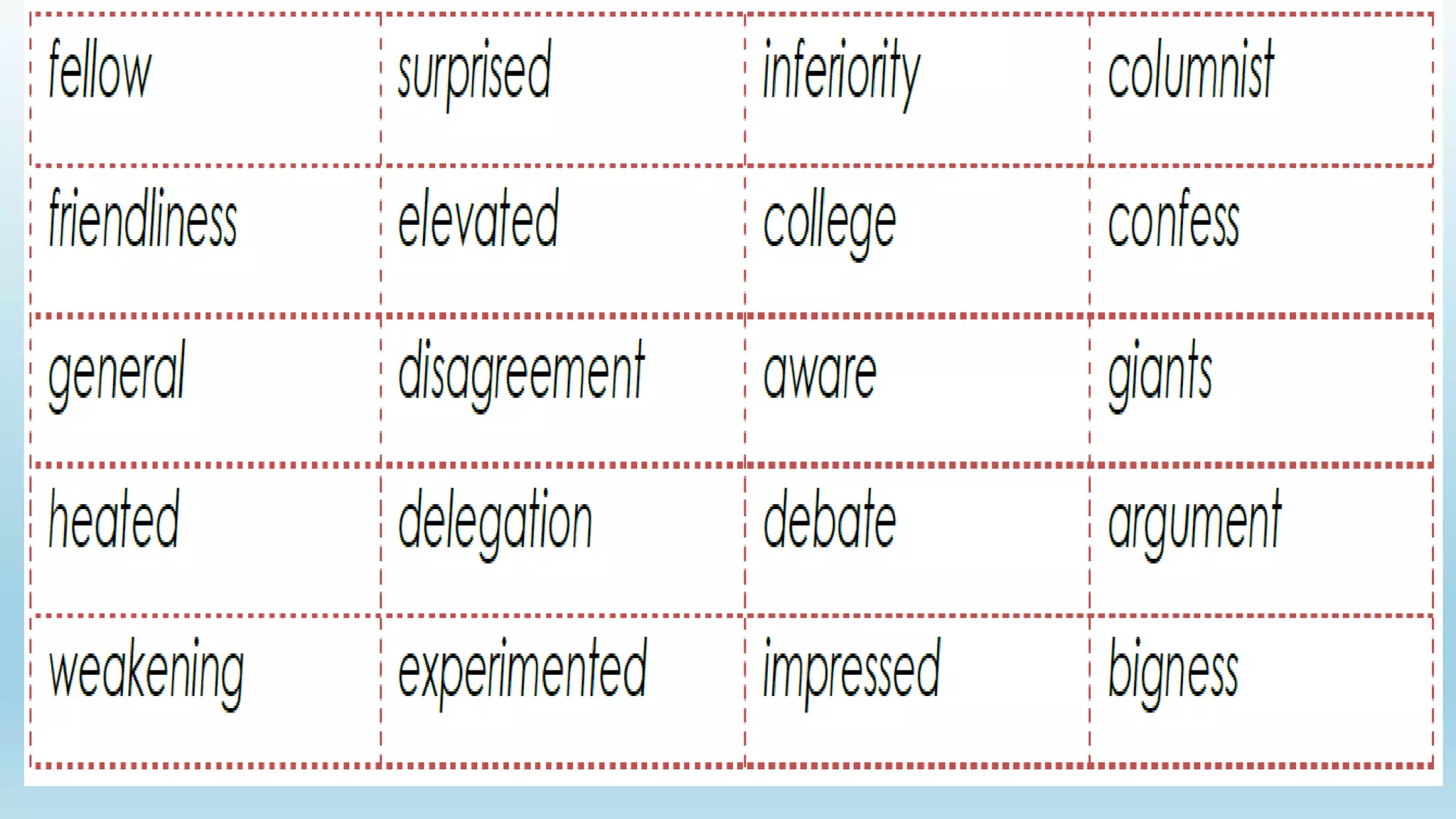
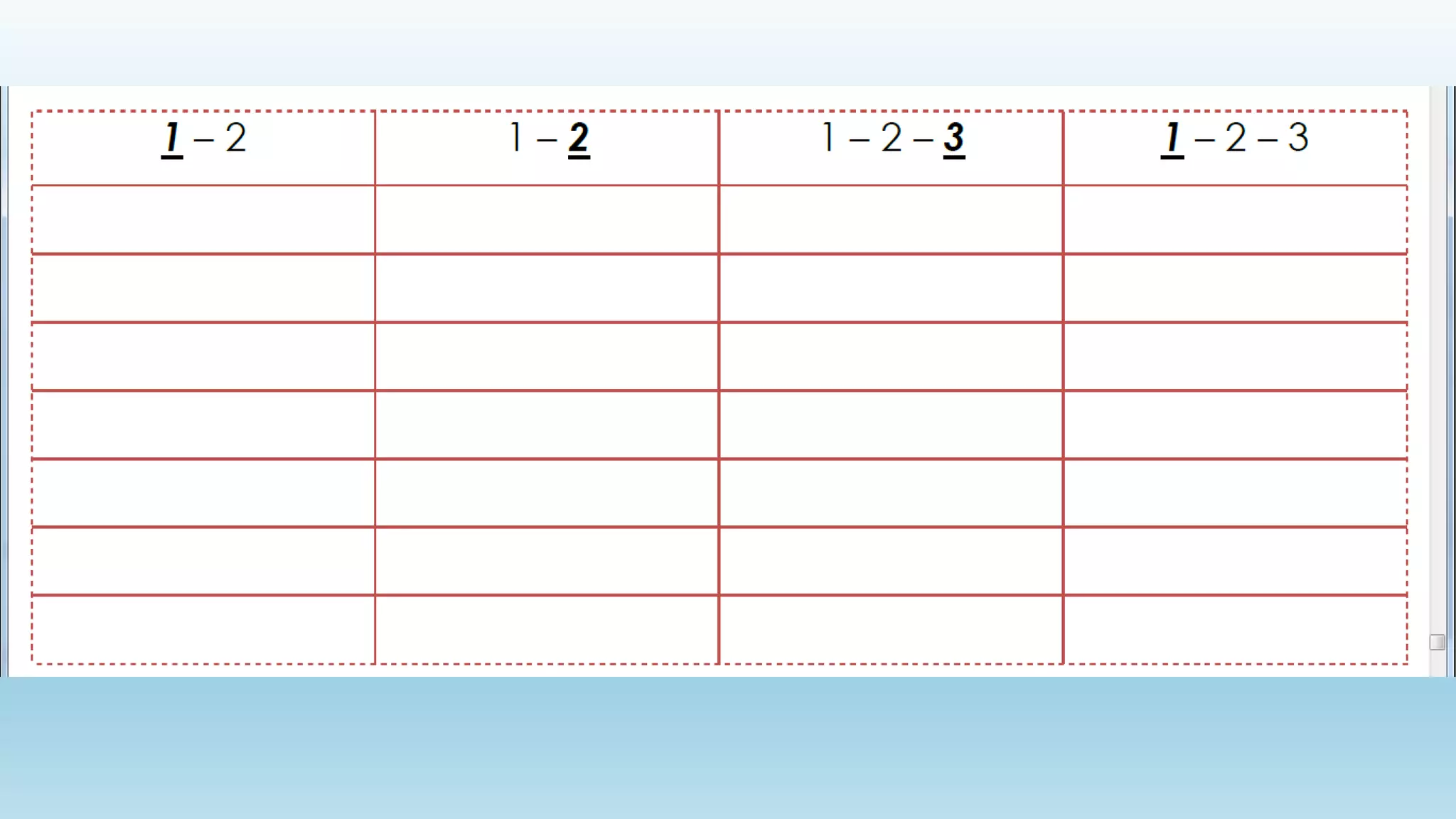
• The chart below has five columns. At the top of
each, there are numbers 1, 2, and 3 which
represent each syllable, and one of the numbers
in each chart are bolded and underlined,
showing the syllable that is stressed. Place each
word below the corresponding column which
indicates its stressed syllable.
Stress and intonation

Stress and intonation

  • 1.
  • 2.
    •To speak isto pronounce every word with such emotion and conviction to deliver the appropriate message to the listeners. Such skill is a tough act to master! Yet, to become better English learners, we need to gain confidence in speaking through correct speech.
  • 3.
    Stress •You put stresson a syllable when you pronounce it with such a force that gives it more importance than the surrounding syllables and to make it stand out more among them: for example, the com- of comfortable or the –ter in determine.
  • 4.
    •A long wordfrequently has two stressed syllables, one of which is usually more prominent than the other. An example is economical. The most important syllable bears the primary accent and the next most important bears the secondary accent. In the case of economical, the primary accent falls on –nom- and the secondary on e-.
  • 5.
    •Stress then isthe key to the pronunciation of an English word, and the location of the accent should always be learned with the word. If you out stress on the wrong syllable, it may be quite difficult for anyone listening to understand what you are trying to say.
  • 6.
    Intonation •Intonation indicates pauses,stops, and questions and also communicates emotions. Varied intonation tells your listener whether you are finished talking or not, if you are asking a question, and whether you are excited, angry, surprised or confused. Not using these rising and falling patterns can confuse the listener and can also leave your speech sounding monotone.
  • 7.
    Falling Intonation •This iswhen your pitch lowers at the end of a phrase or sentence. We use falling intonation at the end of a statement or with a question that uses who, what, when, where, why, or how.
  • 8.
    Rising Intonation •This iswhen your pitch goes up. It is used when asking a yes/no question.
  • 9.
    • The chartbelow has five columns. At the top of each, there are numbers 1, 2, and 3 which represent each syllable, and one of the numbers in each chart are bolded and underlined, showing the syllable that is stressed. Place each word below the corresponding column which indicates its stressed syllable.