The Second Coming
William Butler Yeats
Areej Aslam
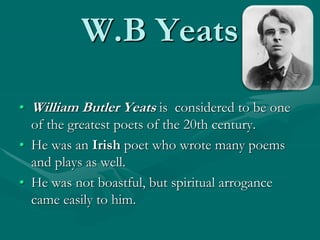
W.B Yeats
• William Butler Yeats is considered to be one
of the greatest poets of the 20th century.
• He was an Irish poet who wrote many poems
and plays as well.
• He was not boastful, but spiritual arrogance
came easily to him.
About Poem
• The poem was written in 1919 in the outcome of
the First World War and the beginning of the Irish
War of Independence.
• Yeats used the phrase “The Second Birth"
instead of “The Second Coming" in his first
drafts.
• It consist of two stanza.
• It is a poem of powerful imagery and symbolism.
Background
• Europe had enjoyed almost a century without
conflict and this was exceptionally a long period
of peace.
• Then in 1914, the World War, the Irish Easter
Rising, the Russian Revolution, and soon
after, the rise of Fascism in both Germany
and Italy, all followed each other rapidly.
• And there was great disturbance in the Europe.
Cont.
• The poet had seen mass killings, diseases and
deaths around him.
• This made him believe that there is no concept
of morality in the world.
• As a substitute, the one who believes in doing
the wrong things is the one who gets more
benefitted.
Stanza 1
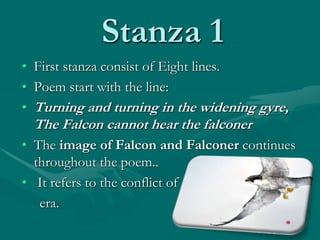
• First stanza consist of Eight lines.
• Poem start with the line:
• Turning and turning in the widening gyre,
The Falcon cannot hear the falconer
• The image of Falcon and Falconer continues
throughout the poem..
• It refers to the conflict of
era.
Cont.
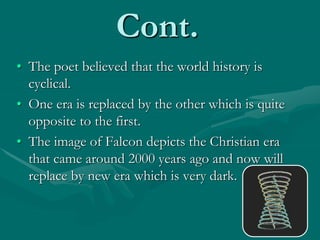
• The poet believed that the world history is
cyclical.
• One era is replaced by the other which is quite
opposite to the first.
• The image of Falcon depicts the Christian era
that came around 2000 years ago and now will
replace by new era which is very dark.
Cont.
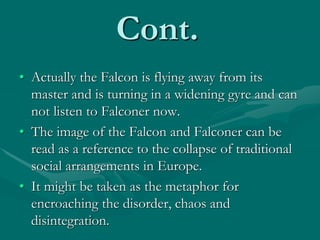
• Actually the Falcon is flying away from its
master and is turning in a widening gyre and can
not listen to Falconer now.
• The image of the Falcon and Falconer can be
read as a reference to the collapse of traditional
social arrangements in Europe.
• It might be taken as the metaphor for
encroaching the disorder, chaos and
disintegration.
Cont.
• The blood is flowing like a stream i.e. there are
mass killings, murders, and deaths everywhere.
• The good people or the intellectuals do not get
justice while the those full of passionate
intensity are enjoying.
• Yeats is thinking about the peaceful time of his
childhood and how it is gone forever.
Stanza 2
• This stanza consist of Fourteen lines.
• Surely some revelation is at hand;
Surely the Second Coming is at hand
• In second stanza Yeats give vision of the
Second coming of Christ to save mankind like
before.
• He observed Spiritus Mundi emerging out.
Cont.
• Though it was
supposed to provide
relief but the poet is
troubled by seeing
it.
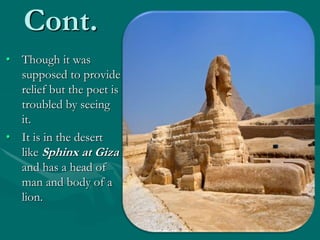
• It is in the desert
like Sphinx at Giza
and has a head of
man and body of a
lion.
• The beast is in no hurry and is moving slowly.
• It is unable of having sympathy with other
humans or it is merciless.
• The situation was almost similar only the
difference was that, Christ was born in
Bethlehem. Beast is moving slowly in desert
towards Bethlehem.
• The other thing is Christ was welcome and Beast
looks more terrifying than welcome.
• The end of the poem is on contrary to the
biblical belief according to Yeats.
• According to the Christian mythology, it was
believed that Christ will be born when the world
would be in disorder.
• But after Christ there was stony sleep of two
thousand years, leading to the present
nightmare.
• This era has come to an end.
• Desert Birds like vultures are flying around it
and falcon in the first stanza was too moving in
the gyre.
• The Falcon and the desert birds are probably
the same.
• Suddenly darkness come over again and the
vision is over again.
Theme
• This poem is about loss, about change, and
about traditional meanings and values coming
apart at the ridges.
• In the poem's conclusion Yeats suggests that out
of the chaos of that era, something is arising that
is darker and more evil.
• Good people don’t know what is worthy for
them and bad people are full of desire and
intensity
The second coming

The second coming

  • 1.
    The Second Coming WilliamButler Yeats Areej Aslam
  • 2.
    W.B Yeats • WilliamButler Yeats is considered to be one of the greatest poets of the 20th century. • He was an Irish poet who wrote many poems and plays as well. • He was not boastful, but spiritual arrogance came easily to him.
  • 3.
    About Poem • Thepoem was written in 1919 in the outcome of the First World War and the beginning of the Irish War of Independence. • Yeats used the phrase “The Second Birth" instead of “The Second Coming" in his first drafts. • It consist of two stanza. • It is a poem of powerful imagery and symbolism.
  • 4.
    Background • Europe hadenjoyed almost a century without conflict and this was exceptionally a long period of peace. • Then in 1914, the World War, the Irish Easter Rising, the Russian Revolution, and soon after, the rise of Fascism in both Germany and Italy, all followed each other rapidly. • And there was great disturbance in the Europe.
  • 5.
    Cont. • The poethad seen mass killings, diseases and deaths around him. • This made him believe that there is no concept of morality in the world. • As a substitute, the one who believes in doing the wrong things is the one who gets more benefitted.
  • 6.
    Stanza 1 • Firststanza consist of Eight lines. • Poem start with the line: • Turning and turning in the widening gyre, The Falcon cannot hear the falconer • The image of Falcon and Falconer continues throughout the poem.. • It refers to the conflict of era.
  • 7.
    Cont. • The poetbelieved that the world history is cyclical. • One era is replaced by the other which is quite opposite to the first. • The image of Falcon depicts the Christian era that came around 2000 years ago and now will replace by new era which is very dark.
  • 8.
    Cont. • Actually theFalcon is flying away from its master and is turning in a widening gyre and can not listen to Falconer now. • The image of the Falcon and Falconer can be read as a reference to the collapse of traditional social arrangements in Europe. • It might be taken as the metaphor for encroaching the disorder, chaos and disintegration.
  • 9.
    Cont. • The bloodis flowing like a stream i.e. there are mass killings, murders, and deaths everywhere. • The good people or the intellectuals do not get justice while the those full of passionate intensity are enjoying. • Yeats is thinking about the peaceful time of his childhood and how it is gone forever.
  • 10.
    Stanza 2 • Thisstanza consist of Fourteen lines. • Surely some revelation is at hand; Surely the Second Coming is at hand • In second stanza Yeats give vision of the Second coming of Christ to save mankind like before. • He observed Spiritus Mundi emerging out.
  • 11.
    Cont. • Though itwas supposed to provide relief but the poet is troubled by seeing it. • It is in the desert like Sphinx at Giza and has a head of man and body of a lion.
  • 12.
    • The beastis in no hurry and is moving slowly. • It is unable of having sympathy with other humans or it is merciless. • The situation was almost similar only the difference was that, Christ was born in Bethlehem. Beast is moving slowly in desert towards Bethlehem. • The other thing is Christ was welcome and Beast looks more terrifying than welcome.
  • 13.
    • The endof the poem is on contrary to the biblical belief according to Yeats. • According to the Christian mythology, it was believed that Christ will be born when the world would be in disorder. • But after Christ there was stony sleep of two thousand years, leading to the present nightmare. • This era has come to an end.
  • 14.
    • Desert Birdslike vultures are flying around it and falcon in the first stanza was too moving in the gyre. • The Falcon and the desert birds are probably the same. • Suddenly darkness come over again and the vision is over again.
  • 15.
    Theme • This poemis about loss, about change, and about traditional meanings and values coming apart at the ridges. • In the poem's conclusion Yeats suggests that out of the chaos of that era, something is arising that is darker and more evil. • Good people don’t know what is worthy for them and bad people are full of desire and intensity