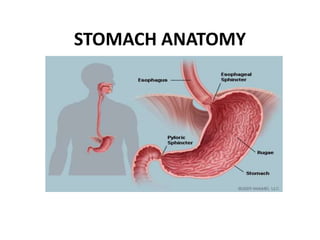
STOMACH ANATOMY
The stomach
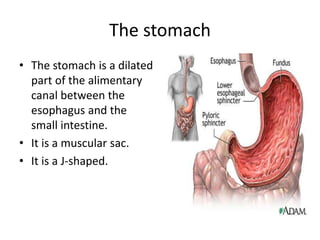
• The stomach is a dilated
part of the alimentary
canal between the
esophagus and the
small intestine.
• It is a muscular sac.
• It is a J-shaped.
The stomach
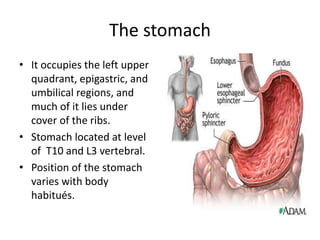
• It occupies the left upper
quadrant, epigastric, and
umbilical regions, and
much of it lies under
cover of the ribs.
• Stomach located at level
of T10 and L3 vertebral.
• Position of the stomach
varies with body
habitués.
The stomach
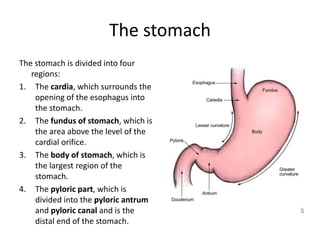
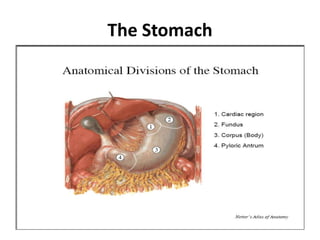
The stomach is divided into four
regions:
1. The cardia, which surrounds the
opening of the esophagus into
the stomach.
2. The fundus of stomach, which is
the area above the level of the
cardial orifice.
3. The body of stomach, which is
the largest region of the
stomach.
4. The pyloric part, which is
divided into the pyloric antrum
and pyloric canal and is the
distal end of the stomach.
The Stomach
The stomach
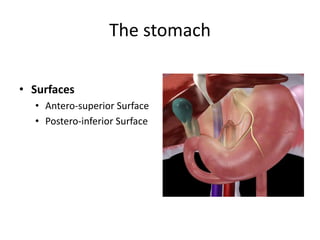
• Surfaces
• Antero-superior Surface
• Postero-inferior Surface
The stomach
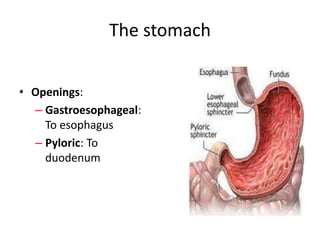
• Openings:
– Gastroesophageal:
To esophagus
– Pyloric: To
duodenum
The stomach
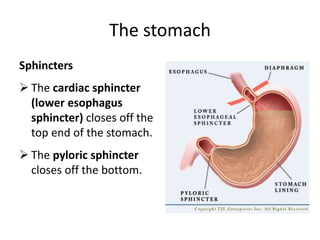
Sphincters
 The cardiac sphincter
(lower esophagus
sphincter) closes off the
top end of the stomach.
 The pyloric sphincter
closes off the bottom.
The stomach
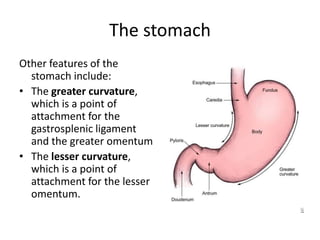
Other features of the
stomach include:
• The greater curvature,
which is a point of
attachment for the
gastrosplenic ligament
and the greater omentum
• The lesser curvature,
which is a point of
attachment for the lesser
omentum.
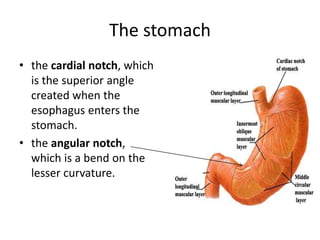
The stomach
• the cardial notch, which
is the superior angle
created when the
esophagus enters the
stomach.
• the angular notch,
which is a bend on the
lesser curvature.
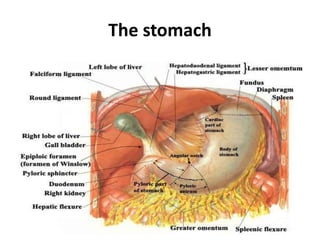
The stomach
• Lesser omentum
• Greater omentum
 Layers of peritoneum
attached to the
stomach:
 Lesser omentum:
attaches the liver to
the lesser curvature.
 Greater omentum:
attaches the greater
curvature to the
posterior body wall.
The stomach
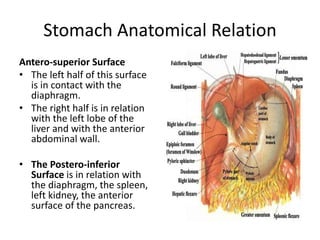
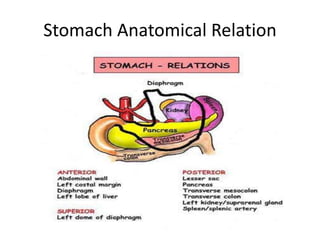
Stomach Anatomical Relation
Antero-superior Surface
• The left half of this surface
is in contact with the
diaphragm.
• The right half is in relation
with the left lobe of the
liver and with the anterior
abdominal wall.
• The Postero-inferior
Surface is in relation with
the diaphragm, the spleen,
left kidney, the anterior
surface of the pancreas.
Stomach Anatomical Relation
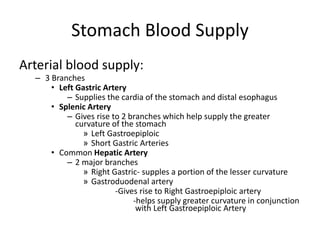
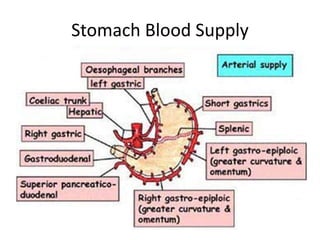
Stomach Blood Supply
Arterial blood supply:
– 3 Branches
• Left Gastric Artery
– Supplies the cardia of the stomach and distal esophagus
• Splenic Artery
– Gives rise to 2 branches which help supply the greater
curvature of the stomach
» Left Gastroepiploic
» Short Gastric Arteries
• Common Hepatic Artery
– 2 major branches
» Right Gastric- supples a portion of the lesser curvature
» Gastroduodenal artery
-Gives rise to Right Gastroepiploic artery
-helps supply greater curvature in conjunction
with Left Gastroepiploic Artery
Stomach Blood Supply
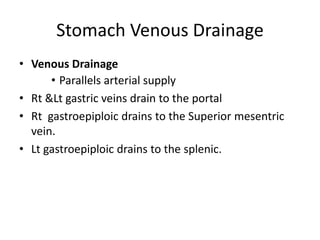
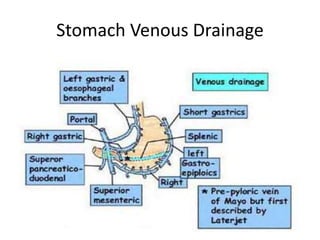
Stomach Venous Drainage
• Venous Drainage
• Parallels arterial supply
• Rt &Lt gastric veins drain to the portal
• Rt gastroepiploic drains to the Superior mesentric
vein.
• Lt gastroepiploic drains to the splenic.
Stomach Venous Drainage
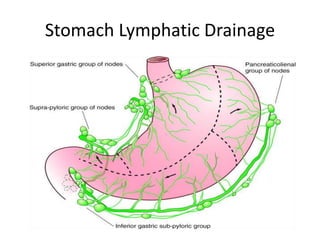
Stomach Lymphatic Drainage
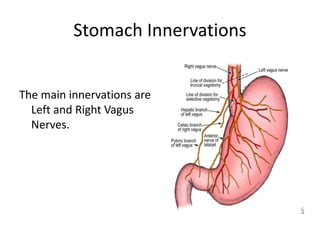
Stomach Innervations
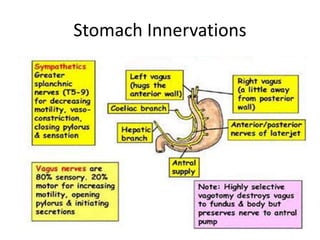
The main innervations are
Left and Right Vagus
Nerves.
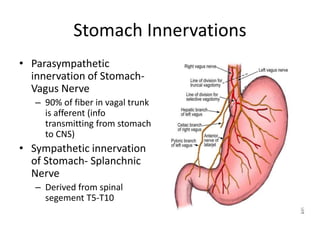
Stomach Innervations
• Parasympathetic
innervation of Stomach-
Vagus Nerve
– 90% of fiber in vagal trunk
is afferent (info
transmitting from stomach
to CNS)
• Sympathetic innervation
of Stomach- Splanchnic
Nerve
– Derived from spinal
segement T5-T10
Stomach Innervations

Stomach

  • 1.
  • 2.
    The stomach • Thestomach is a dilated part of the alimentary canal between the esophagus and the small intestine. • It is a muscular sac. • It is a J-shaped.
  • 3.
    The stomach • Itoccupies the left upper quadrant, epigastric, and umbilical regions, and much of it lies under cover of the ribs. • Stomach located at level of T10 and L3 vertebral. • Position of the stomach varies with body habitués.
  • 4.
    The stomach The stomachis divided into four regions: 1. The cardia, which surrounds the opening of the esophagus into the stomach. 2. The fundus of stomach, which is the area above the level of the cardial orifice. 3. The body of stomach, which is the largest region of the stomach. 4. The pyloric part, which is divided into the pyloric antrum and pyloric canal and is the distal end of the stomach.
  • 5.
  • 6.
    The stomach • Surfaces •Antero-superior Surface • Postero-inferior Surface
  • 7.
    The stomach • Openings: –Gastroesophageal: To esophagus – Pyloric: To duodenum
  • 8.
    The stomach Sphincters  Thecardiac sphincter (lower esophagus sphincter) closes off the top end of the stomach.  The pyloric sphincter closes off the bottom.
  • 9.
    The stomach Other featuresof the stomach include: • The greater curvature, which is a point of attachment for the gastrosplenic ligament and the greater omentum • The lesser curvature, which is a point of attachment for the lesser omentum.
  • 10.
    The stomach • thecardial notch, which is the superior angle created when the esophagus enters the stomach. • the angular notch, which is a bend on the lesser curvature.
  • 11.
    The stomach • Lesseromentum • Greater omentum  Layers of peritoneum attached to the stomach:  Lesser omentum: attaches the liver to the lesser curvature.  Greater omentum: attaches the greater curvature to the posterior body wall.
  • 12.
  • 13.
    Stomach Anatomical Relation Antero-superiorSurface • The left half of this surface is in contact with the diaphragm. • The right half is in relation with the left lobe of the liver and with the anterior abdominal wall. • The Postero-inferior Surface is in relation with the diaphragm, the spleen, left kidney, the anterior surface of the pancreas.
  • 14.
  • 15.
    Stomach Blood Supply Arterialblood supply: – 3 Branches • Left Gastric Artery – Supplies the cardia of the stomach and distal esophagus • Splenic Artery – Gives rise to 2 branches which help supply the greater curvature of the stomach » Left Gastroepiploic » Short Gastric Arteries • Common Hepatic Artery – 2 major branches » Right Gastric- supples a portion of the lesser curvature » Gastroduodenal artery -Gives rise to Right Gastroepiploic artery -helps supply greater curvature in conjunction with Left Gastroepiploic Artery
  • 16.
  • 17.
    Stomach Venous Drainage •Venous Drainage • Parallels arterial supply • Rt &Lt gastric veins drain to the portal • Rt gastroepiploic drains to the Superior mesentric vein. • Lt gastroepiploic drains to the splenic.
  • 18.
  • 19.
  • 20.
    Stomach Innervations The maininnervations are Left and Right Vagus Nerves.
  • 21.
    Stomach Innervations • Parasympathetic innervationof Stomach- Vagus Nerve – 90% of fiber in vagal trunk is afferent (info transmitting from stomach to CNS) • Sympathetic innervation of Stomach- Splanchnic Nerve – Derived from spinal segement T5-T10
  • 22.