STIRLING ENGINE
GUIDED BY:
Amijith A M
Lecturer
Department of Mechanical Engg.
PRESENTED BY:
SANJITH B S
Sememester - 5
Department of Mechanical Engg.
CONTENTS
• Introduction
• Types of stirling engine
• Components
• Working
• Alpha Stirling Engine
• Beta Stirling Engine
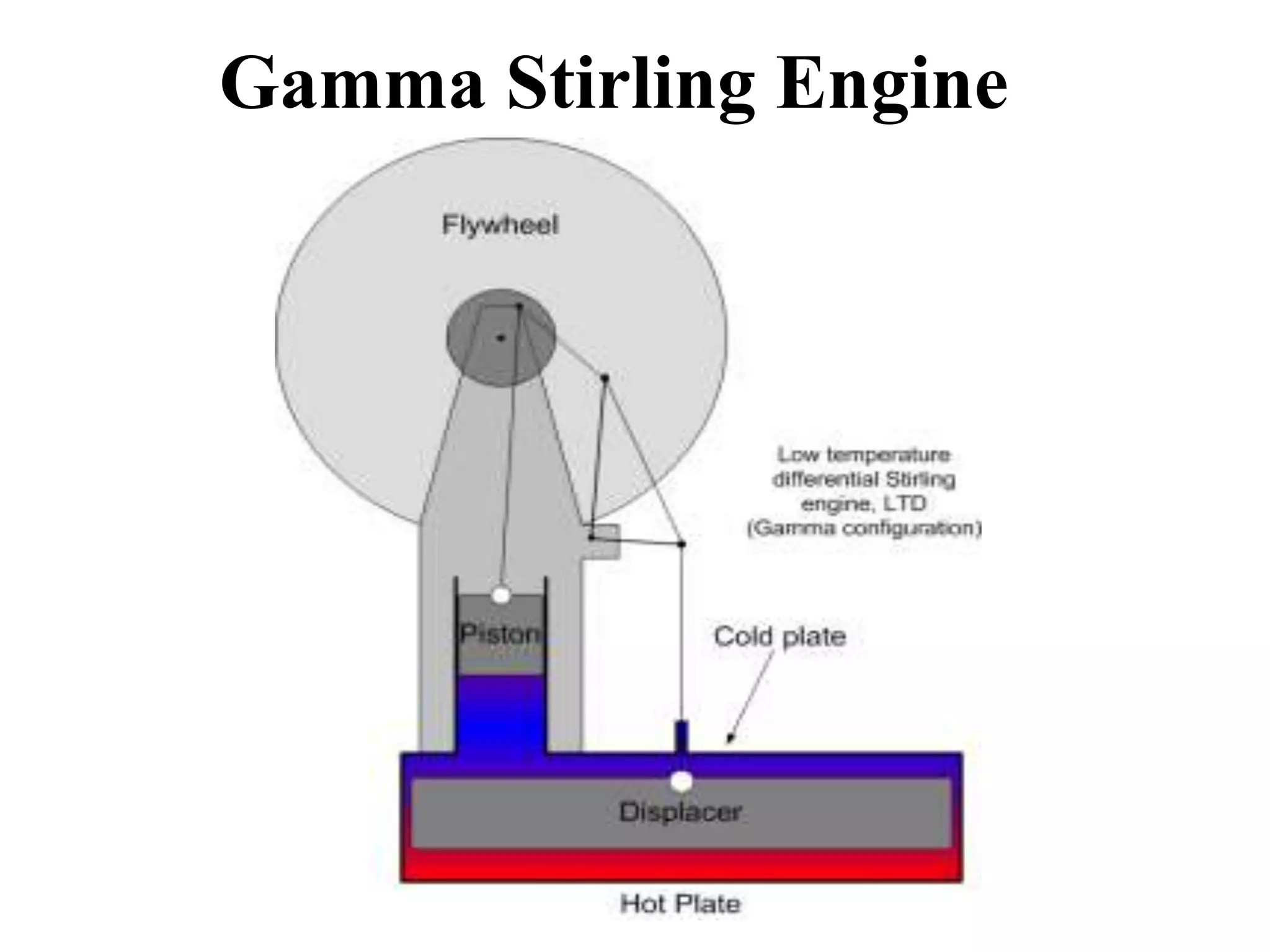
• Gamma Stirling Engine
• Application
• Advantages
• Disadvantages
• Conclusion
• Referances
Introduction
• Stirling engine is a heat engine
• Converts heat energy to mechanical work
• Developed and patened in 1816
• Inventor : Robert Stirling
• Works on any heat source
• It is vastly different from IC engines
• EC engine
• Closed working cycle
• Works on temperature difference
Types of stirling engine
The three major types of stirling engine are -:
1. Alpha Stirling Engine
2. Beta Stirling Engine
3. Gamma Stirling Engine
Components
• Regenerator
• Power Piston
• Displacer
• Crank shaft
• Flywheel
• Heat dissipation Fins
Working
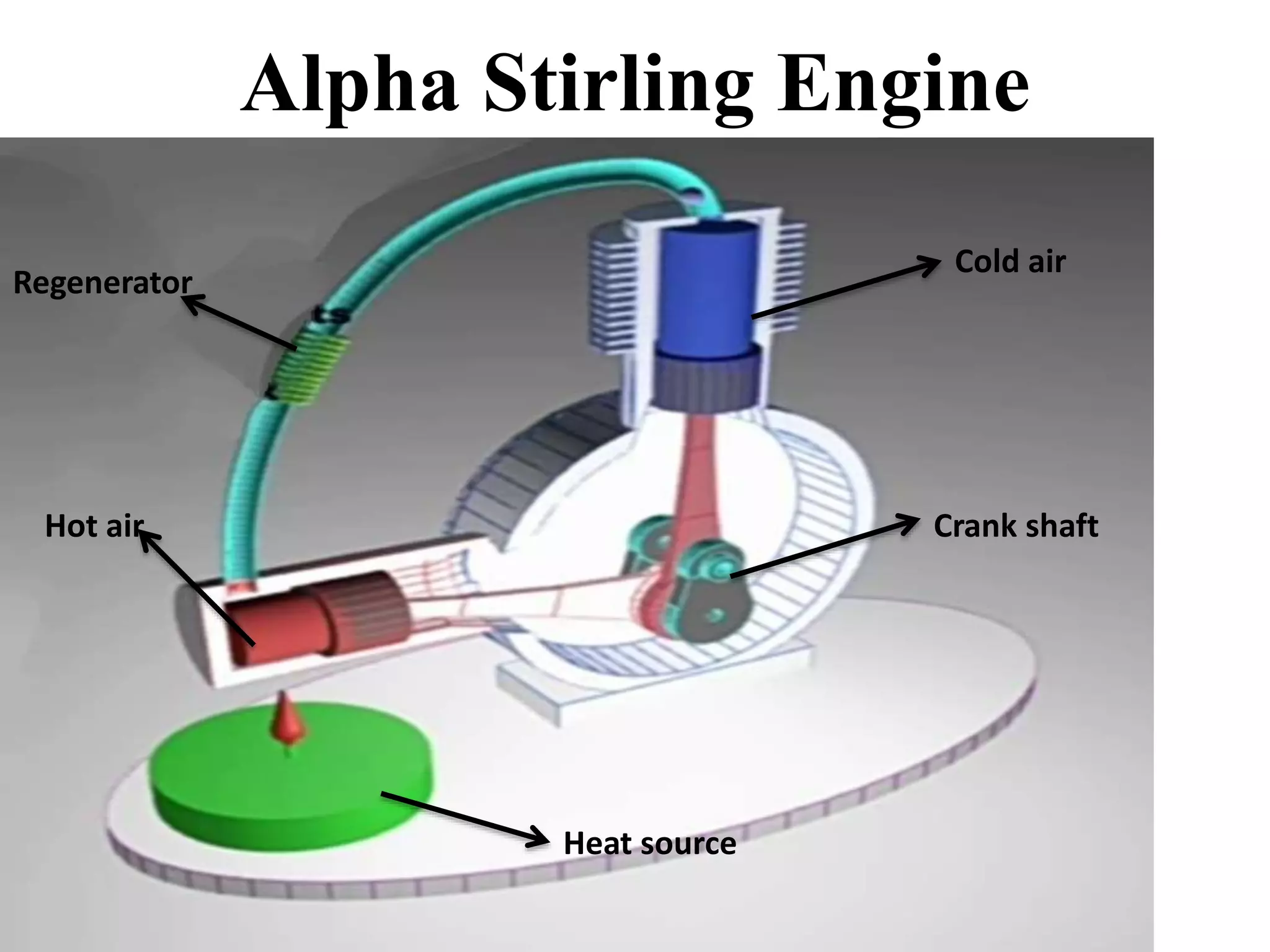
Alpha Stirling Engine
Cold air
Regenerator
Heat source
Hot air Crank shaft
Alpha Stirling Engine
4 Strokes -:
1. Expantion
2. Transfer
3. Contraction
4. Transfer
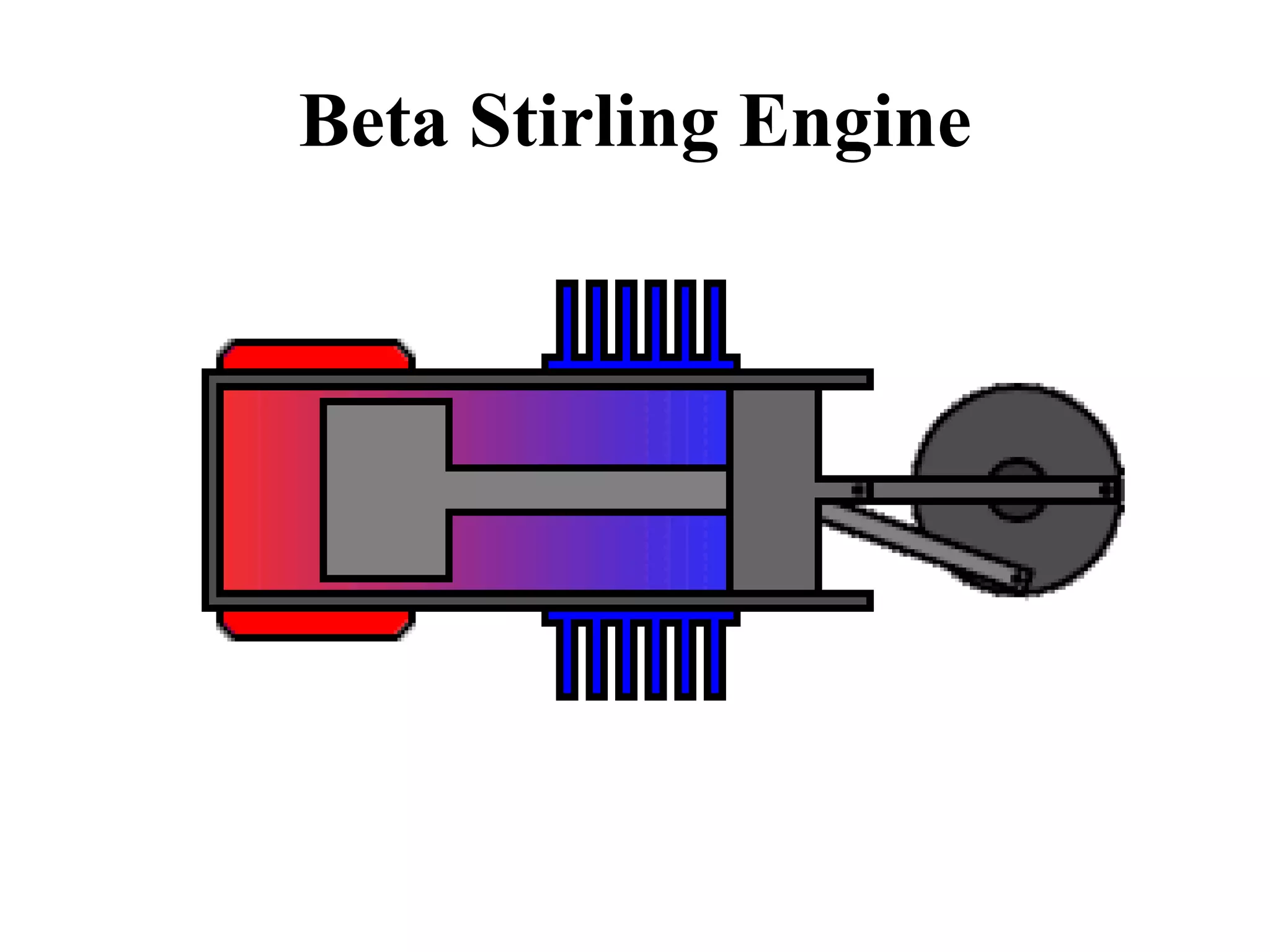
Beta Stirling Engine
Hot end of
cylinder
Cold end
of cylinder
Power
Piston
Displacer
piston
Fly wheel
Cold gas or air
Hot gas or air
Fins for
cooling
Beta Stirling Engine
Gamma Stirling Engine
Application
• Electric generation
• Prime mover
• Micro-CHP
• Nuclear power plants
• Heat pump
• Water pump
• Cryogenic refrigerators for missile guidance (below 150 K)
• Ideal for use in domestic homes (1KW,50Hz)
• Submarines (The Gotland-class submarines of the Swedish Navy)
Advantages
• Can use any heat source
• More thermal efficient (approx: 40% vs modern engines 20-25%)
• Less pollution (also less noise)
• Can generate AC power
• Simple working priciple
• Simple design
• Can be a replacement for steam turbines and
steam engines
• Low power densities
Disadvantages
• Initial capital is high
• Change their power output levels slowly
• Heavier (and more expensive)
• A Stirling engine cannot start instantly
Conclusion
• Have a range of applications
• They are often expensive to build
• Have rarely been used in commercial power generating
systems.
• The Stirling engine is the interesting alternative way to
commercialize the waste heat.
• One of the ways to increase the effectiveness is to find
the optimal mechanism to gear the engine pistons and
optimize its parameters (dimensions).
References
• www.wikipedia.org/wiki/Stirling_engine
• www.sciencedirect.com/topics/engineering/stir
ling-engine
• www.auto.howstuffworks.com/stirling-
engine.htm
• www.seminarstopics.com/pollution-less-
engine
Thank you
Q

Stirling engine

  • 1.
    STIRLING ENGINE GUIDED BY: AmijithA M Lecturer Department of Mechanical Engg. PRESENTED BY: SANJITH B S Sememester - 5 Department of Mechanical Engg.
  • 2.
    CONTENTS • Introduction • Typesof stirling engine • Components • Working • Alpha Stirling Engine • Beta Stirling Engine • Gamma Stirling Engine • Application • Advantages • Disadvantages • Conclusion • Referances
  • 3.
    Introduction • Stirling engineis a heat engine • Converts heat energy to mechanical work • Developed and patened in 1816 • Inventor : Robert Stirling • Works on any heat source • It is vastly different from IC engines • EC engine • Closed working cycle • Works on temperature difference
  • 4.
    Types of stirlingengine The three major types of stirling engine are -: 1. Alpha Stirling Engine 2. Beta Stirling Engine 3. Gamma Stirling Engine
  • 5.
    Components • Regenerator • PowerPiston • Displacer • Crank shaft • Flywheel • Heat dissipation Fins
  • 6.
  • 7.
    Alpha Stirling Engine Coldair Regenerator Heat source Hot air Crank shaft
  • 8.
    Alpha Stirling Engine 4Strokes -: 1. Expantion 2. Transfer 3. Contraction 4. Transfer
  • 9.
    Beta Stirling Engine Hotend of cylinder Cold end of cylinder Power Piston Displacer piston Fly wheel Cold gas or air Hot gas or air Fins for cooling
  • 10.
  • 11.
  • 12.
    Application • Electric generation •Prime mover • Micro-CHP • Nuclear power plants • Heat pump • Water pump • Cryogenic refrigerators for missile guidance (below 150 K) • Ideal for use in domestic homes (1KW,50Hz) • Submarines (The Gotland-class submarines of the Swedish Navy)
  • 13.
    Advantages • Can useany heat source • More thermal efficient (approx: 40% vs modern engines 20-25%) • Less pollution (also less noise) • Can generate AC power • Simple working priciple • Simple design • Can be a replacement for steam turbines and steam engines • Low power densities
  • 14.
    Disadvantages • Initial capitalis high • Change their power output levels slowly • Heavier (and more expensive) • A Stirling engine cannot start instantly
  • 15.
    Conclusion • Have arange of applications • They are often expensive to build • Have rarely been used in commercial power generating systems. • The Stirling engine is the interesting alternative way to commercialize the waste heat. • One of the ways to increase the effectiveness is to find the optimal mechanism to gear the engine pistons and optimize its parameters (dimensions).
  • 16.
    References • www.wikipedia.org/wiki/Stirling_engine • www.sciencedirect.com/topics/engineering/stir ling-engine •www.auto.howstuffworks.com/stirling- engine.htm • www.seminarstopics.com/pollution-less- engine
  • 17.
  • 18.