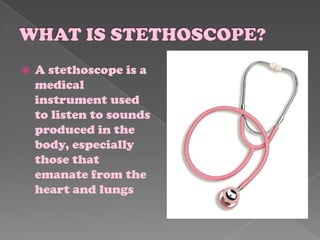
   A stethoscope is a
    medical
    instrument used
    to listen to sounds
    produced in the
    body, especially
    those that
    emanate from the
    heart and lungs
The stethoscope is a very
important noninvasive tool used
 by medical professionals and all
     health care workers and
  students will be trained in the
           use of them.
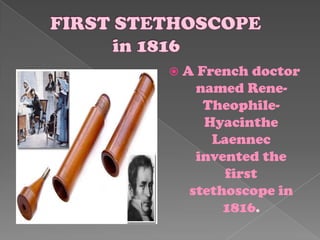
AFrench doctor
  named Rene-
   Theophile-
   Hyacinthe
    Laennec
  invented the
      first
 stethoscope in
      1816.
   This cylindrical
    stethoscope is made
    with three parts
    fitting together by
    wood screw thread
    and brass tube
    fitting with an
    overall length
    of 12.6 inches and a
    diameter of 1.5
    inches. Both ends
    are slightly concav
Picture after the fresco by Theobold Chartan
in the Sorbonne commemorating the
invention of the stethoscope in 1816. The
photo on the right shows Laennec examing a
young boy by "mediate" auscultation with his
stethoscope. The picture is taken fromm a
painting by Robert A. Thom, copyrighted
in 1960.
   In the early 1850's
    there was a rush of
    designs for a new
    stethoscope that
    used both ears. This
    new
    'Bi-aural' or
    'Binaural'
    instrument was felt
    to be the future of
    auscultation.
The idea belonged to Nicholas Comins, who
        devised a stethoscope that he
 described as "a bent tube" that had several
hinges, allowing the physician to not have to
                   assume
     uncomfortable positions during the
  examination. He offered the suggestion of
                 making his
instrument binaural, and may have, as there
     are only sketches of his instrument.
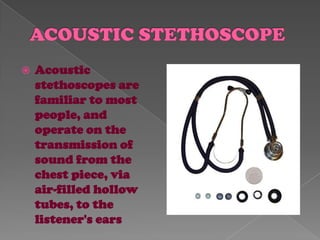
   Acoustic
    stethoscopes are
    familiar to most
    people, and
    operate on the
    transmission of
    sound from the
    chest piece, via
    air-filled hollow
    tubes, to the
    listener's ears
audible sounds are
magnified through
an amplifier to
earphones, of which
there may be more
than one set, and
may be broadcast
through
loudspeakers, but in
both instances the
results are mediocre
   http://www.heartdiseasesympton.com/articles/
    heart-disease-symptom-21.html
   http://discoverd-
    world.blogspot.com.au/2011/05/discovery-
    history-stethoscope.html
   http://inventors.about.com/gi/dynamic/offsite.
    htm?site=http://www.antiquemed.com/tableof
    con.htm
   http://www.instabriefs.com/medical-
    devices/stethoscopes/stethoscopes-fast-
    facts.php
   http://www.antiquemed.com/test/binaural_stet
    hoscope.htm

Stethoscope

  • 2.
    A stethoscope is a medical instrument used to listen to sounds produced in the body, especially those that emanate from the heart and lungs
  • 4.
    The stethoscope isa very important noninvasive tool used by medical professionals and all health care workers and students will be trained in the use of them.
  • 6.
    AFrench doctor named Rene- Theophile- Hyacinthe Laennec invented the first stethoscope in 1816.
  • 7.
    This cylindrical stethoscope is made with three parts fitting together by wood screw thread and brass tube fitting with an overall length of 12.6 inches and a diameter of 1.5 inches. Both ends are slightly concav
  • 8.
    Picture after thefresco by Theobold Chartan in the Sorbonne commemorating the invention of the stethoscope in 1816. The photo on the right shows Laennec examing a young boy by "mediate" auscultation with his stethoscope. The picture is taken fromm a painting by Robert A. Thom, copyrighted in 1960.
  • 9.
    In the early 1850's there was a rush of designs for a new stethoscope that used both ears. This new 'Bi-aural' or 'Binaural' instrument was felt to be the future of auscultation.
  • 10.
    The idea belongedto Nicholas Comins, who devised a stethoscope that he described as "a bent tube" that had several hinges, allowing the physician to not have to assume uncomfortable positions during the examination. He offered the suggestion of making his instrument binaural, and may have, as there are only sketches of his instrument.
  • 11.
    Acoustic stethoscopes are familiar to most people, and operate on the transmission of sound from the chest piece, via air-filled hollow tubes, to the listener's ears
  • 12.
    audible sounds are magnifiedthrough an amplifier to earphones, of which there may be more than one set, and may be broadcast through loudspeakers, but in both instances the results are mediocre
  • 13.
    http://www.heartdiseasesympton.com/articles/ heart-disease-symptom-21.html  http://discoverd- world.blogspot.com.au/2011/05/discovery- history-stethoscope.html  http://inventors.about.com/gi/dynamic/offsite. htm?site=http://www.antiquemed.com/tableof con.htm  http://www.instabriefs.com/medical- devices/stethoscopes/stethoscopes-fast- facts.php  http://www.antiquemed.com/test/binaural_stet hoscope.htm