 is not just cleanliness
 keeping work areas neat and orderly
 maintaining halls and floors free of
slip and trip hazards
 employers must orient workers and
provide suitable information.
 check that workers have the appropriate
qualifications to use intricate tools and
equipment
Protect Yourself
 Use the correct hand protection; wear
gloves to prevent cuts.
 Wear safety shoes to prevent injury to your
feet from a dropped item.
 A. Determine if you can carry a load
comfortably; tip it on its side.
 B. Get help if the load is too big or bulky for
one person.
 C. Check for nails, splinters, rough
strapping, and rough edges.
 Make sure your footing is solid.
 Keep your back straight, with no
curving or slouching.
 Center your body over your feet.
 Get a good grasp on the object and pull it
close to you.
 Lift with your legs, not your back.
 Move your feet to turn. Don't twist your
back.
 Don't try to carry a big load alone. Ask
for help.
 Work as a team. Lift, walk, and lower
the load together.
 Let one person give the directions and
direct the lift.
 Use a step stool or a sturdy ladder to reach
loads that are above your shoulders.
 Get as close as you can to the load.
 Slide the load toward you.
 Do all the work with your arms and
legs, not your back.
 Loads that are under racks and cabinets
need extra care.
 Pull the load toward you, and then try to
support it on your knee before you lift.
 Use your legs to power the lift.
 Make sure your footing is firm.
 Ensure enough clearance at
doorways to keep your hands and
fingers safe.
 Check your route for hazards.
 Take extra care at platforms, loading
docks, ramps, and stairs.
 Carry long loads on your shoulders, with
front end high.
 Make sure the next person has a firm grip
before you hand off the load.
 When you carry with others, everyone
should carry the load on the same
shoulder,
walk in step, and put the load down as
a team.
 Wear the right personal protective
equipment for lifting and carrying.
 Lift with your legs, not your back;
pivot, don't twist.
 Get help with tough lifting jobs.
 Spend a few minutes each day before
work on power warm-ups.
 Exercise regularly to keep your back
strong and healthy.
 Eat right, stay slender, and cut down
on stress to avoid back injuries.
 How Much Have You Learned?
I. QUICK WRITES
 Directions: Answer the table below
by writing the safety measures to be
observed in given activities.
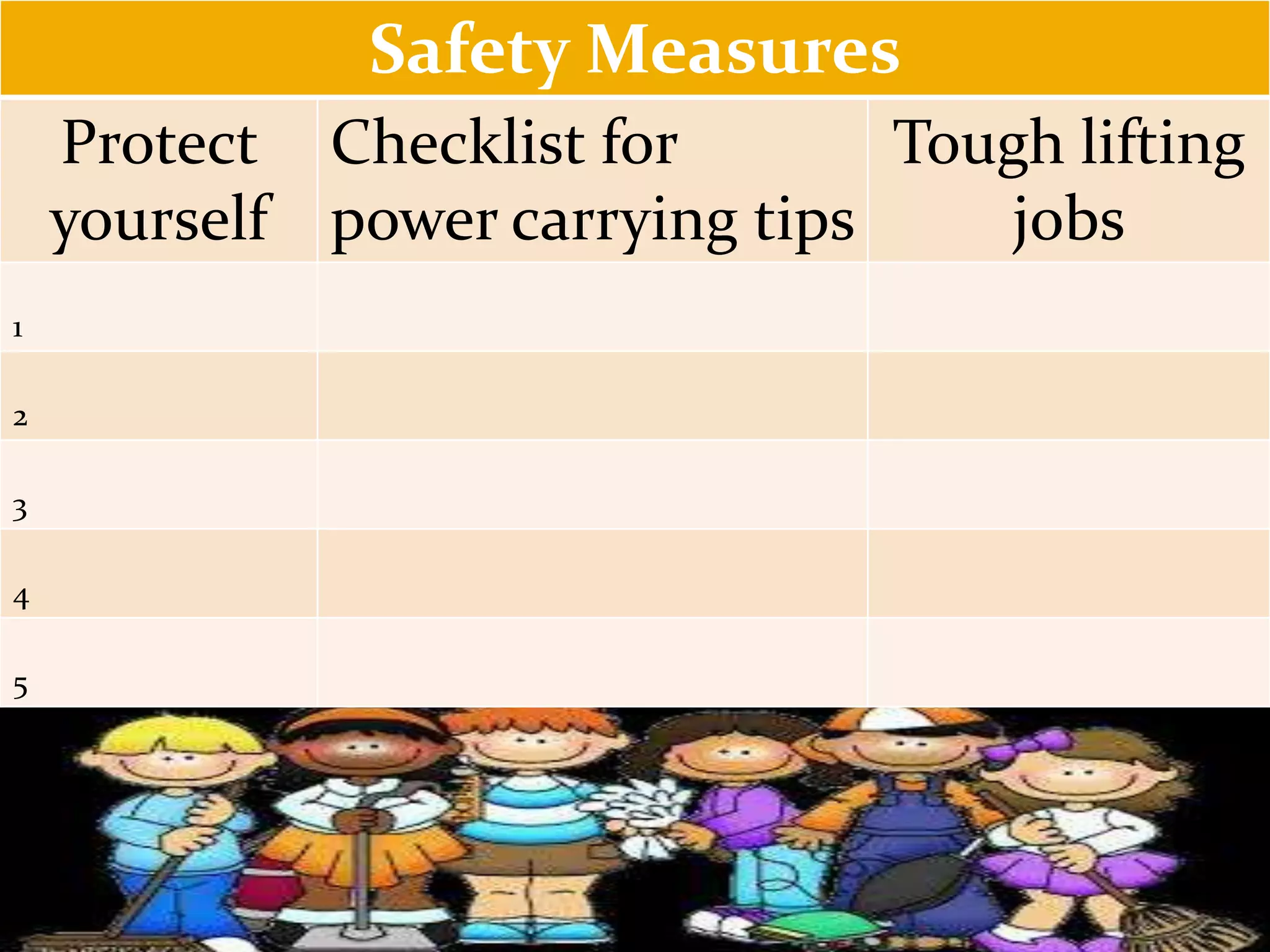
Safety Measures
Protect
yourself
Checklist for
power carrying tips
Tough lifting
jobs
1
2
3
4
5
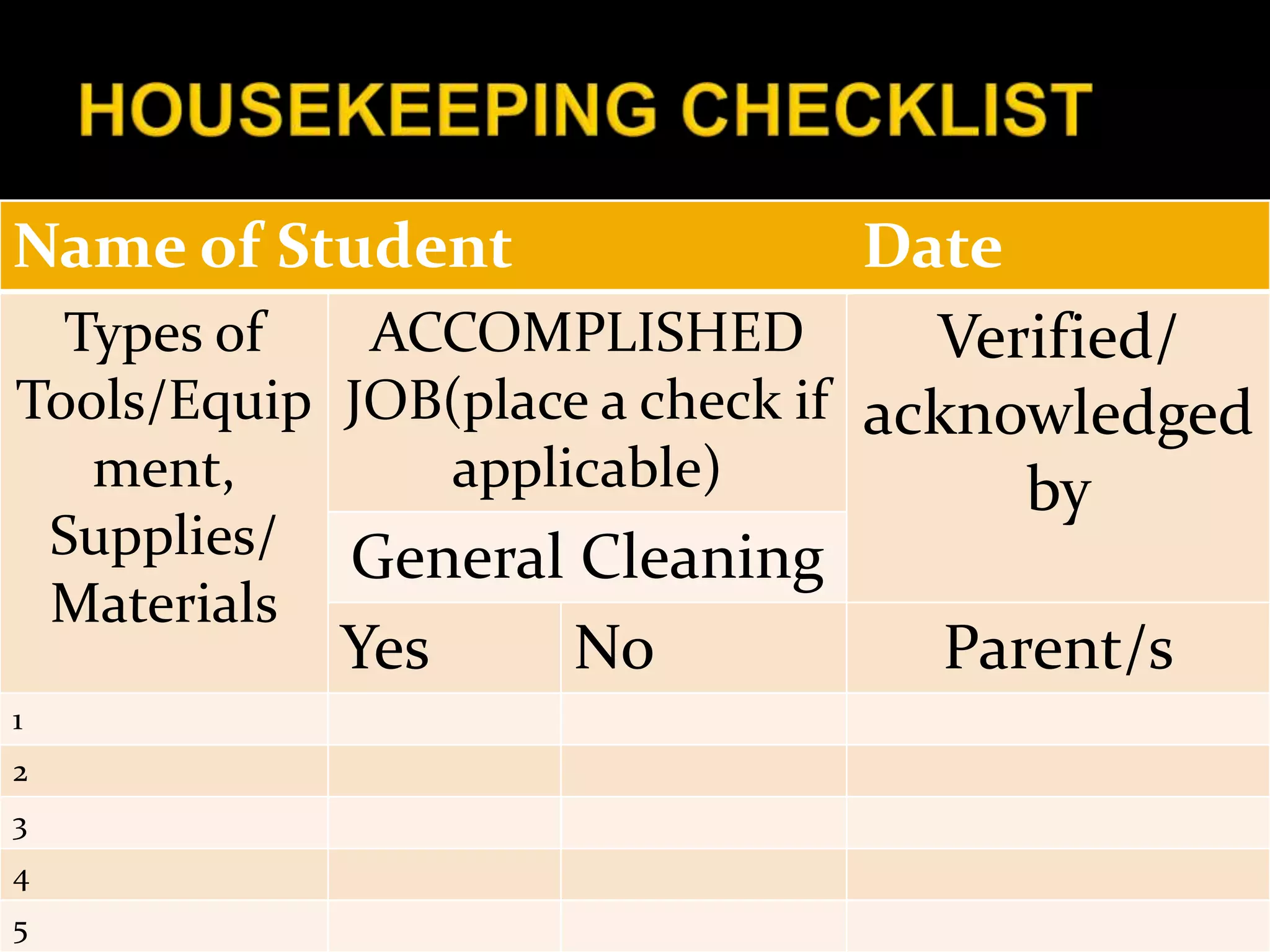
Name of Student Date
Types of
Tools/Equip
ment,
Supplies/
Materials
ACCOMPLISHED
JOB(place a check if
applicable)
Verified/
acknowledged
by
General Cleaning
Yes No Parent/s
1
2
3
4
5
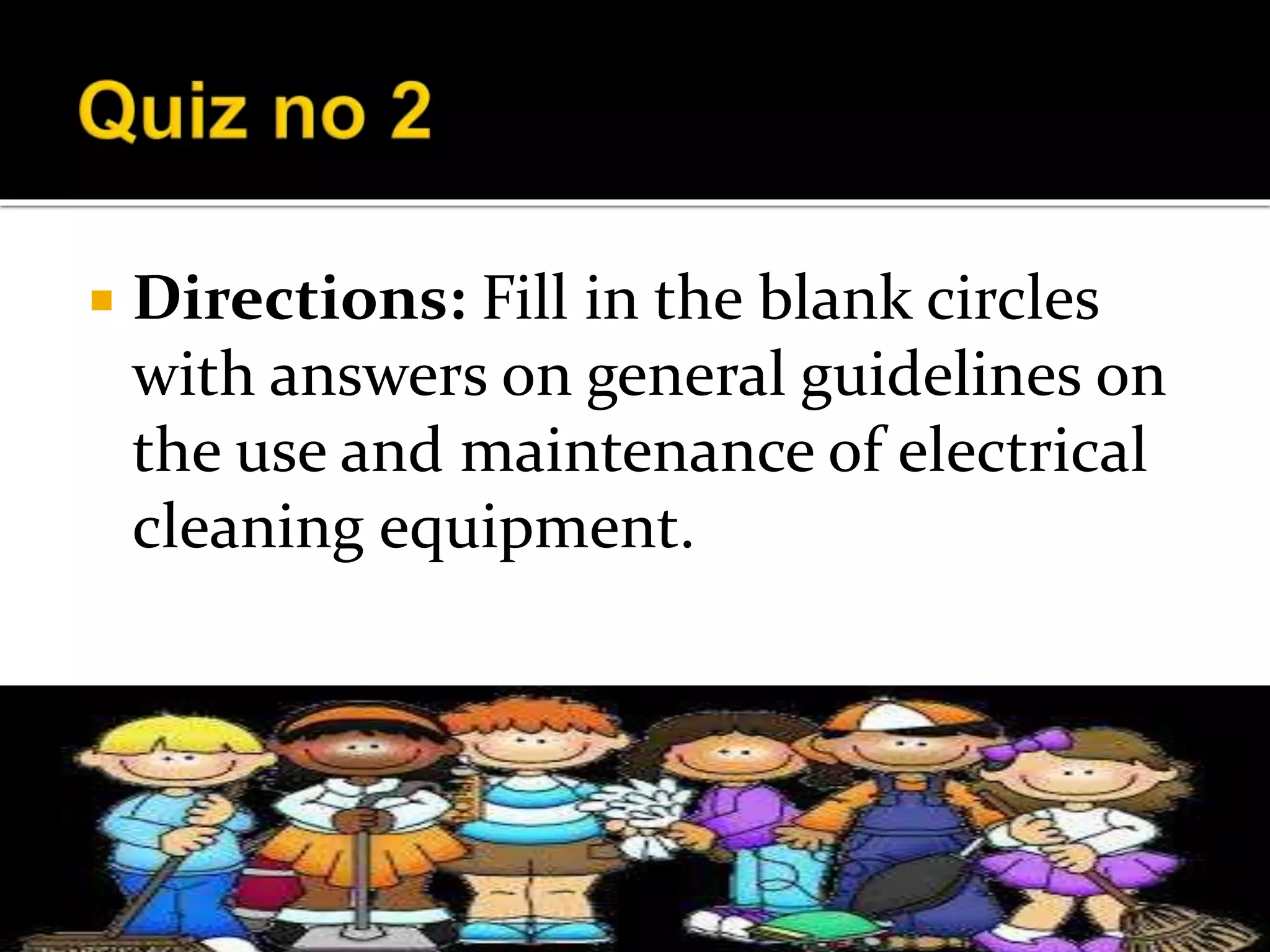
 Directions: Fill in the blank circles
with answers on general guidelines on
the use and maintenance of electrical
cleaning equipment.
8 1 safety measures in doing household tasks

8 1 safety measures in doing household tasks

  • 2.
     is notjust cleanliness  keeping work areas neat and orderly  maintaining halls and floors free of slip and trip hazards
  • 3.
     employers mustorient workers and provide suitable information.  check that workers have the appropriate qualifications to use intricate tools and equipment
  • 5.
    Protect Yourself  Usethe correct hand protection; wear gloves to prevent cuts.  Wear safety shoes to prevent injury to your feet from a dropped item.
  • 6.
     A. Determineif you can carry a load comfortably; tip it on its side.  B. Get help if the load is too big or bulky for one person.
  • 7.
     C. Checkfor nails, splinters, rough strapping, and rough edges.
  • 8.
     Make sureyour footing is solid.  Keep your back straight, with no curving or slouching.  Center your body over your feet.
  • 9.
     Get agood grasp on the object and pull it close to you.  Lift with your legs, not your back.  Move your feet to turn. Don't twist your back.
  • 11.
     Don't tryto carry a big load alone. Ask for help.  Work as a team. Lift, walk, and lower the load together.  Let one person give the directions and direct the lift.
  • 12.
     Use astep stool or a sturdy ladder to reach loads that are above your shoulders.  Get as close as you can to the load.  Slide the load toward you.
  • 13.
     Do allthe work with your arms and legs, not your back.
  • 14.
     Loads thatare under racks and cabinets need extra care.  Pull the load toward you, and then try to support it on your knee before you lift.  Use your legs to power the lift.
  • 16.
     Make sureyour footing is firm.  Ensure enough clearance at doorways to keep your hands and fingers safe.  Check your route for hazards.
  • 17.
     Take extracare at platforms, loading docks, ramps, and stairs.  Carry long loads on your shoulders, with front end high.  Make sure the next person has a firm grip before you hand off the load.
  • 18.
     When youcarry with others, everyone should carry the load on the same shoulder, walk in step, and put the load down as a team.
  • 19.
     Wear theright personal protective equipment for lifting and carrying.  Lift with your legs, not your back; pivot, don't twist.
  • 20.
     Get helpwith tough lifting jobs.  Spend a few minutes each day before work on power warm-ups.
  • 21.
     Exercise regularlyto keep your back strong and healthy.  Eat right, stay slender, and cut down on stress to avoid back injuries.
  • 22.
     How MuchHave You Learned?
  • 23.
    I. QUICK WRITES Directions: Answer the table below by writing the safety measures to be observed in given activities.
  • 24.
    Safety Measures Protect yourself Checklist for powercarrying tips Tough lifting jobs 1 2 3 4 5
  • 26.
    Name of StudentDate Types of Tools/Equip ment, Supplies/ Materials ACCOMPLISHED JOB(place a check if applicable) Verified/ acknowledged by General Cleaning Yes No Parent/s 1 2 3 4 5
  • 27.
     Directions: Fillin the blank circles with answers on general guidelines on the use and maintenance of electrical cleaning equipment.