Stereotypes

  Festinger
Why do we need them?
Think of as many reasons as you can to
explain the purpose/popularity of
stereotypes.
Problems/Criticism
              KEY TERM – MEDIATION

         The way the media represent an idea to us.


Stereotypes overlook the individual
Place people in groups
Qualities often ‘exaggerated’ which leads to a
caricature
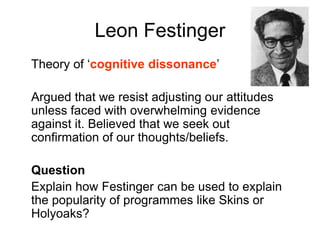
Leon Festinger
Theory of ‘cognitive dissonance’

Argued that we resist adjusting our attitudes
unless faced with overwhelming evidence
against it. Believed that we seek out
confirmation of our thoughts/beliefs.

Question
Explain how Festinger can be used to explain
the popularity of programmes like Skins or
Holyoaks?
Representation
  The Seven Key areas
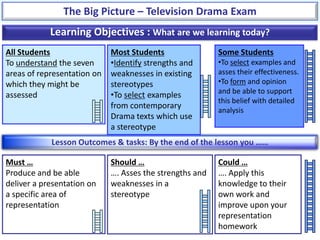
The Big Picture – Television Drama Exam
            Learning Objectives : What are we learning today?
All Students                 Most Students                Some Students
To understand the seven      •Identify strengths and      •To select examples and
areas of representation on   weaknesses in existing       asses their effectiveness.
which they might be          stereotypes                  •To form and opinion
                                                          and be able to support
assessed                     •To select examples
                                                          this belief with detailed
                             from contemporary
                                                          analysis
                             Drama texts which use
                             a stereotype
            Lesson Outcomes & tasks: By the end of the lesson you ……

Must …                       Should …                     Could …
Produce and be able          …. Asses the strengths and   …. Apply this
deliver a presentation on    weaknesses in a              knowledge to their
a specific area of           stereotype                   own work and
representation                                            improve upon your
                                                          representation
                                                          homework
The seven areas
• The seven categories which you could be
  assessed on are:

• Gender
• Age
• Ethnicity
• Sexuality
• Class and status
• Physical ability/disability
• Regional identity
Today’s lesson
    Your presentation can take any form but must include
                                                               What you must include
    An explanation of how you think your particular social
    group are traditionally represented in British TV drama.   Stereotypes about your chosen group

    Typical clothing for members of your social group          Explanations of why these particular
    Typical occupations for members your group                 stereotypes are used and in which TV
    Typical jobs for members of your social group              Genre they are most likely to be found.
    Typical modes of speech for your social group
    Typical story lines for your social group                  Images focusing on the ‘mise-en-scene’ of
    examples from British TV drama                             a specific stereotype.
    You also need to link your points to the relevant theory   An opinion on whether the representation is
                                                               fair and accurate.
    Roland Barthes - binary opposites
    Leon Festinger - Cognitive dissonance
    Vladimir Propp - Character Roles
                                                               Historical context on the representation.
    Laura Mulvey - Male Gaze                                   i.e. has the way a group is represented
    Tessa Perkins - Stereotypes .                              changed over time?
                                                               Key elements of mise en scene which help
                                                               establish the representation
You have today’s lesson to complete                            Any theory which you feel is relevant.
this task. You will then be required to
                                                               What ideology lies behind the text.
start subsequent lessons with your
presentation.

Stereotypes yr12

  • 1.
  • 2.
    Why do weneed them? Think of as many reasons as you can to explain the purpose/popularity of stereotypes.
  • 3.
    Problems/Criticism KEY TERM – MEDIATION The way the media represent an idea to us. Stereotypes overlook the individual Place people in groups Qualities often ‘exaggerated’ which leads to a caricature
  • 4.
    Leon Festinger Theory of‘cognitive dissonance’ Argued that we resist adjusting our attitudes unless faced with overwhelming evidence against it. Believed that we seek out confirmation of our thoughts/beliefs. Question Explain how Festinger can be used to explain the popularity of programmes like Skins or Holyoaks?
  • 5.
    Representation TheSeven Key areas
  • 6.
    The Big Picture– Television Drama Exam Learning Objectives : What are we learning today? All Students Most Students Some Students To understand the seven •Identify strengths and •To select examples and areas of representation on weaknesses in existing asses their effectiveness. which they might be stereotypes •To form and opinion and be able to support assessed •To select examples this belief with detailed from contemporary analysis Drama texts which use a stereotype Lesson Outcomes & tasks: By the end of the lesson you …… Must … Should … Could … Produce and be able …. Asses the strengths and …. Apply this deliver a presentation on weaknesses in a knowledge to their a specific area of stereotype own work and representation improve upon your representation homework
  • 7.
    The seven areas •The seven categories which you could be assessed on are: • Gender • Age • Ethnicity • Sexuality • Class and status • Physical ability/disability • Regional identity
  • 8.
    Today’s lesson Your presentation can take any form but must include What you must include An explanation of how you think your particular social group are traditionally represented in British TV drama. Stereotypes about your chosen group Typical clothing for members of your social group Explanations of why these particular Typical occupations for members your group stereotypes are used and in which TV Typical jobs for members of your social group Genre they are most likely to be found. Typical modes of speech for your social group Typical story lines for your social group Images focusing on the ‘mise-en-scene’ of examples from British TV drama a specific stereotype. You also need to link your points to the relevant theory An opinion on whether the representation is fair and accurate. Roland Barthes - binary opposites Leon Festinger - Cognitive dissonance Vladimir Propp - Character Roles Historical context on the representation. Laura Mulvey - Male Gaze i.e. has the way a group is represented Tessa Perkins - Stereotypes . changed over time? Key elements of mise en scene which help establish the representation You have today’s lesson to complete Any theory which you feel is relevant. this task. You will then be required to What ideology lies behind the text. start subsequent lessons with your presentation.