Stepping Out of the Vacuum
without Leaving Your Desk

        Laura Nicole Warren, Libraries Thriving Coordinator
               Library 2.012 Worldwide Virtual Conference
                                Thursday, October 4, 2012
So Much Information, So Little
Time


      Follow (and Click) Along:
          @LibsThriving or
          @credoreference
The Given:
   Collaboration is a Must


“…multiple organizations sometimes work separately to
accomplish the same purposes of preserving, archiving, and
disseminating print and born digital materials, raising
problems with duplication, overlap, and unnecessary
expenses” (Cadmus, 2011)
The Problem:
 We Can’t Leave Our Desks

1. Shrinking Travel Budgets
The Problem:
 We Can’t Leave Our Desks

1. Shrinking Travel Budgets

2. Increasing Daily
Responsibilities
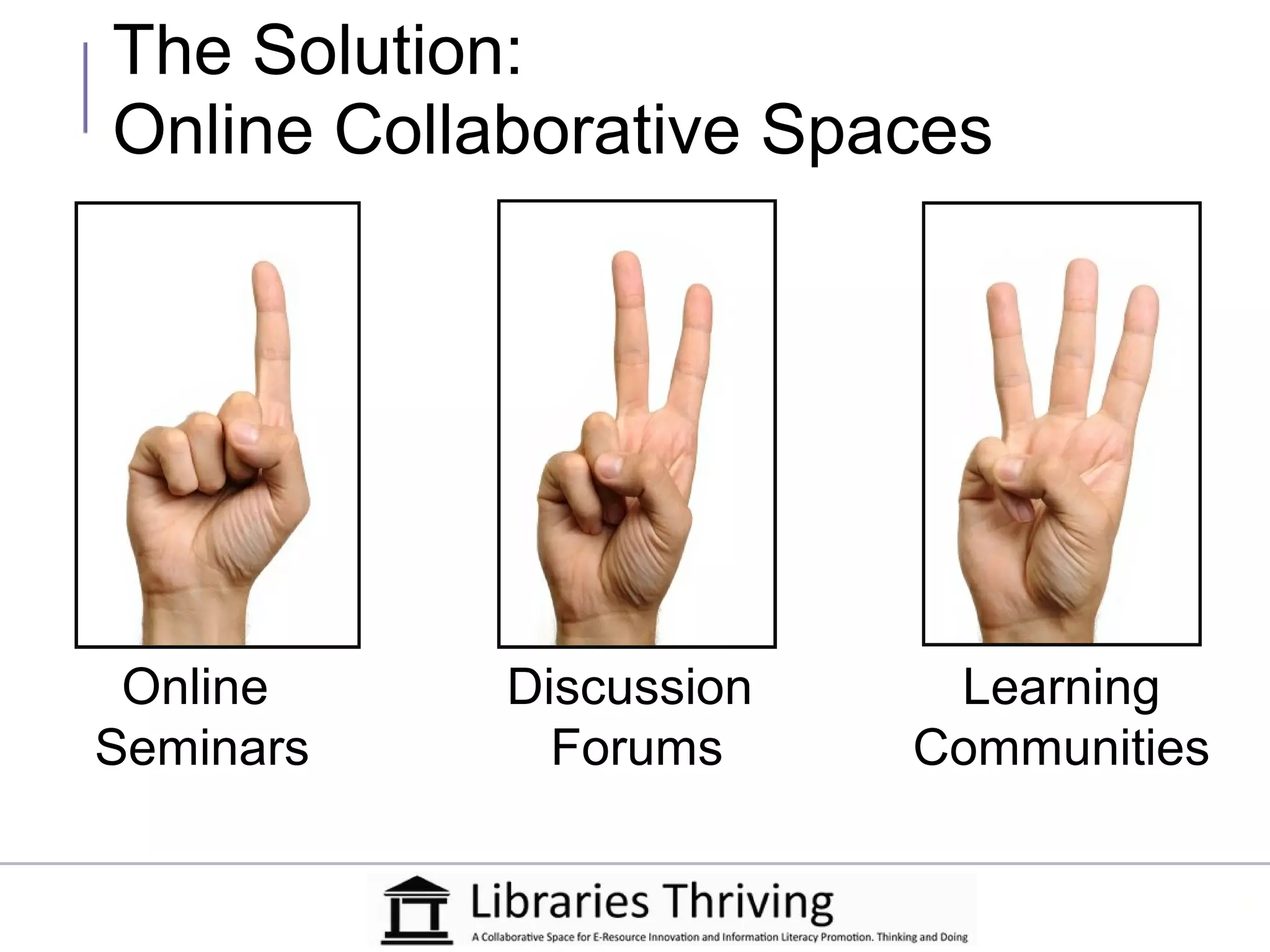
The Solution:
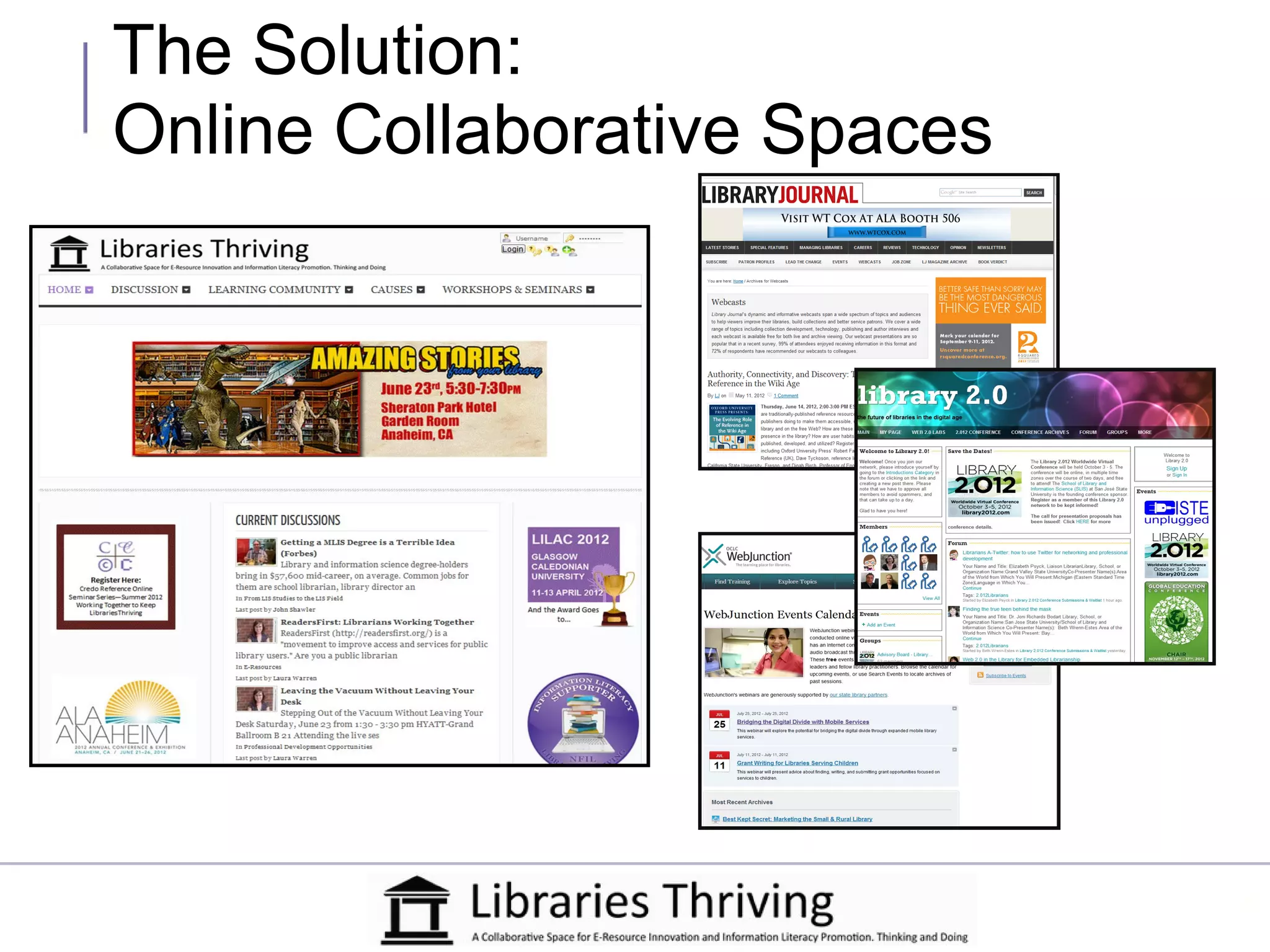
Online Collaborative Spaces
The Solution:
Online Collaborative Spaces


 Online
Seminars
The Solution:
Online Collaborative Spaces


 Online     Discussion
Seminars      Forums
The Solution:
Online Collaborative Spaces


 Online     Discussion    Learning
Seminars      Forums     Communities
The Key Takeaways
“None of us can know everything; each of us knows
something; and we can put the pieces together if we pool
our resources and combine our skills.”
-Henry Jenkins, Principal Investigator, New Media Literacies Project


            “[Online collaborative spaces are important because they
            ensure that you] have all of the right people sitting at the
            table.”
            -Sandra Hirsh, Director, San Jose State University School of Library and Information
            Science


            “[Online collaborative spaces] are a necessity as it’s very
            difficult to go everywhere to hear everything that’s being
            said.”
            -Sarah Murray, Database Librarian, The American University of Paris
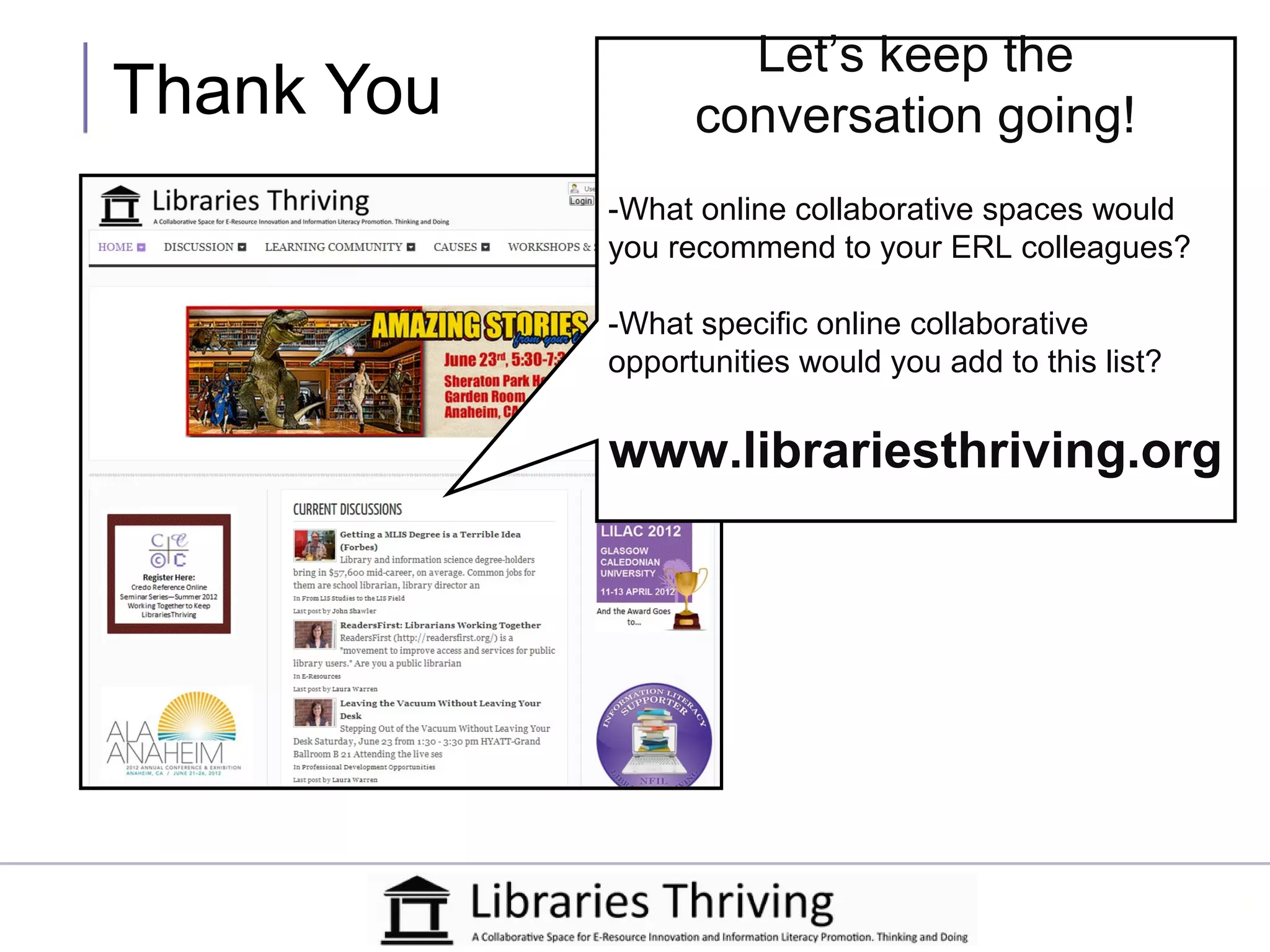
Let’s keep the
Thank You         conversation going!
            -What online collaborative spaces would
            you recommend to your ERL colleagues?

            -What specific online collaborative
            opportunities would you add to this list?


            www.librariesthriving.org
References
American Library Association. (2012). The 2012 state of american
libraries. Retrieved fromhttp://www.ala.org/news/mediapressc
        enter/americaslibraries/soal2012

Bell, S.J. (2005). Creating community online. American Libraries,
36(4), 68-71. Retrieved from http://libaccess.sjlibrary.org/login
       ?url=http://search.ebscohost.com/login.aspx?direct=true&db=l
       lf&AN=502951328&site=ehost-live

Cadmus, F. (2011). Things in common: Challenges of the 19th and
21st century librarians. Librarian Scholarship Series. Retrieved from
http://digitalcommons.law.yale.edu/ylss/8
References Continued
Cooke, N. A. (2012). Professional development 2.0: Developing
an online personal learning network. Library Hi Tech News,
29, 1-9. doi 10.1108/07419051211241840

Information Today, Inc. (2012). The digital squeeze: Libraries at
the crossroads. Retrieved from http://libraryresource.onl
       ineinc.com/Downloads/ResearchReports

United States Department of Labor. (2012). Librarians.
Occupational Outlook Handbook. Retrieved from http://www.
      bls.gov/ooh/EducationTrainingandLibrary/Librarians.htm#tab6

Stepping Out of the Vaccuum Without Leaving Your Desk

  • 1.
    Stepping Out ofthe Vacuum without Leaving Your Desk Laura Nicole Warren, Libraries Thriving Coordinator Library 2.012 Worldwide Virtual Conference Thursday, October 4, 2012
  • 2.
    So Much Information,So Little Time Follow (and Click) Along: @LibsThriving or @credoreference
  • 3.
    The Given: Collaboration is a Must “…multiple organizations sometimes work separately to accomplish the same purposes of preserving, archiving, and disseminating print and born digital materials, raising problems with duplication, overlap, and unnecessary expenses” (Cadmus, 2011)
  • 4.
    The Problem: WeCan’t Leave Our Desks 1. Shrinking Travel Budgets
  • 5.
    The Problem: WeCan’t Leave Our Desks 1. Shrinking Travel Budgets 2. Increasing Daily Responsibilities
  • 6.
  • 7.
    The Solution: Online CollaborativeSpaces Online Seminars
  • 8.
    The Solution: Online CollaborativeSpaces Online Discussion Seminars Forums
  • 9.
    The Solution: Online CollaborativeSpaces Online Discussion Learning Seminars Forums Communities
  • 10.
    The Key Takeaways “Noneof us can know everything; each of us knows something; and we can put the pieces together if we pool our resources and combine our skills.” -Henry Jenkins, Principal Investigator, New Media Literacies Project “[Online collaborative spaces are important because they ensure that you] have all of the right people sitting at the table.” -Sandra Hirsh, Director, San Jose State University School of Library and Information Science “[Online collaborative spaces] are a necessity as it’s very difficult to go everywhere to hear everything that’s being said.” -Sarah Murray, Database Librarian, The American University of Paris
  • 11.
    Let’s keep the ThankYou conversation going! -What online collaborative spaces would you recommend to your ERL colleagues? -What specific online collaborative opportunities would you add to this list? www.librariesthriving.org
  • 12.
    References American Library Association.(2012). The 2012 state of american libraries. Retrieved fromhttp://www.ala.org/news/mediapressc enter/americaslibraries/soal2012 Bell, S.J. (2005). Creating community online. American Libraries, 36(4), 68-71. Retrieved from http://libaccess.sjlibrary.org/login ?url=http://search.ebscohost.com/login.aspx?direct=true&db=l lf&AN=502951328&site=ehost-live Cadmus, F. (2011). Things in common: Challenges of the 19th and 21st century librarians. Librarian Scholarship Series. Retrieved from http://digitalcommons.law.yale.edu/ylss/8
  • 13.
    References Continued Cooke, N.A. (2012). Professional development 2.0: Developing an online personal learning network. Library Hi Tech News, 29, 1-9. doi 10.1108/07419051211241840 Information Today, Inc. (2012). The digital squeeze: Libraries at the crossroads. Retrieved from http://libraryresource.onl ineinc.com/Downloads/ResearchReports United States Department of Labor. (2012). Librarians. Occupational Outlook Handbook. Retrieved from http://www. bls.gov/ooh/EducationTrainingandLibrary/Librarians.htm#tab6