Embedded Librarianship:
Physical Worlds & Virtual Worlds
Valerie Hill, PhD
Lewisville ISD School Librarian
TWU Adjunct Instructor
Virtual World Librarian
@valibrarian
Serving Patrons
wherever they are
School Library Example
• Embedding the library
through social
media/webmaster
• Information literacy
skills 21st Century
• Embracing Web 2.0 &
user-generated
content
• Content evaluation &
curation
• Mobile apps
Virtual Library Example
• Embedding library
services in virtual
spaces
• International
information literacy
• Embracing Web 3.0
• Global spaces,
virtual worlds
(Skype, Minecraft,
& MOOCs)
“What we’re trying to do is have the library be wherever you are.” Nancy Roderer, John
Hopkins Welch Medical Library http://www.insidehighered.com/news/2010/06/09/hopkins
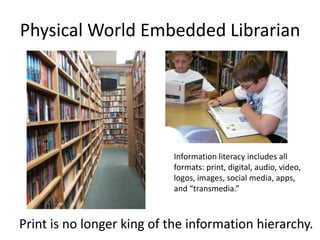
Physical World Embedded Librarian
Print is no longer king of the information hierarchy.
Information literacy includes all
formats: print, digital, audio, video,
logos, images, social media, apps,
and “transmedia.”
Integrating Information Literacy:
the challenge of the embedded librarian
The game has quickly changed.
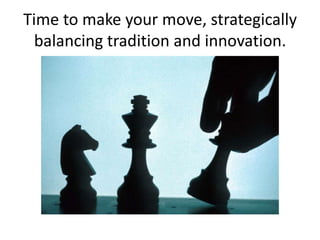
Time to make your move, strategically
balancing tradition and innovation.
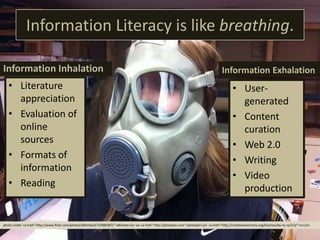
Information Literacy is like breathing.
Information Inhalation
• Literature
appreciation
• Evaluation of
online
sources
• Formats of
information
• Reading
Information Exhalation
• User-
generated
• Content
curation
• Web 2.0
• Writing
• Video
production
photo credit: <a href="http://www.flickr.com/photos/dklimke/6732980387/">dklimke</a> via <a href="http://photopin.com">photopin</a> <a href="http://creativecommons.org/licenses/by-nc-sa/2.0/">cc</a>
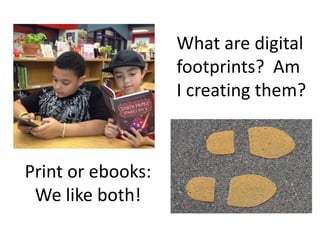
Print or ebooks:
We like both!
What are digital
footprints? Am
I creating them?
Digital Citizenship
Global Network
Distance is no longer relevant. Anyone can
share user-generated across the globe.
Creating a personal & professional learning
network is crucial.
Problem: The blurry line between personal /
professional life requires balance, ethics, and a
clear focus of intent.
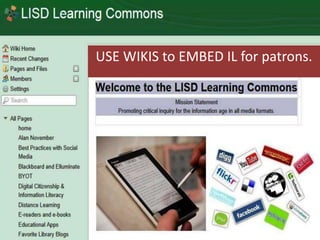
USE WIKIS to EMBED IL for patrons.
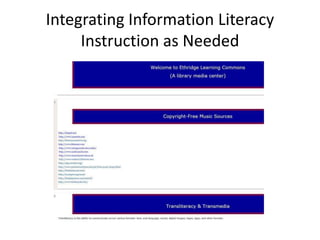
Integrating Information Literacy
Instruction as Needed
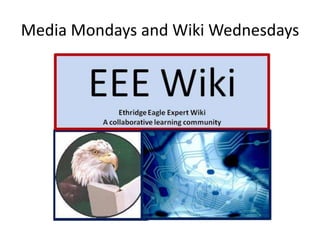
Media Mondays and Wiki Wednesdays
EEE Bar & Brown Bag Lunches
An embedded librarian
shares resources and
information literacy in
numerous formats: both
synchronous and
asynchronous.
Problems with WIKIS
• Different skill levels of users
• Reluctance to embrace new tools (staff)
• Lack of time to train users
• Why reinvent the wheel? (Because learning
the tool is important.)
Social Media & PLNs
The way we search has changed.
Our first “go-to” places are:
David Ferriero, Archivist of the
US stated, “Students believe if it
isn’t online, it doesn’t exist.”
ALISE 2012
Teaching information literacy is
now TOP priority for school
librarians.
Web 3.0 & the Rise of a Networked
Generation
We all live in virtual worlds, whether or not we have avatars.
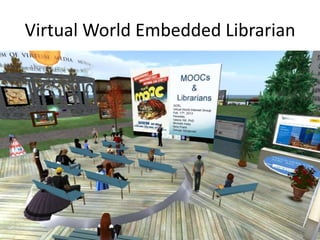
Virtual World Embedded Librarian
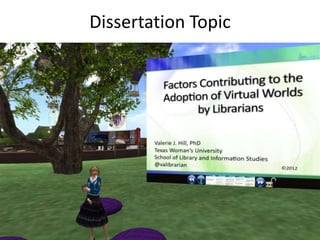
Dissertation Topic
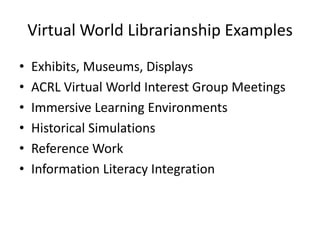
Virtual World Librarianship Examples
• Exhibits, Museums, Displays
• ACRL Virtual World Interest Group Meetings
• Immersive Learning Environments
• Historical Simulations
• Reference Work
• Information Literacy Integration
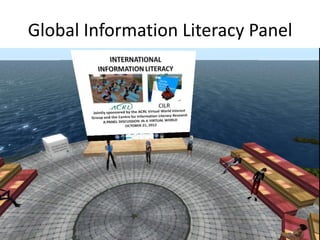
Global Information Literacy Panel
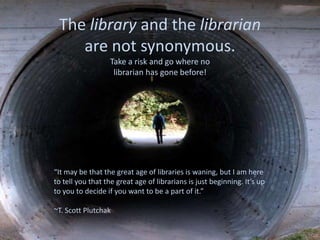
The library and the librarian
are not synonymous.
Take a risk and go where no
librarian has gone before!
“It may be that the great age of libraries is waning, but I am here
to tell you that the great age of librarians is just beginning. It’s up
to you to decide if you want to be a part of it.”
~T. Scott Plutchak
Bibliography
ALA. 2013. Standards for the 21st Century Learner.
http://www.ala.org/aasl/guidelinesandstandards/learningstandards/standards
Gant, Scott. (2007). We’re All Journalists Now. New York: Free Press.
Gleick, J. (2011). The information: A history, a theory, a flood. Pantheon.
Grassian, Esther. (2012). Teach Information Literacy & Critical Thinking. https://sites.google.com/site/teachinfolit/ (accessed July
17, 2012).
Hill, Valerie, and Hyuk-Jin Lee. 2009. Libraries and immersive learning environments unite in second life. Library Hi Tech 27, (3):
338-56.
Howard, H. (2012). Looking to the future: Developing an academic skills strategy to ensure information literacy thrives in a
changing higher education world. Journal Of Information Literacy, 6(1), 71-81.
Kenton, J. and Blummer, B. (2010). Promoting Digital Literacy Skills: Examples from the Literature and Implications for Academic
Librarians. Community & Junior College Libraries, 16(2), 84-99.
Plutchak, T. Scott. 2007. The Librarian: Fantastic Adventures in the Digital World. Serials, 20(2), 87-91.
Webber, Sheila and Diane Nahl. 2011. Sustaining Learning for LIS through use of a Virtual World. IFLA Journal (37)(1): 5-15.
Photos from bigfoto.com and Second Life by Valibrarian

Embedded Librarianship: Physical Worlds & Virtual Worlds

  • 1.
    Embedded Librarianship: Physical Worlds& Virtual Worlds Valerie Hill, PhD Lewisville ISD School Librarian TWU Adjunct Instructor Virtual World Librarian @valibrarian
  • 2.
    Serving Patrons wherever theyare School Library Example • Embedding the library through social media/webmaster • Information literacy skills 21st Century • Embracing Web 2.0 & user-generated content • Content evaluation & curation • Mobile apps Virtual Library Example • Embedding library services in virtual spaces • International information literacy • Embracing Web 3.0 • Global spaces, virtual worlds (Skype, Minecraft, & MOOCs) “What we’re trying to do is have the library be wherever you are.” Nancy Roderer, John Hopkins Welch Medical Library http://www.insidehighered.com/news/2010/06/09/hopkins
  • 3.
    Physical World EmbeddedLibrarian Print is no longer king of the information hierarchy. Information literacy includes all formats: print, digital, audio, video, logos, images, social media, apps, and “transmedia.”
  • 4.
    Integrating Information Literacy: thechallenge of the embedded librarian The game has quickly changed.
  • 5.
    Time to makeyour move, strategically balancing tradition and innovation.
  • 6.
    Information Literacy islike breathing. Information Inhalation • Literature appreciation • Evaluation of online sources • Formats of information • Reading Information Exhalation • User- generated • Content curation • Web 2.0 • Writing • Video production photo credit: <a href="http://www.flickr.com/photos/dklimke/6732980387/">dklimke</a> via <a href="http://photopin.com">photopin</a> <a href="http://creativecommons.org/licenses/by-nc-sa/2.0/">cc</a>
  • 7.
    Print or ebooks: Welike both! What are digital footprints? Am I creating them?
  • 8.
  • 9.
    Global Network Distance isno longer relevant. Anyone can share user-generated across the globe. Creating a personal & professional learning network is crucial. Problem: The blurry line between personal / professional life requires balance, ethics, and a clear focus of intent.
  • 10.
    USE WIKIS toEMBED IL for patrons.
  • 11.
  • 12.
    Media Mondays andWiki Wednesdays
  • 13.
    EEE Bar &Brown Bag Lunches An embedded librarian shares resources and information literacy in numerous formats: both synchronous and asynchronous.
  • 14.
    Problems with WIKIS •Different skill levels of users • Reluctance to embrace new tools (staff) • Lack of time to train users • Why reinvent the wheel? (Because learning the tool is important.)
  • 15.
  • 16.
    The way wesearch has changed. Our first “go-to” places are: David Ferriero, Archivist of the US stated, “Students believe if it isn’t online, it doesn’t exist.” ALISE 2012
  • 17.
    Teaching information literacyis now TOP priority for school librarians.
  • 18.
    Web 3.0 &the Rise of a Networked Generation We all live in virtual worlds, whether or not we have avatars.
  • 19.
  • 20.
  • 21.
    Virtual World LibrarianshipExamples • Exhibits, Museums, Displays • ACRL Virtual World Interest Group Meetings • Immersive Learning Environments • Historical Simulations • Reference Work • Information Literacy Integration
  • 22.
  • 23.
    The library andthe librarian are not synonymous. Take a risk and go where no librarian has gone before! “It may be that the great age of libraries is waning, but I am here to tell you that the great age of librarians is just beginning. It’s up to you to decide if you want to be a part of it.” ~T. Scott Plutchak
  • 24.
    Bibliography ALA. 2013. Standardsfor the 21st Century Learner. http://www.ala.org/aasl/guidelinesandstandards/learningstandards/standards Gant, Scott. (2007). We’re All Journalists Now. New York: Free Press. Gleick, J. (2011). The information: A history, a theory, a flood. Pantheon. Grassian, Esther. (2012). Teach Information Literacy & Critical Thinking. https://sites.google.com/site/teachinfolit/ (accessed July 17, 2012). Hill, Valerie, and Hyuk-Jin Lee. 2009. Libraries and immersive learning environments unite in second life. Library Hi Tech 27, (3): 338-56. Howard, H. (2012). Looking to the future: Developing an academic skills strategy to ensure information literacy thrives in a changing higher education world. Journal Of Information Literacy, 6(1), 71-81. Kenton, J. and Blummer, B. (2010). Promoting Digital Literacy Skills: Examples from the Literature and Implications for Academic Librarians. Community & Junior College Libraries, 16(2), 84-99. Plutchak, T. Scott. 2007. The Librarian: Fantastic Adventures in the Digital World. Serials, 20(2), 87-91. Webber, Sheila and Diane Nahl. 2011. Sustaining Learning for LIS through use of a Virtual World. IFLA Journal (37)(1): 5-15. Photos from bigfoto.com and Second Life by Valibrarian

Editor's Notes

  • #4 As media formats change…so do the terms for literacy --- information literacy, digital literacy, media literacy and a new term I am hearing – transliteracy (See http://librariesandtransliteracy.wordpress.com) Print is, of course, still important- but are they always the best choice for learning? This giant dictionary is now an antique!