Step 4

     Be A Reporter
      (The 5 W’s
       And An H)
Background

           Imagine you are working on a poetry
           report for Language Arts. You have
           found some great web sites with
           definitions, examples and pictures.


The web pages are very long, and you
won’t remember all of it when you get
back to class to work on it. So, you
need to pull out just the facts. Here
are some tips on how to do this.
Objective

By the end of this lesson you will know
that:
       The ‘Be A Reporter’ strategy can help in
       writing notes and recording findings from a
       web site.
        Not all information on a web page is helpful,
       some of it can be ignored (omitted.)
        Referencing is a very important part of a
       search.
Lesson


Being a reporter or detective is a tough
job, you need to be alert, and ask good
questions.


By asking good questions
and reading you will be able
to find out A LOT of good
information.
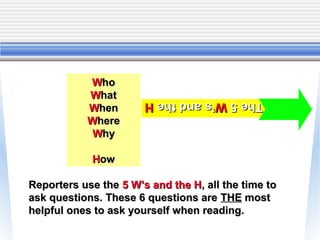
Who
           What        The 5 W’s and the H
                       The 5 W’s and the H
           When
           Where
            Why

            How

Reporters use the 5 W’s and the H, all the time to
ask questions. These 6 questions are THE most
helpful ones to ask yourself when reading.
Take the time to ask questions,
then be sure to make the time to answer them.

How this works is when you find a good
web site, you need to find the answers to
the 5 W’s and an H as you read.

By doing this, you are pushing yourself to
find meaning in the reading and pull out
the important information.
While you are looking at the web site,
      ask yourself the question:


                    WHO
      Who worked on the web site (authors)?
      Who is the author talking about or to (if any)?
      Who is the web site built for?
      Who …

Write your answers down, these will become your notes.
WHAT
 What question was the author answering?
 What is the the main idea for the web site (title)?
 What new things did you learn?
 What …

Your answers, are the notes that will help you
remember what is important.
WHEN
      When was the web page published (updated)?
      When is the important event happening?
      When …


Your notes will be a study guide, as they are the most
important pieces of information.
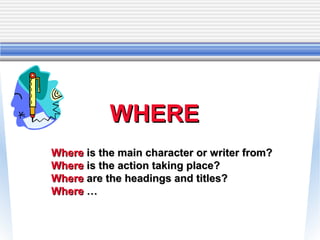
WHERE
Where is the main character or writer from?
Where is the action taking place?
Where are the headings and titles?
Where …
WHY
      Why did you select this web site?
      Why is the important event happening
      Why….

Your notes will follow you when you go back to the
classroom, so write down ONLY what is important (the
answers to the questions.)
And last, but not least ask questions
               which contain:


                 HOW
How did it happen?
How did they do that?
How did the story end?
How …
Were you a good reporter, did you get answers
to all of your questions?

                 Find out by looking at your
                 notes and see if they make
                 sense. Do you have all the
                 important points written down?

                 If not, go back and get the
                 answers.
Let’s Review

• By asking questions like a reporter, we can
pull the important facts from a web site.
• The 5 W’s and an H are helpful starting points
for your questions.
• Your answers become the review (study)
notes of the web site.
• Be sure to reference the web site you were
looking at for answers.
 Remember the more you practice the
 faster and easier this process will
 become. Go complete Activity Sheet 4.

Step4

  • 1.
    Step 4 Be A Reporter (The 5 W’s And An H)
  • 2.
    Background Imagine you are working on a poetry report for Language Arts. You have found some great web sites with definitions, examples and pictures. The web pages are very long, and you won’t remember all of it when you get back to class to work on it. So, you need to pull out just the facts. Here are some tips on how to do this.
  • 3.
    Objective By the endof this lesson you will know that: The ‘Be A Reporter’ strategy can help in writing notes and recording findings from a web site.  Not all information on a web page is helpful, some of it can be ignored (omitted.)  Referencing is a very important part of a search.
  • 4.
    Lesson Being a reporteror detective is a tough job, you need to be alert, and ask good questions. By asking good questions and reading you will be able to find out A LOT of good information.
  • 5.
    Who What The 5 W’s and the H The 5 W’s and the H When Where Why How Reporters use the 5 W’s and the H, all the time to ask questions. These 6 questions are THE most helpful ones to ask yourself when reading.
  • 6.
    Take the timeto ask questions, then be sure to make the time to answer them. How this works is when you find a good web site, you need to find the answers to the 5 W’s and an H as you read. By doing this, you are pushing yourself to find meaning in the reading and pull out the important information.
  • 7.
    While you arelooking at the web site, ask yourself the question: WHO Who worked on the web site (authors)? Who is the author talking about or to (if any)? Who is the web site built for? Who … Write your answers down, these will become your notes.
  • 8.
    WHAT What questionwas the author answering? What is the the main idea for the web site (title)? What new things did you learn? What … Your answers, are the notes that will help you remember what is important.
  • 9.
    WHEN When was the web page published (updated)? When is the important event happening? When … Your notes will be a study guide, as they are the most important pieces of information.
  • 10.
    WHERE Where is themain character or writer from? Where is the action taking place? Where are the headings and titles? Where …
  • 11.
    WHY Why did you select this web site? Why is the important event happening Why…. Your notes will follow you when you go back to the classroom, so write down ONLY what is important (the answers to the questions.)
  • 12.
    And last, butnot least ask questions which contain: HOW How did it happen? How did they do that? How did the story end? How …
  • 13.
    Were you agood reporter, did you get answers to all of your questions? Find out by looking at your notes and see if they make sense. Do you have all the important points written down? If not, go back and get the answers.
  • 14.
    Let’s Review • Byasking questions like a reporter, we can pull the important facts from a web site. • The 5 W’s and an H are helpful starting points for your questions. • Your answers become the review (study) notes of the web site. • Be sure to reference the web site you were looking at for answers. Remember the more you practice the faster and easier this process will become. Go complete Activity Sheet 4.