NATIONAL SEMINAR CONDUCTED BY MANUU-CTE, BHOPAL
NEP 2020 AND TEACHER EDUCATION: THINK GLOBAL AND ACT LOCAL
22ND AND 23RD NOVEMBER 2023
STEM READINESS TO FOSTER CREATIVE EDUCATIONAL SPACES,
SOCIAL AND CROSS-CULTURAL COLLABORATION
IN THE INSTITUTIONS
DR. RAKHI SAWLANI
ASSISTANT PROFESSOR
B.ED. COLLEGE
RESEARCH QUESTIONS
 Does India need a STEM education system?
 Do you want to implement STEM education in schools?
 Why Is it necessary to design STEM Programs in Schools?
 What are the various government initiatives in STEM education?
 Are our institutions STEM Ready to foster creativity, social and cross cultural collaborations?
 What is the nature of the STEM disciplines, opportunities, challenges and advantages of STEM
education in terms of theoretical and practical implications?
 What are the best STEM education practices, and examining areas for future research in STEM
education?
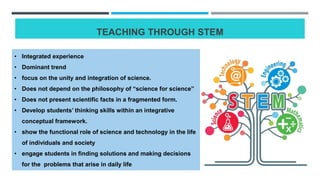
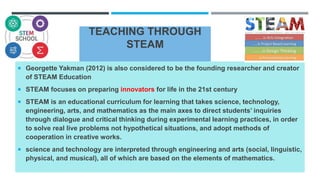
TEACHING THROUGH STEM
• Integrated experience
• Dominant trend
• focus on the unity and integration of science.
• Does not depend on the philosophy of “science for science”
• Does not present scientific facts in a fragmented form.
• Develop students’ thinking skills within an integrative
conceptual framework.
• show the functional role of science and technology in the life
of individuals and society
• engage students in finding solutions and making decisions
for the problems that arise in daily life
CONTRIBUTION OF STEM IN
LEARNING
 STEM prepares them for a future as engineers and scientists
 STEM contributes to the production of innovative ideas that will lead to
economic development
 STEM predicates on the fact that those who begin studying early in the
scientific and technological fields will be more prepared to for future
scientific careers.
 STEM education operates within the context of a complex phenomenon
or problem, with tasks that require learners to use their knowledge and
skills from various systems(science, technology, mathematics, and
engineering design).
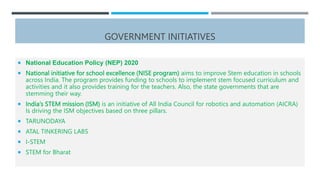
TEACHING THROUGH
STEAM
 Georgette Yakman (2012) is also considered to be the founding researcher and creator
of STEAM Education
 STEAM focuses on preparing innovators for life in the 21st century
 STEAM is an educational curriculum for learning that takes science, technology,
engineering, arts, and mathematics as the main axes to direct students’ inquiries
through dialogue and critical thinking during experimental learning practices, in order
to solve real live problems not hypothetical situations, and adopt methods of
cooperation in creative works.
 science and technology are interpreted through engineering and arts (social, linguistic,
physical, and musical), all of which are based on the elements of mathematics.
GOVERNMENT INITIATIVES
 National Education Policy (NEP) 2020
 National initiative for school excellence (NISE program) aims to improve Stem education in schools
across India. The program provides funding to schools to implement stem focused curriculum and
activities and it also provides training for the teachers. Also, the state governments that are
stemming their way.
 India’s STEM mission (ISM) is an initiative of All India Council for robotics and automation (AICRA)
Is driving the ISM objectives based on three pillars.
 TARUNODAYA
 ATAL TINKERING LABS
 I-STEM
 STEM for Bharat
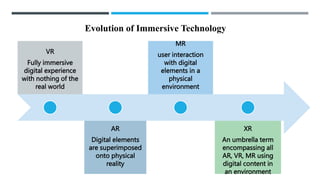
VR
Fully immersive
digital experience
with nothing of the
real world
AR
Digital elements
are superimposed
onto physical
reality
MR
user interaction
with digital
elements in a
physical
environment
XR
An umbrella term
encompassing all
AR, VR, MR using
digital content in
an environment
Evolution of Immersive Technology
BUILDING STEM READINESS
 Designing effective STEM programs in Institutions
 supplements the existing curriculum instead of trying to replace it. It needs to have an innovative
approach that goes beyond traditional teaching methodology.
 resources need to be invested in procuring STEM models and relevant software, setting up labs,
capacity building of the teachers who will deliver the program and creating opportunities for students
to grow. These key factors will determine the effectiveness of the STEM program
 (workshops, science fairs, robotics competitions at IIT Bombay, etc.) were arranged for the students,
simple and inexpensive STEM kits and models
CORPORATE INITIATIVES
 funding STEM education programs in schools
 providing resources for building STEM labs
 running internships, hackathons, coding events, competitions, mentorship programs, etc. to instil
practical experience and exposure in STEM fields.
 recognizing and addressing the need for inclusivity and diversity in STEM education.
 increase access to STEM among girls and students from underprivileged communities.
 synergy between the government and private sector can build a sustainable and inclusive
ecosystem for STEM education and entrepreneurship in India
 driving economic growth and societal progress in the country.
SELF-INITIATIVES
 in studying at home, researching STEM concepts,
 developing STEM working models (WIFI-controlled robocars, drones, model waste treatment
plant, etc),
 participating in STEM-related opportunities.
STEM-Readiness-Dr.Rakhi.pptx

STEM-Readiness-Dr.Rakhi.pptx

  • 1.
    NATIONAL SEMINAR CONDUCTEDBY MANUU-CTE, BHOPAL NEP 2020 AND TEACHER EDUCATION: THINK GLOBAL AND ACT LOCAL 22ND AND 23RD NOVEMBER 2023 STEM READINESS TO FOSTER CREATIVE EDUCATIONAL SPACES, SOCIAL AND CROSS-CULTURAL COLLABORATION IN THE INSTITUTIONS DR. RAKHI SAWLANI ASSISTANT PROFESSOR B.ED. COLLEGE
  • 2.
    RESEARCH QUESTIONS  DoesIndia need a STEM education system?  Do you want to implement STEM education in schools?  Why Is it necessary to design STEM Programs in Schools?  What are the various government initiatives in STEM education?  Are our institutions STEM Ready to foster creativity, social and cross cultural collaborations?  What is the nature of the STEM disciplines, opportunities, challenges and advantages of STEM education in terms of theoretical and practical implications?  What are the best STEM education practices, and examining areas for future research in STEM education?
  • 3.
    TEACHING THROUGH STEM •Integrated experience • Dominant trend • focus on the unity and integration of science. • Does not depend on the philosophy of “science for science” • Does not present scientific facts in a fragmented form. • Develop students’ thinking skills within an integrative conceptual framework. • show the functional role of science and technology in the life of individuals and society • engage students in finding solutions and making decisions for the problems that arise in daily life
  • 4.
    CONTRIBUTION OF STEMIN LEARNING  STEM prepares them for a future as engineers and scientists  STEM contributes to the production of innovative ideas that will lead to economic development  STEM predicates on the fact that those who begin studying early in the scientific and technological fields will be more prepared to for future scientific careers.  STEM education operates within the context of a complex phenomenon or problem, with tasks that require learners to use their knowledge and skills from various systems(science, technology, mathematics, and engineering design).
  • 5.
    TEACHING THROUGH STEAM  GeorgetteYakman (2012) is also considered to be the founding researcher and creator of STEAM Education  STEAM focuses on preparing innovators for life in the 21st century  STEAM is an educational curriculum for learning that takes science, technology, engineering, arts, and mathematics as the main axes to direct students’ inquiries through dialogue and critical thinking during experimental learning practices, in order to solve real live problems not hypothetical situations, and adopt methods of cooperation in creative works.  science and technology are interpreted through engineering and arts (social, linguistic, physical, and musical), all of which are based on the elements of mathematics.
  • 6.
    GOVERNMENT INITIATIVES  NationalEducation Policy (NEP) 2020  National initiative for school excellence (NISE program) aims to improve Stem education in schools across India. The program provides funding to schools to implement stem focused curriculum and activities and it also provides training for the teachers. Also, the state governments that are stemming their way.  India’s STEM mission (ISM) is an initiative of All India Council for robotics and automation (AICRA) Is driving the ISM objectives based on three pillars.  TARUNODAYA  ATAL TINKERING LABS  I-STEM  STEM for Bharat
  • 7.
    VR Fully immersive digital experience withnothing of the real world AR Digital elements are superimposed onto physical reality MR user interaction with digital elements in a physical environment XR An umbrella term encompassing all AR, VR, MR using digital content in an environment Evolution of Immersive Technology
  • 8.
    BUILDING STEM READINESS Designing effective STEM programs in Institutions  supplements the existing curriculum instead of trying to replace it. It needs to have an innovative approach that goes beyond traditional teaching methodology.  resources need to be invested in procuring STEM models and relevant software, setting up labs, capacity building of the teachers who will deliver the program and creating opportunities for students to grow. These key factors will determine the effectiveness of the STEM program  (workshops, science fairs, robotics competitions at IIT Bombay, etc.) were arranged for the students, simple and inexpensive STEM kits and models
  • 9.
    CORPORATE INITIATIVES  fundingSTEM education programs in schools  providing resources for building STEM labs  running internships, hackathons, coding events, competitions, mentorship programs, etc. to instil practical experience and exposure in STEM fields.  recognizing and addressing the need for inclusivity and diversity in STEM education.  increase access to STEM among girls and students from underprivileged communities.  synergy between the government and private sector can build a sustainable and inclusive ecosystem for STEM education and entrepreneurship in India  driving economic growth and societal progress in the country.
  • 10.
    SELF-INITIATIVES  in studyingat home, researching STEM concepts,  developing STEM working models (WIFI-controlled robocars, drones, model waste treatment plant, etc),  participating in STEM-related opportunities.