Downloaded 16 times



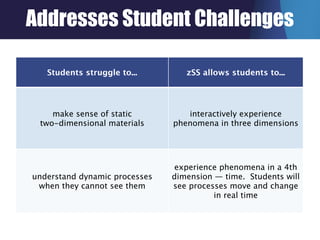


The document proposes virtual holographic STEM stations for K-12 students in the US to address shortcomings in science and math proficiency. It describes the large US education market and trends towards digital learning. The solution presented is an interactive 3D holographic device that delivers STEM curriculum through observation, experimentation, expert guidance and assessment. A business model is proposed where the hardware is produced by one company and content is developed and distributed through a separate company's platform to schools and individuals. The concept aims to be validated through a controlled study comparing learning outcomes.


