MANAGEMENT OF STATUS EPILEPTICUS
Presenter : Dr. Vamsi Krishna Koneru
DM Neurology (CMC Vellore)
PDF Epilepsy (JIPMER)
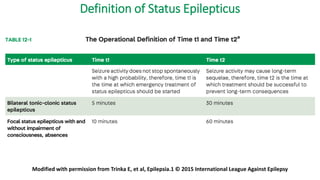
Definition of Status Epilepticus
Modified with permission from Trinka E, et al, Epilepsia.1 © 2015 International League Against Epilepsy
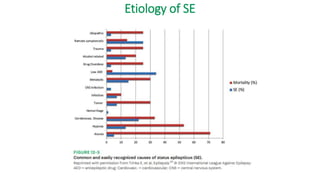
Etiology of SE
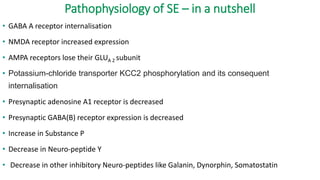
Pathophysiology of SE – in a nutshell
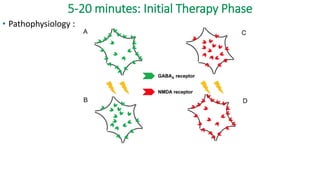
• GABA A receptor internalisation
• NMDA receptor increased expression
• AMPA receptors lose their GLUA 2 subunit
• Potassium-chloride transporter KCC2 phosphorylation and its consequent
internalisation
• Presynaptic adenosine A1 receptor is decreased
• Presynaptic GABA(B) receptor expression is decreased
• Increase in Substance P
• Decrease in Neuro-peptide Y
• Decrease in other inhibitory Neuro-peptides like Galanin, Dynorphin, Somatostatin
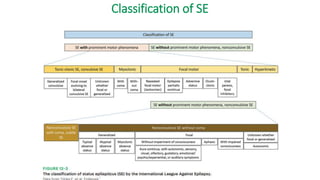
Classification of SE
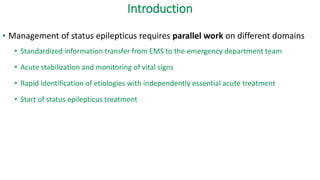
Introduction
• Management of status epilepticus requires parallel work on different domains
• Standardized information transfer from EMS to the emergency department team
• Acute stabilization and monitoring of vital signs
• Rapid identification of etiologies with independently essential acute treatment
• Start of status epilepticus treatment
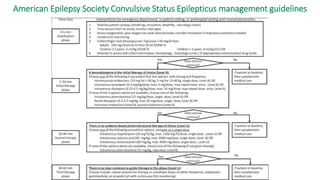
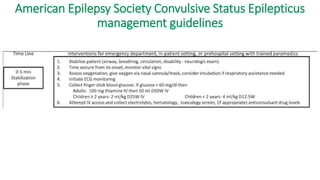
American Epilepsy Society Convulsive Status Epilepticus management guidelines
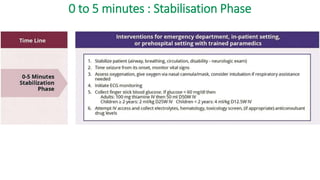
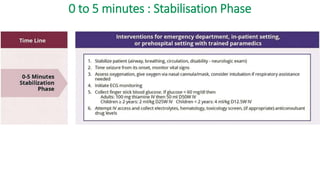
0 to 5 minutes : Stabilisation Phase
• Maintain patent airway during all stages of management of SE.
• Clear the oral secretions (mouth, followed by nose)
• Keeping in recovery position is advisable to prevent aspiration
• Immobilize cervical spine IF trauma is suspected
• Oral airway : prevent tongue from falling back
• Consider endotracheal intubation if airway is not maintainable with above
measures
0 to 5 minutes : Stabilisation Phase
• All Pt’s with SE should :
• Have their breathing and spo2 monitored continuously.
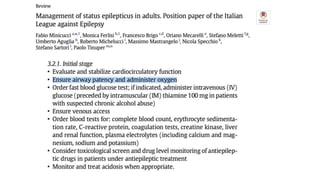
• Be given supplemental oxygen
• Depending on the degree of altered sensorium and duration of SE maintain
oxygen saturation by:
• Supplemental oxygen,
• AMBU bag,
• Non-invasive continuous positive airway pressure (CPAP) and
• Invasive ventilation by endotracheal intubation.
0 to 5 minutes : Stabilisation Phase
• Hypoxemia may result from :
• Respiratory depression
• Apnea
• Aspiration
• Airway obstruction and
• Neurogenic pulmonary edema
Wijdicks E. Neurologic catastrophies in the emergency department. Boston: Butterworth-Heinemann
American Epilepsy Society Convulsive Status Epilepticus
management guidelines
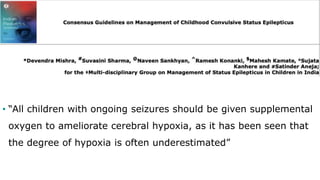
• “All children with ongoing seizures should be given supplemental
oxygen to ameliorate cerebral hypoxia, as it has been seen that
the degree of hypoxia is often underestimated”
• Other guidelines advocating oxygen supplementation during status epilepticus:
• U.K’s NICE guidelines
• AAN-in it’s Continuum publication
• PALS algorithm
0 to 5 minutes : Stabilisation Phase
• Place continuous cardiorespiratory monitors and pulse oximetry
• Establish IV or IO access at least two lines
• Draw samples for the following laboratory studies :
• Serum electrolytes, including Ca, Mg
• Glucose,
• LFTs,
• CBC,
• Toxicology and
• ASM levels
0 to 5 minutes : Stabilisation Phase
• Check finger stick blood glucose. If glucose < 60 mg/dl then
• Adults: 100 mg Thiamine IV then 50 ml D50W IV
• Children > 2 years: 2 ml/kg D25W IV
• Children < 2 years: 4 ml/kg D12.5W IV
0 to 5 minutes : Stabilisation Phase
Properly managed stabilisation phase will :
• Prevent Respiratory failure
• Major complication
• 80% of patients with generalized SE
• Independent predictor of death
• Identify and treat potential underlying causes
• Hypoglycemia
• Metabolic abnormalites
• Fever/infection
0 to 5 minutes : Stabilisation Phase
5-20 minutes: Initial Therapy Phase
• Pathophysiology :
5-20 minutes: Initial Therapy Phase
• Nine RCTs addressed the efficacy of initial therapy
• Three class I
• One class II and
• Five class III
• The following are the class I trials :
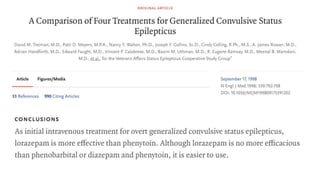
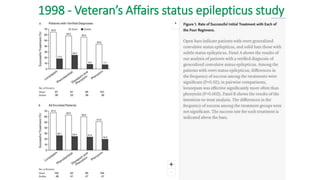
• 1998 - Veteran’s Affairs status epilepticus study
• 2001 - Comparison of Lorazepam, Diazepam, and Placebo for the Treatment of Out-of-Hospital
Status Epilepticus [NEJM]
• 2012 - RAMPART trial
1998 - Veteran’s Affairs status epilepticus study
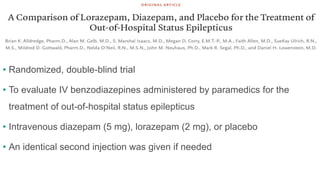
• Randomized, double-blind trial
• To evaluate IV benzodiazepines administered by paramedics for the
treatment of out-of-hospital status epilepticus
• Intravenous diazepam (5 mg), lorazepam (2 mg), or placebo
• An identical second injection was given if needed
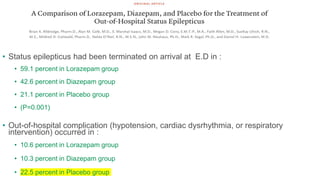
• Status epilepticus had been terminated on arrival at E.D in :
• 59.1 percent in Lorazepam group
• 42.6 percent in Diazepam group
• 21.1 percent in Placebo group
• (P=0.001)
• Out-of-hospital complication (hypotension, cardiac dysrhythmia, or respiratory
intervention) occurred in :
• 10.6 percent in Lorazepam group
• 10.3 percent in Diazepam group
• 22.5 percent in Placebo group
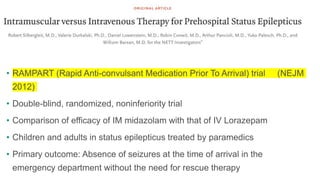
• RAMPART (Rapid Anti-convulsant Medication Prior To Arrival) trial (NEJM
2012)
• Double-blind, randomized, noninferiority trial
• Comparison of efficacy of IM midazolam with that of IV Lorazepam
• Children and adults in status epilepticus treated by paramedics
• Primary outcome: Absence of seizures at the time of arrival in the
emergency department without the need for rescue therapy
• Dosage:
• Adults and children with an estimated body weight of more than 40 kg:
• 10 mg of IM Midazolam followed by IV placebo [or] IM placebo followed
by 4 mg of IV Lorazepam.
• In children with an estimated weight of 13 to 40 kg :
• 5 mg of IM Midazolam or 2 mg of IV Lorazepam.
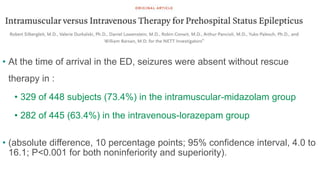
• At the time of arrival in the ED, seizures were absent without rescue
therapy in :
• 329 of 448 subjects (73.4%) in the intramuscular-midazolam group
• 282 of 445 (63.4%) in the intravenous-lorazepam group
• (absolute difference, 10 percentage points; 95% confidence interval, 4.0 to
16.1; P<0.001 for both noninferiority and superiority).
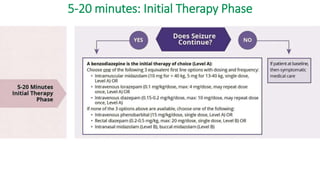
5-20 minutes: Initial Therapy Phase
• Midazolam
• Water-soluble benzodiazepine
• Can be administered by different routes: IV, IM, buccal, and intranasal.
• Ideally suited for early out-of-hospital treatment by caregivers or paramedics
• Non-IV Midazolam by any route VS Diazepam by any route :
• For seizure cessation both groups are equally efficacious
• Time interval btw arrival & seizure cessation was significantly shorter in Midazolam group
• No difference in adverse effects was found between the two groups
• Buccal Midazolam was more effective than rectal diazepam in terminating status
epilepticus
• Out-of-hospital status epilepticus : Buccal or intranasal midazolam can be
regarded as the first-choice treatment
• First-line Non-IV treatment will NOT stop status epilepticus in around 20% to 30%
of cases
Brigo F, Nardone R, Tezzon F, Trinka E. Nonintravenous midazolam versus intravenous or rectal diazepam for
the treatment of early status epilepticus: a systematic review with meta- analysis. Epilepsy Behav 2015;49:
5-20 minutes: Initial Therapy Phase
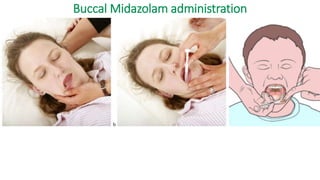
Buccal Midazolam administration
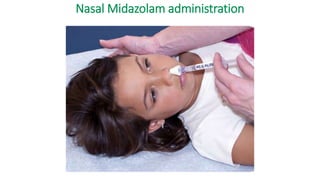
Nasal Midazolam administration
5-20 minutes: Initial Therapy Phase
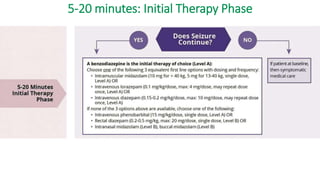
• Current guidelines recommended dose for initial buccal or intranasal route :
• 0.3 mg/kg to a maximum of 10 mg
• Dose can be divided and given half in each nostril
• Absorption takes approximately 1–3 minutes
• The efficacy of the alternative routes of midazolam administration was
• 79% for the intranasal route
• 82–100% for intramuscular route
• Phenobarbitone :
• Enhances γ-aminobutyric acid (GABA) inhibition.
• One of the oldest drugs used to treat SE
• Efficacy has been demonstrated for both early and established SE.
• However, the unfavourable safety profile of phenobarbital restricts its use
• Respiratory depression,
• Hypotension, and
• Sedation.
• IV loading dose of phenobarbital : 10–20 mg/kg.
• The infusion rate should not exceed :
• 100 mg/min in adults and
• 2 mg/kg/min in children.
5-20 minutes: Initial Therapy Phase
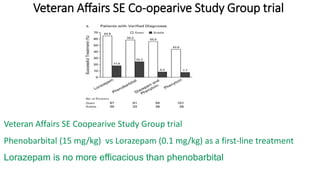
Veteran Affairs SE Co-opearive Study Group trial
Veteran Affairs SE Coopearive Study Group trial
Phenobarbital (15 mg/kg) vs Lorazepam (0.1 mg/kg) as a first-line treatment
Lorazepam is no more efficacious than phenobarbital
5-20 minutes: Initial Therapy Phase
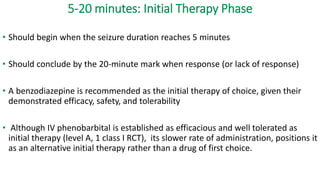
• Should begin when the seizure duration reaches 5 minutes
• Should conclude by the 20-minute mark when response (or lack of response)
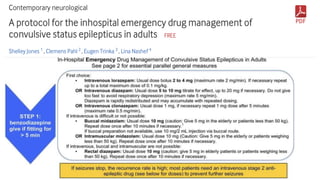
• A benzodiazepine is recommended as the initial therapy of choice, given their
demonstrated efficacy, safety, and tolerability
• Although IV phenobarbital is established as efficacious and well tolerated as
initial therapy (level A, 1 class I RCT), its slower rate of administration, positions it
as an alternative initial therapy rather than a drug of first choice.
5-20 minutes: Initial Therapy Phase
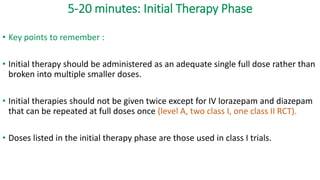
• Key points to remember :
• Initial therapy should be administered as an adequate single full dose rather than
broken into multiple smaller doses.
• Initial therapies should not be given twice except for IV lorazepam and diazepam
that can be repeated at full doses once (level A, two class I, one class II RCT).
• Doses listed in the initial therapy phase are those used in class I trials.
5-20 minutes: Initial Therapy Phase
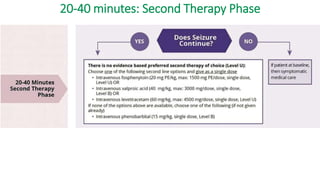
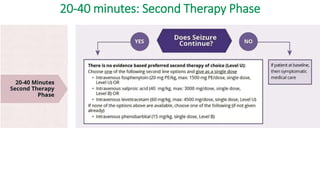
20-40 minutes: Second Therapy Phase
• Second therapy phase (20-40 minutes of seizure activity) begins
when response (or lack of response) to the initial therapy becomes
apparent.
• Reasonable options include :
• Fosphenytoin,
• Valproic acid,
• Levetiracetam.
ESETT trial
• Established Status Epilepticus Treatment Trial (ESETT) trial
• 384 pediatric and adult patients with convulsive status epilepticus
• Refractory to Benzodiazepines
• Compared Fos-Phenytoin, Valproic acid and Levetiracetam
• Found that all 3 are equally effective and have similar rates of adverse effects
• High-quality evidence
• Choose one among them according to patient baseline characteristics
FOSPHENYTOIN
• Fosphenytoin :
• Pro-drug of Phenytoin
• Hydrolyzed to phenytoin by serum phosphatases.
• highly water soluble - unlikely to precipitate during IV administration.
• Risk of local irritation at the site of infusion is significantly less compared to phenytoin
• Infused much more rapidly (up to 150 mg PE/min vs 50 mg/min with phenytoin).
• IM administration possible if IV access cannot be obtained due to it’s water solubility
FOSPHENYTOIN
• Fosphenytoin :
• It is the preferred formulation of phenytoin for rapid intravenous dosing.
• The loading dose is 20 mg PE/kg (Max 1500 PE/dose)
• Infused at a rate of 100 to 150 mg PE/minute.
• Cardiac monitoring is required during the infusion of Fosphenytoin or Phenytoin
• Cardiac monitoring should be continued for at least 15 minutes after the end of a
Fosphenytoin infusion,
(while it continues to be dephosphorylated into phenytoin)
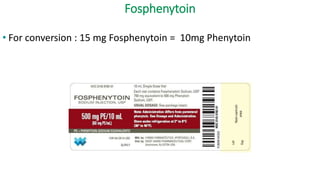
Fosphenytoin
• For conversion : 15 mg Fosphenytoin = 10mg Phenytoin
PHENYTOIN
• Phenytoin is generally started with a loading dose of 20 mg/kg (max 1500mg)
• Infused at a rate of up to 50 mg/minute
• Modify the infusion rate if hypotension or adverse cardiovascular events occur.
• Risk increase with higher infusion rates, due to the propylene glycol
(used to solubilize phenytoin)
• Local pain and injury (including venous thrombosis and the rare purple glove syndrome)
increase with more rapid infusions.
• Risk of cardiac arrhythmias – Hence cardiac monitoring during infusion is mandatory
SODIUM VALPROATE
• Loading dose of 40 mg/kg (Maximum dose 3000 mg)
• Infused at a rate of 10 mg/kg per minute in adults
• Full dose can be given in four minutes, with no significant risk of acute adverse effects
• Loading doses in this range yield :
• concentrations in therapeutic ranges without significant sedation
SODIUM VALPROATE
• Preferred over phenytoin in patients with primary generalized epilepsies
• Particularly useful in patients with focal or myoclonic status epilepticus (MSE)
• Patients who are on enzyme-inducing ASM’s may need higher maintenance doses or
shorter intervals between doses
• Free phenytoin level often rises markedly with concurrent administration, as both
agents are highly protein-bound
Sodium Valproate
• Risk of hepatic toxicity and hyperammonemic encephalopathy
• Particularly in children with Mitochondrial disorders & some Aminoacidopathies
• Risks of hepatic dysfunction and coagulopathy are important considerations
LEVETIRACETAM
• Levetiracetam :
• Loading dose of 60 mg/kg IV in adults (maximum 4500 mg)
• Infused over 5 to 15 minutes.
• Doses are typically infused over 15 minutes.
• Retrospective data suggest that rapid intravenous infusion (over 5 minutes) of
levetiracetam in doses up to 4500 mg is safe and well-tolerated
LACOSAMIDE
• IV Lacosamide (200 to 400 mg IV bolus) is usually well tolerated
• May have similar efficacy compared with other agents used to treat refractory status
epilepticus
• Rare serious adverse events include second-degree and complete atrioventricular block
• ECG monitoring before and during maintenance period to look for PR prolongation.
• Comorbid heart disease and with concurrent use of other drugs that may prolong the
PR interval – Additional caution required
PHENOBARBITONE
• Very effective antiseizure medication,
• Especially in the acute management of seizures,
• High doses of phenobarbital will control almost any seizure
• But at the cost of substantial sedation and potential reduction of blood pressure and
respiration
PHENOBARBITONE
• Initial doses of 20 mg/kg infused at a rate of 30 to 50 mg/minute are generally used
• Slower infusion rates should be used in older adult patients
• Careful monitoring of respiratory and cardiac status is mandatory.
• Intubation is often necessary.
• The risk of prolonged sedation with phenobarbital is greater
• Half-life of 87 to 100 hours.
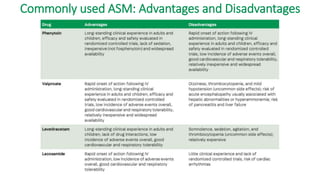
Commonly used ASM: Advantages and Disadvantages
20-40 minutes: Second Therapy Phase
Treatment failure causes
• Inadequate drug treatment
• Failure to initiate or continue maintenance antiepileptic drug
therapy
• Medical factors can exacerbate seizures
• Failure to treat (or identify) the underlying cause
• Misdiagnosis : pseudo-status epilepticus.
• Wilson Disease patients , INH toxicity : Pyridoxine supplementation
• Porphyrias : Use non enzyme inducing ASMs like LEV.
• Coexisting liver disease : Avoid VPA. LEV is best
• Coexisting kidney disease : LEV is best avoided. Or titrate according
to EFR
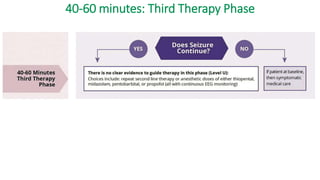
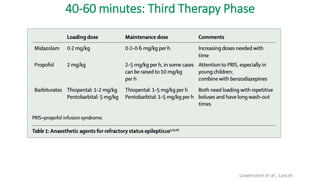
40-60 minutes: Third Therapy Phase
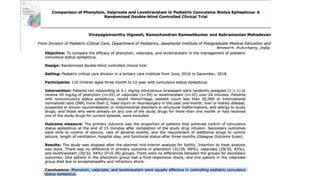
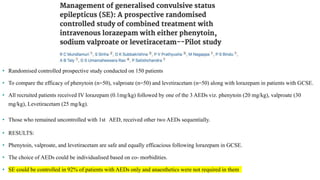
• Randomised controlled prospective study conducted on 150 patients
• To compare the efficacy of phenytoin (n=50), valproate (n=50) and levetiracetam (n=50) along with lorazepam in patients with GCSE.
• All recruited patients received IV lorazepam (0.1mg/kg) followed by one of the 3 AEDs viz. phenytoin (20 mg/kg), valproate (30
mg/kg), Levetiracetam (25 mg/kg).
• Those who remained uncontrolled with 1st AED, received other two AEDs sequentially.
• RESULTS:
• Phenytoin, valproate, and levetiracetam are safe and equally efficacious following lorazepam in GCSE.
• The choice of AEDs could be individualised based on co- morbidities.
• SE could be controlled in 92% of patients with AEDs only and anaesthetics were not required in them
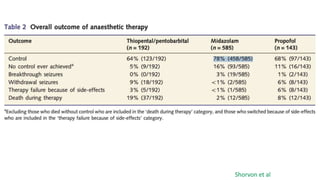
40-60 minutes: Third Therapy Phase
Shorvon et al
40-60 minutes: Third Therapy Phase
Lowenstein et al , Lancet
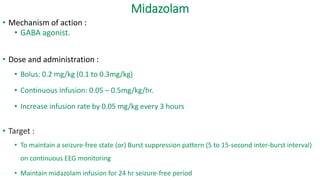
Midazolam
• Mechanism of action :
• GABA agonist.
• Dose and administration :
• Bolus: 0.2 mg/kg (0.1 to 0.3mg/kg)
• Continuous infusion: 0.05 – 0.5mg/kg/hr.
• Increase infusion rate by 0.05 mg/kg every 3 hours
• Target :
• To maintain a seizure-free state (or) Burst suppression pattern (5 to 15-second inter-burst interval)
on continuous EEG monitoring
• Maintain midazolam infusion for 24 hr seizure-free period
Midazolam
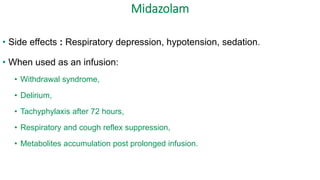
• Side effects : Respiratory depression, hypotension, sedation.
• When used as an infusion:
• Withdrawal syndrome,
• Delirium,
• Tachyphylaxis after 72 hours,
• Respiratory and cough reflex suppression,
• Metabolites accumulation post prolonged infusion.
Midazolam
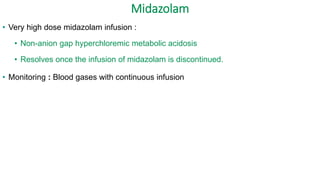
• Very high dose midazolam infusion :
• Non-anion gap hyperchloremic metabolic acidosis
• Resolves once the infusion of midazolam is discontinued.
• Monitoring : Blood gases with continuous infusion
Propofol
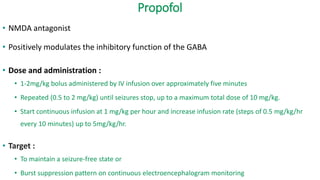
• NMDA antagonist
• Positively modulates the inhibitory function of the GABA
• Dose and administration :
• 1-2mg/kg bolus administered by IV infusion over approximately five minutes
• Repeated (0.5 to 2 mg/kg) until seizures stop, up to a maximum total dose of 10 mg/kg.
• Start continuous infusion at 1 mg/kg per hour and increase infusion rate (steps of 0.5 mg/kg/hr
every 10 minutes) up to 5mg/kg/hr.
• Target :
• To maintain a seizure-free state or
• Burst suppression pattern on continuous electroencephalogram monitoring
Propofol
• Common Side effects of Propofol :
Bradycardia,
Hypotension,
Apnoea,
Arrythmia,
Thrombosis,
Phlebitis,
Deranged liver function tests (particularly transaminases),
Pancreatitis.
Propofol
• Propofol Infusion Syndrome (PRIS) : Rare but dangerous adverse effect
• Lactic acidosis,
• Hyperkalaemia,
• Hyperlipidaemia,
• Cardiac dysfunction,
• Rhabdomyolysis,
• Renal failure
• Risk factors for propofol infusion syndrome include :
• Young age (Usually avoided in children)
• Carbohydrate depletion,
• Concomitant use of corticosteroids, and
• Prolonged infusion at high doses
( for longer than 48 h at dosages exceeding 5 mg/kg/h)
Propofol
• Monitoring :
• Creatine Kinase (CK) levels should be monitored daily in patients on Propofol.
• Liver function
• Reliable indicator for the development of PRIS :
• Rising CK levels + Acidosis + Increasing lactate levels
• If indicative of PRIS: Consider to stop or reduce the dose of propofol
KETAMINE
• NMDA receptor antagonist.
• Dose and administration
• Loading dose of ketamine is 0.5-2 mg/kg, followed by an infusion of 1 to 10
mg/kg per hour
• Titrated to suppression of electrographic seizures or Burst suppression pattern
for 24-48 hrs
• Contraindications
• Patients with severe coronary or myocardial disease or cerebrovascular
accident
KETAMINE
• Neuroprotectant against glutamate-induced widespread neuronal necrosis.
• It interacts with opioid, monoaminergic, muscarinic, and nicotinic receptor ion channels and
modulates some cytokines.
• It may reduce the neuroinflammation, which may contribute to the refractoriness of SE
• Fujikawa recommends early initiation of ketamine in Refractory SE
• Fujikawa DG. Starting ketamine for neuroprotection earlier than its current use as an anesthetic/antiepileptic drug late in refractory status epilepticus. Epilepsia.
2019; 60(5):373–380
KETAMINE
• Cautions
• Hepatic impairment – metabolised in the liver CYP 450, action may be prolonged in patients
with impaired liver function
• Acute intermittent porphyria
• Psychiatric illness – confusion, agitation, hallucinations – specially during weaning
• Conditions where an elevated ICP or IOP may be detrimental
• Cardiac disease – increases myocardial oxygen consumption
• Deranged liver function tests (when used for >3days)
• Rash
KETAMINE
• Midazolam + Ketamine combination :
• Different MOA , hence synergistic effect
• Hypotention + Hypertention
• Neuroprotective effect
• Relative ease of availability and administration
Thiopentone sodium
• Thiopental, its first metabolite pentobarbital :
• are the oldest compounds used in the setting of RSE
• In addition to GABAA modulation, barbiturates have an NMDA-antagonist action in vitro
• tendency to accumulate in adipose tissue.
• They have a long half-life (up to 36 h) after continuous administration
• Thiopental Dosage:
• Started with a bolus of 3–5 mg/kg,
• Then further boluses of 1–2 mg/kg every 2–3 min (until seizures are controlled )
• Then continuous infusion at a rate of 3–7 mg/kg/h
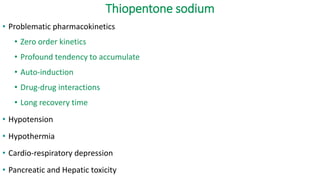
Thiopentone sodium
• Problematic pharmacokinetics
• Zero order kinetics
• Profound tendency to accumulate
• Auto-induction
• Drug-drug interactions
• Long recovery time
• Hypotension
• Hypothermia
• Cardio-respiratory depression
• Pancreatic and Hepatic toxicity
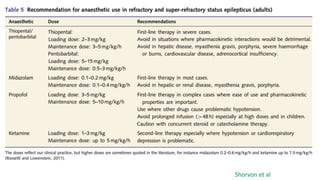
Shorvon et al
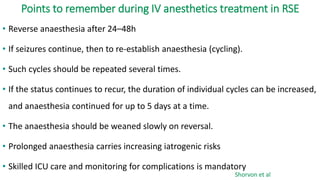
Points to remember during IV anesthetics treatment in RSE
• Reverse anaesthesia after 24–48h
• If seizures continue, then to re-establish anaesthesia (cycling).
• Such cycles should be repeated several times.
• If the status continues to recur, the duration of individual cycles can be increased,
and anaesthesia continued for up to 5 days at a time.
• The anaesthesia should be weaned slowly on reversal.
• Prolonged anaesthesia carries increasing iatrogenic risks
• Skilled ICU care and monitoring for complications is mandatory
Shorvon et al
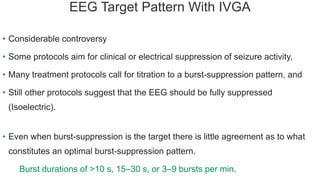
EEG Target Pattern With IVGA
• Considerable controversy
• Some protocols aim for clinical or electrical suppression of seizure activity,
• Many treatment protocols call for titration to a burst-suppression pattern, and
• Still other protocols suggest that the EEG should be fully suppressed
(Isoelectric).
• Even when burst-suppression is the target there is little agreement as to what
constitutes an optimal burst-suppression pattern.
Burst durations of >10 s, 15–30 s, or 3–9 bursts per min.
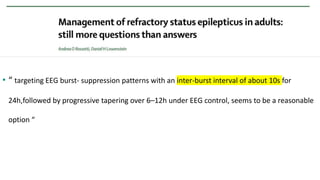
• “ targeting EEG burst- suppression patterns with an inter-burst interval of about 10s for
24h,followed by progressive tapering over 6–12h under EEG control, seems to be a reasonable
option “
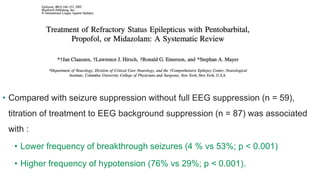
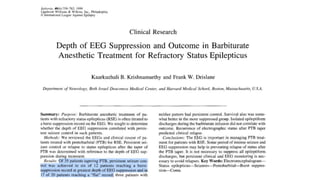
• Compared with seizure suppression without full EEG suppression (n = 59),
titration of treatment to EEG background suppression (n = 87) was associated
with :
• Lower frequency of breakthrough seizures (4 % vs 53%; p < 0.001)
• Higher frequency of hypotension (76% vs 29%; p < 0.001).
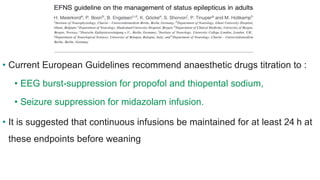
• Current European Guidelines recommend anaesthetic drugs titration to :
• EEG burst-suppression for propofol and thiopental sodium,
• Seizure suppression for midazolam infusion.
• It is suggested that continuous infusions be maintained for at least 24 h at
these endpoints before weaning
Duration of Coma Before Reducing IV Anesthetics
• Another facet in the treatment of refractory SE with strong opinions but weak data.
• Recommendations regarding the duration of the initial period of induced coma vary
from 12 to 48 h.
• Holtkamp et al. surveyed 91 'opinion leaders' specializing in critical care neurology or
epileptology in three central European countries
• 22% : reduce drug dose within the first 24 hr
• 72% : reduce dose between 24 and 48 hr and
• 5% : reduce dose between 48 and 72 h.
Other Non-Pharmacological Methods
• Ketogenic diet
• Neuro—modulation ( VNS, TMS, DBS, ECT)
• Immunomodulation (IVIG, Steroids, Plasma exchange)
• Magnesium infusion
• Pyridoxine infusion
• Hypothermia
• CSF drainage
• Music therapy
Grey areas
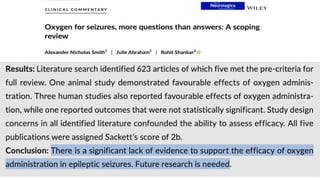
• Oxygen administration ?
• Whether or not to give ASM in those patients who achieved seizure control with
benzodiazepines?
• Whether or not to repeat second line therapy at the end of 40 min ?
• EEG target after initiation of IV anesthetic agents ?
Thank you

status epilepticus-management

  • 1.
    MANAGEMENT OF STATUSEPILEPTICUS Presenter : Dr. Vamsi Krishna Koneru DM Neurology (CMC Vellore) PDF Epilepsy (JIPMER)
  • 2.
    Definition of StatusEpilepticus Modified with permission from Trinka E, et al, Epilepsia.1 © 2015 International League Against Epilepsy
  • 3.
  • 4.
    Pathophysiology of SE– in a nutshell • GABA A receptor internalisation • NMDA receptor increased expression • AMPA receptors lose their GLUA 2 subunit • Potassium-chloride transporter KCC2 phosphorylation and its consequent internalisation • Presynaptic adenosine A1 receptor is decreased • Presynaptic GABA(B) receptor expression is decreased • Increase in Substance P • Decrease in Neuro-peptide Y • Decrease in other inhibitory Neuro-peptides like Galanin, Dynorphin, Somatostatin
  • 5.
  • 6.
    Introduction • Management ofstatus epilepticus requires parallel work on different domains • Standardized information transfer from EMS to the emergency department team • Acute stabilization and monitoring of vital signs • Rapid identification of etiologies with independently essential acute treatment • Start of status epilepticus treatment
  • 7.
    American Epilepsy SocietyConvulsive Status Epilepticus management guidelines
  • 8.
    0 to 5minutes : Stabilisation Phase
  • 9.
    0 to 5minutes : Stabilisation Phase • Maintain patent airway during all stages of management of SE. • Clear the oral secretions (mouth, followed by nose) • Keeping in recovery position is advisable to prevent aspiration • Immobilize cervical spine IF trauma is suspected • Oral airway : prevent tongue from falling back • Consider endotracheal intubation if airway is not maintainable with above measures
  • 10.
    0 to 5minutes : Stabilisation Phase • All Pt’s with SE should : • Have their breathing and spo2 monitored continuously. • Be given supplemental oxygen • Depending on the degree of altered sensorium and duration of SE maintain oxygen saturation by: • Supplemental oxygen, • AMBU bag, • Non-invasive continuous positive airway pressure (CPAP) and • Invasive ventilation by endotracheal intubation.
  • 11.
    0 to 5minutes : Stabilisation Phase • Hypoxemia may result from : • Respiratory depression • Apnea • Aspiration • Airway obstruction and • Neurogenic pulmonary edema Wijdicks E. Neurologic catastrophies in the emergency department. Boston: Butterworth-Heinemann
  • 12.
    American Epilepsy SocietyConvulsive Status Epilepticus management guidelines
  • 14.
    • “All childrenwith ongoing seizures should be given supplemental oxygen to ameliorate cerebral hypoxia, as it has been seen that the degree of hypoxia is often underestimated”
  • 15.
    • Other guidelinesadvocating oxygen supplementation during status epilepticus: • U.K’s NICE guidelines • AAN-in it’s Continuum publication • PALS algorithm
  • 17.
    0 to 5minutes : Stabilisation Phase • Place continuous cardiorespiratory monitors and pulse oximetry • Establish IV or IO access at least two lines • Draw samples for the following laboratory studies : • Serum electrolytes, including Ca, Mg • Glucose, • LFTs, • CBC, • Toxicology and • ASM levels
  • 18.
    0 to 5minutes : Stabilisation Phase • Check finger stick blood glucose. If glucose < 60 mg/dl then • Adults: 100 mg Thiamine IV then 50 ml D50W IV • Children > 2 years: 2 ml/kg D25W IV • Children < 2 years: 4 ml/kg D12.5W IV
  • 19.
    0 to 5minutes : Stabilisation Phase Properly managed stabilisation phase will : • Prevent Respiratory failure • Major complication • 80% of patients with generalized SE • Independent predictor of death • Identify and treat potential underlying causes • Hypoglycemia • Metabolic abnormalites • Fever/infection
  • 20.
    0 to 5minutes : Stabilisation Phase
  • 21.
    5-20 minutes: InitialTherapy Phase
  • 22.
    5-20 minutes: InitialTherapy Phase • Pathophysiology :
  • 23.
    5-20 minutes: InitialTherapy Phase • Nine RCTs addressed the efficacy of initial therapy • Three class I • One class II and • Five class III • The following are the class I trials : • 1998 - Veteran’s Affairs status epilepticus study • 2001 - Comparison of Lorazepam, Diazepam, and Placebo for the Treatment of Out-of-Hospital Status Epilepticus [NEJM] • 2012 - RAMPART trial
  • 25.
    1998 - Veteran’sAffairs status epilepticus study
  • 26.
    • Randomized, double-blindtrial • To evaluate IV benzodiazepines administered by paramedics for the treatment of out-of-hospital status epilepticus • Intravenous diazepam (5 mg), lorazepam (2 mg), or placebo • An identical second injection was given if needed
  • 27.
    • Status epilepticushad been terminated on arrival at E.D in : • 59.1 percent in Lorazepam group • 42.6 percent in Diazepam group • 21.1 percent in Placebo group • (P=0.001) • Out-of-hospital complication (hypotension, cardiac dysrhythmia, or respiratory intervention) occurred in : • 10.6 percent in Lorazepam group • 10.3 percent in Diazepam group • 22.5 percent in Placebo group
  • 28.
    • RAMPART (RapidAnti-convulsant Medication Prior To Arrival) trial (NEJM 2012) • Double-blind, randomized, noninferiority trial • Comparison of efficacy of IM midazolam with that of IV Lorazepam • Children and adults in status epilepticus treated by paramedics • Primary outcome: Absence of seizures at the time of arrival in the emergency department without the need for rescue therapy
  • 29.
    • Dosage: • Adultsand children with an estimated body weight of more than 40 kg: • 10 mg of IM Midazolam followed by IV placebo [or] IM placebo followed by 4 mg of IV Lorazepam. • In children with an estimated weight of 13 to 40 kg : • 5 mg of IM Midazolam or 2 mg of IV Lorazepam.
  • 30.
    • At thetime of arrival in the ED, seizures were absent without rescue therapy in : • 329 of 448 subjects (73.4%) in the intramuscular-midazolam group • 282 of 445 (63.4%) in the intravenous-lorazepam group • (absolute difference, 10 percentage points; 95% confidence interval, 4.0 to 16.1; P<0.001 for both noninferiority and superiority).
  • 31.
    5-20 minutes: InitialTherapy Phase • Midazolam • Water-soluble benzodiazepine • Can be administered by different routes: IV, IM, buccal, and intranasal. • Ideally suited for early out-of-hospital treatment by caregivers or paramedics • Non-IV Midazolam by any route VS Diazepam by any route : • For seizure cessation both groups are equally efficacious • Time interval btw arrival & seizure cessation was significantly shorter in Midazolam group • No difference in adverse effects was found between the two groups
  • 32.
    • Buccal Midazolamwas more effective than rectal diazepam in terminating status epilepticus • Out-of-hospital status epilepticus : Buccal or intranasal midazolam can be regarded as the first-choice treatment • First-line Non-IV treatment will NOT stop status epilepticus in around 20% to 30% of cases Brigo F, Nardone R, Tezzon F, Trinka E. Nonintravenous midazolam versus intravenous or rectal diazepam for the treatment of early status epilepticus: a systematic review with meta- analysis. Epilepsy Behav 2015;49: 5-20 minutes: Initial Therapy Phase
  • 33.
  • 34.
  • 35.
    5-20 minutes: InitialTherapy Phase • Current guidelines recommended dose for initial buccal or intranasal route : • 0.3 mg/kg to a maximum of 10 mg • Dose can be divided and given half in each nostril • Absorption takes approximately 1–3 minutes • The efficacy of the alternative routes of midazolam administration was • 79% for the intranasal route • 82–100% for intramuscular route
  • 36.
    • Phenobarbitone : •Enhances γ-aminobutyric acid (GABA) inhibition. • One of the oldest drugs used to treat SE • Efficacy has been demonstrated for both early and established SE. • However, the unfavourable safety profile of phenobarbital restricts its use • Respiratory depression, • Hypotension, and • Sedation. • IV loading dose of phenobarbital : 10–20 mg/kg. • The infusion rate should not exceed : • 100 mg/min in adults and • 2 mg/kg/min in children. 5-20 minutes: Initial Therapy Phase
  • 37.
    Veteran Affairs SECo-opearive Study Group trial Veteran Affairs SE Coopearive Study Group trial Phenobarbital (15 mg/kg) vs Lorazepam (0.1 mg/kg) as a first-line treatment Lorazepam is no more efficacious than phenobarbital
  • 38.
    5-20 minutes: InitialTherapy Phase • Should begin when the seizure duration reaches 5 minutes • Should conclude by the 20-minute mark when response (or lack of response) • A benzodiazepine is recommended as the initial therapy of choice, given their demonstrated efficacy, safety, and tolerability • Although IV phenobarbital is established as efficacious and well tolerated as initial therapy (level A, 1 class I RCT), its slower rate of administration, positions it as an alternative initial therapy rather than a drug of first choice.
  • 39.
    5-20 minutes: InitialTherapy Phase • Key points to remember : • Initial therapy should be administered as an adequate single full dose rather than broken into multiple smaller doses. • Initial therapies should not be given twice except for IV lorazepam and diazepam that can be repeated at full doses once (level A, two class I, one class II RCT). • Doses listed in the initial therapy phase are those used in class I trials.
  • 40.
    5-20 minutes: InitialTherapy Phase
  • 42.
    20-40 minutes: SecondTherapy Phase
  • 43.
    20-40 minutes: SecondTherapy Phase • Second therapy phase (20-40 minutes of seizure activity) begins when response (or lack of response) to the initial therapy becomes apparent. • Reasonable options include : • Fosphenytoin, • Valproic acid, • Levetiracetam.
  • 44.
    ESETT trial • EstablishedStatus Epilepticus Treatment Trial (ESETT) trial • 384 pediatric and adult patients with convulsive status epilepticus • Refractory to Benzodiazepines • Compared Fos-Phenytoin, Valproic acid and Levetiracetam • Found that all 3 are equally effective and have similar rates of adverse effects • High-quality evidence • Choose one among them according to patient baseline characteristics
  • 46.
    FOSPHENYTOIN • Fosphenytoin : •Pro-drug of Phenytoin • Hydrolyzed to phenytoin by serum phosphatases. • highly water soluble - unlikely to precipitate during IV administration. • Risk of local irritation at the site of infusion is significantly less compared to phenytoin • Infused much more rapidly (up to 150 mg PE/min vs 50 mg/min with phenytoin). • IM administration possible if IV access cannot be obtained due to it’s water solubility
  • 47.
    FOSPHENYTOIN • Fosphenytoin : •It is the preferred formulation of phenytoin for rapid intravenous dosing. • The loading dose is 20 mg PE/kg (Max 1500 PE/dose) • Infused at a rate of 100 to 150 mg PE/minute. • Cardiac monitoring is required during the infusion of Fosphenytoin or Phenytoin • Cardiac monitoring should be continued for at least 15 minutes after the end of a Fosphenytoin infusion, (while it continues to be dephosphorylated into phenytoin)
  • 48.
    Fosphenytoin • For conversion: 15 mg Fosphenytoin = 10mg Phenytoin
  • 49.
    PHENYTOIN • Phenytoin isgenerally started with a loading dose of 20 mg/kg (max 1500mg) • Infused at a rate of up to 50 mg/minute • Modify the infusion rate if hypotension or adverse cardiovascular events occur. • Risk increase with higher infusion rates, due to the propylene glycol (used to solubilize phenytoin) • Local pain and injury (including venous thrombosis and the rare purple glove syndrome) increase with more rapid infusions. • Risk of cardiac arrhythmias – Hence cardiac monitoring during infusion is mandatory
  • 50.
    SODIUM VALPROATE • Loadingdose of 40 mg/kg (Maximum dose 3000 mg) • Infused at a rate of 10 mg/kg per minute in adults • Full dose can be given in four minutes, with no significant risk of acute adverse effects • Loading doses in this range yield : • concentrations in therapeutic ranges without significant sedation
  • 51.
    SODIUM VALPROATE • Preferredover phenytoin in patients with primary generalized epilepsies • Particularly useful in patients with focal or myoclonic status epilepticus (MSE) • Patients who are on enzyme-inducing ASM’s may need higher maintenance doses or shorter intervals between doses • Free phenytoin level often rises markedly with concurrent administration, as both agents are highly protein-bound
  • 52.
    Sodium Valproate • Riskof hepatic toxicity and hyperammonemic encephalopathy • Particularly in children with Mitochondrial disorders & some Aminoacidopathies • Risks of hepatic dysfunction and coagulopathy are important considerations
  • 53.
    LEVETIRACETAM • Levetiracetam : •Loading dose of 60 mg/kg IV in adults (maximum 4500 mg) • Infused over 5 to 15 minutes. • Doses are typically infused over 15 minutes. • Retrospective data suggest that rapid intravenous infusion (over 5 minutes) of levetiracetam in doses up to 4500 mg is safe and well-tolerated
  • 54.
    LACOSAMIDE • IV Lacosamide(200 to 400 mg IV bolus) is usually well tolerated • May have similar efficacy compared with other agents used to treat refractory status epilepticus • Rare serious adverse events include second-degree and complete atrioventricular block • ECG monitoring before and during maintenance period to look for PR prolongation. • Comorbid heart disease and with concurrent use of other drugs that may prolong the PR interval – Additional caution required
  • 55.
    PHENOBARBITONE • Very effectiveantiseizure medication, • Especially in the acute management of seizures, • High doses of phenobarbital will control almost any seizure • But at the cost of substantial sedation and potential reduction of blood pressure and respiration
  • 56.
    PHENOBARBITONE • Initial dosesof 20 mg/kg infused at a rate of 30 to 50 mg/minute are generally used • Slower infusion rates should be used in older adult patients • Careful monitoring of respiratory and cardiac status is mandatory. • Intubation is often necessary. • The risk of prolonged sedation with phenobarbital is greater • Half-life of 87 to 100 hours.
  • 57.
    Commonly used ASM:Advantages and Disadvantages
  • 58.
    20-40 minutes: SecondTherapy Phase
  • 59.
    Treatment failure causes •Inadequate drug treatment • Failure to initiate or continue maintenance antiepileptic drug therapy • Medical factors can exacerbate seizures • Failure to treat (or identify) the underlying cause • Misdiagnosis : pseudo-status epilepticus.
  • 60.
    • Wilson Diseasepatients , INH toxicity : Pyridoxine supplementation • Porphyrias : Use non enzyme inducing ASMs like LEV. • Coexisting liver disease : Avoid VPA. LEV is best • Coexisting kidney disease : LEV is best avoided. Or titrate according to EFR
  • 61.
    40-60 minutes: ThirdTherapy Phase
  • 63.
    • Randomised controlledprospective study conducted on 150 patients • To compare the efficacy of phenytoin (n=50), valproate (n=50) and levetiracetam (n=50) along with lorazepam in patients with GCSE. • All recruited patients received IV lorazepam (0.1mg/kg) followed by one of the 3 AEDs viz. phenytoin (20 mg/kg), valproate (30 mg/kg), Levetiracetam (25 mg/kg). • Those who remained uncontrolled with 1st AED, received other two AEDs sequentially. • RESULTS: • Phenytoin, valproate, and levetiracetam are safe and equally efficacious following lorazepam in GCSE. • The choice of AEDs could be individualised based on co- morbidities. • SE could be controlled in 92% of patients with AEDs only and anaesthetics were not required in them
  • 64.
    40-60 minutes: ThirdTherapy Phase
  • 66.
  • 67.
    40-60 minutes: ThirdTherapy Phase Lowenstein et al , Lancet
  • 68.
    Midazolam • Mechanism ofaction : • GABA agonist. • Dose and administration : • Bolus: 0.2 mg/kg (0.1 to 0.3mg/kg) • Continuous infusion: 0.05 – 0.5mg/kg/hr. • Increase infusion rate by 0.05 mg/kg every 3 hours • Target : • To maintain a seizure-free state (or) Burst suppression pattern (5 to 15-second inter-burst interval) on continuous EEG monitoring • Maintain midazolam infusion for 24 hr seizure-free period
  • 69.
    Midazolam • Side effects: Respiratory depression, hypotension, sedation. • When used as an infusion: • Withdrawal syndrome, • Delirium, • Tachyphylaxis after 72 hours, • Respiratory and cough reflex suppression, • Metabolites accumulation post prolonged infusion.
  • 70.
    Midazolam • Very highdose midazolam infusion : • Non-anion gap hyperchloremic metabolic acidosis • Resolves once the infusion of midazolam is discontinued. • Monitoring : Blood gases with continuous infusion
  • 71.
    Propofol • NMDA antagonist •Positively modulates the inhibitory function of the GABA • Dose and administration : • 1-2mg/kg bolus administered by IV infusion over approximately five minutes • Repeated (0.5 to 2 mg/kg) until seizures stop, up to a maximum total dose of 10 mg/kg. • Start continuous infusion at 1 mg/kg per hour and increase infusion rate (steps of 0.5 mg/kg/hr every 10 minutes) up to 5mg/kg/hr. • Target : • To maintain a seizure-free state or • Burst suppression pattern on continuous electroencephalogram monitoring
  • 72.
    Propofol • Common Sideeffects of Propofol : Bradycardia, Hypotension, Apnoea, Arrythmia, Thrombosis, Phlebitis, Deranged liver function tests (particularly transaminases), Pancreatitis.
  • 73.
    Propofol • Propofol InfusionSyndrome (PRIS) : Rare but dangerous adverse effect • Lactic acidosis, • Hyperkalaemia, • Hyperlipidaemia, • Cardiac dysfunction, • Rhabdomyolysis, • Renal failure • Risk factors for propofol infusion syndrome include : • Young age (Usually avoided in children) • Carbohydrate depletion, • Concomitant use of corticosteroids, and • Prolonged infusion at high doses ( for longer than 48 h at dosages exceeding 5 mg/kg/h)
  • 74.
    Propofol • Monitoring : •Creatine Kinase (CK) levels should be monitored daily in patients on Propofol. • Liver function • Reliable indicator for the development of PRIS : • Rising CK levels + Acidosis + Increasing lactate levels • If indicative of PRIS: Consider to stop or reduce the dose of propofol
  • 75.
    KETAMINE • NMDA receptorantagonist. • Dose and administration • Loading dose of ketamine is 0.5-2 mg/kg, followed by an infusion of 1 to 10 mg/kg per hour • Titrated to suppression of electrographic seizures or Burst suppression pattern for 24-48 hrs • Contraindications • Patients with severe coronary or myocardial disease or cerebrovascular accident
  • 76.
    KETAMINE • Neuroprotectant againstglutamate-induced widespread neuronal necrosis. • It interacts with opioid, monoaminergic, muscarinic, and nicotinic receptor ion channels and modulates some cytokines. • It may reduce the neuroinflammation, which may contribute to the refractoriness of SE • Fujikawa recommends early initiation of ketamine in Refractory SE • Fujikawa DG. Starting ketamine for neuroprotection earlier than its current use as an anesthetic/antiepileptic drug late in refractory status epilepticus. Epilepsia. 2019; 60(5):373–380
  • 77.
    KETAMINE • Cautions • Hepaticimpairment – metabolised in the liver CYP 450, action may be prolonged in patients with impaired liver function • Acute intermittent porphyria • Psychiatric illness – confusion, agitation, hallucinations – specially during weaning • Conditions where an elevated ICP or IOP may be detrimental • Cardiac disease – increases myocardial oxygen consumption • Deranged liver function tests (when used for >3days) • Rash
  • 78.
    KETAMINE • Midazolam +Ketamine combination : • Different MOA , hence synergistic effect • Hypotention + Hypertention • Neuroprotective effect • Relative ease of availability and administration
  • 79.
    Thiopentone sodium • Thiopental,its first metabolite pentobarbital : • are the oldest compounds used in the setting of RSE • In addition to GABAA modulation, barbiturates have an NMDA-antagonist action in vitro • tendency to accumulate in adipose tissue. • They have a long half-life (up to 36 h) after continuous administration • Thiopental Dosage: • Started with a bolus of 3–5 mg/kg, • Then further boluses of 1–2 mg/kg every 2–3 min (until seizures are controlled ) • Then continuous infusion at a rate of 3–7 mg/kg/h
  • 80.
    Thiopentone sodium • Problematicpharmacokinetics • Zero order kinetics • Profound tendency to accumulate • Auto-induction • Drug-drug interactions • Long recovery time • Hypotension • Hypothermia • Cardio-respiratory depression • Pancreatic and Hepatic toxicity
  • 81.
  • 82.
    Points to rememberduring IV anesthetics treatment in RSE • Reverse anaesthesia after 24–48h • If seizures continue, then to re-establish anaesthesia (cycling). • Such cycles should be repeated several times. • If the status continues to recur, the duration of individual cycles can be increased, and anaesthesia continued for up to 5 days at a time. • The anaesthesia should be weaned slowly on reversal. • Prolonged anaesthesia carries increasing iatrogenic risks • Skilled ICU care and monitoring for complications is mandatory Shorvon et al
  • 83.
    EEG Target PatternWith IVGA • Considerable controversy • Some protocols aim for clinical or electrical suppression of seizure activity, • Many treatment protocols call for titration to a burst-suppression pattern, and • Still other protocols suggest that the EEG should be fully suppressed (Isoelectric). • Even when burst-suppression is the target there is little agreement as to what constitutes an optimal burst-suppression pattern. Burst durations of >10 s, 15–30 s, or 3–9 bursts per min.
  • 84.
    • “ targetingEEG burst- suppression patterns with an inter-burst interval of about 10s for 24h,followed by progressive tapering over 6–12h under EEG control, seems to be a reasonable option “
  • 85.
    • Compared withseizure suppression without full EEG suppression (n = 59), titration of treatment to EEG background suppression (n = 87) was associated with : • Lower frequency of breakthrough seizures (4 % vs 53%; p < 0.001) • Higher frequency of hypotension (76% vs 29%; p < 0.001).
  • 87.
    • Current EuropeanGuidelines recommend anaesthetic drugs titration to : • EEG burst-suppression for propofol and thiopental sodium, • Seizure suppression for midazolam infusion. • It is suggested that continuous infusions be maintained for at least 24 h at these endpoints before weaning
  • 88.
    Duration of ComaBefore Reducing IV Anesthetics • Another facet in the treatment of refractory SE with strong opinions but weak data. • Recommendations regarding the duration of the initial period of induced coma vary from 12 to 48 h. • Holtkamp et al. surveyed 91 'opinion leaders' specializing in critical care neurology or epileptology in three central European countries • 22% : reduce drug dose within the first 24 hr • 72% : reduce dose between 24 and 48 hr and • 5% : reduce dose between 48 and 72 h.
  • 89.
    Other Non-Pharmacological Methods •Ketogenic diet • Neuro—modulation ( VNS, TMS, DBS, ECT) • Immunomodulation (IVIG, Steroids, Plasma exchange) • Magnesium infusion • Pyridoxine infusion • Hypothermia • CSF drainage • Music therapy
  • 90.
    Grey areas • Oxygenadministration ? • Whether or not to give ASM in those patients who achieved seizure control with benzodiazepines? • Whether or not to repeat second line therapy at the end of 40 min ? • EEG target after initiation of IV anesthetic agents ?
  • 91.

Editor's Notes

  • #45 Limitations to the ESETT include a substantial rate (approximately 50 percent) of unblinding of investigators and clinicians to permit choosing a second antiseizure medication for ongoing seizures; inadvertent enrollment of patients without status epilepticus, including patients with psychogenic nonepileptic seizures (approximately 10 percent of the study population, likely unavoidable); capping of weight-based dosing at 75 kg (such that heavier patients received a lower mg/kg dose); and absence of confirmatory EEG.
  • #66 Published in 2019
  • #86 The only study that has attempted to compare the relative efficacy of burst-suppression versus full EEG suppression in the treatment of refractory SE is the Claassen et al. review of 193 cases of refractory SE discussed above.