Starting with why:
What are universities for?
Professor Tansy Jessop
USW Senior Management Conference on L&T
@tansyjtweets
28 November 2016
Session outline
1. Reflections on the Market and HE
2. Individual reflective activity
3. Diamond Nine Activity
4. Visualising different purposes
5. Perspectives on the purpose of HE
6. So what is the purpose of Higher Education?
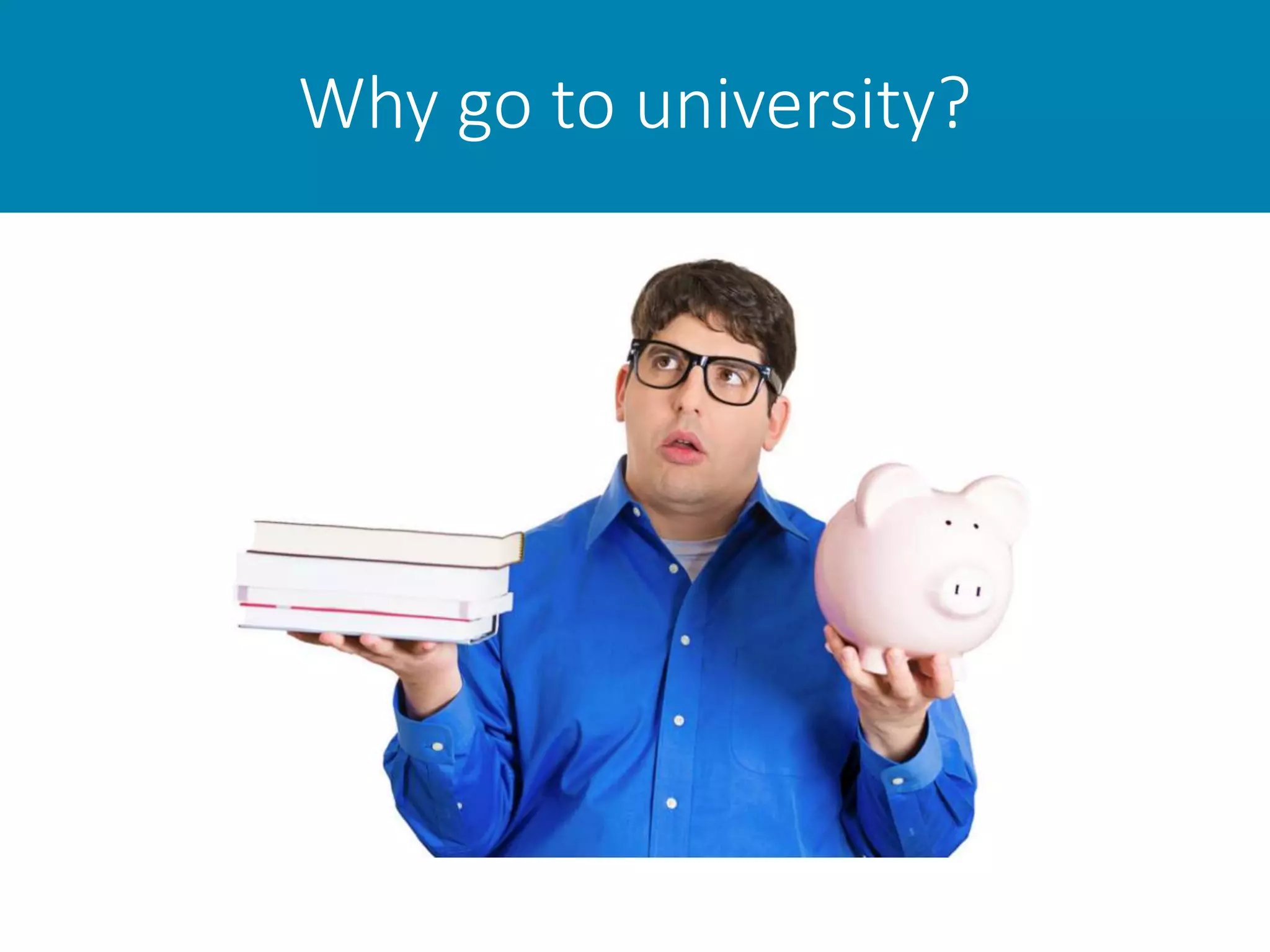
Why go to university?
Is it worth it when for the price you can
get…
• 108,000 Freddos @25p each
• 98 Freddos per day
• 6,293 Big Mac Meals @£4.29
• 5.7 burgers a day
A new mini-cooper Clubman S
Automatic
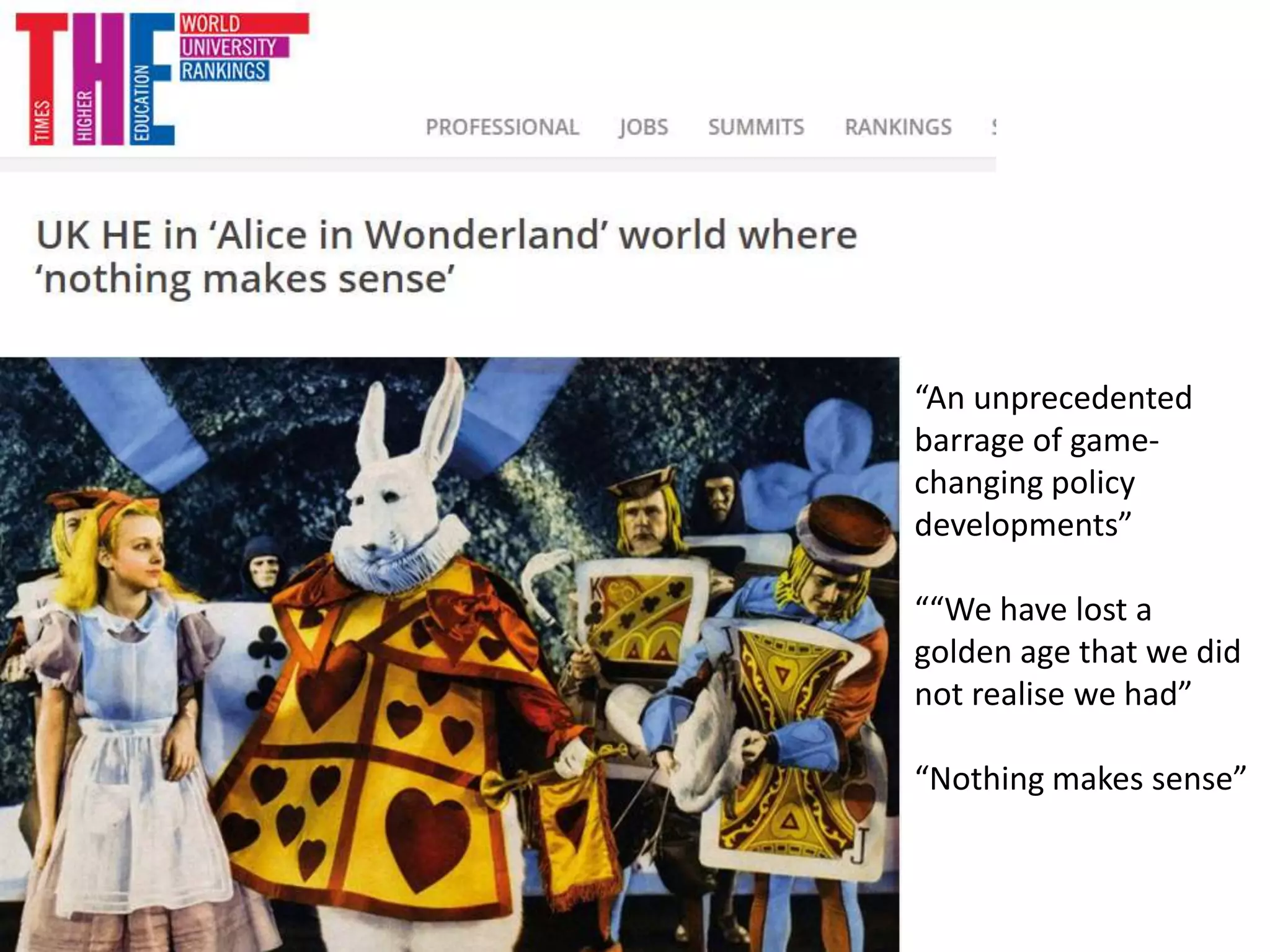
“An unprecedented
barrage of game-
changing policy
developments”
““We have lost a
golden age that we did
not realise we had”
“Nothing makes sense”
Of course, too many people go to university now, don’t
they? I mean, what is the point?”
So, with one eye on the departure board, I found myself
launching into a robust defence of UK higher education.
…benefits.. for the individual student, for the nation and for
global humanity. I tried to paint the bigger picture of
education as a public good…
Quite rightly, they were concerned with the level of tuition
fees, student living costs and the prospects of employment
upon graduation.
https://www.timeshighereducation.com/blog/its-time-go-back-basics-demonstrate-benefits-higher-education
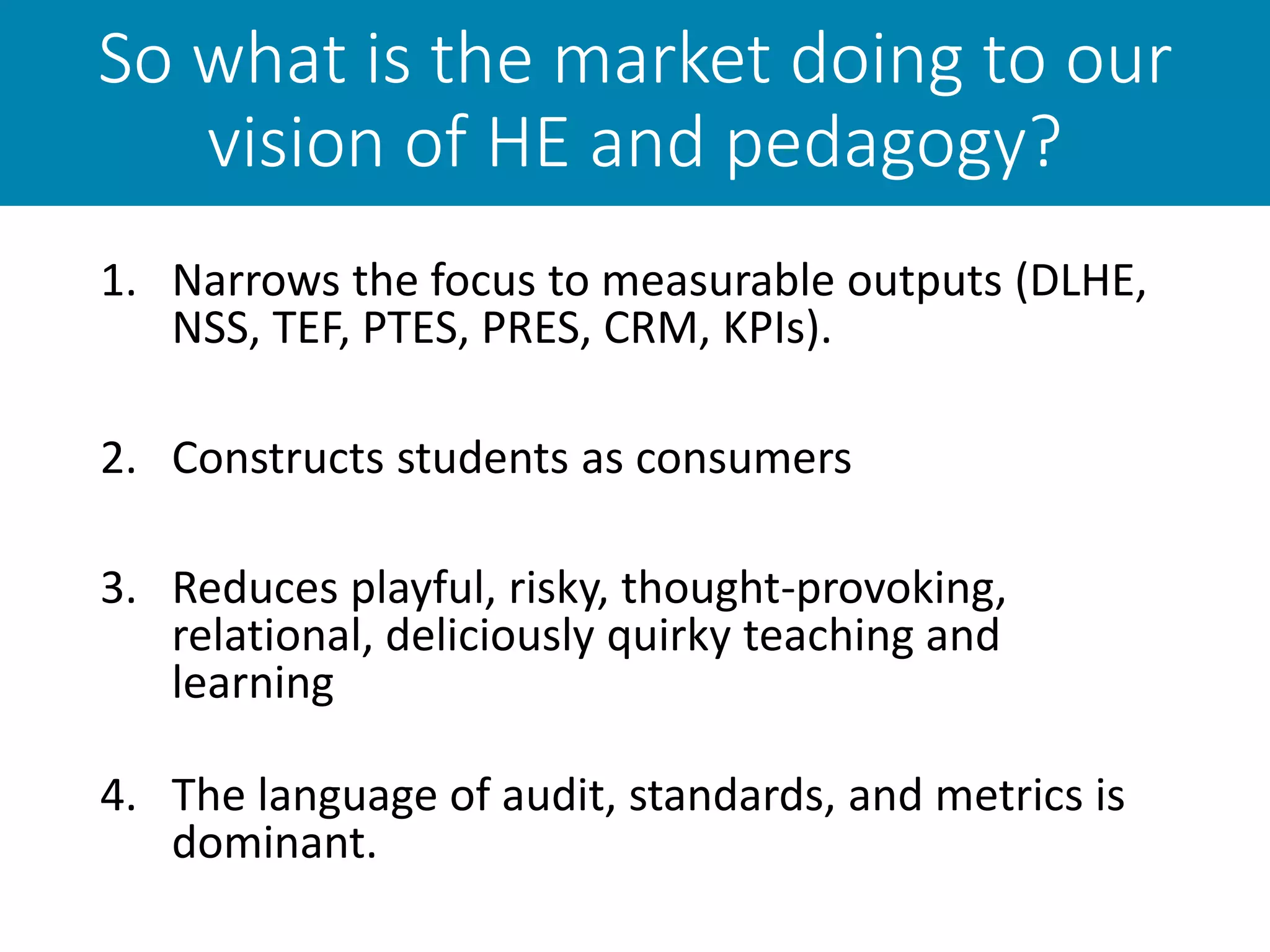
So what is the market doing to our
vision of HE and pedagogy?
1. Narrows the focus to measurable outputs (DLHE,
NSS, TEF, PTES, PRES, CRM, KPIs).
2. Constructs students as consumers
3. Reduces playful, risky, thought-provoking,
relational, deliciously quirky teaching and
learning
4. The language of audit, standards, and metrics is
dominant.
Back to basics
Let’s explore our
conceptions of
what university is for…
a) In an individual exercise
b) In a ‘Diamond Nine’
c) Through Art
Activity 1: Postcards from the Edge
Choose a picture that you are drawn to.
Don’t think too much about it.
Jottings
1. Why did you choose the picture?
2. How does the picture relate to the benefits university
has given to your life?
3. What does the picture speak to about your hopes and
dreams for 21st century graduates?
4. What shadows do you imagine for USW in 2016, which
link to the picture?
Talk to someone – not a usual suspect
• Chat about the
picture and your
thoughts
• Swap over after five
minutes.
Activity 2: Diamond Nine
• In groups, open your
envelope.
• It contains statements
about the purpose of HE
• Agree a hierarchy of nine
in clumpy bits
• Discard, amend, reach
consensus
Consensus building
• Let’s look at the top
categories (this may be
messy!)
Personal
growth
Citizenship
Social justice
and
transformation
Economy
and jobs
Character
and moral
virtue
Knowledge
and
intellectual
growth
Creativity
Activity 3: World Café Art
• Choose a table with the educational purpose that
most interests you, or you want to explore most.
• What would learning and teaching look like in a world
where this purpose was dominant?
• Draw an image or metaphor (which may be an animal,
plant, machine etc.) which represents this purpose as
the central driver of Learning and Teaching.
Show and Tell
• Choose a spokesperson to share your drawing
• Tell the group what it represents, and why you
chose the image/metaphor
• How has thinking visually influenced your
thinking about this purpose in HE?
What is an educated person?
It means respecting the miracle of life, being empowered
in the use of language, and responding sensitively to the
aesthetic. Being truly educated means putting learning in
historical perspective, understanding groups and
institutions, having reverence for the natural world, and
affirming the dignity of work. And, above all, being an
educated person means being guided by values and
beliefs and connecting the lessons of the classroom to
the realities of life.
(Boyer 1995)
Quinlan’s Virtues
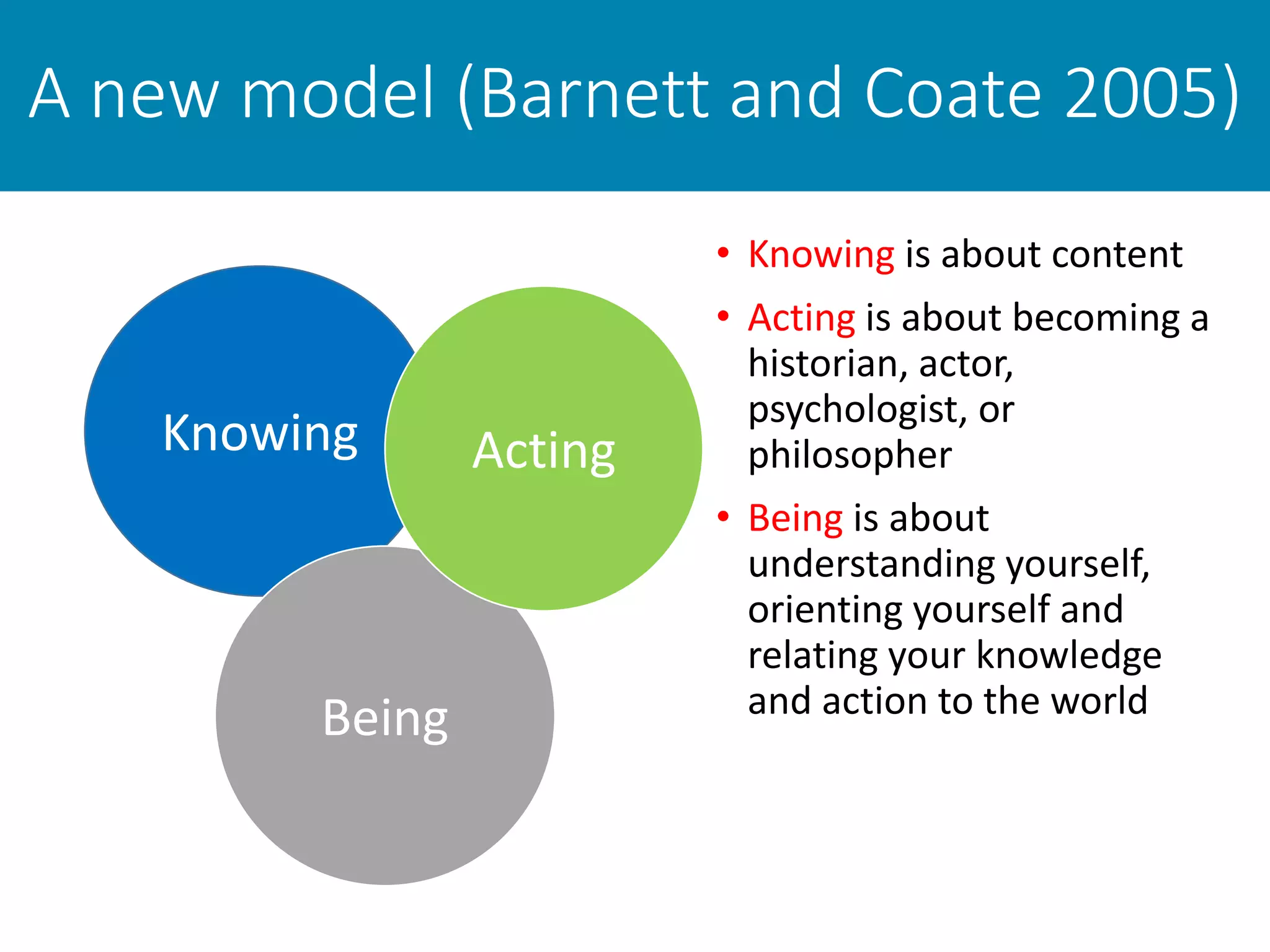
A new model (Barnett and Coate 2005)
• Knowing is about content
• Acting is about becoming a
historian, actor,
psychologist, or
philosopher
• Being is about
understanding yourself,
orienting yourself and
relating your knowledge
and action to the world
Knowing
Being
Acting
Reframing Barnett and Coate 2005
• What is about content
• How is about becoming a
historian, actor,
psychologist, or
philosopher
• Why is about
understanding yourself,
orienting yourself and
relating your knowledge
and action to the world
What
Why
How
So what are universities for?
References
Barnett, R. and Coate, K. 2005. Engaging the Curriculum in Higher Education. SRHE
Boyer, E. 1995. What is an Educated Person?
Collini, S. 2012. What are Universities for? London: Penguin Books.
Mann, S. J. 2008. Study, Power and the University. Maidenhead, Open University Press.
Quinlan, K. 2014. Developing student character through disciplinary curricula: an analysis
of UK QAA subject benchmark statements, Studies in Higher Education. 41(6) 1041-54.
Times Higher Education Supplement (various)

Starting with why

  • 1.
    Starting with why: Whatare universities for? Professor Tansy Jessop USW Senior Management Conference on L&T @tansyjtweets 28 November 2016
  • 2.
    Session outline 1. Reflectionson the Market and HE 2. Individual reflective activity 3. Diamond Nine Activity 4. Visualising different purposes 5. Perspectives on the purpose of HE 6. So what is the purpose of Higher Education?
  • 3.
    Why go touniversity?
  • 4.
    Is it worthit when for the price you can get… • 108,000 Freddos @25p each • 98 Freddos per day • 6,293 Big Mac Meals @£4.29 • 5.7 burgers a day
  • 5.
    A new mini-cooperClubman S Automatic
  • 7.
    “An unprecedented barrage ofgame- changing policy developments” ““We have lost a golden age that we did not realise we had” “Nothing makes sense”
  • 8.
    Of course, toomany people go to university now, don’t they? I mean, what is the point?” So, with one eye on the departure board, I found myself launching into a robust defence of UK higher education. …benefits.. for the individual student, for the nation and for global humanity. I tried to paint the bigger picture of education as a public good… Quite rightly, they were concerned with the level of tuition fees, student living costs and the prospects of employment upon graduation. https://www.timeshighereducation.com/blog/its-time-go-back-basics-demonstrate-benefits-higher-education
  • 9.
    So what isthe market doing to our vision of HE and pedagogy? 1. Narrows the focus to measurable outputs (DLHE, NSS, TEF, PTES, PRES, CRM, KPIs). 2. Constructs students as consumers 3. Reduces playful, risky, thought-provoking, relational, deliciously quirky teaching and learning 4. The language of audit, standards, and metrics is dominant.
  • 10.
    Back to basics Let’sexplore our conceptions of what university is for… a) In an individual exercise b) In a ‘Diamond Nine’ c) Through Art
  • 11.
    Activity 1: Postcardsfrom the Edge Choose a picture that you are drawn to. Don’t think too much about it.
  • 12.
    Jottings 1. Why didyou choose the picture? 2. How does the picture relate to the benefits university has given to your life? 3. What does the picture speak to about your hopes and dreams for 21st century graduates? 4. What shadows do you imagine for USW in 2016, which link to the picture?
  • 13.
    Talk to someone– not a usual suspect • Chat about the picture and your thoughts • Swap over after five minutes.
  • 14.
    Activity 2: DiamondNine • In groups, open your envelope. • It contains statements about the purpose of HE • Agree a hierarchy of nine in clumpy bits • Discard, amend, reach consensus
  • 15.
    Consensus building • Let’slook at the top categories (this may be messy!)
  • 16.
  • 17.
    Activity 3: WorldCafé Art • Choose a table with the educational purpose that most interests you, or you want to explore most. • What would learning and teaching look like in a world where this purpose was dominant? • Draw an image or metaphor (which may be an animal, plant, machine etc.) which represents this purpose as the central driver of Learning and Teaching.
  • 18.
    Show and Tell •Choose a spokesperson to share your drawing • Tell the group what it represents, and why you chose the image/metaphor • How has thinking visually influenced your thinking about this purpose in HE?
  • 19.
    What is aneducated person? It means respecting the miracle of life, being empowered in the use of language, and responding sensitively to the aesthetic. Being truly educated means putting learning in historical perspective, understanding groups and institutions, having reverence for the natural world, and affirming the dignity of work. And, above all, being an educated person means being guided by values and beliefs and connecting the lessons of the classroom to the realities of life. (Boyer 1995)
  • 20.
  • 21.
    A new model(Barnett and Coate 2005) • Knowing is about content • Acting is about becoming a historian, actor, psychologist, or philosopher • Being is about understanding yourself, orienting yourself and relating your knowledge and action to the world Knowing Being Acting
  • 22.
    Reframing Barnett andCoate 2005 • What is about content • How is about becoming a historian, actor, psychologist, or philosopher • Why is about understanding yourself, orienting yourself and relating your knowledge and action to the world What Why How
  • 23.
    So what areuniversities for?
  • 24.
    References Barnett, R. andCoate, K. 2005. Engaging the Curriculum in Higher Education. SRHE Boyer, E. 1995. What is an Educated Person? Collini, S. 2012. What are Universities for? London: Penguin Books. Mann, S. J. 2008. Study, Power and the University. Maidenhead, Open University Press. Quinlan, K. 2014. Developing student character through disciplinary curricula: an analysis of UK QAA subject benchmark statements, Studies in Higher Education. 41(6) 1041-54. Times Higher Education Supplement (various)

Editor's Notes

  • #2 Technical rational apparatus – stakeholder, risk analysis etc
  • #9 Education is never wasted
  • #10 VFM