

Teaching and education should
not be seen only as a technical
exercise within a classroom but
every teacher
should make efforts to reach out
to all children in the school.
Willing to do different:
Changing Teaching Practices
 Research shows that many
children who experience
learning difficulties become
frustrated when they are not
effectively supported and
eventually drop out.
 There is evidence from all
over the world that many
children do not achieve
according to their potential
because they find learning to
be ‗boring‘.
 It is indeed a challenge for teachers to
ensure that the work that is being done in
the classroom is relevant to the children
and their contexts
 Teachers can also help retain children in
classrooms by making their teaching
more interesting, appealing and
motivating, as well as providing
opportunities for learning success.
 Dedicated and committed teachers who make a
difference in the lives of their students and in their
communities through providing important learning
opportunities.
 Many teachers are demoralised, discouraged and
unmotivated due to the lack of support from the
education authorities, harsh living and working
conditions and many other reasons.
 Teachers are doing hard work
and they need the support
and encouragement that will
enable them to grow, develop
and use new methods.
 The education system at all
levels has the responsibility
and possibility to make
changes despite the
challenges and pressures that
are faced at different levels.
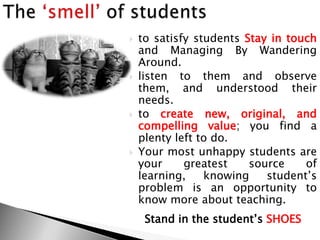
 to satisfy students Stay in touch
and Managing By Wandering
Around.
 listen to them and observe
them, and understood their
needs.
 to create new, original, and
compelling value; you find a
plenty left to do.
 Your most unhappy students are
your greatest source of
learning, knowing student‘s
problem is an opportunity to
know more about teaching.
Stand in the student‘s SHOES
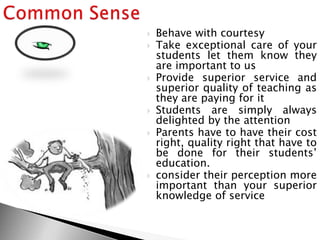
 Behave with courtesy
 Take exceptional care of your
students let them know they
are important to us
 Provide superior service and
superior quality of teaching as
they are paying for it
 Students are simply always
delighted by the attention
 Parents have to have their cost
right, quality right that have to
be done for their students‘
education.
 consider their perception more
important than your superior
knowledge of service
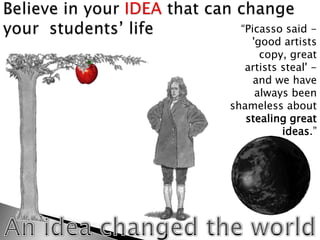
―Picasso said -
'good artists
copy, great
artists steal' -
and we have
always been
shameless about
stealing great
ideas.‖
 To do anything they believe it can be done.
 They are driven to do something new – to
creative, they have a compelling vision, they are
courageous, and they are persistent so persistent
and services that changes the world.
 Bringing knowledge Alive, Sparking Imagination,
Creating Possibility and Caring Environment.
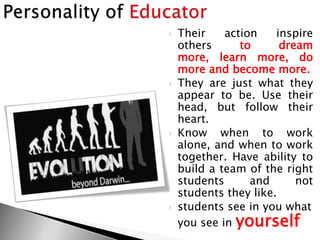
 Their action inspire
others to dream
more, learn more, do
more and become more.
 They are just what they
appear to be. Use their
head, but follow their
heart.
 Know when to work
alone, and when to work
together. Have ability to
build a team of the right
students and not
students they like.
 students see in you what
you see in yourself
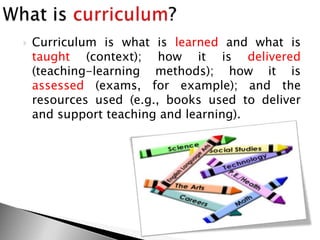
 Curriculum is what is learned and what is
taught (context); how it is delivered
(teaching-learning methods); how it is
assessed (exams, for example); and the
resources used (e.g., books used to deliver
and support teaching and learning).
 Teachers can adapt or differentiate
the curriculum by changing: the
content, methods for teaching and
learning content (sometimes
referred to as the process), and, the
methods of assessment (sometimes
referred to as the products). It
might mean, for example, dividing
the class into four ability Groups or
dividing them into mixed-ability
groups in which the students with
more experience help the students
with less experience.
 Successful teachers are not
negative even on the worst of
times. They can always find
opportunities even during the
most serious crisis and do not
give up.
 Just because something is
difficult mean you shouldn't try,
It means you should try HARDER
 What we are today is a result of our earlier environment
5, 10, 20 years ago and today‘s environment will decide
what you will be 20 years from now.
 ―We don‘t know everything but
we can be creative in solving our
problems.‖
 In teaching there is no beginning
or end. It is a process, and as
such it continually develops.
Therefore, there is no one
correct way to do it.
 What can we do? We can get to
know our students better and
use information about their
similarities and differences (e.g.
what they know about already,
what they are interested in)
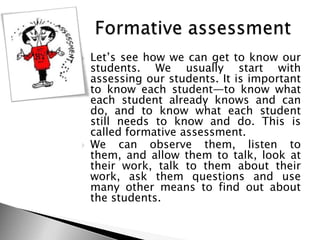
 Let‘s see how we can get to know our
students. We usually start with
assessing our students. It is important
to know each student—to know what
each student already knows and can
do, and to know what each student
still needs to know and do. This is
called formative assessment.
 We can observe them, listen to
them, and allow them to talk, look at
their work, talk to them about their
work, ask them questions and use
many other means to find out about
the students.
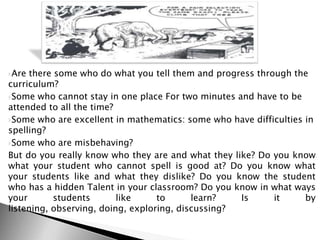
Are there some who do what you tell them and progress through the
curriculum?
Some who cannot stay in one place For two minutes and have to be
attended to all the time?
Some who are excellent in mathematics: some who have difficulties in
spelling?
Some who are misbehaving?
But do you really know who they are and what they like? Do you know
what your student who cannot spell is good at? Do you know what
your students like and what they dislike? Do you know the student
who has a hidden Talent in your classroom? Do you know in what ways
your students like to learn? Is it by
listening, observing, doing, exploring, discussing?
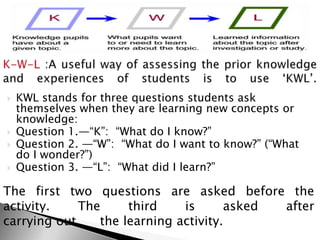
 KWL stands for three questions students ask
themselves when they are learning new concepts or
knowledge:
 Question 1.—―K‖: ―What do I know?‖
 Question 2. —―W‖: ―What do I want to know?‖ (―What
do I wonder?‖)
 Question 3. —―L‖: ―What did I learn?‖
The first two questions are asked before the
activity. The third is asked after
carrying out the learning activity.
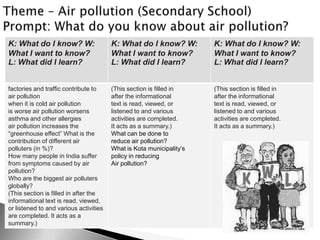
K: What do I know? W:
What I want to know?
L: What did I learn?
K: What do I know? W:
What I want to know?
L: What did I learn?
K: What do I know? W:
What I want to know?
L: What did I learn?
factories and traffic contribute to
air pollution
when it is cold air pollution
is worse air pollution worsens
asthma and other allergies
air pollution increases the
“greenhouse effect” What is the
contribution of different air
polluters (in %)?
How many people in India suffer
from symptoms caused by air
pollution?
Who are the biggest air polluters
globally?
(This section is filled in after the
informational text is read, viewed,
or listened to and various activities
are completed. It acts as a
summary.)
(This section is filled in
after the informational
text is read, viewed, or
listened to and various
activities are completed.
It acts as a summary.)
What can be done to
reduce air pollution?
What is Kota municipality’s
policy in reducing
Air pollution?
(This section is filled in
after the informational
text is read, viewed, or
listened to and various
activities are completed.
It acts as a summary.)

Education for all

  • 1.
    Teaching and educationshould not be seen only as a technical exercise within a classroom but every teacher should make efforts to reach out to all children in the school.
  • 3.
    Willing to dodifferent: Changing Teaching Practices
  • 4.
     Research showsthat many children who experience learning difficulties become frustrated when they are not effectively supported and eventually drop out.  There is evidence from all over the world that many children do not achieve according to their potential because they find learning to be ‗boring‘.
  • 5.
     It isindeed a challenge for teachers to ensure that the work that is being done in the classroom is relevant to the children and their contexts  Teachers can also help retain children in classrooms by making their teaching more interesting, appealing and motivating, as well as providing opportunities for learning success.
  • 6.
     Dedicated andcommitted teachers who make a difference in the lives of their students and in their communities through providing important learning opportunities.  Many teachers are demoralised, discouraged and unmotivated due to the lack of support from the education authorities, harsh living and working conditions and many other reasons.
  • 7.
     Teachers aredoing hard work and they need the support and encouragement that will enable them to grow, develop and use new methods.  The education system at all levels has the responsibility and possibility to make changes despite the challenges and pressures that are faced at different levels.
  • 8.
     to satisfystudents Stay in touch and Managing By Wandering Around.  listen to them and observe them, and understood their needs.  to create new, original, and compelling value; you find a plenty left to do.  Your most unhappy students are your greatest source of learning, knowing student‘s problem is an opportunity to know more about teaching. Stand in the student‘s SHOES
  • 9.
     Behave withcourtesy  Take exceptional care of your students let them know they are important to us  Provide superior service and superior quality of teaching as they are paying for it  Students are simply always delighted by the attention  Parents have to have their cost right, quality right that have to be done for their students‘ education.  consider their perception more important than your superior knowledge of service
  • 10.
    ―Picasso said - 'goodartists copy, great artists steal' - and we have always been shameless about stealing great ideas.‖
  • 11.
     To doanything they believe it can be done.  They are driven to do something new – to creative, they have a compelling vision, they are courageous, and they are persistent so persistent and services that changes the world.  Bringing knowledge Alive, Sparking Imagination, Creating Possibility and Caring Environment.
  • 12.
     Their actioninspire others to dream more, learn more, do more and become more.  They are just what they appear to be. Use their head, but follow their heart.  Know when to work alone, and when to work together. Have ability to build a team of the right students and not students they like.  students see in you what you see in yourself
  • 13.
     Curriculum iswhat is learned and what is taught (context); how it is delivered (teaching-learning methods); how it is assessed (exams, for example); and the resources used (e.g., books used to deliver and support teaching and learning).
  • 14.
     Teachers canadapt or differentiate the curriculum by changing: the content, methods for teaching and learning content (sometimes referred to as the process), and, the methods of assessment (sometimes referred to as the products). It might mean, for example, dividing the class into four ability Groups or dividing them into mixed-ability groups in which the students with more experience help the students with less experience.
  • 15.
     Successful teachersare not negative even on the worst of times. They can always find opportunities even during the most serious crisis and do not give up.  Just because something is difficult mean you shouldn't try, It means you should try HARDER
  • 16.
     What weare today is a result of our earlier environment 5, 10, 20 years ago and today‘s environment will decide what you will be 20 years from now.
  • 17.
     ―We don‘tknow everything but we can be creative in solving our problems.‖  In teaching there is no beginning or end. It is a process, and as such it continually develops. Therefore, there is no one correct way to do it.  What can we do? We can get to know our students better and use information about their similarities and differences (e.g. what they know about already, what they are interested in)
  • 18.
     Let‘s seehow we can get to know our students. We usually start with assessing our students. It is important to know each student—to know what each student already knows and can do, and to know what each student still needs to know and do. This is called formative assessment.  We can observe them, listen to them, and allow them to talk, look at their work, talk to them about their work, ask them questions and use many other means to find out about the students.
  • 19.
    Are there somewho do what you tell them and progress through the curriculum? Some who cannot stay in one place For two minutes and have to be attended to all the time? Some who are excellent in mathematics: some who have difficulties in spelling? Some who are misbehaving? But do you really know who they are and what they like? Do you know what your student who cannot spell is good at? Do you know what your students like and what they dislike? Do you know the student who has a hidden Talent in your classroom? Do you know in what ways your students like to learn? Is it by listening, observing, doing, exploring, discussing?
  • 20.
     KWL standsfor three questions students ask themselves when they are learning new concepts or knowledge:  Question 1.—―K‖: ―What do I know?‖  Question 2. —―W‖: ―What do I want to know?‖ (―What do I wonder?‖)  Question 3. —―L‖: ―What did I learn?‖ The first two questions are asked before the activity. The third is asked after carrying out the learning activity.
  • 21.
    K: What doI know? W: What I want to know? L: What did I learn? K: What do I know? W: What I want to know? L: What did I learn? K: What do I know? W: What I want to know? L: What did I learn? factories and traffic contribute to air pollution when it is cold air pollution is worse air pollution worsens asthma and other allergies air pollution increases the “greenhouse effect” What is the contribution of different air polluters (in %)? How many people in India suffer from symptoms caused by air pollution? Who are the biggest air polluters globally? (This section is filled in after the informational text is read, viewed, or listened to and various activities are completed. It acts as a summary.) (This section is filled in after the informational text is read, viewed, or listened to and various activities are completed. It acts as a summary.) What can be done to reduce air pollution? What is Kota municipality’s policy in reducing Air pollution? (This section is filled in after the informational text is read, viewed, or listened to and various activities are completed. It acts as a summary.)