
GDNet-AERC Policy Brief
Training Workshop
June 6-8, 2014 Accra, Ghana
Target Audience (A) Level of influence and (B)
interest (High, medium and
low)
Influence explained Opportunities to engage
Civil Society team, DFID A = Medium
B= Medium
Funder with high
profile
Post research case studies on
DFID website, attend DFID
funded conference on
Women’s role in Civil Society,
July 2014.
Sam Marques,
Women’s rights
Argentina (WRA) (Think
tank)
A = High
B = High
Regularly invited to
consult government
Open to dialogue with
research bodies and spoke to
Sam Marques about project
collaboration.
Enrique Suarez,
Department of Women’s
affairs
A = High
B = Low
Key decision maker A member of the advisory
board for the programme
with high level of interest in
study. Aim to hold quarterly
research briefs with Mr
Suarez
School of Civil Society,
University of Buenos
Aries
A = Medium
B = Low
Leading academic
institution, a number of
senior researchers have
policy role
Present findings annually
during School seminar series
Clara Sebatal (Editor),
Women’s Affairs
Magazine
A = Low/Medium (but
potentially high)
B = Low
Popular issue-based
Women’s magazine
Speak to editor about
submitting a feature about
the research programme
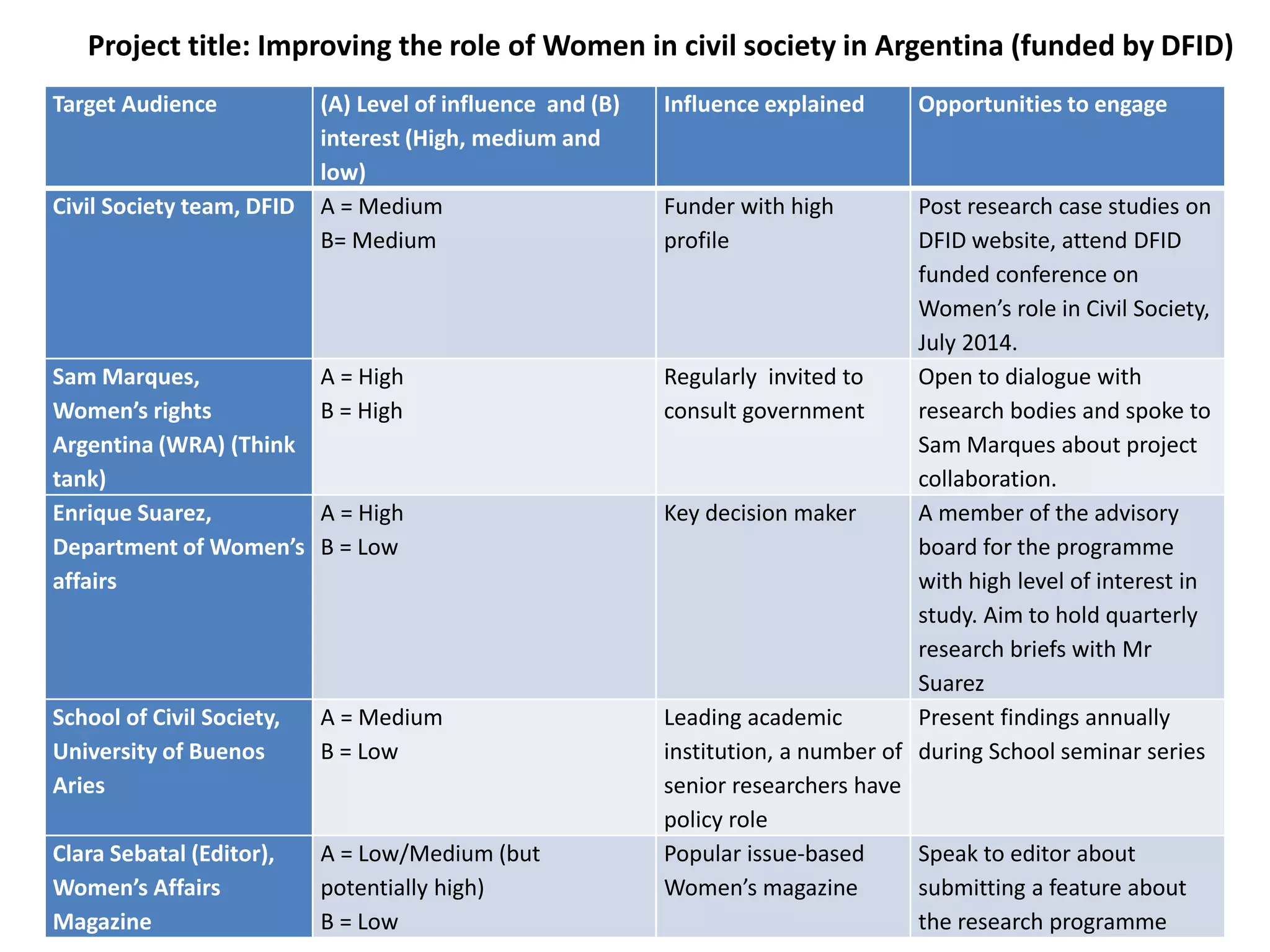
Project title: Improving the role of Women in civil society in Argentina (funded by DFID)
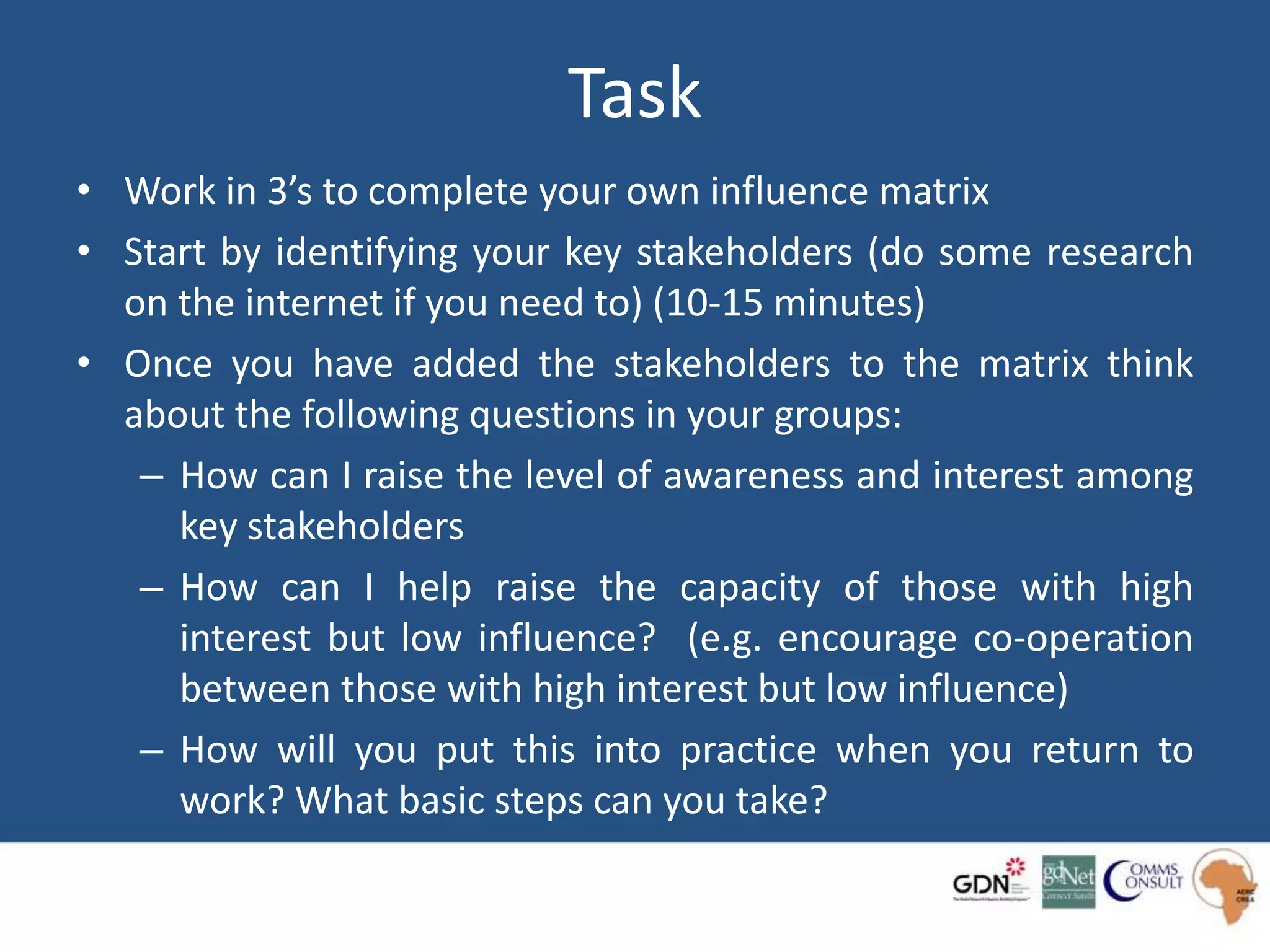
Task
• Work in 3’s to complete your own influence matrix
• Start by identifying your key stakeholders (do some research
on the internet if you need to) (10-15 minutes)
• Once you have added the stakeholders to the matrix think
about the following questions in your groups:
– How can I raise the level of awareness and interest among
key stakeholders
– How can I help raise the capacity of those with high
interest but low influence? (e.g. encourage co-operation
between those with high interest but low influence)
– How will you put this into practice when you return to
work? What basic steps can you take?

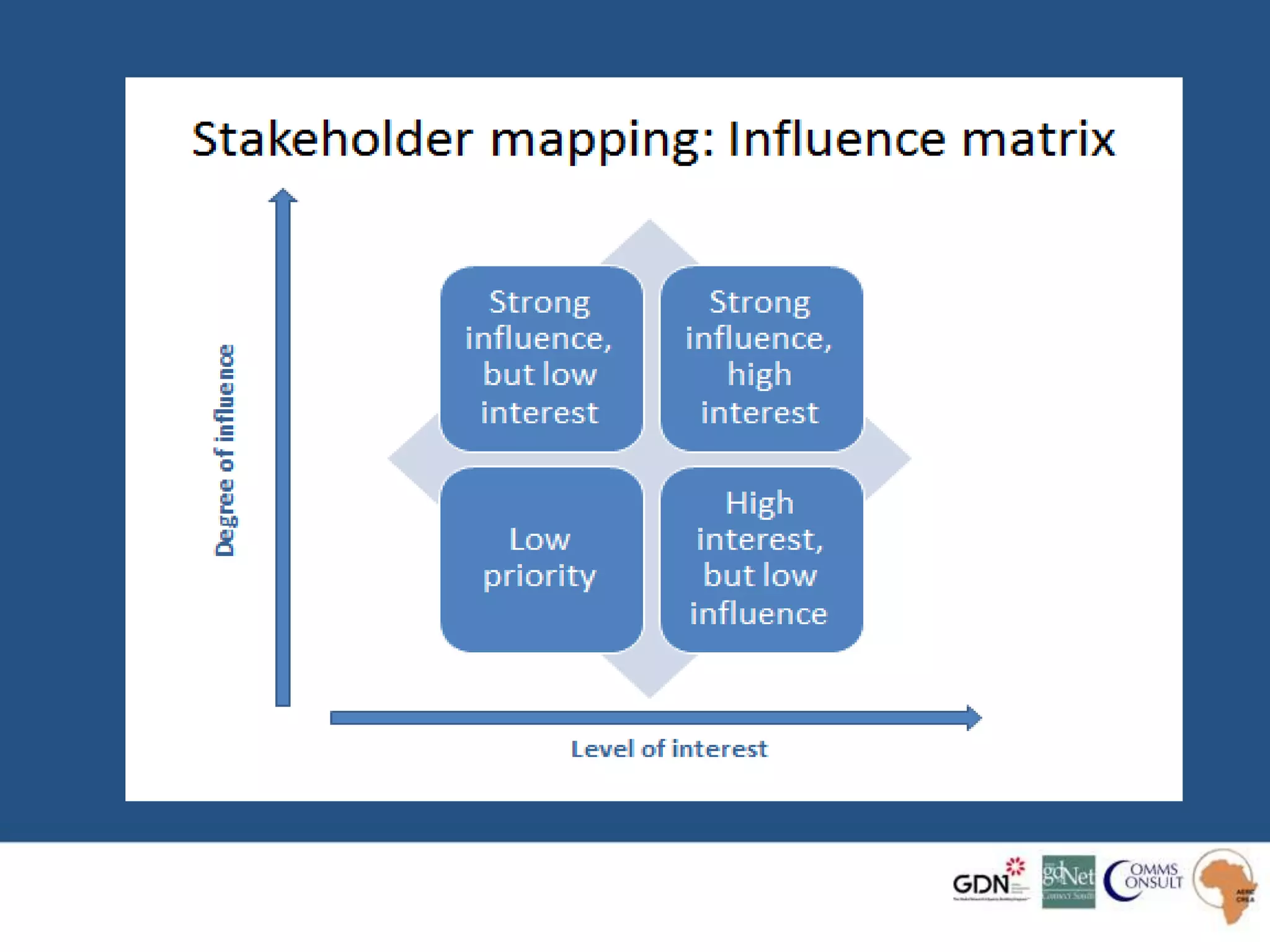
Stakeholder Mapping Influence Matrix

  • 1.
    GDNet-AERC Policy Brief TrainingWorkshop June 6-8, 2014 Accra, Ghana
  • 3.
    Target Audience (A)Level of influence and (B) interest (High, medium and low) Influence explained Opportunities to engage Civil Society team, DFID A = Medium B= Medium Funder with high profile Post research case studies on DFID website, attend DFID funded conference on Women’s role in Civil Society, July 2014. Sam Marques, Women’s rights Argentina (WRA) (Think tank) A = High B = High Regularly invited to consult government Open to dialogue with research bodies and spoke to Sam Marques about project collaboration. Enrique Suarez, Department of Women’s affairs A = High B = Low Key decision maker A member of the advisory board for the programme with high level of interest in study. Aim to hold quarterly research briefs with Mr Suarez School of Civil Society, University of Buenos Aries A = Medium B = Low Leading academic institution, a number of senior researchers have policy role Present findings annually during School seminar series Clara Sebatal (Editor), Women’s Affairs Magazine A = Low/Medium (but potentially high) B = Low Popular issue-based Women’s magazine Speak to editor about submitting a feature about the research programme Project title: Improving the role of Women in civil society in Argentina (funded by DFID)
  • 4.
    Task • Work in3’s to complete your own influence matrix • Start by identifying your key stakeholders (do some research on the internet if you need to) (10-15 minutes) • Once you have added the stakeholders to the matrix think about the following questions in your groups: – How can I raise the level of awareness and interest among key stakeholders – How can I help raise the capacity of those with high interest but low influence? (e.g. encourage co-operation between those with high interest but low influence) – How will you put this into practice when you return to work? What basic steps can you take?