Chapter 13 Human Life and Health Body Systems  GEE Science Summer Remediation Mr. Nash Donnie Bickham Middle School Room 204
Control Systems Homeostasis  is the process of maintaining a fairly constant internal environment despite changing conditions. To accomplish homeostasis, our cells must be continually bathed in fluid. This fluid is called  extracellular  fluid. Most fluid is  interstitial , meaning it lies within the spaces between the cells. Pg. 226
Control Systems Sensory receptors are cells that detect changes like light, temperature, or hormone levels in the body. These sensory receptors send information to the nervous system; the nervous system then sends a signal to the appropriate organ system for adjustment. Pg. 226
Control Systems Two types of feedback to maintain homeostasis in the body: Negative Feedback Positive Feedback Pg. 227
Negative Feedback The last step in the process slows or stops the first step. Pg. 227
Positive Feedback The last step accelerates the first step of a process. Can lead to abnormal conditions and cause disease. Necessary for a few body functions. Example: Childbirth Pg. 227
Nervous System The control and communication network of the body. Consists of: Brain Nerves Nerves are a bundle of cells called neurons Pg. 227
Nervous System Two types of Neurons: Sensory Neurons Get information from the environment through the senses (sight, sound, taste, etc.) and relay the information to the brain. Motor Neurons Carry information from the brain to the muscles and glands and cause an action to occur. Pg. 227
Nervous System Two Main Parts: Central Nervous System Peripheral Nervous System Pg. 227
Central Nervous System (CNS) Contains the brain and spinal cord. Brain contains several parts; each having its own specific task.  It is enclosed in the skull. Spinal cord runs up and down the back and is enclosed by the vertebrae of the back for protection. Pg. 227
Peripheral Nervous System Consists of all other parts of the nervous system outside of the CNS. Carries nerve impulses from the brain to the body and back. Two systems: Autonomic System Controls the involuntary systems such as heart beating and breathing. Somatic System Controls the voluntary systems such a muscle movement. Pg. 227
Senses The ability for us to detect what is happening in our environment Sight Smell Taste Touch Hearing Pg. 227
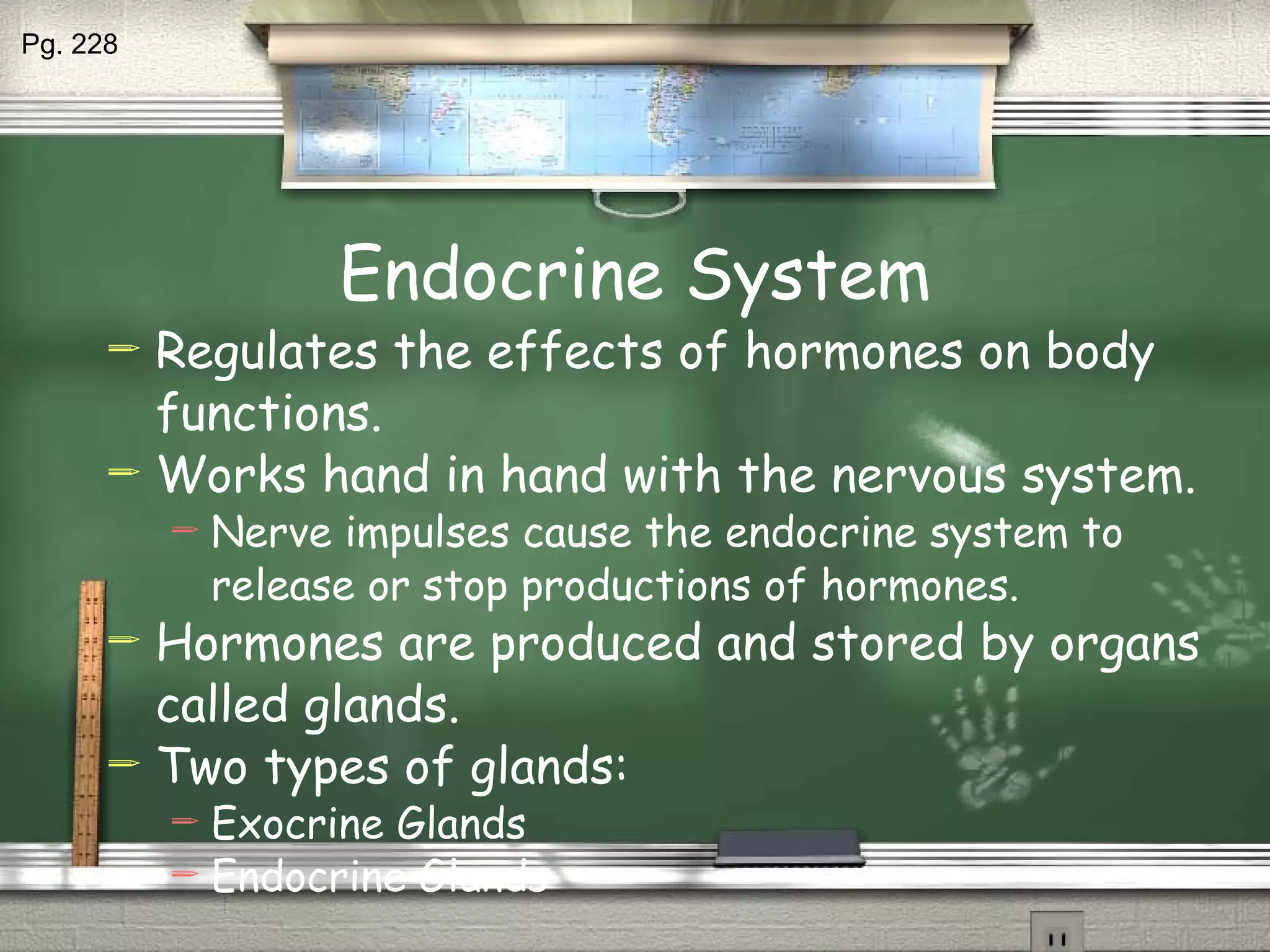
Endocrine System Regulates the effects of hormones on body functions. Works hand in hand with the nervous system. Nerve impulses cause the endocrine system to release or stop productions of hormones. Hormones are produced and stored by organs called glands. Two types of glands: Exocrine Glands Endocrine Glands Pg. 228
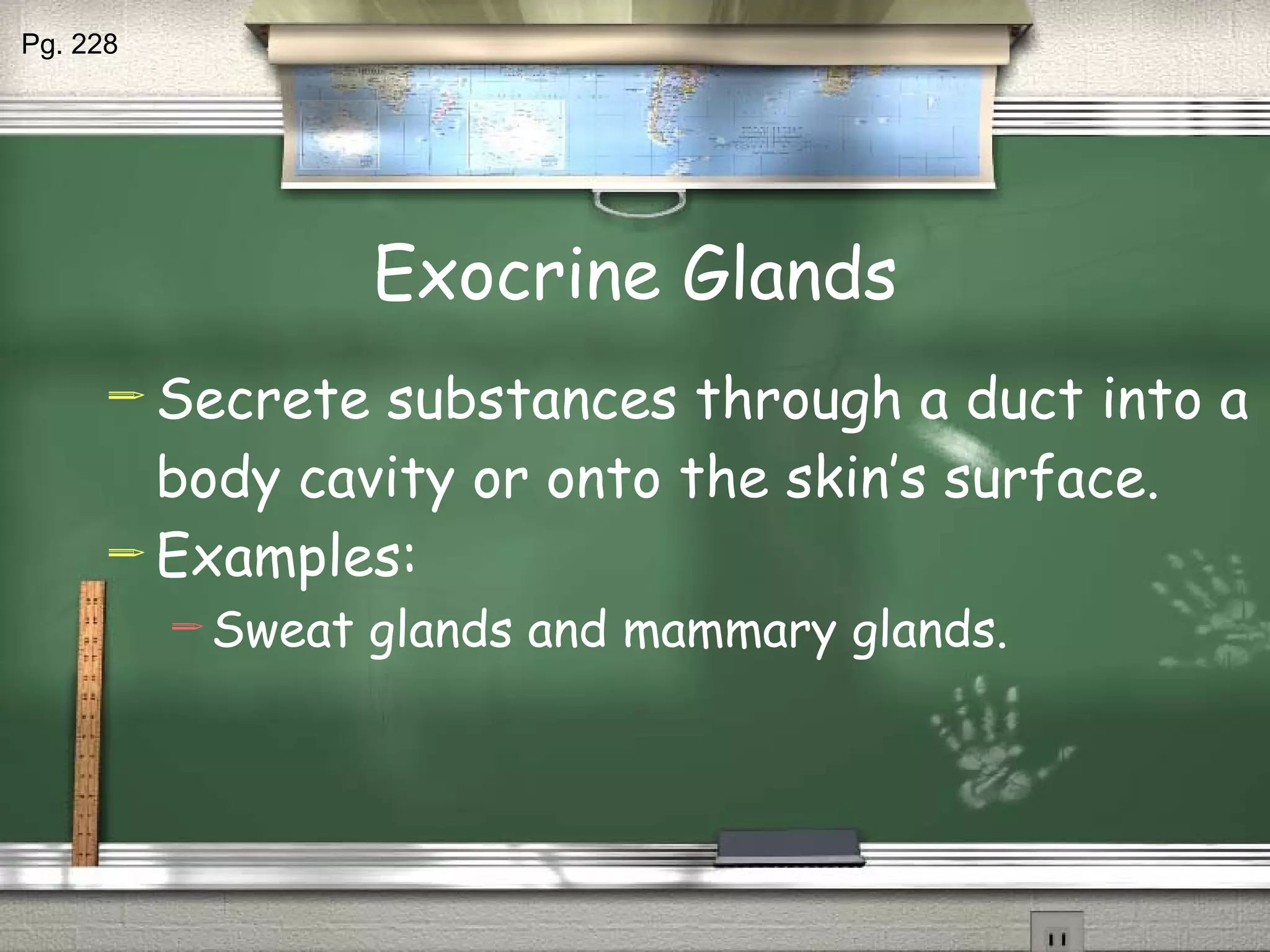
Exocrine Glands Secrete substances through a duct into a body cavity or onto the skin’s surface. Examples: Sweat glands and mammary glands. Pg. 228
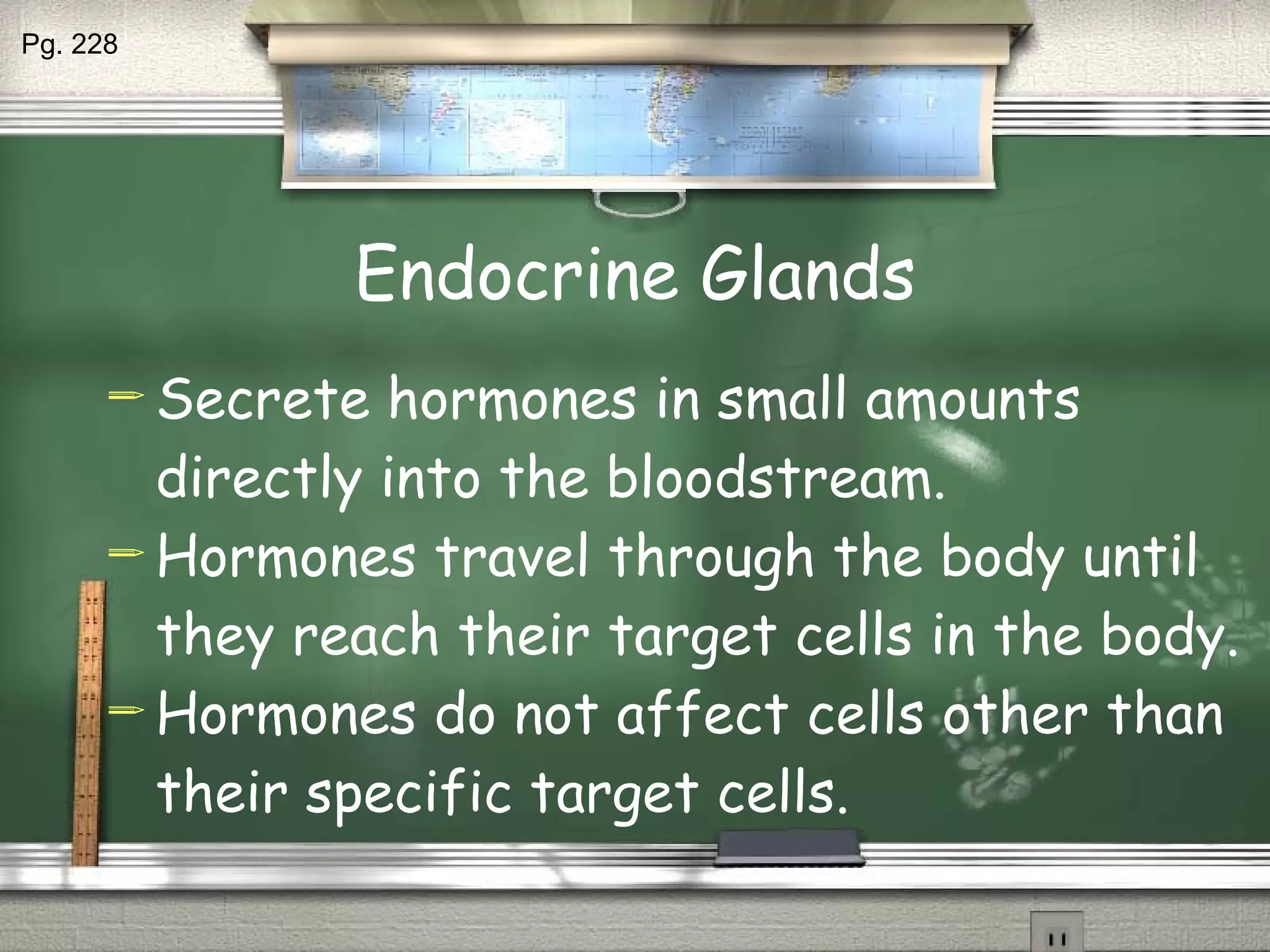
Endocrine Glands Secrete hormones in small amounts directly into the bloodstream. Hormones travel through the body until they reach their target cells in the body. Hormones do not affect cells other than their specific target cells. Pg. 228
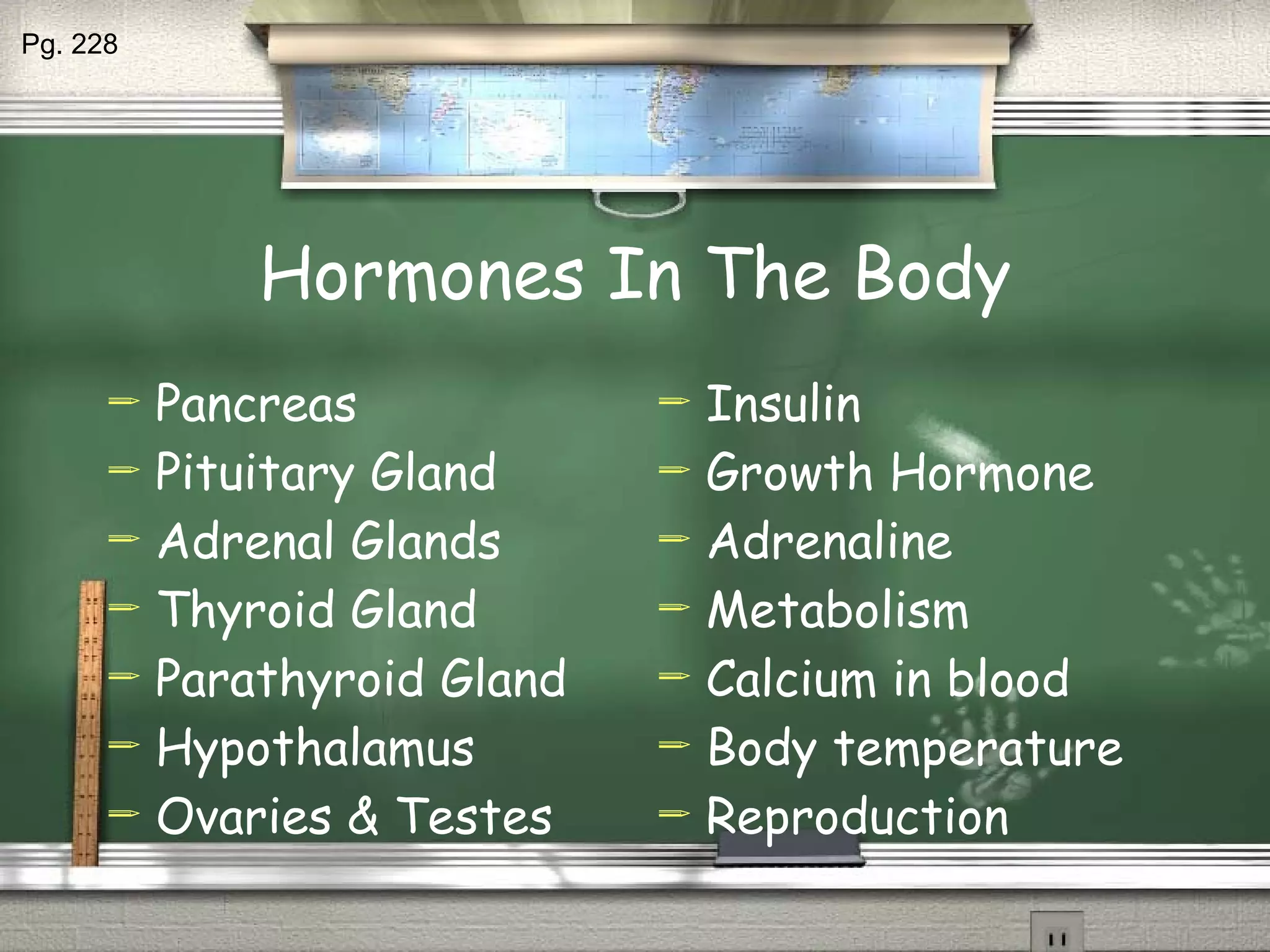
Hormones In The Body Pancreas Pituitary Gland Adrenal Glands Thyroid Gland Parathyroid Gland Hypothalamus Ovaries & Testes Insulin Growth Hormone Adrenaline Metabolism Calcium in blood Body temperature Reproduction Pg. 228
Excretory System Removes waste products from the body. Lungs and skin release some waster product through respiration and sweating, but most is released through the urinary tract. Pg. 228
Urinary Tract Consists of: Kidneys Ureters Bladder Urethra  Pg. 228
Urinary Tract Kidneys are a pair of organs that filter the blood. Kidneys filter blood and produce urine. Urea is a byproduct of protein production that is contained in urine. Urine is mostly water, but also contains urea, salts and other waste products. Pg. 228
Urinary Tract Urine travels through the ureters from the kidneys to the bladder for storage. The bladder is a storage organ. When urine is ready to be expelled from the body it travels from the bladder through the urethra and out of the body. Pg. 228

Ss Chapter 13

  • 1.
    Chapter 13 HumanLife and Health Body Systems GEE Science Summer Remediation Mr. Nash Donnie Bickham Middle School Room 204
  • 2.
    Control Systems Homeostasis is the process of maintaining a fairly constant internal environment despite changing conditions. To accomplish homeostasis, our cells must be continually bathed in fluid. This fluid is called extracellular fluid. Most fluid is interstitial , meaning it lies within the spaces between the cells. Pg. 226
  • 3.
    Control Systems Sensoryreceptors are cells that detect changes like light, temperature, or hormone levels in the body. These sensory receptors send information to the nervous system; the nervous system then sends a signal to the appropriate organ system for adjustment. Pg. 226
  • 4.
    Control Systems Twotypes of feedback to maintain homeostasis in the body: Negative Feedback Positive Feedback Pg. 227
  • 5.
    Negative Feedback Thelast step in the process slows or stops the first step. Pg. 227
  • 6.
    Positive Feedback Thelast step accelerates the first step of a process. Can lead to abnormal conditions and cause disease. Necessary for a few body functions. Example: Childbirth Pg. 227
  • 7.
    Nervous System Thecontrol and communication network of the body. Consists of: Brain Nerves Nerves are a bundle of cells called neurons Pg. 227
  • 8.
    Nervous System Twotypes of Neurons: Sensory Neurons Get information from the environment through the senses (sight, sound, taste, etc.) and relay the information to the brain. Motor Neurons Carry information from the brain to the muscles and glands and cause an action to occur. Pg. 227
  • 9.
    Nervous System TwoMain Parts: Central Nervous System Peripheral Nervous System Pg. 227
  • 10.
    Central Nervous System(CNS) Contains the brain and spinal cord. Brain contains several parts; each having its own specific task. It is enclosed in the skull. Spinal cord runs up and down the back and is enclosed by the vertebrae of the back for protection. Pg. 227
  • 11.
    Peripheral Nervous SystemConsists of all other parts of the nervous system outside of the CNS. Carries nerve impulses from the brain to the body and back. Two systems: Autonomic System Controls the involuntary systems such as heart beating and breathing. Somatic System Controls the voluntary systems such a muscle movement. Pg. 227
  • 12.
    Senses The abilityfor us to detect what is happening in our environment Sight Smell Taste Touch Hearing Pg. 227
  • 13.
    Endocrine System Regulatesthe effects of hormones on body functions. Works hand in hand with the nervous system. Nerve impulses cause the endocrine system to release or stop productions of hormones. Hormones are produced and stored by organs called glands. Two types of glands: Exocrine Glands Endocrine Glands Pg. 228
  • 14.
    Exocrine Glands Secretesubstances through a duct into a body cavity or onto the skin’s surface. Examples: Sweat glands and mammary glands. Pg. 228
  • 15.
    Endocrine Glands Secretehormones in small amounts directly into the bloodstream. Hormones travel through the body until they reach their target cells in the body. Hormones do not affect cells other than their specific target cells. Pg. 228
  • 16.
    Hormones In TheBody Pancreas Pituitary Gland Adrenal Glands Thyroid Gland Parathyroid Gland Hypothalamus Ovaries & Testes Insulin Growth Hormone Adrenaline Metabolism Calcium in blood Body temperature Reproduction Pg. 228
  • 17.
    Excretory System Removeswaste products from the body. Lungs and skin release some waster product through respiration and sweating, but most is released through the urinary tract. Pg. 228
  • 18.
    Urinary Tract Consistsof: Kidneys Ureters Bladder Urethra Pg. 228
  • 19.
    Urinary Tract Kidneysare a pair of organs that filter the blood. Kidneys filter blood and produce urine. Urea is a byproduct of protein production that is contained in urine. Urine is mostly water, but also contains urea, salts and other waste products. Pg. 228
  • 20.
    Urinary Tract Urinetravels through the ureters from the kidneys to the bladder for storage. The bladder is a storage organ. When urine is ready to be expelled from the body it travels from the bladder through the urethra and out of the body. Pg. 228