Sputum respiratory
expectoration
By Bhumi Senta
Definition
• Sputum, the mucus coughed up from the respiratory tract, can
provide important clues about a person's condition. Here are some
key points to understand sputum characteristics:
Quantity of sputum
• Scanty
• Moderate
• Large
Types of Sputum:
• Watery
• Mucoid
• Mucopurulent
• Purulent
• Colour of sputum
1.Watery:
• Indicates conditions like
• pulmonary congestion,
• pulmonary edema, or
• certain cysts.
2. Mucoid:
• Sticky sputum with increased mucin, often seen in
• bronchitis,
• asthma, and
• early stages of tuberculosis.
3. Mucopurulent:
• Mixture of mucus and pus, commonly
• associated with infections of the bronchi and lungs.
4. Purulent:
• Indicates respiratory tract infections, with large quantities of pus.
Colour of sputum
• Blackish: Inhalation of carbon particles, often seen in coal
miners or when there is lung tissue breakdown.
• Rusty or Khaki: Blood mixed with mucus, commonly seen in
lobar pneumonia.
• Small yellow sulphur granules: Actinomycosis of the lungs.
• Reddish: Presence of fresh or altered blood, indicating possible
bleeding in the lungs.
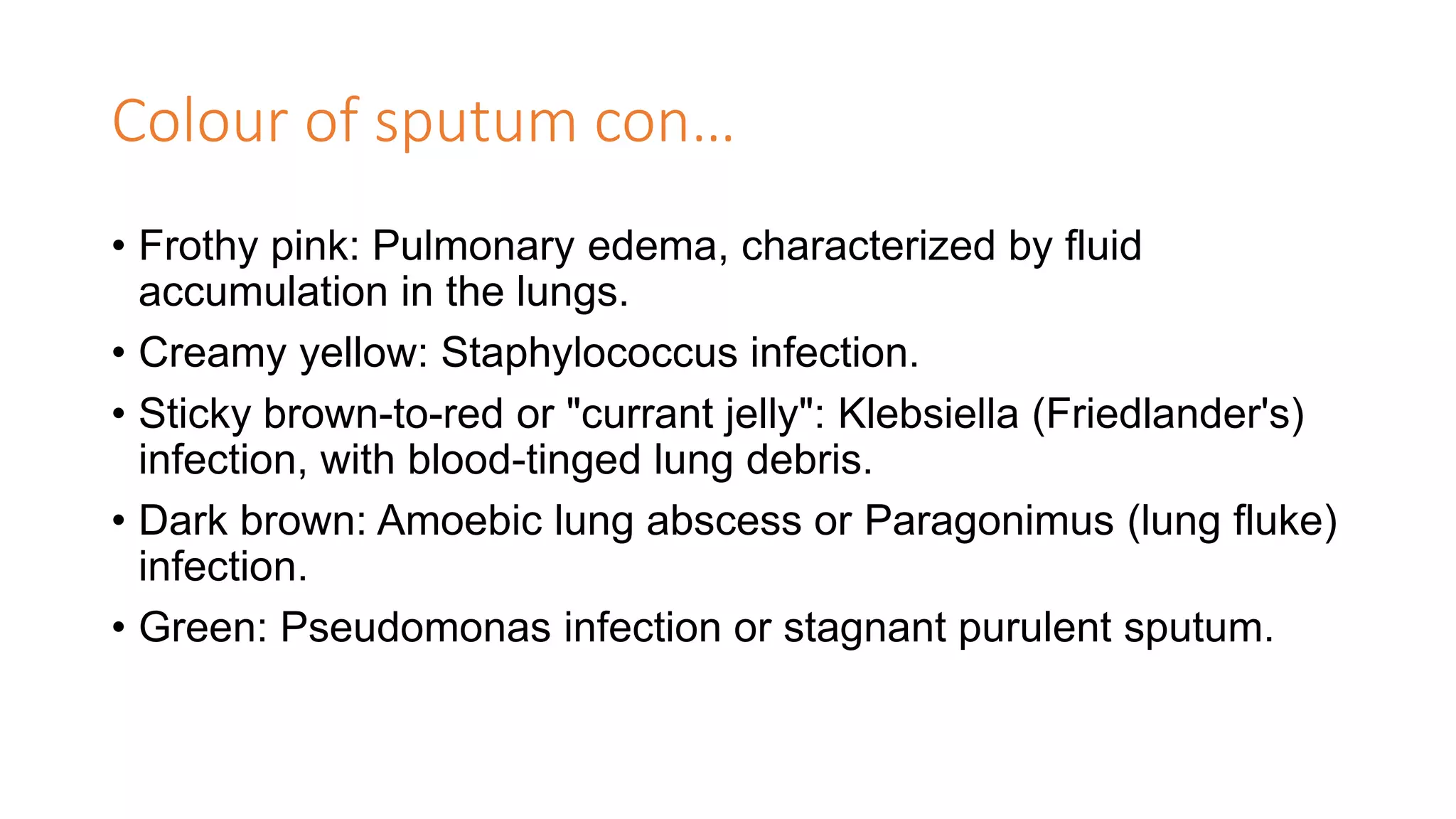
Colour of sputum con…
• Frothy pink: Pulmonary edema, characterized by fluid
accumulation in the lungs.
• Creamy yellow: Staphylococcus infection.
• Sticky brown-to-red or "currant jelly": Klebsiella (Friedlander's)
infection, with blood-tinged lung debris.
• Dark brown: Amoebic lung abscess or Paragonimus (lung fluke)
infection.
• Green: Pseudomonas infection or stagnant purulent sputum.
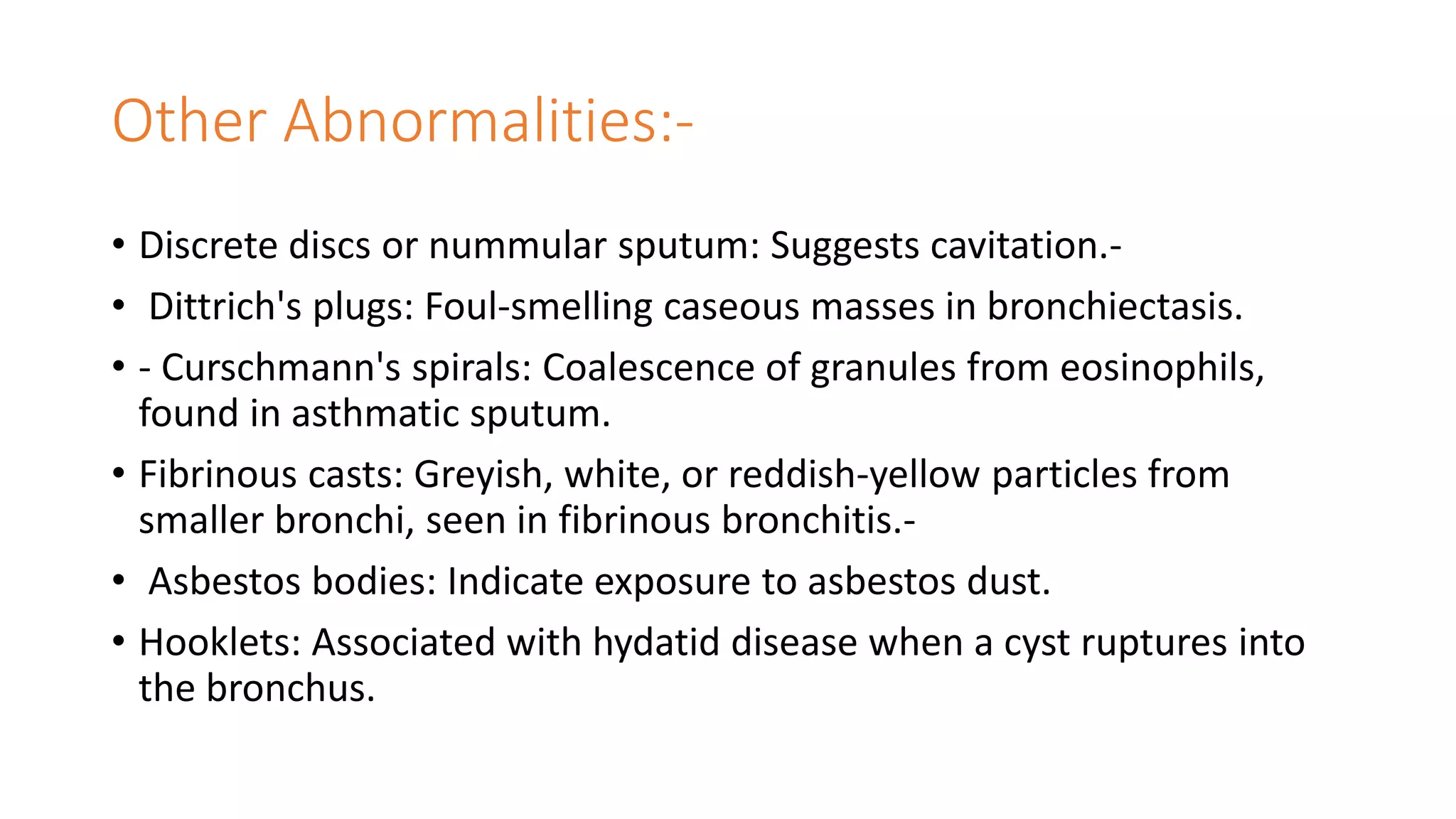
Other Abnormalities:-
• Discrete discs or nummular sputum: Suggests cavitation.-
• Dittrich's plugs: Foul-smelling caseous masses in bronchiectasis.
• - Curschmann's spirals: Coalescence of granules from eosinophils,
found in asthmatic sputum.
• Fibrinous casts: Greyish, white, or reddish-yellow particles from
smaller bronchi, seen in fibrinous bronchitis.-
• Asbestos bodies: Indicate exposure to asbestos dust.
• Hooklets: Associated with hydatid disease when a cyst ruptures into
the bronchus.
Odor:-
• Foul odor: Indicates infection with specific bacteria or anaerobes,
seen in conditions like lung abscess or bronchiectasis
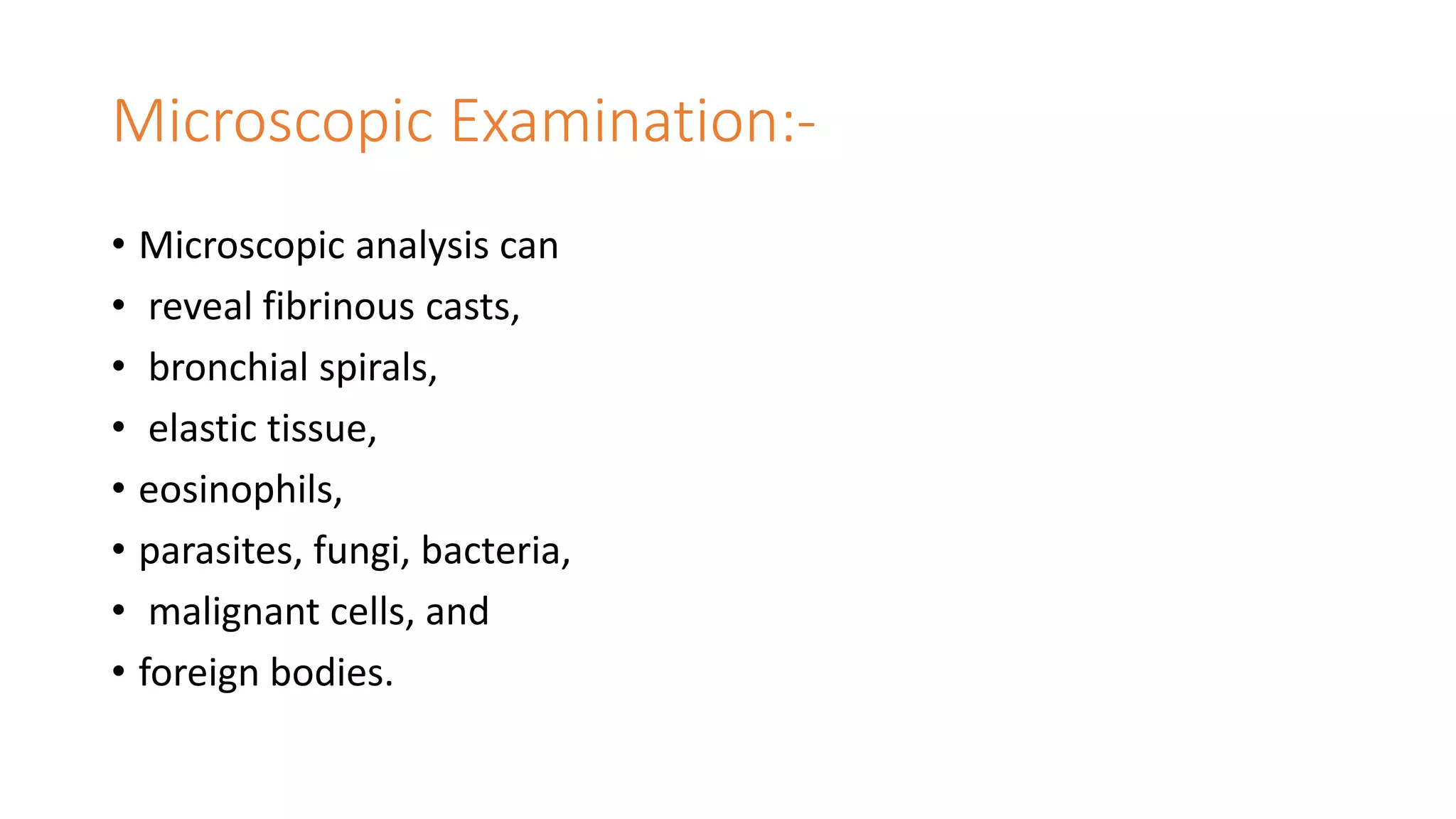
Microscopic Examination:-
• Microscopic analysis can
• reveal fibrinous casts,
• bronchial spirals,
• elastic tissue,
• eosinophils,
• parasites, fungi, bacteria,
• malignant cells, and
• foreign bodies.
Culture and Antibiotic Sensitivity Tests:-
• Culturing sputum helps identify the specific microorganisms causing
infections, such as pneumonia or tuberculosis. Antibiotic sensitivity
tests determine the appropriate treatment.
Reference
• Galwalla medicine for students

sputum respiratory expectoration (1).pptx

  • 1.
  • 2.
    Definition • Sputum, themucus coughed up from the respiratory tract, can provide important clues about a person's condition. Here are some key points to understand sputum characteristics:
  • 3.
    Quantity of sputum •Scanty • Moderate • Large
  • 4.
    Types of Sputum: •Watery • Mucoid • Mucopurulent • Purulent • Colour of sputum
  • 5.
    1.Watery: • Indicates conditionslike • pulmonary congestion, • pulmonary edema, or • certain cysts.
  • 6.
    2. Mucoid: • Stickysputum with increased mucin, often seen in • bronchitis, • asthma, and • early stages of tuberculosis.
  • 7.
    3. Mucopurulent: • Mixtureof mucus and pus, commonly • associated with infections of the bronchi and lungs.
  • 8.
    4. Purulent: • Indicatesrespiratory tract infections, with large quantities of pus.
  • 9.
    Colour of sputum •Blackish: Inhalation of carbon particles, often seen in coal miners or when there is lung tissue breakdown. • Rusty or Khaki: Blood mixed with mucus, commonly seen in lobar pneumonia. • Small yellow sulphur granules: Actinomycosis of the lungs. • Reddish: Presence of fresh or altered blood, indicating possible bleeding in the lungs.
  • 10.
    Colour of sputumcon… • Frothy pink: Pulmonary edema, characterized by fluid accumulation in the lungs. • Creamy yellow: Staphylococcus infection. • Sticky brown-to-red or "currant jelly": Klebsiella (Friedlander's) infection, with blood-tinged lung debris. • Dark brown: Amoebic lung abscess or Paragonimus (lung fluke) infection. • Green: Pseudomonas infection or stagnant purulent sputum.
  • 11.
    Other Abnormalities:- • Discretediscs or nummular sputum: Suggests cavitation.- • Dittrich's plugs: Foul-smelling caseous masses in bronchiectasis. • - Curschmann's spirals: Coalescence of granules from eosinophils, found in asthmatic sputum. • Fibrinous casts: Greyish, white, or reddish-yellow particles from smaller bronchi, seen in fibrinous bronchitis.- • Asbestos bodies: Indicate exposure to asbestos dust. • Hooklets: Associated with hydatid disease when a cyst ruptures into the bronchus.
  • 12.
    Odor:- • Foul odor:Indicates infection with specific bacteria or anaerobes, seen in conditions like lung abscess or bronchiectasis
  • 13.
    Microscopic Examination:- • Microscopicanalysis can • reveal fibrinous casts, • bronchial spirals, • elastic tissue, • eosinophils, • parasites, fungi, bacteria, • malignant cells, and • foreign bodies.
  • 14.
    Culture and AntibioticSensitivity Tests:- • Culturing sputum helps identify the specific microorganisms causing infections, such as pneumonia or tuberculosis. Antibiotic sensitivity tests determine the appropriate treatment.
  • 15.