Prof. Dr. A.MAHABOOBJAN
Bharathidasan University,
Tiruchirappalli, Tamilnadu, India.
Training Load
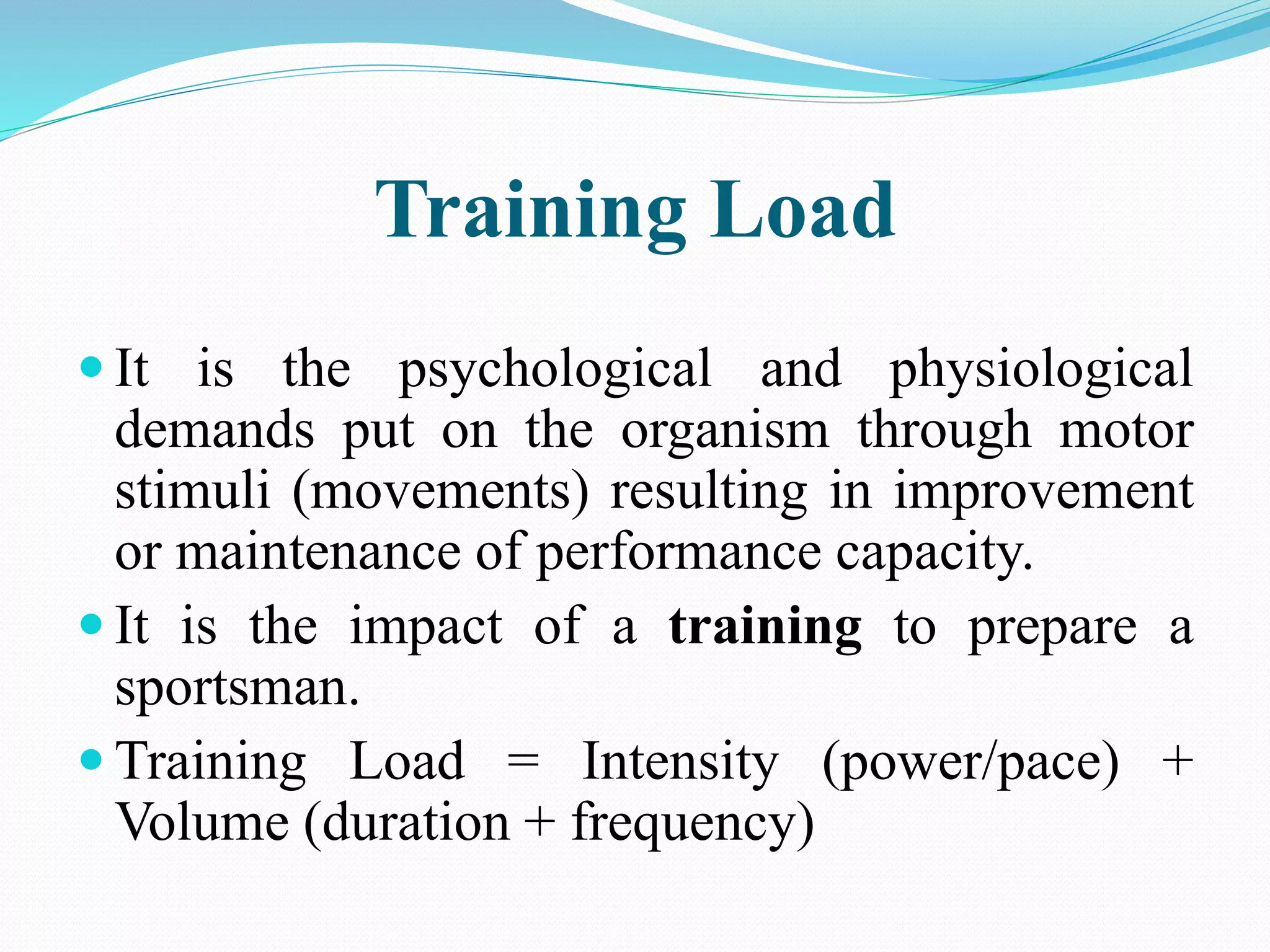
 It is the psychological and physiological
demands put on the organism through motor
stimuli (movements) resulting in improvement
or maintenance of performance capacity.
 It is the impact of a training to prepare a
sportsman.
 Training Load = Intensity (power/pace) +
Volume (duration + frequency)
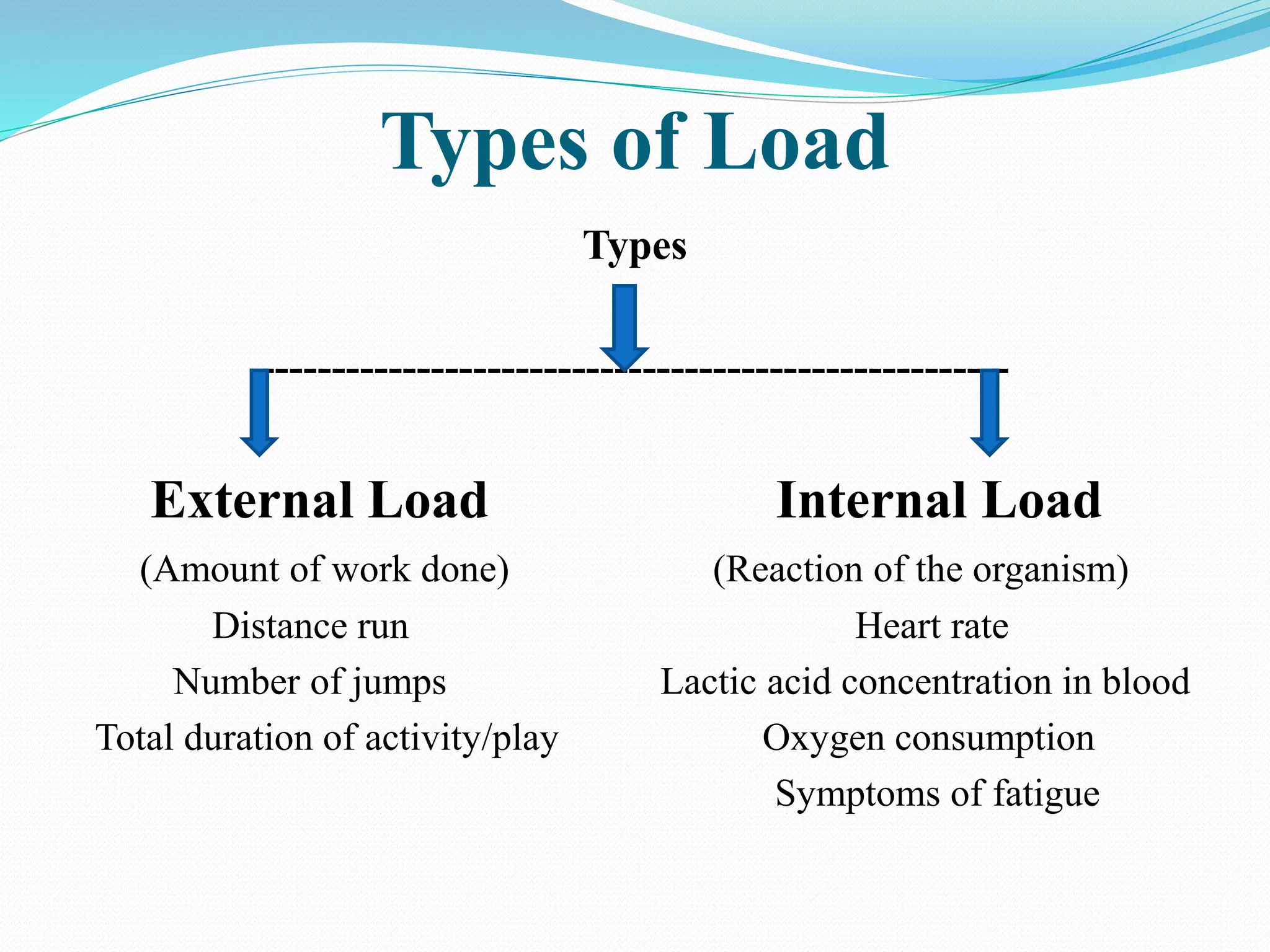
Types of Load
Types
-----------------------------------------------------
External Load Internal Load
(Amount of work done) (Reaction of the organism)
Distance run Heart rate
Number of jumps Lactic acid concentration in blood
Total duration of activity/play Oxygen consumption
Symptoms of fatigue
External Load
 It is the work done by the sportsman.
Eg. The distances run by a distance runner.
Internal Load
 It is the psycho-physiological reaction of sportsman to
external load. The degree of internal load is judged by
pulse rate, lactic acid concentration in blood and
various biochemical changes in the tissues. It can also
be judged by various symptoms of fatigue.
Eg. Sweating, changes in colour, Increase in heart rate
etc..
External and internal load are inter-related.
For biological adaptations internal load is
a must and should be optimum. Since the
individuals are differ according to their
need the external load must be applied to
get optimum internal load.
Principles of Training Load
1. Principles of Continuity and Repetition of Load
2. Principles of Optimum Load
3. Principles of Load and Recovery
4. Principles of Specificity of Load
5. Principles of Progression of Load
1.Principles of Continuity and
Repetition of Load
The load must be given several times to
achieve the stable increase in performance
capacity and the training should be continuous,
otherwise achieved adaptations or performance
improvement will be lost after some time.
2.Principles of Optimum Load
The load given is neither too low nor too much
excessive, because no super compensation
takes place or recovery process is slowed down
respectively. Therefore, for super compensation
and optimum recovery the optimum load must
be given.
3.Principles of Load and Recovery
Optimum load is essential to achieve good
super compensation and the super
compensation will take place only if enough
time for recovery is given.
4.Principles of Specificity of Load
Since specific type of load leads to a super
compensation of a particular type of substance,
when different performance factors need to be
improved different type of load should be
given.
5.Principles of Progression of Load
The load should be increased from time to time
for continuous improvement of performance.
According to the need, the lad should be given.
For example, higher load should be given for
the adaptation to a higher level.
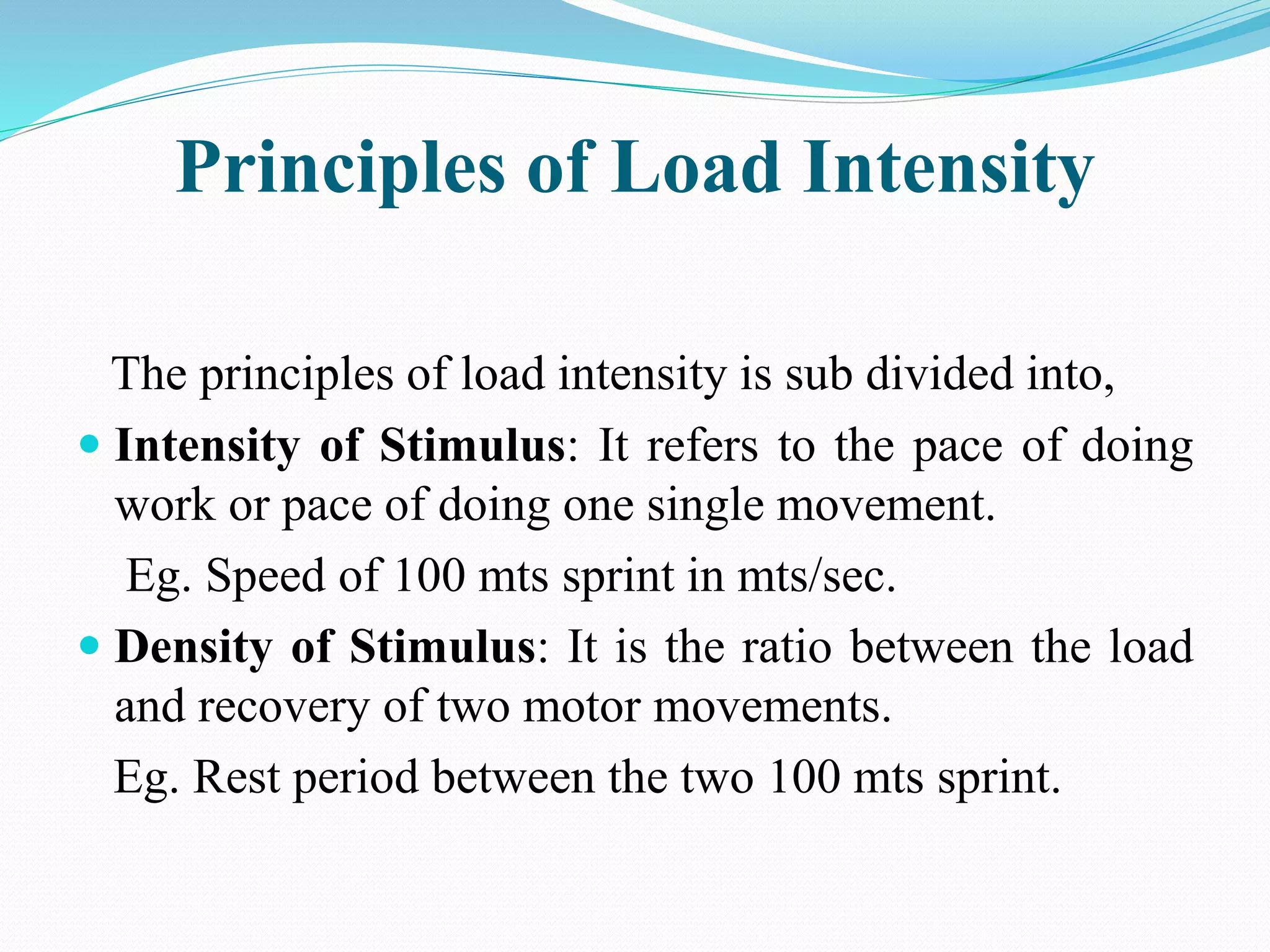
Principles of Load Intensity
The principles of load intensity is sub divided into,
 Intensity of Stimulus: It refers to the pace of doing
work or pace of doing one single movement.
Eg. Speed of 100 mts sprint in mts/sec.
 Density of Stimulus: It is the ratio between the load
and recovery of two motor movements.
Eg. Rest period between the two 100 mts sprint.
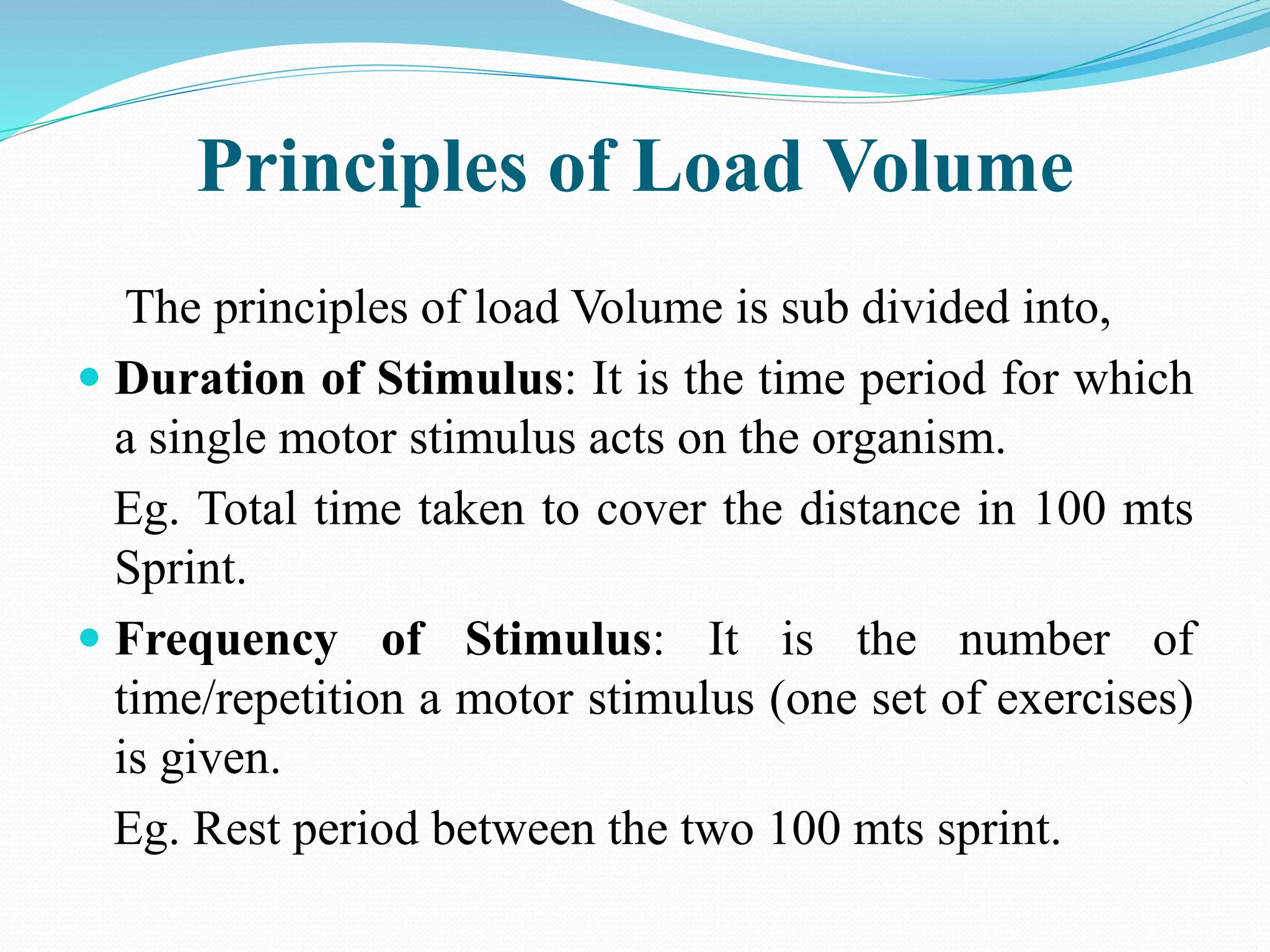
Principles of Load Volume
The principles of load Volume is sub divided into,
 Duration of Stimulus: It is the time period for which
a single motor stimulus acts on the organism.
Eg. Total time taken to cover the distance in 100 mts
Sprint.
 Frequency of Stimulus: It is the number of
time/repetition a motor stimulus (one set of exercises)
is given.
Eg. Rest period between the two 100 mts sprint.

Definition, types and principles of training load

  • 1.
    Prof. Dr. A.MAHABOOBJAN BharathidasanUniversity, Tiruchirappalli, Tamilnadu, India.
  • 2.
    Training Load  Itis the psychological and physiological demands put on the organism through motor stimuli (movements) resulting in improvement or maintenance of performance capacity.  It is the impact of a training to prepare a sportsman.  Training Load = Intensity (power/pace) + Volume (duration + frequency)
  • 3.
    Types of Load Types ----------------------------------------------------- ExternalLoad Internal Load (Amount of work done) (Reaction of the organism) Distance run Heart rate Number of jumps Lactic acid concentration in blood Total duration of activity/play Oxygen consumption Symptoms of fatigue
  • 4.
    External Load  Itis the work done by the sportsman. Eg. The distances run by a distance runner.
  • 5.
    Internal Load  Itis the psycho-physiological reaction of sportsman to external load. The degree of internal load is judged by pulse rate, lactic acid concentration in blood and various biochemical changes in the tissues. It can also be judged by various symptoms of fatigue. Eg. Sweating, changes in colour, Increase in heart rate etc..
  • 6.
    External and internalload are inter-related. For biological adaptations internal load is a must and should be optimum. Since the individuals are differ according to their need the external load must be applied to get optimum internal load.
  • 7.
    Principles of TrainingLoad 1. Principles of Continuity and Repetition of Load 2. Principles of Optimum Load 3. Principles of Load and Recovery 4. Principles of Specificity of Load 5. Principles of Progression of Load
  • 8.
    1.Principles of Continuityand Repetition of Load The load must be given several times to achieve the stable increase in performance capacity and the training should be continuous, otherwise achieved adaptations or performance improvement will be lost after some time.
  • 9.
    2.Principles of OptimumLoad The load given is neither too low nor too much excessive, because no super compensation takes place or recovery process is slowed down respectively. Therefore, for super compensation and optimum recovery the optimum load must be given.
  • 10.
    3.Principles of Loadand Recovery Optimum load is essential to achieve good super compensation and the super compensation will take place only if enough time for recovery is given.
  • 11.
    4.Principles of Specificityof Load Since specific type of load leads to a super compensation of a particular type of substance, when different performance factors need to be improved different type of load should be given.
  • 12.
    5.Principles of Progressionof Load The load should be increased from time to time for continuous improvement of performance. According to the need, the lad should be given. For example, higher load should be given for the adaptation to a higher level.
  • 13.
    Principles of LoadIntensity The principles of load intensity is sub divided into,  Intensity of Stimulus: It refers to the pace of doing work or pace of doing one single movement. Eg. Speed of 100 mts sprint in mts/sec.  Density of Stimulus: It is the ratio between the load and recovery of two motor movements. Eg. Rest period between the two 100 mts sprint.
  • 14.
    Principles of LoadVolume The principles of load Volume is sub divided into,  Duration of Stimulus: It is the time period for which a single motor stimulus acts on the organism. Eg. Total time taken to cover the distance in 100 mts Sprint.  Frequency of Stimulus: It is the number of time/repetition a motor stimulus (one set of exercises) is given. Eg. Rest period between the two 100 mts sprint.